




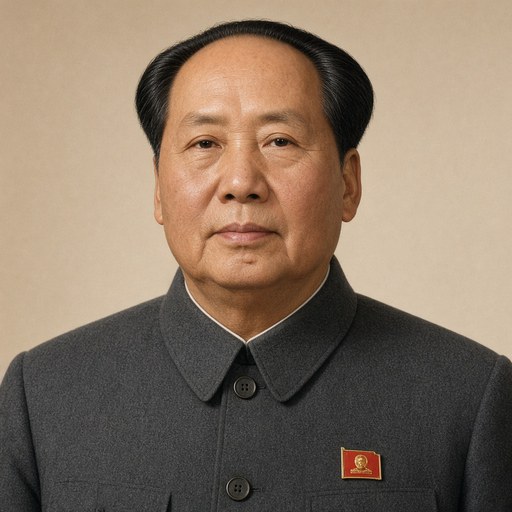
Speeches at the Opening and Closing Sessions of the Ninth National Congress of the Communist Party of China
 Mao Zedong · Chairman of the Central Committee of the Communist Party of China
- Context
- Mao addressed the Ninth National Congress of the Communist Party of China at its opening session on 1 April 1969 and its closing session on 28 April 1969, calling for unity, continued revolution and preparation for war.
- Main themes
- Unity and victory at the Ninth Party Congress, history of the Party's congresses since 1921, errors of the Wang Ming line, Liu Shaoqi and the old line, Cultural Revolution as second revolution, continuing socialist revolution, Soviet revisionist attacks, preparation for war, rectifying and rebuilding the Party, leniency toward cadres who made mistakes, factory leadership and the February Seventh Works, contradictions among the people in the provinces
- Duration
- ~28 min
- Words
- 3,336
- Sentences
- 214
- Readability
- 67
- Grade
- 7.8
- Syntax
- 2.74
- Vocabulary
- 1.98
Translated from Chinese Source: GitHub qinglee/maoxuan (毛泽东选集) ↗
The broad sphere of national life a sentence belongs to. Every sentence has an Arena, so it is the denominator the other indices are read against.
Other214 sentences in 30 paragraphs
Speech at the Opening Session on 1 April 1969
(1)
Comrades!
The Ninth National Congress of the Communist Party of China is now open.
I hope that our congress will go well, that it will be a congress of unity, a congress of victory.
Our Party, from its founding in 1921 to this year, has existed for as long as forty-eight years. The First Congress had only twelve delegates. Of those, two are still here among us: one is Comrade Dong, and the other is me. Several of the delegates gave their lives: the Shandong delegates Wang Jinmei and Deng Enming, the Hubei delegate Chen Tanqiu, the Hunan delegate He Shuheng, the Shanghai delegate Li Hanjun, all of them sacrificed. Those who turned traitor, who became collaborators with the Japanese and counter-revolutionaries, were four: Chen Gongbo, Zhou Fohai, Zhang Guotao and Liu Renjing, and the last two are still alive. There was also one called Li Da, who died a couple of years ago. At that time the Party had only a few dozen members in the whole country, most of them intellectuals. Later it grew. At the First, Second, Third and Fourth Congresses, very few delegates attended each time, a dozen or so, twenty-odd. The Fifth Congress was held in Wuhan, with rather more people, a few hundred. The Sixth Congress was held in Moscow, with several dozen delegates; Comrade Enlai and Comrade Bocheng took part.
The Seventh Congress was held in Yan'an, and it was a congress of unity. At that time there were also divisions within the Party, because of the errors of Qu Qiubai, Li Lisan and Wang Ming, especially the Wang Ming line. At that time some people proposed not electing the comrades of the Wang Ming line to the Central Committee; we did not agree, and we persuaded them to vote for them. And the result? The result was that a few turned out bad: Wang Ming ran off abroad to oppose us, Li Lisan was no good either, Zhang Wentian and Wang Jiaxiang made mistakes, just these few. Some others, such as Liu Shaoqi, and people like Peng Zhen and Bo Yibo, we did not know they were bad, we were not clear about their political histories, and they were elected too. From the Eighth Congress up to now, things have become fairly clear. On the political line, on the organizational line, in ideology, things have become fairly clear. Therefore we hope that this congress can be a congress of unity. On the basis of this unity, can we win victory? As for this congress itself, can it be a congress of victory? After the congress, can we win still greater victories throughout the country? I think we can. It can be a congress of unity, a congress of victory, and after the congress we can win still greater victories throughout the country!
11 April 1969
(2)
When the Republic was founded, socialism began, but we did not announce it; we announced it gradually only after land reform. Was land reform thorough? It was not all that thorough. In some places there was peaceful land reform. Towards the national bourgeoisie, the policy was to use, restrict and transform.
Within a few years, the principal contradiction in the country was the contradiction between the proletariat and the bourgeoisie. This was pointed out, but it was not talked about regularly, so the broad mass of cadres did not know it, and so this time there came a second revolution, called the Cultural Revolution. It started from culture; should it be called a great revolution? Let historians work that out later. Calling it the Cultural Revolution is fine too; any name will do. It is aimed mainly at the superstructure, at offices, schools and factories. This work is not yet finished, and I am afraid it will have to be seriously taken in hand for some time yet.
(3) (28 April 1969) Speech at the Closing Session
What I have to say are old words, things everyone knows; there is nothing new. It is simply about unity, and the purpose of uniting is to win still greater victories. Now the Soviet revisionists are attacking us: broadcasts from TASS, Wang Ming's material, and the long-winded pieces in *Kommunist*, saying we are now not a proletarian party, calling us a "petty-bourgeois party." They say we have practised centralization, gone back to the era of the old base areas, which is to say we have regressed. What do they mean by centralization? They say it is a military-bureaucratic system. In the Japanese wording it's called a "system"; in the Soviet wording it's called a "military-bureaucratic dictatorship." They look at our list of names and see quite a few military men, and that's what they call "military"; and then there's the "bureaucratic" part, which presumably means "bureaucrats" like me, Enlai, Kang Sheng, Chen Boda and that lot. In short, any of you who isn't a military man belongs to the "bureaucratic" system, that's all! That's why they call it a "military-bureaucratic dictatorship." As for these words, I say let them talk! Whatever they want to say, let them say it. But there's one peculiar thing: they don't call us a bourgeois party, they call us a "petty-bourgeois party." Whereas we say that theirs is a dictatorship of the bourgeoisie, a restoration of the dictatorship of the bourgeoisie.
When we talk about victory, we must guarantee that, under the leadership of the proletariat, we unite the broad masses of the people of the whole country to win victory. The socialist revolution must still continue. In this revolution there are still some things that haven't been finished and must still be carried on now, for example struggle-criticism-transformation. After a number of years, perhaps we will have to make revolution again.
Several of us old comrades spent a period looking around in factories. I hope that in future, when you have the chance, you too will go down and look, and study the problems in the various factories. It seems the Great Proletarian Cultural Revolution had to be carried out; our foundation is not solid. According to my observation, not in all of them, and not in the overwhelming majority, but I am afraid in a fairly large majority of factories, leadership is not in the hands of genuine Marxists, not in the hands of the masses of workers. Among those who led the factories in the past, it isn't that there were no good people.
There were good people: among Party committee secretaries, deputy secretaries and committee members there were good people, and among branch secretaries there were good people. But they followed the old line of Liu Shaoqi, which was nothing but material incentives, putting profit in command, not promoting proletarian politics, handing out bonuses and so on. Now in some factories these people have already been liberated and have taken part in three-in-one combination leadership; in some factories not yet. But there really are bad people in the factories. Take the February Seventh Works, that is, the Changxindian railway locomotive and rolling stock repair works. It's a big factory, eight thousand workers, tens of thousands with their families. In the past the Kuomintang had nine district sub-branches there, the Three People's Principles Youth League had three organizations, and there were another eight special-agent organizations of some kind. Of course this has to be analysed, because in those days you couldn't get by without joining that Kuomintang thing! Some are old workers; are we going to throw out all the old workers? That won't do either. We should distinguish degrees of seriousness. Some were nominal members of the Kuomintang who had no choice but to join; a talk with them is enough. Some bore a bit more responsibility. A small number burrowed in deep and did bad things. Several kinds of situations must be distinguished. Those who did bad things must be distinguished too: leniency for those who confess, severity for those who resist. If they now examine themselves well, they should still be allowed to work, though of course not in leadership work. If these people aren't allowed to work, what are they to do at home? What about their children? Moreover, old workers generally have skills, even if some of their skills aren't all that brilliant.
I give this example to show that the revolution is not finished. So all comrades of the Central Committee, including alternate members, please pay attention and do your work meticulously. In matters like this you must be meticulous; being sloppy won't do, sloppiness often leads to mistakes. In some places too many people have been arrested; this is not good. If you arrest too many people, what are you arresting them for? They haven't killed anyone, haven't committed arson, haven't poisoned anyone. I say as long as none of these things apply, don't arrest them. As for committing capitalist-roader errors, all the more reason not to arrest them. In the factories, let them work, have them take part in the mass movement. People who made mistakes made them in the past, either joining the Kuomintang, or doing some bad things, or making mistakes in the recent period, the so-called capitalist roaders. They should be with the masses; if they aren't allowed to be with the masses, that is bad. Some people have been locked up for two years, locked in "cowsheds," and know nothing of what's happening in the world. When they come out and listen, what they say is out of step; they're still talking the way people talked two years ago. They've been cut off from two years of life. These people must be helped. Study classes must be run for them, and they must be told the history, the history of the two years of the Cultural Revolution, so that they gradually come to their senses.
Unite for one goal, that is, to consolidate the dictatorship of the proletariat, and this must be carried down to every factory, village, office and school. At the start, don't spread it across the board; you can spread it out, but don't spread it out and then stop paying attention. Don't let it go for half a year or longer with nobody seeing to it. Experience must be summed up factory by factory, school by school, office by office. That's why Comrade Lin Biao's report says it must be done factory by factory, school by school, commune by commune, Party branch by Party branch, unit by unit. And also Youth League branch by Youth League branch; the question of rectifying the League has been raised too.
Apart from this, as has been said before, we must prepare for war. Whatever the year, we must prepare for war. People ask: what if they don't come? Whether they come or not, we should prepare. Don't make it so that even manufacturing hand grenades requires the Centre to allocate materials. Hand grenades can be made anywhere; every province can make them. Rifles, light weapons, every province can make those. This is speaking of material preparation. But the main thing is spiritual preparation. Spiritual preparation means having the spirit of being ready to fight. Not only our Central Committee, but the majority of the whole people must be spiritually prepared. What I'm saying here doesn't include the objects of dictatorship, that lot of landlords, rich peasants, counter-revolutionaries and bad elements. Because that lot would be delighted to see the imperialists and revisionists attack; they think if there's an attack, the world will be turned over and they can turn things over in their favour. We must be prepared for that too.
In the course of the socialist revolution, this revolution must still be made.
If others attack us, we will not go out to fight. We will not go out to fight. I say don't be provoked; even if you invite me, I won't go. But if you attack, then I'll have to deal with you. It depends whether you fight a small war or a big war. A small war, we fight at the border. A big war, I am for yielding some ground. China is not a small place. If he doesn't get some advantage, I don't think he'll come in. We must let the whole world see that our fighting is justified and advantageous. If he comes in, I think that's rather advantageous: not only justified, but advantageous, easy to fight, getting him bogged down in the encirclement of the people. As for aircraft, tanks, armoured cars and the like, experience everywhere now proves they can be dealt with.
To win victory, we need more people, isn't that so? People from all sides, no matter which mountain stronghold or which province you're from, whether north or south, is it better to unite more people or fewer? It's always better to unite more people. Some people's views may not be the same as ours, but that is not a relationship between ourselves and the enemy. I just don't believe, to take a concrete case, that Yang Dezhi and Wang Xiaoyu are in an enemy relationship. Is the relationship between you two an enemy relationship or one among the people? As I see it, it's squabbling among the people. The Centre has had a bit of bureaucratism too, hasn't paid much attention to you, and you haven't brought it to the Centre for discussion either. A province as big as Shandong, it's a contradiction among the people. Take this opportunity and talk it over, all right? I think East China also has this problem among the people. And Shanxi, also among the people: you back one faction, I back another, why keep quarrelling like that! Then there's the problem of Yunnan, Guizhou and Sichuan. Every place has some problems, more or less, that's all; but it's much better compared with last year and the year before. You there, comrade, aren't you called Xu Shiyou? The year before last, when we were in Shanghai, things were terrible, those three months, July, August, September. Now life is a bit easier, isn't it! I'm speaking of the overall situation. That Nanjing of yours, out popped some "Red General" outfit, and as a result of the work done, they ended up cooperating, didn't they: one "August 27," one "Red General," and didn't they end up cooperating?
I say the main problem is still our work. Didn't we once say two sentences? The problem in the localities lies in the army; the problem in the army lies in work. It's not a mortal feud, so why bother? If we're going to talk about personal grudges, there are too many accounts to settle. All in all, I think there was no enmity in your previous lives and no feud in this one; you ran into each other and some of your opinions didn't match. Someone criticized you, or opposed you, and you hit back, and the result was a contradiction. People who oppose you are not necessarily bad people.
One of the figures in Beijing that people were always wanting to overthrow was called Xie Fuzhi. Later the policy he adopted was this: whenever he saw groups that wanted to overthrow him, he told them, you're all right.
And those who support you are not necessarily all good.
So what I'm saying is still those few old words, simply: unite and win still greater victories. There is concrete content in this: what work to do, what concrete victories, how to unite.
I have confidence in some of the old comrades who made mistakes in the past. Originally there was a big list of thirty-odd names, and we thought it would be good to elect them all to the Political Bureau. Later someone put forward a small list, a dozen or so, and that was felt to be too small. Most people were in the middle; they opposed the big list and also opposed the small list, and favoured a medium list of twenty-odd people, so we had no choice but to elect representatives. It's not that alternate members of the Central Committee are inferior to full members in political level, in working ability, in virtue, talent and seniority, that's not the issue. There is some unfairness in this. If you say it's all that fair, I don't think it's all that fair, not all that just.
Everyone must be cautious and careful, whether alternate members of the Central Committee, members of the Central Committee or members of the Political Bureau, all must be cautious and careful. Don't let yourselves get carried away in a moment of excitement and forget who you are. Ever since Marx, there has never been any haggling over the size of one's merits. You are Communist Party members, the more conscious section of the whole mass of the people, the more conscious section of the proletariat. So I am in favour of the slogan "first, fear no hardship; second, fear no death," and not in favour of the slogan "if not merit, then at least toil; if not toil, then at least fatigue." That slogan is opposed to "first, fear no hardship; second, fear no death." Look how many of us died in the past. We old comrades who are still here are survivors, alive by chance. Comrade Pi Dingjun, how many people did you have back in that Hubei-Henan-Anhui period? How many were left afterwards? There were a great many people then; not so many are still alive now. Back then, the Jiangxi soviet area, the Jinggangshan soviet area, northeastern Jiangxi, western Fujian, western Hunan-Hubei, northern Shaanxi, through the fighting there were great sacrifices, and not many of the old people survived. That is what is called "first, fear no hardship; second, fear no death." For many years we had no salary to speak of, no eight-grade wage system. There was just a fixed ration for food: three qian of oil, five qian of salt and a jin and a half of rice, and that was considered a lot. As for vegetables? Where a great army is passing through, how could you get vegetables to eat everywhere?
Now we have entered the cities. Entering the cities was a good thing; if we hadn't, Chiang Kai-shek would have held on to these places. But entering the cities was also a bad thing, because it made our Party not so good. So some foreigners and journalists say that our Party is being rebuilt. Now we ourselves have also put forward this slogan, rectifying and building the Party. In fact it does need rebuilding. Every branch must be rectified anew among the masses. It must go through the masses, not just a few Party members; masses from outside the Party must take part in the meetings and take part in the appraisal. Individuals who really won't do should be persuaded to leave. A very small number may have to be given disciplinary sanctions, as laid down in the Party Constitution, isn't that so? And this must go through a general meeting of the branch and be approved by the higher level. In short, cautious methods must be adopted. It must be done, it absolutely must be done, but cautious methods must be adopted.
This National Congress seems to have gone well. As I see it, it has been a congress of unity, a congress of victory. We adopted the method of issuing communiqués. Now foreigners can't get any news about us and say we're holding secret meetings. We are both open and secret. These journalists in Beijing, I don't think they're up to much either; we've probably pretty much rooted out the traitors and spies they had mixed in among us. In the past, every time a meeting was held, it leaked out right away, and the Red Guard tabloids were all over it. Ever since Wang, Guan and Qi, and Yang, Yu and Fu fell from power, they don't know the news from the Centre anymore.
The original Chinese. The tags above are read on the English translation's sentences.
一九六九年四月一日开幕式上的讲话
(一)
同志们!
中国共产党第九次全国代表大会现在开幕。
我希望,我们的大会,能够开得好,能够开成一个团结的大会,胜利的大会。
我们党,从一九二一年成立,到今年已经有四十八年这么长的时间了。第一次代表大会,只有十二个代表。现在在座的还有两个,一个就是董老,再一个就是我。有好几个代表牺牲了,山东的代表王尽美、邓恩铭,湖北的代表陈潭秋,湖南的代表何叔衡,上海的代表李汉俊,都是牺牲了。叛变的,当了汉奸、反革命的,有陈公博、周佛海、张国焘、刘仁静四个,后头这两个还活着。还有一个叫李达,在早两年去世了。那个时候,全国的党员只有几十个人,大多数是知识分子。后头就发展了。第一次、第二次、第三次、第四次代表大会,每次到会的代表都很少,十几个人,二十几个人。第五次代表大会在武汉开,人数比较多一些,有几百人。第六次代表大会在莫斯科开,几十名代表,恩来同志、伯承同志参加了。
第七次代表大会在延安开的,开了一个团结大会。那个时候,也是党内分歧,因为有瞿秋白、李立三、王明的错误,特别是王明路线。那个时候,有人建议不要选王明路线那些同志到中央,我们不赞成,说服他们选举。结果呢?结果,就有几个不好了,王明跑到国外反对我们,李立三也是不好的,张闻天、王稼祥犯了错误,就这么几个。其他一些,比如刘少奇呀,什么彭真、薄一波这些人,我们不知道他们不好,他们的政治历史我们不清楚,也选进来了。经过“八大”到现在,搞得比较清楚了。在政治路线上,组织路线上,思想方面,都搞得比较清楚。因此,我们希望这一次大会,能够开成一个团结的大会。在这个团结的基础上,我们能不能取得胜利?就这个大会来说,能不能开成一个胜利的大会?大会以后,能不能在全国取得更大的胜利?我以为,可以的。可以开成一个团结的大会,胜利的大会,大会以后,可以在全国取得更大的胜利!
一九六九年四月十一日
(二)
共和国建立了,社会主义就开始了,但我们没有宣布,土改以后才逐步宣布。土地改革彻底?就不那么彻底。有的是和平土改。对民族资产阶级是利用、限制、改造。
在几年内,国内主要矛盾,是无产阶级和资产阶级的矛盾,已经指出了,但是没有经常讲,所以广大干部不知道,所以这一次又来了二次革命,叫文化大革命。是从文化开始的,叫不叫大革命?以后历史学家去做。叫文化大革命也可以,名称叫什么都可以。主要是针对上层建筑、机关、学校、工厂,这个工作还没有完,恐怕还要一个时期要认真抓一下。
(三)(一九六九年四月二十八日)闭幕式上的讲话
我的话是些老话,就是大家知道的,没有什么新话。无非是讲团结,团结起来的目的,是要争取更大的胜利。现在苏修攻击我们,什么塔斯社的广播,王明的材料,以及《共产党人》的长篇大论,说我们现在不是无产阶级的党,叫做“小资产阶级的党”。说我们搞一元化,回到了过去根据地那个时代,就是讲倒退了。什么叫一元化呢?他们说就是军事、官僚体制。按照日本人的话叫体制;按照苏联的话叫做“军事官僚专政”。他们一看我们名单里头,军人不少,这就叫“军事”;还有什么“官僚”,大概就是我呀,恩来呀,康生呀,陈伯达呀这批“官僚”。总而言之,你们凡是不是军人,都属于“官僚”系统就是了!所以叫做“军事官僚专政”。这些话嘛,我看让人家去讲!人家怎么讲,就怎么讲。但他有个特点,他就是不骂我们叫资产阶级的政党,而叫“小资产阶级的政党”。而我们呢,就说他是资产阶级的专政,恢复资产阶级专政。
我们讲胜利,就要保证在无产阶级领导之下,团结全国广大人民群众,去争取胜利。社会主义革命还要继续。这个革命,还有些事没有做完,现在还要继续做,比如讲斗、批、改。过若干年,也许又要进行革命。
我们几个老同志,在工厂里头看了一个时期,希望你们以后有机会,还得下去看,还得去研究有关各个工厂里的问题。看来,无产阶级文化大革命不搞是不行的,我们这个基础不稳固。据我观察,不讲全体,也不讲绝大多数,恐怕是相当大的一个多数的工厂里头,领导权不在真正的马克思主义者、不在工人群众手里。过去领导工厂的,不是没有好人。
有好人,党委书记、副书记、委员,都有好人,支部书记有好人。但是,他是跟着过去刘少奇那种路线走,无非是搞什么物质刺激,利润挂帅,不提倡无产阶级政治,搞什么奖金,等等。现在有些工厂已经把他们解放出来了,参加了三结合的领导;有些工厂还没有。但是,工厂里确有坏人。比如二七工厂,就是长辛店铁路机车车辆修理厂,是一个大工厂,八千工人,连家属几万人,过去国民党有九个区分部,三青团有三个机构,另有八个什么特务机构。这个里头当然就要分析了,因为那个时候不加入国民党那个东西是不行呀!有些是老工人了,老工人都不要了吗?那也不行。应该分别轻重,有些人是国民党的挂名党员,不得不加入,只要谈一谈就行了;有些比较负些责任的;有少数,就是钻得很深的,做了坏事的。要分别几种情况。做坏事的,也要分别,坦白从宽,抗拒从严。如果他现在检讨得好,那还应该让他工作,当然不是给领导工作。不让这些人工作,他在家怎么办呢?他的子女怎么办呢?并且老工人一般都是有技术的,虽然技术有些并不那么高明。
我举这么一个例子,就是说明革命没有完。所以整个中央的同志,包括候补中央委员,请你们注意,要过细地做工作。对于这种事情要过细,粗枝大叶不行,粗枝大叶往往搞错。有些地方抓多了人,这个不好。你抓多了人,抓起来干什么呢?他也没有杀人,也没有放火,又没有放毒,我说只要没有这几条,就不要抓。至于犯走资派错误,那更不要抓。工厂里头,要让他工作,要他参加群众运动。人家犯了错误,无非是过去犯的,或者加入国民党,或者做了些坏事,或者是犯了最近一个时期的错误,就是所谓走资派,要他们跟群众一道,如果不让他们跟群众一道,那就不好了。有些人关了两年,关在“牛棚”里头,世界上的事情不知道了,出来一听呀,讲的话不对头了,他还是讲两年前的话。他脱离了两年的生活。对这些人就要帮助了,要办学习班,还要跟他讲历史,讲两年的文化大革命过程的历史,使他逐步清醒。
团结起来,为了一个目标,就是巩固无产阶级专政,要落实到每个工厂、农村、机关、学校。开头不要全面铺开,可以铺开,但不要一铺开不管了。不要搞了半年或者更久,就是没有人去管它。要一个一个工厂,一个一个学校,一个一个机关地去总结经验。所以,在林彪同志报告里头讲,要一个一个工厂,一个一个学校,一个一个公社,一个一个党支部,一个一个单位地搞。还有一个一个团支部,整团的问题,也提出来了。
此外,过去讲过的了,就是要准备打仗。无论哪一年,我们要准备打仗。人家就问了:他不来怎么办呢?不管他来不来,我们应该准备。不要造手榴弹都要中央配发材料。手榴弹,到处可以造,各省都可以造。什么步枪,轻武器,每省都可以造。这是讲物质上的准备。而主要的,是要有精神上的准备。精神上的准备,就是要有准备打仗的精神。不仅是我们中央委员会,要使全体人民中间的大多数有这个精神准备。我这里讲的不包括专政对象,什么地富反坏那套人。因为那套人是很高兴帝国主义、修正主义打来的,他以为打来了,这个世界就翻身了,他就可以翻身了。还要准备这一条。
社会主义革命过程还要革这个命。
人家打来,我们不打出去。我们是不打出去的。我说不要受挑拨,你请我去我也不去。但是你打来呢,那我就要对付了。看你是小打还是大打。小打就在边界上打。大打,我主张让出点地方来。中国这个地方不小。他不得点好处,我看他也不会进来。要使全世界看到我们打仗是有理的,有利的。他进来了,我看比较有利,不仅有理,而且有利,好打,使他陷在人民包围中间。至于什么飞机、坦克、装甲车之类,现在到处经验证明,可以对付。
为了胜利,就是要人多一点了,是不是呀?各方面的人,不管你是哪个山头或者哪一个省的,或者是北方、南方的,还是多团结一点人好,还是少团结一点人好呢?总是多团结一点人好。有些人的意见不一定跟我们一致,但是,不是敌我关系。我就不相信,比如具体来讲,说是什么杨得志跟王效禹是敌我关系。你们两个人的关系是敌我关系,还是人民内部的关系呀?据我看是人民内部吵吵架。中央也是有点官僚主义,没有大管你们,你们也没有提向中央来讨论。山东这么一个大省,是人民内部矛盾,乘此机会,你们谈一谈嘛,好不好呀?我看华东也有这个人民内部问题。还有山西,也是人民内部,你支一派,我支一派,何必那么尽吵干什么!还有云、贵、川的问题。各地方多多少少都有一些问题就是了,那比较去年跟前年好多了。你这个同志不是叫许世友吗?前年我们在上海那个时候可不得了,七、八、九三个月。现在日子总好过一点嘛!我说的是整个局面。你那个南京跑出一个什么“红总”,做工作之结果,还是合作了嘛,一个“八·二七”,一个“红总”,还不是合作了嘛。
我说主要问题还是我们的工作。过去不是讲过两句话吗?地方的问题在军队,军队的问题在工作。不是生死冤仇,那何必呢?要讲个人恩怨呀,那个账算不了那么多。总而言之,我看都是前世无冤,今世无仇,碰在一块,有些意见不对头。人家或者是搞什么批评了自己,反对了自己,自己又反攻一下,结果就发生矛盾了。反对自己的人不一定是坏人。
北京经常要打倒的人物之一就叫谢富治。后头他采取的方针是这样:凡见要打倒他的那些团体,他都说你们无事。
而拥护他的,不一定都是好的。
所以,我讲的还是那几句老话,无非是团结起来,争取更大的胜利。这个里头有具体内容的,干什么事,什么具体的胜利,怎么个团结法。
我相信过去犯错误的一些老同志。原先有个大名单三十几个,我们认为都要选举到政治局委员就好。后头有人提出个小名单,十几个,又觉得它太小了。大多数人是个中间派,反对这个大名单,也反对小名单,主张二十几个人的中等名单,这就只好选代表啰。并不是说候补中央委员就比正式中央委员在政治水平上、工作能力上、德才资各方面差,并不是这个问题。在这个里头有个不公平。你说那么公平哪,我看就不那么公平,不那么公道。
大家要谨慎小心,无论是候补中央委员、中央委员、政治局委员,都要谨慎小心。不要心血来潮的时候,就忘乎所以。从马克思以来,从来不讲什么计较功劳大小。你是共产党员,是整个人民群众中间比较更觉悟的一部分人,是无产阶级里面比较更觉悟的一部分人。所以,我赞成这样的口号,叫做“一不怕苦,二不怕死”,而不赞成那样的口号:“没有功劳也有苦劳,没有苦劳也有疲劳”。这个口号同“一不怕苦,二不怕死”是对立的。你看我们过去死了多少人,我们现在存在的这些老同志,是幸存者,偶然存在下来的。皮定钧同志,你那个鄂豫皖那个时候多少人?后头剩了多少人?那个时候人可多啦,现在存在的就不那么多了。那个时候,江西苏区,井冈山苏区,赣东北,闽西,湘鄂西,陕北,经过战争有很大的牺牲,老人存下的就不多了,那叫做一不怕苦,二不怕死。多少年我们都是没有啥薪水的,没有定八级工资制,就是吃饭有个定量,叫三钱油、五钱盐、一斤半米就了不起了。至于菜呢?大军所过,哪里能够到处搞到菜吃呀?
现在进了城。这个进城,是好事,不进城,蒋介石霸住这些地方了;进城又是坏事,使得我们这个党不那么好了。所以,有些外国人、新闻记者说,我们这个党在重建。现在我们自己也提出这个口号,叫整党建党。事实是需要重建。每一个支部,都是要重新在群众里头进行整顿。要经过群众,不仅是几个党员,要有党外的群众参加会议,参加评论。个别实在不行的,劝他退出。极少数的人,可能要采取纪律的处分了,党章规定了的,是不是呀?还要经过支部大会,上级批准。总而言之,要采取谨慎的方法。要做,一定要做,但是要采取谨慎的方法。
这次全国代表大会,看起来开得不错。据我看,是开成了一个团结的大会,胜利的大会。我们采取发公报的办法,现在外国人捞不到我们的新闻,说我们开秘密会议。我们是又公开又秘密。北京这些记者,我看也不大行,大概我们把他们混到我们里头的什么叛徒、特务搞得差不多了。过去每开一次会,马上透露出去,红卫兵小报就是起来。自从王、关、戚,杨、余、傅下台之后,中央的消息他们就不知道了。