




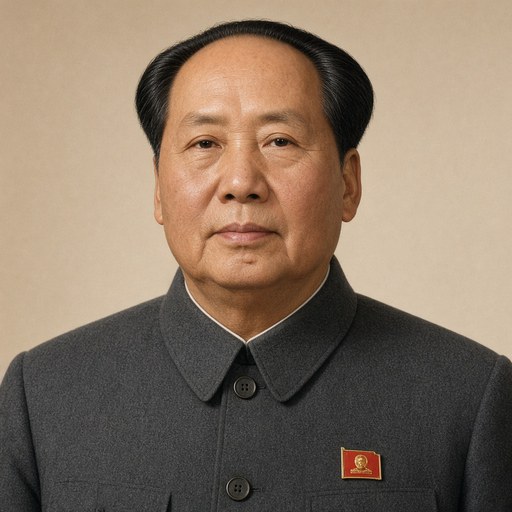
Speech at the Second Plenary Session of the Eighth Central Committee of the Communist Party of China
 Mao Zedong · Chairman of the Central Committee of the Communist Party of China
- Context
- Mao addressed the Second Plenary Session of the Eighth Central Committee of the Chinese Communist Party in November 1956, covering the economy, the international situation, Sino-Soviet relations and big versus small democracy, and announcing a rectification movement for 1957.
- Main themes
- Dialectics of advance and retreat, balance and imbalance in the planned economy, assessment of the First Five-Year Plan, state budget review and reliability, diligence and thrift, suppression of counter-revolutionaries, Hungarian and Polish disturbances and Suez aggression, Sino-Soviet differences and Stalin and Lenin, secret collusion with foreign countries, big democracy and small democracy, Dalai Lama's visit to India, planned rectification movement
- Duration
- ~61 min
- Words
- 7,292
- Sentences
- 423
- Readability
- 59
- Grade
- 9.4
- Syntax
- 2.80
- Vocabulary
- 2.12
Translated from Chinese Source: GitHub qinglee/maoxuan (毛泽东选集) ↗
The broad sphere of national life a sentence belongs to. Every sentence has an Arena, so it is the denominator the other indices are read against.
Other423 sentences in 41 paragraphs
I will speak on four questions: the economic question, the question of the international situation, the question of Sino-Soviet relations, and the question of big democracy and small democracy.
I
We must analyse problems comprehensively before we can resolve them properly. Whether to advance or retreat, whether to get on the horse or get off it, must all be decided according to dialectics. In this world there is always getting on and getting off the horse, advancing and retreating. Who ever heard of getting on a horse and riding a whole day without dismounting? When we walk, we do not move both feet at once; they are always out of step. In the first step this foot goes forward and that one stays behind; in the second step that foot goes forward and this one stays behind. When you watch a film, the people on the screen are moving all the time, but if you look at the film print, every single frame is motionless. The "Tianxia" chapter of the *Zhuangzi* says: "The shadow of a flying bird has never moved." That is the dialectics of the world: things both move and do not move. There is no such thing as being entirely motionless, nor is there such a thing as being entirely in motion. Motion is absolute; rest is temporary and conditional.
Our planned economy is both balanced and unbalanced. Balance is temporary and conditional. Once a balance has been temporarily established, change soon follows. There is balance in the first half of the year and imbalance in the second half; balance this year and imbalance again next year. To have nothing but balance and never break it would not do. We Marxists hold that imbalance, contradiction, struggle and development are absolute, while balance and rest are relative. "Relative" means temporary and conditional. Looking at our economic problems in this light, are we advancing or retreating after all? We should tell the cadres and the broad masses: there is advance and there is retreat, but mainly it is advance, though not in a straight line; it is advance in waves. Although there are times when we dismount, there are always more times when we mount. Are our Party committees at all levels, our ministries and our governments at all levels promoting progress or promoting retreat? Fundamentally they are promoting progress. Society always moves forward; advance is the general trend, development is the general trend.
Was the First Five-Year Plan correct? I agree with the view that, judging from the first four years, the First Five-Year Plan was fundamentally correct. As for mistakes, there certainly were some, and that was unavoidable, because we lacked experience. In the future, after we have carried out several five-year plans and gained experience, will we still make mistakes? We will. One can never learn enough from experience. Ten thousand years from now, will planning be done without a single mistake? We cannot take charge of what happens ten thousand years from now, but one thing is certain: people will still make mistakes then. Young people make mistakes, and old people don't? Confucius said that at seventy whatever he did conformed to objective laws. I don't believe it; that was bragging. Of the above-norm construction projects in our First Five-Year Plan, some were designed for us by the Soviet Union, but most we designed ourselves. You think the Chinese can't do it? We can. But we must also admit that there is something we still can't do, because there is a portion we are not yet able to design ourselves. One problem in construction over the past few years was, as some comrades have put it, that we paid attention only to the "bones" and not much to the "flesh." Factory buildings, machinery and equipment went up, but municipal construction and service facilities were not built correspondingly, and this will cause big problems in the future. In my view the effects of this problem will be felt not in the First Five-Year Plan but in the Second, perhaps even in the Third. As to whether the First Five-Year Plan was correct, we can draw some conclusions now and some more next year, but I think a full conclusion can only be drawn at the end of the Second Five-Year Plan. It is impossible that no subjectivism at all crept in. Making a few mistakes is not a bad thing. Achievements have a dual nature, and so do mistakes. Achievements can encourage people, but at the same time they can make people arrogant; mistakes bring people bad luck and make them anxious, they are an enemy, but at the same time they are a very good teacher for us. On the whole, we cannot see any big mistake, any mistake of a fundamental nature, in the First Five-Year Plan at present.
We must protect the enthusiasm of the cadres and the masses and not pour cold water on their heads. Some people once poured cold water on the socialist transformation of agriculture; at that time there was a "Committee for Promoting Retreat." Later we said one should not pour cold water, and so a Society for Promoting Progress came into being. The original arrangement was to take eighteen years to basically complete the socialist transformation of ownership, but once progress was promoted it went very fast. The draft programme for agricultural development stated that higher-stage agricultural cooperation would be completed in 1958; now it looks as if it can be achieved this winter and next spring. Although there are quite a few shortcomings, it is better than that Society for Promoting Retreat; the peasants are happy and agricultural output has risen. Without this cooperativisation, with a disaster as big as this year's, grain output could not have increased by more than twenty billion jin. In disaster areas, having cooperatives also makes production for disaster relief easier. Under the fundamental condition of protecting the enthusiasm of the cadres and the masses, we should criticise their shortcomings and criticise our own shortcomings; that way they will have drive. Where the masses demand something that cannot be done for the time being, we must explain it clearly to them, and it can be explained clearly.
Every year the state budget should be settled through three rounds of posting. That is, the comrades of our Central Committee, together with some other comrades concerned, will hold three meetings to discuss and settle it. This way everyone can understand the contents of the budget. Otherwise, it is always the comrades handling it who understand it better, while people like us just raise our hands. But do we understand it? We both understand and do not understand; we are not very clear about it. With the three-round method, will you understand it perfectly? Not necessarily; there is still a gap between you and the comrades who handle it. They are like actors on the stage who can sing, and we are like the audience who cannot sing. But if we have watched opera for a long time, we can judge fairly correctly what is good and what is bad. Whether an opera is sung well or badly is still for the audience to judge. Correcting the actors' mistakes still depends on the people watching. That is where the audience's wisdom lies. If people often like to watch a certain opera, it can go on being performed. If people are not very happy watching certain operas, they must be changed. So within our Central Committee there is also a contradiction between specialists and non-specialists. Specialists have the strengths of specialists, and non-specialists have the strengths of non-specialists. Non-specialists can distinguish right from wrong.
The 1956 state budget report used the phrase "sound and reliable." I suggest that in future it be changed to "fully reliable." When the conference on the question of intellectuals was held in January this year, I raised the idea of "fully reliable." "Sound" and "reliable" repeat each other in meaning. Using "sound" to modify "reliable" adds nothing and restricts nothing. An adjective is on the one hand a modifier and on the other a restrictor. To say "fully reliable" restricts it in degree: not ordinarily reliable, but fully reliable. Being fully reliable is not easy. When the National People's Congress adopted the budget in June this year, everyone said it was reliable. Looking at it now, a little less than one tenth of this budget was unreliable; some items were wrongly arranged, and some items used too much money. So in future we must pay attention to arranging the items in the budget properly. Whether the items are well arranged or not depends on the attention of the specialists, and also on our attention, especially that of comrades at the provincial level. Of course, everyone must pay attention.
People like us, the secretaries of the Party committees of provinces, municipalities and autonomous regions, must take hold of finance and take hold of planning. Some comrades did not take a firm hold before. Please pay attention, comrades, to the questions of grain, pork, eggs, vegetables and so on; this problem is quite big. Since last winter we concentrated on grain and neglected side-line occupations and cash crops. Later we corrected this deviation and turned to side-line occupations and cash crops, especially once twenty or thirty price ratios were fixed, the cotton-grain price ratio, the oil-grain price ratio, the pig-grain price ratio, the tobacco-grain price ratio and so on. As a result the peasants developed a great taste for side-line occupations and cash crops, and grain suffered. First there was a deviation towards grain, then a deviation towards side-line occupations and cash crops. Low grain prices hurt the peasants; if your grain prices are so cheap, the peasants won't grow grain. This problem deserves close attention.
We must build the country through diligence and thrift, oppose extravagance and waste, and advocate hard work, plain living, and sharing weal and woe. Comrades have proposed that factory directors and school principals can live in sheds. I think that is a good method, especially in difficult times. When we crossed the grasslands on the Long March, there were no houses at all, so we slept just like that. Commander-in-Chief Zhu walked through the grasslands for forty days and slept just like that too, and we all came through. Our troops, when they had no grain, ate tree bark and leaves. Sharing blessings and misfortunes with the people is something we did in the past; why can't we do it now? So long as we do this, we will not become divorced from the masses.
We must take hold of the newspapers. The Centre and the Party committees at all levels, wherever newspapers are published, must regard running newspapers as a major matter. This year the newspapers have one-sidedly and unrealistically propagandised improving the people's livelihood, while there has been very little propaganda for building the country through diligence and thrift, opposing extravagance and waste, and advocating hard work, plain living, and sharing weal and woe. In future the focus of newspaper propaganda must be put on these things. What the radio stations broadcast probably also comes from the newspapers. So the journalists, newspaper staff and radio staff should be called together for meetings, to exchange views with them and tell them the guidelines for propaganda.
Here I will also speak about the question of suppressing counter-revolutionaries. Those local tyrants and evil gentry, despots and counter-revolutionaries guilty of the most heinous crimes, should they be executed or not? They should be executed. Some democratic personages say the executions were wrong; we say they were right. It is simply a case of putting on rival performances. On this opera we are always out of tune with the democratic personages. Those we executed were "little Chiang Kai-sheks." As for the "big Chiang Kai-sheks," such as the Xuantong Emperor, Wang Yaowu, Du Yuming and the like, we did not execute a single one. But if those "little Chiang Kai-sheks" were not executed, there would be an "earthquake" under our feet every day, and we could not liberate the productive forces or liberate the working people. The productive forces consist of just two things: labourers and tools. If counter-revolutionaries are not suppressed, the working people are unhappy. The oxen are unhappy too, the hoes are unhappy too, and the land is uncomfortable too, because the peasants who drive the oxen, wield the hoes and use the land are unhappy. Therefore a number of counter-revolutionaries must certainly be executed, another number arrested, and another number put under surveillance.
II
On the whole, the international situation is good. What are a few imperialist countries? Even if we added several dozen more imperialist countries, we would not be afraid.
At present problems have arisen in two places: one is Eastern Europe, the other is the Middle East. Poland and Hungary have had disturbances, and Britain and France have launched armed aggression against Egypt. In my view these bad things are also good things. In the eyes of Marxists, a bad thing has a dual nature: one side is bad and the other side is good. Many people see the word "bad" in front of the word "thing" and think it is only bad. We say it has another meaning as well: it is also a good thing. This is what is called "failure is the mother of success." Every failure, every misfortune, every mistake can, under certain conditions, produce good results. Whether in Poland or in Hungary, since there was fire, it was bound to burn. Is it better for it to burn or not to burn? You cannot wrap fire in paper. Now it has burst into flames, and it is good that it has. Hungary had so many counter-revolutionaries, and now they have been exposed. The Hungarian incident has educated the Hungarian people, and at the same time it has educated some comrades in the Soviet Union and educated our Chinese comrades as well. When a Beria appeared, it was terrible: how could a Beria appear in a socialist country? When a Gao Gang appeared, we were greatly shocked again. We must be educated by these things. Such things are only to be expected, and there will always be such things.
In the future, when imperialism has been overthrown throughout the world and classes have been abolished, tell me, will there still be revolution then? I think there will still be revolution. The social system will still need to be reformed, and the word "revolution" will still be used. Of course, the nature of revolution then will be different from that of revolution in the era of class struggle. There will still be contradictions between the relations of production and the productive forces, and between the superstructure and the economic base. If the relations of production are not right, they will have to be overthrown. If the superstructure (including ideas and public opinion) protects the kind of relations of production that the people dislike, the people will reform it. The superstructure is also a kind of social relation. The superstructure is built on the economic base. The so-called economic base is the relations of production, chiefly the system of ownership. The productive forces are the most revolutionary factor. When the productive forces develop, there is bound to be revolution. The productive forces consist of two things: one is people, the other is tools. Tools are created by people. When tools want revolution, they will speak through people, speak through the labourers, and destroy the old relations of production and the old social relations. "A gentleman uses his mouth, not his fists"; the best method is to use the mouth. If good words go unheeded, there will be talk by force. And if there are no weapons, what then? The labourers have tools in their hands, and those without tools can pick up stones. If there aren't even stones, there are two fists.
Our state organs are the state organs of the dictatorship of the proletariat. Take the courts: they deal with counter-revolutionaries, but not exclusively with counter-revolutionaries; they have to handle many disputes among the people. It seems courts will be needed for ten thousand years. Because after classes have been abolished, there will still be contradictions between the advanced and the backward, there will still be struggles among people, there will still be fights, and all sorts of disturbances may still occur. How could you manage without setting up courts? However, the struggle will have changed its nature; it will be different from class struggle. The courts will also have changed their nature. At that time the superstructure may also run into problems. For example, people like us may make mistakes, lose the struggle and be pushed out by others, letting Gomułka come to power and bringing Rao Shushi out on stage. You say such things can't happen? I think they will still happen a thousand or ten thousand years from now.
III
Everything in the world is a unity of opposites. A unity of opposites means the unity of opposed things of different natures. Take water, for example: it is formed by combining two elements, hydrogen and oxygen. Without oxygen, with only hydrogen, or without hydrogen, with only oxygen, you cannot make water. I hear that more than a million compounds have now been given names, and nobody knows how many have not been named yet. Compounds are all unities of opposites of things of different natures. It is the same with things in society. The centre and the localities are a unity of opposites, and this ministry and that ministry are also a unity of opposites.
Two countries are also a unity of opposites. China and the Soviet Union are both called socialist; are there differences or not? There are. The Soviet Union and China are different nations. The October Revolution took place there thirty-nine years ago, while we have held nationwide power for only seven years. As for what we have done, there are many differences. For example, our agricultural collectivisation went through several steps, which is different from theirs; our policy towards capitalists is different from theirs; our market and price policy is different from theirs; our handling of the relationship between agriculture, light industry and heavy industry is different from theirs; and our system in the army and our system in the Party are also different from theirs. We have told them: we do not agree with some of your things, and we do not approve of some of your methods.
Some comrades simply do not apply dialectics, do not analyse, say everything Soviet is good, and mechanically copy everything from the Soviet Union. In fact, whether it is Chinese or foreign, everything can be analysed; there are good things and bad things. The work of every province is the same: there are achievements and there are shortcomings. Every one of us is the same: there are always two points, strengths and shortcomings, not just one point. The one-point theory has existed since ancient times, and the two-point theory has also existed since ancient times. These are metaphysics and dialectics. The ancient Chinese said: "One yin and one yang constitute the Way." You cannot have only yin without yang, or only yang without yin. That is the ancient two-point theory. Metaphysics is the one-point theory. At present a considerable number of comrades still cannot shake off the one-point theory. They look at problems one-sidedly, think everything Soviet is good and copy everything wholesale, so that quite a lot of things that should not have been copied have been brought over. Those things copied wrongly, which do not suit our soil, must be changed.
Here I will speak about the question of "secret collusion with foreign countries." Are there such people in China, who pass information to foreigners behind the back of the Centre? I think there are; Gao Gang, for instance, was one. This has been proved by many facts.
On December 24, 1953, at the Central meeting exposing Gao Gang, I announced that there were two headquarters in Beijing: one headquarters was ours, and this headquarters blew a yang wind and lit a yang fire; the second headquarters was called the underground headquarters, and it too blew a kind of wind and lit a kind of fire, called blowing a yin wind and lighting a yin fire. Our ancient Lin Daiyu said: if the east wind does not prevail over the west wind, then the west wind prevails over the east wind. Now, if the yang wind and yang fire do not prevail over the yin wind and yin fire, then the yin wind and yin fire prevail over the yang wind and yang fire. He blew the yin wind and lit the yin fire for the purpose of blowing down the yang wind, putting out the yang fire, and overthrowing a large number of people.
Among our senior and middle-ranking cadres there are still isolated individuals (not many) who secretly collude with foreign countries. This is not good. I hope that comrades, in the Party groups and Party committees, at the level of the Party committees of the provinces, municipalities and autonomous regions, will explain this question clearly to everyone, so that such things will not be done any more. We do not approve of some things in the Soviet Union; the Party Centre has already spoken to them several times about this, there are some questions we have not raised yet, and we will raise them in the future. If anything is to be said, it should be said through the Centre. As for information, don't pass it on. That information is of no use whatsoever and only does harm. It undermines relations between the two parties and the two countries. People who do this also find themselves in an awkward position, because when you act behind the Party's back, you always feel guilty at heart. Those who have passed information should speak up and that will be the end of it; if they do not speak up, there will be an investigation, and if they are found out they will be given appropriate punishment.
I would like to say a little about the Twentieth Congress of the Communist Party of the Soviet Union. I think there are two "swords": one is Lenin and the other is Stalin. Now the Russians have thrown away the sword of Stalin. Gomułka and some people in Hungary have picked up this sword to strike at the Soviet Union and oppose so-called Stalinism. The Communist Parties of many European countries are also criticising the Soviet Union, and their leader is Togliatti. The imperialists also use this sword to kill people; Dulles picked it up and brandished it for a while. This sword was not lent out; it was thrown out. We in China have not thrown it away. First, we protect Stalin; second, we also criticise Stalin's mistakes, and we wrote the article "On the Historical Experience of the Dictatorship of the Proletariat." Unlike some people, we do not vilify Stalin or destroy Stalin; we act in accordance with the actual situation.
As for the sword of Lenin, have some Soviet leaders now thrown it away to some extent too? I think they have thrown away quite a lot of it. Is the October Revolution still valid? Can it still serve as a model for all countries? Khrushchev's report at the Twentieth Congress of the CPSU said that it is possible to seize power by the parliamentary road, which means that other countries need no longer learn from the October Revolution. Once this door is opened, Leninism is basically thrown away.
Leninism developed Marxism. In what respects did it develop it? First, in world outlook, that is, materialism and dialectics; second, in revolutionary theory and revolutionary tactics, especially on the questions of class struggle, the dictatorship of the proletariat and the proletarian party. Lenin also had a theory of socialist construction. From the October Revolution of 1917 onwards there was construction in the midst of revolution; he already had seven years of practice, something Marx did not have. What we have learned are these basic principles of Marxism-Leninism.
In both the democratic revolution and the socialist revolution, we mobilised the masses to wage class struggle and educated the masses in the course of struggle. We learned class struggle from the October Revolution. In the October Revolution, both in the cities and in the countryside, the masses were fully mobilised to wage class struggle. Those whom the Soviet Union now sends to other countries as experts were only a few years old, or in their teens, at the time of the October Revolution, and many of them have forgotten it. Comrades from some countries say that China's mass line is wrong, and they are very happy to learn that viewpoint of bestowing favours from above. If they want to learn it, there's nothing we can do; in any case we follow the Five Principles of Peaceful Coexistence, non-interference in each other's internal affairs and mutual non-aggression. We do not attempt to lead any other country; we lead only one place, the People's Republic of China.
The basic problem in some Eastern European countries is that they did not wage class struggle well, they left so many counter-revolutionaries uncleaned out, and they did not train the proletariat in class struggle to draw a clear line between the enemy and ourselves, between right and wrong, and between idealism and materialism. Now they are reaping what they sowed; the fire is burning their own heads.
How much capital do you have? Nothing more than a Lenin and a Stalin. You have thrown away Stalin and thrown away almost all of Lenin too; Lenin's feet are gone, or perhaps only a head is left, or one of Lenin's two hands has been chopped off. We study Marxism-Leninism and learn from the October Revolution. Marx wrote so much, and Lenin wrote so much! Relying on the masses and following the mass line is something we learned from them. Not relying on the masses to wage class struggle, not drawing a clear line between the enemy and ourselves, is very dangerous.
IV
Some intellectual cadres at the level of department and bureau directors advocate big democracy, saying small democracy isn't satisfying enough. The "big democracy" they want is to adopt the parliamentary system of the Western bourgeoisie and copy the Western stuff of "parliamentary democracy," "freedom of the press" and "freedom of speech." This proposal of theirs lacks a Marxist viewpoint and lacks a class viewpoint; it is wrong. However, the terms big democracy and small democracy are very vivid, so we will borrow them.
Democracy is a method; it depends on whom it is used on and what it is used for. We are fond of big democracy. What we are fond of is big democracy under the leadership of the proletariat. We mobilised the masses to struggle against Chiang Kai-shek for more than twenty years and brought him down; in the land reform movement, the peasant masses rose up to struggle against the landlord class for three years and won the land. Those were big democracy. The "Three Antis" was a struggle against functionaries corrupted by the bourgeoisie, and the "Five Antis" was a struggle against the bourgeoisie, a really hard struggle. Those were vigorous mass movements and were also big democracy. A few days ago the masses went to demonstrate at the Office of the British Chargé d'Affaires in China, and several hundred thousand people held a rally in Tiananmen Square in Beijing in support of Egypt's resistance to Anglo-French aggression. That too was big democracy, and it was against imperialism. Why shouldn't we be fond of big democracy like this? We really are fond of it. Whom is this kind of big democracy directed against? Against imperialism, feudalism and bureaucrat-capitalism, against capitalism. The socialist transformation of private industry and commerce is directed against capitalism. The socialist transformation of agriculture aims to abolish private ownership by small producers, and by its nature it too is directed against capitalism. We used the method of mass movements to carry out the socialist transformation of agriculture, mobilising the peasants to organise themselves, mainly with the poor peasants and lower-middle peasants organising first, so that the upper-middle peasants had no choice but to approve. As for the capitalists approving of socialist transformation with gongs and drums, that was because once the socialist upsurge came in the countryside and the worker masses were pushing against them from below, they were forced to do so.
If there is big democracy again now, I am in favour of it too. You are afraid of the masses taking to the streets; I am not afraid, even if several hundred thousand come. "He who does not fear being cut to pieces dares to pull the emperor off his horse." This is a saying of the ancients, by a person named Wang Xifeng, also called Sister Feng; it was she who said it. The big democracy launched by the proletariat is directed against class enemies. National enemies (nothing more than imperialism and foreign monopoly bourgeoisie) are also class enemies. Big democracy can also be used against bureaucrats. I just said that there will still be revolution ten thousand years from now, and it will still be possible to have big democracy then. If some people get tired of living and practise bureaucracy, never have a kind word for the masses but only curse them, and do not solve the masses' problems, then they are bound to be overthrown. At present this danger exists. If we become divorced from the masses and do not solve their problems, the peasants will wield their carrying poles, the workers will take to the streets to demonstrate, and the students will create disturbances. Whenever things like this happen, first of all we should call them good things; that is how I see it.
A few years ago, an airfield was to be built somewhere in Henan Province. No arrangements were made for the peasants beforehand, nothing was explained to them, and they were forced to move. The peasants of that village said: if you take a long stick and poke at a sparrow's nest in a tree and knock it down, the sparrows will cry out a few times. Deng Xiaoping, you have a nest too; if I smash your nest, will you cry out a few times or not? And so the masses there set up three lines of defence: the first line was children, the second was women, and the third was young and able-bodied men. The people who went there to survey were all driven away, and in the end the peasants won. Later, things were properly explained to the peasants and arrangements were made for them, and they did move house after all, and the airfield was built after all. There are quite a few incidents like this. Now there are some people who seem to think that since they have won the country, they can rest easy and ride roughshod over others. When the masses oppose such people, throwing stones and swinging hoes, I think they deserve it, and I welcome it most heartily. Moreover, sometimes only by fighting can problems be solved. The Communist Party needs to be taught lessons. When students take to the streets, when workers take to the streets, whenever things like that happen, comrades should regard them as good things. In Chengdu more than a hundred students wanted to go to Beijing to present a petition. The students on one train were stopped at Guangyuan station in Sichuan Province, and the students on another train got to Luoyang but could not come on to Beijing. My view, and Premier Zhou's view, is that they should have been let through to Beijing to visit the relevant departments. Workers must be allowed to strike, and the masses must be allowed to demonstrate. Processions and demonstrations have a basis in the Constitution. When the Constitution is revised in future, I propose adding freedom to strike; workers must be allowed to strike. This will help resolve the contradictions between the state and factory directors on the one hand and the masses on the other. They are nothing but contradictions. The world is full of contradictions. The democratic revolution resolved the set of contradictions with imperialism, feudalism and bureaucrat-capitalism. Now the contradictions with national capitalism and small production in the sphere of ownership have also been basically resolved, while contradictions in other spheres have come to the fore, and new contradictions have arisen. There are several hundred thousand cadres at the level of county Party committee and above, and the fate of the country is in their hands. If they do not do well, if they become divorced from the masses and do not work hard and struggle arduously, then the workers, peasants and students will have reason to disapprove of them. We must be vigilant, we must not let a bureaucratic style grow, and we must not let an aristocratic stratum divorced from the people take shape. Whoever commits bureaucracy, does not solve the masses' problems, curses the masses, oppresses the masses, and never mends his ways, the masses will have reason to remove him. I say removing him is very good; he should be removed.
At present the democratic parties and the bourgeoisie oppose the big democracy of the proletariat. They would not approve of another "Five Antis." They are very afraid: if there is big democracy, the democratic parties will be wiped out and there can be no long-term coexistence. Do professors like big democracy? It's hard to say. I think they are somewhat on guard and are also afraid of proletarian big democracy. If you want to engage in bourgeois big democracy, I will propose a rectification, that is, ideological remoulding. All the students will be mobilised to criticise you, a checkpoint will be set up in every school, and you will have to pass the test; only when you have passed will the matter be closed. So the professors are still afraid of proletarian big democracy.
Here I will also speak about the question of the Dalai. The Buddha died two thousand five hundred years ago, and now the Dalai and his people want to go to India to pay homage to the Buddha. Should we let him go or not? The Centre considers that it is better to let him go; not letting him go would be bad. He will set off in a few days. We advised him to fly, but he won't; he wants to go by car, through Kalimpong, and in Kalimpong there are spies from various countries and Kuomintang agents. We must reckon with the possibility that the Dalai may not come back, and not only not come back but curse us every day, saying "the Communist Party has invaded Tibet" and so on, even declaring "Tibetan independence" in India; he may also instigate the reactionary elements among the Tibetan upper strata to issue a call, raise a big rebellion and try to drive us out, while he himself says he was not there and is not responsible. This possibility is the worst-case scenario. If such a bad situation does occur, I will be glad too. Our Tibet Work Committee and our army should be prepared, build fortifications, and lay in more grain and water. We have just those few soldiers there. In any case each side has its own freedom: if you fight, I defend; if you attack, I hold my ground. We should never attack first; let them attack first, and then we deliver a counter-attack and smash those attackers thoroughly. If one Dalai runs away, will I be heartbroken? Add nine more, let ten run away, and I still won't be heartbroken. One thing our experience tells us is that Zhang Guotao's running away was not a bad thing. You cannot make a marriage by tying people together. If he no longer loves this place of yours and wants to run, let him run. What harm will it do us if he runs away? No harm at all; at most he will curse us. We Communists have been cursed by others for thirty-five years, nothing more than the usual stuff about the Communist Party being "brutal and vicious," "sharing property and sharing wives," "inhuman" and so on. What does it matter if one Dalai, or someone else, is added? Another thirty-five years of cursing would still only make seventy years. I don't think it is good for a person to be afraid of being cursed. Some people are afraid of secrets being leaked. Didn't Zhang Guotao have so many secrets? Yet we have never heard of our affairs being ruined because Zhang Guotao leaked secrets.
Our Party has a million experienced cadres. Most of these cadres of ours are good; they are home-grown, they have ties with the masses, and they have been tested in long years of struggle. We have this whole set of cadres: those from the period of founding the Party, from the period of the Northern Expedition, from the period of the Agrarian Revolutionary War, from the period of the War of Resistance Against Japan, from the period of the War of Liberation, and from after the liberation of the whole country. They are all the precious assets of our country. One important reason why some Eastern European countries are not very stable is that they do not have such a set of cadres. Since we have such a set of cadres tested in different revolutionary periods, we can "sit tight in the fishing boat, however high the wind and waves may rise." We must have this confidence. We are not even afraid of imperialism, so why be afraid of big democracy? Why be afraid of students taking to the streets? But a section of our Party members are afraid of big democracy, and this is not good. You bureaucrats who are afraid of big democracy, you must study Marxism properly, you must change.
We are preparing to launch a rectification movement next year. We will rectify three styles of work: first, subjectivism; second, sectarianism; third, bureaucracy. After the Centre has decided, we will first issue a notice listing the items. For example, bureaucracy covers many things: not being in contact with cadres and the masses, not going down to find out the situation, not sharing weal and woe with the masses, as well as corruption, waste and so on. If the notice is issued in the first half of the year and the rectification is held in the second half, there will be a gap of several months in between. All those who have embezzled should admit their errors and return the money during this period, or else pay it back in instalments later, or if even instalments are really impossible, it can only be written off; any of these will do. But they must admit their errors and report themselves. This is giving them a staircase so that they can come downstairs slowly. The same method will be applied to other mistakes. Announcing it in advance and carrying out rectification when the time comes is not "punishing without first teaching"; it is a method of small democracy. Some say that if this method is used, by the second half of the year there probably won't be much left to rectify. That is exactly the result we hope for: we hope that by the time the formal rectification takes place, subjectivism, sectarianism and bureaucracy will all have been greatly reduced. Rectification is a method that has proved effective in our history. From now on, all matters among the people and all matters within the Party should be resolved by the method of rectification, by the method of criticism and self-criticism, and not by force. We favour a gentle breeze and mild rain. Of course, it is hard to avoid a few individuals being a little too fierce in the process, but the general tendency should be to cure the illness and save the patient, truly to achieve the aim of curing the illness to save the patient, not merely to talk about it. First, protect him; second, criticise him. First of all he must be protected, because he is not a counter-revolutionary. That is, starting from the desire for unity, and through criticism and self-criticism, to arrive at a new unity on a new basis. Among the people, if we use the method of both protecting and criticising those who have made mistakes, we will win the people's hearts, and we will be able to unite the people of the whole country and mobilise all positive factors among our six hundred million people to build socialism.
I am in favour of gradually narrowing, in peacetime, the gap between the salaries of army cadres and those of cadres outside the army, but not complete egalitarianism. I have always held that the army must work hard and struggle arduously and must be a model. When we met here in 1949, one of our generals proposed that the army's pay be increased, and many comrades agreed, but I opposed it. The example he gave was that capitalists eat five dishes at a meal, while the Liberation Army eats salt water with a bit of pickled vegetables, and he said this would not do. I said this was precisely a good thing. You have five dishes, we eat pickled vegetables, and these pickled vegetables produce politics and produce models. What won the Liberation Army the people's hearts was these pickled vegetables, along with other things, of course. Now the army's food has improved and is already different from eating nothing but pickled vegetables. But the fundamental thing is that we must advocate hard work and arduous struggle; hard work and arduous struggle are our political character. Jinzhou is a place that produces apples. At the time of the western Liaoning campaign it was autumn, and the ordinary people had lots of apples in their homes, but our soldiers did not take a single one. I was very moved when I read that report. On this matter the soldiers consciously held that not eating them was very noble and eating them would be very contemptible, because these were the people's apples. Our discipline is built on this consciousness. This is the result of our Party's leadership and education. People must have a bit of spirit, and the revolutionary spirit of the proletariat comes out of this. Not eating a single apple, did anyone starve to death? No one starved; there was still millet and pickled vegetables. When necessary, the comrades present here must live in sheds. When we crossed the grasslands we could manage without even sheds, so now that there are sheds, why can't we live in them? The army has been holding meetings these past few days, and they are full of fervour and willing to restrain themselves and economise. If the army is like this, others should work hard and struggle arduously all the more. Otherwise the army will checkmate you. There are both civilians and soldiers here, and we use the military to checkmate the civilians. The Liberation Army is a good army, and I am very fond of it.
We must strengthen political work. Whether civilian or military, whether in factories, villages, shops, schools, the army, Party and government organs or mass organisations, political work must be greatly strengthened in every field, and the political level of cadres and the masses must be raised.
The original Chinese. The tags above are read on the English translation's sentences.
我讲四个问题;经济问题,国际形势问题,中苏关系问题,大民主小民主问题。
一
我们对问题要作全面的分析,才能解决得妥当。进还是退,上马还是下马,都要按照辩证法。世界上,上马和下马,进和退,总是有的。那有上马走一天不下马的道理?我们走路,不是两个脚同时走,总是参差不齐的。第一步,这个脚向前,那个脚在后;第二步,那个脚又向前,这个脚在后。看电影,银幕上那些人净是那么活动,但是拿电影拷贝一看,每一小片都是不动的。《庄子》的《天下篇》说:“飞鸟之景,未尝动也。”世界上就是这样一个辩证法:又动又不动。净是不动没有,净是动也没有。动是绝对的,静是暂时的,有条件的。
我们的计划经济,又平衡又不平衡。平衡是暂时的,有条件的。暂时建立了平衡,随后就要发生变动。上半年平衡,下半年就不平衡了,今年平衡,到明年又不平衡了;净是平衡,不打破平衡,那是不行的。我们马克思主义者认为,不平衡,矛盾,斗争,发展,是绝对的,而平衡,静止,是相对的。所谓相对,就是暂时的,有条件的。这样来看我们的经济问题,究竟是进,还是退?我们应当告诉干部,告诉广大群众:有进有退,主要的还是进,但不是直线前进,而是波浪式地前进。虽然有下马,总是上马的时候多。我们的各级党委,各部,各级政府,是促进呢?还是促退呢?根本还是促进的。社会总是前进的,前进是个总的趋势,发展是个总的趋势。
第一个五年计划是不是正确?我赞成这种意见,就是说,从前四年的情况可以看得清楚,第一个五年计划根本正确。至于错误,确实有,这也是难免的,因为我们缺少经验。将来搞了几个五年计划,有了经验,是不是还会犯错误呢?还会犯的。经验是永远学不足的。一万年以后,搞计划就一点错误不犯?一万年以后的事情我们管不着,但是可以肯定,那个时候还是会犯错误的。青年要犯错误,老年就不犯错误呀?孔夫子说,他七十岁干什么都合乎客观规律了,我就不相信,那是吹牛皮。我们第一个五年计划,限额以上的建设项目,一部分是苏联帮我们设计的,大部分是我们自己设计的。你看中国人不行?我们也行。但是,也要承认我们还有点不行,因为有一部分自己还不能设计。前几年建设中有一个问题,就象有的同志所说的,光注意“骨头”,不大注意“肉”,厂房、机器设备等搞起来了,而市政建设和服务性的设施没有相应地搞起来,将来问题很大。我看,这个问题的影响,不在第一个五年计划,而是在第二个五年计划,也许还在第三个五年计划。第一个五年计划是否正确,现在可以作一点结论,明年也可以作一点结论,我看要到第二个五年计划末期才能完全作出结论。这里头不犯一点主观主义是不可能的。犯一点错误也并不坏。成绩有两重性,错误也有两重性。成绩能够鼓励人,同时会使人骄傲;错误使人倒霉,使人着急,是个敌人,同时也是我们很好的教员。总的说来,现在看不出第一个五年计划有什么大错,有什么根本性质的错误。
要保护干部和人民群众的积极性,不要在他们头上泼冷水。有些人曾经在农业的社会主义改造问题上泼过冷水,那个时候有个“促退委员会”。后头我们说不应当泼冷水,就来一个促进会。本来的安排是用十八年时间基本完成所有制方面的社会主义改造,一促进就很快。农业发展纲要草案上写的是一九五八年完成高级形式的农业合作化,现在看样子今冬明春就能实现。虽然毛病也不少,但是比那个促退会好,农民高兴,农业增产。没有这个合作化,今年这样大的灾荒,粮食就不可能增产两百多亿斤。在灾荒区,有合作社,生产救灾也方便。要在保护干部和人民群众积极性的根本条件下,批评他们的缺点,批评我们自己的缺点,这样,他们就有一股劲了。群众要求办而暂时办不到的事情,要向群众解释清楚,也是可以解释清楚的。
每年国家预算要三榜定案。就是说,我们中央委员会的同志,还有一些有关同志,开三次会,讨论定案。这样就使大家都能了解预算的内容。不然,总是经手的同志比较了解,而我们这些人就是举手,但是懂不懂呢?叫作又懂又不懂,不甚了了。用三榜定案的办法,你就那么十分懂?也不见得,还是跟经手的同志有距离。他们好比是戏台上的演员,会唱,我们好比是观众,不会唱。但是,如果我们看戏看久了,那个长,那个短,就可以做出比较正确的判断。戏唱得好坏,还是归观众评定的。要改正演员的错误,还是靠看戏的人。观众的高明处就在这个地方。一个戏,人们经常喜欢看,就可以继续演下去。有些戏,人们不大高兴看,就必须改变。所以,我们中央委员会内部又有专家同非专家的矛盾。专家有专家的长处,非专家有非专家的长处。非专家可以鉴别正确和错误。
一九五六年国家预算报告中说过“稳妥可靠”这个话,我建议以后改为“充分可靠”。今年一月召开知识分子问题会议的时候,我曾经提过要“充分可靠”。稳妥和可靠,意思是重复的。用稳妥形容可靠,没有增加什么,也没有限制什么。形容词一面是修饰词,一面是限制词。说充分可靠,这就在程度上限制了它,不是普通可靠,是充分可靠。要做到充分可靠是不容易的。今年六月人民代表大会通过预算的时候,大家都说是可靠的。现在看起来,这个预算有不到十分之一不可靠,有的项目安排得不对,有的项目用钱多了。所以,以后要注意安排好预算中的项目。项目到底安排得好不好,要靠专家注意,同时也要靠我们,特别是省一级的同志注意。当然,大家都要注意。
我们这些人,我们的省、市、自治区党委书记,要抓财政,抓计划。以前有些同志没有大抓。粮食、猪肉、鸡蛋、蔬菜等问题,请同志们注意,这个问题相当大。从去年冬季以来,集中搞粮食,忽略了副业和经济作物。后头又纠正这个偏差,来搞副业和经济作物,特别是二十项、三十项比价一定,什么棉粮比价,油粮比价,猪粮比价,烟粮比价,等等,这样一来,农民对副业、经济作物就大有味道,而粮食不行了。开头一偏偏到粮食,再一偏偏到副业、经济作物。谷贱伤农,你那个粮价那么便宜,农民就不种粮食了。这个问题很值得注意。
要勤俭建国,反对铺张浪费,提倡艰苦朴素、同甘共苦。同志们提出,厂长、校长可以住棚子,我看这个法子好,特别是在困难的时候。我们长征路上过草地,根本没有房子,就那么睡,朱总司令走了四十天草地,也是那么睡,都过来了。我们的部队,没有粮食,就吃树皮、树叶。同人民有福共享,有祸同当,这是我们过去干过的,为什么现在不能干呢?只要我们这样干了,就不会脱离群众。
要抓报纸。中央,各级党委,凡是出版报纸的地方,都要把办报看成大事。今年这一年,报纸上片面地、不合实际地宣传要改善人民生活,而对勤俭建国,反对铺张浪费,提倡艰苦朴素、同甘共苦这些东西,很少宣传,以后报纸的宣传重点要放到这方面来。广播电台讲的那些东西,恐怕也是从报纸上来的。所以,要把新闻记者、报纸工作人员和广播工作人员召集起来开会,跟他们交换意见,告诉他们宣传的方针。
这里还讲一个镇压反革命的问题。那些罪大恶极的土豪劣绅、恶霸、反革命,你说杀不杀呀?要杀。有些民主人士说杀得坏,我们说杀得好,无非是唱对台戏。这个戏,我们就是老跟民主人士唱得不对头。我们杀的是些“小蒋介石”。至于“大蒋介石”,比如宣统皇帝、王耀武、杜聿明那些人,我们一个不杀。但是,那些“小蒋介石”不杀掉,我们这个脚下就天天“地震”,不能解放生产力,不能解放劳动人民。生产力就是两项:劳动者和工具。不镇压反革命,劳动人民不高兴。牛也不高兴,锄头也不高兴,土地也不舒服,因为使牛、使锄头、利用土地的农民不高兴。所以,对反革命一定要杀掉一批,另外还捉起来一批,管制一批。
二
国际形势,总的看来是好的。几个帝国主义算什么呢?再加几十个帝国主义也不怕。
现在有两个地方发生问题,一个是东欧,一个是中东。波兰、匈牙利出了乱子,英、法武装侵略埃及,我看这些坏事也都是好事。在马克思主义者看来,坏事有两重性,一重是坏,一重是好。许多人看到那个“事”字上边有一个“坏”字,就认为它只是坏。我们说还有一个意义,它又是好事,这就是所谓“失败者成功之母”。凡是失败的事,倒霉的事,错误,在一定的条件下,会产生好的结果。波兰也好,匈牙利也好,既然有火,总是要燃烧的。烧起来好,还是不烧起来好?纸是包不住火的,现在烧起来了,烧起来就好了。匈牙利有那么多反革命,这一下暴露出来了。匈牙利事件教育了匈牙利人民,同时教育了苏联的一些同志,也教育了我们中国的同志。出了一个贝利亚,就不得了,怎么社会主义国家出贝利亚?出了一个高岗,又是大为一惊。我们就要从这些事情中得到教育。这类事情是题中应有之义,永远也会有的。
将来全世界的帝国主义都打倒了,阶级消灭了,你们讲,那个时候还有没有革命?我看还是要革命的。社会制度还要改革,还会用“革命”这个词。当然,那时革命的性质不同于阶级斗争时代的革命。那个时候还有生产关系同生产力的矛盾,上层建筑同经济基础的矛盾。生产关系搞得不对头,就要把它推翻。上层建筑(其中包括思想、舆论)要是保护人民不喜欢的那种生产关系,人民就要改革它。上层建筑也是一种社会关系。上层建筑是建立在经济基础上的。所谓经济基础,就是生产关系,主要是所有制。生产力是最革命的因素。生产力发展了,总是要革命的。生产力有两项,一项是人,一项是工具。工具是人创造的。工具要革命,它会通过人来讲话,通过劳动者来讲话,破坏旧的生产关系,破坏旧的社会关系。“君子动口不动手”,最好的办法是用口。善讲不听,就会武讲。没有武器了,怎么搞呢?劳动者手里有工具,没有工具的可以拿石头。石头都没有,有两个拳头。
我们的国家机关,是无产阶级专政的国家机关。拿法庭来说,它是对付反革命的,但也不完全是对付反革命的,要处理很多人民内部闹纠纷的问题。看来,法庭一万年都要。因为在阶级消灭以后,还会有先进和落后的矛盾,人们之间还会有斗争,还会有打架的,还可能出各种乱子,你不设一个法庭怎么得了呀!不过,斗争改变了性质,它不同于阶级斗争了。法庭也改变了性质。那个时候上层建筑也可能出问题。比如说,象我们这样的人,可能犯错误,结果斗不赢,被别人推下去,让哥穆尔卡上台,把饶漱石抬出来。你说没有这种事呀?我看一千年、一万年以后还有的。
三
世界上一切事物都是对立统一。所谓对立统一,就是不同性质的对立的东西的统一。比如水,是由氢和氧两种元素结合的。如果没有氧,光有氢,或者没有氢,光有氧,都不能够搞成水。听说现在已经定下名称的化合物就有一百多万种,没有定名称的还不知道多少。化合物都是不同性质的东西的对立统一。社会上的事情也是这样。中央和地方是对立统一,这个部和那个部也是对立统一。
两个国家也是对立统一。中国和苏联两个国家都叫社会主义,有不同没有?是有的。苏联和中国的民族不同。他们那里三十九年前就发生十月革命了,我们取得全国政权只有七年。至于所作的事,那有很多不同。比如,我们的农业集体化经过几个步骤,跟他们不同;我们对待资本家的政策跟他们不同;我们的市场物价政策跟他们不同;我们处理农业、轻工业同重工业的关系,跟他们不同;我们军队里头的制度和党里头的制度也跟他们不同。我们曾对他们说过:我们不同意你们的一些事情,不赞成你们的一些做法。
有一些同志就是不讲辩证法,不分析,凡是苏联的东西都说是好的,硬搬苏联的一切东西。其实,中国的东西也好,外国的东西也好,都是可以分析的,有好的,有不好的。每个省的工作也是一样,有成绩,有缺点。我们每个人也是如此,总是有两点,有优点,有缺点,不是只有一点。一点论是从古以来就有的,两点论也是从古以来就有的。这就是形而上学跟辩证法。中国古人讲,“一阴一阳之谓道”。不能只有阴没有阳,或者只有阳没有阴。这是古代的两点论。形而上学是一点论。现在,一点论在相当一些同志中间还不能改。他们片面地看问题,认为苏联的东西都好,一切照搬,不应当搬的也搬来了不少。那些搬得不对的,不适合我们这块土地的东西,必须改过来。
这里讲一个“里通外国”的问题。我们中国有没有这种人,背着中央向外国人通情报?我看是有的,比如高岗就是一个。这是有许多事实证明了的。
一九五三年十二月二十四日,在揭露高岗的中央会议上,我曾经宣布说,北京城里头有两个司令部:一个司令部就是我们这些人的,这个司令部刮阳风,烧阳火;第二个司令部呢,就叫地下司令部,也刮一种风,烧一种火,叫刮阴风,烧阴火。我们的古人林黛玉讲,不是东风压倒西风,就是西风压倒东风。现在呢,不是阳风阳火压倒阴风阴火,就是阴风阴火压倒阳风阳火。他刮阴风,烧阴火,其目的就是要刮倒阳风,灭掉阳火,打倒一大批人。
我们的高级干部、中级干部中,还有个别的人(不多)里通外国。这是不好的。我希望同志们在党组、党委里头,在省、市、自治区党委一级,把这个问题向大家说清楚,这样的事就不要干了。我们不赞成苏联的一些事情,党中央已经跟他们讲过好几次,有些问题没有讲,将来还要讲。要讲就经过中央去讲。至于情报,不要去通。那个情报毫无用处,只有害处。这是破坏两党两国关系的。干这种事的人,自己也搞得很尴尬。因为你背着党,心里总是有愧的。送过情报的讲出来就完了,不讲,就要查,查出来就给适当的处分。
关于苏共二十次代表大会,我想讲一点。我看有两把“刀子”:一把是列宁,一把是斯大林。现在,斯大林这把刀子,俄国人丢了。哥穆尔卡、匈牙利的一些人就拿起这把刀于杀苏联,反所谓斯大林主义。欧洲许多国家的共产党也批评苏联,这个领袖就是陶里亚蒂。帝国主义也拿这把刀子杀人,杜勒斯就拿起来耍了一顿。这把刀子不是借出去的,是丢出去的。我们中国没有丢。我们第一条是保护斯大林,第二条也批评斯大林的错误,写了《关于无产阶级专政的历史经验》那篇文章。我们不象有些人那样,丑化斯大林,毁灭斯大林,而是按照实际情况办事。
列宁这把刀子现在是不是也被苏联一些领导人丢掉一些呢?我看也丢掉相当多了。十月革命还灵不灵?还可不可以作为各国的模范?苏共二十次代表大会赫鲁晓夫的报告说,可以经过议会道路去取得政权,这就是说,各国可以不学十月革命了。这个门一开,列宁主义就基本上丢掉了。
列宁主义学说发展了马克思主义。在那些地方发展了呢?一,在世界观,就是唯物论和辩证法方面发展了它;二,在革命的理论、革命的策略方面,特别是在阶级斗争、无产阶级专政和无产阶级政党等问题上发展了它。列宁还有关于社会主义建设的学说。从一九一七年十月革命开始,革命中间就有建设,他已经有了七年的实践,这是马克思所没有的。我们学的就是这些马克思列宁主义的基本原理。
我们在民主革命和社会主义革命中,都是发动群众搞阶级斗争,在斗争中教育人民群众。我们搞阶级斗争是从十月革命学来的。十月革命,无论城里、乡里,都是充分发动群众进行阶级斗争。现在苏联派到各国去当专家的那些人,十月革命的时候不过几岁、十几岁,他们很多人就忘记了。有的国家的同志说,中国的群众路线不对,很高兴学那个恩赐观点。他要学也没有办法,横直我们是和平共处五项原则,互不干涉内政,互不侵犯。我们不企图去领导任何别的国家,我们只领导一个地方,就是中华人民共和国。
东欧一些国家的基本问题就是阶级斗争没有搞好,那么多反革命没有搞掉,没有在阶级斗争中训练无产阶级,分清敌我,分清是非,分清唯心论和唯物论。现在呢,自食其果,烧到自己头上来了。
你有多少资本呢?无非是一个列宁,一个斯大林。你把斯大林丢了,把列宁也丢得差不多了,列宁的脚没有了,或者还有一个头,或者把列宁的两只手砍掉了一只。我们是学习马克思列宁主义,学习十月革命的。马克思写了那么多东西,列宁写了那么多东西嘛!依靠群众,走群众路线,是从他们那里学来的。不依靠群众进行阶级斗争,不分清敌我,这很危险。
四
有几位司局长一级的知识分子干部,主张要大民主,说小民主不过瘾。他们要搞的“大民主”,就是采用西方资产阶级的国会制度,学西方的“议会民主”、“新闻自由”、“言论自由”那一套。他们这种主张缺乏马克思主义观点,缺乏阶级观点,是错误的。不过,大民主、小民主的讲法很形象化,我们就借用这个话。
民主是一个方法,看用在谁人身上,看干什么事情。我们是爱好大民主的。我们爱好的是无产阶级领导下的大民主。我们发动群众斗蒋介石,斗了二十几年,把他斗垮了;土地改革运动,农民群众起来斗地主阶级,斗了三年,取得了土地。那都是大民主。“三反”是斗那些被资产阶级腐蚀的工作人员,“五反”是斗资产阶级,狠狠地斗了一下。那都是轰轰烈烈的群众运动,也都是大民主。早几天群众到英国驻华代办处去示威,在北京天安门广场上几十万人开大会,支援埃及反抗英法侵略。这也是大民主,是反对帝国主义。这样的大民主,我们为什么不爱好呢?我们的确是爱好的。这种大民主是对付谁的呢?对付帝国主义、封建主义、官僚资本主义,对付资本主义。私营工商业的社会主义改造,是对付资本主义的。农业的社会主义改造,是要废除小生产私有制,就它的性质来说,也是对付资本主义的。我们用群众运动的方法来进行农业的社会主义改造,发动农民自己组织起来,主要是贫农下中农首先组织起来,上中农也只好赞成。至于资本家赞成社会主义改造,敲锣打鼓,那是因为农村的社会主义高潮一来,工人群众又在底下顶他们,逼得他们不得不这样。
现在再搞大民主,我也赞成。你们怕群众上街,我不怕,来他几十万也不怕。“舍得一身剐,敢把皇帝拉下马”。这是古人有言,其人叫王熙凤,又名凤姐儿,就是她说的。无产阶级发动的大民主是对付阶级敌人的。民族敌人(无非是帝国主义,外国垄断资产阶级)也是阶级敌人。大民主也可以用来对付官僚主义者。我刚才讲,一万年以后还有革命,那时搞大民主还是可能的。有些人如果活得不耐烦了,搞官僚主义,见了群众一句好话没有,就是骂人,群众有问题不去解决,那就一定要被打倒。现在,这个危险是存在的。如果脱离群众,不去解决群众的问题,农民就要打扁担,工人就要上街示威,学生就要闹事。凡是出了这类事,第一要说是好事,我就是这样看的。
早几年,在河南省一个地方要修飞机场,事先不给农民安排好,没有说清道理,就强迫人家搬家。那个庄的农民说,你拿根长棍子去拨树上雀儿的巢,把它搞下来,雀儿也要叫几声。邓小平你也有一个巢,我把你的巢搞烂了,你要不要叫几声?于是乎那个地方的群众布置了三道防线:第一道是小孩子,第二道是妇女,第三道是男的青壮年。到那里去测量的人都被赶走了,结果农民还是胜利了。后来,向农民好好说清楚,给他们作了安排,他们的家还是搬了,飞机场还是修了。这样的事情不少。现在,有这样一些人,好象得了天下,就高枕无忧,可以横行霸道了。这样的人,群众反对他,打石头,打锄头,我看是该当,我最欢迎。而且有些时候,只有打才能解决问题。共产党是要得到教训的。学生上街,工人上街,凡是有那样的事情,同志们要看作好事。成都有一百多学生要到北京请愿,一个列车上的学生在四川省广元车站就被阻止了,另外一个列车上的学生到了洛阳,没有能到北京来。我的意见,周总理的意见,是应当放到北京来,到有关部门去拜访。要允许工人罢工,允许群众示威。游行示威在宪法上是有根据的。以后修改宪法,我主张加一个罢工自由,要允许工人罢工。这样,有利于解决国家、厂长同群众的矛盾。无非是矛盾。世界充满着矛盾。民主革命解决了同帝国主义、封建主义、官僚资本主义这一套矛盾。现在,在所有制方面同民族资本主义和小生产的矛盾也基本上解决了,别的方面的矛盾又突出出来了,新的矛盾又发生了。县委以上的干部有几十万,国家的命运就掌握在他们手里。如果不搞好,脱离群众,不是艰苦奋斗,那末,工人、农民、学生就有理由不赞成他们。我们一定要警惕,不要滋长官僚主义作风,不要形成一个脱离人民的贵族阶层。谁犯了官僚主义,不去解决群众的问题,骂群众,压群众,总是不改,群众就有理由把他革掉。我说革掉很好,应当革掉。
现在,民主党派、资产阶级反对无产阶级的大民主。再来一个“五反”,他们是不赞成的。他们很害怕:如果搞大民主,民主党派就被消灭了,就不能长期共存了。教授是不是喜欢大民主?也难说,我看他们有所警惕,也怕无产阶级的大民主。你要搞资产阶级大民主,我就提出整风,就是思想改造。把学生们统统发动起来批评你,每个学校设一个关卡,你要过关,通过才算了事。所以,教授还是怕无产阶级大民主的。
这里再讲个达赖的问题。佛菩萨死了二千五百年,现在达赖他们想去印度朝佛。让他去,还是不让他去?中央认为,还是让他去好,不让他去不好。过几天他就要动身了。劝他坐飞机,他不坐,要坐汽车,通过噶伦堡,而噶伦堡有各国的侦探,有国民党的特务。要估计到达赖可能不回来,不仅不回来,而且天天骂娘,说“共产党侵略西藏”等等,甚至在印度宣布“西藏独立”;他也可能指使西藏上层反动分子来一个号召,大闹起事,要把我们轰走,而他自己却说他不在那里,不负责任。这种可能,是从坏的方面着想。出现这种坏的情况,我也高兴。我们的西藏工委和军队要准备着,把堡垒修起来,把粮食、水多搞一点。我们就是那几个兵,横直各有各的自由,你要打,我就防,你要攻,我就守。我们总是不要先攻,先让他们攻,然后来它一个反攻,把那些进攻者狠狠打垮。跑掉一个达赖,我就伤心?再加九个,跑掉十个,我也不伤心。我们有经验一条,就是张国焘跑了并不坏。捆绑不成夫妻。他不爱你这个地方了,他想跑,就让他跑。跑出去对我们有什么坏处呢?没有什么坏处,无非是骂人。我们共产党是被人家骂了三十五年的,无非是骂共产党“穷凶极恶”、“共产共妻”、“惨无人道”那一套。加一个达赖,再加一个什么人,有什么要紧。再骂三十五年,还只有七十年。一个人怕挨骂,我看不好。有人怕泄露机密,张国焘还不是有那么多机密,但是没有听见因为张国焘泄露机密,我们的事情办坏了。
我们党有成百万有经验的干部。我们这些干部,大多数是好的,是土生土长,联系群众,经过长期斗争考验的。我们有这么一套干部:有建党时期的,有北伐战争时期的,有土地革命战争时期的,有抗日战争时期的,有解放战争时期的,有全国解放以后的,他们都是我们国家的宝贵财产。东欧一些国家不很稳,一个重要的原因就是他们没有这样一套干部。我们有在不同革命时期经过考验的这样一套干部,就可以“任凭风浪起,稳坐钓鱼船”。要有这个信心。帝国主义都不怕,怕什么大民主?怕什么学生上街?但是,在我们党员中有一部分人怕大民主,这不好。那些怕大民主的官僚主义者,你就要好好学习马克思主义,你就要改。
我们准备在明年开展整风运动。整顿三风:一整主观主义,二整宗派主义,三整官僚主义。中央决定后,先发通知,把项目开出来。比如,官僚主义就包括许多东西:不接触干部和群众,不下去了解情况,不与群众同甘共苦,还有贪污、浪费,等等。如果上半年发通知,下半年整风,中间隔几个月。凡是贪污了的,要承认错误,在这期间把它退出来,或者以后分期退还,或者连分期退还也实在没有办法,只好免了,都可以。但是总要承认错误,自己报出来。这就是给他搭一个楼梯,让他慢慢下楼。对于其它错误,也是采取这个办法。预先出告示,到期进行整风,不是“不教而诛”,这是一种小民主的方法。有人说,如果用这个办法,到下半年,恐怕就没有什么好整了。我们就是希望达到这个目的,希望在正式整风的时候,主观主义、宗派主义和官僚主义都大为减少。整风是在我们历史上行之有效的方法。以后凡是人民内部的事情,党内的事情,都要用整风的方法,用批评和自我批评的方法来解决,而不是用武力来解决。我们主张和风细雨,当然,这中间个别的人也难免稍微激烈一点,但总的倾向是要把病治好,把人救了,真正要达到治病救人的目的,不是讲讲而已。第一条保护他,第二条批评他。首先要保护他,因为他不是反革命。这就是从团结的愿望出发,经过批评和自我批评,在新的基础上达到新的团结。在人民内部,对犯错误的人,都用保护他又批评他的方法,这样就很得人心,就能够团结全国人民,调动六亿人口中的一切积极因素,来建设社会主义。
我赞成在和平时期逐步缩小军队干部跟军队以外干部的薪水差额,但不是完全平均主义。我是历来主张军队要艰苦奋斗,要成为模范的。一九四九年在这个地方开会的时候,我们有一位将军主张军队要增加薪水,有许多同志赞成,我就反对。他举的例于是资本家吃饭五个碗,解放军吃饭是盐水加一点酸菜,他说这不行。我说这恰恰是好事。你是五个碗,我们吃酸菜,这个酸菜里面就出政治,就出模范。解放军得人心就是这个酸菜,当然,还有别的。现在部队的伙食改善了,已经比专吃酸菜有所不同了。但根本的是我们要提倡艰苦奋斗,艰苦奋斗是我们的政治本色。锦州那个地方出苹果,辽西战役的时候,正是秋天,老百姓家里很多苹果,我们战士一个都不去拿。我看了那个消息很感动。在这个问题上,战士们自觉地认为:不吃是很高尚的,而吃了是很卑鄙的,因为这是人民的苹果。我们的纪律就建筑在这个自觉性上边。这是我们党的领导和教育的结果。人是要有一点精神的,无产阶级的革命精神就是由这里头出来的。一个苹果不吃,饿死人没有呢?没有饿死,还有小米加酸菜。在必要的时候,在座的同志们要住棚子。在过草地的时候,没有棚子都可以住,现在有棚子为什么不可以住?军队这几天开会,他们慷慨激昂,愿意克己节省。军队这样,其它的人更要艰苦奋斗。不然,军队就将你的军了。在座的有文有武,我们拿武来将文。解放军是一个好军队,我是很喜欢这个军队的。
要加强政治工作。不论文武,不论工厂,农村,商店,学校,军队,党政机关,群众团体,各方面都要极大地加强政治工作,提高干部和群众的政治水平。