




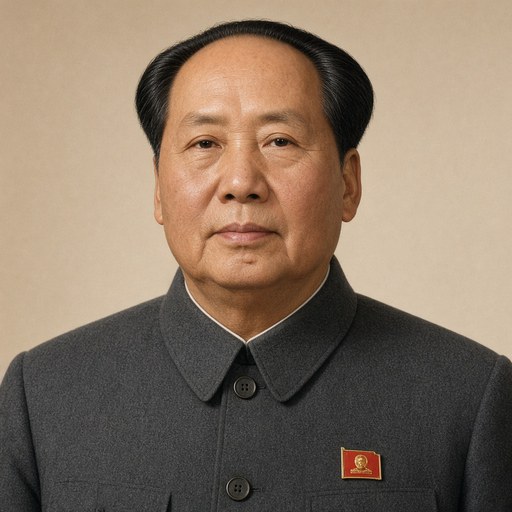
Speech at the Wuchang Conference
 Mao Zedong · Chairman of the Central Committee of the Communist Party of China
- Context
- Mao addressed Party leaders at the Wuchang Conference on November 21 and 23, 1958, urging caution on the transition to communism, a lower 1959 steel target of 18 million tons, and consolidation of the people's communes.
- Main themes
- Timing of the transition to communism, Soviet Union entering communism before China, 1959 steel target of 18 million tons, planned and proportionate development, fake reporting of output, people's communes consolidation, elimination of classes, commodity production under socialism, water conservancy workload and deaths, breaking down superstition without breaking science
- Duration
- ~78 min
- Words
- 9,374
- Sentences
- 643
- Readability
- 68
- Grade
- 7.4
- Syntax
- 2.67
- Vocabulary
- 2.04
Translated from Chinese Source: GitHub qinglee/maoxuan (毛泽东选集) ↗
The broad sphere of national life a sentence belongs to. Every sentence has an Arena, so it is the denominator the other indices are read against.
Other643 sentences in 40 paragraphs
21 November 1958
If People Die, You Can't Cut Off My Head
I can't sleep; something is on my mind. Doubling output, as the first set of accounts. I will raise a few topics and ask everyone to study them. You are writing articles; I have some ideas of my own.
(1) The transition to communism: how do you see it? There are two methods. We may be able to go somewhat faster; it looks as though our mass line is a good method. With so many people, anything can be done. Khrushchev's report outline was printed in the People's Daily on 15 November; I hope you will read it. Read it carefully and discuss it. The article isn't long, and it reads well. They have already had forty-one years, and now he wants another seven years plus five, twelve years in all. Judging by his meaning, he is preparing for the transition, but he speaks only of preparation, not of the transition itself. He is very cautious. We Chinese, myself included, are probably rash fellows. Khrushchev is very cautious. He already has 55 million tons of steel and over 100 million tons of oil, and even so he is that cautious and still wants twelve years to prepare for the transition. They have their difficulties, and we have our strengths. Their bourgeois hierarchy is deeply rooted; the living standards of superiors and subordinates are worlds apart, like cat and mouse. We send cadres down; cadres from the Centre downward all take part in labour, and generals serve as ordinary soldiers. They lack this one thing, the mass line, that is, they lack politics. So they go relatively slowly. And there are several differences, between workers and peasants, between town and country, between mental and manual labour, which they have not set about eliminating. But they are cautious. Before the people of the whole world, and speaking of the socialist camp as a whole, my idea is that the Soviet Union must make the transition first (this is not an order), and that we must in any case make the transition after them, no matter how much steel we produce. Do you all think this is right? Perhaps we will have a bit more steel, because we have more people and we also have the mass line; in ten years we could produce several hundred million tons of steel. He doubles in seven years: 55 million tons doubled is 110 million tons, yet he speaks only of 91 million tons, leaving some leeway. Think it over: is this right?
As for revolution, in Marx's day it did not succeed; Lenin succeeded and accomplished the October Revolution. The Soviet Union has been at it for forty-one years already, and only after another twelve years will it make the transition. If it falls behind us, and they are already getting flustered now. They have no people's communes; they can't get going, and if we rush ahead of them, the Soviet Union loses face, and the proletariat of the whole world loses face too. What is to be done? I think we have to push them across; the situation is pressing, push them to make the transition faster; without this kind of situation it won't work. You go across in the first half of the year, I go across in the second half; you go across and I go across too, at most three years later than them, but we must definitely let them go first. Otherwise it is bad for the world proletariat, bad for the Soviet Union, and bad for us too. In the present domestic situation, we have at least several hundred thousand, up to a million, cadres who want to get there first; they all want to go as fast as possible, and they pay too little attention to the overall picture. They see only several hundred million people and fail to see 2.7 billion. We are only a part (600 million people); the whole world is the whole. Is there such a problem or not? Should it be considered or not? This question involves a whole series of issues: our way of thinking, drawing up plans, learning from and respecting the Soviet Union, removing estrangement. Their economic foundation is better than ours; our political foundation, in turn, is better than theirs. They have 200 million people, 55 million tons of copper, 100 million tons of oil, technology that advanced, millions of technical personnel, the whole population educated to middle-school level. Their capital is large; America can't compare with them.
We are now a family come down in the world, "poor and blank", and also poor and weak. As for our poverty, the average income per head nationwide is under 80 yuan, probably between 60 and 80 yuan; workers nationwide average 60 yuan a month (including dependants). How much do peasants actually have? Henan says 74 yuan; is it that much? Workers are paid by the month, peasants by the year. Over 500 million people with an average annual income of under 80 yuan: desperately poor. When we say we are strong and great, there is still no basis for it. We are bragging far too much now; it doesn't accord with the facts. I think it doesn't reflect objective reality. The Soviet Union has had forty-one years; we have had only nine. We have no experience in building socialism. I think that in making the transition to communism we must let the Soviet Union go first and go after them. Is this opportunism? They will have only 100 million tons of steel in twelve years, and we can't go first either, there are reasons for that too. In ten years we will have 400 million tons of steel, 1.6 million machine tools, 2.5 billion tons of coal, 300 million tons of oil. Our country has the "number one field under heaven"; by that time, there will be the number one country under heaven on this earth. Whether we can achieve it is another question. About the material from the Zhengzhou Conference, I am both pleased and doubtful. Is producing 400 million tons of steel a good thing? Producing 4 billion tons would be even better. The question is: is there a need? Is it possible? As of the statistics up to 17 November this year, we have produced only 8.9 million tons of steel, and 60 million people have already been mobilised. How many people would you need, do you suppose, to produce 400 million tons? Of course conditions differ: Anshan Steel now has 100,000 people and produced 4 million tons. It is better to let the Soviet Union go first, so as to avoid putting ourselves in the limelight. I am worried that our construction has a bit of the white poplar about it; there is a kind of tower poplar that grows very fast but isn't sturdy. Shooting up too fast, out of balance, could throw everything under heaven into great chaos. I keep worrying: whatever about the line being correct or not, if everything under heaven is in great chaos, are you still going to say you're correct?
(2) Planned and proportionate development: if iron and steel go up, does everything go up? The sixty-four rare metals all need to be in proportion. What is meant by proportion? Right now none of us knows what proportion means. I certainly don't; you may be a bit cleverer. What planned and proportionate development is, we have to grope our way towards slowly. Engels said we must understand objective laws, master them, and apply them skilfully. I think Stalin's understanding was incomplete, his application was inflexible, and as for skilful application, that was even worse. He wasn't quite correct about industry and agriculture, or light and heavy industry. Heavy industry was too heavy, the long leg; agriculture was the short leg, an Iron-Crutch Li. Now Khrushchev shows signs of walking on two legs. We have now groped our way to a bit of proportion: walking on two legs, the three simultaneous developments, heavy industry, light industry and agriculture. Following the three simultaneous developments is walking on two legs; there are several proportions. Large, medium and small is also a proportion; things in the world always come in large, medium and small. I have read the twelve reports now; most are well written, and some are especially good. Combining colloquial language with scientific terminology is also a combination of the native and the foreign. In the past I often said that articles on economic science were badly written: you yourself could understand them, others couldn't. I hope everyone will read them all once. We have so many days; if each person reads one at a time, they're easy to get through. It seems we have a bit of proportion. The three simultaneous developments have a key point, with heavy industry as the key link, but truly mastering objective laws and applying them skilfully still poses problems.
We have shortcomings too. The Beidaihe Conference spoke of three or four years, or five or six years, or a little longer, to achieve ownership by the whole people. Fortunately, the transition to communism still has five conditions: 1. an extreme abundance of products; 2. a rise in communist ideological consciousness and morality; 3. the spread and raising of culture and education; 4. the elimination of the three differences and of the remnants of bourgeois rights; 5. the gradual withering away of the state's functions other than its external functions. As for the three differences and the elimination of bourgeois rights, it can't be done without ten or twenty years. I'm not in a hurry; it's the young people who are in a hurry. If the three conditions are not complete, it's merely socialism, nothing more. Please everyone think about this question. This doesn't mean we should dawdle. "More, faster, better, more economically" is something objective; go fast where you can go fast, but don't force it. The Tu-104 aircraft flies at over ten thousand metres; our planes fly at only a few thousand metres. Old Ke travels by train, even slower, and walking is slower still. Speed is an objective law. This year's grain at 900 billion jin, I don't believe it. 740 billion jin, a doubling, is possible, and I would be very satisfied with that. I don't believe in 800 billion jin, 900 billion jin, a trillion jin.
As for this question of the forty articles, if it gets out it will be very bad. You're going for so much, and how much is the Soviet Union going for? This is called chasing an empty reputation and suffering real calamity. You won't even get the empty reputation; nobody will believe it; they'll say the Chinese are bragging. As for suffering real calamity, the Americans might drop atomic bombs and throw you into chaos. Of course, not necessarily. In future, one, it won't be possible; two, it won't be needed. Wouldn't that be the same as bringing ourselves down? I think we'd better be a bit cautious. Some people collude with foreign countries; if they go and report to an embassy, the Soviet Union will be the first to get a fright. What then? A bit more grain doesn't matter, but ten thousand jin per person isn't good either. It would become a disaster; it would just mean not farming for three years. Eat it all up and then plant again. I've heard that some girls say they won't marry unless yields reach 80,000 jin per mu. I think they want to stay single and are using this as a shield. According to Boda's investigation, they still want to get married. 80,000 jin is impossible. That is the second question. What exactly is best? Let it sit for two or three years before deciding; either way, it does no harm. We said before that we wouldn't do long-range plans, since we're not sure of them, only annual plans; but it is still necessary for a few people to have a figure in their heads. For the forty-article programme there are two approaches. One is to deliberate on it seriously and discuss and adopt it as a draft at the plenum. The other is not to discuss it at all, not to adopt it, just to give an explanation, stating that the figures from the Zhengzhou Conference are not certain but have a positive significance.
(3) The tasks of this meeting. One is the people's communes. One is the arrangement of next year's plan (especially the arrangement for the first quarter). Of course we can also do some other things, such as the "two decentralisations, three unifications, one contract" in finance and trade work, and so on.
(4) The question of drawing the line. Should a line be drawn? How should it be drawn? The Zhengzhou Conference had five criteria. Shanxi has objections. The completion of socialism finds its concentrated expression in ownership by the whole people; this is inconsistent with what Stalin announced in 1936. What does completing ownership by the whole people mean? What does completing the building of socialism mean? In his two reports of 1936 and 1938 (the former the report on the Constitution, the latter the report to the Eighteenth Congress), Stalin put forward two markers: one, the elimination of classes; the other, industry already accounting for 70 per cent. But the Soviet Union went on for twenty years, and now Khrushchev adds another twelve years, which means thirty-two years before the transition can be made, and only then can collective ownership and ownership by the whole people be merged into one. On this question we won't do as they did. We speak of five criteria. We don't say that industry accounting for 70 per cent counts as completion. By this year we've had nine years; another ten years makes nineteen years in all. Counting from 1921, by 1938 the Soviet Union had had eighteen years in all and had only 18 million tons of steel. By 1968 we too will have had eighteen years; the time is about the same, and we will certainly have more. Next year we'll exceed 18 million tons of steel. For us, completing the building of socialism takes the merging of ownership into one as the criterion: everything under ownership by the whole people. Having completed ownership by the whole people is our first criterion. By this criterion, the Soviet Union hasn't completed the building of socialism. It still has two forms of ownership. That creates a problem. People all over the world will ask: has the Soviet Union still not completed the building of socialism? (Zeng Xisheng interjected: This point won't be made public.) Even if it isn't made public, it will get out. Another way is not to say it like this. As at the Beidaihe Conference, speak only of a few conditions and don't say when it will be completed; that may give us more initiative. The Beidaihe document had one shortcoming: the time frame was a bit too fast. It was influenced by Henan. I thought three or four years at least in the north and five or six years at most in the south, but it can't be done, it has to be changed. The Soviet standard of living is still higher than ours, and they haven't made the transition yet. A professor from Peking University went to have a look at Xushui and said, "A one-yuan communism? I'm damned if I'll go along with it." In Xushui wages are no more than two or three yuan. Ten years of the one-third system: allocating one third each year means one third is ownership by the whole people. Of course there is another third for accumulation, and there is still what the peasants consume themselves, so it's nearly ownership by the whole people. Right now we're eating the rice of poverty, all these public canteens. Right now it's just too fast: three or four years at least, five or six at most. I'm a bit alarmed; I'm afraid of making the mistake of adventurism.
(Liu Shaoqi: Once a consumption level of 150 to 200 yuan is reached, one batch can make the switch; later, switch in batches. That's advantageous. Otherwise, if we wait until it's even higher, there will be more difficulties in switching, which would actually be disadvantageous.)
(Peng Zhen: We carried out land reform, then big cooperatives, then communes. As soon as we reach 150 to 200 yuan per person, the transition can be made. If it's too much, as in Romania, where the peasants earn more than the workers, it becomes hard to switch. Keep the "three -izations" down, strike while the iron is hot; switching early is better than switching late. The transition can be made in three or four years.)
According to the views of Shaoqi and Peng Zhen, the transition is to be made by taking advantage of poverty. Making the transition while poor may be somewhat advantageous; otherwise, it will be hard to make the transition. In short, the line must be drawn; as to how to draw it, please discuss it among yourselves and work out several criteria, which must be higher than the Soviet Union's.
(5) The question of eliminating classes. The question of eliminating classes merits consideration. In the Soviet version, it was announced in 1936 that classes had been eliminated in sixteen years. We may manage it in sixteen years; this year is nine, leaving seven, but don't commit to it. Eliminating classes is of two kinds. One is classes as economic exploiters, which are easy to eliminate; now we can say they have already been eliminated. The other is classes in a political and ideological sense (landlords, rich peasants, the bourgeoisie, including their intellectuals), which are not easy to eliminate and have not yet been eliminated; we only discovered this in last year's rectification. In a comment I wrote in 1956, there was one sentence saying, "The socialist revolution is basically complete; the question of ownership has basically been resolved." Looking at it now, that was inappropriate. Afterwards the Zhang-Luo alliance popped up. Landlords in the countryside liked reading Wenhui Bao; as soon as Wenhui Bao arrived, they spread rumours. "Landlords, rich peasants, counter-revolutionaries and bad elements" seized the opportunity to rise up. That's why the Qingdao meeting began arresting and began killing. Hunan struggled against 100,000, arrested 10,000 and killed 1,000; the other provinces were the same, and the problem was solved. Those landlords, rich peasants, counter-revolutionaries and bad elements do not exploit economically, but as a class in the political and ideological sense, landlords and bourgeoisie of the Zhang Bojun crowd still exist. When the people's communes were set up, intellectuals and professors were the most concerned of all, living in a constant state of anxiety. In Beijing there was a woman professor who, in the middle of the night, had a dream: the people's commune was established and her child went into a nursery. She cried her heart out, and only when she woke up did she realise it was a dream. That's no simple matter.
Stalin announced the elimination of classes in 1936; why then were so many people killed in 1937, with spies everywhere? I think it's best to leave this question of eliminating classes hanging and not rush to announce it. When exactly would it be advantageous to announce the elimination of classes? If we announce they've been eliminated, so that landlords are all peasants and capitalists are all workers, is that advantageous or not? The bourgeoisie are allowed to join the people's communes, but they must still wear the bourgeois label, and fixed interest won't be abolished. In view of Stalin announcing too early, we shouldn't rush to announce the elimination of classes; we can only announce it once there's basically no harm left, I'm afraid. Among Soviet intellectuals, have classes been eliminated so cleanly? Not necessarily, I think. Recently a Soviet writer wrote a novel that caused a small anti-Soviet movement around the world; the Hong Kong papers trumpeted it, and Eisenhower said, "If this writer comes, I'll receive him." There are still bourgeois among their writers, and so many university graduates still believe in religion and become priests. I'm afraid they had no experience before; we have experience, and should be a bit more cautious.
(6) Questions of economic theory. Should we have commodities or not? What does the scope of commodities include? At Zhengzhou it was limited to means of subsistence, plus some of the communes' means of production. This is Stalin's view; Stalin advocated not selling means of production to the collective farms. Our country has also declared the land state-owned. The machinery for mechanisation they make themselves; what the peasants can't make, we supply. There's news now that the third edition of the Soviet political economy textbook has expanded the scope of commodities: not only means of subsistence but also means of production. This question can be studied. There's one point in Stalin that doesn't make sense: agricultural products are commodities, industrial products are non-commodities; one a commodity, one a non-commodity (the products of state industry), and the two are exchanged (cloth exchanged for collective-farm grain). How can that make sense? I think the present formulation is better: means of production. In the final analysis, means of production are for making means of subsistence (including clothing, food, housing and transport, culture and entertainment, the erhu and flutes for opera singers, the "four treasures of the study", and so on). For a time, people seemed to think the fewer commodities the better, and the shorter the period the better, even doing away with them in two or three years. That is problematic. I think it's better to keep commodities for longer; if not a hundred years, then thirty years, or fifteen years at the very least. What harm does this do? The question is what harm it does, whether it obstructs economic development. Of course, there will be a period when it does obstruct the development of production. Therefore, what's written about commodities in the forty articles is inappropriate; it still follows what Stalin wrote, and Stalin didn't get clear the relationship between means of subsistence produced by state enterprises and means of subsistence produced by collective farms. Please discuss this, it's the third edition of the political economy; nothing else has been greatly changed. So Stalin's things can only be partly overturned, not entirely thrown out, because he is science; overturning him entirely is no good. Who was the first to write a socialist political economy? It was still Stalin. Of course that book has some shortcomings and errors in it, for example the third letter: in order to keep the peasants on a leash, machines weren't sold to the collective farms. It was written down that they have the right of use but no right of ownership. This is distrust of the peasants. We give them to the cooperatives.
I asked Comrade Yudin: the collective farms have trucks, small factories, work implements; why not give them tractors? People like us, myself included, in the past paid no attention to any socialist political economy and didn't read the books. Now hundreds of thousands of people across the country are arguing back and forth: ten people, ten views; a hundred people, a hundred views. We still have to read books. Those who haven't read them should read them, and those who have should read them again. We should also read the political economy textbook. Have you read it? Everyone will be issued a set of the textbook. Read the socialist part first. Didn't we want to discuss principles?
(7) Will this pour cold water? We want people to eat their fill and sleep well, especially when they are going all out, fighting hard for several days and nights, and getting the job done. Except in special cases, they must still get some sleep. Now we need to lighten the tasks. For water conservancy, last winter and this spring the whole country moved 50 billion cubic metres of earth and stone, and this winter and next spring the whole country is to move 190 billion cubic metres, more than three times as much. On top of that there are all sorts of tasks: iron and steel, copper, aluminium, coal, transport, processing industries, chemical industry, all needing a great many people. Going about it this way, I think, China will inevitably have half its people die; if not half, then a third or a tenth, 50 million dead. People died in Guangxi; wasn't Chen Manyuan dismissed? If 50 million die, even if you aren't dismissed, at the very least I should be dismissed, and my head would be in question too. Anhui wants to do that much. You can do more, but on the principle of not letting people die. More than 190 billion cubic metres of earth and stone is too much after all. Discuss it among yourselves. If you insist on doing it, there's nothing I can do, but if people die, you can't cut off my head. Add a bit more than last year, do 60 or 70 billion, not too much. There's an item on this in the document; I hope you'll discuss it. Besides that, if there are other tasks that are really crushing people so they can't breathe, you can also consider lightening them. Tasks must be increased, but not by too much. We must consider things from the opposite side too. Doubling is fine; increasing dozens of times over requires consideration. 30 million tons of steel: do we really need that much? Can we achieve it? How many people need to be mobilised? Will people die? Even though you say you'll build up key points (steel, coal), how many months will it take to get them done? Hebei says half a year, and that has to include ironmaking, coal, transport, steel rolling and so on. This needs discussing. This year has had two sides. China has had several lots of 60 million people, and several million tons of native iron and native steel, of which only 40 per cent is good. Should we honestly just double next year? This year 10.7 million tons, next year 21.4 million tons. Do 10,000 tons more: next year produce 21.41 million tons. I still think we should be a bit steadier. Water conservancy stays at 50 billion cubic metres of earth and stone, not doubled at all. Do that for ten years and won't it be 500 billion? I say leave a bit for our sons to do; how could we finish everything ourselves?
In addition, there is the arrangement of all the various kinds of work: coal, electricity, chemicals, forestry, building materials, textiles, papermaking. At this meeting we should sing in a low key and compress the atmosphere a bit. Do the first half of next year; if we have strength to spare and things go smoothly, then we can get a bit ambitious again and add a bit more on 1 July. Don't be like playing the huqin at an opera, with the string drawn so tight it's in danger of snapping. This may have a bit of a cold-water flavour. Cadres down below running communes won't want to hear some of it; at most they'll curse us as right-deviationist. Don't be afraid; brace yourselves and let those below curse. Doubling: since Pangu split heaven and earth, the whole world has never seen it. What right deviation is there in that?!
How high should the agricultural targets be? The Beidaihe Conference material still needs discussing. You call it right opportunism? I'm doubling, aren't I! Machine tools: 80,000 units, next year increased sixteenfold to 320,000 units. Are we really that formidable? At the time of the Beidaihe Conference we still had no experience in running industry. After two months, steel and transport are jammed solid everywhere; now we have a fair amount of experience. It's always best to have a real possibility. There are two kinds of real possibility: one is realistic possibility, the other is unrealistic possibility. For example, making satellites now is unrealistic, but in future it may become realistic. There are two kinds of possibility, aren't there? (Turning to Comrade Chen Boda.) Comrade Boda! A possibility that can be transformed into reality is a realistic possibility; the other kind is a possibility that can't be transformed into reality, like the dogmatism of the past that claimed to be one hundred per cent correct. Didn't we lose all our territory? I think "not marrying unless yields reach 80,000 jin per mu" is also an unrealistic possibility.
(8) The people's communes must be consolidated for four months: December, January, February, March. We should set up an inspection team of ten thousand people, mainly to see whether people sleep eight hours a day; if they sleep only seven hours, they've failed to fulfil the task. I have never fulfilled the task; you can inspect me too and put up big-character posters. How are the canteens? There should be a set of regulations. The people's communes need discussing; we should draw up a directive. Can they be consolidated in four months? Is that too little? Six months are needed. According to Hubei now, 7 or 8 per cent of the communes are doing relatively well. I'm a sceptic. I think if one commune in ten is truly done well, that counts as success. Provincial (municipal) and prefectural committees should concentrate their efforts on helping one commune get it right, over four months; by then we must set up the ten-thousand-strong inspection team, otherwise there's a danger of the country perishing. Dulles and Chiang Kai-shek both curse us for setting up the people's communes. They both say: if you don't set up communes, you won't perish; if you do, you'll perish. I don't think you can say there's not a grain of truth in that. There are always two possibilities: one, perishing; the other, not perishing. Of course, if we perish, we'll rise again; it would be a temporary perishing. The canteens could perish, the nurseries could perish too. There's a canteen in Gucheng County, Hubei Province, that's exactly like that. A batch of nurseries will certainly perish; as soon as a few children die, the parents will definitely take theirs back home. In Henan there was a Home of Happiness where 30 per cent died and the rest all ran away. I'd run away too. How could it not collapse? Since nurseries and Homes of Happiness can collapse, can't the people's communes collapse? I think everything has two possibilities: collapse and not collapse. Cooperatives collapsed before, in Henan and in Zhejiang. I just don't believe that in a province as big as your Sichuan not a single cooperative collapsed. It's simply that it wasn't reported.
I'm raising questions. Putting the topics forward for discussion is the better way. Every comrade can raise questions. These days, these questions are in my head, always like fifteen buckets drawing water, seven up and eight down: which method is actually better? For instance, for steel, is it better to have 30 million tons or 21.4 million tons?
This meeting is a meeting to sum up this year. It's already December, after all. Arrange next year, mainly the first quarter.
23 November 1958
Spanking My Backside Has Nothing to Do With You
(1) Starting with writing articles. Comrades from twelve central ministries have written twelve reports; these need to be discussed and somewhat revised. The articles are well written; I was very pleased reading them. The line is still the same line, the spirit is still the same spirit; it's just that the targets proposed and their grounds need to be studied in earnest. Some of the targets put forward in the reports have insufficient grounds; they speak only of possibility and not of grounds. Each ministry needs to supply the grounds. For instance, they say reaching 400 million tons of steel in ten years is possible, but why it is possible isn't adequately explained. It needs to be made more solid. All members of the Central Committee should read them, and they can also be sent to the Party secretaries and directors of the eighteen key enterprises, so they all read them and gain an overall perspective. Some articles, once revised, could even be published in the newspapers so the people know; there's nothing secret about this. When I say compress the air, I don't mean reduce the air. Matter is indestructible; there's still as much air as before, it's just compressed a bit, into a liquid or solid state.
Reports must have adequate grounds. They should be made clearer, explaining when the hurdles can be cleared. For instance, the equipment at both ends of iron and steel, mining and rolling, hasn't cleared the hurdle. When exactly can it clear it? Next March, April, May? Why can it clear it then? Give reasons and grounds. Or again, why can't machinery sets be completed, when exactly can they be completed, and on what grounds? Discuss it with the second-in-command. Or again, on what grounds can the modern furnaces take native iron, and when and by what means will this be resolved? And what is to be done about the shortage of electricity? We've now found a way out: building our own self-supplied power plants. Factories, mines, government offices, schools and army units all build their own power stations, making use of water, fire, wind and methane, which has solved quite a few problems. This is something the Northeast came up with. Are other places adopting the same method? How much can it solve?
Should we discuss the twelve reports for another two or three days before setting about revising them? Supplying the grounds mainly requires that they be truly reliable. Revise the targets again.
(2) On the question of comrades from the provincial, municipal and autonomous-region Party committees writing reports. Comrades from the central ministries have written twelve reports. You comrades from the provincial and municipal committees, it won't do for you not to write a single one; we need to put on some pressure. Would one each be all right? Nobody says a word. Pushing this time might push people to death. How about each person writing one for next time, five or six thousand characters, or seven or eight thousand, one-sided or comprehensive, either is fine, but the first secretary must do it personally; even if he doesn't write it himself, he must use his brain and his mouth, revising and patching. Were the central ministries' reports written personally by the ministers? The next meeting will be held on 1 February next year. Send these articles in before 25 January so they can be reviewed and printed and distributed at the meeting, where they can be discussed and revised. Each province should hold a Party congress to sum things up. Too many questions won't do; with a hundred questions nobody will read it. Get rid of ninety-nine and write about a few questions or one question, ten at the very most. There must be points that stand out. People have their various systems, and local work also has many systems; so some things can be left out, some should be touched on in a few strokes, and some should be emphasised.
(3) Let's talk about tomorrow evening's question. Taking steel as the key link to drive everything else, what's the best figure for the steel target (1959)? The Beidaihe Conference set it at 27 to 30 million tons, which was for discussion; this time we must decide. 27 million tons of steel, I'm in favour; 30 million tons, I'm in favour too; even more would be good too. The question is whether it can be done and whether there are grounds. The Beidaihe Conference didn't settle this question because it wasn't ripe. Last year 5.35 million tons, all good steel. This year doubled to 10.7 million tons, an adventurous plan, with the result that 60 million people were mobilised and everything else had to give way; things got very tense. In a county in Hubei, a batch of pigs was transported to the Xiangyang prefecture; they couldn't be moved on, so they were left and the people went away. Xiangyang has a lot of local produce and iron that can't be shipped out, and the industrial goods the peasants need can't be shipped in. The steel marshal itself can't walk. The experience of the two or three months since the Beidaihe Conference has been very useful to us. Setting next year at 27 to 30 million tons will be hard to achieve. Could we use another method and lower the target? I propose that next year we don't double twice but only double once. Are we sure of producing 22 million tons? The night before last, Fuchun, Yibo, Wang Heshou and Zhao Erlu had already gone to sleep; I dragged these comrades out from under their quilts to say that the question isn't whether we're sure of 30 million tons but whether we're sure of 18 million tons. Last night I chatted about it with several comrades from the large regions and the Centre: are we really sure of 18 million tons? The grounds we've got are insufficient.
The grounds given now still don't convince me. I've already taken the opportunist position and am struggling for it. Spanking my backside has nothing to do with you. At worst, in future we'll have another saddle shape. In the past everyone opposed my rash advance; today I'm here opposing other people's rash advance. From last night's talk, it seems we're sure of 18 million tons; this can be reached by effort, and it isn't called rash advance. Next year we want 18 million tons of good steel. This year, of 11 million tons of steel, only 8.5 million are good. Doubling 8.5 million tons is 17 million tons. 18 million tons is more than double. Is saying this opportunism? If you say I'm an opportunist, Marx will defend me and say I'm not an opportunist; it only counts when he says so. And I say it's a Great Leap Forward; if it isn't a Great Leap Forward, I won't accept it. 18 million tons: I still feel the grounds are insufficient. Quite a few hurdles haven't been cleared. When you revise your articles, you must show when each hurdle will be cleared: the ore-dressing hurdle, the ore-washing hurdle, the crushing hurdle, the coal-washing hurdle, the smelting hurdle, the transport hurdle, the quality hurdle. Some can only clear the hurdle next January or February, or March, April, May, June. Now some places already have no stocks for the next night (coal, iron, ore). Because of transport difficulties, some factories can't even get meals delivered at present. That's taking steel as an example; it's the same in other sectors too. When exactly can certain hurdles be cleared? If we aren't sure, we'll have to push it down further. 15 million tons would also do. If we're sure, 18 million tons; if we're surer, 22 million tons; surer still, 25 million tons; 30 million tons, I'm in favour of it all. The question is whether we're sure. Yesterday the comrades favoured 18 million tons, which means we're sure of it. Last year the Northeast had about 3.5 million tons; this year's original target was 6 million tons and it achieved 5 million. Next year it plans only 7.15 million tons, and says that with effort it could manage 8 million tons. If we're talking opportunism, I'd say he's the opportunist. But in the Soviet Union he'd be in favour, because this year it's only 5 million tons and next year [eight] million tons, an increase of 60 per cent, more than half again; that's half an opportunist. North China had only 600,000 tons last year, 1.5 million tons this year, and plans 4 million tons next year. This year's increase is 1.7 times; that's Marxism-Leninism. Increasing to 4 million tons next year is several Marxisms. Can you do it? Tell us your grounds: why produce so much next year? East China last year 220,000 tons, this year 1.2 million tons (1.6 million tons including bad steel), next year 4 million tons, an increase of more than double. Shanghai is a true proletarian: first, no coal; second, no iron; only fifty thousand people. Central China last year 170,000 tons, this year 500,000 tons, next year 2 million tons, an increase of three times. This fellow originally had great boldness and planned to produce 3 million tons. As long as everyone makes an effort, (if they can) clear those hurdles, it can succeed; nobody objects, and we'll even hold a celebration meeting. Southwest last year 200,000 tons, this year 700,000 tons, next year 2 million tons, an increase of double. Northwest last year only 14,000 tons, a bit less than Chiang Kai-shek (his iron and steel output); this year 50,000 tons, surpassing Chiang Kai-shek; next year 700,000 tons, an increase of thirteen times. Is there any opportunism in that? South China last year 2,000 tons, this year 60,000 tons, an increase of thirty times. The further south you go, the higher the Marxism. Next year 600,000 tons, a tenfold increase.
These figures still need verifying; each must have grounds. Please, Comrade Fuchun, verify them: how much this year, how much next year, not just blurting something out. Citing these figures just shows that this isn't opportunism, and there's no danger of being expelled from the Party. Adding up all the regions, next year comes to 21.3 million tons. The question is whether it can really be done. We need a lot of safety margins. 18 million tons as the first set of accounts, adopted at the People's Congress, and we'll truly struggle for it, but we must also be mentally prepared: if we can only produce 15 million tons of good steel, plus another 3 million tons of native steel, I'll be satisfied. That way my burden is lifted. If we can't fulfil it, I've got native steel. The Soviet Metallurgy Gazette praised our "small, native, mass" method highly. It said some of the steel may be poor in quality but very useful, it can be made into farm tools. Thinking about it that way, my heart feels lighter.
First set of accounts, 18 million tons; second set of accounts, 22 million tons. Taking this as an example, every sector's targets must be reduced accordingly. For instance, electricity generation: with small, native, mass methods you can generate for your own use, coercion and commandism. For what has already been done, adopt He Yingqin's method of not paying wages. Or railways: the original plan was only 20,000 kilometres in five years, and now 20,000 kilometres are being done in a few years. It's needed, yes, but can that much be done? The Chengdu Conference said 20,000 kilometres in five years; now in 1958 alone 20,000 kilometres have been done. Lü Zhengcao's report was very bold, and I was very pleased; the question is whether it can be done, whether we're sure of it. Find the grounds. What other methods are there? There are contradictions. Lü Zhengcao, you've really got your thinking straightened out. The Centre can boast big, while the burden falls on the localities. For instance, in Hubei in the first quarter the localities want 80,000 tons of rolled steel, Wuhan Steel wants 75,000 tons, 655,000 tons, but the Centre only gives 70,000 tons, so those projects can't be built. If you don't give them rice, even the cleverest housewife can't cook without rice. Disaster victims have all sorts of ways of resisting us. For instance, at district level, to fill in reporting forms, they specially appoint a false reporter whose job is to fill in the forms, because the higher-ups insist on reports, and reporting too little doesn't look good. It gets reported all the way up, the higher-ups take it as true, and in reality there's nothing at all. I see quite a few problems like this now. Do we really have 8.5 million tons of good steel this year? Is it really there or just reported? Isn't any of it false? If it can't be transferred up, there's falsity. I think in reality there isn't that much.
(4) The question of faking. The first draft of the Resolution on Certain Questions Concerning the People's Communes put forward at the Zhengzhou Conference is now to be made into a directive. The question of faking should have a point of its own; don't write it together with working methods, otherwise people won't pay attention. Now everyone is set on launching "satellites" and competing for honours, so they fake. One commune had only 100 pigs of its own; to cope with visitors, it borrowed 200 big pigs and returned them after the visit. If you have 100, you have 100; if you don't have any, you don't. What's the point of faking? In the past, when we fought wars and issued victory bulletins, saying how many prisoners were taken and how much was captured, the same thing happened: exaggerating battle results to boost morale. Ordinary people read it and felt good; the enemy read it and laughed. You can't deceive them. Later we opposed doing this, issued repeated orders and instructions, educated people many times to be honest, and only then did people not dare to fake. Actually, is everyone really that honest? People are not of one mind; I think there's still a bit of falsity. Some people in the world just aren't that honest. I suggest talking in earnest with county Party secretaries and commune Party secretaries: be honest, don't fake. If something doesn't work, let people curse you; losing face doesn't matter. Don't go chasing vanity. For instance, eliminating illiteracy: saying it'll be wiped out in half a year or a year, I don't really believe that. If it's wiped out during the Second Five-Year Plan, that'll be pretty good. Afforestation: afforested every year, never afforested any year; the more we afforest, the fewer trees we see. They say the four pests have been eliminated, it's a "four-withouts" village, when in fact it's a "four-withs" village. Whatever task is set from above, they always say it's been fulfilled; if it hasn't been fulfilled, they fake it. The serious problem now is that not only do those below fake, but we believe it. From the Centre, the province and the prefecture down to the county, all believe it, mainly the first three levels. That's dangerous. If we disbelieved everything, that would become opportunism. The masses really have achieved results; why obliterate the masses' achievements? But believing fakery is also a mistake. For instance, with 11 million tons of steel, if you say there isn't even 10,000 tons, of course that's wrong, but is there really that much? Or grain again: how much is there really? Last year 370 billion jin. This year it was first said to be 900 billion jin, then pressed down to 750 to 800 billion jin. Is this reliable? I think doubling to 750 billion jin would be quite remarkable.
Hold evaluations and comparisons, and the result is faking; don't hold them, and there's no competition. We need to draw up rules for competitions, carry out inspections, set up acceptance committees, as with export goods; if it doesn't meet the specifications, it won't do. Economic undertakings must become ever more precise, ever more practical, ever more scientific. This is different from writing poetry; we must understand the difference between writing poetry and running the economy. "Lift up Chaohu Lake to use as a water ladle": that's poetry. I've never lifted one; probably you Anhui people have. How could Chaohu Lake be lifted up? Even after inspection, you still have to reckon there's falsity in it. Some fakes you can't find even if you check; people have held meetings and arranged everything in advance. I hope the three levels of the Centre, the province and the prefecture all understand this problem, keep a clear head, and apply a discount. Thirty-seventy: out of ten, take three as false; is that acceptable? Does this underestimate achievements and distrust cadres and masses? There should be some distrust. We should reckon on at least no less than one-tenth being false; some are one hundred per cent false. That's bad faking. Another kind is faking we can be glad of. For instance, concealing output: cadres want to report more, ordinary people want to conceal output; that's a contradiction. Concealing output has its benefits. In some places where too much was reported, the higher-ups requisitioned more and there wasn't much left for them; they got the short end. There's yet another kind of falsity that's well done, the kind that copes with subjectivism and coercion and commandism. A sent-down cadre from Zhongnanhai wrote a letter back saying that the commune he was in had ordered 300 mu of maize uprooted and replaced with sweet potatoes, with 1.5 million sweet potato plants per mu, when the maize had already grown as tall as a man. The masses thought it was a pity and only uprooted 30 mu, but reported that 300 mu had been uprooted. This kind of faking is good. Wang Renzhong said that in a place in Hebei, his home area, at Spring Festival everyone was made to water the wheat and not allowed to rest. What could the ordinary people do? They had no choice but to fake. At night they lit lanterns in the fields while actually resting at home; the cadres saw lanterns everywhere and thought nobody was resting. In a county in Hubei, the masses were made to fight hard day and night and not sleep at night. But the masses wanted to sleep, so they sent children to keep watch; when they saw cadres coming, everyone got up and put on a show, and when the cadres left, they went back to sleep. That's also good faking. In short, first, cadres must keep a clear head; second, they must be educated not to be deceived and not to resort to coercion and commandism. Otherwise, what will you do when people set up sentries? Now there's an atmosphere of talking only about achievements and not about shortcomings. Having shortcomings means losing face; telling the truth, nobody listens; faking, talking big, brings glory. Say the ox's tail grows behind its backside and nobody listens; say it grows on its head and that's news. We must carry out education, explain clearly, be honest; if this can be achieved within a few years, that's good. I think after some years, once things are on track, we can be more down-to-earth.
(5) Break down superstition, but don't break down science as if it were superstition. For instance, people have to eat; that's science and can't be broken down. Zhang Liang abstained from grain, but he ate meat. Now people aren't being allowed to eat freely; probably output has been over-reported. People have to sleep; that's science too. Animals always need rest; bacteria need rest too. The human heart beats seventy-two times a minute, over a hundred thousand times a day. First, eating; second, sleeping. Break down these two and things won't work; people will die. Besides that, quite a few other things are being broken down as superstition. When people press upon nature, applying the tools of production to the objects of production, nature, as the object, puts up resistance and reacts. That's a scientific truth. When a person walks on the ground, the ground pushes back; without that resistance, you can't walk. Grassland doesn't resist much, so it's hard to walk on. Mud paddy doesn't resist; you sink in and can't pull yourself out, so such fields need sand mixed in. Nature has resistance; that's a scientific truth. If you don't acknowledge it, it will do you to death. Since we began breaking down superstition, the effect has been tremendous: daring to think, dare to speak, dare to act. But a small part has gone too far in breaking things down and has broken scientific truth too, for instance doing away with sleep altogether and saying one hour of sleep is enough. The policy is to break down superstition, but science can't be broken down.
All superstition must be broken down; all truth must be protected. Bourgeois rights can only be partly broken down. For example, the three styles and five airs, excessively wide gaps in rank, the attitude of overlords, cat-and-mouse relationships: these must be broken down, and the more thoroughly the better. Another part, for example wage grades, relations between superiors and subordinates, a certain amount of state coercion, can't be broken down yet. Part of bourgeois rights is useful in the socialist era and must be protected and made to serve socialism. If we beat it until there isn't a whole patch of skin left on it, one day we'll find ourselves in a passive position, having to admit our mistake and apologise to the useful bourgeois rights. So there must be analysis, distinguishing which parts are useful and which must be broken down. Given that the Soviet Union didn't break down those bourgeois rights that should have been broken down, and its order has become quite rigid, we should break down what should be broken down and protect the useful part.
(6) As for the forty articles, it's better not to do them this time. There are no grounds for them now; they can't be properly discussed.
(7) Who enters communism first? Does the Soviet Union enter first or does our country? With us this has become a question. Khrushchev proposed that the twelve years are for preparing the conditions for entering communism. They are very cautious; on this question we should also be a bit more cautious. Some people say we'll enter communism in two or three years, three or four years, five or seven years. Is that possible? If anyone is to enter, Anshan Steel would enter first, Liaoning next (of their 24 million people, 8 million are in the cities), and not other provinces; after that, Old Ke and Shanghai. If even they have to wait for others and can't enter alone, then Xushui, Shouzhang and Fan County want to enter; wouldn't that be too fast? We sent Comrade Chen Boda to investigate, and he said it would be hard to enter. Now no prefecture or province says it will enter first; they want to be cautious. It's just some counties that are acting as vanguards. How much time will it take for the whole of China to enter communism? Right now nobody knows; it's hard to imagine. Ten years? Fifteen years? Twenty years? Thirty years? The Soviet Union has had forty-one years, add twelve more, fifty-three years in all, and they still say it's preparing the conditions. Is China that formidable? We've had only a few years and already we're getting ambitious. Is that possible or not? Considering the interests of the world proletariat, it's also better for the Soviet Union to enter first. Perhaps the Soviet Union will enter communism at the centenary of the Paris Commune (1971). What about us in twelve years? Perhaps it's possible; I think it isn't possible. Even if in ten years, by 1968, we're already prepared, we won't enter; at least wait two or three years after the Soviet Union enters before we enter, so that Lenin's party and the country of the October Revolution don't lose face. Being able to enter and not entering is also acceptable. Having all this capability and not announcing it, not putting it in the papers that we've entered communism: isn't that deliberate faking? That doesn't matter. Many people think China may enter first because we've found this road of the people's communes. In this there is an "it isn't possible", and there is also an "it shouldn't be". How do you enter on wages of one yuan? These questions can't be discussed publicly, but these ideological questions must be explained clearly within the Party.
The original Chinese. The tags above are read on the English translation's sentences.
一九五八年十一月二十一日
死了人不能杀我的头
睡不着觉,心里有事。翻一番,作为第一本账。出点题目,请大家研究。你们写文章,我有我的一些想法。
(一)过渡共产主义,你们看怎么样?有两种方法,我们可能搞得快一些,看起来我们的群众路线是好办法,这么多人,什么事都可以搞。赫鲁晓夫的报告提纲,登在十一月十五日的《人民日报》上,希望看一看。要详细看一下,讨论一下。文章不长,也好看。他已经四十一年了,现在想再七年加五年,共十二年,看他意思准备过渡,但只讲准备,并没有讲过渡,很谨慎。我们中国人,包括我在内,大概是冒失鬼,赫鲁晓夫很谨慎,他已有五千五百万吨钢,一亿多吨石油,他尚且那样谨慎,还要十二年准备过渡。他们有他们的困难,我们有我们的长处。他们资产阶级等级制度根深蒂固,上下级生活悬殊,像猫和老鼠。我们干部下放,从中央以下干部都参加劳动,将军当兵。他们缺乏群众路线这一条,即缺政治。所以搞得比较慢,还有几种差别,工农、城乡、脑力体力,没有去破除。但他们谨慎。我们在全世界人民面前,就整个社会主义阵营来说,我设想一定要苏联先过渡(不是命令),我们无论如何要后过渡,不管我们搞多少钢,这条大家看对不对?也许我们钢多一点,因为我们人多,还有群众路线,十年搞几亿钢。他七年翻一番,五千五百万吨翻一番,一亿一千万吨,只讲九千一百万吨,留有余地。想一想对不对?
因为革命,马克思那时没有成功,列宁成功了,完成了十月革命,苏联已经搞了四十一年,再搞十二年,才过渡,落在我们后头,现在已经发慌了。他们没有人民公社,他们搞不上去,我们抢上去,苏联脸上无光,整个全世界无产阶级脸上也无光。怎么办?我看要逼他过,形势逼人,逼他快些过渡,没有这种形势是不行的。你上半年过,我下半年过,你过我也过,最多比他迟三年,但是一定要让他先过。否则,对世界无产阶级不利,对苏联不利,对我们也不利。现在国内局势,我们至少有几十万、上百万干部想抢先,都想走得越快越好,对全局顾及不够。只看到几亿人口,没有看到二十七亿,我们只是一个局部(六亿人口),全世界是全局。是不是有这样一个问题?是不是要考虑?这个问题牵涉到我们的想法,作计划,对苏联的学习和尊重,去掉隔阂等一系列的问题。他们的经济底子比我们好,我们的政治底子又比他们好。他们两亿人口,五千五百万吨铜,一亿吨石油,技术那么高,成百万的技术人员,全国人民中学程度,它的本钱大,美国比不上他。
我们现在是破落户,一穷二白,还有一穷二弱。我们之穷,全国每人平均收入不到八十元,大概在六十到八十元之间,全国工人平均每月六十元(包括家属)。农民究竟有多少,河南讲七十四元,有那么多?工人是月薪,农民是年薪。五亿多人口,平均年薪不到八十元,穷得要命。我们说强大,还没有什么根据。现在我们吹得太大了,不合乎事实。我看没有反映客观事实。苏联四十一年,我们只有九年。我们搞社会主义建设没有经验,我看要过渡到共产主义,一定要让苏联先过,我们后过,这是不是机会主义,他是十二年只有一亿吨钢,我们也不能先过,也有理由,我们十年四亿吨钢,一百六十万台机器,二十五亿吨煤,三亿吨石油,我国有天下第一田,到那个时候,地球上有天下第一国。搞不搞得到是另一个问题。郑州会议的东西,我又高兴又怀疑,搞四亿吨钢好不好?搞四十亿吨更好。问题是有没有需要?有没有可能?今年到现在十一月十七日统计,只搞了八百九十万吨钢,已经有六千万人上阵,你说搞四亿吨要多少人?当然条件不同,鞍钢现有十万人,搞了四百万吨。让苏联先过,比较好,免得个人突出。我担心,我们的建没有点白杨树,有一种钻天扬,长得很快,就是不结实。钻的太快,不平衡,可能搞得天下大乱。我总是担心,什么路线正确不正确,到天下大乱,你还说你正确啊?
(二)有计划按比例,钢铁上去各方面都上去?六十四种稀有金属都要有比例。什么叫比例?现在我们谁也不知道什么叫比例,我是不知道,你们可能高明一点。什么是有计划按比例,要慢慢摸索。恩格斯说,要认识客观规律,掌握它,熟练地运用它。我看斯大林认识也不完全,运用也不灵活,至于熟练地运用就更差,对工、农,轻、重工业都不那么正确,重工业太重,是长腿,农业是短腿,是铁拐李。现在赫鲁晓夫人有两条腿走路之势。我们现在摸了一点比例,是两条腿走路,三个并举。重工业轻工业和农业。我们按三个并举,就是两条腿走路,几个比例,大中小也是个比例,世界上的事总有大中小的。现在十二个报告,我看了,大多数写得好,有些特别好。口语与科学名词结合也是土洋结合,过去我常说经济科学文章写得不好,你自己看得懂,别人看不懂,希望大家都看一遍。我们有这么多天,一个看一个就容易看完了,似乎我们有点按比例。三个并举,有个重点,重工业为纲,但真正掌握客观规律,熟练地运用它还有问题。
我们也有缺点。北戴河会议讲三、四年或五、六年或更多一点时间,搞成全民所有制,好在过渡到共产主义还有五个条件,1、产品极为丰富;2、共产主义思想觉悟道德的提高;3、文化教育的普及和提高;4、三种差别和资产阶级法权残余的消灭;5、国家除对外作用外其它作用逐渐消失。三个差别,资产阶级法权消灭没有一、二十年不行。我并不着急,还是青年人急,三个条件不完备,不过是社会主义而已,这个问题请大家想一想。这不是说我们要慢腾腾的,多快好省是客观的东西,能速则速,不能勉强。图104飞机高到一万多公尺,我们飞机只几千公尺,柯老坐火车更慢,走路更慢。速度是客观规律,今年粮食九千亿,我不信,七千四百亿翻了翻,是可能的,我就很满意了,我不相信八千亿斤,九千亿斤,一万亿斤。
四十条这个问题,如果传出去,很不好。你们搞那么多,而苏联搞多少?叫做务虚名而受实祸,虚名得也不到,谁也不相信,说中国人吹牛。说受实祸,美国人可能打原子弹,把你打乱。当然也不一定。将来一不可能,二不需要。这样岂不如自己垮台?我看还是谨慎一点。有些人里通外国,到大使馆一报,苏联首先会吓一跳,如何办?粮食多一点没关系,但每人一万斤也不好。要成灾的,无非是三年不种田。吃完了再种。听说有几个姑娘说,不搞亩产八万斤不结婚,我看她们是想独身主义的,把这个作挡箭牌。据伯达调查,她们还是想结婚的,八万斤是不行的。这是第二个问题,究竟怎样好?摆他两三年再说,横竖不碍事,过去讲过不搞长远计划,没有把握,只搞年度计划,但在少数人头脑中有个数,还是必要的,四十条纲要要有两种办法,一是认真议一下,作为全会草案讨论通过。另一种方法是根本不讨论,不通过,只交待一下。说明郑州会议的数字没有把握,但有积极意义。
(三)这次会议的任务。一是人民公社。一是明年计划的安排(特别是第一季度的安排)。当然还可以搞点别的。如财贸工作的“两放、三统、一包”等等。
(四)划线问题。要不要划线?如何划法?郑州会议有五个标准。山西有意见。建成社会主义的集中表现为全民所有制,这与斯大林在一九三六年宣布的不一致。什么叫完成全民所有制?什么叫建成社会主义?斯大林在一九三六年、一九三八年两个报告(前者是宪法报告,后者是十八次代表大会报告)提出两个标志:一是消灭阶级,一是工业比重已占百分之七十。但苏联过了二十年,赫鲁晓夫又来个十二年,即经过三十二年才能过渡,到那时候集体所有制和全民所有制才能合一,在这个问题上我们不照他们的办。我们讲五个标准。不讲工业占百分之七十算建成。我们到今年是九年,再过十年共十九年。苏联从一九二一年算起,到一九三八年共十八年,只有一千八百万吨钢,我们到一九六八年也是十八年,时间差不多,肯定东西要多,我们明年就超过一千八百万吨钢,我们建成社会主义,是所有制合为一个标准,都是全民所有制,我们已完成全民所有制为第一标准,按此标准,苏联就没有建成社会主义。它还是两种所有制,这就发生了一个问题。全世界人民要问,苏联到现在还没有建成社会主义?(曾希圣插话。这条不公布。)不公开也会传出去。另外一个办法,是不这样讲。像北戴河会议一样,只讲几个条件,什么时候建成不说,可能主动一些,北戴河文件有个缺点,就是年限快了一点。是受到河南的影响.我以为北方少者三、四年,南方多者五、六年,但办不到,要改一下。苏联生活水平总比我们高,还未过渡,北京大学有个教授,到徐水一看,他说;“一块钱的共产主义,老子不干。”徐水发薪也不过二、三元。十年三三制,一年调拨三分之一,那就是三分之一的全民所有制.当然另有三分之一的积累,总还有农民自己消费的,所以也近乎全民所有制了,现在就是吃穷的饭,什么公共食堂,现在就是太快,少者三、四年,多者五、六年,我有点恐慌,怕犯什么冒险主义的错误。
(刘少奇:达到一百五十元到二百元的消费水平,就可以转一批,将来分批转,这样有利,否则,等到更高了,转起来困难多,反而不利。)
(彭真:我们搞了土改,就搞大合作,又搞公社,只要到每人一百五十元到二百元就可以过渡,太多了,如罗马尼亚那样,农民比工人收入多时,就不好转了,把三化压低,趁热打铁,早转比晚转好,三、四年即可过渡。)
按照少奇、彭真的意见,是趁穷之势来过渡,趁穷过渡可能有利些,不然就难过渡。总之,线是要划的,就是如何划,请你们讨论,搞几条标准,一定要高于苏联的。
(五)消灭阶级问题。消灭阶级问题,值得考虑。按苏联的说法,是一九三六年宣布的十六年消灭,我们十六年也许可能,今年九年,还有七年,但不要说死,消灭阶级有两种,一种是作为经济剥削的阶级容易消灭,现在我们可以说已消灭了,另一种是政治思想上的阶级(地主、富农、资产阶级,包括他们的知识分子),不容易消灭,还没有消灭,这是去年整风才发现的。我在一九五六年写的批语中有一条说,“社会主义革命基本完成,所有制问题基本解决”,现在看来不妥当了。后来冒出来一个章罗联盟,农村地主喜欢看《文汇报》,《文汇报》一到,就造谣了。“地、富、反、坏”乘机而起,所以青岛会议才开捉戒,开杀戒,湖南斗十万,捉一万,杀一千,别的省也一样,问题就解决了。那些地、富、反、坏经济上不剥削,但作为政治上、思想上的这个阶级,如章伯钧一起的地主、资产阶级还存在,搞人民公社,首先知识分子、教授最关心,惶惶不可终日。北京有个女教授。睡到半夜,作了一场梦,人民公社成立,孩子进了托儿所,大哭一场,醒来后才知道是一个梦,这不简单。
斯大林在一九三六年宣布消灭阶级,为什么一九三七年还杀了那么多人,特务如麻。我看消灭阶级这个问题让他吊着,不忙宣布为好。阶级消灭究竟何时宣布才有利,如宣布消灭了,地主都是农民,资本家都是工人,有利无利?资产阶级允许入人民公社,但资产阶级帽子还要戴,不取消定息。鉴于斯大林宣布早了,宣布阶级消灭不要忙,恐怕基本上没有害了,才能宣布。苏联的知识分子里面,阶级消灭的那样干净?我看不一定。最近苏联一个作家,写了一本小说。造成世界小反苏运动,香港报纸大肆宣传,艾森豪威尔说;“这个作家来了我接见。”他们作家中还有资产阶级,大学毕业生中还有那么人信宗教,当牧师。恐怕他们以前没有经验,我们有经验,谨慎一些。
(六)经济理论问题。究竟要不要商品。商品的范围包括哪些了在郑州只限于生活资料,加上一部分公社的生产资料,这是斯大林的说法,斯大林主张不把生产资料卖给集体农庄。我国还宣布土地国有。机械化的机器自己搞。农民作不了的,我们供应。现在有个消息,苏联政治经济学教科书第三版,把商品范围扩大了。不但是生活资料,而且包括生产资料,这个问题可以研究一下,斯大林有一点讲的不通,农产品是商品。工业品是非商品,一个商品,一个非商品(国营工业的产品),两者交换(布匹与农庄粮食交换)这怎么能讲的通呢?我看现在的讲法比较好,生产资料。归根结底,生产资料为了制造生活资料(包括衣食住行。文化娱乐,唱戏的二胡、笛子、文房四宝等等)。一个时期。仿佛认为商品越少越好,时间越短越好。甚至两三年就不要。是有问题的。我看商品时间搞久一点好,不要一百年,也要三十年,再少说得十五年。这有什么害处。问题看有什么害处,看他是否阻碍经济的发展。当然。有个时期是阻碍生产发展的。因此,四十条中商品写得不妥当,还是照斯大林的写的,而斯大林对于国营生产的生活资料和集体农庄生产的生活资料的关系没弄清楚,请大家议一下,是政治经济学第三版,其他没有大改。所以斯大林的东西只能推倒一部分,不能全部推掉。因为他是科学,全部推倒不好。谁人第一个写社会主义政治经济学?还是斯大林。当然那一本书其中有部分缺点和错误,例如第三封信。为抓农民辫子起见.机器不卖给农庄。写规定有使用之权,无所有权,这就是不信任农民,我们是给合作社。
我问过尤金同志,农庄有卡车,有小工厂,有工作机具,为什么不给拖拉机?我们这些人,包括我,过去不管什么社会主义政治经济学,不去看书。现在全国有几十万人议论纷纷,十人十说,百人百说,还要看书,没有看过的要看,看过的再看一遍,还要看政治经济学教科书,你们看了没有?教科书每人发一套。先看社会主义部分。不是要务虚吗?
(七)会不会泼冷水?要人家吃饱饭,睡好觉,特别人家正在鼓足干劲,苦战几昼夜,干出来了。除特殊外,还是要睡一点觉。现在要减轻任务。水利任务,去冬今春全国搞五百亿土石方。而今冬明春全国要搞一千九百亿土石方,多了三倍多。还要各种各样的任务,钢铁、铜、铝、煤炭、运输、加工工业、化学工业,需要人很多,这样一来,我看搞起来,中国非死一半人不可,不死一半也要死三分之一或者十分之一,死五千万人。广西死了人,陈漫远不是撤了吗,死五千万人你们的职不撤,至少我的职要撤,头也成问题。安徽要搞那么多,你搞多了也可以,但以不死人为原则。一千九百多亿土石方总是多了,你们议一下,你们一定要搞,我也没办法,但死了人不能杀我的头,要比去年再加一点,搞六、七百亿,不要太多。文件中有这么一项,希望你们讨论一下。此外,还有什么别的任务,实在压得透不过气来的,也可以考虑减轻些。任务不可不加,但也不可多加。要从反面考虑一下,翻一番可以,翻几十番,就要考虑。钢三千万吨,究竟要不要这么多?搞不搞得到?要多少人上阵?会不会死人?虽然你们说要搞基点(钢、煤),但要几个月才能搞成?河北说半年,这还要包括炼铁、煤炭、运输、轧钢等等。这要议一议。今年有两个侧面,中国有几个六千万人,几百万吨土铁,土钢,只有四成是好的。明年是不是老老实实翻一番?今年一千零七十万吨。明年二千一百四十万吨。多搞一万吨。明年要搞二千一百四十一万吨。我看还是稳一点。水利照五百亿土石方,一点也不翻。搞他十年,不就是五千亿了吗?我说还是留一点儿给儿子去做,我们还能都搞完哪?
此外,各项工作的安排,煤、电、化学、森林、建筑材料、纺织、造纸。这次会议要唱个低调,把空气压缩一下,明年搞个上半年,行有余力,情况顺利,那时还可起点野心,七月一日再加一点。不要像唱戏拉胡琴,弦拉得太紧了,有断弦的危险,这可能有一点泼冷水的味道,下面干部搞公社,有些听不进去,无非骂我们右倾,不要怕,硬着头皮让下面骂.翻一番。自从盘古开天地,全世界都没有,还有什么右倾呀!?
农业指标搞多少?北戴河会议的东西还要议一下,你说右倾机会主义,我翻一番吆!机床八万台,明年翻四番,搞三十二万合,有那么厉害?北戴河会议那时,我们对搞工业还没有经验。经过两个月,钢铁运输到处水泄不通,这就有相当的经验了。总是要有实际可能才好,有两种实际可能性,一种是现实的可能性,另一种是非现实的可能性,如现在造卫星就是非现实的,将来可能是落实的。可能性有两种,是不是?(转向陈伯达同志),伯达同志!,可能转化为现实的是现实的可能性,另一种是不能转化为现实的可能性,如过去的教条主义,说百分之百的正确。不是地方都丢了吗?我看非亩产八万斤不结婚,也是非现实的可能性。
(八)人民公社要整顿四个月,十二、一、二、三月要搞万人检查团,主要是看每天是否睡了八小时,如只睡七小时是未完成任务,我是从未完成任务的,你们也可以检查贴大字报,食堂如何,要有个章程,人民公社要议一下,搞个指示,四个月能不能整顿好?是不是要少了。要半年。现在据湖北说,有百分之七、八的公社搞得比较好了,我是怀疑派,我看十个公社,有一个真正搞好了的就算成功。省(市)地委集中力量去帮助搞好一个公社,时间四个月,到那时候要搞万人检查团,不然就有亡国的危险。杜勒斯,蒋介石都骂我们搞人民公社。都这样说,你们不搞公社不会亡。搞会亡,我看不能说他没有一点道理。总有两种可能性。一亡,一不亡。当然亡了会搞起来,是暂时的灭亡。食堂会亡,托儿所也会亡,湖北省谷城县有个食堂,就是如此。托儿所一定要亡掉一批,只要死了几个孩子,父母一定会带回的。河南有个幸福院死了百分之三十,其余的都跑了。我也会跑的,怎么不垮呢?既然托儿所、幸福院会垮,人民公社不会垮?我看什么事都有两种可能性:垮与不垮,合作社过去就垮过的,河南、浙江都垮过,我就不相信你四川那么大的一个省,一个社也没有垮?无非是没有报告而已。
我是提问题。把题目提出来,去讨论,那样为好,各个同志都可以提问题,这些时候,这些问题在我的脑子里,总是十五个吊桶打水七上八下,究竟那个方法好。如钢铁究竟是三千万吨还是二千一百四十万吨好?
这次会议是今年这一年的总结性会议。已十二月了嘛,安排明年,主要是第一季度。
一九五八年十一月二十三日
打我的屁股与你们无关
(一)从写文章谈起。中央十二个部的同志写了十二个报告,要议一议,作些修改。文章写得好,看了很高兴。路线还是那个路线,精神还是那个精神,就是所提指标和根据要切实研究一下。报告中提出的一些指标根据不充分,只讲可能,没有讲根据,各部需要补充根据。比如,讲十年达到四亿吨钢是可能的,为什么是可能的,就说得不充分。要搞得更扎实些。中央委员都要看一看,还可以发给十八个重点企业的党委书记、厂长,让他们都看一下,使他们有全局观点。有的文章修改以后甚至可以在报上发表,让人民知道,这没有什么秘密。我说要压缩空气,不是减少空气。物质不灭,空气还是那样多,只不过压缩一下而已,成为液体或者固体状态。
报告总要有充分根据。要再搞得清楚一些,说明什么时候可以过关。比如,钢铁的两头设备——采矿和轧钢没有过关,究竟什么时候可以过关?是否明年三月、四月、五月?为什么那时候可以过关?要说出个理由和根据。又比如,机械配套为什么配不起来,究竟什么时候配得起来,有什么根据?要与二把手商量一下。再比如,洋炉子可以吃土铁,有什么根据,什么时候、用什么办法解决?还有电力不足怎样办?现在找到了一条出路,就是自建自备电厂。工厂、矿山、机关、学校、部队都自己搞电站,水、火、风、沼气都利用起来,解决了不少问题。这是东北搞出来的名堂。各地是否采取同样办法?能解决多少?
是不是对十二个报告再议论两三天,然后再动手修改。补充根据主要要求切实可靠。把指标再修改一下。
(二)关于各省、市、自治区党委的同志写报告的问题。中央各部的同志写了十二个报告。各省市委的同志,你们一个也不写是不行的,要压一压。每人写一个是否可以?大家不言语。这次逼,可能逼死人。是不是下次每人写一篇。五、六千字或七、八千宇,片面性、全面性都可以,就是第一书记亲自动手,即使不动手,也要动脑、动口,修修补补。中央各部的报告是不是部长亲自动手写的啊?下次会,明年二月一日开,这些文章在一月二十五日前送到,以便审查,会上印发,在会场上可以讨论修改。各省要开党代会总结一下。问题太多了不行,搞一百个问题就没有人看了。去掉九十九个,写几个问题或一个问题,最多不超过十个问题。要有突出的地方。人有各个系统,地方工作也有许多系统,因此,有些可以不讲,有的要带几笔。有的要突出起来讲。
(三)谈一谈明天晚上的问题。以钢为纲带动一切,(一九五九年)钢的指标,究竟定多少为好?北戴河会议定为二千七百万吨至三千万吨,那是讨论性的;这次要决定,钢二千七百万吨,我赞成,三千万吨,我也赞成,更多也好,问题是办到办不到,有没有根据?北戴河会议没有确定这个问题。因为没有成熟,去年五百三十五万吨,都是好钢,今年翻一番,一千〇七十万吨,是冒险的计划,结果六千万人上阵,别的都让路;搞的很紧张。湖北有一个县,有一批猪运到襄阳专区,运不走放下就走,襄阳有很多土特产和铁运不出,农民需要的工业品运不进,钢帅自己也不能走路。北戴河会议后,两三个月来的经验,对我们很有用,明年定为二千七百万吨至三千万吨,难于办到。我们是不是可以用另外一种办法,把指标降低。我主张明年不翻二番,只翻一番,搞二千二百万吨有无把握?前天晚上,富春、一波、王鹤寿、赵尔陆他们已经睡着了,我从被窝里头把这几位同志拖起来,就是讲,不是什么三千万吨有无把握的问题,而是一千八百万吨有无把握的问题。昨天晚上,我跟大区和中央几个同志吹了一下,究竟一千八百万吨有无把握,我们所得到的根据不足。
现在说的那些根据,我还不能服,我已经是站在机会主义的立场,并为此奋斗,打我屁股与你们无关,无非是将来又搞个马鞍形,过去大家反我的冒进,今天我在这里反人家的冒进。昨晚谈的似乎一千八百万吨是有把握的,这努力可以达到,不叫冒进,明年要搞好钢一千八百万吨,今年一千一百万吨钢,只有八百五十万吨好的。八百五十万吨翻一番,是一千七百万吨。一千八百万吨翻一番还多,这样说是机会主义吗?你说我是机会主义,马克思会为我辩护的,会说我不是机会主义,要他说了才算数。还说我大跃进,不是大跃进我不服。一千八百万吨,我觉得还是根据不足,好些关未过,你们修改文章,要证明什么时候过什么关,选矿之关、洗矿之关、破碎之关、选煤之关、冶炼之关、运输之关、质量之关,有的明年一月二月或三月四月五月六月才能过关。现在有些地方已经无隔宿之粮(煤、铁、矿石),有些厂子因运输困难,目前搞得送不上饭,这是以钢为例,其他部门也都如此。有些关究竟何时能过,如果没有把握还得下压,一千五百万吨也可以,有把握即一千八百万吨,再有把握、二千二百万吨,再有把握二千五百万吨、三千万吨我都赞成,问题在于有无把握。昨天同志们赞成一千八百万吨,就是有把握的。东北去年是三百五十万吨左右,今年原定六百万吨,完成五百万吨。明年只准备搞七百一十五万吨,又说经过努力,可以搞八百万吨,我看要讲机会主义,他才是机会主义,可是在苏联,他是要得势的,因为今年只有五百万吨,明年百万吨,增加了百分之六十嘛,增加了半倍多,是半机会主义。华北去年只有六十万吨,今年一百五十万吨,明年打算四百万吨,今年增加一点七倍,这是马列主义,明年增加到四百万吨,这是几个马克思主义了,你办得了吗?你把根据讲出来,为什么明年搞这么多?华东去年二十二万吨。今年一百二十万吨(加上坏钢是一百六十万吨),明年四百万吨,增加二倍多,上海真正是无产阶级,一无煤,二无铁,只有五万人。华中去年十七万吨,今年五十万吨,明年二百万吨,增加三倍。此人原先气魄很大,打算搞三百万吨,只要大家努力,(如果能)过那些关,能成功,无人反对,并且开庆祝会。西南去年二十万吨,今年七十万吨,明年二百万吨,增加二倍。西北去年只有一万四千吨,比蒋介石(的钢铁产量)少一点,今年五万吨,超过蒋介石,明年七十万吨,增加了十三倍,这里头有机会主义吗?华南去年两千吨,今年六万吨,增加三十倍,马克思主义越到南方越高,明年六十万吨,增长十倍。
这些数字,还要核实一下,要各有根据,请富春同志核实一下,今年多少,明年多少,不是冒叫一声。说这些数字,无非说明并非机会主义,没有开除党籍的危险。各地合计,明年是二千一百三十万吨。问题是是否能确实办到,要搞许多保险系数,一千八百万吨作为第一本帐,在人民代表大会通过,确实为此奋斗,还要作思想准备,如果只能搞到一千五百万吨好钢,另外有三百万吨土钢,我也满意,如此,我的负担就解除了。完成不了,我有土钢。苏联《冶金报》很称赞我们“小土群”的办法,它说可能有些钢质量差,但很有用处,可作农具,这样一想,心里就开朗了。
第一本帐,一千八百万吨;第二本帐,二千二百万吨。以此为例,各部门的指标,都要相应地减下来,例如发电,搞小土群,可以自发自用,强迫命令。已搞的,要采取何应钦不发饷的办法。又如铁路,原定五年只搞二万公里,现在几年就搞二万公里,需要是需要,但能不能搞这样多?成都会议是五年二万公里,现在一九五八年就搞了两万公里,吕正操的报告气魄很大,我很高兴,问题是能不能办到,有没有把握,要找出根据,还有什么办法?有矛盾,吕正操你真是思想解决了,中央可以夸海口,担子则压在地方身上,例如湖北第一季度地方要钢材八万吨,武钢要七万五千吨,六十五万五千吨,而中央只给七万吨,所以那些项目是建不成的。不给米,巧妇难为无米之炊。灾民就有各种办法抵制我们。例如区上,为填表报,专设一个假报员,专门填写表报,因为上面一定要报,而且报少了不像样子,一路报上去,上面信以为真,实际根本没有,我看见现在不少这样的问题。今年究竟有没有八百五十万吨好钢?是真有还是报上来的?没有假的吗?调不上来就有虚假,我看实际没有这样多。
(四)作假问题。郑州会议提出的《关于人民公社若干问题的决议》初稿,现在要搞成指示,作假问题要专搞一条,不要同工作方法写在一起,否则人家不注意。现在横竖要放“卫星”,争名誉,就造假。有一个公社,自己只有一百头猪,为了应付参观,借来了二百头大猪,参观后又送回去。有一百头就是一百头,没有就是没有,搞假干什么?过去打仗发捷报,讲俘虏多少、缴获多少,也有这样的事,虚报战绩,以壮声势,老百姓看了舒服,敌人看了好笑,欺骗不了的。后来我们反对这样做,三令五申,多次教育,要老实,才不敢作假了。其实,就都那么老实吗?人心不齐,我看还是有点假的,世界上的人有的就不那么老实。建议跟县委书记、公社党委书记切实谈一下,要老老实实,不要作假。本来不行,就让人家骂,脸上无光,也不要紧。不要去争虚荣。比如扫盲,说什么半年、一年扫光,我就不太相信,第二个五年计划期间扫除了就不错。绿化,年年化,年年没有化,越化越见不到树。说消灭了四害,是“四无”村,实际上是“四有”村。上面规定的任务,他总说完成了,没有完成就造假。现在的严重问题是,不仅下面作假,而且我们相信,从中央、省、地到县都相信,主要是前三级相信,这就危险。如果样样都不相信,那就变成机会主义了。群众确实做出了成绩,为什么要抹煞群众的成绩,但相信作假也要犯错误。比如一千一百万吨钢,你说一万吨也没有,那当然不对了,但是真有那么多吗?又比如粮食,究竟有多少,去年三千七百亿斤,今年先说九千亿斤,后来又压到七千五百亿斤到八千亿斤,这是否靠得住?我看七千五百亿斤翻了一番,那就了不起。
搞评比,结果就造假;不评比,那就不竞赛了。要订个竞赛办法,要检验,要组织验收委员会,像出口物资那样,不合规格不行。经济事业要越搞越细密,越搞越实际越科学,这跟做诗不一样,要懂得做诗和办经济事业的区别。“端起巢湖当水瓢”,这是诗,我没有端过,大概你们安徽人端过。巢湖怎么端得起来?即使检查了,也还要估计到里头还有假。有些假的,你查也查不出来,人家开了会,事先都布置好了。希望中央、省、地这三级都懂得这个问题,有个清醒头脑,打个折扣。三七开,十分中打个三分假,可不可以?这样是否对成绩估计不足,对干部、群众不信任?要有一部分不信任,要估计到至少不少于一成的假,有的是百分之百的假。这是不好的造假。另一种是值得高兴的造假。比如瞒产,干部要多报,老百姓要瞒产,这是个矛盾。瞒产有好处,有些地方报多了,上面就调得多,留给它的就没有多少了,吃了亏。再有一种假,也是造得好的,是对付主观主义、强迫命令的。中南海有个下放干部写信回来说,他所在的那个公社规定要拔掉三百亩包谷,改种红薯,每亩红薯要种一百五十万株,而当时包谷已经长到人头那么高了,群众觉得可惜,只拔了三十亩,但上报说拔了三百亩。这种造假是好的。王任重说,他的家乡河北某地,过春节时,要大家浇麦子,不让休息,老百姓有什么办法,只得作假。夜间在地里点上灯笼,人实际上在家里休息,干部看见遍地灯光,以为大家没有休息。湖北有一个县,要群众日夜苦战,夜间不睡觉。但群众要睡觉,就派小孩子放哨,看见干部来了,大家起来哄弄哄弄,干部走了又睡觉。这也是好的造假。总之,一要干部有清醒头脑,一要对他们进行教育,不要受骗,不要强迫命令。不然,人家起来放哨怎么办?现在有种空气,只讲成绩,不讲缺点,有缺点就脸上无光,讲实话没有人听,造假,讲得多,有光彩。讲牛尾巴长在屁股后面,没有人听,讲长在头上,就是新闻了。要进行教育,讲清楚,要老老实实,几年之内能做到就好。我看经过若干年,上了轨道,就可以比较踏实。
(五)破除迷信,不要把科学当迷信破除了。比如,人是要吃饭的,这是科学,不能破除。张良辟谷,但他吃肉。现在,不放手让群众吃饭,大概是产量报多了。人是要睡觉的,这也是科学。动物总是要休息,细菌也要休息,人的心脏一分钟跳七十二次,一天跳十万多次。一要吃饭,二要睡觉,破除了这两条,就不好办事,就要死人。此外,还有不少的东西被当作迷信在那里破除。人去压迫自然界,拿生产工具作用于生产对象,自然界这个对象要作抵抗,反作用一下,这是一条科学。人在地上走路,地就有个反抗,如果没有抵抗,就不能走路。草地不大抵抗,就不好走路;拌泥田不抵抗,陷进去就拔不出来,这种田要掺沙土。自然界有抵抗力,这是一条科学。你不承认,它就要把你整死。破除迷信以来,效力极大,敢想敢说敢做,但有一小部分破得过分了,把科学真理也破了。比如说,连睡觉也不要了,说睡觉一小时就够了。方针是破除迷信,但科学是不能破的。
凡迷信一定要破除,凡真理一定要保护。资产阶级法权只能破除一部分,例如三风五气,等级过分悬殊,老爷态度,猫鼠关系,一定要破除,而且破得越彻底越好。另一部分,例如工资等级,上下级关系,国家一定的强制,还不能破除。资产阶级法权有一部分在社会主义时代是有用的,必须保护,使之为社会主义服务。把它打得体无完肤,会有一天我们要陷于被动,要承认错误,向有用的资产阶级法权道歉。因此要有分析,分清哪些有用,哪些要破除。鉴于苏联对于资产阶级法权应破者没有破,秩序相当凝固,我们应当应破者破,有用的部分保护。
(六)四十条,这次不搞为好,现在没有根据,不好议。
(七)谁先进入共产主义?苏联先进入还是我国先进入?在我们这里成了问题。赫鲁晓夫提出在十二年是准备进入共产主义的条件,他们很谨慎,我们在这个问题上也要谨慎一些。有人说,两三年,三四年,五年七年进入共产主义,是否可能?要进,鞍钢先进,辽宁后进,(他们二千四百万人中有八百万人在城市),而不是别省,再其次是柯老、上海。如果他们还要等待别人,不能单独进。那徐水、寿张、范县就要进,那不太快了吗?派了陈伯达同志去调查,说难于进,现在专区、省还没有人说先进,想谨慎,就是县有些打先锋的。整个中国进入共产主义,要多少时间,现在谁也不知道,难以设想。十年?十五年?二十年?三十年?苏联四十一年,再加上十二年,共五十三年,还说是准备条件,中国就那么厉害?我们还只有几年,就起野心,这可能不可能?从全世界无产阶级利益考虑,也是苏联先进为好,也许在巴黎公社百年纪念时(一九七一年)苏联进入共产主义,我们十二年怎么样?也许可能,我看不可能。即或十年到一九六八年我们已经准备好,也不进,至少等苏联进入二三年后再进,免得列宁的党、十月革命的国家脸上无光。本来可进而不进,也是可以的。有这么多本领,又不宣布,又不登报说进入共产主义,这不是有意作假吗?这不要紧。有许多人想:中国可能先进入,因为我们找到人民公社这条路。这里有个不可能,也有个不应该。一块钱工资怎么进入?这些问题不好公开讨论,但这些思想问题要在党内讲清楚。