




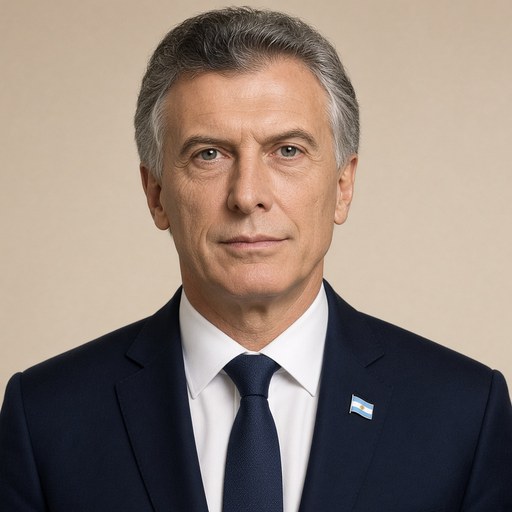
President Mauricio Macri announced changes to the Income Tax and Family Allowances.
 Mauricio Macri · President of Argentina
- Context
- Macri addressed governors, union leaders, and legislators on February 18, 2016, to announce increases to the income tax non-taxable minimum and expansion of family allowances.
- Main themes
- Income tax reform, non-taxable minimum increase, family allowances expansion, inflation and purchasing power, childhood and early education, poverty reduction, fiscal deficit, labor rights, intergovernmental cooperation, social justice for workers
- Duration
- ~11 min
- Words
- 1,290
- Sentences
- 38
- Readability
- 47
- Grade
- 15.2
- Syntax
- 3.40
- Vocabulary
- 1.96
Translated from Spanish
The broad sphere of national life a sentence belongs to. Every sentence has an Arena, so it is the denominator the other indices are read against.
Other38 sentences in 19 paragraphs
Good morning everyone. It is a great joy to be here this morning alongside the wonderful team that accompanies me and a group of the most important leaders in our country, I am referring to the dear governors, the dear union leaders, deputies, senators, and friends from the business community.
The joy is because we are here to announce something that relates to a long-standing demand from Argentinians, from workers; I am referring to something that also intersects with an issue that has been on the agenda in recent weeks, which are the effects that the perverse inflation has had on our community, and how it has affected, in this case, the Income Tax.
We all know that we are committed to reducing inflation as quickly as possible, because it seriously affects our capacity for growth, and it affects the purchasing power of our people. We have discussed this in many meetings we have had with you, union friends, in recent days, and also with the dear governors. But along that path, there has also been a demand over the years about why workers who historically did not pay Income Tax were now doing so, and it was because, in addition to a poorly managed government that robbed them through the Income Tax via prices, it was also charging them taxes without adjusting the non-taxable minimum.
That is why today I remember a letter that Cristina sent me a couple of years ago - a neonatologist, so there is no confusion - telling me that with great effort she had managed to graduate as a doctor and worked in a municipal hospital in Mendoza, and that the Income Tax, along with inflation, made it impossible for her to make ends meet. And I experienced this demand while traveling systematically across the country. I remember Claudia and Eduardo in Ayacucho, who welcomed me into their home, and told me that they worked tirelessly and could not have the peace of mind to care for their little son Andrés in his childhood and provide him with everything he needed for his growth.
That is why today I feel that we are taking a first step forward. We know that it is a step in fulfilling these promises to start generating justice, for things to be as they should be. And that is why today, thanking you all, and understanding that it is step by step, we are announcing the increase of the non-taxable minimum to 30,000 pesos, which is more than a 160 percent increase.
And I also want to share this effort we are making with our governor friends, because this is something, Mario, that we all pay for together, but we believe it is strict justice, it is thinking that someone who earned 21,300 pesos net will now earn 26,600 pesos net starting March 1, retroactive to January 1.
The second point, which is also very important, because not all workers are subject to the Income Tax, is to take care of them based, again, on this priority we have, which is childhood, to ensure that every child in this country has access to the best stimulation, better growth, better education. And for that, we have made the decision to expand and reach 1,200,000 children with new family allowances. And that more than 900,000 families who are currently in the second, third, and fourth categories will reach the first category.
We also believe that this brings us closer to this concern of caring for our population, of caring for our future, of achieving a direction towards zero poverty, which is what we want. And the central element in the work of fighting for an Argentina with zero poverty is to take care of our children, so that all of them truly have access to another part of our commitment, which is a kindergarten. Let us remember that we are committed to ensuring that the 638,000 children in this country who still do not have access to a three, four, or five-year-old classroom will have it within the next four years.
That means building 3,000 kindergartens, and that is why we want to be there alongside families, so that each of their children has what they need to achieve that level of training, of education, that guarantees them access to good jobs.
But beyond these measures we are taking today, aware of the moment we are living in, aware of the historically poor level of fiscal deficit with which we have received Argentina, we deeply trust in the learning we have had in these years, understanding what the path to growth is.
What I want to highlight today as something fundamental is that we are all gathered here, that we have understood that we are one team, that we have understood that regardless of which political party has called us, has allowed us to be exercising our position, today we all together must respond to Argentinians.
I want to insist again, dear governors, that having opened a joint work agenda stimulates me, commits me, makes me happy, and I feel that we have found that we have many more coincidences than differences, because we all want to build new opportunities and solutions for Argentinians.
Just like with our worker brothers, we have talked for many years when I was in the Head of Government - with some more intensely due to daily reality, others from the business era - that the path to dignity is work, that the path to progress is work, that we must recover that culture in our country.
We must understand again that what we need is a lot of effort, not sacrifice. Because effort is what dignifies us, it is what makes us feel part of something, it is what gives us a reason to be, it is what raises our self-esteem; knowing that we achieve things based on what we do and not sitting and waiting at home for someone to solve our problems, and always looking for someone to blame for what happens to us, internal or external blame, which we have already realized is not true.
We are the ones who will decide about our future, especially you who are the important leaders of this country. And to the extent that we act responsibly in the coming years, we will see the fruit and the result of that work.
I insist, we have months ahead where we must resolve historical problems, and we must tell the truth. We must try not to take short-term advantages thinking about an election that is many years away, in terms of what is the urgent agenda of Argentinians.
We must be united in understanding what the path is that puts Argentina back on the agenda of the 21st century. The world has opened its arms to us: you see the visits we are receiving, and those we will receive. Why? Because they also believe in us, they believe in our potential; they recognize us as a people with talent, with capacity, with creativity.
What must unite us now is the responsibility of knowing that each of these steps we are taking is to affirm our commitment to growth. I insist, and I know, thanking you for your flexibility, that many thought we should give more and do more, but these are stages, and I hope that in the National Congress we can deepen this path of dialogue and debate so that we continue to correct, to continue improving the instruments that give transparency and dynamism to the growth of our country.
Thank you very much for being here, and I hope that we continue in the future making decisions that improve the lives of Argentinians. Thank you.
The original Spanish. The tags above are read on the English translation's sentences.
Buenos días a todos. Una enorme alegría estar acá en esta mañana junto al maravilloso equipo que me acompaña y a un grupo de los dirigentes más importantes de nuestro país, me refiero a los queridos gobernadores, a los queridos líderes sindicales, diputados, senadores, amigos del empresariado.
La alegría es porque estamos acá para anunciar algo que tiene que ver con un ya viejo reclamo de los argentinos, de los trabajadores; me refiero a algo que tiene que ver y que cruza también algo que está en la agenda de estas últimas semanas, que son los efectos que ha tenido la perversa inflación en nuestra comunidad, y lo que ha afectado en este caso al Impuesto a las Ganancias.
Todos sabemos que estamos comprometidos en reducir la inflación a la mayor velocidad posible, porque afecta seriamente nuestra capacidad de crecimiento, y afecta el poder adquisitivo de nuestra gente. Lo hemos hablado en muchas reuniones que hemos tenido con ustedes, amigos sindicalistas, en los últimos días, y también con los queridos gobernadores. Pero en ese camino también hubo un reclamo durante estos años acerca de por qué se pagaba Impuesto a las Ganancias por parte de trabajadores que históricamente no lo hacían, y era porque además de un gobierno que se administró mal, robándoles con el Impuesto a las Ganancias a través de los precios, lo hacía cobrándoles impuestos, no ajustando el mínimo no imponible.
Por eso hoy recuerdo una carta que me mandó hace un par de años Cristina - una doctora neonatóloga, para que no se confundan- diciéndome que con mucho esfuerzo había logrado recibirse de médica y trabajaba en un hospital municipal en Mendoza, y que el Impuesto a las Ganancias, más la inflación, le hacían imposible llegar a fin de mes. Y este reclamo lo viví recorriendo el país sistemáticamente. Me acuerdo de Claudia y Eduardo en Ayacucho, que me recibieron en su casa, y me decían que trabajaban incansablemente y no podían tener la tranquilidad de poder asistir en la niñez a su hijito Andrés y darle todo lo que necesitaba en función de su crecimiento.
Por eso hoy acá siento que estamos dando un primer paso adelante. Sabemos que es un paso en el cumplimiento de estas promesas de empezar a generar justicia, que las cosas sean como tienen que ser. Y por eso hoy, agradeciéndoles a todos, y entender que es por pasos, estamos anunciando el aumento del mínimo no imponible a 30 mil pesos, que es más de 160 por ciento de aumento.
Y quiero también compartir este esfuerzo que estamos haciendo con los amigos gobernadores, porque esto es algo, Mario, que lo pagamos entre todos, pero creemos que es estricta justicia, es pensar en que alguien que ganaba 21.300 pesos netos pasa a ganar 26.600 pesos netos a partir del 1° de marzo, y retroactivo al 1° de enero.
Lo segundo, que es también muy importante, porque no todos los trabajadores están alcanzados por el Impuesto a las Ganancias, es ocuparnos de ellos en función, de nuevo, de esta prioridad que tenemos que es la niñez, de asegurarnos que cada hijo en este país tenga acceso a la mejor estimulación, mejor crecimiento, mejor educación. Y para eso hemos tomado la decisión de ampliar y alcanzar con nuevas asignaciones familiares a 1.200.000 chicos. Y que alcancen la primera categoría más de 900.000 familias que hoy están en segunda, tercera y cuarta categoría.
Esto creemos también que nos arrima a esta preocupación de cuidar a nuestra población, de cuidar nuestro futuro, de lograr ir en dirección a pobreza cero, que es lo que queremos. Y el elemento central en el trabajo de luchar por una Argentina con pobreza cero, es ocuparnos de nuestros niños, que todos ellos realmente tengan acceso a otra parte de nuestro compromiso, que es un jardín de infantes. Recordemos que estamos comprometidos a que los 638.000 chicos que en este país aún hoy no tienen sala de tres, cuatro o cinco años, la tengan antes de los próximos cuatro años.
Eso significa construir 3.000 jardines, y por eso queremos estar ahí junto a las familias, para que cada uno de sus hijos tenga lo que necesita para poder alcanzar ese nivel de formación, de educación, que les garantice el acceso al buen trabajo.
Pero más allá de estas medidas que estamos tomando hoy, a conciencia del momento que estamos viviendo, a conciencia del pésimo nivel histórico de déficit fiscal con el cual hemos recibido la Argentina, confiamos profundamente en el aprendizaje que hemos tenido en estos años, entendiendo cuál es el camino del crecimiento.
Lo que quiero destacar hoy como algo fundamental, es que estemos todos acá reunidos, que hayamos entendido que somos un único equipo, que hayamos entendido que independientemente de qué partido político nos haya convocado, nos haya permitido estar ejerciendo nuestro cargo, hoy tenemos todos juntos que darle respuesta a los argentinos.
Yo quiero volver a insistir, amigos gobernadores, el que hayamos abierto una agenda de trabajo en conjunto, a mí me estimula, me compromete, me alegra, y siento que hemos encontrado que tenemos muchísimas más coincidencias que diferencias, porque todos queremos construir nuevas oportunidades y soluciones para los argentinos.
Igual que con los hermanos trabajadores, hemos hablado durante muchos años cuando yo estuve en la Jefatura de Gobierno -con algunos más intensamente por la realidad diaria, algunos otros desde la época empresarial- que el camino de la dignidad es el trabajo, que el camino del progreso es el trabajo, que tenemos que volver a recuperar esa cultura en nuestro país.
Volver a entender que lo que necesitamos es mucho esfuerzo, no sacrificio. Porque el esfuerzo es lo que nos dignifica, es lo que nos hace sentirnos parte de, es lo que nos da razón de ser, es lo que nos levanta la autoestima; saber que logramos las cosas a partir de lo que nosotros hacemos y no sentándonos y esperando en nuestra casa que alguien resuelva nuestros problemas, y buscando siempre a quién echarle la culpa de lo que nos pasa, culpas internas o externas, que ya nos hemos dado cuenta que no son verdad.
Nosotros somos los que vamos a decidir sobre nuestro futuro, especialmente ustedes que son los dirigentes importantes de este país. Y en la medida de la responsabilidad con que actuemos en los próximos años, veremos el fruto y el resultado de ese trabajo.
Insisto, nos tocan meses a recorrer donde tenemos que resolver problemas históricos, y tenemos que decir la verdad. Tratar de no sacar ventajas de corto plazo pensando en una elección que está a muchos años vista, en términos de lo que es la agenda perentoria de los argentinos.
Tenemos que estar unidos en entender cuál es el camino que pone a la Argentina de nuevo en la agenda del siglo XXI. El mundo nos ha abierto los brazos: ustedes ven las visitas que estamos recibiendo, y las que vamos a recibir. ¿Por qué? Porque ellos también creen en nosotros, creen en nuestra potencialidad; nos reconocen como un pueblo con talento, con capacidad, con creatividad.
Lo que nos tiene que unir ahora es la responsabilidad de saber que cada uno de estos pasos que estamos dando son para afirmarnos en el compromiso del crecimiento. Insisto, y sé, agradeciéndoles la flexibilidad, que muchos pensaban que teníamos que dar más y hacer más, pero estas son etapas, y yo espero que en el Congreso de la Nación podamos ahondar este camino del diálogo y del debate para que vayamos en la línea de seguir corrigiendo, de seguir mejorando los instrumentos que le den transparencia y dinámica al crecimiento de nuestro país.
Muchas gracias de verdad por estar acá y espero que sigamos en el futuro tomando decisiones que le mejoren la vida a los argentinos. Gracias.