




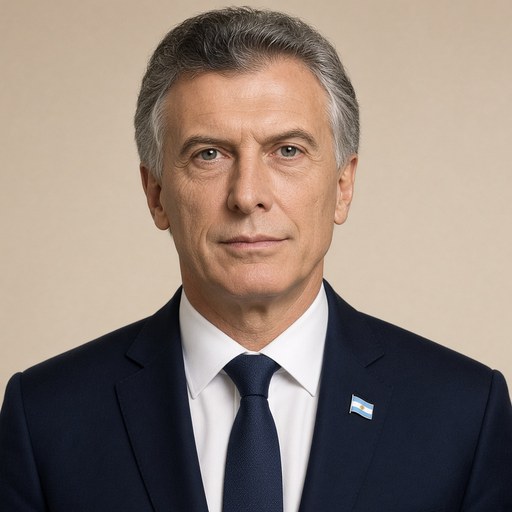
President Mauricio Macri at the Center for Strategic and International Studies in Washington
 Mauricio Macri · President of Argentina
- Context
- Macri addressed the Center for Strategic and International Studies in Washington on April 27, 2017, outlining Argentina's reform agenda following a visit to President Trump at the White House.
- Main themes
- Economic reform, poverty reduction, populism rejection, Argentina-US relations, international diplomacy, fiscal deficit reduction, inflation control, job creation, education reform, foreign investment, regional integration
- Duration
- ~31 min
- Words
- 3,664
- Sentences
- 105
- Readability
- 42
- Grade
- 15.8
- Syntax
- 3.37
- Vocabulary
- 1.87
Translated from Spanish
The broad sphere of national life a sentence belongs to. Every sentence has an Arena, so it is the denominator the other indices are read against.
Other105 sentences in 29 paragraphs
TOMÁS F. MCLARTY, PRESIDENT OF MCLARTY ASSOCIATES. - Thank you very much for making sure we are all comfortable and for the presentation; my association with the Center for Strategic and International Studies (CSIS) always allows me the opportunity to benefit from the leadership and advice of John J. Hamre. We have traveled the Pan-American Highway together; he is a friend, a colleague, and I have great respect for him. (Inaudible and a part in English, no translation).
We have a very distinguished group here today. It is packed, Mr. President; there is only room for standing; thank you to each of you for being here today to help deepen the relationships among the nations of the Americas, and after all, it is those close relationships that have brought us here today.
I am very pleased and honored to introduce President Mauricio Macri to this group. Mr. President, you have led Argentina for a short time, just over a year; however, in that time you have worked hard and effectively to build that trust within your country with the international community and investors, and you have made a significant change in the relationship between the United States and Argentina. You have come from the Casa Rosada to the White House for one of the first meetings with President Trump as a leader from South America. This is a very encouraging sign of the relationship between our two countries and a sign that it is improving.
I remember that you have a degree in Civil Engineering, and we may ask you some questions about engineering or civil engineering matters. President Trump has clearly understood the mandate you have to improve the lives of the citizens you have the privilege to represent. We know you have had to make very difficult domestic policy decisions (Inaudible and incomprehensible translation, delayed).
This certainly reminds me of when I had the privilege of working in the White House, and for that reason, I was able to enjoy the elegance of Buenos Aires and the beauty of Bariloche and the talent of Argentine football players. We know that President Macri, at that time, was a different president, as he served as president of Boca Juniors, and if you didn’t know, this is a big deal in Argentina, as it is the most popular team. I already knew he would boast about that. I am from San Lorenzo, although it is not such a good team. We did not see a game, although we would have liked to, but we did have the opportunity to travel with the President to Plaza San Martín in Buenos Aires, the general who pointed out that “all progress is the result of time.”
However, we have seen what your country has been able to do in just over a year, and we are happy to see the future and the progress. I could make some comments and then I will ask you some questions.
PRESIDENT.- At least two or three years ago, no one would have believed that we would enter a new policy of change; the odds were against us, but what has happened has involved all the citizens of my country, who understood that 30 or more years of conflict, confrontation, or isolation did not help at all; on the contrary, it increased poverty. Today, we have 30 percent of the population below the poverty line, despite abundant natural resources and, more importantly, incredible human resources. So we understood that the way to do it was to put an end to confrontations and try to resort to dialogue among ourselves and with the rest of the world.
And for that, we needed a change, and populism was no longer the solution; it was the cause of all these problems we faced. That is why we surprised the world and initiated a new process. As you said, that takes time; it is not overnight. It would require not a President, but a magician, and unfortunately, I am not one; I would love to be. At many moments of the day, I would love to be a magician to make some problems disappear, but no, problems have to be solved by working and working hard.
So we are very grateful because we have received a wonderful welcome from everyone, as you said, and we can also say that we have been receiving very distinguished visitors, presidents, prime ministers, and leaders of major companies from around the world in our country. In the next 30 days, I am not only here, after having gone to the White House, but also, in a couple of weeks, I will visit China, then Japan to meet with their top authorities, and then, in June, we will receive Chancellor Merkel, so this reflects the level of interest that the world has shown in us in this year and a half, but we must continue working on the reforms that are just beginning.
We know that we have cut inflation, but we need to reach single-digit inflation, and we must continue working to reduce the fiscal deficit and create a more favorable environment for business, as reducing poverty requires creating jobs, improving education, and we are in a deep debate about how to educate our children and youth for the future and leave a 19th-century system to enter a 21st-century system, trying to prepare young people for jobs that do not even exist yet, as the world is advancing so rapidly that we do not know what many of those new jobs will be about, but we are starting that process with great enthusiasm, with much hope in the country, and this shows that something is happening in Argentina.
A couple of years ago, when I came here, Argentina did not receive attention; now there is a lot of attention, and that is a great challenge of which we must be aware and seize that opportunity. But the big difference between this process and any previous process is that this arose from the very decision of the citizens, that is, from the bottom up, and this gives a different strength to everything we do.
If we travel around the region and the world and see what the situation of all governments is and what support they have from all citizens, it might be in the order of 20; 25; 15, but we still have support from more than 50 percent of the population with our policies, and it has not been a very easy transition process; it has been very difficult for many Argentines, and I suffer with them all the consequences of what it meant to get rid of the populism of the past. It takes a lot of work.
MCLARTY.- I think it is now clear why we have been able to make such important and significant progress. We have had the privilege of working in government, in the diplomatic corps, and in the private sector, and we know that change is very difficult, and clearly you are committed and have a very clear vision - it seems to me - and I believe that for you, success comes because you take very seriously the objective, the privilege of serving your country and your people. It is a sacred trust, and you take that responsibility very well, and that shows how you relate to your people and other countries very seriously.
Mr. President, let’s move on to the question session. Before coming here to the podium, I was speaking with John J. Hamre, and we wanted to hear some of your comments, which you have already made in a very serious and clear way, but I wanted you to talk about the natural areas of cooperation, agriculture, energy; these are areas that have a lot in common within our countries, but I also have to ask you, on behalf of these people, how did your visit with President Trump go, from where you come directly? Was it a wonderful meeting?
PRESIDENT.- It was a wonderful meeting, an incredible encounter. I had already met him a few years ago when I was 24, so there was a lot of enthusiasm, and I found myself in a very friendly environment, so it was a good reunion. Yes, absolutely, and all my team participated in a lunch, and we talked about many topics, and in all cases, we found a great openness to find solutions, small issues compared to the enormous potential for integration that we have.
We still have a very small economic link, and we need to bet on strengthening it, and it seems natural because if you analyze what the first destinations are that Argentines choose when they travel abroad, the number one is the United States. So there is a natural friendship that we need to develop also at the level of integration, and as you said, there are areas where we can really cooperate very easily.
If we take into account many of these horrendous populist policies over the last fifteen years, one included the energy issue: we went from being an energy-exporting country to being an energy-importing country only due to erroneous policies, as Argentina is full of natural resources, and we now have access to world-class reserves in unconventional resources, especially shale gas and shale oil, and especially shale gas we need to develop because this will allow us to develop our industries.
In fact, I visited the Dow Chemical plant in Houston; I came from Argentina, landed on a plane, took a helicopter, and another helicopter, plus another plane, and in a few hours, I didn’t even know where I was standing. But I wanted to visit the new Dow Chemical plant because they see a great opportunity to expand in Argentina with access to a secure energy supply and at appropriate prices; the possibility of developing all kinds of industries in Argentina increases incredibly. With the access to the technology that you have, which you have already developed, for example, in the case of shale gas and with Roca, I believe the opportunities are enormous; large companies already have a presence, but medium and small ones do not yet; I think they should establish a presence, and that should also help continue strengthening this long-term economic relationship.
MCLARTY.- I think that is good news; you have clearly changed the environment to make it conducive to foreign investments and can provide opportunities for our country and countries around the world. Now, let’s talk about trade, which is a very important topic here in our country, as you know, one that has been hotly debated in the campaign, and now, it seems to me that Argentina is increasing its intraregional trade; it is looking up. I would be interested to hear your point of view on this and if you have had the opportunity to talk with President Trump about trade.
PRESIDENT.- We did not talk much about the specific issue of trade. What we first need to understand is that we are in different situations. President Trump is addressing the issue from one of the most open economies in the world, and we are from one of the most closed economies in the world. So we are always trying to see what the real balance is; that is the right word. Of course, we need to progress towards a considerably more open economy, so we are working intensively to accelerate the Mercosur process; we have relaunched it, and we are quite optimistic about the future agreement with the European Union, the same with EFTA; we are in talks with Korea, with Japan; we are also talking about the future integration between Mercosur and the Pacific Alliance, so we see that this smart integration with the world will help Argentina a lot to restore good and sustainable growth. We have already experienced what total isolation is for almost two decades, and it did not work. Of course, it is a huge cultural change, and that is why we want to do it gradually. We want to help our people to be prepared for integration, and in that way, we are working sector by sector, trying to find ways to increase productivity, to ensure that each sector has its own plan in which also a large part of the competitiveness that they do not have is related to what the State itself does not do, so we have already launched the largest infrastructure program in our history; Luis Alberto Moreno from the IDB is here, he is a great friend of Argentina, he is helping us a lot along with the World Bank, all the international institutions. We are talking about hundreds of millions of dollars; Argentina is a great country; it is one of the largest countries in the world; we need roads, we need ports, we need railways, airports, and we are starting to build all of that, and by the way, in the meantime, it is a good way to create jobs, good jobs that contribute to the future, not political positions that only generate bureaucracy and expense. So we are excited about that, and in that process, we find ourselves. Again, it is a process of cultural change; we know that after so many years of being isolated, we cannot achieve openness overnight, so this is a day-to-day process.
MCLARTY.- I believe that if one learned to understand cooperation and have aspirational goals but also to take small steps and see the reality, that is crucial. Infrastructure perhaps, you can talk to some members of Congress about infrastructure, that would be helpful. You mentioned Luis Alberto Moreno, who is a good friend; I had the opportunity to meet part of his team last night. It is essential for any leader to have a very strong team, and clearly you have one (inaudible). Well, now let’s talk about a somewhat more serious topic, which is the audience questions. The issue of Venezuela is a major concern in our country for all the reasons you understand; regional stability is clearly important for your country due to investment issues, it is also important here in the Americas. I know it is a very complicated topic, the minister spoke about it in his eloquent way, but I would appreciate your impressions.
PRESIDENT.- First of all, when I first came into contact with this issue many years ago, many told me that things could not get worse. But time passed and things really got worse, so what I believe is that in Venezuela there is no respect for human rights, that is not a democracy, it is not functioning, we have political pressures, the independence of Congress is not being respected, so I think we must continue to demand elections, the release of prisoners, and I am very glad that we have reached an agreement within Mercosur to express that precisely; and now, the OAS has also issued a statement in that regard, so I believe we must keep working. I think we are all concerned about what is happening in Venezuela; we have friends, we are receiving immigrants from Venezuela like never before in Argentina, they are desperate trying to find a place to recover their lives, and obviously that is not the solution. We need to ensure that Venezuela has a democratic government again, and there is a lot of work to be done in that regard, because the day after is going to be very, very hard.
MCLARTY.- Well, thank you very much for your commitment to such a concerning and complex issue. We will work on this together, evidently, and I think you expressed it very appropriately. Returning to the topic of energy, but broadening the issue a bit, reflecting… You referred to generating financial stability, to creating jobs through the infrastructure plan, you also spoke very sharply about energy issues, and how do you see the issue of environmental balance? Bariloche, for example, is an emblematic area, Argentina is a very beautiful country, how do you reconcile energy development with being guardians of the environment?
PRESIDENT.- The recovery of the energy market and energy production has been based on two fundamental aspects. One is energy security, that is, having the energy supply when it is needed. We have suffered from outages and blackouts for many years, and obviously we also need reasonable, competitive prices. But the second point is that production and consumption must be sustainable; we have a real commitment in that regard, we are working intensively at the national level, at the provincial level, and at the local level, with municipal governments, we are leading various programs aimed at producing great results, and in fact, that is what I did as Head of Government of the City of Buenos Aires with a very successful program; and I believe that cities have a very important role since more and more citizens want to live in large cities every day, so we have to work hard in that regard to reduce energy consumption and to recycle waste. In that sense, I believe there is greater awareness in Argentina, and we are all working together to try to be part of the solution and not part of the problem. I believe we have been the first country to double down in Marrakech by increasing our commitments compared to the rest of the parties.
MCLARTY.- There is something characteristic about being Head of Government, being close to the citizens and how that relates to daily life.
PRESIDENT.- Let me tell you something, it may sound like a joke, but it is always said that being Head of Government should be harder than being President because you are closer to the problems of the people, but not as hard as being president of a football club, that was total madness, I prefer to deal with the issues I am dealing with now.
MCLARTY.- We have a changing political landscape in our country and globally, without a doubt. As you advance these changes that you have articulated in a very detailed manner and how you will achieve them, we would be very interested for you to talk a little about the political environment in Argentina: your election, how you will work or have worked with your legislature, your Congress, with the heads of government, congressmen who you know have great influence in Argentina. I think that is something we are very interested to know because it has a direct relationship, we are interested.
PRESIDENT.- We have a legislative election in October, everyone is anxious to see what will happen. I am very optimistic really about what citizens feel, although, again, the transition has not been easy, many things are being done. It has been very difficult for many citizens in Argentina, and I suffer with them all the consequences of trying to build this new scenario for the future, but even so, I think we will win the elections because the will for change remains very high, we really believe in our future, there is a lot of hope for the future, and I allow myself to say that everything we have done we did without having a majority in both chambers of Congress. We have less than one-sixth in the Senate and one-third in the Congress. We passed the laws we need, with the support of the opposition; they agreed that we had to reach an agreement with the holdout creditors and put an end to a period that has been disastrous for the country, among many other things. So that makes me quite optimistic, and the same at the level of the governors; all the new governors helped a lot, we worked as a team, in all the definitions of this great infrastructure program listening to their opinions. So I think the process has been quite intelligent and productive in these 18 months; of course, many things need to be improved, a cultural change takes much longer than an economic change. But I must say that so far I feel very proud, first of all on behalf of the citizens who are the ones leading; perhaps we can say that we have many social conflicts, there has been a strike, other issues, and finally this generated a reaction in the citizens: on a Saturday at six in the afternoon they self-convened, they went to the streets to say that they wanted to respond to the Government, that they wanted the Government to move forward, to continue on the path of change; and this is something unprecedented, we are talking about hundreds of thousands of people across the country, it is impossible to measure how many there were, we are talking about hundreds of squares in dozens of cities across the country, which shows that there is a different energy in Argentina and I believe that the change that has begun will not stop. Argentina, in less than 20 years, will be one of the key countries in the world, and will lead in many challenges that we will face, as everyone is under a lot of tension.
MCLARTY.- Mr. President, unfortunately, we are running out of time. You have been very generous with your time in coming to visit us. (inaudible) the excess of people who were out there, I think it shows the interest that exists in Argentina, but I also think it reflects the hope that people have in your leadership. I think the appropriate tenor, to conclude, you referred repeatedly in your responses to the citizens of Argentina, and how you related to them, whether they supported you or not, and how your changes are changing them in the short and long term, that is the right path, to which we refer in our country frequently. We have hope for the future of Argentina. I wish you the best, you have honored us greatly with your presence. Thank you for coming.
The original Spanish. The tags above are read on the English translation's sentences.
TOMÁS F. MCLARTY, PRESIDENTE MCLARTY ASSOCIATES. - Muchas gracias por asegurarnos que estemos todos cómodos y por la presentación, mi asociación con el Center for Strategic and International Studies(CSIS)siempre me permite tener la oportunidad de beneficiarme del liderazgo y de la asesoría de John J. Hamre. Nosotros hemos viajado la vía Panamericana juntos, él es un hombre amigo, colega y lo respeto mucho. (Inaudible y una parte en inglés, sin traducción).
Tenemos un grupo muy distinguido, hoy. Acá está lleno, señor Presidente, solamente caben de pie; gracias a cada uno ustedes por estar aquí, en el día de hoy, para ayudar a profundizar las relaciones entre las naciones de las Américas y después de todo las relaciones estrechas es lo que nos ha traído aquí, en el día de hoy.
Estoy muy contento y honrado de presentar al Presidente Mauricio Macri, a este grupo. Señor Presidente, usted ha liderado a la Argentina por un corto tiempo, más de un año, sin embargo en ese tiempo usted ha trabajado ardua y efectivamente para construir esa confianza dentro de su país con la comunidad internacional y los inversores y usted ha causado un cambio importante en la relación entre los Estados Unidos y la Argentina. Usted ha venido de la Casa Rosada a la Casa Blanca para una de las primeras reuniones con el Presidente Trump, de un líder de Sudamérica. Esta es una señal muy alentadora de la relación entre ambos países y una señal de que está mejorando.
Me recuerdo que usted tiene un título de Ingeniería Civil y puede que le hagamos algunas preguntas acerca de la ingeniería o de los asuntos de ingeniería civil. El Presidente Trump ha entendido claramente el mandato que usted tiene para mejorar la vida de los ciudadanos, que usted tiene el privilegio de representar. Sabemos que ha tenido que tomar decisiones muy difíciles de política doméstica (Inaudible e incompresible la traducción, se atrasa).
Esto me recuerda ciertamente cuando yo tuve el privilegio de trabajar en la Casa Blanca y por este motivo pude en viaje disfrutar de la elegancia de Buenos Aires y la belleza de Bariloche y el talento de los futbolistas argentinos. Sabemos que el Presidente Macri, en ese entonces, era un presidente diferente, pues se desempeñaba como presidente del Club de Boca Juniors y por si no lo sabían esto es una gran cosa, en la Argentina, pues es el equipo más popular. Ya sabía yo que él iba a jactarse de eso. (APLAUSOS). Yo soy de San Lorenzo, aunque no es un equipo tan bueno. No vimos un juego, aunque nos hubiera gustado, pero sí tuvimos la oportunidad de viajar con el Presidente a la Plaza de San Martín, en Buenos Aires, el general que apuntaba que “todo progreso es fruto del tiempo”.
Sin embargo, hemos visto lo que su país ha podido hacer en poco más de un año y estamos contentos viendo el futuro y el progreso. Podría hacer algún comentario y luego le haré algunas preguntas.
PRESIDENTE.- Por lo menos hace dos o tres años nadie hubiera podido creer que íbamos a entrar en una nueva política de cambio, las apuestas estaban en contra nuestra, pero lo que ha pasado ha sido algo que ha involucrado a todos los ciudadanos de mi país, que entendieron que 30 ó más años de conflictos, de enfrentamiento o de aislamiento no ayudaron para nada, por el contrario aumentaba la pobreza. Hoy, tenemos el 30 por ciento de la población por debajo de la línea de pobreza, a pesar de los abundantes recursos naturales y lo que es más importante aún, increíbles recursos humanos. Así que entendimos que la forma de hacerlo era poniendo fin a los enfrentamientos y tratando de recurrir al diálogo entre nosotros y con el resto del mundo.
Y para eso necesitábamos un cambio y el populismo ya no era la solución, sino que era la causa de todos estos problemas que enfrentábamos. Es por eso que sorprendimos al mundo e iniciamos un nuevo proceso. Como usted dijo que eso lleva su tiempo, no es de un día para el otro. Eso necesitaría no un Presidente, sino un mago y lamentablemente yo no lo soy, me encantaría. En muchos momentos del día me encantaría ser mago para hacer que algunos problemas desaparezcan, pero no, los problemas tienen que solucionarse trabajando y trabajando mucho.
Así que estamos muy agradecidos porque hemos recibido una maravillosa bienvenida de parte de todo el mundo, como usted dijo, y podemos también decir que hemos estado recibiendo visitantes muy distinguidos, presidentes, primeros ministros y responsables de las principales empresas del mundo, en nuestro país. En los próximos 30 días no solamente estoy aquí, después de haber ido a la Casa Blanca, sino también, en un par de semanas, voy a visitar China, luego a Japón para entrevistarme con sus máximas autoridades y luego, en junio, vamos a recibir a la Canciller Merkel, así que esto refleja el nivel de interés que el mundo ha demostrado por nosotros, en este año y medio, pero tenemos que seguir trabajando en la reformas que están recién comenzando.
Sabemos que hemos cortado la inflación, pero tenemos que llegar a una inflación de un dígito y tenemos que seguir trabajando para reducir el déficit fiscal y crear un entorno más favorable para los negocios, ya que para reducir la pobreza hace falta crear empleos, mejorar la educación y estamos en un profundo debate sobre cómo educar a nuestros hijos y jóvenes para el futuro y dejar un sistema del siglo XIX para ingresar a un sistema del siglo XXI, tratando de preparar a los jóvenes para empleos que ni siquiera existen aún, ya que el mundo avanza tan rápidamente que no sabemos de qué se van a tratar muchos de esos nuevos empleos, pero estamos empezando ese proceso con mucho entusiasmo, con mucha esperanza en el país y esto demuestra que algo está pasando, en la Argentina.
Hace un par de años, cuando yo venía aquí, Argentina no recibía atención; ahora hay mucha atención y eso es un gran desafío, del que debemos estar conscientes y aprovechar esa oportunidad. Pero la gran diferencia entre este proceso y cualquier proceso anterior es que esto surgió de la propia decisión de los ciudadanos, o sea desde abajo hacia arriba y esto le da una fuerza distinta a todo lo que hacemos.
Si viajamos por la región y todo el mundo y vemos cuál es la situación de todos los gobiernos y cuál es el respaldo que tienen de parte de todos los ciudadanos, quizás está en el orden del 20; 25; 15, pero nosotros todavía seguimos teniendo respaldo de más del 50 por ciento de la población con nuestras políticas y no ha sido un proceso de transición muy fácil, ha sido muy difícil para muchos argentinos y yo sufro con ellos todas las consecuencias de lo que implicó deshacerse del populismo de antaño. Hace falta mucho trabajo.
MCLARTY.- Yo creo que ahora queda claro el por qué hemos podido hacer un progreso tan importante y significativo. Hemos tenido el privilegio de trabajar en el Gobierno, en el cuerpo diplomático y en el sector privado y sabemos que el cambio es muy difícil y claramente ustedes están comprometidos y tienen una visión -me parece a mí - muy clara y creo que para ustedes el éxito viene porque se toman muy en serio el objetivo, el privilegio de servir a su país y a su población muy en serio. Es es una confianza sagrada y usted se toma esa responsabilidad muy bien y eso demuestra cómo usted se relaciona con su gente y los demás países muy en serio.
Señor Presidente, pasemos ya a la sesión de las preguntas. Antes de venir aquí, a la tarima, estaba hablando con John J. Hamre y queríamos conocer algunos comentarios suyos, que usted ya lo ha hecho de una manera muy seria y clara, pero quería que hablara de las áreas naturales de cooperación, de la agricultura, de energía, esas son áreas que tienen mucho en común dentro de nuestros países, pero también tengo que preguntarle, en nombre de estas personas cómo le fue a usted con su visita al Presidente Trump, de donde viene directamente. ¿Fue una reunión maravillosa?
PRESIDENTE.- Fue una maravillosa reunión, un encuentro increíble. Ya yo lo había conocido a él, hace unos cuantos años, yo tenía 24 años, así que había mucho entusiasmo y me encontré en un ambiente muy amigable, así que fue un buen reencuentro. Sí absolutamente y todo mi equipo participó de un almuerzo y hablamos de muchos temas y en todos los casos nos encontramos con una gran apertura para encontrar soluciones, pequeñas cuestiones, comparadas con las enormes potencialidades de integración que tenemos.
Nosotros tenemos un vínculo económico todavía muy pequeño y tenemos que apostar por fortalecerlo y me parece que es natural porque si se analiza cuáles son los primeros destinos que eligen los argentinos, cuando viajan al exterior, el número uno es Estados Unidos. Así que hay una amistad natural que tenemos que desarrollar también a nivel de integración y como usted decía hay áreas en las que realmente podemos cooperar muy fácilmente.
Si tenemos en cuenta muchas de estas horrendas políticas del populismo durante los últimos quince años, una incluyó el tema de energía: pasamos de ser un país exportador de energía a ser un país importador de energía sólo por políticas erróneas, ya que Argentina está llena de recursos naturales y realmente tenemos acceso, ahora, a reservas de nivel mundial en recursos no convencionales, especialmente el shale gas y el shale oíl y, especialmente el shale gas lo tenemos que desarrollar porque esto nos va a permitir desarrollar a nuestras industrias.
De hecho visité la planta de Dow Chemical, en Houston, venía de la Argentina, aterricé en un avión, tomé un helicóptero, y otro helicóptero, más otro avión y en unas horas ya ni sabía dónde estaba parado. Pero quería visitar la nueva planta de Dow Chemical porque ellos ven una gran oportunidad para expandirse en Argentina con acceso a un suministro de energía seguro y a precios adecuados, la posibilidad de desarrollar todo tipo de industrias en la Argentina aumenta de manera increíble. Con el acceso a la tecnología que tienen ustedes, que ya han desarrollado por ejemplo el caso de Shale Gas y con Roca, creo que las oportunidades son enormes, las empresas grandes ya tienen una presencia, no las medianas y pequeñas aún, creo que deberían establecer una presencia, y eso debería también ayudar a seguir fortaleciendo esta relación económica a largo plazo.
MCLARTY.- Creo que son buenas noticias, usted ha cambiado claramente el ambiente para que pueda así ser propicio para las inversiones extranjeras y puede proveer oportunidades para nuestro país y países alrededor del mundo. Ahora, hablemos del comercio que es un tema muy importante aquí en nuestro país, como usted lo sabe, uno que ha sido debatido muy arteramente en la campaña y ahora, me parece que Argentina está aumentando su comercio intrarregional, está mirando hacia arriba. Me interesaría escuchar su punto de vista al respecto y si ha tenido la oportunidad de hablar con el presidente Trump acerca del comercio.
PRESIDENTE.- No hablamos mucho sobre el tema específico del comercio. Lo que primero debemos entender es que nos encontramos en situaciones diferentes. El presidente Trump está abordando el tema desde una de las economías más abiertas del mundo, y nosotros desde una de las economías más cerradas del mundo. Así que siempre estamos tratando de ver cuál es el verdadero equilibrio, ésa es la palabra correcta. Por supuesto necesitamos progresar hacia una economía considerablemente más abierta, así que estamos trabajando intensamente para acelerar el proceso del Mercosur, lo hemos relanzado y somos bastante optimistas respecto del futuro acuerdo con la Unión Europea, lo mismo con EFTA, estamos en conversaciones con Corea, con Japón, también estamos hablando con la futura integración entre el Mercosur y la Alianza del Pacífico, así que vemos que esta integración inteligente con el mundo va a ayudar mucho a la Argentina como para restablecer un crecimiento bueno y sostenible. Ya hemos experimentado lo que es el aislamiento total, durante casi dos décadas, y no funcionó. Por supuesto se trata de un enorme cambio cultural y por eso queremos hacerlo gradualmente. Queremos ayudar a nuestra gente a estar preparada para la integración, y de esa forma estamos trabajando sector por sector, tratando de encontrar formas de aumentar la productividad, de lograr que cada sector tenga su propio plan en el que también gran parte de la competitividad que no tienen, tiene que ver con lo que no hace el Estado mismo, así que ya hemos lanzado el programa de infraestructura más grande de nuestra historia; Luis Alberto Moreno del BID está presente aquí, es un gran amigo de la Argentina, nos está ayudando mucho junto con el Banco Mundial, todas las instituciones internacionales. Estamos hablando de cientos de millones de dólares, la Argentina es un gran país, es uno de los países más grandes del mundo, necesitamos caminos, necesitamos puertos, necesitamos ferrocarriles, aeropuertos, y estamos empezando a construir todo eso, y dicho sea de paso, mientras tanto, es una buena forma de crear empleos, buenos empleos, que aporten al futuro, no cargos políticos que lo único que generan es burocracia y gasto. Así que estamos entusiasmados con eso, y en ese proceso nos encontramos. Nuevamente, se trata de un proceso de cambio cultural, sabemos que luego de tantos años de estar aislados, no se puede lograr la apertura de un día para el otro, así que esto es un día a día.
MCLARTY.- Yo creo que si uno aprendiera a conocer la cooperación y tener metas de aspiración pero también para tomar pasos pequeños y ver la realidad que es crucial. La infraestructura a lo mejor, usted puede hablar con algunos miembros del Congreso para hablar de infraestructura, sería útil. Mencionó a Luis Alberto Moreno que es un buen amigo; tuve la oportunidad de conocer parte de su equipo anoche. Es esencial para cualquier líder que tenga un equipo muy fuerte, y claramente usted lo tiene (inaudible). Bueno, ahora hablemos de un tema un poco más serio que son las preguntas de la audiencia. La cuestión de Venezuela, es una gran preocupación en nuestro país por todas las razones que usted entiende, la estabilidad regional es claramente importante para su país por la cuestión de las inversiones, es importante también aquí en las Américas. Yo sé que es un tema muy complicado, el ministro ahí hablo de su manera elocuente pero yo creo que agradecería sus impresiones.
PRESIDENTE.- En primer lugar, cuando por primera vez tomé contacto con este tema, hace muchos años, muchos me dijeron que la cosa no podía empeorar. Pero el tiempo pasó y las cosas, realmente, empeoraron, así que lo que creo es que en Venezuela no se tiene ningún respeto por los derechos humanos, eso no es una democracia, no está funcionando, tenemos presiones los políticos, no se está respetando la independencia del Congreso, así que creo que tenemos que seguir exigiendo elecciones, la liberación de los prisioneros y me alegro mucho que hayamos logrado un acuerdo en el seno del Mercosur para expresar eso justamente; y ahora, la OEA también ha emitido una declaración en ese sentido, así que yo creo que hay que seguir trabajando. Yo creo que a todos aquí nos preocupa lo que está pasando en Venezuela, tenemos amigos, recibimos inmigrantes de Venezuela como nunca antes en Argentina, están desesperados tratando de encontrar un lugar para poder recuperar su vida, y obviamente esa no es la solución. Necesitamos lograr que Venezuela vuelva a tener un gobierno democrático y hay mucho trabajo para hacer en ese sentido, porque el día después va a ser muy, muy duro.
MCLARTY.- Bueno, muchas gracias por su compromiso en un tema tan preocupante y a la vez complejo. Vamos a trabajar en eso juntos, evidentemente, y creo que usted lo expresó muy adecuadamente. Volviendo al tema de la energía, pero ampliando la cuestión un poco, reflejando… Usted se refirió a la generación de estabilidad financiera, a la creación de empleo a través del plan de infraestructura, también habló de manera muy aguda sobre las cuestiones de la energía, y ¿cómo ve la cuestión del equilibrio ambiental? Bariloche por ejemplo es una zona emblemática, Argentina es un país muy hermoso, ¿cómo se concilia el desarrollo de la energía con esto de ser guardianes del medioambiente?
PRESIDENTE.- La recuperación del mercado energético y de la producción de energía se ha basado en dos aspectos fundamentales. Uno es la seguridad energética, es decir tener el suministro de energía cuando se necesita. Hemos sufrido situaciones de cortes y apagones durante muchos años, y obviamente necesitamos también precios razonables, competitivos. Pero el segundo punto, es que la producción y el consumo deben ser sostenibles, tenemos un verdadero compromiso en ese sentido, estamos trabajando intensamente a nivel nacional, a nivel de las provincias y a nivel local, de gobiernos municipales, estamos liderando distintos programas que apuntan a producir grandes resultados y, de hecho, es lo que hice yo como Jefe de Gobierno de la Ciudad de Buenos Aires con un programa muy exitoso; y creo que las ciudades tienen un papel muy importante ya que todos los días son más los ciudadanos que quieren vivir en las grandes ciudades, así que tenemos que trabajar mucho en ese sentido para reducir el consumo de energía y para reciclar los residuos, en ese sentido creo que hay una mayor conciencia en Argentina y estamos trabajando todos juntos para tratar de ser parte de la solución y no del problema. Creo que hemos sido el primer país en redoblar la apuesta en Marrakech aumentando nuestros compromisos comparados con el resto de las partes.
MCLARTY.- Hay algo característico de ser Jefe de Gobierno, estando cerca de los ciudadanos y cómo eso se relaciona eso en la vida diaria.
PRESIDENTE.- Déjeme decirle algo, a lo mejor le parece una broma, pero siempre se dice que ser Jefe de Gobierno debería ser más difícil que ser Presidente porque está más cercano a la problemática de la gente, pero no tan difícil como ser presidente de un club de futbol, eso fue una locura total, prefiero lidiar con los asuntos que estoy lidiando ahora.
MCLARTY.- Tenemos un panorama cambiante a nivel político en nuestro país y a nivel mundial, sin duda alguna. A medida que usted va avanzando estos cambios que ha articulado de una manera muy detallada y cómo lo logrará, nos interesaría mucho que hable un poco del ambiente político en Argentina: su elección, cómo trabajará o ha trabajado con su legislatura, su Congreso, con los jefes de gobierno, congresistas que usted sabe tienen gran influencia en Argentina. Yo creo que eso es algo que nos interesa mucho saber porque tiene una relación directa, nos interesa.
PRESIDENTE.- Tenemos una elección legislativa en octubre, todos están ansiosos por ver qué va a suceder. Yo soy muy optimista realmente sobre lo que sienten los ciudadanos, aunque, de nuevo, la transición no ha sido sencilla, se están haciendo muchas cosas. Ha sido muy difícil para muchos ciudadanos en Argentina, y yo sufro con ellos todas las consecuencias de tratar de construir este nuevo escenario para el futuro, pero aun así pienso que vamos a ganar las elecciones porque la voluntad de cambio sigue siendo muy alta, realmente creemos en nuestro futuro, hay mucha esperanzas en el futuro, y me permito decir que todo lo que hemos hecho lo hicimos sin contar con una mayoría en las dos cámaras del Congreso. Tenemos menos de un sexto en el Senado y un tercio en el Congreso. Sacamos las leyes que necesitamos, con el apoyo de la oposición, ellos estaban de acuerdo en que teníamos que lograr un acuerdo con los acreedores hold outs y poner fin a un período que ha sido desastroso para el país, entre muchas otras cosas. Así que eso me hace bastante optimista, y lo mismo al nivel de los gobernadores; todos los nuevos gobernadores ayudaron mucho, trabajamos como equipo, en todas las definiciones de este gran programa de infraestructuras escuchando sus opiniones. Así que me parece que el proceso ha sido bastante inteligente y productivo en estos 18 meses, por supuesto hay que mejorar muchas cosas, un cambio cultural requiere de mucho más tiempo que un cambio económico. Pero debo decir que hasta ahora me siento muy orgulloso, en primer lugar en nombre de los ciudadanos que son quienes lideran, quizás podemos decir que tenemos muchos conflictos sociales, ha habido una huelga, otras cuestiones, y finalmente esto generó una reacción en los ciudadanos: un sábado a las seis de la tarde se autoconvocaron, fueron a la calle para decir que querían responder al Gobierno, que querían que el Gobierno siguiera adelante, seguir por el camino del cambio; y esto es algo inédito, estamos hablando de cientos de miles de personas en todo el país, es imposible medir cuántos fueron, estamos hablando de cientos de plazas en decenas de ciudades en todo el país, lo cual demuestra que hay una energía distinta en la Argentina y creo que el cambio que ha empezado no se va a detener. Argentina, en menos de 20 años, va a ser uno de los países claves del mundo, y va a liderar en materia de muchos desafíos que vamos a enfrentar, ya que todo el mundo se encuentra bajo mucha tensión.
MC LARTY.- Señor Presidente, desafortunadamente, se nos está acabando el tiempo. Usted ha sido muy generoso con su tiempo al venir visitarnos. (inaudible) el exceso de personas que estaban ahí afuera, yo creo que demuestra el interés que existe en Argentina, pero creo que también refleja la esperanza que tienen las personas en su liderazgo. Yo creo que el tenor apropiado, para concluir, usted se refirió repetidamente sus respuestas a los ciudadanos de Argentina, y cómo se relacionaba con ellos, si lo apoyaban a usted o no, y cómo sus cambios lo están cambiando a corto y largo plazo, ese es el camino adecuado, al cual nos referimos en nuestro país con frecuencia. Tenemos una esperanza para el futuro de Argentina. Le deseo lo mejor, nos ha honrado mucho con su presencia. Gracias por haber venido.