




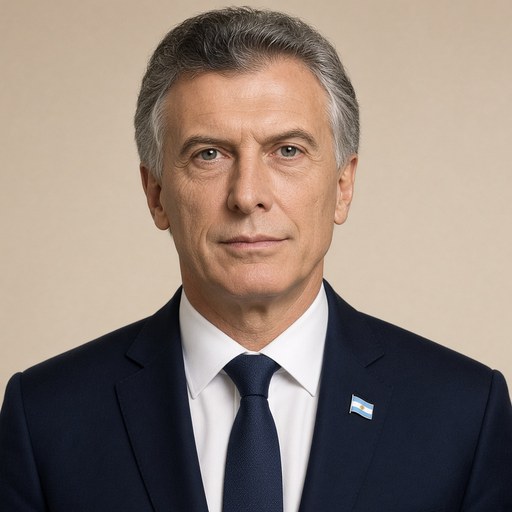
President Mauricio Macri chaired a meeting of the expanded cabinet at the CCK.
 Mauricio Macri · President of Argentina
- Context
- Macri chaired an expanded cabinet meeting at the CCK on September 20, 2017, following primary election results and amid signs of economic recovery.
- Main themes
- Political momentum after PASO elections, economic recovery and growth, humility in leadership, government accountability, citizen engagement and social media, conviction and team cohesion, public trust in government, responsibility of power
- Duration
- ~25 min
- Words
- 3,007
- Sentences
- 76
- Readability
- 47
- Grade
- 16.5
- Syntax
- 3.61
- Vocabulary
- 1.86
Translated from Spanish
The broad sphere of national life a sentence belongs to. Every sentence has an Arena, so it is the denominator the other indices are read against.
Other76 sentences in 16 paragraphs
Since the last time we met, we can say that we are in a different climate; there is a different atmosphere in Argentina. We have received a significant boost with the results of the PASO elections, as Marcos valued it, and I believe we all value it in our day-to-day lives. The economy is beginning to show a clear trend towards recovery and growth, and we hope that this will happen year after year.
And I would say that this boost, these announcements we are making here, represent the essence of what we are doing, the essence of what I hope we can all feel we are. In these announcements, we want to show every citizen as the protagonist of this moment. That is why I hope everyone was as moved as I was when I saw them for the first time a couple of days ago, because I find it absolutely brilliant and genuine that instead of making a beautiful video with panoramic shots and drones, showcasing all the works we are doing across the country, we have gathered the testimonies of every Argentine who today communicates—just as happens all over the world, in those modern societies in which we reflect and compare ourselves and want to belong—through social media. It is truly a moment of testimony that is very, very beautiful, which I hope you gathered during the outreach event over the weekend. At least I heard a lot of this, a lot of this feeling of being part of something, of getting involved.
But here comes the first alert: an essential element of everything we have done has been humility, humility in the face of the task, in the face of responsibility. Yesterday I had an off-the-record conversation with one of the journalists, which was tense at one point—I was looking at Pavlovsky's face; he had a look that said to stop—but one also gets passionate defending ideas. He asked me if I suffered from power. I do not feel that I suffer from it, but I do have such a sense of responsibility that I do not take it as a gift or a privilege that I have to enjoy, and I do not look to see whom we harm today or whom we mistreat today. No, I have taken it from day one as something I would almost call sacred, because it is the possibility of helping things change for the better; the responsibility that in every second what we are doing matters, it matters to many people for whom it is not the same whether you solve the issue today or in two years. Perhaps in two years, the opportunity for that child to be educated will no longer exist, for that family to recover, to grow. I have always taken it from that place.
I am not saying that maintaining humility is always easy; in any circumstance, it is an exercise, but it is much more difficult to maintain it when the results start to improve. The natural tendency of human beings is that if things are going well for me, why should I listen to you? Who are you? There is a very fine line between feeling strengthened, and having your conviction in what you are doing increase, and believing it. It is always a line that I ask you to keep reviewing, because I need a team of people who are convinced of what they are doing, who do not back down at the first hint or bark from someone, but who also do not cross over to the other extreme, because that is where we can make other types of mistakes, which would precisely betray the principle of a path that I believe is wonderful. I truly believe that those little curves will happen and improve, because there is not included the “snowball” effect that keeps accelerating. But all of that is based on people believing all the time in the essence of what we are doing, because I do not know if it has happened to you, but not only lawyers, as Lopetegui says, many people do not manage to understand the magnitude of what an economy means. It happened to me that day we went to eat at “Beto's” grill in Cañuelas, when that couple I visited before told me, while we were eating some cheese—this was three months ago, we were still in the middle of the cloud—: “Mauricio, I have always followed you, but tell me that you are sure we are going the right way, because I hear so many horrible things every day that sometimes I get anxious.” I started to think about her, and how she would be able to understand if she listens to opposition economists and politicians saying this was going to fail, that this was going to be an explosion of inflation, more economic recession. What anxiety when you have the responsibility for your little ones; she had that small business by the road and was struggling to get by. The truth is that I felt more than ever the importance of what people can measure even if they do not understand economics, which is what your attitude is, and in your attitude, they read the essence of the other person.
That is where this phenomenon lies, of daring to let go of the little they have in order to aspire to the life they truly want, based on the fact that I trust this person, I trust that she is telling me from her conviction that honestly this is the way, that he has the luck to see further and we are going to trust. That is where leadership grows, where one supports the other, and where each one begins to trust that the sum of small grains of sand will achieve the final result. So be careful, because when you lose humility, you lose that closeness, and if you lose closeness, you lose the essence.
Everything we are doing here is based on making trust stronger every day, because trust is what allows many of these numbers to arrive before the final result, because it is like the chicken and the egg all the time, as that investor told Gustavo, if he does not have trust, he does not invest, and if he does not invest, you cannot start. So we need many people to invest.
Also, as Marcos said, and the truth is that I have always said it but without having read El Cambalache, El Cambalache expresses a central part of what we are proposing for Argentina. I have always said that I believed MERCOSUR was a great opportunity for Argentines, because it mixed all our talents, all our capacity, our analytical ability, with the enthusiasm and positivity of Brazilians, because we were always melancholic, skeptical, “it cannot be done.” El Cambalache has a couple of phrases that are tremendous, “that the world was and will be a mess, I already know,” that is clearly not right; and against shortcuts and tricks: “he who does not cry does not suck,” “he who does not steal is a fool.” All of that is said in a wonderful song that represents much of what has harmed us, from which we are preaching that we must distance ourselves, because the path of everyone against everyone that Argentina has traveled for many decades, not just in this last one, has made it worse for more and more people; because everyone, but especially those who have the least, need to know on what field they are playing, with what rules they are playing, because if they do not have rules and do not have a field, they feel like they are going blind, without all their work and dedication functioning, serving, which is what happens to so many retirees who worked their whole lives, saved in one place, and when they went to retire, there was nothing left. That is perhaps the most pathetic example of a society in which people devour each other.
I believe that what we have started is that; it is only a beginning, so for any moment of doubt, of thinking that it is already done, no, we have only opened a huge path in which we have to take many steps in that direction. But it does not matter that where we want to get may be far away; it does not matter how much is left, what matters is that every day we are a little better, because precisely what overcomes skepticism is that feeling of being part of something that improves every day, and the most important thing is that you are part of that improvement. That is why when I say where you have to place yourselves to feel good, I clearly congratulate you for everything you have done, even if you do not do it every day and every day it demands more from you, because that is my job. But today I do tell you that I am very happy with what you have achieved, but since there is still so much more to do, I always have to tell you: “a little more, a little more.”
And what should be the greatest satisfaction for each of you? The one you feel with your children; that is the bond you need to have. Every time we manage to get a person to stop doubting themselves, for an Argentine to abandon skepticism to believe in what they can do, and that they do not have to wait for the handout of a political operator, for a subsidy, no, that they can have a role, and that role is important, that role matters; and that they do not self-exclude. It is what we feel with our children when they grow, when they develop; it is an enormous satisfaction, that one says “dad put on the bib”; this is what we need to feel. Every time we manage to get a person to build their identity based on their place, on their development, we will have contributed to their deep happiness, because what matters in life is precisely what you achieve by yourself, not what is given to you; that is what makes you who you are. That is where I believe you need to stand as a fundamental element.
The other thing is that the voters who have supported us—who we also have to work hard to ensure they support us in October—know that there are dozens, hundreds of people, not that many, I always fantasize about 582, there is always a different number, who believe they own a “piece” of our country, but a “piece” that, as I told you before, is at the expense of violating the rights of others, taking advantage of others, and believing that they have a right over the work of all the other Argentines, and that without working, they have a right to an income, to abuse. We have embarked on that battle, often silently, and we must continue fighting it, because those who are convinced of this change and who are making it more substantive and not adjectival, do not forgive us if we doubt, if we cower, because those guys all have power, they have resources, they have accumulated money to bribe, to buy, from all sides, from the State, from the Executive, from Justice, from journalism. We are here so that we all have the same rights and obligations before the law, so there is no room for “oh, this guy... I am not brave enough,” no, we have to do it, intelligently, working as a team, but we have to do it as we are doing in many sectors.
To conclude, I want to tell you—that is also part of the debate we are having and of this profound cultural change—three central things that must increasingly take presence in the discussion. Here we are filled with impressive leading voices to convey it: that there is no country, no society that has truly progressed in the last thirty years that has not opened up to exchange with the world; all the countries that have done better—this is empirical, this can be seen, it is in the statistics, it is not debatable—are those that dared to exchange more; we come from being one of the three that exchanged the least. That discussion is profound; it is very large. We all have ambivalences; there are things we like about some and things that scare us, but that is where we have to have that debate and say: “let's make this experience of inserting ourselves into the world hand in hand, all together.” All those things take time; an agreement with the European Union, all those agreements we are negotiating, even if they are signed in November, will take less than ten years to be effective. So we have to try to bring more and more Argentines on board so that they are not afraid, that this is part of the substantive, that it is part of the change.
The second thing is that none of the countries that have moved forward did so without having a serious debate and a profound reform of the public education system; they “updated” themselves, all those who are leading, to a 21st-century education; we have to do it.
It hurts to see where we started, that there are young people whom adults fill with fears, fill with prejudices, so much so that they oppose something as basic as a work internship in the last year of school, which technical schools have been doing forever. That is where we start, from those fears that we have to overcome. But we have to do it even if it is uncomfortable, and those conflicts are eternal, and the Governor had to face a terrible one in the Province of Buenos Aires last year, and we will have to face more. But if we do not achieve that change, we know that there will be no future for all those kids, and then this present effort makes no sense because those who have to come to take the baton will not have how to take it. It is a battle, a debate that must be present; we have to have it, we are going into campaign mode, it has to be one of the fundamental axes. Fortunately, our candidate, María Eugenia, comes from there, so she has to talk about this because this is what made Argentina wonderful, and this is what will make it wonderful again: quality public education, which is what truly equalizes, is what makes any child, no matter where they were born, have the same opportunity and not have to pay, but rather have it there because the State provides it. And the resources are there, and the teachers are there, because most teachers want to be part of the solution, want to be part of and fundamental protagonists of the future. So we have to achieve overcoming this harmful intermediation to truly get teachers to help us make the future of those kids a reality.
The last thing, which I have also talked about in recent times, and which is central to everything we are doing, is to build trust based on the central element that builds it, which is the truth. We preach this every day, and that is why all the information comes out, harsh, it commits us, it challenges us, but we face it. But we cannot accept that judges are lied to as they are lied to in Argentina; we cannot have cases where there are witnesses who give false testimonies and nothing happens; labor trials where experts and doctors invent accidents, one in every so many is discovered, and nothing happens, it is the same expert, lawyer, and doctor who goes to the next trial as a professional. Or in commercial matters, where balances are falsified and adulterated. In a country like the one we want, like the one we love and want to be respected, the one who does that, who is the one making the demands, must become the one who goes to prison. This is something we must demand from our judges and demand from society, that if we are all committing to the truth, the truth begins with the one who administers the law not being able to accept being lied to; it is a central element. In none of these countries to which we refer—now we want to enter the OECD, which has a whole set of parameters—can this happen; no one thinks of it, they die of fear, they prepare for days to go testify before the judge to see what they can say and what they cannot say, because if they make a mistake in a quotation, they go from being the attacker to being the one who defends.
I believe these are three central things that I ask you to incorporate into the day-to-day of what we are doing, understanding that what we are building is something unprecedented in the history of Argentina, and it is something that is being discussed all over the world, because we see what is happening with democratic systems in the world today, how they are under siege with this demand for infinite expectations, the support that exists in the different countries of the region for other presidents, around the world. And here we have those numbers that Marcos mentioned; what is being achieved is unprecedented, but it is achieved first and foremost by a decision of a majority of Argentines who have decided to bet on the future, to truly invest in developing each one's capacity. We are here because they decided it, against all odds, and if we never forget that, this path is a path that is just beginning, and where every day, I assure you, we will be a little better.
Thank you very much to everyone, and let’s get to work.
The original Spanish. The tags above are read on the English translation's sentences.
Desde la última vez que nos vimos podemos decir que estamos en un clima diferente, se respira otra cosa en la Argentina; hemos recibido una palmada grande con el resultado de las PASO, así lo valoró Marcos y lo valoramos todos creo yo en el día a día, la economía empieza a mostrar una tendencia clara a la recuperación, al crecimiento, y que esperamos que eso suceda año a año.
Y yo diría que esa palmada, estos avisos que estamos poniendo acá, representan la esencia de lo que estamos haciendo, la esencia de lo que yo espero que todos podamos sentir que somos; en estos avisos lo que queremos es mostrar a cada ciudadano como protagonista de este momento. Por eso espero que todos se hayan emocionado como me emocioné yo cuando los vi por primera vez hace un par de días atrás, porque me parece absolutamente genial y genuino que en vez de hacer un video lindísimo, con tomas panorámicas y drones, y mostrar todas las obras que estamos haciendo por todo el país, hayamos recogido el testimonio de cada argentino que hoy se comunica -como pasa en el mundo entero, en esas sociedades modernas en las cuales nos reflejamos y nos comparamos y queremos pertenecer- con las redes sociales. ealmente es un momento de testimonio muy pero muy lindo, que es lo que espero que hayan recogido ustedes en el timbreo del fin de semana, al menos a mí me tocó escucha mucho de esto, mucho de esto de sentirse parte, de involucrarse.
Pero va la primera alerta: un elemento esencial de todo lo que hemos hecho ha sido la humildad, la humidad frente a la tarea, frente a la responsabilidad. Ayer tuve un off con uno de los periodistas, que estuvo tenso en un momento -yo le miraba la cara a Pavlovsky, Pavlovsky estaba con cara de que pare, pero uno se apasiona también defendiendo las ideas-, y me decía si yo sufría el poder. Yo no siento que lo sufra, pero sí tengo tal sentido de la responsabilidad que no lo tomo como una dádiva o un privilegio que tengo yo con el cual me tengo que divertir y tengo que ver a quién dañamos hoy, a quién maltratamos hoy, no, yo lo he tomado desde el primer día como algo diría casi sagrado, porque es la posibilidad de ayudar a que las cosas cambien y para bien; la responsabilidad de que en cada segundo lo que estamos haciendo cuenta, cuenta en mucha gente a la que no le es lo mismo que le resuelvas el tema hoy o dentro de dos años, por ahí dentro de dos años no está más la posibilidad de que ese chico se pueda educar, de que esa familia se pueda recuperar, que pueda crecer. Yo lo he tomado siempre desde ese lugar.
No digo que mantener la humildad sea algo fácil siempre, en cualquier circunstancia es un ejercicio, pero es mucho más difícil mantenerla cuando los resultados se empiezan a dar mejor, la tendencia natural de los seres humanos es que si me está yendo bien por qué te tengo que escuchar a vos, que quién sos vos. Es una línea muy finita entre sentirse fortalecido, y que te aumente la convicción de lo que estás haciendo, y creértela, siempre es una línea en la cual yo les pido que estén revisándola, porque yo necesito un equipo de gente que esté convencida de lo que está haciendo, que no frente al primer amague o ladrido de alguien se me vaya para atrás, pero que tampoco que pasemos a la otra instancia, porque ahí es donde podemos cometer otro tipo de errores, y que justamente defraudarían el principio de un camino que yo creo que es maravilloso, yo creo que realmente esas curvitas se van a dar y mejor, porque ahí no está incluido el efecto “bola de nieve” que va acelerando. Pero todo eso se basa en que la gente crea todo el tiempo en la esencia de lo que estamos haciendo, porque no sé si a ustedes les ha pasado, pero no solo los abogados, como dice Lopetegui, mucha gente no logra entender la magnitud de lo que significa una economía. A mí me pasó aquel día que fuimos a comer a la parrilla de “Beto” en Cañuelas, que ese matrimonio que visité antes me dijo ella, en un momento en el que estábamos comiendo unos quesitos -esto hace tres meses atrás, estábamos en el medio de la nube todavía- :”Mauricio, yo te sigo desde siempre, pero decime que estás seguro de que por acá vamos bien, porque yo escucho tantas cosas horribles todos los días que a veces me angustio”. Me puse a pensar en ella, y cómo va a poder entender si escucha economistas de la oposición y políticos diciendo esto iba al fracaso, que esto iba a ser una explosión de inflación, más recesión económica. Qué angustia cuando vos tenés la responsabilidad de tus hijitos, ella tenía ese pequeño emprendimiento frente a la ruta y estaba remando para salir. La verdad que ahí yo sentí más que nunca la importancia de lo que la gente sí puede medir aunque no entienda de economía, que es cuál es tu actitud, y en tu actitud ellos leen la esencia de la otra persona.
Ahí es dónde radica este fenómeno de animarse a soltar lo poquito que tienen en función de ir hacia aspirar a la vida que realmente quieren, en base a que yo confío en esta persona, confío en que ella me está diciendo desde su convicción que honestamente este es el camino, que él tiene la suerte de ver más lejos y vamos a confiar. Ahí es donde se logra que el liderazgo crezca, que uno se apoye en el otro, y que cada uno vaya confiando en que la sumatoria de pequeños granitos de arena va a lograr el resultado final. Entonces cuidado, porque cuando pierde la humildad pierde esa cercanía, y si perdés la cercanía perdés la esencia.
Todo lo que estamos haciendo acá se basa en que la confianza sea cada día más sólida, porque la confianza es la que logra que muchos de estos números lleguen antes que el resultado final, porque es como el huevo y la gallina todo el tiempo, como le decía ese inversor a Gustavo, si él no tiene confianza no apuesta, y si no apuesta vos no podés arrancar. Entonces necesitamos que mucha gente apueste.
Aparte, como también dijo Marcos, y la verdad que yo siempre lo he dicho pero sin haber leído El Cambalache, El Cambalache expresa una parte central de lo que estamos planteando de la Argentina. Yo siempre dije que creía que el MERCOSUR era una gran oportunidad para los argentinos, porque mezclaba todos nuestros talentos, toda nuestra capacidad, nuestra capacidad de análisis, con el entusiasmo y el positivismo de los brasileros, porque nosotros siempre éramos melancólicos, escépticos, “no se puede”. El Cambalache tiene un par de frases que son tremendas, “que el mundo fue y será una porquería ya lo sé”, eso claramente no está bien; y contra el atajo y la aviada: “el que no llora no mama”, “el que no afana es un gil”. Todo eso lo dice una canción maravillosa que representa mucho de lo que nos ha hecho mal, de lo que justamente nosotros venimos predicando que tenemos que alejarnos, porque el camino del todos contra todos que recorrió la Argentina durante muchas décadas, no solamente en esta última, hizo que cada vez a más gente le fuese peor; porque todos, pero especialmente aquellos que menos tienen, necesitan saber en qué cancha juegan, con qué reglas juegan, porque si ellos no tienen reglas y no tienen cancha sienten que van como a ciegas, sin que todo su trabajo y toda su dedicación funcione, sirva, que es lo que les pasa a tantos jubilados que trabajaron toda una vida, ahorraron en un lugar, y cuando fueron a jubilarse no quedaba nada. Ese es tal vez el ejemplo más patético de una sociedad en la cual se fagocitan unos a otros.
Creo que esto que hemos comenzado es eso, es solamente un comienzo, entonces para cualquier momento de duda, de que creamos que ya está, no, hemos solamente abierto un enorme camino en el cual tenemos que dar muchísimos pasos en esa dirección. Pero no importa que adonde queremos llegar pueda estar lejos, no importa cuánto falta, lo importante es que cada día estemos un poco mejor, porque justamente lo que vence el escepticismo es eso, el sentirte que sos parte de algo que todos los días mejora, y lo más importante es que vos sos parte de esa mejora. Por eso cuando digo en qué lugar se tienen que colocar para sentirse bien, yo claramente los felicito por todo lo que hayan hecho por más que todos los días no lo hagan y todos los días les exija más, porque esa es mi tarea. Pero hoy sí les digo que estoy muy contento de lo que han logrado, pero como falta muchísimo más tengo que siempre decirles: “un poco más, un poco más”.
¿Y cuál tiene que ser la mayor satisfacción de cada uno de ustedes? La que sienten con sus hijos, ese el vínculo que tienen que tener, cada vez que nosotros logremos que una persona deje de dudar de sí misma, que un argentino abandone el escepticismo para creer en lo que él puede hacer, y que no tiene que esperar de la dádiva de un puntero, de un subsidio, no, que él puede tener un rol, y que ese rol es importante, que ese rol cuenta; y que no se autoexcluya. Es lo que sentimos con nuestros hijos cuando ellos crecen, cuando ellos se desarrollan, es una satisfacción enorme, que uno dice “papá se puso el babero”; esto es lo que tenemos que sentir. Cada vez que nosotros logremos que una persona construya su identidad a partir de su lugar, de su desarrollo, habremos contribuido a su felicidad de fondo, porque lo que cuenta en la vida es justamente lo que vos conseguís por vos mismo, no lo que te regalan, eso es lo que te hace ser quien sos. Ahí es donde creo que tienen que pararse como elemento fundamental.
Lo otro es que el votante que nos ha acompañado -que también tenemos que trabajar duro para que nos acompañe en octubre- sabe que hay decenas, centenares de personas, no son tantos, yo siempre fantaseo con 582, siempre hay un número distinto, que se creen dueños de un “cacho” de nuestro país, pero un “cacho” que, como les decía antes, es a costa de vulnerar los derechos de los otros, sacar ventaja a los otros y creer que tienen como un derecho sobre el trabajo de todo el resto de los argentinos, y que sin trabajar tienen derecho a un ingreso, a abusar. Hemos emprendido esa batalla, muchas veces silenciosamente, y la tenemos que seguir dando, porque aquellos que están convencidos de este cambio y que cada vez lo hacen más sustantivo y no adjetivo, no nos perdonen si nosotros dudamos, nos acobardamos, porque esos tipos todos tienen poder, tienen recursos, tienen plata acumulada para sobornar, comprar, de todos lados, del lado del Estado, del Ejecutivo, de la Justicia, del periodismo. Nosotros estamos acá para justamente que todos tengamos los mismos derechos y obligaciones frente a la ley, entonces no hay lugar para “uh, este tipo…, no me animo”, no, hay que hacerlo, con inteligencia, trabajando en equipo, pero hay que hacerlo como lo estamos haciendo en muchos sectores.
Para terminar quiero decirles- que también es parte del debate que estamos dando y de este cambio cultural profundo- tres cosas centrales que cada vez tienen que ir tomando más presencia en la discusión, acá está lleno de impresionantes voceros líderes para transmitirlo: que no hay país, no hay sociedad que haya progresado de verdad en los últimos treinta años que no se haya abierto a intercambiar con el mundo, a todos los países que les ha ido mejor -esto es empírico, esto se mira, está en las estadísticas, no es opinable- son aquellos que se animaron a intercambiar más; nosotros venimos de ser uno de los tres que intercambió menos. Es profunda esa discusión, es muy grande. Todos tenemos ambivalencias, hay cosas que nos gustan de algunos y hay cosas que nos asustan, pero ahí es donde tenemos que dar ese debate y decir: “vamos a hacer esta experiencia de insertarnos en el mundo agarraditos de la mano, todos juntos”. Todas esas cosas se hacen con tiempo, un acuerdo con la Unión Europea, todos esos acuerdos que estamos negociando, aunque se firmen en noviembre, van a llevar menos de diez años para que sean efectivos. Entonces tenemos que tratar de ir sumando cada vez más argentinos a que no tengan miedo, que esto es parte de lo sustantivo, que es parte del cambio.
La segunda cosa es que ninguno de los países que ha salido adelante lo hizo sin haber dado un debate en serio y una reforma profunda del sistema de educación pública, se “aggiornaron”, todos esos que están liderando, a una educación del siglo XXI; nosotros tenemos que hacerlo.
Duele ver de dónde arrancamos, que haya jóvenes a los que adultos los llenen de miedos, los llenen de prejuicios, tanto como para oponerse a algo que es tan básico como una pasantía laboral en el último año de colegio, que ya los colegios técnicos lo hacen de toda la vida. De ahí arrancamos, de esos miedos que tenemos que vencer. Pero lo tenemos que hacer por más que es incómodo, y que esos conflictos son eternos, y a la Gobernadora le tocó dar uno terrible en la Provincia de Buenos Aires el año pasado, y tendremos que dar más. Pero si nosotros no logramos ese cambio sabemos que no va a haber futuro para todos esos chicos, y entonces este esfuerzo presente no tiene sentido porque aquellos que tienen que venir a tomar la posta no van a tener cómo tomar la posta. Es una batalla, un debate que tiene que estar presente, lo tenemos que dar, vamos a entrar en campaña, tiene que ser uno de los ejes fundamentales. Por suerte nuestro candidato, María Eugenia, viene de ahí, así que tiene que hablar de esto porque esto es lo que hizo a la Argentina maravillosa, y esto lo que la va a volver a hacer, la educación pública de calidad, que es lo que te iguala de verdad, es lo que hace que cualquier chico, haya nacido donde haya nacido, tenga la misma oportunidad y no tenga que pagar, sino que la tiene ahí porque se la da el Estado. Y los recursos están, y los docentes están, porque la mayoría de los docentes quiere ser parte de la solución, quiere ser parte y protagonista fundamental del futuro. Entonces tenemos que lograr traspasar esta intermediación que ha sido nociva para lograr realmente que los docentes nos ayuden a que el futuro de esos chicos sea realmente una realidad.
Lo último, que también lo he hablado ya las últimas veces, que hace también a lo central de todo lo que estamos haciendo, que es construir confianza en base al elemento central que la construye, que es la verdad, todos los días lo venimos predicando y por eso toda la información sale, dura, nos compromete, nos interpela, pero la enfrentamos. Pero no podemos aceptar que se les mienta a los jueces como se les miente en la Argentina; no podemos tener casos donde hay testigos que ponen falsos testimonios y no pasa nada; juicios laborales donde peritos y médicos inventan accidentes, a uno de cada tantos se lo descubre, y no pasa nada, es el mismo perito, abogado y médico que va al siguiente juico como profesional. O en los hechos comerciales, donde se falsifican y adulteran balances. En un país como el que nosotros queremos, como nosotros amamos y queremos ser respetados, el que hace eso de ser el que demanda tiene que pasar a ser el que va preso. Es algo que tenemos que demandarles a nuestros jueces y demandarle a la sociedad, que si todos nos estamos comprometiendo con la verdad, la verdad comienza por que aquel que administra la ley no pueda aceptar que se le mienta, es un elemento central. En ninguno de estos países en los cuales nos referenciamos- ahora queremos entrar a la OCDE que tiene toda una cantidad de parámetros- eso puede suceder, a nadie se le ocurre, se mueren de miedo, se preparan días para ir a declarar frente al juez a ver qué pueden decir y qué no pueden decir, porque se equivocan en una comilla y pasan del que ataca a ser el que se defiende.
Creo que esas son tres cosas centrales las cuales les pido que las incorporemos en el día a día de lo que estamos haciendo, y entendiendo que esto que estamos construyendo es algo inédito en la historia de la Argentina, y es algo que se comenta en el mundo entero, porque vemos lo que pasa con los sistemas democráticos en el mundo hoy, como están en jaque con esta demanda de expectativas infinitas, los apoyos que hay en los distintos países de la región a los otros presidentes, en el mundo entero. Y acá tenemos esos números que mencionaba Marcos, es inédito lo que se está logrando, pero se logra primero y principal por una decisión de una mayoría de argentinos que ha decidido apostar al futuro, apostar realmente a desarrollar cada uno su capacidad. Nosotros estamos acá porque ellos lo decidieron, contra viento y marea, y si no nos olvidamos nunca de eso este camino es un camino que recién comienza, y donde cada día, les aseguro, vamos a estar un poquito mejor.
Muchas gracias a todos y a trabajar.