




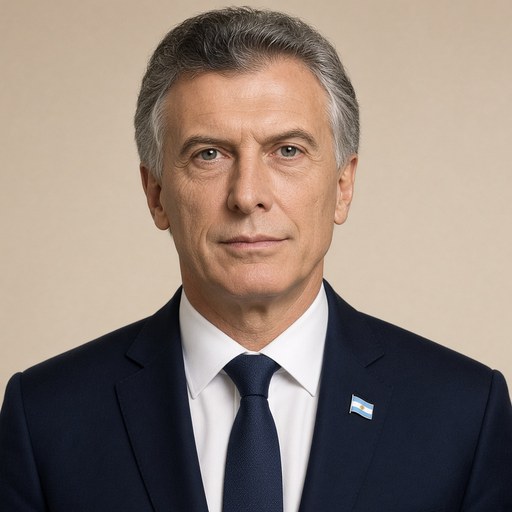
President Mauricio Macri at a meeting with residents of the town of Presidencia Roque Sáenz Peña, Chaco.
 Mauricio Macri · President of Argentina
- Context
- Macri addressed residents of Presidencia Roque Sáenz Peña, Chaco, during his fourth visit to the province in 20 months to inaugurate infrastructure projects.
- Main themes
- Regional development and investment, infrastructure and transport, Belgrano Cargas railway, employment creation, poverty reduction and hope, road construction, social housing, economic growth and inflation, belief in Argentina's potential, community engagement
- Duration
- ~13 min
- Words
- 1,511
- Sentences
- 61
- Readability
- 68
- Grade
- 10.0
- Syntax
- 3.11
- Vocabulary
- 2.01
Translated from Spanish
The broad sphere of national life a sentence belongs to. Every sentence has an Arena, so it is the denominator the other indices are read against.
Other61 sentences in 13 paragraphs
Good morning, good morning dear people of Chaco. How are the people of Chaco today? How are we doing? We're on the rise. I can't believe it, what a joy to be with you again, this is the fourth time I've come to Chaco in 20 months. Always with this joy, with this strength, with this desire to build, to do, to develop. The truth is that it is a wonderful people, wonderful. You know what, many times people ask me if I don't get tired of going to one province in the morning; another in the afternoon and living traveling around the country. And I tell them: "How could I get tired, if in every place I go I meet Argentinians full of hope, full of desire, who are giving their all, who are advancing in their dreams that they have had for so many years, and who today are daring to carry them out.
Also, just now, I came from Pampa del Infierno where I inaugurated an expansion of a collection center, which is already bringing a revolution of employment to Pampa del Infierno, I had never been there. I had been invited to a barbecue, but I couldn't leave you all hanging, so I missed a goat barbecue, which is incredible.
And I was also in Napenay, a small little town. Are you from Napenay? Oh, yes, look at that. I was there with Alexis and his wife, at their house, they are going to produce ice cream and they brought me a cactus, which they also produce to sell, to add to it. And the truth is that what we experienced this morning in Pampa del Infierno is a demonstration of what we want: we are investing, from the Ministry of Transport, billions of pesos in Chaco. For what? To connect Chaco with the world, so that the world knows the valuable and important things that the people of Chaco can do.
And one of the fundamental investments is the Belgrano Cargas, it is the railway that connects all of northern Argentina with the world, which is also related to the Belgrano Plan, which here "Mono" is leading, which is to give a historical reparation to all of northern Argentina, always undervalued and postponed. And what happened there was that we started to fix the Belgrano, to make new tracks and many didn't believe it. There was even one, who is working there, named Hugo, I think, who when he was hired to build the new tracks of Belgrano Cargas said: "I've heard this so many times, it's just another lie from these politicians" and suddenly he began to surprise himself that he was making the tracks and that more than 203 kilometers have already been built anew.
And suddenly the freight train returned with new locomotives, with new wagons and this group from Córdoba - called AGD - said: "I bet on the people of Chaco and I bet that the government will fulfill its promise and will repair the railway" and they built this Collection Plant and created jobs, and now there are many people from Chaco who work and now the trucks instead of going to Rosario turn around there and load and load the railway. And the gas station works, the workshop, the hotel, everyone works and those who live in Pampa del Infierno or in Napenay or in Sáenz Peña, if we continue like this, will be able to choose where to live and where to work, because the work will be here, where you were born, and you will be able to show all that you are worth. And this is what we are doing: building together, working with the Mayor, with Gerardo we always work, he sends me messages all the time. "This, that," he drives me crazy, he drives me crazy.
And also the works that are advancing throughout Chaco, I said are billions because it is not only Highway 16, and that we really have no more accidents; also the Highway between Sáenz Peña and Resistencia, which you have already seen has started to be built and we are fixing all the roads in the province. Again, for what. So that you can communicate, can travel, take care of you and also that your work reaches the whole world. And the 5,600 social housing units and the Procrear Plan and all the habitat works are aimed at recovering this, which is to believe that we are not poor, we may be poor, but we can get out of that place by working together.
And this is what has changed in Argentina, this is what we have to keep transmitting because there are still many who feel that it is not true and who do not want to get their hopes up, and who believe in these speeches of resignation, of skepticism, that it is like this and if you were born in a place you are already condemned. And I am here to tell you that it is not true, it is a lie. Of course it can be done, of course it can be done.
And for that we had to go through a tough year, but we lowered inflation, we are growing again and next year we will grow more and these investments that we inaugurated today will multiply, because Chaco and all the deep interior of Argentina can produce much more, can do much more and can add value in that place.
Yesterday we had a long meeting with the Forest Industry, which is also important for Chaco, and we told them: "how are we going to achieve exporting and generating 200,000 jobs around wood, we are going to start building more wooden houses, which are of excellent quality, and it also gives us peace of mind with the environment, with the problems of heat and cold. We have it there and we have not known how to take advantage of it, but luckily we have it and we have you and now we are going to do it and those 200,000 jobs will be generated from Chaco and all of Mesopotamia. And all this that we are doing we do together.
That is why I really like that you, now when a work is finished, make your little video with your cell phone and upload it. That is very good, because that is transmitting faith, hope, trust… do it, keep doing it, it is great that when you see that a work is finished you film it and express what you feel, because that is what it is about. In the Argentina we dream of, it is about feeling with the heart, not being afraid to get involved, putting everything we have. Because this is the place where we were born, this is the place where our loved ones, our families are. And now the time has come because we are the ones who said that things were going to happen and they are happening; what seemed impossible, a couple of years ago, is happening. And why? Because you decided it.
That is why I want to tell you, we are the generation that came to change history, and when I talk about generation I talk about those of us who are here today, whether we are 20, like you, or 80, like some who are around here. But all of us, it doesn't matter the age, what matters is the attitude of saying: "it is possible, change is possible." And changing is that, it is looking each other in the eye and telling the truth. Changing is putting the problems on the table and not denying them, but solving them. Changing is saying: "enough of looking for shortcuts, what comes quickly, goes quickly." We are going to do it every day by taking small steps. Changing is putting an end to the cleverness, to the everyone against everyone, in understanding that we are a team, and that we all have to give our best because if not we are messing with those next to us. If in a football team there is one who doesn't run, what is he doing? Harming everyone else, so we all have to give our maximum. Changing is also understanding that violence is not the way, we cannot express ourselves from that place, it is understanding that we have to respect those who think differently. Changing is assuming that we can, that it is not true that Argentina is condemned, that Argentinians are condemned, that we are part of the problem. No, changing is understanding that Argentinians are part of the solution. Did you understand me? We are part of the solution.
That is why I tell you: "people of Chaco, we are doing well; people of Chaco, we are doing well, we are doing very well. Let's all continue working for Chaco, for Sáenz Peña, for Napenay, for Charata, for Resistencia, for all of Argentina!"
Let's go Chaco, let's go Chaco, I love you! Let's go, strength!
The original Spanish. The tags above are read on the English translation's sentences.
Buenos días, buenos días chaqueños queridos. ¿Cómo están los chaqueños, hoy? Cómo estamos, vamos para arriba. No puedo creer, qué alegría estar nuevamente con ustedes, es la cuarta vez que vengo al Chaco, en 20 meses. Siempre con esta alegría, con estas fuerzas, con estas ganas de construir, de hacer, de desarrollarse. La verdad que es un pueblo maravilloso, maravilloso. Saben qué, muchas veces me preguntan si no me canso de ir a una provincia a la mañana; otra a la tarde y vivir recorriendo el país. Y les digo: “como me voy a cansar, si a cada lugar que voy me encuentro con argentinos llenos de esperanza, llenos de ganas, que están poniendo todo, que están avanzando en sus sueños que tuvieron durante tantos años, y que hoy se están animando a llevar adelante.
También, recién, vengo de Pampa del Infierno de inaugurar una ampliación de un centro de acopio, que ya está llevando una revolución de empleo a Pampa del Infierno, nunca había ido ahí. Me habían invitado a un asado, pero no los podía dejar a ustedes plantados, así que me perdí un asado de chivo, que es increíble.
Y también estuve en Napenay, un pueblito chiquito. ¿Son de Napenay? Ah, sí, mirá vos. Estuve ahí con Alexis y la mujer, en su casa, van a producir helados y me llevaron un cactus, que también producen para vender, para sumar. Y la verdad que lo que vivimos, esta mañana, en Pampa del Infierno es una demostración de lo que queremos: estamos invirtiendo, desde el Ministerio de Transporte, miles de millones de pesos, en el Chaco. ¿Para qué? Para conectar al Chaco con el mundo, para que el mundo sepa las cosas valiosas e importantes, que pueden hacer los chaqueños.
Y una de las inversiones fundamentales, es el Belgrano Cargas, es el ferrocarril que conecta a todo el norte argentino con el mundo, que también tiene que ver con el Plan Belgrano, que acá “el Mono” está liderando, que es darle una reparación histórica, a todo el norte argentino, siempre no valorado y postergado. Y ahí lo que pasó fue que comenzamos a arreglar el Belgrano, a hacer las vías nuevas y muchos no creían. Hasta había uno, que está trabajando ahí, que se llama Hugo, creo, que cuando lo fueron a contratar para construir las vías nuevas del Belgrano Cargas dijo: “esto ya lo escuché tantas veces, es una mentira más de estos tipos de la política” y de golpe se comenzó a sorprender él mismo de que él estaba haciendo las vías y que ya son de más de 203 kilómetros construidos a nuevo.
Y que de golpe el tren de carga volvió con locomotoras nuevas, con vagones nuevos y este grupo cordobés - que se llama AGD - dijo: “yo apuesto por los chaqueños y apuesto a que el gobierno va a cumplir y va a reparar el ferrocarril” e hicieron esta Planta de Acopio y generaron trabajo, y ahora hay muchos chaqueños, que trabajan y ahora los camiones en vez de irse a Rosario dan la vuelta ahí y cargan y cargan el ferrocarril. Y trabaja la estación de servicio, el taller, el hotel, trabajan todos y los que viven en Pampa del Infierno o en Napenay o en Sáenz Peña, si seguimos así, van a poder elegir dónde vivir y dónde trabajar, porque el trabajo va a estar acá, donde ustedes nacieron, y ustedes van a poder demostrar todo lo que valen. Y esto es lo que estamos haciendo: construir en conjunto, trabajando con el Intendente, con Gerardo siempre trabajamos, me manda mensajitos todo el tiempo. “Esto, lo otro”, me vuelve loco, me vuelve loco.
Y también las obras que están avanzando en todo el Chaco, yo decía son miles de millones porque no sólo es Autopista la 16, y que realmente no tengamos más accidentes; también la Autopista entre Sáenz Peña y Resistencia, que ya vieron que empezó a construirse y estamos arreglando todas las rutas de la provincia. De vuelta, para qué. Para que ustedes se puedan comunicar, puedan viajar, cuidarlos y además que el trabajo de ustedes llegue a todo el mundo. Y las 5.600 viviendas sociales y el Plan Procrear y las obras de hábitat todas van encaminadas a recuperar esto, que es creer que no somos pobres, podemos estar pobres, pero podemos salir de ese lugar trabajando todos juntos.
Y esto es lo que ha cambiado en la Argentina, esto es lo que tenemos que seguir transmitiendo porque todavía hay muchos, que sienten que no es verdad y que no se quieren ilusionar, y que creen en estos discursos de resignación, de escepticismo, que es así y si naciste en un lugar ya estás condenado. Y yo estoy acá para decirles que no es verdad, es mentira. Claro que se puede, claro que se puede.
Y para eso tuvimos que cruzar un año duro, pero bajamos la inflación, estamos creciendo otra vez y el año que viene vamos a crecer más y estas inversiones que inauguramos, hoy, se van a multiplicar, porque el Chaco y todo el interior profundo de la Argentina, puede producir mucho más, puede hacer mucho más y le puede agregar valor, en ese lugar.
Ayer tuvimos una larga reunión con la Foresta Industria, que es importante, también, para el Chaco, y le dijimos: “cómo vamos a lograr exportar y generar 200.000 puestos de trabajo alrededor de la madera, vamos a empezar a construir más casas de madera, que son de excelente calidad, y nos da tranquilidad también con el medioambiente, con los problemas del calor y del frío. La tenemos ahí y no la hemos sabido aprovechar, pero por suerte la tenemos y los tenemos a ustedes y ahora lo vamos a hacer y esos 200.000 puestos de trabajo se van a generar desde el Chaco y toda la Mesopotamia. Y todo esto que estamos haciendo lo hacemos juntos.
Por eso me gusta mucho que ustedes, ahora cuando se termina una obra, hacen su videíto con el celular y lo suben. Eso está muy bueno, porque eso es transmitir fe, esperanza, confianza… háganlo, sigan haciéndolo, eso está bárbaro que cuando ustedes ven que se termina una obra fílmenla y expresen lo que sienten, porque de eso se trata. En la Argentina que soñamos se trata de sentir con el corazón, no tener miedo a involucrarse, poniendo todo lo que tenemos. Porque este es el lugar donde nacimos, este es el lugar donde están nuestros seres queridos, nuestras familias. Y acá llegó la hora porque nosotros somos los que dijimos que las cosas iban a pasar y están pasando por eso; lo que parecía imposible, hace un par de años, está pasando. ¿Y por qué? Porque ustedes lo decidieron.
Por eso, les quiero decir, somos la generación que vino a cambiar la historia, y cuando hablo de generación hablo de los que estamos hoy acá, tengamos 20, como vos u 80, como algunos que están por acá. Pero todos, no importa la edad, lo que importa es la actitud de decir: “se puede, el cambio es posible”. Y cambiar es eso, es mirarse a los ojos y decirse la verdad. Cambiar es poner los problemas sobre la mesa y no negarlos, sino resolverlos. Cambiar es decir: “basta de buscar atajo, lo que rápido viene, rápido se va”. Lo vamos a hacer todos los días dando pequeños pasos. Cambiar es terminar con la viveza criolla, con el todos contra todos, en entender que somos un equipo, y que todos tenemos que poner lo máximo de nosotros porque si no estamos jodiendo a quien está a nuestro lado. Si en un equipo de fútbol hay uno que no corre ¿qué está haciendo? Perjudicando a todos los demás, entonces todos tenemos que dar nuestro máximo. Cambiar también es entender que la violencia no es la forma, no nos podemos expresar desde ese lugar, es entender que tenemos que respetar al que piensa distinto. Cambiar es asumir que podemos, que no es verdad que la Argentina está condenada, que los argentinos estamos condenados, que somos parte del problema. No, cambiar es entender que los argentinos somos parte de la solución. ¿Me entendieron? Somos parte de la solución.
Por eso les digo: “chaqueños, vamos bien; chaqueños, vamos bien, vamos muy bien. ¡Todos juntos a seguir trabajando por Chaco, por Sáenz Peña, por Napenay, por Charata, por Resistencia, por toda la Argentina¡”
¡Vamos Chaco, vamos Chaco, los quiero! ¡Vamos, fuerza!