




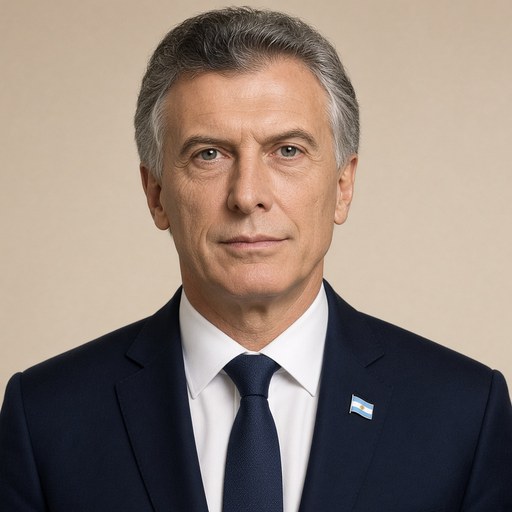
President Mauricio Macri at the event for the 41st anniversary of the Mediterranean Foundation.
 Mauricio Macri · President of Argentina
- Context
- Macri addressed the Mediterranean Foundation's 41st anniversary event in Córdoba on July 30, 2018, marking the first presidential participation at the occasion.
- Main themes
- Vaca Muerta energy development, investment and economic progress, Argentina's future outlook, lithium mining in northern provinces, Argentine national team coach debate, SME and business concerns, productivity agreements with unions, natural gas exports, employment generation, economic difficulties and recovery
- Duration
- ~57 min
- Words
- 6,878
- Sentences
- 173
- Readability
- 39
- Grade
- 17.5
- Syntax
- 3.38
- Vocabulary
- 2.00
Translated from Spanish
The broad sphere of national life a sentence belongs to. Every sentence has an Arena, so it is the denominator the other indices are read against.
Other173 sentences in 82 paragraphs
JOURNALIST.- How are you, Mr. President? Good morning.
PRESIDENT.- Good morning, very happy to be here, in my province.
JOURNALIST.- They let you through because it was not possible to pass; we had to walk, but they let you through.
PRESIDENT.- They let me through, yes, someone arranged everything; I think it was the Governor who arranged for us to pass.
JOURNALIST.- You know that I was just pointed out that this is the first time a President of the Republic participates in an anniversary of the Fundación Mediterránea. There have been presidents, of course, but in Córdoba, at the anniversary of the Fundación Mediterránea, which is celebrating 41 years, this is the first time it has happened; it is not an ordinary event.
PRESIDENT.- I love living doing things that later they tell me it's the first time. I don’t know why, maybe I associate it incorrectly, but I relate it to youth; the first time I feel like…
JOURNALIST.- I have good news for you to start, Mr. President. I am not the one asking the questions.
PRESIDENT.- No?
JOURNALIST.- No, the mechanism has been that – in your absence – while they waited for you, questions were raised from all levels by the people from the Foundation, so… the first one they asked me, which I’m going to sneak in, is whether you already have a candidate for the Argentine National Team.
PRESIDENT.- No, contrary to what is said, I do not participate in those kinds of things; I worry as a fan, clearly.
JOURNALIST.- But who do you like?
PRESIDENT.- Who do I like? Among the young ones, let’s say the established ones who are in Europe are there, but among the young ones here, Almirón seems to me that among the teams he has managed, he marks something different.
JOURNALIST.- Good title for this note, do you like Almirón?
PRESIDENT.- Yes, I like Almirón.
JOURNALIST.- You like Almirón? All the colleagues here are tweeting right now, the president likes Almirón for the National Team.
PRESIDENT.- I don’t know if that helps him or not.
JOURNALIST.- But since time is surely short and there are many questions, the truth is that I have seen the questions, and there is one that asks if you are happy, and there are others that ask questions that have to do more with what they are surely expecting; there are questions from economists and questions from large businessmen and questions from very small SMEs. The first messages have to do with something that is permanent in your speech, Mr. President, how are you evaluating the progress of investments, particularly in “Vaca Muerta,” on one hand, and lithium in the three provinces of northern Argentina?
PRESIDENT.- I just came from inaugurating this new platform to produce Nissan-Renault pick-ups here in Córdoba, which is a day of joy for the families who have secured that job, and I mentioned that – beyond the difficult moment we are going through – this storm that hit us head-on, when we had started to gain momentum, important things continue to happen in terms of the future for Argentines; I insist without denying the agenda of difficulties we have ahead to resolve, but also to stand in a place where we do not say, in the face of so many catastrophic forecasts, that this country has no destiny, has no future, because there are things that demonstrate that we have a future. “Vaca Muerta” is clearly a demonstration of that; there was a lot of talk about “Vaca Muerta,” that there were pilots we had there and they didn’t start because there was an inability to reach an agreement among unions, provincial government, national government, and companies; it was the first Productivity Table we created in my government, we all sat down or I personally sat down and showed the unions that acted directly that if they did not make a number of changes, that would remain down there, and we would continue importing energy and maybe we would never take advantage of it to generate jobs in Argentina and lower the cost of energy for Argentines, and from there it got underway, and in two and a half years demonstrating a tremendous capacity of the Argentine worker, because all the investors – for the most part – are partners of YPF and are foreigners and are impressed by the capacity and flexibility of Argentine human resources.
In two and a half years, with “Vaca Muerta,” we compensated for the decline of conventional production, and today we are producing a little more gas every day. So much so that this summer we will have the first export of gas to Chile, and in two years, at most three years, we will be net exporters; they are already starting to think about plants to liquefy gas and export by ship. The ships that today came here will leave for abroad with gas made in Argentina, and this is a revolution of employment that can generate half a million jobs, thanks to “Vaca Muerta,” and not only in the place, in Neuquén, Río Negro, and part of Mendoza, which has a little bit too, but throughout the metalworking industry because the amount of supplies needed is enormous, in addition to the fact that we are going to bid for PPP – shortly – for the railway that goes from Bahía Blanca to “Vaca Muerta” to carry all the sand that is needed because it is an industry. You already know that it is not like the conventional one, where one drills a well and it gives and gives and extracts everything it can; here one cannot stop drilling horizontal wells, for the most part, and so it is like a permanent factory that generates a lot of employment.
And the most important thing, for the Cordobans present here, one of the most industrial provinces we have in Argentina, is that this will lead to a significant decrease in the value of the cubic meter of gas; it will be a significant decrease, given that it is one of the main sources of energy generation, of energy for production. So I think it is something very, very important that is happening; it is a fact, and one has to go there and check it and see what is happening there; it is like a gold rush; there are people arriving, families arriving every week. And the same is happening in the north with “white gold”: the lithium needed for car batteries, soon, and for cell phones today. So, Catamarca, Salta, and Jujuy have an employment revolution around lithium, and there are already a number of projects underway, but many more are about to start.
JOURNALIST.- The question seems to aim a bit to find out if, in the case of lithium, are we going to be only exporters of lithium or are we going to do something with lithium before exporting it?
PRESIDENT.- No, we are all wanting to see how we can add value; the governor of Jujuy is already developing the processes prior to the battery that add value and is very enthusiastic, but it is a struggle, and as long as we have a lot of lithium and have an orderly macroeconomy, lower inflation, have a State that really does not crush everyone with taxes that harm private activity, and on top of that, that is managed with the resources it has, it will be easier for people to bet on adding value in Argentina, and not wanting to take things from here because we do not have a reliable system.
JOURNALIST.- Particularly China, who will play a special role in the issue of Argentine lithium?
PRESIDENT.- Today they are not playing such a special role; today we have Australians, Chileans, Europeans, in general; today there is no particular vision, but we cannot rule it out because China is a strong demander of minerals, food, and energy. That is why they see us as such an important strategic partner, which I reiterated with President Xi Jinping this week when I was with him…
JOURNALIST.- Your ambassador Guelar told us that they are inaugurating the highway that will charge cars in motion, and for that, they need lithium, so it seems they will demand it.
PRESIDENT.- Ambassador Guelar is an enthusiast of the relationship with China, and we are all enthusiastic because it is a great opportunity that is opening up for us. China has bet heavily; it has not stopped taking participation in Argentine companies; it is betting strongly on the investment process in infrastructure in our country, and we believe that this is going to increase; just like Japan, be careful with Japan, in the midst of the currency run, the 80 most important businessmen from Japan came for the first time in history; we never had a delegation like that, and the message from Minister Abe was that this is a temporary issue; we bet on the relationship with Argentina for 30 years, and we have made the decision – after two years of studying what the Argentines are doing – and we believe in Argentina as a strategic partner, so it happens with everyone. What we have to do is finish doing our homework.
JOURNALIST.- The next question relates – it seems to me – to the other side of this conflict that arises in global markets, between the two heavyweights, between the United States and China; do you see an opportunity with China, in light of the ongoing conflict with the United States?
PRESIDENT.- Both are very important partners of Argentina; the United States already has a tradition; it is the first investor in Argentina for more than a century, and China has really been beating the drums and advancing very quickly, and now it is our turn to hold the presidency of the G-20, which is a tremendous responsibility, perhaps – in institutional terms – the greatest that Argentina has had in its history, and as such, we have set out to be a friendly and equitable facilitator to establish and maintain the values of fair, equitable, and open trade, because – as I have said many times – when one has a doubt, one has to go and see if we have fallen asleep over time; we have lost decades by not finding our way. So today we can look at the different alternatives, how the countries fared – and Miguel – the 20 countries that fared best in the last 30 years are 100% of those who traded the most, who integrated the most. So there is no doubt about what the path is; we will defend those flags because we have already used the others: to live with our own, to isolate ourselves, and it went badly for us, so we want to integrate intelligently, gradually, because we have many internal productivity problems, many things to resolve, many mafia-like, arrogant behaviors that weigh on the cost of Argentines, starting also with the irresponsible behavior of a State that takes all the money that is circulating here and in the world to finance something that never seems to have an end, a limit. So I think it is also important to understand – when I talk about the burden of uncontrolled public spending – it is what prevents you from developing quality private employment, which is the main objective we have as a country: to generate opportunities to choose, so that people can choose, so that they do not have to end up depending on a favor from some politician in power because there are no alternatives in their town.
And we will achieve that if there is financing, and financing will come when the State stops being the main demander of financing and leaves it to the SMEs, which you just mentioned, to have credit.
This morning I had the Agricultural Machinery Productivity Table, and the issue of financing is always there.
JOURNALIST.- Soybean SMEs were asking about that…
PRESIDENT.- Exactly, they all need financing; it is a country where if the SME grows too fast, it goes bankrupt because it has to provide so much liquidity on the street that it cannot turn around because there is a system of check discounts that is just starting, with the Stock Exchange, the CGR, but all that will also accelerate if we lower inflation, and for that, it is also very important to lower the fiscal deficit.
JOURNALIST.- I have no doubt that this question has been asked by a colleague, among the many here, from the economic journalists, with the opening of negotiations, is a reactivation of internal consumption expected?
PRESIDENT.- Consumption, these months, has had an impact, not comparable to other situations and difficulties we have had in the past, but clearly when it normalizes and the interest rate goes down, consumption will recover, and the private sector negotiations are free; each sector is renegotiating, settling the negotiations; the value of the salary will surely be defended in the honest negotiation, and then there are the municipalities, the provinces, and the Nation that can pay according to their budget, with what they have. We do not sell anything; we count the taxes we collect, and we have to pay according to that, and we will make our best efforts at each level of budgetary difficulty.
JOURNALIST.- But I cannot help but relate to what you are answering, Mr. President, this question that I have: what are the prospects for Brazil, the main partner of Mercosur, because in terms of consumption and market, Brazil is very important for us.
PRESIDENT.- Without a doubt, we wish Brazil well because it especially impacts Córdoba, because it is the province…
JOURNALIST.- In Nissan, what have they told you about the pick-up truck? Are they going to sell it in Brazil?
PRESIDENT.- Yes, they are going to sell it in Brazil, in Colombia, in the entire region; all the new investments – 5.1 billion dollars, which the entire automotive industry is investing, starting from the Automotive Industry Productivity Table, which we call the One Million Vehicles Plan, the new auto parts law is aimed at exporting, so everyone is developing a monolocated vehicle, as they call it now, a car here to supply different countries around the world, no longer just a little bit of each car; they export that one and exchange it with others and aim for 70,000 pick-ups, half here and half to sell abroad.
JOURNALIST.- And in that sense, what expectations does Brazil have regarding the economic situation it is witnessing and the politics?
PRESIDENT.- Brazil has gone through a traumatic situation, but in historical terms, it will be very positive for Brazil, because it has definitively freed itself from its judicial system and this collusion with corruption that existed in Brazil has come to an end, which will give it very important institutional health for the future; in the meantime, this has had a huge impact on governance and the economy. It is recovering, so this shake-up from external markets has also hit Brazil...
JOURNALIST.- Not so much us, but it has hit...
PRESIDENT.- It has hit as well, because they have an internal market and are financed internally, there is a huge difference, which is why it hit them less, but I trust that after these elections Brazil will regain its growth momentum, it is a country like ours with enormous potential and we have a very active agenda, since we took office we have proposed to Brazil greater integration, greater unification of sanitary, phytosanitary, technical standards, sharing consulates, in other words, we are really going to do it, I am very pro-Brazil, I am the only Argentine who, when Argentina loses in the World Cup, votes for Brazil and I was left without a team afterwards because the Brazilian team...
JOURNALIST.- Does the political instability in Brazil not worry you, Mr. President?
PRESIDENT.- Well yes, there is a lot of uncertainty about who will govern that country starting in October, but let’s hope it is for the best, and I insist it is our most important strategic partner and we have several negotiations underway, with the European Union, Japan, Canada, Korea, in other words, we are giving it momentum.
JOURNALIST.- The questions from SMEs come - almost all - in the same direction, whether it is possible to return to national purchasing, whether it is possible to protect production?
PRESIDENT.- We have a law that we are proposing, Dante is around; next week we will go to the regulation, that was a great success, just like – for me, although it has nothing to do with it – the Competition Defense Law, which not only helps us defend SMEs from large companies when they abuse their dominant position in the market but also, of course, helps consumers, in other words, there are tools. We passed the SME Law, it was one of the first laws where we got the support of Peronism in Congress, the Entrepreneurs Law, boosting the CGR, in other words, 70 percent of jobs in the next 30 years will be generated by the first ventures and we have to bet strongly on it, because large companies – which are very welcome – are increasingly coming hand in hand with technology, robotics, artificial intelligence, so the job gain is very little and here what is important is to generate employment for Argentines. That is why the export axis, the serious regional development of Argentina, a truly federal country, enough of the nonsense of federalism where everything happened in the capital. I want every province to be connected to the world, we already have seven provinces where Argentines take their plane and go out into the world to sell what they have to sell and they are visited directly and that has to continue advancing until the whole country is connected to the world and that in a few years, in 20 years we see an Argentina where the strength of Córdoba, Tucumán, Santiago del Estero, Salta, all the provinces is evident in all activities.
JOURNALIST.- You have anticipated the question that I have been signaled, there are many changes coming in education and we must be prepared for technological advances in the world, I was thinking this morning and this morning I was given an explanation, Mr. President you come from Santa Isabel, what was the level of demand, of quality control from the Japanese, regarding the new truck and the two more that they are going to make and how they have raised the bar for the suppliers from Córdoba of the automotive industry and you just mentioned the issue, in this revolution that is coming in the world, in terms of technological advances, that is the question, how are we doing.
PRESIDENT.- Well, first, how good that these things are happening to us, that is why I said, in Santa Isabel, that despite the difficulties, very good things are happening to us, because we bring technology from the world, we incorporate it, we self-challenge and we comply, because the same thing that the Japanese can tell you about the reaction of the Córdoba workers with the truck, the Italians can tell you about the Cronos and everyone who is working in the automotive industry: our human resource is very valuable and what it means for that person to feel gratified by improving, discovering their talents, discovering their capacity, because we are in a world where – regardless of the fact that the North is marked by competitiveness – what we must not forget is that we are here to be happy, to connect from love, so it has to be linked to personal satisfaction and this is given to you by doing things well. So that is why what is happening is so important, even though the Japanese relaxed a bit – they told me – because they were given a little Fernet and goat and they started to relax.
JOURNALIST.- We can export goats and Fernet to the Japanese.
PRESIDENT.- For the first time we are exporting meat from Patagonia, for the first time in history and little by little we have opened 69 markets and we are going for more. So in education, going back to your point, we are clearly experiencing an absolute revolution so we cannot teach how we taught a hundred years ago and it is that debate that we have set up from day one with all the Education ministers from all the provinces and we talked about the federal pact for education, in which we said: “gentlemen, we need to revolutionize education, we need to dare to change pedagogy, content, teacher training, and this started depending on the level of conflict with the unions each province has begun, as it has been able, and it is the debate we need to have and there it is very important that society in general raises, that we want to know how it can be that the results of school evaluations are something hidden, in other words, parents need to know if their children are learning in school or not, they cannot find out when they receive, in fifth year, that when they go to make a job presentation and then they are told: “no, you don’t know anything about Mathematics, you don’t understand texts, I can’t give you a job.” So, it is already too late, this part of the change is to put the truth on the table and self-demand again, to tell ourselves what we are doing wrong to correct it. So what we ask of teachers and not only teachers, but also unions, because most teachers understand it and want to participate in this revolution of training.
JOURNALIST.- Do they really want to participate?
PRESIDENT.- Most yes, absolutely most...
JOURNALIST.- Do the governors also?
PRESIDENT.- The governors too.
JOURNALIST.- Let’s not talk about the one who is, because he is your friend, but the governors in general, when this is raised to them...
PRESIDENT.- Of course. In education, we have something that also has to do with this ambiguous and cynical thing that we Argentines often have, we say a lot of things that we want but then we do not act accordingly.
JOURNALIST.- That is what I was referring to.
PRESIDENT.- But many times we talk about education, the importance of education, and they invite you to an education meeting and you don’t show up, or five minutes later you get bored and you go off to wander with your mind. So I think there needs to be a commitment from all of society, and the business community has an important role, because it has to build that bridge between technical school and business, between university and business, which was also broken in this thing of telling kids “the worst thing is the company”; but excuse me: if most are going to work in a company: how do we want to teach kids that small companies are good and large ones are bad? But how, if we believe and need all small companies to grow, because if they grow they will create more jobs, they will need more people, and if they grow, the whole country grows? So how are we going to be teaching those things that do not lead to Argentina being full of opportunities for everyone? So I believe that education is the central challenge, when I talk about generating employment, without education there is no employment.
JOURNALIST.- Of course, I must apologize in advance for all the questions that will not be asked, but since it is Fundación Mediterránea and there are large companies and there are SMEs, at least some of the SMEs; this one that defines itself as a purely exporting SME, produces textured soy proteins, “we need to lower internal logistical costs, basically,” they are in such a place in the province of Córdoba. “Mr. President: will we be able to achieve, will it be possible to lower costs to be able to export and be competitive?”
PRESIDENT.- It is a very important challenge, clearly Argentina has the worst logistics system, or one of the two or three worst in Latin America; we have costs that more than double, and we are tired of hearing that a container from Tucumán to Rosario costs much more than from Rosario to Shanghai, and we have all heard that. We have a productivity table for logistics, in each productivity table logistics is present, today we talked about it again with agricultural machinery, which goes from problems that National and provincial Roads bring with permits to circulate, through the routes and widths - which of course the priority is to protect people’s lives, it is one of the priorities I set at the opening of this year in Congress, to reduce the number of tragic deaths on Argentine roads-. But there are many things, the bi-trains, which we are also approving with Roads, adapting the routes, that is why the most important Road Plan in the history of Argentina must be what we are launching, we signed six road corridors by PPP last week, this means 6 billion dollars; and next year I estimate that there will be around 60, 70 billion pesos that will start to be invested. We need to lower the cost of trucks, that is why bi-trains; we need trains, that is why we are making strong progress on Belgrano Cargas, the first, and we hope that when we can budget we can launch San Martín. The airports, this number of planes that we are starting to receive and have internally has a byproduct which is the cargo capacity of the plane, low, cheap, there is a lot of offer to load by plane, to reach the right season for the “opening” of blueberries, to get the best prices; cherries are coming which will be another revolution, 100,000 jobs in four years because we are lucky that by latitude we arrive earlier to have the best moment than Chile, which is the other great exporter of cherries: in everything we are thinking about how to lower logistics costs. We also need to confront the arrogant, mafia-like behaviors that we know exist in the system, and there I need the courage of entrepreneurs to go and report where they have their abusive situations that do not correspond, like a woman did, I don’t know if you heard the audio of a woman that went viral a few weeks ago - always women having more guts than us men - and she confronted the union telling them that she was not going to keep paying these extras that they were asking for, which made no sense and endangered the jobs of her transport company. I believe that we have a huge chapter to resolve there, because logistics affects everything, absolutely everything; we need that cost to go down too, because we are a team; if someone arbitrarily decides to charge much more than what their task is worth, it harms all Argentines, leaves Argentines without jobs, without the opportunity to sell what they produce in another province or sell it to the whole world.
JOURNALIST.- Of course, if it were a journalistic interview, the one I would skip is the first one I would ask, because it has to do with party politics, so to the one who sent it I inform that I will not ask that question, I will ask it when I interview you on the radio.
PRESIDENT.- He is protecting his rating.
JOURNALIST.- Unless you want to...
PRESIDENT.- No, no, if we talk tomorrow.
JOURNALIST.- There are several aspiring candidates sitting over there, it could be complicated. But regarding poverty, that is the question, which also has to do with the economy, what serious policies will be carried out to face this critical moment, Mr. President?
PRESIDENT.- The best demonstration of the concern we have given to the issue is that we have the highest proportion of social spending in history; three out of every four pesos have a social application. In addition to that, we have generated systems to get closer to the people: the single window, a place where people can easily carry out all their procedures; the State in your Neighborhood, which was a design in which we mobilized to the humblest neighborhoods across the country. We have not stopped traveling around the country; there are already many neighborhoods simultaneously. I do not have all the numbers in my head, but we are reaching millions of Argentines, to whom we provide everything from documents to information about all the rights they have, and we also help them resolve their conflicts, our legal advice, access to school: all the things one needs for people to feel included. And then we are changing the "Trabajar" plans for a plan called "Hacemos Futuro," in which we are truly now demanding and supporting training, because those plans cannot be an eternal tool, as that leads to frustration and excludes them definitively. So we are working, and we have already trained 80,000 Argentines in terms of completing secondary education and accessing knowledge for some type of work. So this is working. And then we also created the "Empalme," where those who have the plans, for several months we continue to pay the plan while they complement it with their salary. This has allowed, not as much as we would have dreamed, but already 8,000 workers have joined the formal workforce. Because what we need to achieve is to get people out of exclusion, not to accompany them in exclusion for life; so we clearly have that commitment to training, which is a complement to education.
JOURNALIST.- The people from the Foundation have signaled to me that I need to return their time so they can fulfill their obligations.
JOURNALIST.- But we have a couple more, I will accompany you a couple more.
JOURNALIST.- What I am going to ask is that you speak; people want to hear from you, Mr. President, there is a lot of interest in hearing you.
PRESIDENT.- As a summary of what we are experiencing. Without a doubt, we had gained momentum in 2017 and we had proposed to sequence the reduction of problems over time, accompanying it with growth and financing. Perhaps what we set as a goal was not coherent, to gradually reduce the fiscal deficit over time and try to lower inflation much more quickly, and added to that is the fragility of a country that requires permanent financing, because the State spends more than two pesos out of every five and does not have them. This generates a demand for permanent financing in a world as volatile as the one we are living in, which exposes you to any storm that comes your way. But clearly, it is part of a learning process; today we are also understanding things, starting to call things by their name, starting to put the real problems on the table, not denying them, moving away from magical solutions, thinking that magically I can spend more and not go into debt and not have inflation: that does not exist. If it existed, everything would be much simpler; it would come down to having a little machine, and the more efficient the machine, the more pesos we have to distribute and the happier we are, and it is not like that. So I believe that this maturity and this ability to understand make us grow as a society. And I feel that we are growing and that today we talk about things that for a long time we did not want to talk about, or we were deceived into thinking they were not important; and now they are there, and there is a majority of society that says, "We have to solve them"; and there is a leadership that at times supports and at times falls into, let’s say, demagogic attitudes. And clearly that is not the way; the path is for every Argentine to have the opportunity to choose from where they are a protagonist, from where they will give their all and feel part of, useful, dynamic, powerful, creative, and innovative; that is what will build the Argentina we want. And the good thing is that we have talent; I would not be here if I were not an absolute believer in the talent of Argentines, and from the bottom up, not from the top down; the Argentine is adaptable, the Argentine is capable. What we have to understand is that what was given to us was a lie, and when someone gives you something, be suspicious; my grandmother used to tell me, "When they give you too much, be suspicious," it is like that, it has no consistency. Today, in what we are doing, although for many it may seem like slow steps, there is consistency, there is coherence in what we are doing, in all these things we have recounted. What the agricultural sector is doing is consistent; the drought hit the agricultural sector, and now it has bet and doubled down, planting record amounts of wheat, and that means it has the means to do so. And tourism is something consistent; we are breaking records all the time, with the enthusiasm of Gustavo, another powerful Cordoban, because tourism is a great generator of employment, and on top of that, of culture, because they come, visit us, we exchange, we exchange between provinces, no longer this thing that centralism knows the world before knowing its own country.
We have a wonderful country; how can someone go to know the world before knowing Purmamarca, or Ushuaia, or Los Esteros del Iberá? There is so much to see, and that creates jobs, and what we have seen these weeks during the winter holidays, record winter vacations. So that is happening, and I also say that we face things we have to confront, but important things are happening to us, and we export services with added value. Who does it? Cordobans, Argentines, who process information here and export it via the internet, and that is also growing every month. So, I say there is a virtuous process of generating opportunities with a heavy legacy that we are far from having resolved. I mean, if one starts with a Central Bank with less than 5 billion dollars in reserves, because they squandered 70 billion to sustain and fill it with paper at the Central Bank and sustain a party, well, it is not easy, it is not easy.
For those who criticize me for not having said on the first day that we are bankrupt, that we are a catastrophe, that we are going nowhere, I believe that from that place you do not gather energy, you do not gather energy to start; if all these things have started, it is because we gave an optimistic vision to our reality, which is the one I have. I mean, I know that there are many people who say that this country has no solution, and I say yes, as long as we commit more and more to ensuring that opportunities are available for those who are willing to be protagonists, not for those who seek shortcuts, not for those who are clever and settle, not for those who invent a public job with a salary higher than in the private sector and there is no task; we cannot sustain that anymore.
JOURNALIST.- What is the dimension of the storm, Mr. President, that you frequently mention?
PRESIDENT.- For me, given all the things we have done, it is much more manageable than what we had in 2009, in 2014, not to mention 2001. That is why we are standing, that is why we are walking, that is why we have a recession, but it is not of the dimensions of the previous ones. So, as long as we quickly emit a message that we are on this course and we are not going to change it, and that we are really going to stop trying to deceive someone else in the world to lend us money, only to later declare it empty, the more this process will accelerate. It is clear; on this course, the only thing ahead are opportunities. I mean, all these things I have recounted, that just by producing cherries, we can generate 100,000 registered private jobs, is incredible; it is a dimension of employment that changes lives in this case for Río Negro, Neuquén, and Chubut. And just as it changes for Neuquén, Mendoza, and a bit of Río Negro, Vaca Muerta, and just as in the coastal region, the issue of wood is starting to turn around, because we do not have that pulp mill, because some governor asked for bribes that did not belong to the Finns; otherwise, that pulp mill would have been on the Argentine side. We need a pulp mill that exports, that generates value, that adds value, that creates a development hub; just in wood, we can export the same as wheat.
So, I say we have so many things to do, and once we have that wood, we will add value, because there is talent here; we are going to design things and export something to the world. That is why it is so important to improve the foreign trade system; that is why the only foreign trade window we are designing is so that everything can be done online. There are already more than a thousand procedures that in this Government we have moved from paper to digital, and there are no more bribes, weeks and months are not lost. We are talking about millions of hours that we have returned to you, so you can use them to create, to work. So all this is a process of having understood that we are a single team, the public sector and the private sector, and that there can no longer be any boogeymen in the AFIP, in Customs, in SENASA, in INTI.
No, gentlemen, what do you need? Because you are the creators of wealth, the generators of wealth, and so we need you to move forward, because with your taxes we will provide better public education, better public health, and you will continue generating employment, and that is the Argentina that has begun. Today there is a shift in Argentines to say what else can I do, what else can I export, and despite the fact that we still have not managed to control inflation, despite the fact that we still have high taxes. Imagine what will happen in a couple of years when inflation is under control and taxes have gone down; that is my vision, if we persist and put in what we need: it has been a revolution of growth for Argentines.
JOURNALIST.- The last one, and I apologize to the people of the Foundation because I am going off what they asked me. I have known you since before you were Chief of Government, I have known you since you were President of Boca, you have always had a relationship with Córdoba; now they say that the relationship is because you got many votes in Córdoba. Regardless of the votes, Mr. President, how is your relationship with Córdoba? Your institutional relationship and your personal relationship with Córdoba.
PRESIDENT.- The personal relationship is better than ever; I have great admiration for the drive of Cordobans, for this different personality that I hope my Government will acquire in each province, because these cultural differences are what give us strength, what can give us that different place in the world, and Córdoba has always had that rebelliousness towards the Capital, and I believe we need that same healthy rebelliousness in all provinces. So I am happy with the drive and betting a lot, betting a lot that this entrepreneurial spirit of Cordobans radiates, radiates in Chaco, in Santiago del Estero, in San Luis, it radiates in everything around it; so it is very important, very important.
JOURNALIST.- Thank you very much for your presence; I told you at the beginning, the Mediterranean Foundation is 41 years old, and it is the first time that a President of the Republic accompanies us in person for the anniversary.
PRESIDENT.- Thank you for inviting me, to such a prestigious institution that has always advocated for the regional development of the country and regional economies, for fiscal balance. It has fought a battle that can be frustrating after so many years of not achieving it, but I believe that now these flags that the Foundation has carried are permeating, and it is good that today they have gathered all the organizing institutions of this anniversary, because this division we have had in the business and entrepreneurial sector is not good. Too many institutions, too many egos, and what we need to do here is work as a team; that is what is important.
JOURNALIST.- Thank you very much, Mr. President.
PRESIDENT.- Thank you.
The original Spanish. The tags above are read on the English translation's sentences.
PERIODISTA.- ¿Cómo está presidente?, buen día.
PRESIDENTE.- Buen día, muy contento de estar acá, en mi provincia.
PERIODISTA.- Lo han dejado pasar porque no se podía pasar, nos hicieron caminar, a usted lo dejaron pasar.
PRESIDENTE.- A mí sí, hay alguien que arregló todo, creo que fue el Gobernador arregló para que pasemos.
PERIODISTA.- Sabe que me hacían notar recién, que es la primera vez que un Presidente de la República participa de un aniversario de la Fundación Mediterránea, ha habido presidentes, por supuesto, pero en Córdoba, en el aniversario de la Fundación Mediterránea, que está cumpliendo 41 años, es la primera vez que pasa, no es un hecho cualquiera.
PRESIDENTE.- Me encanta vivir haciendo cosas que luego me dicen es el primera vez. (Risas y aplausos) No sé por qué, por ahí lo asocio mal, pero lo relaciono con la juventud, la primera vez me siento como que…
PERIODISTA.- Tengo una buena noticia para usted para empezar, presidente. Las preguntas no las formulo yo.
PRESIDENTE.- ¿No?
PERIODISTA.- No, el mecanismo ha sido que – en su ausencia – mientras lo esperaban se han planteado preguntas de todos los niveles la gente de la Fundación, así que… la primera que me han hecho, que yo la voy a colar porque es ¿si ya tiene candidato para usted la Selección Argentina?
PRESIDENTE.- No, no, contrariamente a lo que se dice no participo en ese tipo de cosas, me preocupo como hincha claramente.
PERIODISTA.- Pero ¿quién le gusta?
PRESIDENTE.- Quién me gusta, de los jóvenes, digamos los consagrados que están en Europa están allí, pero entre los jóvenes de acá Almirón me parece que entre los equipos que él dirigió marcan algo distinto.
PERIODISTA.- Buen título para esta nota, ¿le gusta Almirón?
PRESIDENTE.- Sí me gusta Almirón.
PERIODISTA.- ¿Almirón le gusta? Todos los colegas que están acá están tuiteando, en este momento, al presidente le gusta Almirón para la Selección. (Risas).
PRESIDENTE.- No sé si con eso lo ayudo o no lo ayudo.
PERIODISTA.- Pero como seguramente el tiempo es breve y hay muchísimas preguntas la verdad que he visto las preguntas y hay uno que le pregunta si es feliz y hay otros que le preguntan cuestiones que tienen que ver más con lo que seguramente están esperando; hay preguntas de economistas y hay preguntas de empresarios grandes y hay preguntas de Pymes muy chiquitas. Los primeros mensajes tienen que ver con algo que es permanente en su discurso, presidente, ¿cómo está evaluando los avances de las inversiones, particularmente en “Vaca Muerta”, por un lado, y el litio en las tres provincias, del Norte argentino?
PRESIDENTE.- Justamente vengo de inaugurar esta nueva plataforma para producir pick up Nissan-Renault, acá, en Córdoba, que es un día de alegría para las familias, que han conseguido ese trabajo y mencionaba que – más allá del momento difícil que está transcurriendo – esta tormenta que nos tocó de frente, cuando habíamos empezado a embalarnos siguen pasando cosas muy importantes, en términos de futuro, para los argentinos; insisto sin negar la agenda de dificultades que tenemos por delante para resolver, pero también para pararnos en un lugar en el cual no digamos, frente a tantos pronósticos catastróficos, como que este país no tiene destino, no tiene futuro, porque hay cosas que demuestran que tenemos futuro. “Vaca Muerta” es claramente una demostración de eso, se habló mucho de “Vaca Muerta”, que eran pilotos que teníamos ahí y no arrancaban porque había una incapacidad de ponerse de acuerdo entre gremios, gobierno provincial, nacional y empresa; fue la primera Mesa de Productividad que creamos en mi gobierno, nos sentamos todos o me senté personalmente y le mostramos a los gremios que actuaban directamente que si no hacían una cantidad de cambios eso iba a quedar ahí abajo e íbamos a seguir importando energía y tal vez nunca la íbamos a aprovechar para generar trabajo en la Argentina y bajar el costo de la energía para los argentinos y a partir de ahí se puso en marcha y en dos años y medio demostrando una tremenda capacidad del trabajador argentino, porque todos los inversores – en su inmensa mayoría – son socios de YPF y son extranjeros y están impresionados de la capacidad y ductilidad del recurso humano argentino.
En dos años y medio, con “Vaca Muerta” compensamos la declinación del convencional y hoy estamos produciendo, todos los días, un poco más de gas. Tanto que este verano vamos a tener la primera exportación de gas, a Chile, y en dos años, máximo tres años vamos a ser exportadores netos, ya se está empezando a pensar en plantas para licuar el gas y exportar en barco. Los barcos que, hoy, venían para acá, van a irse para afuera con el gas hecho en la Argentina y esto es una revolución de empleo, que puede llegar a generar medio millón de empleos, gracias a “Vaca Muerta” y no sólo en el lugar, en Neuquén, Río Negro y parte Mendoza, que tiene un cachito también, sino en toda la metalmecánica porque la cantidad de provisiones que se necesita es bestial, amén de que vamos a licitar por PPP – en breve – el ferrocarril que va de Bahía Blanca a “Vaca Muerta” para llevar toda la arena, que hace falta, porque es una industrial. Ustedes ya más o menos deben saber que no es como el convencional, que uno hace un pozo y le da y le da y saca todo lo que puede, acá uno no puede parar de hacer pozos horizontales, en su mayoría y entonces es como una fábrica permanente, que genera muchísimo empleo.
Y lo más importante, para los cordobeses, aquí presentes, una de las provincias más industriales que tenemos en la Argentina es que esto va a llevar a una baja importante en el valor del metro cúbico de gas, será una baja importante, dado que es una de las principales fuentes de generación de energía, de la energía para la producción. Entonces creo que es algo muy pero muy importante que está sucediendo, es un hecho y uno tiene que ir ahí y comprobarlo y ver lo que pasa ahí, es como una fiebre del oro, hay gente que llega, familias que llegan todas las semanas. Y lo mismo está pasando en el norte con el “oro blanco”: el litio que hace falta para la batería de los autos, en poco tiempo y de los celulares hoy. Entonces, Catamarca, Salta y Jujuy tiene una revolución de empleo alrededor del litio y ya hay una cantidad de proyectos en marcha, pero muchísimos más por empezar.
PERIODISTA.- La pregunta parece apuntar un poco para saber si, en el caso del litio, ¿si vamos a hacer solamente exportadores de litio o vamos a hacer algo con el litio, antes de exportarlo?
PRESIDENTE.- No, estamos todos queriendo ver cómo le agregamos valor, ya el gobernador de Jujuy está desarrollando los procesos anteriores a la batería que le agregan valor y está muy entusiasmado, pero es una lucha y en la medida que tengamos mucho litio y tengamos una macroeconomía ordenada, bajemos la inflación, tengamos un Estado que realmente no aplasta a todo el mundo con impuestos que dañan la actividad privada y encima que se maneja con los recursos que tiene va a ser más fácil que la gente apueste a agregarle valor, en la Argentina, y no que se quiera llevar las cosas de acá porque no tenemos un sistema confiable.
PERIODISTA.- ¿Particularmente China, quien jugará un rol especial en el tema del litio argentino?
PRESIDENTE.- Hoy no están jugando un rol tan especial, hoy tenemos australianos, chilenos, europeos, en general; hoy no hay una visión particular, pero no hay que descartar porque China es un fuerte demandante de minerales, de alimentos y de energía. Por eso es que nos ve como un socio estratégico tan importante, que lo volví a reiterar con el Presidente Xi Jinping, esta semana cuando estuve con él…
PERIODISTA.- Su embajador Guelar nos contaba que están inaugurando la autopista que va a cargar a los autos en marcha y para ello necesitan litio, así que se ve que van a demandar.
PRESIDENTE.- El embajador Guelar es un entusiasta de la relación con China y es que todos somos entusiastas porque es una gran oportunidad que se nos abre. China ha apostado fuertísimo, no ha parado de tomar participación en empresas argentinas, está apostando fuerte al proceso de inversión en infraestructura en nuestro país y creemos que esto va hacía más; igual que Japón, cuidado con Japón, en plena corrida cambiaria vinieron los 80 empresarios más importantes de Japón, por primera vez en la historia nunca tuvimos una delegación como esa y el mensaje del ministro Abe era que esto es una cuestión coyuntural, nosotros apostamos a la relación con la Argentina, durante 30 años, y hemos tomado la decisión – después de dos años de estudiar lo que están haciendo los argentinos – y creemos en la Argentina como un socio estratégico, así que nos pasa con todos. Lo que tenemos que hacer es terminar de hacer los deberes.
PERIODISTA.- La pregunta que sigue, tiene que ver – me parece con el otro lado de esto- este conflicto que se plantea en los mercados mundiales, entre los dos pesos pesados, entre Estados Unidos y China, ¿usted considera una oportunidad con China, ante el conflicto que se mantiene con Estados Unidos?
PRESIDENTE.- Los dos son socios muy importantes de la Argentina, Estados Unidos ya tiene una tradición, es el primer inversor en la Argentina, ya hace más de un siglo y China viene realmente batiendo los tambores y avanzando muy rápido y ahora nos toca ejercer la presidencia del G-20, que es una tremenda responsabilidad, tal vez – en términos institucionales – la mayor que ha tenido la Argentina en su historia y como tal nos hemos propuesto, como un amigable y ecuánime facilitador para lograr establecer y sostener los valores del comercio justo, equitativo, abierto, porque – como ya lo he dicho muchas veces – cuando uno tiene una duda uno tiene que ir y mirar si nos hemos dormido en el tiempo, hemos perdido décadas por no encontrar el rumbo. Entonces, hoy podemos mirar, en las distintas alternativas, cómo les fue a los países - y Miguel - los 20 países, a los cuales le fue mejor, en los últimos 30 años, son el ciento por ciento de los que más comerciaron, de los que más se integraron. Entonces no hay dudas de cuál es el camino, igual nosotros vamos a defender esas banderas porque ya utilizamos las otras: de vivir con lo nuestro, de aislarnos y nos fue mal, entonces queremos integrarnos en forma inteligente, gradual, porque tenemos muchos problemas internos de productividad, muchas cosas que resolver, muchos comportamientos mafiosos, prepotentes que gravan el costo de los argentinos, empezando también por el comportamiento irresponsable de un Estado, que se lleva todo el dinero que hay dando vuelta acá y en el mundo para financiar algo que nunca parece tener un final, un límite. Entonces creo que hay que entender también – cuando hablo de la mochila del gasto público descontrolado – es lo que te impide desarrollar empleo privado de calidad, que es el principal objetivo que tenemos como país: generar oportunidades de elegir, que la gente pueda elegir, que no tenga que terminar dependiendo de un acomodo con algún político de turno, porque no hay alternativas en su pueblo.
Y eso lo vamos a lograr si hay financiamiento, y el financiamiento va a venir cuando el Estado deje de ser el principal demandante de financiamiento y le deje a la Pyme, que recién vos mencionaste, que tenga crédito.
Esta mañana tuve la Mesa de la Productividad de la maquinaría agrícola y siempre está el tema del financiamiento.
PERIODISTA.- Pymes sojeras que estaban preguntando por eso…
PRESIDENTE.- Exactamente, todo necesitan financiamiento, es un país que si la Pyme crece demasiado rápido se funde, porque tiene que dar tanta bancaridad en la calle que no llega a dar la vuelta, porque hay un sistema de descuento de cheques que recién está empezando, con la Bolsa, la CGR, pero también todo eso se va a acelerar, si bajamos la inflación y para eso también es muy importante bajar el déficit fiscal.
PERIODISTA.- no tengo duda que esta pregunta la ha hecho un colega, de los muchos que hay acá, de los periodistas económicos, ¿con la apertura de las paritarias se espera una reactivación del consumo interno?
PRESIDENTE.- El consumo, estos meses, ha tenido un impacto, no comparable con otras situaciones y dificultades, que hemos tenido en el pasado, pero claramente cuando se normalice y baje la tasa de interés, el consumo se va a recuperar y las paritarias del sector privado son libres, cada sector está re-pautando, arreglando las paritarias, se va defender seguramente en la negociación honesta el valor del salario y después están los municipios, las provincias y la Nación que pueden pagar de acuerdo con su presupuesto, con lo que tienen. Nosotros no vendemos nada, contamos los impuestos que recaudamos y tenemos que pagar de acuerdo a eso y haremos nuestros mejores esfuerzos cada uno a su nivel de dificultad presupuestaria.
PERIODISTA.- Pero no puedo dejar de relacionar con lo que está contestando, Presidente, esta pregunta que me pasa ¿cuáles son las perspectivas de Brasil, el principal socio del Mercosur, porque en materia de consumo y de mercado Brasil es muy importante para nosotros.
PRESIDENTE.- Sin dudas, nosotros deseamos que a Brasil le vaya bien, porque repercute especialmente en Córdoba, porque es la provincia…
PERIODISTA.- En Nissan qué le han dicho sobre la camioneta pick up, ¿la van a vender en Brasil?
PRESIDENTE.- Sí, la van a vender en Brasil, en Colombia, en toda la región, todas las nuevas inversiones – 5.100 millones de dólares, que invierte toda la industria automotriz, a partir de la Mesa de la Productividad de la industria automotriz, que le llamamos Plan Un Millón de Vehículos, la nueva Ley autopartista está apuntada a exportar, entonces todos están desarrollando un monolocado, como le dicen ahora, un auto acá para abastecer distintos países del mundo, ya no más un cachito de cada auto, un auto exportan ese e intercambian con otros y apuntan a 70.000 pick up, mitad acá y mitad venderlas afuera.
PERIODISTA.- ¿Y en ese sentido, qué expectativa tiene Brasil de la situación económica que está viendo y de la política¡
PRESIDENTE.- Brasil ha pasado una situación traumática, pero que en términos de historia va a ser muy positiva para Brasil, porque independizado definitivamente de su sistema judicial se ha terminado esta connivencia con la corrupción, que había en Brasil y eso le va a dar una salud institucional hacía el futuro muy importante; en el medio eso ha impactado muchísimo en la gobernabilidad y en la economía. Se está recuperando, entonces, también este sacudón de los mercados externos le ha pegado a Brasil…
PERIODISTA.- No tanto a nosotros, pero le ha pegado…
PRESIDENTE.- Le ha pegado también, porque ellos tienen mercado interno y se financian internamente, hay una enorme diferencia, por eso les pegó menos, pero confío que después de estas elecciones Brasil va a retomar el ritmo de crecimiento, es un país como nosotros de enormes potencialidades y tenemos una agenda muy activa, desde que tomamos el gobierno le hemos planteado a Brasil mayor integración, mayor unificación de normas sanitarias, fitosanitarias, técnicas, compartir consulados, o sea vamos realmente a hacerlo, yo soy muy pro-Brasil, soy el único argentino, que cuando pierde la Argentina, en el Mundial, voto por Brasil y me quedé sin equipo después porque el equipo brasilero…
PERIODISTA.- ¿La inestabilidad política de Brasil no le preocupa, Presidente?
PRESIDENTE.- Bueno sí, hay mucha incertidumbre de quién va a gobernar, en ese país, a partir de octubre, pero esperemos que sea para bien, e insisto es nuestro socio estratégico más importante y tenemos varias negociaciones en marcha, con la Unión Europea, Japón, Canadá, Corea, o sea le estamos dando dinámica.
PERIODISTA.- Las preguntas de las Pymes vienen - casi todas - en la misma dirección, ¿si se puede volver al compre nacional, si se puede volverá proteger la producción?
PRESIDENTE.- Tenemos una ley que estamos planteando, por ahí está Dante; la semana que viene vamos a la reglamentación, eso fue un gran éxito, igual que – para mí, aunque no tiene nada que ver – pero la Ley de Defensa de la Competencia, que no sólo también ayuda a que las Pymes las podamos defender de las grandes empresas, cuando hacen uso abusivo de su posición predominante en el mercado y también, por supuesto, a los consumidores, o sea hay herramientas. Sacamos la Ley Pyme, fue una de las primeras leyes donde conseguimos el apoyo del peronismo, en el Congreso, la Ley de Emprendedores, darle impulso a la CGR, o sea el 70 por ciento de los trabajos, en los próximos 30 años, lo van a generar los primeros emprendimientos y hay que apostarle fuerte, porque las grandes compañías – que son muy bienvenidas – cada vez vienen más de la mano de la tecnología, de la robótica, de la inteligencia artificial, con lo cual la ganancia de empleo es muy poca y acá lo importante es generar empleo para los argentinos. Por eso el eje exportador, el desarrollo regional de la Argentina en serio, país federal en serio, basta de sanata de federal y todo pasaba en la capital. Yo quiero que cada provincia esté conectada al mundo, ya tenemos siete provincias donde los argentinos toman su avión y se van al mundo a vender lo que tienen que vender y los visitan directamente y eso tiene que seguir avanzando hasta que todo el país esté conectado con el mundo y que en unos años, en 20 años veamos una Argentina donde la potencia de Córdoba, de Tucumán, de Santiago del Estero, de Salta, de todas las provincias se note en todos los quehaceres de la actividad.
PERIODISTA.- Se ha adelantado a la pregunta que me marcan, se vienen muchos cambios en materia educativa y hay que estar preparado para los avances tecnológicos en el mundo, estaba pensando esta mañana y esta mañana me daban una explicación, presidente usted viene de Santa Isabel, de cuál fue el nivel de exigencia, de control de calidad de los japoneses, respecto de la nueva camioneta y de las dos más que van a hacer y de qué manera le han levantado la vara a los proveedores de Córdoba de las automotrices y acaba usted de mencionar el tema, en esta revolución que se viene en el mundo, en materia de avances tecnológicos, es la pregunta, cómo estamos.
PRESIDENTE.- Bueno, primero, qué bueno que nos estén pasando estás cosas, por eso yo decía, en Santa Isabel, que a pesar de las dificultades, nos están pasando cosas muy buenas, porque traemos tecnología del mundo, la incorporamos, nos autodesafiamos y cumplimos, porque lo mismo que te pueden decir los japoneses de la reacción de los trabajadores cordobeses con la camioneta, te lo pueden decir los tanos con el Cronos y te lo pueden decir todos los que están trabajando en la industria automotriz: nuestro recurso humano es muy valioso y lo que significa para esa persona gratificarse con mejorar, descubrir sus talentos, descubrir su capacidad, porque estamos en un mundo en el cual – más allá de que el Norte te lo marca la competitividad – lo que no tenemos que olvidarnos es que estamos acá para ser felices, para vincularnos desde el amor, entonces tiene que estar vinculado con la satisfacción personal y esto te lo da hacer las cosas bien. Entonces por eso es tan importante eso que está pasando, más allá de que los japoneses se relajaron un poco- me dijeron - porque le dieron un poquito de Fernet y cabrito y se fueron relajando.
PERIODISTA.- Podemos exportarle cabritos y Fernet a los japoneses.
PRESIDENTE.- Por primera vez estamos exportándole carne de la Patagonia, por primera vez en la historia y de a poco abrimos 69 mercados y vamos por más. Entonces en la educación, volviendo a tu punto, claramente estamos viviendo una revolución absoluta entonces no podemos enseñar cómo enseñábamos hace cien años y es ese debate que lo armamos desde el primer día con todos los ministros de Educación de todas las provincias y hablamos del pacto federal por la educación, en el cual dijimos: “señores, hay que revolucionar la educación, hay que animarse a cambiar la pedagogía, los contenidos, la capacitación de los docentes, y esto empezó dependiendo del nivel de conflictividad con los gremios cada provincia ha ido empezando, en la medida que ha podido, y es el debate que tenemos que dar y ahí es muy importante que la sociedad en general que plantee, que queremos saber cómo puede ser que sea una cosa oculta los resultados de las evaluaciones escolares, o sea los padres tienen que saber, si en el colegio, sus hijos están aprendiendo o no, no se pueden enterar, cuando recibió, en quinto año, que cuando va a hacer una presentación laboral y entonces le dicen: “no, vos nos sabés nada de Matemática, no comprendes textos, no te puedo dar trabajo”. Entonces, ya es tarde, esta parte del cambio es poner la verdad sobre la mesa y auto-exigirnos, de vuelta, decirnos qué estamos haciendo mal para corregirlo. Entonces lo que le pedimos a los docentes y no sólo a los docentes, sino a los gremios, porque la mayoría de los docentes lo entienden y quieren participar en esta revolución de la capacitación.
PERIODISTA.- ¿Realmente quieren participar?
PRESIDENTE.- La mayoría sí, la mayoría absolutamente…
PERIODISTA.- ¿Los gobernadores también?
PRESIDENTE.- Los gobernadores también.
PERIODISTA.- No hablemos del que está, porque es amigo suyo, pero los gobernadores en general, cuando se les plantea esto…
PRESIDENTE.- Por supuesto. En la educación nos pasa algo que también tiene que ver con esta cosa ambigua y cínica que muchas veces tenemos los argentinos, decimos una cantidad de cosas que queremos pero después no actuamos en consecuencia.
PERIODISTA.- A eso me refería.
PRESIDENTE.- Pero muchas veces hablamos de la educación, la importancia de la educación, y te invitan a una reunión de educación y faltás, o a los cinco minutos te aburriste y te fuiste a paseare con tu mente. Entonces creo que hace falta un compromiso de toda la sociedad, y el empresariado tiene un rol importante, porque tiene que lograr tender ese puente entre la escuela técnica y la empresa, entre la universidad y la empresa, que se rompió también en esta cosa de decirles a los chicos “lo peor que hay es la empresa”; pero perdón: si la mayoría va a ir a trabajar a una empresa: ¿cómo que le queremos enseñar a los chicos que las empresas chicas son buenas y las grandes son malas? ¿Pero cómo, si nosotros creemos y necesitamos que todas las empresas chicas crezcan, porque si crecen van a dar más trabajo, van a necesitar de más gente, y si crecen ellos crece todo el país? ¿Entonces cómo vamos a andar enseñando esas cosas que no conducen a la Argentina llena de oportunidades para todos? Entonces creo que la educación es el desafío central, cuando yo hablo de generar empleo, sin educación no hay empleo.
PERIODISTA.- Por supuesto me tengo que disculpar de antemano de todas las preguntas que no van a entrar, pero como es Fundación Mediterránea y están las grandes y están las pymes, por lo menos algunas de las pymes; esta que se define como una pyme netamente exportadora, producen proteínas de soja texturizada, “necesitamos bajar los costos internos logísticos, básicamente”, están en tal lugar de la provincia de Córdoba. “Presidente: ¿podremos lograr, se podrán lograr bajar costos para poder exportar y ser competitivos?”.
PRESIDENTE.- Es un desafío importantísimo, claramente la Argentina tiene el peor sistema logístico, o de los dos o tres peores de América Latina; tenemos costos que más que duplican, y nos cansamos de escuchar que un contenedor de Tucumán a Rosario vale mucho más caro que de Rosario a Shanghái, y eso lo hemos escuchado todos. Tenemos una mesa de productividad para logística, en cada mesa de productividad está la logística, hoy lo volvimos a hablar con las máquinas de maquinaria agrícola, que van desde problemas que trae Vialidad Nacional y provinciales con los permisos para circular, por las rutas y los anchos -que por supuesto la prioridad es cuidar la vida de la gente, es una de las prioridades que fijé en la apertura de este año en el Congreso, bajar la cantidad de muertes trágicas en las rutas argentinas-. Pero hay muchísimas cosas, los bi-trenes, que estamos aprobando también con Vialidad, adaptar las rutas, por eso el Plan de Rutas más importante de la historia de la Argentina debe ser lo que estamos lanzando, firmamos ya seis corredores viales por PPP la semana pasada, esto significan 6 mil millones de dólares; y el año que viene calculo que ya van a estar en la cancha cerca de 60, 70 mil millones de pesos que se van a empezar a invertir. Necesitamos bajar el costo del camión, por eso bitren; necesitamos los trenes, por eso estamos avanzando fuerte en el Belgrano Cargas, el primero, y esperemos cuando presupuestariamente podamos lanzar el San Martín. Los aeropuertos, esta cantidad de aviones que estamos empezando a recibir y tener internamente tienen un subproducto que es la capacidad de carga del avión, baja, barata, hay mucha oferta para cargar en avión, para llegar a la temporada justa de “opening” del arándano, agarrar los mejores precios; se viene la cereza que va a ser otra revolución, 100 mil empleos en cuatro años porque tenemos la suerte que por latitud nosotros llegamos antes a tener el mejor momento que Chile, que es el otro gran exportador de cereza: en todo estamos pensando en cómo bajar el costo de la logística. También necesitamos enfrentar los comportamientos prepotentes, mafiosos que sabemos que existen en el sistema, y ahí necesito el coraje de los empresarios que vayan y denuncien donde tienen sus situaciones abusivas que no corresponden, como lo hizo una mujer, no sé si ustedes escucharon el audio de una mujer que se viralizó hace algunas semanas -siempre las mujeres teniendo más agallas que nosotros los hombres-, y se enfrentó al gremio diciéndole que no iba a seguir pagando estos extras que le pedían, que no tenían ningún sentido y que ponían en peligro la fuentes de trabajo de su empresa de transporte. Creo que ahí tenemos un enorme capítulo por resolver, porque la logística afecta a todo, absolutamente a todo; necesitamos que ese costo baje también, porque somos un equipo; si hay alguien que arbitrariamente decide cobrar mucho más lo que vale su tarea perjudica a todos los argentinos, deja a argentinos sin trabajo, sin oportunidad de vender lo que produce en otra provincia o venderlo al mundo entero.
PERIODISTA.- Por supuesto, si fuera una entrevista periodística, la que voy a saltear es la primera que le haría, porque tiene que ver con lo política partidaria, así al que la mandó le aviso que no le voy a hacer esa pregunta, se la voy a hacer cuando lo entreviste en la radio.
PRESIDENTE.- Cuida su rating. (RISAS)
PERIODISTA. - A menos que usted quiera…
PRESIDENTE.- No, no, si mañana hablamos. (RISAS)
PERIODISTA.- Hay varios aspirantes a candidatos sentados por allí, podría ser complicado. Pero con respecto a la pobreza es la pregunta, que también tiene que ver con la economía, ¿qué políticas en serio se van a llevar a cabo para enfrentar este momento tan crítico, Presidente?
PRESIDENTE.- La mejor demostración de la preocupación que le hemos dado al tema es que tenemos la proporción de gasto social más alta de la historia, tres de cada cuatro pesos tienen aplicación social; y además de eso hemos generado sistemas para acercarnos más a la gente: la ventanilla única, un lugar donde se le facilita a la gente hacer todo sus trámites; el Estado en tu Barrio, que fue un diseño en el cual nosotros nos movilizamos a los barrios más humildes de todo el país, no paramos de dar la vuelta al país, ya son simultáneamente muchos barrios, no tengo todos los números en la cabeza de memoria pero estamos viendo a millones de argentinos, a los cuales les llevamos desde el documento a que sepan todos los derechos que tienen, y también ayudarles a resolver sus conflictos, nuestro asesoramiento jurídico, el ingreso a la escuela: todas las cosas que uno necesita para que la gente se sienta incluida. Y después estamos cambiando los planes “Trabajar” por un plan que llama “Hacemos Futuro”, en el cual de verdad ahora estamos exigiendo y acompañando en la capacitación, porque esos planes no pueden ser una herramienta eterna porque eso es frustración, eso es excluirlos definitivamente. Entonces estamos trabajando y hemos ya capacitado 80 mil argentinos en términos de terminar secundaria y acceder a un conocimiento para algún tipo de tarea. Entonces esto está funcionando. Y después hicimos también el “Empalme”, que alguno que tiene los planes, durante varios meses nosotros le seguimos pagando el plan y ellos complementan al salario que tienen como total. Eso permitió no tanto como hubiésemos soñado, pero ya hay 8 mil trabajadores que se incorporaron a ser trabajadores formales. Porque lo que hay que lograr es sacar a la gente de la exclusión, no acompañarla de por vida en la exclusión; entonces claramente tenemos ese compromiso de la capacitación, que es un complemento de la educación.
PERIODISTA.- La gente de la Fundación me ha dado señales de que le tengo que devolver su tiempo para que pueda cumplir con sus obligaciones.
PERIODISTA.- Pero tenemos un par más, yo te acompaño un par más.
PERIODISTA.- Yo lo que le voy a pedir es que usted hable, la gente quiere escucharlo a usted Presidente, hay mucho interés por escucharlo.
PRESIDENTE.- Yo como resumen de lo que estamos viviendo. Sin duda habíamos tomado envión en el 2017 y habíamos propuesto secuenciar la reducción de los problemas en el tiempo, acompañándolo con crecimiento y financiamiento. Tal vez lo que nos pusimos como objetivo no fue coherente, bajar demasiado gradualmente en el tiempo el déficit fiscal y tratar de bajar la inflación mucho más rápidamente, y sumado a que la fragilidad que tiene un país que requiere de financiamiento permanentemente, porque se gasta más de dos pesos de cada cinco el Estado y no los tiene, eso genera una demanda de financiamiento permanente, en un mundo tan volátil como el que estamos viviendo, que te expone a que cualquier tormenta que venga te golpee. Pero claramente es parte de un proceso de aprendizaje, también hoy estamos entendiendo las cosas, empezando a decir las cosas por su nombre, empezando a poner los problemas de verdad sobre la mesa, a no negarlos, a dejarnos de soluciones mágicas, de que mágicamente yo puedo gastar de más y no endeudarme y no tener inflación: eso no existe, si existiese sería todo mucho más simple, se remitiría a tener una maquinita y cuanto más eficiente la maquinita, más pesos tenemos para repartir todos y más felices somos, y no es así. Entonces creo que esa madurez y esa capacidad de entender nos hacen crecer como sociedad. Y yo siento que estamos creciendo y que hoy hablamos de cosas que durante mucho tiempo no quisimos hablar, o nos quisieron engañar que no eran importantes; y ahora están ahí y hay una mayoría de la sociedad que dice “las tenemos que resolver”; y hay una dirigencia que de a ratos acompaña y de a ratos recae en actitudes, digamos, demagógicas. Y claramente por ahí no es, el camino es que cada argentino tenga la posibilidad de elegir desde dónde es protagonista, desde dónde él va a dejar todo y va a sentirse parte y útil y dinámico y potente y creativo e innovador, eso es lo que va a construir la Argentina que queremos. Y lo bueno es que tenemos talentos, yo no estaría acá si no fuese un creyente absoluto de talento de los argentinos, y de abajo para arriba, no de arriba para abajo; el argentino es dúctil, el argentino es capaz. Lo que tenemos que entender es que aquello que nos regalaron era mentira, y cuando alguien te regala, sospechá, mi abuela me decía, “cuando te regalan mucho, sospechá”, es así, no tiene consistencia. Hoy en lo que estamos haciendo, aunque para muchos sean pasos lentos, hay consistencia, hay una coherencia en lo que estamos haciendo, en todas estas coas que relatamos. Lo que está haciendo el campo es consistente, al campo le pegó la sequía y ahora apostó y duplicó, y siembra récord de trigo, y eso significa que tiene bases con qué hacerlo. Y el turismo es algo consistente, estamos batiendo récords todo el tiempo, con el entusiasta de Gustavo, otro cordobés potente, porque el turismo es un gran generador de empleo, y encima de cultura, porque vienen, nos visitan, intercambiamos, intercambiamos entre las provincias, no más esta cosa de que el centralismo conoce primero el mundo antes de conocer su país.
Nosotros tenemos un país maravilloso, ¿cómo alguien va a ir a conocer el mundo antes de conocer Purmamarca, o Ushuaia, o Los Esteros del Iberá? Hay tanta cosa y eso da trabajo, y eso que hemos visto estas semanas de las vacaciones de invierno, récord de vacaciones de invierno. Entonces eso está pasando, entonces digo también nos pasan las cosas que tenemos que enfrentar, pero nos están pasando cosas importantes y exportamos servicios con valor agregado ¿Quiénes lo hacen? Cordobeses, argentinos, que procesan información acá y exportan vía internet, y eso está creciendo todos los meses también. Entonces, digo, hay un proceso virtuoso de generación de oportunidades con una pesada herencia, que estamos lejos de haber resuelto, o sea si una arranca con un Banco Central con menos de 5 mil millones de dólares de reservas, porque se patinaron 70 mil para sostener y llenarla de papelitos al Banco Central, y sostener una fiesta, bueno, no es fácil, no es fácil.
Para aquellos que me critican por no haber dicho el primer día estamos quebrados, somos una catástrofe, no vamos a ningún lado, yo creo que desde ese lugar no justás energía, no juntás energía para arrancar; si todas estas cosas arrancaron es porque le dimos una visión optimista a nuestra realidad, que es la que yo tengo. O sea yo sé que hay mucha gente que dice que este país no tiene solución, y yo digo que sí en la medida que cada vez nos comprometamos más a que las oportunidades estén, para aquellos que están dispuestos a ser protagonistas, no para el que busca el atajo, no para el vivo que se acomoda, no para el que inventa un trabajo público encima con una salario mayor que en el sector privado y no hay tarea, eso no lo podemos sostener más.
PERIODISTA.- ¿Cuál es la dimensión de la tormenta, Presidente, que usted menciona con frecuencia?
PRESIDENTE.- Para mí, por todas las cosas que hemos hecho, mucho más manejable que las que hemos tenido en el 2009, en el 2014, ni hablar del 2001. Por eso estamos de pie, por eso estamos caminando, por eso tenemos una recesión pero que no es de las dimensiones de las anteriores, entonces en la medida que rápidamente emitamos un mensaje de que estamos en este rumbo y no lo vamos a cambiar, y que realmente vamos a dejar de querer estafar a alguno más en el mundo que nos preste plata, para después declararle vacía, más se va a acelerar este proceso. Es claro, en este rumbo lo único que hay son oportunidades por delante, o sea todas estas cosas que he relatado que solamente produciendo cereza, podemos generar 100 mil puestos de trabajo registrados privados, es como increíble, es una dimensión de empleo que le cambia la vida en este caso a Río Negro, Neuquén y Chubut. Y así como le cambia a Neuquén, Mendoza y un cachito de Río Negro, Vaca Muerta, y así como en el litoral está empezando a darse vuelta el tema de la madera, porque no tenemos esa pastera, porque algún gobernante le pidió coimas que no le correspondían a los finlandeses, sino hubiese estado del lado argentino esa pastera. Nosotros necesitamos una pastera que exporte, que genere valor, que agregue valor, que genere un polo de desarrollo, solamente en madera podemos exportar lo mismo que el trigo.
Entonces, digo, tenemos tantas cosas para hacer, y a partir que tenemos esa madera, le vamos a agregar valor, porque acá hay talento, acá vamos a diseñar cosas y vamos a exportarle al mundo algo, por eso es tan importante también el mejorar el sistema de comercio exterior, por eso la única ventanilla de comercio exterior que estamos diseñando para que todo se pueda hacer por internet. Ya son más de mil trámites, que en este Gobierno hemos pasado del papel a digital, y que no hay más coimas, no se pierden semanas, meses. Estamos hablando de millones de horas que le hemos de vuelto a ustedes, para que la empleen en crear, en trabajar, entonces todo esto es un proceso de haber entendido que somos un único equipo, sector público y sector privado, y que no puede haber más cucos en la AFIP, en la Aduana, en el SENASA, en el INTI.
No, señores, ¿qué necesitan? Porque ustedes son los creadores de riqueza, los generadores de riquezas, y entonces necesitamos que vayan para adelante, porque así con sus impuestos vamos a dar una mejor educación pública, una mejor salud pública, y ustedes van a seguir generando empleo, y esa es la Argentina que empezó. Hoy hay un chip en los Argentinos de decir qué otra cosa puedo hacer, qué otra cosa puedo exportar, y a pesar de que todavía a la inflación no la logramos dominar, a pesar de que todavía tenemos impuestos altos. Imagínese lo que va pasar en un par de años cuando ya la inflación vaya entrando en control y los impuestos hayan ido bajando, es mi visión, si persistimos y le ponemos lo que hay que poner: fue una revolución de crecimiento de los argentinos.
PERIODISTA.-La última y pido disculpas a la gente de la Fundación porque me salgo de lo que me han pedido. Lo conozco desde antes que fuera Jefe de Gobierno, lo conozco desde que era Presidente de Boca, siempre ha tenido relación con Córdoba, ahora dicen que la relación la tiene porque en Córdoba tuvo muchos votos. Al margen de los votos, Presidente, ¿cómo está su relación con Córdoba? Su relación institucional y su relación personal con Córdoba.
PRESIDENTE.- La personal mejor que nunca, yo tengo gran admiración por el empuje cordobés, por esta personalidad distinta que espero en mi Gobierno que cada provincia adquiera, porque estas diferencias culturales son las que nos dan potencia, las que nos pueden dar ese lugar distinto en el mundo, y Córdoba siempre ha tenido esa rebeldía respecto de la Capital, y creo que necesitamos esa misma sana rebeldía en todas las provincias. Así que contento del empuje y apostando mucho, apostando mucho a que este espíritu emprendedor cordobés irradia, irradia en Chaco, en Santiago del Estero, en San Luis, irradia en todo lo que tiene alrededor, así que es muy importante, muy importante.
PERIODISTA.-Le agradezco mucho su presencia, se lo decía al principio, 41 años tiene la Fundación Mediterránea y es la primera vez que un Presidente de la República nos acompaña en persona en el aniversario.
PRESIDENTE.- Gracias a ustedes por haberme invitado, una institución tan prestigiosa y que siempre ha predicado por el desarrollo regional del país y las economías regionales, por el equilibro fiscal. Ha dado una batalla que por ahí puede ser frustrante, después de tantos años de que no, pero me parece que ahora eso, estas banderas que ha tenido la Fundación, están impregnando y es bueno que hoy hayan reunido a todas las instituciones organizadoras de este aniversario, porque también esta división que hemos tenido en el sector empresario y emprendedor no es bueno. Demasiadas instituciones, demasiados egos, y lo que hay que hacer acá es trabajar en equipo, esto es lo importante.
PERIODISTA.- Muchas gracias, Presidente.
PRESIDENTE.- Gracias a ustedes.