




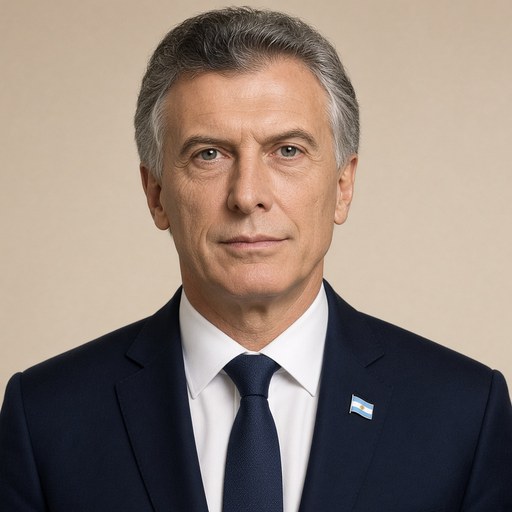
President Mauricio Macri at the gala dinner of the United States Chamber of Commerce.
 Mauricio Macri · President of Argentina
- Context
- Macri addressed the AmCham gala dinner in Argentina on May 23, 2018, marking the chamber's 100th anniversary and discussing Argentina's economic transformation.
- Main themes
- Economic reform, public-private partnership, cultural change, macroeconomic balance, IMF engagement, private sector employment, fiscal deficit, Argentina's historic transformation, trade tensions, gradualism, populism critique, foreign investment
- Duration
- ~37 min
- Words
- 4,382
- Sentences
- 98
- Readability
- 40
- Grade
- 18.3
- Syntax
- 3.75
- Vocabulary
- 1.89
Translated from Spanish
The broad sphere of national life a sentence belongs to. Every sentence has an Arena, so it is the denominator the other indices are read against.
Other98 sentences in 27 paragraphs
MODERATOR.- Good evening everyone, Mr. President, it is an honor as President of AmCham and as a friend to have you here today. Truly, 100 years is not something that happens every day, so thank you very much for being with us.
I want to share that I am also a civil engineer; I studied with the President, we prepared some subjects together, some we did well in, others not so well, but we had a great time. And I always say that he studied what needed to be studied, no more, no less, and with that he did well enough to pass. I found it harder, I mean, mine was more pick and shovel, but the truth is we had a great time in those years and we finished our degree well.
PRESIDENT.- Good evening everyone, what Mr. Aguirre said is false. I often missed what I needed to study, in quantity, and I failed; he never did, he studied everything, but life found us in that place and brings us together again for the debut as moderator-journalist of engineer Aguirre, and we will see how it goes.
MODERATOR.- Later, he will give me an exam. Again: thank you very much for coming, and we are really very happy. I was just telling the President about what AmCham is, the pride we have as all the American companies that work in AmCham, but we are Argentines who manage our American companies and we have been in the country; in many cases, there are companies that have been in the country for over 70, 90, and 100 years.
But moving on to the topics we are interested in discussing, I would first like to ask you some questions. We had a very interesting business forum yesterday, where many of the people here participated, where we talked about the future, we talked about the next 100 years. While we are very proud of the past 100 years, I believe that the transformation the world is experiencing and the transformation Argentina is undergoing forces us to think about the future. So I would like to ask you first, what is your vision for the future? How do you see us, the businesspeople, working together, public sector, private sector, to build that future, which is really what we need as a nation?
PRESIDENT.- I would say that Argentina is clearly at a historic moment because Argentines have matured, we have suddenly understood that we must return to our roots, to what our grandparents instilled in us when they immigrated to this country: the culture of work, personal effort, of being protagonists. And that is why we produced a change in democracy that practically no one in the world thought could happen, and that is something solid.
This is not an economic change, I have said it many times, it is a cultural change because it is based on these values, and the Argentine people understood it. One talks to those people who get up every day to work hard at 6 in the morning, take public transport, work, and never miss a day, and they say, “I want this path, I want a society in which those who break their backs are the ones who do well, not those who look for shortcuts, patches, or lies.” And we have also understood that it is not an easy path; we experienced that 15 days ago, we had a significant increase. Why? Because beyond all this that we feel and want to put on the table, which is channeled into concrete things that you know sector by sector - and perhaps we will talk about some of them - that exist and are real, today we inherit a situation that generates enormous dependency, which is that we have a State that spends much more than it has, and a State that already taxes us excessively: distorting taxes, taxes that burden, attack job creation. So we have to resolve this because otherwise, the dependency on the most volatile global markets, which due to war conflicts, terrorism, changes in trade policies as we are experiencing in the world, the trade tensions due to the increase in the interest rate in the United States, all those things affect, of course, emerging markets, and the more dependent one is, the more vulnerable one is.
That is why I made the decision 15 days ago - which I had been maturing because this market change was already foreseen, that is why we went out on January 3 to finance a large part of what we need for the year, but the market was still changing - to say that we want to work also as a serious institution like the International Monetary Fund, which gives us an opportunity to properly plan this gradualism that we will accelerate towards macroeconomic balance. Macroeconomic balance that is a necessary but not sufficient condition, and that is where the importance of the private sector is absolute because Argentina comes from years of not generating private employment. Public jobs were artificially created to make us believe - like so many things that populism did - that there was positive movement in a society that was stagnant. So today we need that balance to take off that burden that every worker has every morning, which is like putting on ten-kilo weights on each one, twenty kilos, on their backs and going to work because it is like a load that slows us down, that distances us from credit, credit that is so important: if there is something that fails in the Argentine productive system, it is that there is no credit.
So today we have thousands of SMEs - which I visit weekly - young and not so young, talented, with ideas, with desire, but they have to do everything with the little money they are saving, with the savings they have in some sock in the drawer, because they do not have access to the financial system: only 13 percent of companies in Argentina access credit, that is madness. And that has to do with the macro instability of a State that crushes you, that systematically defrauds you. So it is a fundamental necessary condition to create the framework, the rules, the predictability that the private sector needs to develop; and the weaker, the smaller the company, the more it needs that. Because the large companies that are here always have a parent company that can support them in bad times and in good times tries to get back what they lent; but when a company is taking its first steps, that is fundamental.
So I believe that there is an area of enormous potential, Argentina has never had access to that, the first access to credit we had was last year after many years, and it was the record year in our history for the importation of capital goods, a record in our history. Everyone imported, every type of SME bought a machine on credit to innovate, to change tasks; they even started to make a shift in activity because they see that in some things they are not competitive and they start to think about what they will be competitive in, in an Argentina that also, especially the young people, have understood that we must be part of the world, we cannot remain isolated, isolation has led a third of Argentines into poverty. So I believe that there is a huge task ahead.
And there is also a huge task in fighting for these values and for these key references or tools. The private sector - and a Chamber like AmCham for the importance it has - must demand, just as they clearly expressed in favor of regularizing the tariff system, because without energy none of you can work, can live, and the country was heading towards running out of energy; today we have reversed that and we are producing, we have changed the gas decline curve to one that is already starting to grow month by month, so in a few years we will be integrating our energy matrix with Chile and perhaps with other neighboring countries. So I believe we all have to fight to demand normality, to demand responsibility from our leaders, that laws cannot be passed that destroy a budget that was just approved five months, six months ago: that is precisely destroying future employment.
So our legislators, our deputies, our senators, must understand that we need to be predictable, reliable; everything in life is based on trust. You have the responsibilities you have because there are people who have entrusted them to you, and trust is achieved through a trajectory of doing things predictably; and especially in bad times, because in good times we are all great, but in bad times, we should not resort to grabbing things that do not belong to us, not cheating, much worse being the State, and we have lived it.
I believe there is much to be done between the public and private sectors, a lot, and this Government seeks to generate workspaces, teamwork spaces, the productive tables seek that, by sector I participate in many, and the truth is it is a wonderful input for us, to understand how we can facilitate your work so that you can grow. Because what also needs to be understood is that politics does not generate wealth, wealth is generated by citizens. We have to arbitrate so that there is healthy competition, so that there is good access to Public Education, to Public Health, to security, that taxes are paid - there is the new head of the AFIP, Cuccioli, so be careful that you all have to be up to date-.
So I believe that the path we are on, we always knew it was not easy but it is the right one, and we must enjoy every step we take every day, and try to help Argentines see the glass half full. Because we also have a distortion that the one who is critical is intelligent, and we all know the problems we have, I am precisely the President who tells you to put everything on the table; but let us also give ourselves enthusiasm and desire by valuing the things we are achieving, because we have achieved many in these two and a half years, for a reason the world supports us like never before in our history: the chancellors who just left here have reaffirmed the enormous confidence in the process that we Argentines are going through.
MODERATOR.- Thank you very much. Mr. President, those of us who know you know that you come from the world of sports, of football, from your own football team “Los Cardenales,” in your college days, to Boca. The question is about teamwork; we know that you value teamwork very much. We are convinced - just as we talked about yesterday - that technology is disruptive and is changing the world, if there is something that does not change, it is teamwork and the strength and potential that comes from working together. And I want to acknowledge you because the new PPP Law that was approved last year and the new bidding process that was opened last week really show great teamwork between the Ministry of Finance and the Ministry of Transport, not only at the ministerial level but at the team level. Those of us who saw it from this side, like the builders, saw coordination, teamwork with the chambers, with the companies, to clear up all doubts, and I believe the results are evident. But returning to teamwork: what would you ask of us, the businesspeople, to be closer to the Government and to develop that synergy, which is so necessary to help you and help ourselves?
PRESIDENT.- We fully agree that nothing is achieved without a team; everything I have been able to do in life has been based on sharing a vision, a mission, a mystique, with the people I called together. And I truly feel today that the Government team is more solid, which is why we were able to navigate this moment of turbulence, each minister knows their task better. It was very difficult to land in an Argentina that under the slogan “we want a more present State,” had destroyed the State, there were not even information systems: it was really like taking a plane in mid-flight without any instruments. And today we already have a lot of information, we have improved more than 20 positions in the global transparency ranking based precisely on providing access to information.
But it is clearly essential that the private sector sets the pace, that it demands from us, that it really engages in the daily battle for productivity, for competitiveness. I understand that we were anesthetized for about twelve, thirteen years, right?, everyone there anesthetized, controls of everything, a man told them how much they could sell, at what price they could sell it; the union directly decided with the Ministry of Labor, or with that same person, what the salaries were, the increases: the management of each company was neutralized.
But that has already happened, I still feel that I need that muscle, that muscle from Argentina I need, Argentinians need, those who want to keep their jobs and those who want to have access to a better job, they need the company leaders to take up that agenda and fight the battles they need to fight. In other words, there are costs in Argentina that distance us from the possibility of competing, starting with the cost of logistics; we have some of the worst logistics in Latin America: there is so much to improve. We are talking about access to ports, access to trains, to trucks, to airports, all of that we are trying to improve with the most important Infrastructure Plan in history, which really will make PPPs a great tool to energize it. But we also need labor agreements to be discussed, to state that we want more work and better work for the people, but for that, everyone has to do their job as best as possible, not be a burden to others. There is no possibility that we can progress if you, behind the factory doors, do not manage to generate this new commitment to continuous improvement, and if outside the factory you are not there to help us discuss that our ports are not the most expensive, that our land transport is not the most expensive because, I insist: that penalizes and especially penalizes federal Argentina that is farther from the ports. So I believe there is fundamental teamwork to be done, and the truth is that it is one of the things that excites me the most, because we have a Secretariat for Simplification where “Pepe” Inchauspe is, who has an agenda... yesterday we saw 280 simplification projects, we expect to get 180 out this year, where in those meetings we sit down the “boogeyman” of the AFIP, the “boogeyman” of Customs, the “boogeyman” of SENASA, all the boogeymen sit at the table and come here and tell us: “no, I delay such and such.”
I sometimes wonder how there could have been so much economic development in Argentina with so many obstacles, because we have had self-destructive attitudes, we have done things that are incomprehensible; registrations in quantities for I don’t know what; seven registrations for the field, now we will have only one. The seizures that the Administrator of the AFIP has just resolved: today you had a problem, they seized 200 thousand pesos, they seized the ten accounts you had for 200 million pesos and you could not pay from any of those accounts. We were able to resolve that and already for SMEs that is a gigantic relief. Or those industrial registrations that the military invented, which had to be renewed every year, because at that time that general decided he wanted to know everything that was produced in Argentina in case there was a military conflict, and no one ever modified it again; thirty years had passed, and you had to go and pay 8 thousand, 10 thousand pesos every year, and it took 7 months and without that registration enabled you could not get a loan. It is full of those ridiculous things that are a punishment for those who want to undertake, like it was until recently to open a Corporation here, it could take up to six months; now it takes 24 hours online, a Simplified Corporation.
So on that path, there is so much more to do, we have quantified it, and we believe that it is more than one point of GDP that we can return to companies, and we can do that - when they come to ask us for subsidies, more reimbursements, more things: no, there is no more here or at home, as we say, we are having to reduce the deficit - but that yes.
And it is also very important that you come to tell us “this complicates me”; I don’t know why the INTI also took - I don’t know if I’m confused - nine months to a year and a half to enable the new model of a factory: how can it be if Volkswagen sells its car already all over the world, we have to tell them if they can sell it in Argentina? It doesn’t make sense. Now we do it in days. That kind of thing is what we need to remove so that the private sector really feels that the public sector is there to support it, is there so that it doesn’t take 48 hours, 72 hours for the container to leave the port, that it leaves in 3 hours, in 4 hours, because all that is cost, all that is cost that burdens the lives of Argentinians and prevents others from exporting. And in that exporting, it is also very important that we travel together, that we open markets together, that we go today to propose to China everything we can export: they have the willingness to buy from us; we have to go to Shanghai, very few have signed up so far, we want to invite more companies to go and really invest, because we need to increase exports, we need to be there, and I believe that today there is a good opportunity, we are working on the European Union-MERCOSUR, we will work with Japan, with Korea, with Canada, then China will come, also with the Pacific Alliance; in transition not from one day to the next, because we need to give time for those productivities to work. But all those agreements are always for ten years, staggered, so it gives us time to lift the burden off the private sector, for you to get in shape, to get on the treadmill, to run, to be very athletic and for all of us to go out into the world as we should.
MODERATOR.- Mr. President, when we proposed at AmCham to celebrate the 100 years, rather than focusing on the 100 years that have passed, we always wanted to project the next 100 years, which obviously we will not be here for, but clearly the vision for the future is very important. I wanted to ask you, perhaps to conclude, what is your vision for the future, your dream for the country to leave for the next generations, who will indeed be here in these next 100 years?
PRESIDENT.- We have a huge challenge which is to reduce poverty and generate freedom in the country; for that, there is a fundamental tool which is to improve the quality of Public Education, and there is also a space for you to help us, because we need to recover the concept that children in most cases are trained to end up working in some company; so this dichotomy university versus company, schools versus company... we heard recently when in the City of Buenos Aires they started wanting to put these internships, students influenced by incomprehensible ideas, that this was “exploitation.” That should sadden us, because it is as if they are confusing our youth, distancing them from that future that we all want them to have. So I think it is very important, just as we talk about the competitiveness of companies, we need to enter a virtuous process of improving evaluation and training in Public Education, because that is the true place where opportunities are equalized. Today Argentina is divided between those who access private education and those who do not, and that is very wrong, it is very wrong because we have very good teachers, and we have teachers who understand that the world has accelerated, that the world has incorporated digitalization, artificial intelligence, robotics, 3D, and that we need to give them those tools so that they can understand them; and we need them to open up and rejuvenate, because when one goes back to learning, one rejuvenates. So that is a first legacy that I hope works, that we all really enter, today the situation is tense with the unions, but the unions increasingly represent fewer of the majority of teachers; so we need to achieve as a society to force them to understand that what we want is to give them more tools, and that we need to understand that the 21st century is already the century of permanent training. I was always impressed in the last century that doctors had to study every night, one saw, I had a grandfather who was a doctor, a family of doctors on my mother’s side, and they were always studying. And now we are the same because this is moving very fast, and what we need to understand is that it is not bad, because if you can learn it means you are still young: this is fundamental.
And the second thing is that if we succeed, which we will with the Infrastructure Plan that we have launched, physical and virtual connectivity, I hope that a competition or investment will be launched among the large, medium, and small operators throughout the country, because today access to quality internet and signal on cell phones is more important than highways and trains, and today Argentina has regressed many years, we have some of the worst 4G systems, on National Routes the signal cuts off: it is incredible. But we are close, God willing, for Congress to pass a law that allows this competition to start in favor of the people.
We need a federal Argentina, my dream is that I am starting to see patches of things that are happening, because it is no longer just the humid pampa that is going to grow food production by 50 percent in the next five years, but now it is the Argentine north that will be the largest supplier of lithium in four years, there are already four, five, six projects - one from an American group - that are launched and this does not stop, it does not stop and lithium is going to be the most important mineral, there are already many mining projects advancing always, of course, with the due care for the environment. And when one sees the regional economies, what is going to happen when we finish opening the markets of China, Japan, Europe, with fruit, with vegetables: we are talking about hundreds of thousands of jobs. And what is also happening not only in the capital, because before it was only the capital’s heritage, but now cities like Tandil are starting to look like a society where “things matter,” and it is also happening in Chaco, in Santa Fe, in Rosario, in Córdoba, in Mendoza: services with added value, we talked about it today when you visited me with your boss - I saw him there, I know he doesn’t understand anything because we are speaking in Spanish, but he puts on an “okay” face. So the issue is that we are also capable of that.
So by developing this integral way of Argentina, we will have a truly federal Argentina, because that thing that everything passed through Buenos Aires, right? I always remember when I was very young, when I was in my twenties and I went as a responsible partner of Movicom - which was the first mobile phone company - to visit BellSouth, which was our partner, and I went to Atlanta: I saw that airport!; of course, I always went to New York, to Los Angeles, and suddenly in the middle of that airport, “and how is this city so big?” and the guy answered me “because we not only have Bell, we have Coca Cola, we have Delta, we are a very important society.” Argentina is called to be that, and now that we have more than seven or eight cities that connect directly to the world, after decades where the poor person from Salta, Jujuy, Tucumán, Rosario had to come to Aeroparque, take a taxi, go to Ezeiza to be able to go abroad... If Argentina starts to connect, many things start to happen, and all this is happening, not for nothing we have been growing for seven quarters, despite still having the burden and the problems. What shows you that there is the possibility of generating quality employment for many Argentinians, and that this development depends on the private sector and a State that really does what it has to do, setting clear rules of the game and not putting obstacles. This is what we need to achieve and I am convinced that we will achieve it.
So thank you all for the 100 years, thank you for the commitment to ethics, to transparency, to the integrated work with the community that AmCham has always had, because also in an environment where corruption is what rules, productivity and the future go out the other door. We all have to be very committed to really working with both hands like this, very transparently on the table, and that corruption is never again a bargaining chip between politics and the private sector.
The original Spanish. The tags above are read on the English translation's sentences.
MODERADOR.- Buenas noches a todos, señor Presidente, es un orgullo como Presidente del AmCham y como amigo tenerlo acá hoy. Realmente 100 años no se cumplen todos los días, así que muchísimas gracias por estar con nosotros.
Yo quiero compartirles que yo también soy ingeniero civil, estudié con el Presidente la carrera, preparamos algunas materias juntos, algunas nos fue bien, otras no tan bien, pero la pasamos muy bien. Y yo siempre digo que él estudiaba lo que había que estudiar, no más, no menos, y con eso le daba bien para pasar bien. A mí me costaba más, o sea lo mío era más pico y pala, pero la verdad que la pasábamos muy bien en esos años y terminamos bien la carrera.
PRESIDENTE.- Buenas noches a todos, lo que dijo el señor Aguirre es falso (RISAS). Yo muchas veces le erraba en lo que había que estudiar, en la cantidad y me comía bochazos; él jamás, él estudiaba todo, pero la vida nos encontró en ese lugar y nos vuelve a encontrar en el debut como moderador- periodista del ingeniero Aguirre, y vamos a ver cómo anda.
MODERADOR.- Después me va a tomar examen. De vuelta: muchas gracias por venir y nosotros estamos realmente muy contentos, yo le comentaba recién al Presidente lo que es la AmCham, el orgullo que tenemos todas las empresas americanas que trabajamos en AmCham, pero somos argentinos que manejamos nuestras empresas americanas y hemos estado en el país; en muchos casos hay empresas de más de 70, 90 y 100 años en el país.
Pero yendo a los temas que nos interesa conversar, primero quisiera hacerle algunas preguntas, nosotros tuvimos un foro de negocios ayer muy interesante, donde mucha de la gente que está acá participó, donde hablamos de futuro, hablamos de los próximos 100 años. Si bien estamos muy orgullosos de los 100 años pasados, pero creo que la transformación que está viviendo el mundo y la transformación que está viviendo la Argentina nos obliga a pensar en el futuro. Entonces me gustaría preguntarle primero, ¿cuál es su visión de futuro? ¿Cómo ve que nosotros los empresarios tenemos que trabajar juntos, sector público, sector privado, para poder construir ese futuro, que es realmente lo que necesitamos como Nación?
PRESIDENTE.- Yo diría que la Argentina está claramente un momento histórico, porque los argentinos hemos madurado, hemos entendido de golpe que tenemos que volver a nuestras fuentes, a lo que nos inculcaron nuestros abuelos cuando inmigraron a este país: que es la cultura del trabajo, del esfuerzo personal, de ser protagonistas. Y por eso produjimos un cambio en democracia que prácticamente nadie en el mundo nos daba esa posibilidad que sucediese, y eso es algo sólido.
Este no es un cambio económico, lo he dicho muchas veces, es un cambio cultural, porque se basa en estos valores, y el pueblo argentino lo entendió. Uno habla con la gente esa que se levanta todos los días a remarla a las 6 de la mañana, toma el trasporte público, trabaja y nunca falta, y dicen “yo quiero este camino, quiero una sociedad en la cual aquel que se rompe el alma es al que le va a bien, no al que busca el atajo, el parche, la mentira”. Y también hemos entendido que no es un camino fácil, lo hemos vivido hace 15 días, hace 15 días tuvimos un aumento de suma tensión ¿Por qué? Porque más allá de todo esto que sentimos y que queremos poner sobre la mesa, que se canaliza en cosas concretas que ustedes saben sector por sector -y tal vez hablemos de algunas de ellas- que existen que son reales, hoy heredamos una situación que nos genera una enorme dependencia, que es que tenemos un Estado que gasta mucho más de lo que tiene, y un Estado que ya nos cobra impuestos por demás: impuestos distorsivos, impuestos que gravan, atacan la creación de empleo. Entonces tenemos que resolver esto, porque si no la dependencia de mercados mundiales más volátiles que nunca, que por conflictos bélicos, por el terrorismo, por cambio de políticas comerciales como la que se están viviendo en el mundo, la tensión comercial por aumento de la tasa de interés de Estados Unidos, todas esas cosas afectan por supuesto a los mercados emergentes, y aquel que más dependiente es, más vulnerable es.
Por eso tomé la decisión hace 15 días -que ya venía madurando porque ya se veía venir este cambio de mercado, por eso salimos el 3 de enero a financiar una gran parte de lo que necesitamos para el año, pero igual el mercado fue cambiando- de decir que queremos trabajar también como una institución seria como es el Fondo Monetario Internacional, que nos da una oportunidad de planificar bien este gradualismo que vamos acelerar hacia el equilibrio macroeconómico. Equilibrio macroeconómico que es una condición necesaria pero no suficiente, y ahí es donde está la importancia del sector privado es absoluta, porque la Argentina viene de años de no generación de empleo privado. Artificialmente se crearon puestos públicos para hacernos creer -como tantas cosas que hacía el populismo- que había un movimiento positivo en una sociedad que estaba estancada. Entonces hoy necesitamos ese equilibrio para sacarle esa mochila que cada laburante tiene todas las mañanas, y que es como ponerse pesas de diez kilos cada uno, veinte kilos, en sus espaldas y salir a trabajar, porque es como una carga que nos lentifica, que nos aleja del crédito, crédito que es tan importante: si hay algo que le falla al sistema productivo argentino es que no hay crédito.
Entonces hoy tenemos miles de pymes -que yo las visito semanalmente-, jóvenes y no jóvenes, talentosos, con ideas, con ganas, pero todo lo tienen que hacer con el manguito que van juntando, con el ahorro que tienen en alguna media en el cajón, porque no tienen acceso al sistema financiero: solo el 13 por ciento de las compañías en la Argentina acceden al crédito, eso es una locura. Y eso tiene que ver con la inestabilidad macro de un Estado que te aplasta, que te estafa sistemáticamente. Entonces es condición necesaria fundamental para crear el marco, las reglas, la previsibilidad que el sector privado necesita para desarrollarse; y cuánto más débil, más chica es la empresa, más necesita de eso. Porque las grandes empresas que están acá siempre tienen una casa matriz que las puede bancar en la mala y en la buena intenta que le devuelva lo que le prestaron; pero cuando una empresa está dando sus primeros pasos eso es fundamental.
Entonces creo que ahí hay un campo de enorme potencial, la Argentina nunca ha tenido acceso a eso, el primer acceso a créditos que tuvimos fue al año pasado después de muchos años, y fue el año récord en nuestra historia de importación de bienes de capital, récord de nuestra historia. Importaron todos, todo tipo que tiene un pymes se compró una máquina a crédito para innovar, para cambiar de tarea; hasta empezaron a hacer una shift de actividad porque ven que en algunas cosas no son competitivos y empiezan a pensar en qué van a ser competitivos, en una Argentina que también, especialmente los jóvenes, han entendido que tenemos que ser parte del mundo, no podemos seguir aislados, aislados nos llevó a un tercio de los argentinos en la pobreza. Entonces creo que ahí hay una tarea enorme
Y también una tarea enorme en batallar por estos valores y por estas referencias o herramientas claves. El sector privado -y una Cámara como AmCham por la importancia que tiene- tiene que reclamar, así como se expresaron claramente a favor de que hay que regularizar el sistema tarifario, porque sin energía ninguno de ustedes puede trabajar, puede vivir y el país iba rumbo a quedarse sin energía; hoy lo hemos revertido y estamos produciendo, hemos cambiado la curva de declinación de gas por una que ya empieza a crecer mes a mes, así que en pocos años vamos a estar integrando nuestra matriz energética con Chile y tal vez con otros países limítrofes. Entonces creo que tenemos que todos batallar por reclamar normalidad, por reclamar responsabilidad a nuestros dirigentes, que no se pueden sancionar leyes que destruyen un presupuesto que se acaba de aprobar hace cinco meses, seis meses: eso es justamente destruir el empleo futuro.
Entonces nuestros legisladores, nuestros diputados, nuestros senadores, tienen que entender que tenemos que ser previsibles, confiables, todo en la vida se basa en la confianza. Ustedes tienen las responsabilidades que tienen porque hay gente que se las ha confiado, y la confianza se logra en una trayectoria de hacer las cosas en forma previsible; y sobre todo en las malas, porque en las buenas somos todos unos fenómenos, pero en las malas no caer en manotear cosas que no te corresponden, no en hacer trampa, mucho peor siendo el Estado, y lo hemos vivido.
Creo que hay mucho para hacer sector público y sector privado, mucho, y este Gobierno lo que busca es justamente generar espacios de trabajo, espacios de trabajo en equipo, las mesas productivas buscan eso, por sector yo participo en muchísimas, y la verdad es un insumo maravilloso para nosotros, para que entendamos de qué manera podemos facilitarles el trabajo para que ustedes puedan crecer. Porque lo que también hay que entender es que la política no genera la riqueza, la riqueza la generan los ciudadanos. Nosotros tenemos que arbitrar para que haya una competencia sana, para que haya buen acceso a la Educación Pública, a la Salud Pública, a la seguridad, que se paguen los impuestos -ahí está el nuevo responsable de la AFIP, Cuccioli, así que cuidado que tienen que estar todos al día-.
Así que creo que el camino que estamos recorriendo siempre supimos que no era fácil pero es el correcto, y hay que disfrutar de cada paso que damos todos los días, y tratar de ayudar a que los argentinos veamos el vaso medio lleno. Porque también tenemos una deformación de que es inteligente el que es crítico, y ya sabemos todos los problemas que tenemos, justamente yo soy el Presidente que les digo pongámoslos todo sobre la mesa; pero también démonos entusiasmo y ganas valorando las cosas que vamos consiguiendo, porque hemos conseguido muchas en estos dos años y medio, por algo el mundo nos apoya como nunca antes en nuestra historia: se están yendo los cancilleres que acaban de estar acá y han de vuelta ratificado la enorme confianza en el proceso que estamos recorriendo los argentinos.
MODERADOR.- Muchas gracias. Presidente, los que lo conocemos, sabemos que usted viene del mundo del deporte, del fútbol, de su propio equipo de fútbol “Los Cardenales”, en los tiempos de la facultad, hasta Boca. Justamente la pregunta es el tema del trabajo en equipo, sabemos que usted valora muchísimo el trabajo en equipo, nosotros somos convencidos -así como hablamos ayer- que la tecnología es disruptiva y está cambiando el mundo, si hay algo que no cambia es el trabajo en equipo y la fuerza y la potencialidad que da trabajar en conjunto. Y quiero hacerle un reconocimiento porque realmente la nueva Ley de PPP que se aprobó el año pasado y la nueva licitación que se abrió la semana pasada, realmente muestran un gran trabajo en equipo entre el Ministerio de Finanzas y el Ministerio de Transporte, no solo a nivel de los ministros sino al nivel de los equipos. Realmente los que lo vimos de este lado, como a los constructores, vimos una coordinación, un trabajo en conjunto con las cámaras, con las empresas, para evacuar todas las dudas y creo que el resultado está a la vista. Pero volviendo al trabajo en equipo: ¿qué nos pediría a los empresarios para poder estar más cerca del Gobierno y poder desarrollar esa sinergia, que es tan necesaria para poder ayudarlos y ayudarnos a nosotros mismo?
PRESIDENTE.- Coincidimos plenamente en que nada se logra si no hay equipo, todas las cosas que he podido hacer en la vida han sido en base a compartir una visión, una misión, una mística, con la gente que convoqué. Y yo siento hoy realmente que el equipo de Gobierno está más afianzado, por eso pudimos navegar este momento de turbulencia, que cada ministro conoce mejor su tarea. Era muy difícil desembarcar en una Argentina que bajo el lema de “queremos un Estado más presente”, se había destruido el Estado, ni siquiera había sistemas de información: realmente era tomar un avión en pleno vuelo sin ningún instrumental. Y hoy ya tenemos muchísima información, ya hemos mejorado más de 20 posiciones en ranking de transparencia mundial en base a justamente dar acceso a la información.
Pero claramente es fundamental que el sector privado ponga ritmo, que nos exija, que realmente se suba a la batalla diaria de la productividad, de la competitividad. Yo entiendo que estuvimos como doce, trece años anestesiados, ¿no?, todos ahí anestesiados, controles de todo, un señor les decía cuánto podían vender, a qué precio lo podían vender; el gremio decidía directamente con el Ministerio de Trabajo, o con esa misma persona, cuáles eran los salarios, los aumentos: estaba como neutralizada la conducción de cada empresa.
Pero eso ya pasó, yo todavía noto que yo necesito ese músculo, ese músculo de Argentina necesito yo, los argentinos necesitan, esos que quieren conservar sus trabajos y los que quieren tener acceso a un mejor trabajo, necesitan que los conductores de las empresas retomen esa agenda y den las batallas que tienen que dar. O sea que hay costos en la Argentina que nos alejan de la posibilidad de competir, empezando por el costo de la logística, tenemos de las peores logísticas de América Latina: hay muchísimo para mejorar. Estamos hablando del acceso a los puertos, del acceso a los trenes, al camión, los aeropuertos, todo eso que estamos intentando mejorar con el Plan de Infraestructura más importante de la historia, que realmente las PPP van a ser una gran-gran herramienta para dinamizarlo. Pero también necesitamos que se discutan los convenios laborales, que se plantee que queremos más trabajo y mejor trabajo para la gente, pero para eso cada uno tiene que hacer su trabajo lo mejor posible, no ser una carga para el otro. No hay posibilidad de que podamos progresar si ustedes puertas adentro de las fábricas no logran generar este nuevo compromiso con la mejora continua, y si puertas afuera de la fábrica tampoco están ahí para ayudarnos a dar la discusión de que nuestros puertos no sean los más caros, que nuestros transportes terrestres no sea los más caros porque, insisto: eso penaliza y penaliza sobre todo a la Argentina federal que está más lejos de los puertos. Así que creo que hay ahí un trabajo en equipo para hacer fundamental, y la verdad que es una de las cosas que más me entusiasma, porque tenemos una Secretaría de Simplificación donde está “Pepe” Inchauspe, que tiene una agenda…, ayer vimos 280 proyectos de simplificación, 180 esperamos salir este año, donde en esas reuniones sentamos al “cuco” de la AFIP, al “cuco” de la Aduana, al “cuco” del SENASA, todos los cucos se sientan a la mesa y vienen acá y nos dicen: “no, yo demoro tal cosa y tal otra”.
Yo digo a veces cómo pudo haber habido tanto desarrollo económico en la Argentina con tantos obstáculos, porque hemos tenido actitudes autodestructivas, hemos hecho cosas que no se entienden; registros en cantidades para no sé qué cosa; siete registros para el campo, ahora vamos a tener uno solo. Los embargos que acaba de resolver el Administrador de la AFIP: hoy tenías un problema, te embargaban 200 mil pesos, te embargaban las diez cuentas que tenías por 200 millones de pesos y no podías pagar desde ninguna de esas cuentas. Eso lo pudimos resolver y ya para las pymes eso es un alivio gigantesco. O esos registros industriales que habían inventado los militares, que todos los años había que renovar, porque en aquella época ese general decidió que quería saber todo lo que se producía en la Argentina por si había un conflicto bélico, y nunca más nadie lo modificó, habían pasado treinta años, y había que ir y pagar 8 mil, 10 mil pesos todos los años, y tardaba 7 meses y sin ese registro habilitado no podías sacar un crédito. Está lleno de esas cosas ridículas que son un castigo al que quiere emprender, como era hasta hace poco abrir una Sociedad Anónima acá, podías tardar hasta seis meses; ahora se tarda 24 horas en internet, una Sociedad Anónima Simplificada.
Entonces en ese camino hay muchísimo más para hacer, nosotros lo hemos cuantificado, y creemos que es más de un punto del PIB que le podemos devolver a las empresas, y eso lo podemos hacer -cuando nos vienen a pedir subsidios, más rembolsos, más cosas: no, no hay más ni acá ni en casa, como decimos, estamos teniendo que achicar el déficit-, pero eso sí.
Y ahí también es muy importante que ustedes vengan a decirnos “esto me complica”; no sé por qué también el INTI tardaba -no sé si por ahí me confundo- nueve meses a un año y medio para habilitar el nuevo modelo de una fábrica: ¿cómo puede ser si Volkswagen vende su auto ya en todo el mundo, nosotros tenemos que decirle si lo puede vender en la Argentina? No se entiende. Ahora lo hacemos en días. Ese tipo de cosas son las que tenemos que ir removiendo para que realmente sienta el sector privado que el sector público está ahí para apoyarlo, está ahí para que no tarde 48 horas, 72 horas en salir el contenedor del puerto, que salga en 3 horas, en 4 horas, porque todo eso es costo, todo eso es costo que grava la vida de los argentinas e impide a otros exportar. Y en eso de exportar también es muy importante que viajemos juntos, que abramos mercados juntos, que vayamos hoy a proponerle a China todo lo que podamos exportar: ellos tienen vocación de comprarnos; tenemos que ir a Shanghái, se han anotado todavía muy pocos, queremos invitar a que más empresas vayan y que realmente inviertan, porque necesitamos aumentar las exportaciones, necesitamos estar ahí, y creo que hoy hay buena oportunidad, estamos trabajando Unión Europea-MERCOSUR, vamos a trabajar con Japón, con Corea, con Canadá, después vendrá China, también con la Alianza del Pacífico; en transición no de un día para el otro, porque hay que dar tiempo a que esas productividades funcionen. Pero todos esos acuerdos son siempre a diez años, escalonados, entonces nos da tiempo para que nosotros le saquemos la mochila de encima al sector privado, que ustedes se pongan en estado, que suban a la cinta, corran, que estén muy atléticos y que todos podamos salir al mundo como corresponde.
MODERADOR.- Presidente, cuando planteamos en la AmCham festejar los 100 años más que focalizarnos en los 100 años que pasaron siempre quisimos proyectar los 100 años próximos, que obviamente no vamos a estar, pero claramente la visión de futuro es muy importante. Quería preguntarle, tal vez para ir terminando, ¿cuál es su visión de futuro, su sueño de país para dejarle a las próximas generaciones, que sí van a estar en estos próximos 100 años?
PRESIDENTE.- Tenemos un desafío enorme que es reducir la pobreza y generar libertad en el país; para eso hay una herramienta fundamental que es mejorar la calidad de la Educación Pública, y ahí también hay un espacio para que ustedes nos ayuden, porque hay que recuperar el concepto de que los chicos en la mayoría de los casos se forman para terminar trabajando en alguna empresa; entonces esta dicotomía universidad versus empresa, colegios versus empresa…, escuchamos hace poco cuando en la Ciudad de Buenos Aires se empezó a querer poner estas pasantías, alumnos influenciados por ideas inentendibles, que eso era “una explotación”. Eso nos tiene que entristecer, porque es como que están confundiendo a nuestros jóvenes, alejándolos de ese futuro que todos queremos que tengan. Entonces creo que ahí es muy importante, así como decimos competitividad de las empresas, tenemos que lograr entrar en un proceso virtuoso de mejora de evaluación y capacitación en la Educación Pública, porque ese es el verdadero lugar donde se igualan las oportunidades. Hoy la Argentina está dividida entre los que acceden a la educación privada y los que no, y eso está muy mal, está muy mal porque existen y tenemos muy buenos docentes, y tenemos docentes que entienden que el mundo aceleró, que el mundo incorporó la digitalización, la inteligencia artificial, la robótica, las 3D, y que hay que darles esas herramientas para que ellos las puedan entender; y necesitamos que se abran y se rejuvenezcan, porque cuando uno vuelve a aprender rejuvenece. Entonces ahí es un primer legado que espero que funcione, que realmente entremos todos, hoy la situación es tensa con los gremios, pero los gremios cada vez representan menos a la mayoría de los docentes; entonces tenemos que lograr como sociedad obligarlos a entender que nosotros lo que queremos es darles más herramientas, y que hay que entender que el siglo XXI ya es el siglo de la capacitación permanente. A mí siempre me impresionaba en el siglo pasado que los médicos tenían que estudiar todas las noches, uno veía, tenía un abuelo médico, familia de médicos por el lado materno, y ellos todo el tiempo estudiando. Y ahora estamos igual porque esto va muy rápido, y lo que hay que entender es que no está mal, porque si podés aprender es que seguís siendo joven: esto es fundamental
Y la segunda cosa es que si tenemos éxito, que lo vamos a tener con el Plan de Infraestructura que hemos puesto en marcha, física y la conectividad virtual, que yo espero que se lance una competencia barra inversión entre las operadoras grandes, las medianas y las chicas en todo el país, porque hoy es más importante que las autopistas y los trenes el acceso a internet de calidad, y señal en los celulares que hoy la Argentina ha retrocedido muchísimos años, tenemos de los peores sistemas de 4G, en las Rutas Nacionales se corta la señal: es como increíble. Pero estamos cerca, si Dios quiere, de que el Congreso saque una ley que permita que esta competencia arranque a favor de la gente.
Necesitamos una Argentina federal, mi sueño es que empiezo a ver manchones de cosas que está sucediendo, porque ya no es solamente la pampa húmeda que va a crecer un 50 por ciento la producción de alimentos en los próximos cinco años, sino ya es el norte argentino que va a ser el mayor proveedor de litio en cuatro años, ya hay cuatro, cinco, seis proyectos -uno de un grupo americano- que están lanzados y esto no para, no para y el litio va a ser el mineral más importante, ya hay en minería montones de proyectos avanzando siempre, por supuesto, con el debido cuidado del medio ambiente. Y cuando uno ve las economías regionales, lo que va a pasar cuando terminemos de abrir los mercados de China, de Japón, de Europa, con la fruta, con las hortalizas: estamos hablando de cientos de miles de puestos de trabajo. Y lo que está pasando también no solo en capital, porque antes era solo patrimonio de capital, sino ya empieza a haber ciudades como Tandil, que empieza a parecerse a una sociedad donde “incumban” cosas, y también pasa en el Chaco, en Santa Fe, en Rosario, en Córdoba, en Mendoza: servicios con valor agregado, lo hablábamos hoy cuando me visitaste con tu jefe -lo vi por ahí, sé que no entiende nada porque estamos hablando en español, pero pone cara de “okey”-. (Risas). Entonces el tema de realmente que también somos capaces de eso.
Entonces desarrollando esta forma integral de la Argentina vamos a tener una Argentina verdaderamente federal, porque eso de que todo pasase por Buenos Aires, ¿no?, yo siempre de muy chico, cuando me acuerdo que tenía “veintipico” de años y fui como socio responsable de Movicom -que fue la primera de celulares- a visitar a BellSouth, que era nuestro socio, y fui a Atlanta: ¡yo vi ese aeropuerto!; claro, yo iba siempre a Nueva York, a Los Ángeles, y de golpe en medio de ese aeropuerto, “¿y esta ciudad cómo es tan grande?”, y el tipo me contestó “porque nosotros tenemos no solo a Bell, tenemos a Coca Cola, tenemos a Delta, nosotros una sociedad muy importante”. La Argentina está llamada a ser eso, y ya que tengamos más de siete u ocho ciudades que se conectan directamente al mundo, después de décadas de que el pobre salteño, jujeño, tucumano, rosarino tenía que venir hasta Aeroparque, tomarse un remise, ir hasta Ezeiza para poder ir hacia el exterior…Si la Argentina se empieza a conectar empiezan a pasar muchas cosas, y todo esto está sucediendo, no por nada hace siete trimestres que crecemos, a pesar de que todavía tenemos la mochila y los problemas. Lo que te demuestra que existe la posibilidad de generar empleo de calidad para muchos argentinos, y que ese desarrollo depende del sector privado y de un Estado que realmente haga lo que tiene que hacer, fijando reglas de juego claras y no poniendo trabas. Esto es lo que tenemos que lograr y estoy convencido que lo vamos a lograr.
Así que gracias a todos por los 100 años, gracias por el compromiso con la ética, con la transparencia, con el trabajo integrado con la comunidad que siempre ha tenido AmCham, porque también en un ambiente donde la corrupción es lo que manda, la productividad y el futuro se van por la otra puerta. Tenemos que estar todos muy comprometidos con que realmente trabajemos con las dos manos así, bien transparentes sobre la mesa, y que nunca más la corrupción sea una moneda de cambio entre la política y el sector privado. (APLAUSOS)