




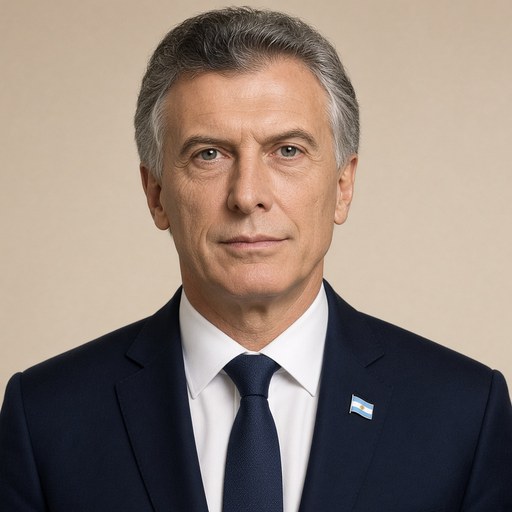
President Mauricio Macri inaugurated the viaduct of the Mitre Railway in the City of Buenos Aires.
 Mauricio Macri · President of Argentina
- Context
- Macri inaugurated the Mitre Railway viaduct in Buenos Aires on May 10, 2019, marking the first such structure built in the city in 100 years.
- Main themes
- Railway infrastructure modernization, viaduct inauguration, urban transportation improvement, public-private collaboration, long-term governance vision, Argentine progress and development, train safety investment, Buenos Aires connectivity, teamwork and institutional coordination
- Duration
- ~12 min
- Words
- 1,390
- Sentences
- 72
- Readability
- 64
- Grade
- 9.2
- Syntax
- 3.02
- Vocabulary
- 2.00
Translated from Spanish
The broad sphere of national life a sentence belongs to. Every sentence has an Arena, so it is the denominator the other indices are read against.
Other72 sentences in 15 paragraphs
Good morning, good morning to everyone. I also have immense joy in being here sharing, all together, this great team with the neighbors, with the train users, with the workers.
A historic day, truly, a historic day. 100 years, right? 100 years have passed since the last time a viaduct was built in the City of Buenos Aires. It's a long time, 100 years: many things have happened around the world during those 100 years.
What we feel, what we realize, is that perhaps in Argentina not as many things have happened as should have, that we have lost some trains, right? Given that we are here with the train.
But the truth is that today is a day of immense joy in this station that seems to be brought from the future or that takes us to the future, and that will change the day-to-day lives of hundreds of thousands of people, as Horacio said. Some who come from the province, some from the neighborhood, some who have to cross the tracks. This viaduct is truly time gained in life, time gained to create the future.
And I want to congratulate you all. I really feel very proud of this team, Horacio, the work you have done with Franco, with the whole team. To Guillo, with the entire Transport team. Because, as you said, and Guillermo Krantzer told me this morning, in another meeting we had, looking at the issue of roadways and other railway issues, that it was at the end of 2013, in October, that we started with this idea. But, of course, there were many hurdles, obstacles. To begin with, we couldn't coordinate very well between the City Government and the national Government at that time. But still, our enthusiasm was strong, so we started to plan and strategize, thinking that we would really get to do this work, working as the great team that we are.
And it became a reality, and it became a reality, and that’s why I really want to congratulate you all. It truly fills me with joy. The same joy that Matías had, the driver who brought us here, because he was proud and told us about a conversation with his grandfather, who many years ago said to him: “And why aren’t the works on the railways progressing?” And today we are here.
And I also want to highlight what Horacio said, because one part is what we do from the Government and then, another part, is what the private sector does, what the construction companies do. Here are two traditional construction companies from Argentina, Chediack and Roggio, who dared to bring this new construction technique, this technological innovation. And they put it into action and quickly trained, and they trained so much, as Horacio says, that now they may continue doing this work in other parts of the world. And that also speaks to what we Argentines are, to what we are capable of doing as Argentines.
That’s why the first thing I want to highlight is that this was not a coincidence, this is causality. This is having understood, many years ago, when we started to govern the City, that we had to build the foundations, these foundations that I speak to Argentines about, week after week. Those foundations, those foundations that are not built overnight, that there are no magic solutions. What there is, is work, is creativity, listening to the neighbor, listening to the citizen about what they need, and transforming all that work, creativity, and honesty into a concrete solution. That’s why we managed to get out of that place because in the entire history of the City, four underpasses had been built, four. And in the first eight years, we built 24, and Horacio is already on five, and with this revolutionary viaduct, which transforms much more than an underpass, it’s like 12 in one go, 12 in one go together. It’s connectivity, it’s communication, and it continues because there are many more things in progress. San Martín will be eleven.
So, I want to tell you that the important thing about all this is to understand that this is part of one of the important foundations of that Argentina of the future, which is the revolution of the trains, which has to do with the fact that if that citizen who wants to study, who wants to train, who wants to work cannot move, there is no future. We all need to be able to communicate, to be able to move, and not only to move, but to move in a timely manner. And safely. That’s why, as María Eugenia said, we have invested and we will reach in a few months that all lines will have automatic brakes to prevent any other tragedy in the future due to distraction or human error.
We are investing in tracks, in signaling, in stations, in equipment, in training drivers. All of that is part of those foundations upon which a country develops and grows. That’s what today is about, that’s what this moment of joy we are experiencing is about.
This morning I was thinking, right? I was asking myself what it would have been like if previous governments, from different parties, had committed to working as a great team, without selfishness, without egos, with transparency. What Argentina would we have? Why didn’t they carry out these works? Why did they promise works and not fulfill them? What were their priorities? And where did the money of all Argentines go? Many questions, many questions, and we have no answers. But the important thing, the important thing is that I feel we have learned, that we understood that we depend on ourselves, on our capacity, on our ability to do, to innovate, speaking the truth, with the truth on the table. And with those values, everything is possible, clearly, as Horacio said, everything is possible.
We come to embody a change that started long before we governed the City, and now we are bringing it to the whole country, and that has to do with these foundations we are building that, I insist, are not built overnight. They require effort. It is a clear challenge. But it is the reward towards a better future for all, it is a better quality of life for all. That’s why the revolution of airplanes and airports, the revolution of trains that also includes the chapter of freight trains, where there are also several of those responsible who are repairing those tracks, buying equipment, training drivers. Why? Because that brings the work of Argentines who live further away closer to the rest of the country and the whole world. The revolution of highways and safe roads, to protect Argentines first. All this is to save lives, but also to facilitate work. The revolution of energy, with Vaca Muerta, with renewable energies, because without energy there is no future either. And the revolution of connectivity because in this city we have had Internet and access to good cell phone service for a long time. Not so good either, it was congested and we improved it. Now, the deployment of 4G and Internet will reach the whole country because two of those foundations, of those foundations upon which we will grow like never before, are based on physical and virtual connectivity, on being able to move, on being able to communicate, and on having energy.
This is the course, dear Argentines. This is the course that leads us to the future. And every work we finish brings us one step closer, one step closer to that Argentina we want, that we dream of, that we deserve. And this wonderful work, this viaduct, this station, is synonymous with the future, is synonymous with progress, is synonymous with safety, is synonymous with quality of life. But, clearly, it shows that it is possible, it clearly demonstrates that if there is honesty, if there is work, if there is vocation, if there is commitment, it can be done.
So, no matter how many doubts there are, I tell you again today, on this historic day for the City of Buenos Aires, for the Argentine trains, that this is the way. Argentines, this is the way.
Thank you very much and congratulations to everyone, once again.
The original Spanish. The tags above are read on the English translation's sentences.
Buenos días, buenos días a todos. Yo también tengo una enorme alegría de estar acá compartiendo, todos juntos, este gran equipo con los vecinos, con los usuarios del tren, con los trabajadores.
Un día histórico, realmente, un día histórico. 100 años, ¿no? 100 años pasaron desde la última vez que se había hecho un viaducto en la Ciudad de Buenos Aires. Es mucho tiempo 100 años: pasaron muchísimas cosas en el mundo entero durante esos 100 años.
Lo que sentimos, que nos damos cuenta, es que tal vez en la Argentina no pasaron tantas como deberían haber pasado, que fuimos perdiendo algunos trenes, ¿no? Dado que estamos acá con el tren.
Pero la verdad es que hoy es un día de enorme alegría en esta estación que parece traída del futuro o que nos lleva al futuro, y que le va a cambiar el día a día a cientos de miles de personas, como decía Horacio. Algunos que vienen de la provincia, algunos del barrio, algunos que tienen que cruzar las vías. Este viaducto es realmente tiempo ganado a la vida, tiempo ganado para crear futuro.
Y quiero felicitarlos a todos. Realmente, me siento muy orgulloso de este equipo, Horacio, la tarea como la han llevado a cabo con Franco, con todo el equipo. A Guillo, con todo el equipo de Transporte. Porque, como decías vos, y me decía Guillermo Krantzer esta mañana, en otra reunión que tuvimos, viendo el tema de vialidad y otros temas de ferrocarriles, que había sido a fines de 2013, en octubre, que arrancamos con esta idea. Pero, claro, había muchas trabas, obstáculos. Por empezar, no podíamos coordinar muy bien entre el Gobierno de la Ciudad y el Gobierno nacional en aquella época. Pero, igual, nuestro entusiasmo era potente, con lo cual empezamos a planear y planificar, pensando que realmente íbamos a llegar a hacer este trabajo, trabajando como un gran equipo que somos.
Y fue realidad, y fue realidad y, por eso, realmente los quiero felicitar a todos. Realmente, me llena de alegría. La misma alegría que tenía Matías, el conductor que nos trajo hasta acá, porque estaba orgulloso y nos relató una conversación con su abuelo, que hace muchos años le decía: “Y, ¿por qué no avanzan las obras en los ferrocarriles?”. Y hoy estamos acá.
Y también quiero destacar lo que dijo Horacio, porque una parte es lo que hacemos desde el Gobierno y después, otra parte, es lo que hace la actividad privada, lo que hacen las empresas constructoras. Acá son dos empresas constructoras tradicionales de la Argentina, Chediack y Roggio, que se animaron a traer esta técnica constructiva nueva, esta innovación tecnológica. Y la pusieron en marcha y rápidamente se capacitaron, y tanto se capacitaron, como dice Horacio, que ahora van a tal vez seguir haciendo este trabajo en otras partes del mundo. Y eso habla también de lo que somos los argentinos, de lo que somos capaces de hacer los argentinos.
Por eso, lo primero que quiero destacar es que esto no fue una casualidad, esto es causalidad. Esto es haber entendido, hace muchos años, cuando arrancamos a gobernar la Ciudad, que había que construir las bases, estas bases que les hablo a los argentinos, semana tras semana. Esos cimientos, esos cimientos que no se hacen de un día para el otro, que no hay soluciones mágicas. Lo que hay es trabajo, es creatividad, escucha al vecino, escucha al ciudadano de qué es lo que necesita, y transformar todo ese trabajo, y creatividad y honestidad en una solución concreta. Por eso, logramos salir de ese lugar porque en toda la historia de la Ciudad se habían hecho cuatro pasos bajo nivel, cuatro. Y, en los primeros ocho años hicimos 24, y Horacio ya va por cinco, y con este viaducto revolucionario, que transforma muchísimo más que un paso bajo nivel, son como 12 de un saque, 12 de un saque juntos. Es conectividad, es comunicación, y sigue porque tiene muchas más cosas en marcha. San Martín serán once.
Entonces, quiero decirles que lo importante de todo esto es entender que esto es parte de una de las bases importante de esa Argentina del futuro, que es la revolución de los trenes, que tiene que ver con que, si aquel ciudadano que quiere estudiar, que quiere capacitarse, que quiere trabajar no se puede trasladar, no hay futuro. Todos necesitamos poder estar comunicados, poder trasladarnos y no solo trasladarnos, sino trasladarnos en tiempo y forma. Y con seguridad. Por eso, como decía María Eugenia, hemos invertido y vamos a llegar en pocos meses a que todas las líneas tengan freno automático para evitar cualquier otra tragedia en el futuro por una distracción o un error humano.
Estamos invirtiendo en vías, en señalización, en estaciones, en equipamiento, en capacitación de conductores. Todo eso es parte de esos cimientos sobre los cuales se desarrolla y crece un país. De eso se trata hoy, de eso se trata este momento de alegría que estamos viviendo.
Esta mañana pensaba, ¿no? Me preguntaba qué hubiese sido si los gobiernos anteriores, de distintas banderías, se hubiesen comprometido a trabajar como un gran equipo, sin mezquindades, sin egos, con transparencia. ¿Qué Argentina tendríamos? ¿Por qué no hicieron estas obras? ¿Por qué prometieron obras y no las cumplieron? ¿Cuáles fueron sus prioridades? Y, ¿a dónde fue a parar el dinero de todos los argentinos? Muchas preguntas, muchas preguntas, y no tenemos respuestas. Pero lo importante, lo importante es que yo siento que hemos aprendido, que entendimos que dependemos de nosotros, de nuestra capacidad, de nuestra capacidad de hacer, de innovar, diciendo la verdad, con la verdad sobre la mesa. Y con esos valores todo se puede, claramente, como decía Horacio, todo se puede.
Nosotros venimos a encarnar un cambio que arrancó mucho antes de que gobernásemos la Ciudad, y ahora estamos llevando a todo el país, y que tiene que ver con estos cimientos que estamos construyendo que, insisto, no se hacen de un día para el otro. Requieren esfuerzo. Es un desafío claro. Pero es el premio hacia un futuro mejor para todos, es una mejor calidad de vida para todos. Por eso, la revolución de los aviones y los aeropuertos, la revolución de los trenes que también tiene el capítulo de los trenes de carga, que acá hay varios también de los responsables que están reparando esas vías, comprando el equipamiento, capacitando a choferes. ¿Por qué? Porque eso acerca el trabajo de argentinos que viven más lejos al resto del país y al mundo entero. La revolución de las autopistas y de las rutas seguras, para cuidar a los argentinos primero. Todo esto es para cuidar las vidas, pero también para facilitar el trabajo. La revolución de la energía, con Vaca Muerta, con las energías renovables, porque sin energía tampoco hay futuro. Y la revolución de la conectividad porque en esta ciudad hace mucho que tenemos Internet y acceso a buena telefonía celular. No tan buena también, estaba congestionada y la mejoramos. Ahora, el despliegue del 4G e Internet va a todo el país porque dos de esas bases, de esos cimientos sobre los cuales vamos a crecer como nunca antes, se basan en la conectividad física y virtual, en poder trasladarnos, en poder comunicarnos, y en tener energía.
Este es el rumbo, queridos argentinos. Este es el rumbo que nos lleva al futuro. Y cada obra que terminamos nos acerca un paso más, un paso más hacia esa Argentina que queremos, que soñamos, que merecemos. Y esta maravillosa obra, este viaducto, esta estación, es sinónimo de futuro, es sinónimo de progreso, es sinónimo de seguridad, es sinónimo de calidad de vida. Pero, claramente, demuestra que sí se puede, demuestra con claridad que, si hay honestidad, si hay trabajo, si hay vocación, si hay compromiso, se puede.
Entonces, por más dudas que hayan, yo hoy les vuelvo a decir, en este día histórico para la Ciudad de Buenos Aires, para los trenes argentinos, es que es por acá. Argentinos, es por acá.
Muchas gracias y felicitaciones a todos, de vuelta.