




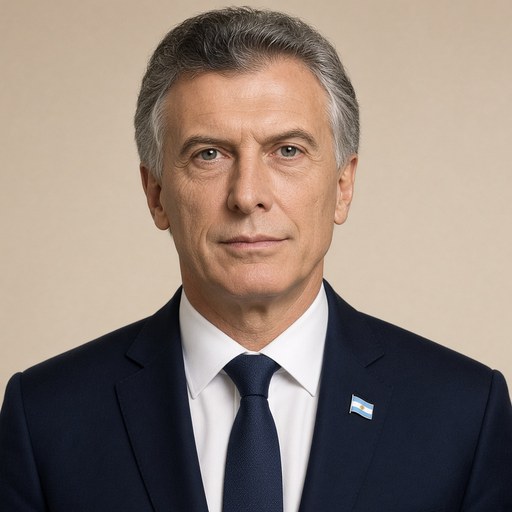
President Mauricio Macri, at the inauguration of the Calchaquí Metrobus, in the Buenos Aires party of Quilmes.
 Mauricio Macri · President of Argentina
- Context
- Macri spoke at the inauguration of the Calchaquí Metrobus line in Quilmes, Buenos Aires, on June 4, 2019, celebrating expanded public transit infrastructure.
- Main themes
- Public transportation improvement, Metrobus network expansion, quality of life and urban mobility, infrastructure investment, time savings for commuters, change and modernization, drinking water access, Buenos Aires province development, team effort and political collaboration
- Duration
- ~12 min
- Words
- 1,447
- Sentences
- 76
- Readability
- 74
- Grade
- 7.7
- Syntax
- 2.99
- Vocabulary
- 1.93
Translated from Spanish
The broad sphere of national life a sentence belongs to. Every sentence has an Arena, so it is the denominator the other indices are read against.
Other76 sentences in 11 paragraphs
Good morning, Quilmes. Good morning. Look at what a day we have, we have a very “Cambiemos” day, with very nice sun, very nice sun.
And the truth is, well, thank you, Martiniano, for receiving us; thank you to all the people of Quilmes for welcoming us with such affection; thank you, María Eugenia, as always for such kind words that reaffirm this team effort we have been making for many years. And how can we not be so happy? Right? If this is real, this is a transformation we are experiencing, which demonstrates the times we live in. Times of change.
And to think that Quilmes, Martiniano, existed before we became a nation. The people of Quilmes have that, they have history, but unfortunately, many generations had to pass, many, many generations, for you to see a transformation like this. But the good thing is that, as María Eugenia said, the change has arrived. This is the change that started eight years ago. Last Saturday marked eight years since the first Metrobus. Eight years. María Eugenia looks the same. I have a lot of gray hair and Dietrich had hair back then. That’s a lie, that’s a lie. He was already bald, eight years ago he was already just as bald. If not, his hair would have fallen out because when we had to start, as always, they told us we were crazy, that “what was this Metrobus thing?”. What we had to talk about with Omar’s colleagues, who is the driver who brought me here, on his bus he brought us here. We had to talk and explain to everyone that this was good, that this was going to work, because it’s not easy, it’s not easy to dare to change. Clearly, because it’s stepping out of that comfort zone, from the known, from what one believes is safe. But we were convinced, we were convinced that a change was needed in Argentina. And a change in public transport is one of the central axes of that change. That’s why we pushed forward with everything, convinced of doing it, and not content with that, we jumped to 9 de Julio. And there they remembered my mother, my grandmother, my whole family. But fortunately, with Guillermo, with Manuela, with Krantzer, we did it in record time so that as soon as possible, before they could realize it, 9 de Julio was already functioning and much better. And today, we are already at 15, 15 Metrobuses.
We are talking about Neuquén, Rosario, Santa Fe, we are talking about those that will come in the province because that lady, as María Eugenia quoted, killed me with that she didn’t have the right to have quality public transport, which she will have, there, just a few blocks from her house in Florencio Varela, too. And we will have it in San Martín, in the extension of Route 8, in the coming weeks. And that’s already 3 million Argentines who travel every day more safely, more calmly, in less time, who have these stops where they can wait for transport sheltered from the heat or the cold, and that these stops are also illuminated, and it is no longer that night when one returns and the darkness and all the fears that surrounded that wait for the bus to go home.
And I also spoke, yesterday or the day before, with a lady who traveled south every day after working in downtown Buenos Aires, and she told me: “President,” Mauricio, she actually said to me, “every day I recover, I have recovered, an hour and ten minutes, every day, Monday to Friday, now I arrive an hour and ten minutes earlier at home. You don’t know what that means to me.” And I said to her: “Yes, I know. Clearly, I know.” An hour and ten to be with family, to take care of your children, to train, is something incredible, it’s incredible. That lady will still have 20 years of work ahead, we are talking about thousands and thousands of days that she recovers, that is dignity, that is the opportunity to progress, because with that work, perhaps once her children are grown, she uses it to retrain to do other things. Maybe she wants to take a cooking course with Martiniano, right? And compete with him as a chef now that he is distracted as mayor, because everything evolves. So now, losing against the others who keep trying things. That is the opportunity to have good quality transport, so today we have this advancing and there are more than 41,000 drivers. Because I also told Omar what it means for them that until now without Metrobuses they have to perform miracles dodging, braking, starting, and now we are starting to help them so that their work also brings fewer accidents, fewer problems in coexistence with cars, with the motorcycles that grow every day.
So, this is much more than these stops, it is much more than the cement, than the concrete, this is real. This is real progress, as we are doing with the Agua Sur system, which here also in Quilmes continues to Lomas, to Esteban Echeverría, to Ezeiza, Almirante Brown. These are five districts. They are two and a half million people who will have drinking water because of this investment we are making. Two and a half million people from Buenos Aires. Like all the works we have done throughout the country in urban terms, pavements, sewers, drainage, so that each of you, rain or shine, can leave your house without having to survive the muddy street, and if there is an emergency, the ambulance can arrive, and that the kids can go to school every day of the year.
And this is happening and it is real. And I am glad that now I see, María Eugenia, that there are leaders who put up big signs with their photo next to the works we are doing as a national government. This is very good. It is very good if they understood the importance of fulfilling our promise to the people by doing the works, it is very good if we understand that these works are what change the reality of the lives of our Argentines forever. So, that in the future they do them, and not just wait for the national government to do the works, but that each one, in their district, does the works as they should. And as many are already doing.
And this revolution of the Metrobuses is not the only one. We have the revolution of trains, of transport, here, in the metropolitan area, as the Governor mentioned. And the cargo ones, which help Argentines who work in the most remote places, their work can reach the rest of the country and the world. The revolution of planes to connect this enormous country, of ports, of roads, of highways, of the internet, because also without the internet there is no future. All Argentines must have the same opportunities and, for that reason, this government has already connected more than six million students in their schools to have internet. And there, there is indeed equal education for all.
All this, all this, is not what we came to do. We came to make this country grow, we came to make this country grow, but without the foundations, without the foundations, a big country like this cannot grow. Without being connected to each other, Argentines, it is impossible for us to grow. Without having transparent institutions where the truth is told, where the people’s money is safeguarded, it is impossible to grow. And all that is what we have been doing and it is getting better and better. And, we are progressing more and more, that is why now we are ready to grow for many years, based on real, concrete facts, that cost because they are forever, but we are doing them and we have already done many of them.
That is why I want to congratulate you, thank you all for working together. Thank you, Martiniano, for helping us land here. Thank you to the Transport team for everything you have done. Thank you, María Eugenia, because in every place we are together fighting all the battles that need to be fought, the battles against drug trafficking, the battles against organized crime, against all those who oppose our progress. But, as we have said that it is possible and that we are determined to change, we will change and we are changing.
Let’s go Quilmes. Yes, we can. Let’s go Quilmes. Let’s go Argentina. Thank you, thank you all.
The original Spanish. The tags above are read on the English translation's sentences.
Buenos días, Quilmes. Buenos días. Miren qué día nos tocó, nos tocó un día bien “Cambiemos”, con muy lindo sol, muy lindo sol.
Y la verdad, bueno, gracias, Martiniano, por recibirnos; gracias a todos los quilmeños por recibirnos con tanto afecto; gracias, María Eugenia, como siempre por tan lindas palabras que ratifican este esfuerzo en equipo que venimos haciendo hace muchos años. Y, ¿cómo no estar tan contentos? ¿No? Si esto es real, esto es una transformación que estamos viviendo, que demuestra los tiempos que vivimos. Tiempos de cambio.
Y pensar que Quilmes, Martiniano, existía antes de que fuésemos una nación. Los quilmeños tienen eso, tienen historia, pero lamentablemente tuvieron que pasar muchas generaciones, muchas y muchas generaciones, para que ustedes vean una transformación como esta. Pero lo bueno es que, como decía María Eugenia, el cambio llegó. Eso es el cambio que empezó hace ocho años. El sábado pasado se cumplieron ocho años del primer Metrobus. Ocho años. María Eugenia está igual. Yo tengo un montón de canas y Dietrich tenía pelo en esa época. Eso es mentira, eso es mentira. Ya estaba pelado, hace ocho años ya estaba igual de pelado. Si no, se le hubiese caído el pelo porque cuando tuvimos que arrancar, como siempre, nos decían que estábamos locos, que “¿qué era esto del Metrobus?”. Lo que tuvimos que hablar con los colegas de Omar, que es el chofer que me trajo hasta acá, en su colectivo nos trajo hasta acá. Tuvimos que hablar y explicarles a todos que esto era bueno, que esto iba a funcionar, porque no es fácil, no es fácil animarse a cambiar. Claramente, porque es salir de ese lugar de confort, de lo conocido, de lo que uno cree que es seguro. Pero nosotros estábamos convencidos, nosotros estábamos convencidos de que se necesitaba un cambio en la Argentina. Y un cambio en el transporte público es uno de los ejes centrales de ese cambio. Por eso, le dimos para adelante con todo, convencidos haciéndolo, y no contentos con eso saltamos a la 9 de Julio. Y ahí ya se acordaron de mi madre, de mi abuela, de toda mi familia. Pero, por suerte, con Guillermo, con Manuela, con Krantzer, lo hicimos en tiempo récord para que lo antes posible, antes de que pudieran darse cuenta, ya la 9 de Julio estaba funcionando y mucho mejor. Y, hoy, ya vamos por 15, 15 Metrobuses.
Estamos hablando de Neuquén, de Rosario, de Santa Fe, estamos hablando de los que van a venir en provincia porque esa señora, como la citó María Eugenia, me mató con eso de que ella no tenía derecho a tener un transporte público de calidad, con lo cual, lo va a tener, ahí, a pocas cuadras de su casa en Florencio Varela, también. Y lo vamos a tener en San Martín, en la extensión de la Ruta 8, en las próximas semanas. Y eso ya son 3 millones de argentinos que todos los días viajan en forma más segura, más tranquila, en menos tiempo, que tienen estas paradas en donde pueden esperar el transporte a resguardo del calor o del frío, y que además estas paradas están iluminadas, y ya deja de ser esa noche que uno vuelve y la oscuridad y todos los miedos que había alrededor de esa espera del colectivo para volver a casa.
Y también hablaba, ayer o anteayer, con una señora que viajaba hacia el sur todos los días, después de trabajar en el centro de la Ciudad de Buenos Aires, y me decía: “Presidente”, Mauricio, me dijo en realidad, “todos los días recupero, he recuperado, una hora y diez minutos, todos los días, de lunes a viernes, ahora llego una hora y diez antes a mi casa. Usted no sabe lo que significa eso para mí”. Y, yo le dije: “Sí, lo sé. Claramente, lo sé”. Una hora y diez para estar en familia, para cuidar a tus hijos, para capacitarte, es algo increíble, es increíble. Esa señora tendrá todavía 20 años de trabajo por delante, estamos hablando de miles y miles de días que ella recupera, eso es dignidad, eso es la oportunidad de progresar, porque con esa obra, por ahí ella, una vez que sus hijos estén grandes, lo emplea en capacitarse de vuelta para hacer otras cosas. Por ahí quiere aprende algún curso de cocina con Martiniano, ¿no? Y hacerle competencia como chef ahora que él está distraído como intendente, porque todo evoluciona. Entonces, ahora, perdiendo contra los otros que siguen probando cosas. Esa es la oportunidad de tener un buen transporte de calidad, entonces, hoy tenemos que esto avanza y son más de 41 mil choferes. Porque también le decía a Omar, lo que significa para ellos que hasta ahora sin Metrobuses tiene que hacer milagros esquivando, frenando, arrancando, y ahora los empezamos a ayudar a que su trabajo también traiga menos accidentes, menos problemas en la convivencia con el auto, con las motos que crecen todos los días.
Entonces, esto es mucho más que estas paradas, es mucho más que el cemento, que el hormigón, esto es real. Este es progreso real, como lo estamos haciendo como el sistema Agua Sur, que acá también en Quilmes y sigue a Lomas, a Esteban Echeverría, a Ezeiza, Almirante Brown. Son cinco distritos. Son dos millones y medio de personas que van a tener agua potable por esta inversión que estamos haciendo. Dos millones y medio de bonaerenses. Como también todas las obras que hemos hecho en todo el país en términos urbanísticos, pavimentos, cloacas, desagües, para que cada uno de ustedes, llueva o truene, pueda salir de su casa y sin tener que sobrevivir a la calle embarrada, y si tienen una emergencia que la ambulancia pueda llegar, y que los chicos puedan ir al colegio todos los días del año.
Y esto está pasando y es real. Y me alegro que ahora veo, María Eugenia, que hay gobernantes que ponen carteles grandes con su foto al lado de las obras que estamos haciendo como Gobierno nacional. Esto está muy bien. Está muy bien si entendieron la importancia de que le cumplamos a la gente haciendo las obras, está muy bien si entendemos que esas obras son las que cambian la realidad de la vida de nuestros argentinos para siempre. Entonces, que en el futuro las hagan, y no que solamente esperen que el Gobierno nacional haga las obras, sino que cada uno, en su distrito, haga las obras como corresponde. Y como muchos ya las están haciendo.
Y esta revolución de los Metrobuses no es la única. Tenemos la revolución de los trenes, de transporte, acá, en el área metropolitana, como mencionó la Gobernadora. Y los de carga, que ayudan a que los argentinos que trabajan en los lugares más alejados, su trabajo pueda llegar al resto del país y al mundo. La revolución de los aviones para conectar a este enorme país, de los puertos, de las rutas, de las autopistas, de internet, porque también sin internet no hay futuro. Todos los argentinos tienen que tener las mismas oportunidades y, por eso, este Gobierno ya conectó a más de seis millones de alumnos en sus escuelas para que tengan internet. Y ahí sí hay educación igual para todos.
Todo esto, todo esto, no es lo que veníamos a hacer. Nosotros veníamos a hacer crecer a este país, vinimos a hacer crecer a este país, pero sin las bases, sin los cimientos, un país grande como este no puede crecer. Sin estar conectados entre nosotros, los argentinos, es imposible que podamos crecer. Sin tener instituciones transparentes donde se diga la verdad, donde se cuide el dinero de la gente es imposible crecer. Y todo eso es lo que hemos venido haciendo y cada vez está mejor. Y, cada vez, progresamos más, por eso es que ahora sí estamos listos para crecer durante muchos años, en base a hechos reales, concretos, que cuestan porque son para siempre, pero los estamos haciendo y ya hicimos muchos de ellos.
Por eso, decirles que los felicito, gracias a todos por trabajar en conjunto. Gracias, Martiniano, por ayudarnos a desembarcar acá. Gracias al equipo de Transporte por todo lo que han hecho. Gracias, María Eugenia, porque en cada lugar estamos juntos dando todas las batallas que hay que dar, las batallas contra el narcotráfico, las batallas contra las mafias organizadas, contra todos aquellos que se oponen a que progresemos. Pero, como nosotros hemos dicho que sí se puede y que estamos decididos a cambiar, vamos a cambiar y estamos cambiando.
Vamos Quilmes. Sí se puede. Vamos Quilmes. Vamos Argentina. Gracias, gracias a todos.