




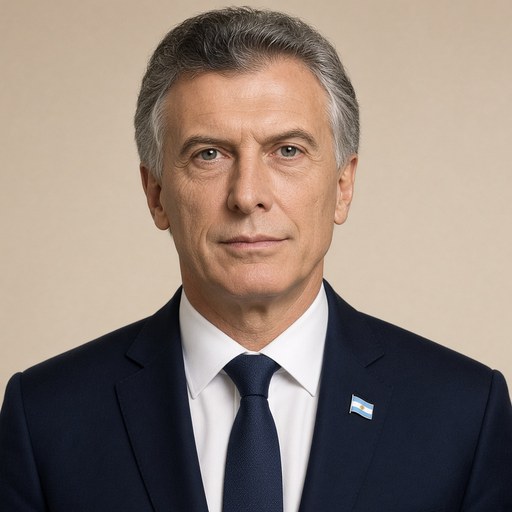
Joint statement by President Mauricio Macri and his Spanish counterpart, Mariano Rajoy
 Mauricio Macri · President of Argentina
- Context
- Macri delivered a joint statement with Spanish Prime Minister Rajoy during Rajoy's official visit to Argentina in April 2018, marking the first such visit in over a decade.
- Main themes
- Argentina-Spain bilateral relations, economic investment and trade, poverty reduction, OECD membership, Mercosur-EU agreement, Venezuela crisis and democracy, infrastructure and education exchange, climate change, government modernization, shared cultural heritage
- Duration
- ~32 min
- Words
- 3,855
- Sentences
- 128
- Readability
- 41
- Grade
- 14.8
- Syntax
- 3.20
- Vocabulary
- 2.05
Translated from Spanish
The broad sphere of national life a sentence belongs to. Every sentence has an Arena, so it is the denominator the other indices are read against.
Other128 sentences in 41 paragraphs
And I also want to thank many things: first, I want to thank you, once again, dear President, and on your behalf all the Spaniards, for the incredible, for the warm, for the affectionate reception I had with my family and the delegation that accompanied me on the visit, a year ago, to Spain. We Argentines experienced it as a gigantic demonstration of affection from the Spanish people to the Argentine people; we truly felt an honest joy of an Argentina that was reuniting with Spain towards that future that challenges us so much.
I also want to thank you for the current visit, for the very important business delegation that accompanies you, which envisions investments, jobs, which is the solution we have to reduce poverty, which is the main commitment I have made as President, and thirdly, the words of support, which I have already expressed before traveling and those I heard this morning from you, from your ambassador, from the Secretary of Commerce, the very laudatory words about the path we have embarked on and the reforms we are making.
I want to reiterate that for us Spain is an example to follow because we clearly have a common path; we too come from a long period of isolation and we want to integrate intelligently into the world and in that way bring better opportunities for people to develop, to live better, to have a life project that helps them to be truly happy. All this, obviously, in a context in which Spain, I want to reiterate, is a country very close to the hearts of Argentines; there are multiple ties and we all came from some Spaniard; I also have my Spanish descent and the truth is that feeling so close again is something so important and, above all – as I told you a year ago when I visited you – we have embarked on a work agenda and all the things we promised we would do we are doing, in order to be credible, to be reliable, so that you feel that betting on us to face the challenges of the 21st century will also benefit the Spaniards. We believe that we face a dynamic world, where there will be winners and losers, and we believe that – if we are together – we will have more opportunities to be among the group of winners.
In that line, today, we went through an important work agenda, within the Strategic Action Plan, and we have reconfirmed our vocation to work on infrastructure development, on educational exchange; on environmental care, which is a priority for both governments, which also relates to mitigation works to reduce the problems brought by climate change and also on modernization issues, because we believe that to be closer to our people, for governments to be closer to citizens, we must introduce technology and provide transparency to government actions, closeness, dynamism, speed, and facilitation of community development.
I also want to thank you for the support for Argentina's entry into the OECD; for us, it is an important point and I am glad that we share the vision that this agreement – between Mercosur and the European Union – is a great opportunity for both and that we have never been so close and this time we must make it a reality.
And finally, I want to say that – we regret – sharing such a negative view of everything that is happening in Venezuela. Clearly, in Venezuela, for a long time now, human rights have been disrespected, the level of abuse with which the Maduro government has acted towards Venezuelan citizens is tremendous; we do not recognize the result of the election, which will be held on whatever date it chooses, but that is not a democratic election and we will continue to demand a democratic solution for the Venezuelan people.
So, thanking you, telling you not to think that the result of 6 to 1 in a friendly match means anything, that in the World Cup, perhaps we will have revenge in the quarter-finals and with Messi on the field we have all the faith to set things right, as they should be, and that, of course, I hope that if we win it will not damage the affectionate relationship between Argentina and Spain at all.
Thank you very much, President, for visiting us again.
RAJOY.- Thank you very much, Mr. President, good morning to all, it is an honor for me to appear, alongside all of you, alongside President Macri, on the occasion of this official visit. This is my first official visit to Argentina, and the first by a President of the Spanish Government in over 10 years.
It has been – in my opinion – a long time, too long for two countries as close as ours, but as the popular saying goes, "it's never too late if the joy is good."
This visit, as President Macri referred to in his speech, is – in a sense – the natural continuation of the successful state visit that President Macri made to Spain in February 2017. That visit, I agree, allowed for a true and profound renewal of our bilateral relations. Spain and Argentina – as you know – share much: a common history, a common language, and a common culture. They also share very close family ties, but now they share something else, which can be of tremendous benefit to both countries, and that is two governments in full harmony on most issues in economic and foreign policy. This can generate a multiplier effect of our efforts and I believe we are working well to take advantage of it.
Also, during our conversations today, we reviewed the internal situation in both countries, as well as bilateral relations and the regional and international situation. In this morning's meeting, I had the opportunity to congratulate President Macri on the determined policy of reforms and economic opening that he has undertaken. We agreed that to generate wealth, we must offer seriousness, predictability, and legal security to citizens. Only then can public administrations help each individual fully develop their capabilities, and I believe that in both countries we are already beginning to see the first results of that recipe and the improvements for the well-being of the people as a whole.
We also talked about our future bilateral relations; the potential of our two countries and our bilateral relations is immense, and I firmly believe that by working hand in hand with President Macri we can fully take advantage of it.
The business presence of Spain in Argentina is strong and is also committed to the future of the country. We are the second largest investor in Argentina, and I see no reason why we cannot return to being the first, as we were for many years.
Our companies persevered in Argentina during more difficult times; they are committed to Argentina and have a vocation for permanence. Also, Argentina has strong capital invested in Spain. I have come away with an excellent impression from the Business Meeting we inaugurated this morning, and I encourage both business sectors to continue trusting in that shared future. I believe it is a good moment because both economies are doing well, and because there is also a good harmony between both governments, and that always helps generate wealth, well-being, and employment.
Well, ladies and gentlemen, the economy is important, but certainly not everything. With this trip to Argentina, I also wanted to send a clear political message: we share values, we share analyses of international reality, we share objectives. It is time to unite efforts in the conviction that in a globalized world, the sum of one plus one is more than two. We have been able to talk with the President about his plans for Mercosur and the future of Europe.
I believe in the convergence between both processes and in the leading role that Argentina and Spain should play from their respective shores of the Atlantic. Therefore, I have reiterated Spain's firm support for a forthcoming conclusion of the European Union-Mercosur association agreement. Likewise, we support Argentina in its aspiration to become a full member of the OECD, and I believe that is an act of justice.
President Macri has also informed me about his presidency of the G-20, which is a demanding task, especially at a time when protectionist winds are blowing, but we are all confident that it will be a great success. There is a very important commitment to the digitalization of our economy, to the digitalization of our countries, and that is undoubtedly a first-order element of competitiveness, and we must be at the forefront of countries in the world in this matter, which will greatly depend on the competitiveness of our economy and therefore the future of the people in the coming years.
As President Macri also said, we have talked about Venezuela. Unfortunately, the problem is of such magnitude that there is no other option, and it is already affecting the entire region; it has overflowed all borders. We fully agree on our analysis of the situation and on the only viable solution. We must return the word to the Venezuelans, without cuts, without threats, and without taking advantage of the hunger and misery caused by incompetence or worse to establish clientelistic regimes; simply let them choose freely as their own Constitution provides. We want for the Venezuelans, I am sure that President Macri also wants the same for our countries: democracy, freedom, human rights, stability, tranquility, and economic and social progress. That is what we want for our countries, for our nationals, and also for all Venezuelans.
In short, and I am convinced that President Macri agrees with me, it has been a very fruitful meeting, as I am sure the entire visit will be. We are working to turn our excellent political harmony into an added value for our citizens at the bilateral level, at the level of relations between Europe and Latin America, and on the main issues of regional and international current affairs. I wish to thank President Macri for his invitation. Argentina and Spain have always professed mutual friendship and affection; now it is about making the most of this valuable common heritage, and I did not want to end this speech without recalling that President Macri has conveyed an invitation to His Majesty the King to make an official visit to Argentina after the Congress of the Language that will take place in Córdoba, I believe in March of next year.
And now to truly finish, it is true that the match was friendly, but even being friendly, one result is not the same as another; in any case, all that is already history, and we will see each other again soon.
MACRI.- We hope so.
JOURNALIST.- Good morning, presidents. The diagnosis on Venezuela is shared by both; the immediate question is: what can be done? Propose a shared leadership? What concrete actions can Argentina and Spain address together? And for President Rajoy, Albert Rivera threatens or warns about supporting the motion of censure against Cristina Cifuentes; what are you going to do? How will you react to that threat? Will you put forward a candidate as he requests or will you do nothing? Thank you very much.
MACRI.- First, in Lima, the top of the agenda will be the issue of Venezuela; there we will debate among the countries attending this summit insisting that this election has no validity, that it is not a democratic election, and that we really hope that political prisoners are released, that a serious electoral schedule is established to allow people to choose how to move forward; of course, we will have to see what other complementary measures can be added. But always reiterating that we will not validate the electoral result of May 20, I don’t know, it doesn’t matter, whatever the date is, because that election has no value, no matter how much Mr. Maduro insults me, we will not recognize him as a democratic President because democracy has long been absent in Venezuela.
RAJOY.- I join those words, and regarding the other issue, it is a matter for the parties; I don’t know if someone threatens or warns, well, they should explain why they do so. I certainly neither threaten nor warn, but that issue has its place where it is resident, and I hope it is resolved there with the utmost seriousness and with the greatest common sense possible, which is lacking.
PRESENTER.- Next, Natasha Niebieskikwiat from the newspaper Clarín will ask about Argentina.
JOURNALIST.- How are you? Good morning.
MACRI.- With that name, she is still Argentine; we have immigrants from all over the world.
JOURNALIST.- I am Cuban, half and half, but my heart is Argentine. To President Rajoy, good afternoon, this morning the businessmen who greeted President Macri in a bilateral meeting, in a very cordial atmosphere, and according to what they discussed with them, have pointed out, as a past chapter, the lack of legal security in Argentina, the lack of stability, but they still have some concerns such as the high inflation that continues in Argentina, some laws they want to pass; my question is: what does Argentina lack in your opinion? Do you think the Spanish model can be transferred? It has been successful but it has also been very tough. To President Macri, what do you think of the detention of Lula Da Silva, the judicial process against Lula Da Silva? Would you like to see in Argentina a judicial process and for the judges to act as they are acting in Brazil?
RAJOY.- The question you are asking me is, what more should Argentina do to continue generating trust? I am by no means the right person to tell the Argentine government what it should do. We are living through a very tough, very complex economic time, and as I tried to explain this morning, we have implemented a policy that we believe is the right one, that of controlling public accounts, that of not spending what we do not have, that of paying attention to macroeconomics, but then there is a value in the economy that is of enormous importance, which is the generation of trust. I said it this morning in my speech and I reiterate it at this moment, the change that has occurred in the global perception of Argentina is a very noticeable change, and today at this moment there is a very important trust in the Argentine government and therefore in the country. That is fundamental; we have all experienced these things in all countries throughout history. We went through a very bad phase; I came to government during a time of extreme difficulty, Spain experienced five years of negative growth and 3 million 800 thousand jobs were lost, people who lost their jobs. Recovering all of that in the end costs a lot and generates a great deal of distrust, but in the end, if you work hard, if you do things well, if you do things sensibly and rationally, negative circumstances can be overcome.
I sincerely do not want to repeat it many more times, but I believe that what is being done in Argentina, in such a short time, because I think we are talking about two years and a bit, since President Macri has been President, is a very substantial change. I meet every month and a half with the heads of government of 28 European countries, and it has produced a substantial change everywhere. What is it about now? It is about entrepreneurs taking advantage of that. Entrepreneurs, apart from working to make profits, as is logical, have to generate well-being, they have to generate wealth and employment, and what they need are opportunities, clear rules of the game, norms that do not change, and from there they have to fight; this is the case in any aspect of life. Governments are here to create opportunities and to provide possibilities; we must bother little with regulation, but then it is the people who have to fight the battle.
I have sincerely already seen many Spanish entrepreneurs, and I have seen them very encouraged, very eager, and very excited to come and invest here, to come and try to obtain contracts like others do, and I saw a good atmosphere, with absolute frankness, and that is how I convey it.
MACRI.- Thank you, President. You may have noticed that the word perhaps mentioned most often by President Rajoy is "trust," and it is what I have spoken to Argentines about during these two years: the importance of trust to move a society, to generate a different space for development. And when you talk about trust, a central element is having an independent judiciary; it is a fundamental element; a judiciary that enforces the law. And that is what Brazil has today: a judiciary that has proven to be truly independent. And from here, as President of Argentina, I can only say that we obviously respect the institutional functioning of Brazil, and that we dream that over time, by appointing the best judges in each shortlist by the Council of the Judiciary; by making some reforms that are being undertaken in the Justice Plan 2020, we will achieve an increasingly solid judicial system, and more solid means more independent, more credible, more trustworthy. So we are all committed to that task.
JOURNALIST.- Good afternoon. A question for the President of the Spanish Government. Recently, you reminded us that Europe was, in addition to a common economic space, a moral space, a space of trust and the rule of law. So my question is whether you believe that this is being respected now, with the situation of Puigdemont in Germany, and whether the Government is doing or has done anything to avoid some accusations or statements that doubt the application of the rule of law in Spain. And then, if you allow me, Mr. President, although I know it is a party matter, are you in favor of changing Cristina Cifuentes or not?
MACRI.- And what do I say to all that?
RAJOY.- Europe is above all a set of values. When the first steps were taken to establish what is the European Union - which was even before the Treaty of Rome, in 1957 - the idea was to turn Europe into a space of peace, freedom, and human rights; a space where the primacy of the law was a value embraced by all, and a rule of law with three powers: the Legislative Power, the Executive Power, and the Judicial Power; and it is also an economic space, a space of progress. That is Europe; Europe is many things, I am a profound Europeanist. You are now asking me about what has happened in Germany. Look, I have always believed, I have said it and reiterated it very recently, in a last intervention I had in Madrid: the decisions of the Courts of Justice are respected and complied with, because if that is not the case, each person would take the decisions they deemed appropriate and convenient. You and I could have a problem; if you win and I do not accept it, then we will have a much bigger problem. Therefore, the decisions of judges? That is democracy, and it is a basic principle of democracy, and they can make mistakes, yes, just as the Legislative Power or the ministers of any executive government in any country in the world can make mistakes. Therefore, it is very important to be clear about that. Spanish judges have issued a European arrest warrant; the German prosecutor supported the European arrest warrant; and there has been a judge in Germany who has made a different decision, which is still not a definitive decision. We will respect the decision that is ultimately made, and the approach that the German government has taken has been exemplary; it has said that it does not have to intervene in a matter that does not correspond to it as a government, because that is a judicial matter, and therefore no one, from any government, should comment on this issue. Therefore, the behavior of the German government has seemed to me to be the behavior of a European nation, of the classic ones and of the first ones. I have already responded to the other matter.
PRESIDENT.- Good morning, Mr. President. In Argentina today there are two important issues, your visit on one hand, but on the other, we are debating the decriminalization of abortion. Spain has long implemented this measure. I wanted to know how you evaluate its implementation, whether it was positive and why? And in the case of President Macri: you receive many foreign investors, as is the case right now with Spain, and they are always enthusiastic about coming to Argentina. However, they also have a list of doubts or claims. What are they specifically, and what is Argentina doing to address them?
RAJOY.- Allow me to respond this way, I have already said that I am no one to tell the Executive Power what it should do, and I should not tell the Legislative Power of another country what to do, no matter how dear it is to me, like Argentina.
JOURNALIST.- I was asking about your experience in Spain, not about Argentina, sorry, excuse me; how was the experience in Spain and do you consider that its implementation was positive?
RAJOY.- That serves me to respond as I have responded.
MACRI.- Regarding the concerns of potential investors who visit us daily, fortunately, because as President Rajoy said, there is a gigantic change in the vision and future expectations regarding our country. But clearly, the whole world has resolved the issue of inflation, so everyone expects us to reach a single-digit inflation rate, as we have committed to by the end of next year; everyone expects us to demonstrate that we are capable of reducing the fiscal deficit, that we are capable of continuing to simplify, that we are capable of establishing clear rules of the game in each sector. We are currently debating in Congress a project that has been sent that will generate a boost, the digitalization of Argentina; all these companies also need to know that they will be connected to the world if they settle in Argentina, with good internet service, with good cell signal. These are all reforms we are making, and what we hope is that companies come to support us in the process so that we can do it together, because Argentina has awakened towards development, modernization, and growth; we are doing it well, but we all know that we are at the beginning, at the beginning of a long road to travel, which must ultimately have as its goal the definitive defeat of poverty in our country, which is the main objective of the Government. Thank you all very much, and see you next time.
The original Spanish. The tags above are read on the English translation's sentences.
Y también quiero agradecer muchas cosas: primero, quiero agradecerle, una vez más, querido Presidente y en su nombre a todos los españoles, por la increíble, por la cálida, por lo afectuosa que fue la recepción que tuve con mi familia y la delegación, que me acompañó a la vista, hace un año, a España. Los argentinos lo vivimos como una gigantesca demostración de afecto del pueblo español al pueblo argentino; realmente vivimos una honesta alegría de una Argentina que volvía a unirse con España hacía ese futuro que tanto nos desafía.
También quiero agradecerle por la visita actual, por la importantísima delegación empresarial que lo acompaña, que vislumbra inversiones, empleo, que es la solución que tenemos para reducir la pobreza, que es el principal compromiso que he asumido como Presidente, y la tercera las palabras de apoyo, que ya he emitido antes de viajar y las que he escuchado, esta mañana, de parte suya, de su embajador, de la secretaria de Comercio, las palabras tan elogiosas sobre el camino que hemos emprendido y las reformas que estamos haciendo.
Quiero reiterarles que para nosotros España es un ejemplo a seguir porque claramente tenemos un camino común, también nosotros venimos de un largo período de aislamiento y queremos integrarnos en forma inteligente al mundo y de esa manera llevarle mejores oportunidades a la gente de desarrollarse, de vivir mejor, de tener un proyecto de vida que los ayude a ser realmente felices. Todo esto, obviamente, en un contexto en el cual España, quiero reiterar, es un país muy cercano al corazón de los argentinos, son múltiples los vínculos y todos vinimos de algún español; yo tengo también mi descendencia española y la verdad que sentirnos de vuelta tan juntos es algo tan importante y, sobre todo – como le dije hace un año, cuando los visité – hemos emprendido una agenda de trabajo y todas las cosas que les prometimos que íbamos a hacer las estamos haciendo, en función de ser creíbles, de ser confiables, de que ustedes sientan que apostar a que juntos recorramos los desafíos, del siglo XXI, va a ser algo que le va a resultar también en beneficio de los españoles. Creemos que enfrentamos un mundo dinámico, donde va a haber ganadores y perdedores y creemos que – si estamos juntos – vamos a tener más oportunidades de estar dentro del grupo de los ganadores.
En esa línea, hoy, recorrimos una agenda de trabajo importante, dentro del Plan de Acción Estratégica, y hemos reconfirmado nuestra vocación de trabajar en el desarrollo de infraestructuras, en el intercambio educativo; en el cuidado del medioambiente, que es una prioridad para ambos gobiernos, que tiene que ver, también, con obras de mitigación para reducir los problemas, que trae este cambio climático y también en temas de modernización, porque creemos que para estar más cerca de nuestra gente, para que los gobiernos estén más cerca de los ciudadanos hay que introducir la tecnología y darle transparencia a las acciones de gobierno, cercanía, dinámica, velocidad y facilitación del desarrollo de la comunidad.
También, quiero agradecerle el apoyo para el ingreso, de la Argentina, en la OCDE; para nosotros es un punto importante y me alegra que compartamos la visión de que este acuerdo – entre Mercosur y la Unión Europea – es una gran oportunidad para ambos y que nunca estuvimos tan cerca y esta vez la tenemos que hacer realidad.
Y por último, decirle que – lamentamos – compartir una visión tan negativa de todo lo que está sucediendo, en Venezuela. Claramente, en Venezuela, hace rato, que se han dejado de respetar los derechos humanos, en nivel de atropello con que ha actuado el gobierno de Maduro, respecto de los ciudadanos venezolanos es tremendo; desconocemos el resultado de la elección, que la hará en la fecha que se le ocurra, pero eso no es una elección democrática y que seguiremos reclamando por una salida democrática para el pueblo venezolano.
Entonces, agradeciéndole, diciéndole que no se crean que ese resultado de 6 a 1, en un amistoso, significa nada, que en el Mundial, capaz que tenemos revancha en el cuarto de final y con Messi en campo nos tenemos toda la fe de poner las cosas en su lugar, como corresponde y eso, por supuesto, espero que si nos toca ganar no va a dañar en lo absoluto la relación de afecto entre Argentina y España.
Muchas gracias Presidente por nuevamente visitarnos. (APLAUSOS).
RAJOY.- Muchas gracias, señor Presidente, muy buenos días a todos, es un honor para mí comparecer, junto a todos ustedes, junto al Presidente Macri, con motivo de esta visita oficial. Es mi primera visita oficial, a la Argentina, y la primera de un Presidente del Gobierno español, desde hace más de 10 años.
Ha sido – en mi opinión – mucho tiempo, demasiado para dos países tan próximos como los nuestros, pero como reza el refranero popular, “nunca es tarde, si la dicha es buena”.
Esta visita, y se ha referido a ello, en su intervención el Presidente Macri, es – en cierto sentido – la continuación natural de la exitosa visita de Estado, que el Presidente Macri, realizó a España, en febrero de 2017. Esa visita, coincido, permitió hacer una verdadera y profunda renovación de nuestras relaciones bilaterales. España y Argentina – como saben- comparten mucho: una historia, una lengua y una cultura comunes. También, estrechísimos vínculos familiares, pero ahora comparten otra cosa, que puede ser de tremendo provecho para ambos países y eso es dos gobiernos en plena sintonía sobre la mayoría de las cuestiones en política económica y exterior. Eso puede generar un efecto multiplicador de nuestros esfuerzos y creo que estamos trabajando bien para sacarle partido.
También, durante nuestras conversaciones de hoy, hemos pasado revista a la situación interna en ambos países, así como a las relaciones bilaterales y a la situación regional e internacional. En la reunión, de esta mañana, he tenido ocasión de felicitar al Presidente Macri por la política decidida de reformas y de apertura económica, que ha emprendido. Coincidimos en que para generar riqueza hay que ofrecer seriedad, previsibilidad y seguridad jurídica a los ciudadanos. Sólo así las administraciones públicas pues podrán coadyuvar a que cada individuo pueda desarrollar plenamente sus capacidades y creo que en ambos países ya estamos empezando a ver los primeros resultados de esa receta y las mejoras para el bienestar del conjunto de la gente.
También hemos hablado de nuestras relaciones bilaterales del futuro; del potencial de nuestros dos países y de nuestras relaciones bilaterales es inmenso y creo firmemente que trabajando mano a mano con el Presidente Macri podremos aprovecharlo plenamente.
La presencia empresarial, de España, en Argentina es potente y además está comprometida con el futuro del país. Somos el segundo inversor, en la Argentina, y no veo razón por la que no podamos volver a ser el primero, como lo fuimos durante muchos años.
Nuestras empresas perseveraron, en una Argentina, en tiempos más difíciles, están comprometidos con Argentina y tienen vocación de permanencia. También, Argentina tiene fuertes capitales invertidos, en España. Me he llevado una excelente impresión del Encuentro Empresarial, que hemos inaugurado, esta mañana, y animo a ambos sectores empresariales a seguir confiando en ese futuro compartido. Creo que es un buen momento, porque las dos economías van bien, y porque además hay una buena sintonía entre ambos gobiernos y eso siempre ayuda a la generación de riqueza, de bienestar y de empleo.
Bien, señoras y señores, la economía es importante, pero ciertamente no lo es todo. Con este viaje a Argentina he querido, también, mandar un claro mensaje político: compartimos valores, compartimos análisis sobre la realidad internacional, compartimos objetivos. Toca unir esfuerzo en la convicción de que en un mundo globalizado la suma de uno más uno es más que dos. Hemos podido hablar con el Presidente de sus planes para el Mercosur y del futuro de Europa.
Creo en la convergencia entre ambos procesos y en el papel protagonista, que corresponde a Argentina y España, desde sus respectivas riberas del Atlántico. Por ello, le he reiterado el firme apoyo de España a una próxima conclusión del acuerdo de asociación Unión Europea Mercosur. Igualmente, apoyamos, a Argentina, en su aspiración de convertirse en miembro de plena derecho de la OCDE y creo que es un acto de justicia.
El Presidente Macri, también, me ha informado sobre su presidencia de G-20, que es una tarea ardua y sobre todo en un momento en el que soplan vientos proteccionistas, pero todos estamos seguros de que va a tener un gran éxito. Hay una apuesta muy importante por la digitalización de nuestra economía, por la digitalización de nuestros países y ahí está – sin dudas – un elemento de competitividad de primer orden y tenemos que estar a la cabeza de los países en el mundo en esta materia de la que va a depender, y mucho, la competitividad de nuestra economía y por el tanto el futuro de la gente, en los próximos años.
Como dijo el Presidente Macri, también, hemos hablado sobre Venezuela. Desgraciadamente el problema es de tal magnitud que no queda otra y ya afecta a toda la región, ha desbordado todas las fronteras. Coincidimos plenamente en nuestro análisis de la situacióny en la única solución viable, Hay que devolverla palabra a los venezolanos, si corta pizzas, sin amenazas y sin aprovechar el hambre y la miseria provocada por la incompetencia o peor para establecer regímenes clientelares, simple y llanamente dejarles elegir en libertad como prevé su propia Constitución. Queremos para los venezolanos, estoy seguro que el Presidente Macri también, lo mismo que queremos para nuestros países: democracia, libertad, derechos humanos, estabilidad, tranquilidad y progreso económico y social. Eso es lo que queremos para nuestros países, para nuestros nacionales y también para el conjunto de todos los venezolanos.
En definitiva, y estoy convencido de que el Presidente Macri coincide conmigo, ha sido una reunión muy provechosa como estoy seguro que resultará toda la visita. Estamos trabajando para convertir nuestra excelente sintonía política en un valor añadido para nuestros ciudadanos a nivel bilateral, a nivel de relaciones entra Europa y América Latina y en las principales cuestiones de la actualidad regional e internacional. Deseo por todo ello agradecerle al Presidente Macri su invitación. Argentina y España siempre se han profesado amistad y cariño mutuo, ahora se trata de sacar el máximo provecho posible a este valioso acervo común, y no quería terminar esta intervención sin recordar que el Presidente Macri me ha trasladado una invitación para su majestad el Rey, para que haga una visita oficial a la Argentina después del Congreso de la Lengua que tendrá lugar en Córdoba, creo recordar que en marzo del año que viene.
Y ya para terminar de verdad, es verdad que el partido era amistoso pero aun siendo amistoso no es lo mismo un resultado que otro, en cualquier caso todo eso ya es historia de la humanidad y volveremos a vernos pronto.
MACRI.- Eso esperamos.
PERIODISTA.- Buenos días, presidentes. El diagnóstico sobre Venezuela lo comparten los dos, la pregunta inmediata es: ¿qué puede hacerse? ¿Plantear un liderazgo compartido? ¿Qué hechos concretos pueden abordar juntos Argentina y España? Y para el Presidente Rajoy, Albert Rivera amenaza o advierte con apoyar la moción de censura a Cristina Cifuentes, ¿Qué va a hacer usted? ¿Cómo va a reaccionar frente a esa amenaza? ¿Va a poner un candidato como él pide o no va a hacer nada? Muchas gracias.
MACRI.- Lo primero, en Lima en el tope de la agenda va estar el tema de Venezuela, ahí vamos a debatir los países que asistimos a esta cumbre insistiendo en que esta elección no tiene validez, que no es una elección democrática y que realmente esperamos que se libere los presos políticos, que se establezca un cronograma electoral en serio para permitir a los personas elegir como seguir hacia el futuro; por supuesto se tendrá que ver qué otras medidas complementarias se pueden agregar. Pero siempre reiterando que no vamos a convalidar el resultado electoral del 20 de mayo, no sé, no importa, la fecha que sea, porque no tiene ningún valor esa elección, por más que el señor Maduro me insulte, no vamos a reconocer como un Presidente democrático porque hace rato que no hay democracia en Venezuela.
RAJOY.- Yo me sumo a esas palabras y sobre el otro asunto es un tema de los partidos, no sé si alguien amenaza o advierte, en fin, debería explicar por qué lo hace. Yo desde luego que ni amenazo, ni advierto, pero ese tema tiene su lugar donde está residenciado y espero que allí se resuelva a la mayor seriedad posible y con el mayor sentido común posible, que falta.
PRESENTADOR.- Seguidamente entonces preguntará por Argentina, Natasha Niebieskikwiat, del diario Clarín.
PERIODISTA.- ¿Qué tal? Buenos días.
MACRI.- Con ese nombre igual es Argentina, nosotros tenemos inmigraciones de todas partes del mundo.
PERIODISTA.- Soy cubana, mitad y mitad, pero mi corazón es argentino. Al Presidente Rajoy, buenas tardes, hoy la mañana los empresarios que saludaron al Presidente Macri en una bilateral, en un ambiente muy cordial y según conversado con ellos han dado, como capítulo pasado, la falta de seguridad jurídica en la Argentina, la falta de estabilidad, pero tienen algunos planteos todavía como la alta inflación que sigue habiendo en la Argentina, algunas leyes que quieren que pase, mi pregunta es: ¿qué le falta a la Argentina a su criterio? ¿Cree que puede trasladar el modelo español? Que ha tenido éxito pero ha sido muy duro también. Al Presidente Macri, ¿qué piensa de la detención de Lula Da Silva, el proceso judicial contra Lula Da Silva? ¿Le gustaría ver en Argentina un proceso judicial y que los jueces actúen como están actuando en Brasil?
RAJOY.- La pregunta que me hace a mí es, ¿qué más debería hacer Argentina para seguir generando confianza? Yo no soy, ni mucho menos, la persona indicada para decirle al Gobierno argentino lo que tiene que hacer. Nosotros vivimos una época económica muy dura, muy compleja, y como he intentado explicar esta mañana, pues hemos hecho una política y que creemos que es la buena, la del control de las cuentas públicas, la de no gastar lo que no se tiene, la de prestar atención a la macroeconomía, pero luego hay un valor que en la economía que tiene una enorme importancia, que es la generación de confianza. Yo lo he dicho esta mañana en mi intervención y lo reitero en este momento, el cambio que se ha producido en la precesión mundial sobre Argentina es un cambio muy notorio, y hoy en estos momentos lo que hay es una confianza muy importante en el Gobierno de Argentina y por tanto en el país. Eso es fundamental, esas cosas las hemos vivido todos los países a lo largo de la historia, nosotros pasamos una etapa muy mala, yo llegué al Gobierno en una etapa de extrema dificultad, cinco años de crecimiento negativo tuvo España y 3 millones 800 mil puestos de trabajaron se perdieron, personas que perdieron su trabajo. Todo eso al final recuperarlo cuesta mucho y todo eso genera una gran desconfianza pero al final si se trabaja, si se hacen las cosas bien, si se hacen las cosas con sensatez y con razón las circunstancias negativas se superan.
Yo sinceramente no quiero repetirlo más veces pero es que creo que lo que se está haciendo en la Argentina, en tan poco tiempo, porque pienso que estamos hablamos de dos años y pico, desde que el Presidente Macri es Presidente, es un cambio muy sustancial. Yo me siento cada mes y medio con los jefes de gobierno de 28 países europeos y ha producido un cambio sustancial en todas partes ¿De qué se trata ahora? Pues de que los empresarios aprovechen eso. Los empresarios aparte de trabajar para tener beneficios, como es lógicos, tienen que generar bienestar, tienen que generar riqueza y empleo, y ellos lo que necesitan son oportunidades, reglas de juegas claras, unas normas que no se cambien y a partir de ahí ellos tienen que pelear, esto es así y en cualquier faceta de la vida. Los gobiernos estamos para generar oportunidades y para dar posibilidades debemos molestar poco con regulación, pero luego es la gente la que tiene que dar la batalla.
Yo sinceramente he visto ya muchos empresarios españoles y los he visto muy animados con muchas ganas y con mucha ilusión de venir a invertir aquí, de venir a intentar tener como viene otra gente, a obtener contratos y vi un buen ambiente, con absoluta franqueza y así se lo traslado.
MACRI.- Gracias Presidente. Se habrán dado cuenta que la palabra tal vez que más veces menciona el presidente Rajoy es “confianza”, y es de la que les he hablado a los argentinos durante estos dos años: la importancia que tiene la confianza para mover una sociedad, para generar un espacio distinto de desarrollo. Y cuando hablás de confianza, un elemento central es tener una Justicia independiente, es un elemento fundamental; una Justicia que haga respetar la ley. Y eso es lo que tiene hoy Brasil: una Justicia que se ha demostrado verdaderamente independiente. Y desde acá, como Presidente de la Argentina, no tengo más que decir que respetamos, obviamente, el funcionamiento institucional de Brasil, y que soñamos con que con el correr del tiempo, designando a los jueces mejores en cada terna por parte del Consejo de la Magistratura; haciendo algunas reformas que están encarando en el Plan Justicia 2020, logremos ir teniendo cada vez un sistema judicial más sólido, y más sólido significa más independiente, más creíble, más confiable. Así que estamos todos empeñados en esa tarea.
PERIODISTA.- Buenas tardes. Una pregunta para el Presidente del Gobierno español. Hace poco nos recordaba que Europa era además de un espacio común económico, un espacio moral, un espacio de confianza y de Estado de derecho. Entonces mi pregunta es si cree que eso se está respetando ahora, con la situación de Puigdemont, en Alemania, y si el Gobierno está haciendo o ha hecho algo para evitar algunas acusaciones o algunas declaraciones que dudan de la aplicación del Estado de derecho en España. Y luego, si me permite Presidente, aunque sé que es una cuestión de partidos, si es usted partidario de cambiar o no a Cristina Cifuentes.
MACRI.- ¿Y yo qué contesto a todo eso? (RISAS)
RAJOY.- Europa es ante todo y sobre todo un conjunto de valores. Cuando se dieron los primeros pasos para constituir lo que es la Unión Europea -que ya fue incluso antes del Tratado de Roma, en el año 1957- la idea era convertir a Europa en un espacio de paz, de libertad, de derechos humanos; un espacio donde la primacía de la ley fuera un valor asumido por todos, y un Estado de derecho con tres poderes: el Poder Legislativo, el Poder Ejecutivo y el Poder Judicial; y además es un espacio de económico, es un espacio de progreso. Eso es Europa, Europa son muchas cosas, yo soy un profundo europeísta. Me pregunta usted ahora por lo que ha ocurrido en Alemania. Mire, yo siempre he creído, lo he dicho y lo he reiterado hacen muy pocas fechas, en una última intervención que tuve en Madrid: las decisiones de los Tribunales de Justicia se respetan y se acatan, porque si eso no es así las decisiones tomaría cada uno la le pareciera oportuno y conveniente. Usted y yo podríamos tener un problema, si me gana usted y yo no lo acepto, pues entones tendremos un problema mucho mayor. Por tanto, ¿las decisiones de los jueces?: eso es democracia, y es un principio básico de la democracia, y se pueden equivocar, sí, igual que se puede equivocar el Poder Legislativo o los ministros de cualquier gobierno ejecutivo de cualquier país del mundo. Por tanto, eso es muy importante tenerlo en claro. Los jueces españoles han dictado una euroorden; la fiscalía alemana apoyó la euroorden; y ha habido un juez en Alemania que ha tomado una decisión distinta, que todavía no es una decisión definitiva. Nosotros respetaremos la decisión que se tome al final, y el planteamiento que ha hecho el Gobierno alemán ha sido modélico, ha dicho que no tiene por qué entrar en un tema que como Gobierno no le corresponde, porque eso es un asunto judicial, y que por tanto nadie, de ningún gobierno, debe entrar en hacer comentarios sobre este tema. Por lo tanto el comportamiento del Gobierno alemán me ha parecido un comportamiento propio de una nación europea, de las clásicas y de las de primera. Al otro asunto ya lo he respondido.
PRESIDENTE.- Buenos días señor Presidente. En la Argentina hoy hay dos temas importantes, su visita por un lado, pero sin embargo otro, que es que estamos debatiendo la despenalización del aborto. España hace tiempo que implementó esta medida. ¿Quería saber cómo evalúa su implementación, si fue positiva y por qué? Y en el caso del presidente Macri: usted recibe a muchos inversores extranjeros, como es en el caso de en este momento de España, y siempre son entusiastas para venir a la Argentina. Sin embargo también tienen una lista de dudas o reclamos. ¿Cuáles son en concreto y qué está haciendo Argentina para ver de subsanarlas?
RAJOY.- Permítame usted que le responda así, yo antes dicho que no soy yo nadie para decirle al Poder Ejecutivo lo que tiene que hacer, y tampoco debo decirle nada al Poder Legislativo de otro país, por muy querido que sea para mí como es Argentina.
PERIODISTA.- Le preguntaba por su experiencia en España, no sobre Argentina, perdón, discúlpeme; ¿cómo fue la experiencia en España y si considera que su implementación fue positiva?
RAJOY.- Es que eso me sirve para responder como le he respondido.
MACRI.- En lo que respecta a los planteos de los potenciales inversores que nos visitan a diario, por suerte, porque como dijo el presidente Rajoy, hay un cambio gigantesco en la visión y en las expectativas de futuro respecto a nuestro país. Pero, claramente, el mundo entero ha resuelto el tema de la inflación, con lo cual todos esperan que lleguemos a una inflación de un dígito, como nos hemos comprometido para fines del año que viene; todos esperan que vayamos demostrando que somos capaces de reducir el déficit fiscal, que somos capaces de seguir simplificando, que somos capaces de poner reglas de juego claras en cada sector. Estamos justamente hoy debatiendo en el Congreso un proyecto que se ha enviado que va a generar un impulso, la digitalización de la Argentina, todas estas empresas también necesitan saber que van a estar conectadas al mundo si se radican en la Argentina, con buen servicio de internet, con buena señal de celular. Son todas reformas que estamos haciendo, y lo que esperamos es que las empresas vengan a acompañarnos en el proceso a que lo vayamos haciendo juntos, porque la Argentina despertó hacia el desarrollo, a la modernización y al crecimiento, lo estamos haciendo bien, pero todos sabemos que estamos en un principio, en el principio de un largo camino a recorrer, que tiene que tener como final haber derrotado definitivamente la pobreza en nuestro país, que es el principal objetivo del Gobierno. Muchas gracias a todos y nos vemos en la próxima.