




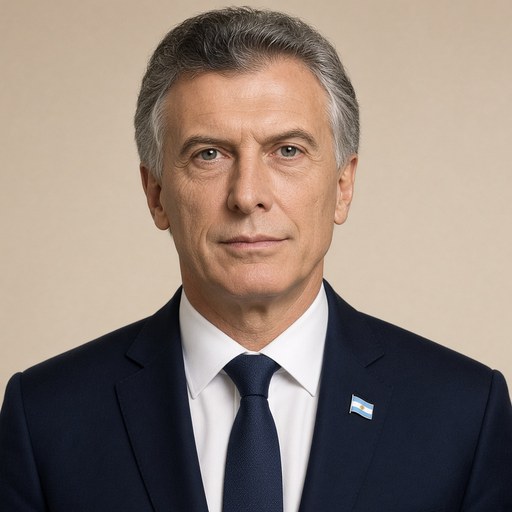
President Mauricio Macri, at the plenary session of the VIII Summit of the Americas
 Mauricio Macri · President of Argentina
- Context
- Macri addressed the VIII Summit of the Americas plenary session in Lima, Peru on April 14, 2018, speaking on democracy, corruption, and regional challenges.
- Main themes
- Corruption and democratic governance, sustainable development, press freedom, chemical weapons condemnation, regional security, drug trafficking and organized crime, connectivity and regional integration, Venezuela crisis and human rights, transparency and anti-corruption measures, international cooperation
- Duration
- ~9 min
- Words
- 1,040
- Sentences
- 35
- Readability
- 29
- Grade
- 16.6
- Syntax
- 3.12
- Vocabulary
- 2.18
Translated from Spanish
The broad sphere of national life a sentence belongs to. Every sentence has an Arena, so it is the denominator the other indices are read against.
Other35 sentences in 14 paragraphs
Thank you, Mr. President.
Good morning to all, esteemed heads of state, dear friends: it is a pleasure to be in Lima, the cradle of the history of the Americas.
I would like to thank President Vizcarra and the Government of Peru for their hospitality and congratulate them on the organization of this Summit. But I would also like to convey to the Government and people of Ecuador, to their President Lenín Moreno, our condolences for the tragic death of the three journalists who were killed in the line of duty in an act that we condemn. In the face of this reprehensible attack, we stand in solidarity with the families who have lost their loved ones, in an event that is undoubtedly an attack on press freedom.
And also - in light of the events of the previous day - Argentina renews its condemnation of the use of chemical weapons, as has occurred in recent days in Syria, as well as the existence of facilities dedicated to their manufacture and/or storage.
In this delicate situation, Argentina calls on the international community to make efforts to preserve international peace and security; avoiding an escalation of tension by resorting to dialogue, within the framework of existing international commitments.
And returning to the topic of the day, and echoing the words we heard today and yesterday from President Vizcarra and the Secretary of the OAS: I congratulate you for promoting what is one of the greatest challenges we face in the region, the relationship between corruption, democracy, and sustainable development. Experience teaches us that where democracy weakens, corruption increases; and where inequality does not relent, corruption takes root. Our people deserve honest leaders with a vocation for service, who work to help them live better and not to benefit themselves: a stable, transparent democratic system that provides answers is a fundamental tool against corruption. We need to ensure that public goods reach those who need them most through institutional and transparent processes, not through clientelistic networks or the exchange of favors.
From Argentina, we are taking this matter very seriously, and the results are evident: it is the first time that our country has improved 21 positions in the Transparency International Index, and we have achieved this in just two years. We are working on an open state for the 21st century, that serves the people, with more open data; creating new channels for citizen participation; demanding greater commitment from our officials every day, and showing how taxpayer money is spent. We have also increased the resources and scope of our Anti-Corruption Office, and enabled new channels to facilitate reporting.
But these changes are not easy; there are many who want to prevent initiatives that make the state transparent out of fear that they will affect their interests; there are many who still bet on impunity. Corruption crosses borders, and efforts to combat it must do so as well; only then can we build a democratic, peaceful, and prosperous future for the Americas.
The security of our continent is another of the great challenges. We are a zone of peace, we know that, but we also know that we have a zone of concerning levels of insecurity and violence. In our shared history, we have developed spaces for cooperation so that war and coups d'état remain in the past. Now we need to optimize our collaboration to eradicate the scourge of drugs, human trafficking, and organized crime. For this, we need a higher level of cooperation between our security agencies and our judicial systems: sharing information through the new opportunities that technology provides us is an unavoidable task.
And another great challenge is connectivity, one of the most significant obstacles in the region. To achieve intelligent integration into the global economy, that deficit of physical connection between our countries and outward is what we need to resolve: if we connect more, there is no doubt that we will be more competitive. Promoting integration between our production systems and among our people, in a framework of respect and celebration of diversity, will allow us to better adapt to the challenges of the 21st century.
We project ourselves to the world from a region that has the potential to integrate from all four cardinal points, with unparalleled natural wealth and a great human talent distributed among young populations full of energy and ideas. We share a common identity based on coexistence, diversity, and very low conflict between states. All of this distinguishes us, allows us, and will allow us to make valuable contributions to the world.
Democracy and human rights continue to be principles to be defended at this Summit of the Americas. Therefore, before concluding, I want to express once again my concern for Venezuela, for the millions of Venezuelans who have been forced to leave their land, and for those who daily suffer from the lack of food and basic health services. We must redouble our efforts so that the Government of Venezuela stops denying reality and accepts regional collaboration and international aid that allows overcoming this humanitarian crisis that has become unsustainable. Considering the topic that brings us together, there is no doubt that the case of Venezuela shows, in the extreme case, what an uncontrolled process of corruption can lead to in a society. Meanwhile, we cannot look the other way when the rights of Venezuelans to choose freely are trampled, with political prisoners and without minimum guarantees of transparency; Argentina will not recognize any election that arises from a process of this kind; I insist: Argentina will not recognize any election that arises from a process of this kind, that is not a democratic election! We must continue to work together for a true democratic and peaceful solution for Venezuela.
The purpose of these summits is not and should not be to engage in an exercise of recriminations where we all blame each other and return to our countries satisfied knowing that the responsible parties are others; being here represents a commitment to a fully relevant hemispheric agenda: let us make it meaningful and be capable of looking forward, understanding that collective efforts are always more efficient in solving the challenges we share.
Thank you very much, Mr. President.
The original Spanish. The tags above are read on the English translation's sentences.
Gracias señor Presidente.
Buenos días a todos, señores jefes de Estado, queridos amigos: es un gusto estar en Lima, cuna de la historia de las Américas.
Quiero agradecer al presidente Vizcarra y al Gobierno de Perú por su hospitalidad y felicitarlos por la organización de esta Cumbre. Pero también permítame transmitir al Gobierno y pueblo de Ecuador, a su presidente Lenín Moreno, nuestras condolencias por la trágica muerte de los tres periodistas que en el ejercicio de su profesión fueron asesinados en un acto que condenamos. Ante este repudiable atentado, nos solidarizamos con las familias que han perdido a sus seres queridos, en este hecho que es un ataque sin dudas a la libertad de prensa.
Y también -ante los sucesos del día anterior- Argentina renueva su condena al uso de armas químicas, tal como ha ocurrido en los últimos días en Siria, así como también la existencia de facilidades dedicadas a su fabricación y/o almacenamiento.
En esta delicada coyuntura, Argentina hace un llamamiento a la comunidad internacional para hacer esfuerzos que permitan preservar la paz y seguridad internacional; evitando una escalada de tensión recurriendo a los caminos del diálogo, en el marco de los compromisos internacionales existentes.
Y volviendo al tema del día, y haciéndome eco de las palabras que escuchamos hoy y ayer del presidente Vizcarra y del Secretario de la OEA: los felicito por promover este que es uno de los desafíos más grandes que tenemos en la región, la relación entre corrupción, democracia y desarrollo sostenible. La experiencia nos enseña que allí donde la democracia se debilita, la corrupción se incrementa; y allí donde la desigualdad no da tregua, la corrupción echa raíces. Nuestra gente merece gobernantes honestos y con vocación de servicio, que trabajen para ayudarlos a vivir mejor y no para beneficiarse a sí mismos: un sistema democrático estable, transparente y que brinde respuestas es una herramienta fundamental contra la corrupción. Necesitamos garantizar que los bienes públicos lleguen a los que más los necesitan a través de procesos institucionales y transparentes, no de redes clientelares o intercambio de favores.
Desde la Argentina estamos tomando este asunto con mucha seriedad, y los resultados están a la vista: es la primera vez que nuestro país mejora 21 posiciones en el Índice de Transparencia Internacional, y en tan solo dos años hemos logrado esto. Estamos trabajando en un Estado abierto para el siglo XXI, que esté al servicio de la gente, con más datos abiertos; creando nuevos canales de participación ciudadana; exigiendo cada día un mayor compromiso a nuestros funcionarios, y mostrando cómo se gasta la plata de los contribuyentes. También hemos incrementado los recursos y alcances de nuestra Oficina Anticorrupción, y habilitado nuevos canales que faciliten las denuncias.
Pero estos cambios no son fáciles, son muchos los que quieren evitar las iniciativas que transparenten al Estado por miedo que afecten sus intereses; son muchos los que todavía apuestan por la impunidad. La corrupción cruza fronteras y los esfuerzos para combatirla también deben hacerlo, solo así podremos construir un futuro democrático, pacífico y próspero para las Américas.
La seguridad de nuestro continente es otro de los grandes desafíos. Somos una zona de paz, lo sabemos, pero sabemos también que tenemos una zona de preocupante niveles de inseguridad y violencia. En nuestra historia compartida hemos desarrollado espacios de cooperación para que la guerra y los golpes de Estado queden en el pasado. Ahora necesitamos optimizar nuestra colaboración para erradicar el flagelo de la droga, la trata de personas y el crimen organizado. Para esto necesitamos un mayor nivel de cooperación entre nuestras agencias de seguridad y nuestros sistemas judiciales: compartir información a través de las nuevas oportunidades que nos brinda la tecnología es una tarea ineludible.
Y otro gran desafío es la conectividad, una de las trabas más importantes de la región. Para lograr una inserción inteligente en la economía mundial, ese déficit de conexión física entre nuestros países y hacia afuera es lo que tenemos que resolver: si nos conectamos más no hay dudas que vamos a ser más competitivos. Promover la integración entre nuestros sistemas de producción y entre nuestra gente, en un marco de respeto y celebración de la diversidad, nos permitirá adaptarnos mejor a los desafíos del siglo XXI.
Nos proyectamos al mundo desde una región que tiene el potencial de integrarse de los cuatro puntos cardinales, con riquezas naturales inigualables y un gran talento humano distribuido en poblaciones jóvenes llenas de energía e ideas. Compartimos una identidad común basada en la convivencia, la diversidad y la bajísima conflictividad entre estados. Todo esto nos distingue, nos permite y nos permitirá realizar valiosos aportes al mundo.
La democracia y los derechos humanos continúan siendo principios a ser defendidos en esta Cumbre de las Américas. Por eso, antes de finalizar, quiero expresar una vez más la preocupación por Venezuela, por los millones de venezolanos que se han visto obligados a dejar su tierra, y por aquellos que diariamente sufren la carencia de alimentos y servicios sanitarios básicos. Tenemos que redoblar nuestros esfuerzos para que el Gobierno de Venezuela deje de negar la realidad y acepte la colaboración regional y la ayuda internacional que permita superar esta crisis humanitaria que se ha vuelto insostenible. Teniendo en cuenta el tema que nos convoca, no hay duda que el caso de Venezuela muestra en el caso extremo a lo que puede llevar a una sociedad un proceso de corrupción descontrolado. Mientras tanto, no podemos mirar hacia otro lado cuando se atropella el derecho de los venezolanos a elegir en libertad, con presos políticos y sin garantías mínimas de transparencia; la Argentina va a desconocer cualquier elección que surja de un proceso de este tipo; insisto: ¡la Argentina va a desconocer cualquier elección que surja de un proceso de este tipo, eso no es una elección democrática! Tenemos que seguir trabajando juntos por una verdadera salida democrática y pacífica para Venezuela.
El motivo de estas cumbres no es ni debe ser realizar un ejercicio de recriminaciones en donde todos culpamos a otro y regresamos a nuestros países conformes por saber que los responsables son los demás; estar acá representa un compromiso con una agenda hemisférica plenamente vigente: hagamos que tenga sentido y seamos capaces de mirar hacia adelante, entendiendo que los esfuerzos colectivos siempre resultan más eficientes para resolver los desafíos que compartimos.
Muchas gracias señor Presidente. (APLAUSOS)