




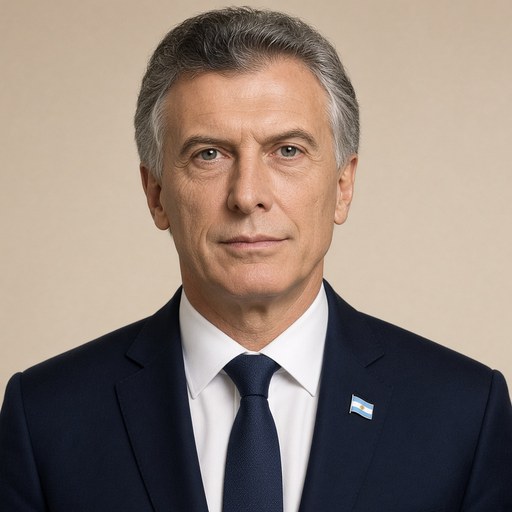
Message from President Mauricio Macri at the opening of the 136th ordinary session of Congress.
 Mauricio Macri · President of Argentina
- Context
- Macri addressed the Argentine Congress on March 1, 2018, delivering his annual opening speech for the 136th ordinary legislative session.
- Main themes
- Economic reform and gradualism, congressional address and legislative agenda, state modernization and transparency, poverty reduction, fiscal deficit reduction and inflation control, anti-corruption measures, infrastructure investment, tribute to ARA San Juan submarine crew, dialogue and national unity, SME growth and entrepreneurship
- Duration
- ~38 min
- Words
- 4,582
- Sentences
- 275
- Readability
- 56
- Grade
- 8.9
- Syntax
- 2.73
- Vocabulary
- 2.03
Translated from Spanish
The broad sphere of national life a sentence belongs to. Every sentence has an Arena, so it is the denominator the other indices are read against.
Other275 sentences in 159 paragraphs
Vice President, governors, members of the diplomatic corps, legislators, special guests, dear Argentinians.
Before I begin, I want to pay tribute to the 44 crew members of the submarine ARA San Juan who gave their lives fulfilling their duty. We stand with the families, and I want to reiterate that we will continue to do everything in our power to find them. I am sure that all Argentinians are united in this recognition.
This is the third time I come to Congress to open the ordinary sessions, and this time I want to start by saying "thank you," thank you to all Argentinians. To those who are in this chamber and to those who are outside.
Thank you for understanding that this is an effort we make together, working hand in hand. Thank you for showing the way and choosing the truth, even when it is sometimes uncomfortable. Thank you for understanding that things take time, and that there are no shortcuts or magic solutions.
And, thank you for committing to dialogue, which is the only way to reach solutions that include everyone.
To each of you with whom I have spoken, I have said this in person. And to each one I will meet in the future, I will say it again. Thank you, thank you, thank you. If we are where we are today, it is thanks to the effort of all.
But the worst is behind us, and now come the years in which we will grow. The transformations we have made are beginning to bear fruit, to be felt, like the family that did not have water or sewage and now does; like the couple in love who could not access their own home and in these two years achieved it; like the worker who returns home after a long day in the rain and does not have to get muddy because we brought asphalt to their block; like every entrepreneur who was able to create that SME they dreamed of.
And this fills my heart with enthusiasm because you put me here to embark on this journey together.
A different journey, which is finally taking us out of so many years of repeating the same mistakes. A path of development, in which we are fighting poverty so that no one is left behind.
And I want to make my intention very clear. Behind every proposal, every reform, every transformation is the responsibility and love with which I have taken on this task, and I always think about what is best for all Argentinians.
I did not come to do what is convenient for me or for my Government.
I am here because I truly want each of you to feel that your life is improving, that you have that concrete opportunity that you did not have before, that each one can see how their life is progressing.
You hear that some criticize us for going too slowly and others for going too fast. The former demand a shock adjustment, and to them, I say that we came here to reduce poverty and to ensure that no Argentine goes hungry. And the latter ask us that nothing change, and I tell them: if nothing had changed, we would be like another brother country that is in social disintegration.
That is why we chose the path of change with gradualism, a path in which all Argentinians are united by effort.
We have goals to reduce inflation, to reduce the fiscal deficit. And as we will meet them, we will stop going into debt and investments will multiply in a reliable country.
We must avoid apocalyptic diagnoses. We need coherence, temperance to walk the path and advance according to the times we live in.
In this context, today I want to propose a work agenda with concrete challenges that help us continue to grow, but without overlooking the importance of other significant issues we have been working on. I invite you to work together on this agenda.
***
We want a State at the service of the people. A modern and facilitating State, that provides Argentinians with the tools to improve their lives and holds officials accountable.
We are making progress. There are already almost 700 procedures that can be done online, without having to make unnecessary trips or wait in lines.
And, starting this year, these procedures and many more will be able to be carried out from your computer or your cell phone.
But, a State at the service of the people is also a transparent State, that shows how it spends its money and has officials required to maintain a high ethical standard.
In these two years, officials have set limits on ourselves like never before to ensure that we are not here to benefit ourselves.
Now, there are rules on how to disclose our assets, rules that study and resolve potential conflicts of interest, and norms that define limits for appointing relatives in the Government, among others.
Argentina has improved its positions and ratings in the Transparency International Index. We moved from 106th to 85th place in two years. It is the first time that Argentina has improved 21 positions in two years. But we must continue working. I ask all powers and provinces to join this titanic task.
And we want to make these changes permanent in a Public Integrity Law that brings together the reforms we have already implemented and those that arise from parliamentary debate.
A State at the service of the people, moreover, is a State that orders its accounts. We cannot spend more than we have.
In this, we have reached an agreement with the governors to organize the relationship between the Nation and the provinces.
After decades of disorder, the time has come to be serious about fiscal balance. It is the money of Argentinians, and managing it responsibly is our obligation.
***
Another priority is that all Argentinians can access credit and save.
We are experiencing a boom in mortgage credit. 2017 was the year, almost in 20, with the most credits. Tens of thousands of families bought their homes with lower installments than the rent they were paying, and 3 million families took loans from ANSES to make renovations or connect to sewage and water networks.
All this was possible, among other reasons, because inflation is decreasing.
The inflation of 2017 was lower than that of 2016. This year's will be even lower, and next year's will be even lower than that of 2018.
We do not just want to lower it. We want it to never again be an instrument of politics as it has been for more than 70 years.
Inflation punishes the majority, hinders competition, and keeps us prisoners of the short term.
And as prisoners of the short term, Argentinians cannot plan. We cannot take credit, we cannot save.
But this is also changing. As Argentinians have seen that we embarked on a clear path of decreasing inflation, we have begun to recover savings.
The Productive Financing Law, which has passed half of the legislative process, will allow us to continue having mortgage credit for several decades and will provide more options to channel the savings of Argentinians, especially to SMEs that need capital to grow.
We ask Congress to prioritize this law this year.
***
We must organize ourselves for the work of the 21st century.
The world is changing rapidly. Every day new jobs are created and others disappear. It is a challenge that all countries in the world face, not just Argentina. We can try to resist or we can embrace the moment we are living.
During these two years, we have made significant progress. Together we have achieved agreements that generate jobs and bring new opportunities to new parts of the country. Thanks to this, unemployment is decreasing, and the total number of registered workers has increased by almost 270,000.
But in Argentina, one in three workers is informal. And they are not there because they want to be; they do what they can.
We are going to present the Labor Inclusion Law project so that thousands of informal workers can register without losing their seniority and the benefits they are entitled to for their years of work.
This initiative is the result of teamwork between unions and employers, united behind the goal of protecting Argentine jobs.
We also cannot allow a woman to earn less than a man. It is not fair. It is not right. And, according to INDEC, these differences reach up to 30%. And this cannot continue.
You have my commitment that equal pay established by our laws will be a reality.
And, in a world of equals, there is also no reason for fathers to share only two days at the time of the birth of our children. We know how important it is to be with family in those first days.
That is why we are going to present a bill to extend paternity leave.
***
A revolution in the country is coming with tourism. And I propose that we organize ourselves to receive more and more tourists.
Last year we broke many records together: never before had so many travelers stayed in hotels across the country - an 8% increase compared to 2016 and in all regions - and never before had so many people traveled on domestic flights as now.
We had more than 50 million trips within the country and received more than 6 million tourists from other parts of the world. And, during the last long weekend of Carnival, we had a record number of tourists.
What does all this mean? It means quality jobs because there are more filled tables in restaurants, more occupied beds in hotels, more tickets sold in theaters, peñas, and shows.
And this year we also have the G20 and the Youth Olympics, which are more entry points and will multiply the number of tourists.
And beyond the improvements in airports, the new routes for more connections, the VAT refund for foreign tourists, or cheaper flights, tourism must be a shared cause for all.
We Argentinians must build a culture of service so that every person who visits us falls in love with our country and wants to return again and again.
Let us transform our kindness and our desire to grow into concrete opportunities that multiply in towns and cities.
***
We want all Argentinians to be connected, to have access to the internet and better cell phone connections.
The internet has changed our lives. It allows us to stay connected, express ourselves, learn about the world, and save time on procedures that used to be endless.
An example of the potential that the internet has applied to life is the pediatric Telehealth network that already operates in 20 provinces, allowing families to consult with doctors from Garraham without having to leave their town. It is for initiatives like this that we want to expand coverage and improve the quality of internet connection in every corner of the country, a step closer to a truly federal Argentina.
In these two years, we accelerated the growth of the Federal Fiber Optic Network, which already has more than 32,000 kilometers laid and connects more than 400 localities that were previously disconnected.
We are also helping entrepreneurs who want to export knowledge-based services, a sector that employs more than 1,000,000 people. And, last year, the export of these services, such as software, grew by 20%.
To continue advancing, we need a new law on telecommunications and information technology that allows us to take advantage of the benefits of technology, improve competition and investments, lower prices, and enhance the quality of service to users. In this legal tool, we are also behind compared to other countries.
There will be room for cooperatives, small, medium, and large companies, both national and international, to actively participate in the conversation to guarantee network neutrality and the plurality of content.
If we are better connected, we will be able to offer better products and services, and we will be more prepared for the economy to come, where innovation and digitalization will be fundamental to creating jobs.
***
Argentinians also have the right to live near a green space, where we can come together, learn, and preserve nature.
Public space, without a doubt, is the most democratic space we have. For the first time in many years, we are expanding the surface area of National Parks, and we are improving the infrastructure of what we already had.
We inaugurated the El Impenetrable National Park in Chaco, we began to create the Iberá Parks in Corrientes, Aconquija in Tucumán, and Mar Chiquita in Córdoba.
For the first time, we are making progress in the creation of Marine Parks.
Our sea plays a key role because it helps regulate temperature, generates the oxygen we breathe, and supports the development of sustainable fishing. Moreover, the creation of protected areas in the Argentine sea allows us to exercise national sovereignty peacefully.
Today, I want to tell you that we have decided to preserve an important part of Campo de Mayo and transform it into a National Park.
It will be one of the largest urban National Parks in the world and part of the system of protected areas in the metropolitan area. We all know that more than 10 million Argentinians live there, and they will be able to know and enjoy these parks.
National parks are not an abstract idea of conservation. They are a tool for local development. And access to them must be seen as a right for all.
If you turn these projects into law, we will have together achieved that 2018 is the year of the greatest creation of national parks in our history.
***
Argentinians want to live in peace.
We want to go out into the street without fear and for our children to live peacefully.
We believe that in these years of democracy, there is a persistent tension between democracy and security.
We do not believe that we should resort to heavy-handedness or abolitionism to resolve this issue. We believe in a system that places victims of crime at its center, that respects law enforcement, and that offers proportional penalties for the crimes committed.
And above all things, we believe in a republican system that protects Argentines so that we can live more safely.
We want to feel cared for, and for that, we also have to think about those who take care of us.
The women and men of our security forces risk their lives for us and deserve all our respect and admiration.
As you know, many years ago I personally suffered from bad policing. That is why believe me when I say that I understand those who go through something like that. I know what it feels like.
Security and the fight against drug trafficking are two of the greatest demands of Argentines.
For the first time, we have a national strategy to address these issues, and we are bringing state care to places where only the power of gangs existed before.
And the best part is that this strategy is working. Drug seizures are at a record high, 300 tons, the number of robberies has decreased by 11%, and homicides by 20% in these two years.
It is important that we advance in the extinction of domain and that the state recovers the assets of drug trafficking and organized crime.
We also need some reforms, such as the Penal Code. We have an old, disorganized, and patched-up code. Since last year, there has been a commission of experts working, and we hope they will propose a new Penal Code to us in a few months.
Another important reform is the Criminal Procedure Code. The focus of the reform is to move from the current model, where judges investigate and decide, to a faster and oral model in which prosecutors have more prominence.
I ask legislators to give these issues the importance they deserve to protect all Argentines.
***
Life is the most important thing we have, and we are killing ourselves in accidents on the roads and streets across the country. Last year, 5,000 people died who should not have died. It is a national tragedy.
We must work together to reduce this number. It is the leading cause of death for young people aged 15 to 34. We cannot stand idly by.
From the state, we are working to ensure that we have safer roads. We have already repaired 5,000 kilometers of roads that were in terrible condition, and we are recovering another 12,000.
We have completed and will have nearly 1,700 kilometers of highways under construction. We are also continuing to invest in transportation methods like Metrobus, which, in addition to being comfortable and saving us time, are safer.
Only if we know in real time where and why an accident occurred can we do something to prevent it from happening again. We need to measure and evaluate. That is why, with the help of the provinces, we created a digital system that allows us to access this crucial information.
But this alone is not enough. It cannot be that irresponsibility behind the wheel almost never results in an effective sentence. We are going to promote a Penal Code project that, for the first time, introduces severe penalties for drivers who endanger the lives of others by driving under the influence of alcohol, drugs, or far exceeding the speed limit.
These are some initiatives, but I ask everyone, absolutely everyone, to do our part and remember to always wear seatbelts, put our children in car seats when we transport them, and not to be distracted by our cell phones.
Preventing deaths from traffic accidents is also another form of care and security that we Argentines must demand from ourselves.
***
I also ask that we work together to combat malnutrition and childhood obesity, which affects those who have the least.
In Argentina, 4 out of 10 children are malnourished. We are the country with the highest childhood obesity rate in Latin America, and, surprisingly, we are one of the four countries that consume the most sugar in the world.
I share these figures so that we can see the magnitude of this problem. 1 in 3 children is overweight or obese.
Childhood obesity and malnutrition are two sides of the same coin, and they have direct consequences on the health and development of children.
Their ability to learn and to do well in school decreases, and they are more likely to suffer from heart diseases, diabetes, and some types of cancer when they become adults.
We are working to ensure they have access to fresher and healthier foods. Healthy eating is now a global issue, similar to environmental protection.
Parents have a primary responsibility in this matter, and we must lead this cause that involves us all.
***
We must work for educational equality so that all children, especially the most vulnerable, can access quality education.
Almost a year ago, I presented the results of the Aprender evaluation. I assure you that it was one of the statistics that affected me the most to share. Because it showed us, it confirmed to us, that we are not preparing our children for the world they will live in.
With the Aprender evaluation, we were able to identify which schools have the most difficulties and which ones are doing better. And thanks to this information, with the Faro Schools program, we focused on helping the 3,000 schools that had the most problems by applying the criteria of those that were doing better.
Quality in education is a commitment that we must assume together, families, teachers, and the entire educational community.
Parents cannot disengage; we cannot leave teachers alone in this. We all have to be part of this improvement process.
And to be able to get involved, we need to know how the school our children attend is doing. Today, it is prohibited by law to publish the results by school, and that makes no sense. I ask that this legislative year we advance to change this norm.
The only way to improve is to start from the truth, from a true, transparent, public diagnosis, available to everyone.
Let us not be afraid of the truth. What we should fear is the lie, the concealment, the unwillingness to face reality, which has already shown us the damage it can cause.
What we should fear is that children do not finish school. We cannot politicize our children's education. We cannot only remember education during salary negotiations.
***
Another issue we need to put on the table is unintentional teenage pregnancy.
Today our country shows a critical situation. Every year, more than 100,000 girls under 19 become pregnant. And 7 out of 10 of those pregnancies are unintentional.
The lives of those young women change forever. Many drop out of school, and that affects their chances of finding work and developing a life project.
Once again, the starting point is education. Sexual education is a tool that empowers young people. It helps them make informed decisions.
We are working with the teams from Social Development, Health, and Education on a comprehensive initiative so that, in schools, health centers, and communities, there are professionals who support and advise young people on Sexual Education, reproductive health, and contraceptive methods. Only with information will they have the freedom to choose what they want for their lives.
For 35 years, a very sensitive debate that we owe to ourselves as a society has been postponed: abortion.
As I have said more than once, I am in favor of life.
But I am also in favor of mature and responsible debates that we, as Argentines, must have.
That is why we welcome the Congress including this issue in its agenda this year. I hope that all voices are heard and that all positions are taken into account.
****
I know that if we work together, if we dialogue and do things with good intentions, we will make great strides in each of the challenges I have proposed in this work agenda.
For a long time, we believed that we were destined to fail, and that resignation was our only option. But that idea is false. Behind that false idea, a united and powerful Argentina began to emerge, millions of Argentines united who decided to change and put all our talent and effort into getting out of where we were.
We Argentines have everything to grow; it depends on us and no one else. I am convinced that we will do it.
I would not be here if I did not believe in what I am telling you.
And the greatest proof of this is that we are growing. Everything we have achieved together in these two years shows that we are growing.
Investment is increasing. Last year it grew by 11%, and it is that investment precisely that guarantees that we will continue to grow because it expands our capacity to produce.
This January, we had record sales of cement, asphalt, cars, used cars, motorcycles, tourism, and passenger flights, to name a few of the most visible examples.
And February is coming so that we can say in a few days that in several of these sectors, it is the most important two-month period in our history.
All this activity is generating jobs. We have already surpassed the number of people employed in 2015. And wages have outpaced inflation.
Construction is one of the sectors that is growing the most. There are more and more works on roads, more paved streets, more houses under construction.
For every new house that is built, there is someone in some hardware store preparing the materials. A freight that delivers them to the site and a seller who prepares an order of fixtures.
These are jobs across the country. We are heading in the right direction, leaving behind many years of stagnation and regression.
And this is not only happening economically. Argentines are maturing.
We have realized that it is useless to keep blaming others for what happens to us. That growing depends on us and our ability to sit down and dialogue at a table, without bullying or extortion.
We have already demonstrated that it is possible. We did it with Vaca Muerta, with dairy, with meat, with construction, with the automotive sector, with the forestry sector, and with biotechnology.
We sat down to talk, starting from the premise that all the involved actors—unions, companies, and government—must participate in the dialogue. Each one presented their future agenda, their concerns, and their proposals.
I myself have been part of many of these tables. I would like you to be there to see the enthusiasm that this joint work generates, how obstacles are being removed, how solutions arise from everyone's contributions.
***
If we were able to advance in all these things; if we were able to sit down to dialogue; if we were able to avoid a crisis that was looming; if we were able to generate jobs and start reducing poverty; if we were able to pave entire neighborhoods that were submerged in mud; if we were able to move from isolation to integration with the world; let us imagine the things we will be able to do in the future!
Yes! Let us dare to imagine it! Because much of what we imagine is happening. And because we have the capacity to do. I am not referring to politics; I am referring to life. I am not referring to parties; I am referring to people, to the people who believe we deserve to live better.
A year ago, in this chamber, I told you that we had to build the foundations for Argentina to grow for 20 consecutive years, that in this way we would defeat poverty and strengthen the middle class. By doing what needed to be done, and that is what we did. That invisible growth happened; it is like when we start a building: at the beginning, you cannot see what we are doing, you cannot see the structures we are putting in place, the pilings, pouring the concrete. But that foundation exists, it is there, and on it, the rest is built.
And this is what is happening; Argentines are beginning to see the fruits of that. And every transformation is built on solid foundations and will last for a lifetime.
That is why I invite you again to the enthusiasm of doing, to the joy of feeling committed, to feeling like protagonists of your own future, to the pride of belonging to the generation that is changing Argentina forever.
And I invite all of you, those who think differently, to open your minds and hearts for a minute and think that everything we are proposing in absolute good faith can work. It is working, and we need all of you.
Because our true enemies are resignation and indifference. And we need everyone, united, because I always say, united Argentines are unstoppable. To defeat them with courage, enthusiasm, and strength, and thus give rise to this Argentina that we dream of and deserve so much.
With this idea in mind and this feeling in my heart, I formally declare the ordinary sessions of this Honorable Congress of the Nation inaugurated.
The original Spanish. The tags above are read on the English translation's sentences.
Vicepresidenta, señores gobernadores, integrantes del cuerpo diplomático, legisladores, invitados especiales, queridos argentinos.
Antes de empezar, quiero homenajear a los 44 tripulantes del submarino ARA San Juan que entregaron su vida cumpliendo su deber. Estamos con los familiares, y quiero reiterarles que seguiremos haciendo todo lo que está a nuestro alcance para encontrarlos. Estoy seguro de que todos los argentinos estamos unidos en este reconocimiento.
Es la tercera vez que vengo al Congreso a hacer la apertura de sesiones ordinarias, y esta vez quiero iniciar diciendo “gracias”, gracias a todos los argentinos. A los que están en este recinto y a los que están afuera.
Gracias por comprender que éste es un esfuerzo que hacemos entre todos, trabajando juntos. Gracias por marcar el camino y elegir la verdad, aunque a veces incomode. Gracias por entender que las cosas llevan tiempo, y que no hay atajos ni soluciones mágicas.
Y, gracias por comprometerse con el diálogo, que es la única manera de llegar a soluciones que incluyan a todos.
A cada uno de ustedes con los que estuve se los dije en persona. Y, a cada uno que siga encontrando en el futuro se los voy a volver a decir. Gracias, gracias, gracias. Si hoy estamos donde estamos es gracias al esfuerzo de todos.
Pero, lo peor ya pasó y ahora vienen los años en que vamos a crecer. Las transformaciones que hicimos empiezan a dar frutos, a sentirse, como las siente esa familia que no tenía agua ni cloacas y ahora las tiene; como las siente esa pareja de enamorados que no podía acceder a su vivienda propia y en estos dos años lo consiguió; como lo siente aquel trabajador que vuelve a casa, después de un largo día bajo la lluvia, y no tiene que embarrarse porque le llevamos el asfalto a su cuadra; como la siente cada emprendedor que pudo crear esa pyme con la que soñaba.
Y, esto me llena el corazón de entusiasmo porque ustedes me pusieron acá para emprender juntos este camino.
Un camino distinto, que por fin nos está sacando de tantos años de repetir los mismos errores. Un camino de desarrollo, en el que estamos combatiendo la pobreza para que nadie quede atrás.
Y, quiero dejar bien clara mi intención. Detrás de cada propuesta, de cada reforma, de cada transformación está la responsabilidad y el amor con que he tomado esta tarea, y siempre pienso en qué es lo mejor para todos los argentinos.
No vine a hacer lo que me conviene a mí o a mi Gobierno.
Estoy acá porque realmente quiero que cada uno de ustedes sienta que su vida mejora, que tengan esa oportunidad concreta que antes no tenían, que cada uno pueda ver cómo su vida va avanzando.
Ustedes escuchan que algunos nos critican por ir demasiado lento y otros por ir demasiado rápido. Los primeros piden un shock de ajuste, y a ellos les digo que acá vinimos a reducir la pobreza y a asegurarnos que ningún argentino pase hambre. Y los otros nos piden que nada cambie, y yo les digo: si nada hubiese cambiado estaríamos como otro país hermano que está en una desintegración social.
Por eso, elegimos el camino del cambio con gradualismo, un camino en el que todos los argentinos estemos unidos por el esfuerzo.
Tenemos metas para bajar la inflación, para reducir el déficit fiscal. Y como las vamos a cumplir, vamos a dejar de endeudarnos y se van a multiplicar las inversiones en un país confiable.
Tenemos que evitar los diagnósticos apocalípticos. Necesitamos coherencia, templanza para recorrer el camino y avanzar de acuerdo a los tiempos que vivimos.
En este contexto, hoy quiero proponerles una agenda de trabajo con desafíos concretos que nos ayuden a seguir creciendo, pero sin desconocer la importancia de otros temas significativos sobre los que venimos trabajando. Los invito a trabajar juntos en esta agenda.
***
Queremos un Estado al servicio de la gente. Un Estado moderno y facilitador, que dé las herramientas a los argentinos para mejorar sus vidas y obligue a los funcionarios a rendir cuentas.
Estamos avanzando. Ya hay casi 700 trámites que se hacen por Internet, sin tener que hacer viajes ni colas innecesarias.
Y, desde este año, estos trámites y muchos más se van a poder realizar desde la computadora o su celular.
Pero, un Estado al servicio de la gente es también un Estado transparente, que muestra cómo gasta su plata y que tiene funcionarios obligados a tener un alto estándar ético.
En estos dos años, los funcionarios nos pusimos límites como nunca antes para garantizar que no estamos acá para beneficiarnos.
Ahora, hay reglas sobre cómo mostrar nuestro patrimonio, reglas que estudian y resuelven posibles conflictos de interés y normas que definen límites para nombrar familiares en el Gobierno, entre otras.
Argentina mejoró las posiciones y calificaciones del Índice de Transparencia Internacional. Pasamos del puesto 106 al 85 en dos años. Es la primera vez que Argentina mejora 21 posiciones en dos años. Pero, tenemos que seguir trabajando. Les pido a todos los poderes y a las provincias que se sumen a esta tarea titánica.
Y queremos hacer permanentes estos cambios en una Ley de Integridad Pública que reúna las reformas que ya implementamos y las que surjan del debate parlamentario.
Un Estado al servicio de la gente, además, es un Estado que ordena sus cuentas. No podemos gastar más de lo que tenemos.
En esto nos pusimos de acuerdo con los gobernadores para ordenar la relación entre Nación y provincias.
Después de décadas de desorden, llegó el momento de ser serios con el equilibrio fiscal. Es la plata de los argentinos y administrarla con responsabilidad es nuestra obligación.
***
Otra de las prioridades es que todos los argentinos puedan acceder al crédito y puedan ahorrar.
Estamos viviendo un boom de crédito hipotecario. 2017 fue el año, casi en 20, con más créditos. Decenas de miles de familias compraron sus casas con cuotas más bajas que el alquiler que pagaban, y 3 millones de familias tomaron créditos en el ANSES para hacer refacciones o conectarse a las redes de cloaca y agua.
Todo fue posible, entre otras razones, porque la inflación está bajando.
La inflación del 2017 fue menor a la del 2016. La de este año va a ser aún menor, y la del año que viene, aún menor a la de 2018.
No queremos sólo bajarla. Queremos que nunca más sea un instrumento de la política como lo ha sido durante más de 70 años.
La inflación castiga a la mayoría, dificulta la competencia y nos mantiene presos del corto plazo.
Y presos del corto plazo los argentinos no podemos planificar. No podemos tomar crédito, no podemos ahorrar.
Pero esto también está cambiando. A medida que los argentinos vimos que emprendimos un camino claro de inflación en baja, empezamos a recuperar el ahorro.
La Ley de Financiamiento Productivo, que tiene media sanción, va a permitir seguir teniendo crédito hipotecario por varias décadas y va a dar más opciones para canalizar el ahorro de los argentinos, en especial a las pymes que necesitan capital para crecer.
Le pedimos al Congreso que tenga esta ley en sus prioridades para este año.
***
Tenemos que organizarnos para el trabajo del siglo XXI.
El mundo está cambiando rápido. Cada día se crean empleos nuevos y otros desaparecen. Es un desafío que enfrentan todos los países del mundo, no sólo la Argentina. Podemos intentar resistirnos o podemos asumir el momento que nos toca vivir.
Durante estos dos años avanzamos mucho. Juntos logramos acuerdos que generan empleo y llevan oportunidades nuevas a nuevas partes del país. Gracias a esto, la desocupación está bajando y el total de trabajadores registrados aumentó en casi 270 mil.
Pero en Argentina uno de cada tres trabajadores está en la informalidad. Y no está ahí porque quiere, hace lo que puede.
Vamos a presentar el proyecto de Ley de inclusión laboral para que miles de trabajadores informales puedan registrarse sin perder la antigüedad y los beneficios que les corresponden por sus años de trabajo.
Esta iniciativa es el fruto del trabajo en equipo entre sindicatos y empleadores, unidos detrás de la meta de cuidar el empleo argentino.
Tampoco podemos permitir más que una mujer gane menos que un hombre. No es justo. No está bien. Y, según el INDEC, estas diferencias llegan hasta el 30%. Y, esto no puede seguir así.
Tienen mi compromiso para que el salario igualitario que establecen nuestras leyes sea una realidad.
Y, en un mundo de iguales, tampoco hay razón para que los padres compartamos tan sólo dos días en el momento del nacimiento de nuestros hijos. Sabemos lo importante que es estar en familia en esos primeros días.
Por eso, vamos a presentar un proyecto de ley para extender la licencia por paternidad.
***
Se viene una revolución en el país con el turismo. Y les propongo que nos organicemos para recibir cada vez más turistas.
El año pasado batimos muchos récords juntos: nunca antes se habían hospedado tantos viajeros en hoteles en todo el país -crecieron un 8% en comparación con el 2016 y en todas las regiones-, y nunca antes había viajado tanta gente en vuelos de cabotaje como ahora.
Tuvimos más de 50 millones de viajes dentro del país y recibimos más de 6 millones de turistas de otras partes del mundo. Y, en el último fin de semana largo de Carnaval tuvimos récord de turistas.
¿Qué significa todo esto? Significa trabajo de calidad porque son más mesas llenas en los restaurantes, más camas ocupadas en los hoteles, más entradas vendidas en los teatros, peñas y espectáculos.
Y además este año tenemos el G20 y las olimpiadas de la Juventud, que son más puertas de entrada y van a multiplicar la cantidad de turistas.
Y más allá de las mejoras de los aeropuertos, las nuevas rutas para que haya más conexiones, la devolución del IVA al turismo extranjero, o los vuelos más baratos, el turismo tiene que ser una causa compartida por todos.
Los argentinos tenemos que construir una cultura del servicio para que cada persona que nos visite se enamore de nuestro país y quiera volver una y otra vez.
Transformemos nuestra amabilidad y nuestras ganas de crecer en oportunidades concretas que se multipliquen en los pueblos y ciudades.
***
Queremos que todos los argentinos estemos conectados, que tengamos acceso a internet y mejor conexión en los celulares.
Internet nos cambió la vida. Nos permite estar comunicados, poder expresarnos, aprender sobre el mundo y ahorrarnos tiempo en trámites que antes eran eternos.
Un ejemplo del potencial que tiene internet aplicado a la vida es la red de Telesalud pediátrica que ya funciona en 20 provincias y las familias pueden hacer consultas con médicos del Garraham sin tener que moverse de su pueblo. Por iniciativas como ésta es que queremos ampliar la cobertura y mejorar la calidad de la conexión a internet en cada rincón del país, un paso más hacia una Argentina verdaderamente federal.
En estos dos años aceleramos el crecimiento de la Red Federal de Fibra Óptica, que ya tiene más de 32.000 kilómetros tendidos y conecta a más de 400 localidades que antes estaban desconectadas.
También estamos ayudando a los emprendedores que quieren exportar servicios basados en el conocimiento, un sector que da trabajo a más de 1.000.000 de personas. Y, el año pasado la exportación de estos servicios, como el software, creció un 20%.
Para seguir avanzando, necesitamos una nueva ley sobre telecomunicaciones y tecnología de la información, que nos permita aprovechar los beneficios de la tecnología, mejorar la competencia y las inversiones, bajar los precios y mejorar la calidad del servicio a los usuarios. En esta herramienta legal también estamos atrasados respecto a otros países.
Va a haber lugar para que cooperativas, empresas pequeñas, medianas, grandes, tanto nacionales como internacionales, participen activamente de la conversación para garantizar la neutralidad de las redes y la pluralidad de los contenidos.
Si estamos mejor conectados vamos a poder ofrecer mejores productos y servicios, y vamos a estar más preparados para la economía que viene, donde la innovación y lo digital serán fundamentales para crear empleo.
***
Los argentinos también tenemos derecho a vivir cerca de un lugar verde, donde podamos unirnos, conocer y preservar la naturaleza.
El espacio público, sin duda, es el espacio más democrático que tenemos. Por primera vez en muchos años, estamos ampliando la superficie de los Parques Nacionales, y estamos mejorando la infraestructura de lo que ya teníamos.
Inauguramos el Parque Nacional El Impenetrable en Chaco, empezamos a crear los Parques Iberá en Corrientes, Aconquija en Tucumán y Mar Chiquita en Córdoba.
Por primera vez, estamos avanzando en la creación de Parques Marinos.
Nuestro mar cumple un rol clave porque ayuda a regular la temperatura, y a generar el oxígeno que respiramos, y acompaña el desarrollo de la pesca sustentable. Además, la creación de áreas protegidas en el mar argentino nos permite ejercer la soberanía nacional en forma pacífica.
Hoy, quiero contarles que hemos decidido preservar una parte importante de Campo de Mayo y transformarlo en un Parque Nacional.
Será uno de los Parques Nacionales urbanos más grandes del mundo, y parte del sistema de áreas protegidas del área metropolitana. Todos sabemos que más de 10 millones de argentinos viven ahí, y van a poder conocer y disfrutar de estos parques.
Los parques nacionales no son una idea abstracta de conservación. Son una herramienta de desarrollo local. Y, el acceso a ellos debe ser visto como un derecho para todos.
Si ustedes convierten en ley estos proyectos habremos logrado juntos que 2018 sea el año de mayor creación de parques nacionales de nuestra historia.
***
Los argentinos queremos vivir en paz.
Queremos salir a la calle sin miedo y que nuestros hijos vivan tranquilos.
Creemos que en estos años de democracia persiste una tensión entre democracia y seguridad.
No creemos que haya que caer en la mano dura ni en el abolicionismo para resolverla. Creemos en un sistema que ponga en el centro a las víctimas del delito, que respete a las fuerzas de seguridad y que ofrezca penas proporcionales a los delitos cometidos.
Y sobre todas las cosas, creemos en un sistema republicano que cuide a los argentinos para que vivamos más seguros.
Queremos sentirnos cuidados, y para eso también tenemos que pensar en los que nos cuidan.
Las mujeres y los hombres de nuestras fuerzas de seguridad se juegan la vida por nosotros y merecen todo nuestro respeto y admiración.
Como ustedes saben, hace muchos años yo sufrí en carne propia a la mala policía. Por eso créanme que entiendo a quienes pasan por algo así. Sé lo que se siente.
La seguridad y la lucha contra el narcotráfico son dos de las demandas más grandes de los argentinos.
Por primera vez tenemos una estrategia nacional para abordar estos temas y estamos llevando el cuidado del Estado a donde antes sólo existía el poder de las bandas.
Y lo mejor es que esta estrategia está funcionando. Las incautaciones de droga son récord, 300 toneladas, la cantidad de robos se redujo en un 11% y los homicidios en un 20% en estos dos años.
Es importante que avancemos en la extinción de dominio y que el Estado recupere los bienes del narcotráfico y del crimen organizado.
También necesitamos algunas reformas, como la del Código Penal. Tenemos un código viejo, desordenado y emparchado mil veces. Desde el año pasado hay una comisión de expertos trabajando y esperamos que nos propongan un Código Penal nuevo en pocos meses.
Otra reforma importante es la del Código Procesal Penal. El centro de la reforma es pasar del modelo actual, donde los jueces son los que investigan y deciden, a uno más rápido y oral en el que los fiscales tengan más protagonismo.
Les pido a los legisladores que les den a estos temas la importancia que merecen para cuidar a todos los argentinos.
***
La vida es lo más importante que tenemos y nos estamos matando en accidentes en las ruta y en las calles de todo el país. El año pasado murieron 5.000 personas que no tenían que morir. Es una tragedia nacional.
Tenemos que trabajar juntos para bajar esta cifra. Es la principal causa de muerte de jóvenes de 15 a 34 años. No nos podemos quedar de brazos cruzados.
Desde el Estado, estamos trabajando para que tengamos rutas más seguras. Ya reparamos 5 mil kilómetros de rutas que estaban en pésimo estado y estamos recuperando 12 mil más.
Terminamos y vamos a tener en obra casi 1.700 kilómetros de autopistas. También seguimos apostando a medios de transporte como el Metrobus, que además de ser cómodos y ahorrarnos tiempo, son más seguros.
Sólo si conocemos en tiempo real dónde y por qué ocurrió un accidente vamos a poder hacer algo para evitar que vuelva a pasar. Tenemos que medir y evaluar. Por eso, con ayuda de las provincias creamos un sistema digital que nos permite acceder a esta información crucial.
Pero no alcanza solo con esto. No puede ser que la irresponsabilidad al volante casi nunca termine en una condena efectiva. Vamos a impulsar un proyecto de Código Penal, que por primera vez introduzca penas fuertes a los conductores que ponen en riesgo la vida de los demás por manejar alcoholizados, bajo el efecto de las drogas, o superando ampliamente la velocidad permitida.
Éstas son algunas iniciativas, pero les pido a todos, absolutamente todos, que pongamos nuestra parte y recordemos usar siempre el cinturón de seguridad, poner a nuestros niños en las sillas cuando los trasportamos, y no distraernos con el celular.
Evitar muertes por accidentes viales es, también, otra de las formas de cuidado y de seguridad que los argentinos nos tenemos que exigir.
***
También les pido que trabajemos juntos para combatir la malnutrición y la obesidad infantil, que afecta más a los que menos tienen.
En la Argentina 4 de cada 10 chicos están malnutridos. Somos el país con mayor obesidad infantil en América Latina y, aunque sorprenda, somos uno de los 4 países que más azúcares consume en el mundo.
Les digo estas cifras para que veamos la magnitud de este problema. 1 de cada 3 chicos tiene sobrepeso u obesidad.
La obesidad infantil y la desnutrición son dos caras de la misma moneda, y tienen consecuencias directas en la salud y en el desarrollo de los chicos.
La capacidad de aprender y de que les vaya bien en la escuela disminuye, y tienen más posibilidades de sufrir enfermedades de corazón, otras como la diabetes y algunos tipos de cáncer cuando son adultos.
Estamos trabajando para que tengan acceso a alimentos más frescos y saludables. La alimentación sana es hoy una temática mundial, semejante a la defensa del ambiente.
Los padres tenemos una responsabilidad primaria en este tema y debemos liderar esta causa que nos involucra a todos.
***
Tenemos que trabajar por la igualdad educativa para que todos los chicos, especialmente los más vulnerables, puedan acceder a una educación de calidad.
Hace casi un año presenté los resultados de la evaluación Aprender. Les aseguro que fue una de las estadísticas que más me afectó tener compartir. Porque nos mostró, nos confirmó, que no estamos preparando a nuestros hijos para el mundo que van a vivir.
Con la evaluación Aprender pudimos identificar qué escuelas tienen más dificultades y a cuáles les va mejor. Y gracias a esta información, con el programa Escuelas Faro, nos focalizamos en ayudar a las 3.000 escuelas que más problemas tenían aplicando los criterios de aquellas a las que les iba mejor.
La calidad en la educación es un compromiso que tenemos que asumir juntos, familias, docentes y toda la comunidad educativa.
Los padres no podemos desentendernos, no podemos dejar a los maestros solos en esto. Todos tenemos que ser parte de este proceso de mejora.
Y para poder involucrarnos, tenemos que poder saber cómo le está yendo a la escuela donde van nuestros hijos. Hoy está prohibido por ley que se publiquen los resultados de los resultados por escuela y eso no tiene sentido. Les pido que este año legislativo avancemos para cambiar esta norma.
La única manera de mejorar es partir de la verdad, de un diagnóstico verdadero, transparente, público, a disposición de todos.
No le tengamos miedo a la verdad. A lo que hay que temer es a la mentira, al ocultamiento, a no querer enfrentar la realidad, que ya nos demostró el daño que puede generar.
A lo que hay que temer es a que los chicos no terminen el colegio. No podemos hacer política con la educación de nuestros hijos. No podemos acordarnos de la educación sólo en el momento de las paritarias.
***
Otro tema que tenemos que poner sobre la mesa es el embarazo adolescente no intencional.
Hoy nuestro país muestra una situación crítica. Cada año más de 100 mil chicas, menores de 19 años, quedan embarazadas. Y 7 de cada 10 de esos embarazos no son intencionales.
Las vidas de esas jóvenes cambian para siempre. Muchas abandonan la escuela, y eso afecta sus posibilidades de conseguir trabajo y desarrollar un proyecto de vida.
Una vez más el punto de partida es la educación. La educación sexual es una herramienta que empodera a los jóvenes. Los ayuda a tomar decisiones informados.
Estamos trabajando con el equipo de Desarrollo Social, Salud y Educación en una iniciativa integral para que, en las escuelas, en los centros de salud y en las comunidades, haya profesionales que acompañen y asesoren a los chicos en Educación Sexual, salud reproductiva y métodos anticonceptivos. Sólo con información van a tener la libertad de elegir qué quieren para su vida.
Hace 35 años que se viene postergando un debate muy sensible que como sociedad nos debemos: el aborto.
Como más de una vez dije, estoy a favor de la vida.
Pero también estoy a favor de los debates maduros y responsables que como argentinos tenemos que darnos.
Por eso, vemos con agrado que el Congreso incluya este tema en su agenda de este año. Espero que se escuchen todas las voces y se tomen en cuenta todas las posturas.
****
Sé que, si trabajamos juntos, si dialogamos y hacemos las cosas con buenas intenciones vamos a dar grandes pasos en cada uno de los desafíos que les propuse en esta agenda de trabajo.
Durante mucho tiempo creímos que estábamos destinados a fracasar, y que resignarnos era nuestra única opción. Pero esa idea es falsa. Detrás de esa idea falsa, empezó a aparecer una Argentina unida y poderosa, empezamos a aparecer millones de argentinos unidos que decidimos cambiar y poner todo nuestro talento y esfuerzo en salir de donde estábamos.
Los argentinos tenemos todo para crecer, depende de nosotros y de nadie más. Estoy convencido de que vamos a hacerlo.
No estaría acá si no creyera en lo que les digo.
Y la mayor prueba de esto es que estamos creciendo. Todo lo que logramos juntos en estos dos años muestra que estamos creciendo.
La inversión aumenta. El año pasado creció un 11% y es esa inversión precisamente la que nos garantiza que vamos a seguir creciendo, porque agranda nuestra capacidad para producir.
Este enero tuvimos récord de venta de cemento, de asfalto, de autos, de autos usados, y de motos, de turismo y de vuelos de pasajeros, para citar algunos de los ejemplos más visibles.
Y febrero viene para que podamos decir en pocos días que también en varios de estos rubros es el bimestre más importante de nuestra historia.
Toda esta actividad está generando trabajo. Ya sobrepasamos la cantidad de personas empleadas en 2015. Y los salarios le ganaron a la inflación.
La construcción es uno de los sectores que más está creciendo. Hay cada vez más obras en rutas, más calles asfaltadas, más casas en construcción.
Por cada nueva casa que se construye hay alguien en algún corralón preparando los materiales. Un flete que los entrega en la obra y un vendedor que prepara un pedido de artefactos.
Son puestos de trabajo en todo el país. Estamos en la dirección correcta, dejando atrás muchos años de estancamiento y retroceso.
Y esto no sólo sucede en lo económico. Los argentinos estamos madurando.
Nos dimos cuenta de que no sirve seguir culpando a otros de lo que nos pasa. Que crecer depende de nosotros y de nuestra capacidad de sentarnos a dialogar en una mesa, sin patoterismos ni extorsiones.
Ya demostramos que se puede. Lo hicimos con Vaca Muerta, con la lechería, con la carne, con la construcción, con el sector automotriz, con el sector forestal y con la biotecnología.
Nos sentamos a conversar, partiendo de la premisa de que todos los actores implicados -sindicatos, empresas y Gobierno- debemos participar del diálogo. Cada uno planteó su agenda de futuro, sus inquietudes y sus propuestas.
Yo mismo formé parte de muchas de estas mesas. Me gustaría que pudieran estar ahí para ver el entusiasmo que despierta ese trabajo en común, cómo se van destrabando obstáculos, cómo van surgiendo soluciones a partir del aporte de todos.
***
Si pudimos avanzar en todas estas cosas; si pudimos sentarnos a dialogar; si pudimos evitar una crisis que se venía encima; si pudimos generar trabajo y empezar a reducir la pobreza; si pudimos asfaltar barrios enteros que estaban sumergidos en el barro; si pudimos pasar del aislamiento a la integración con el mundo; imaginemos la cosas que vamos a poder en el futuro!.
¡Sí! ¡Animémonos a imaginarlo! Porque mucho de lo que imaginamos está sucediendo. Y porque tenemos la capacidad de hacer. No me refiero a la política, me refiero a la vida. No me refiero a los partidos, me refiero a personas, a las personas que creemos que merecemos vivir mejor.
Hace un año, en este recinto, les dije que teníamos que construir las bases para que la Argentina pudiera crecer 20 años en forma consecutiva, que así derrotaríamos la pobreza y fortaleceríamos la clase media. Haciendo lo que había que hacer, y eso es lo que hicimos. Ese crecimiento invisible sucedió, es como cuando empezamos un edificio: en el comienzo no se ve lo que estamos haciendo, no se ven las estructuras que estamos poniendo, los pilotes, volcando el hormigón. Pero esa base existe, está y sobre ella se construye el resto.
Y esto es lo que está sucediendo, los argentinos empezamos a ver los frutos de eso. Y cada trasformación está hecha sobre bases firmes y va durar para toda la vida.
Por eso nuevamente los invito al entusiasmo del hacer, a la alegría de sentirse comprometidos, a sentirse protagonista de su propio futuro, al orgullo a pertenecer a la generación que está cambiando la Argentina para siempre.
Y los invito a todos, a los que piensan distinto, a que por un minuto abran su mente y su corazón y piensen que todo lo que les estamos proponiendo en absoluta buena fe puede funcionar. Está funcionando y los necesitamos a todos.
Porque nuestros verdaderos enemigos son la resignación, la indiferencia. Y necesitamos de todos, unidos, porque siempre les digo, los argentinos unidos somos imparables. Para derrotarlos con coraje, con entusiasmo, con fuerza y así dar lugar a esta Argentina que tanto soñamos y nos merecemos.
Con esta idea en la cabeza y con este sentimiento en mi corazón, dejo formalmente inauguradas las sesiones ordinarias de este Honorable Congreso de la Nación.