




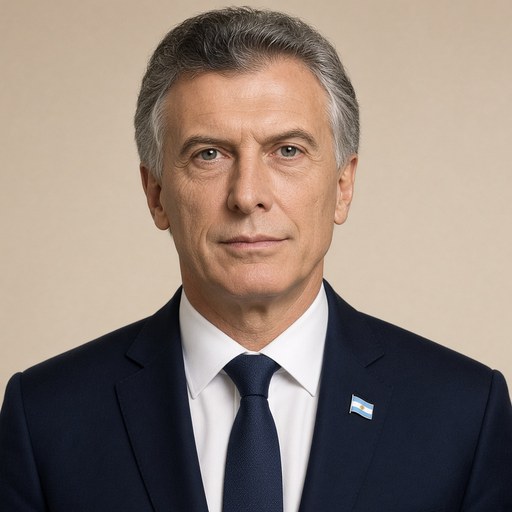
President Mauricio Macri, at the opening of the Second National Forum of Mayors
 Mauricio Macri · President of Argentina
- Context
- Macri addressed the Second National Forum of Mayors in Argentina on November 22, 2018, highlighting federal cooperation, transparency, and digital modernization for municipalities.
- Main themes
- Federalism and municipal governance, women's political representation, good practices and transparency in local government, digital connectivity for municipalities, simplification of business permits, responsible public management, youth in politics, state adaptation to citizens' needs, Country Digital policy, private employment generation
- Duration
- ~12 min
- Words
- 1,449
- Sentences
- 44
- Readability
- 46
- Grade
- 15.0
- Syntax
- 3.49
- Vocabulary
- 1.91
Translated from Spanish
The broad sphere of national life a sentence belongs to. Every sentence has an Arena, so it is the denominator the other indices are read against.
Other44 sentences in 17 paragraphs
Good morning, good morning everyone, and welcome as well.
I want to say that it is a pride to have leaders from every corner of Argentina with us at the Second National Meeting of Mayors. And I know that many have made a great effort to be here, traveling from very far away, so I thank you for being here again today.
What brings us together today is something much greater than those of us who are here; today we are united by a true federal spirit. That is why we are happy to have representatives from all provinces and all political colors among us, and all - as Rogelio said - willing to listen, dialogue, and exchange experiences.
And I know that many of you here have been in politics for many years, but we also have around 100 or a little more who are under 35 years old - 35 years of age, not in politics - and who come with that spark and energy that comes with the vocation for renewal.
However, I must highlight that we still have a pending debt in all political parties, and I refer to women leaders, because out of 2,300 mayorships, less than 120 are led by women. The truth is that there are very few, and we need more, because I am one of those convinced that their vision is fundamental for Argentina to become a fairer country, more inclusive, and with true equality of opportunities. So I tell everyone to work so that spaces are increasingly plural, because the more representative they are of reality, the better we will be able to meet the needs of our people.
And also, as Rogelio mentioned and we have discussed in these meetings that I have systematically with different groups of mayors, you are the first contact, the front line with the neighbors, and of course I know perfectly well what it means to be in that position. Because when I was Chief of Government, my first commitment was to be there, that is why I started knocking on doors and asking how they were, what their needs were, and of course also listening to their criticisms; because only by being close can we generate solutions to everyday problems, there is no other way. And that is how I continue to work here today, because there is no one who knows it all, and it is the State that must adapt to the needs of the people and not vice versa. And I want to repeat this: we must adapt by leading the State to the needs of the people and build those solutions.
That is why today we also want to start recognizing good practices in 15 municipalities, because they are an example of what it means to be at the service of their neighbors. This ranking we have created, which we will announce today, aims to stimulate orderly management, responsible management, that does not spend more than it has, because it does make a difference to do things well or to do them, as they have always been done, through trickery and shortcuts. And we are banishing something that we have been made to believe in recent decades, that budgets, statistics, public information did not exist, that they were things we could draw up, and that at the end of the day it did not matter whether the objectives were met or not; this is what must end, and we are breaking with that logic, and we want those who are working best to serve as a guide to all the others. That is why it is important for everyone to participate, because there are still many who have not signed up to participate in this type of measurement, and I especially say this to those who are missing from Cambiemos.
And today I want to highlight that you have a National State that supports you, that is laying the foundations for a development that goes beyond a government. And you can clearly see it in our Country Digital policy: when we arrived, we surveyed each municipality and found that 90 percent did not have quality internet, nor the possibility of doing paperwork remotely, nor control dashboards, nor transparency portals. The majority, almost 60 percent, did not even have a website from which to introduce themselves to the world and to their own neighbors. And now more than ever, as we have made progress, we realize that a municipality without connectivity is a municipality that is condemned to work on paper, and that means that thousands of families will be waiting for a response.
And that is why we launched this program, and today I can say with joy that together with Andrés and his entire team we have managed for 1,500 municipalities to have digital tools, 1,500 that will begin to be able to meet what Argentines demand from us: transparency and agility.
But quick responses must also be given to companies that want to develop, because if not, how will their cities grow? Each of you has the responsibility to clear the way for them to generate quality private employment. And you know better than I do that today more than 60 percent of businesses and industries do not have definitive permits: 60 percent do not have definitive permits! And it costs them dearly and takes months. That is why the challenge is to simplify the procedures; let’s think that every fee, every little fee that is added, every permit or stamp that is added, means that they are less competitive companies, that they lose time and generate less work in their municipalities. That is why I invite you to join this simplification agenda that we are promoting throughout the country.
And also, if we want to generate jobs, we cannot charge distorting taxes; the taxes that a mayor can charge must be for services provided to the square meters occupied by those we charge, they cannot be linked to what that person or company invoices in those square meters.
And we also need connectivity; cities must be connected physically and virtually. That is why we are promoting what we call “the revolution of airplanes,” so that it becomes less and less necessary to come to the capital to connect with another city in Argentina, so that all Argentines can move around the country visiting, trading, and realizing themselves. And it is working; I see it in the agenda of many of you, the concern about how to generate new air connectivity. And for that, we started a revolution in infrastructure, which also has to do with roads and bypasses to important cities that were crossed by a national route - or that are still crossed, because we are in that process - with works that start and must finish.
And all of this favors something that we have all put on the agenda, which is tourism, and it is a great tool to promote territorial development. Like the Authentic Towns program, let’s see how many authentic towns are visiting us today? Good, there are several, this creative idea from Gustavo Santos and his team, which brings these unique characteristics that enrich and represent our culture. So I hope that the little towns progress well and that more and more Argentines and foreigners visit these unique places in the country. You see all of that; all of that and more is happening.
That is why I call on you to continue working together to keep improving what can be improved, always putting Argentines first.
And to summarize: if you want your communities to grow, what you have to do is manage well, transparently, with an open government, close to the people. And create conditions for your people to develop in that place, what the old industrial parks, now economic districts, like the district we created together with Horacio and the team, here the Technological District in Parque Patricios, are based on providing services, which include security, connectivity, and not imposing distorting taxes: that is the path to development for each community, from there you will be able to help lead the development of your communities.
So thank you very much to everyone for being here, and I hope you take advantage of this day of joint work; it is very valuable for you to meet, listen to each other, and exchange experiences. All of us who have had the responsibility of governing a city have lived similar experiences, and we enrich ourselves a lot from the successes and failures of others, because these are experiences that are shared.
Thank you very much; a big hug to everyone.
The original Spanish. The tags above are read on the English translation's sentences.
Buenos días, buenos días a todos, bienvenidos también.
Quiero decirles que es un orgullo que nos acompañen dirigentes de cada de cada rincón de la Argentina en el que es el Segundo Encuentro Nacional de Intendentes. Y sé que muchos han hecho un gran esfuerzo porque viajan desde muy lejos, así que les agradezco que estén nuevamente hoy acá.
Y lo que hoy nos reúne es algo mucho más grande de los que estamos aquí, hoy unos reúne un verdadero espíritu federal. Por eso estamos contentos de tener entre nosotros a representantes de todas las provincias y de todos los colores políticos, y todos -como dijo Rogelio- dispuestos a escuchar, dialogar e intercambiar experiencias.
Y sé que muchos de ustedes que están acá llevan muchos años en la política, pero tenemos también alrededor de 100 o un poquito más que tienen menos de 35 años -35 años de edad, no en la política- y que vienen realmente con esa chispa y fuerza que tiene la vocación de la renovación.
Pero sin embargo tengo que destacar que todavía tenemos todos los partidos políticos una deuda pendiente, y me refiero a con las dirigentes mujeres, porque de 2.300 intendencias menos de 120 son lideradas por mujeres. La verdad que son muy pocas y necesitamos que sean más, porque yo soy uno de los convencidos de que su visión es fundamental para que la Argentina se convierta en un país más justo, más inclusivo y con verdadera igualdad de oportunidades. Así que le digo a todos a trabajar para que los espacios sean cada vez más plurales, porque cuanto más representativos sean de la realidad mejor vamos a poder atender las necesidades de nuestra gente.
Y también, como mencionaba Rogelio y lo hemos hablado en estas reuniones que tengo sistemáticamente con distintos grupos de intendentes, que ustedes son el primer contacto, la primera fila con los vecinos, y por supuesto que sé perfectamente lo que significa estar en ese lugar. Porque cuando fui Jefe de Gobierno mi primer compromiso fue estar ahí, por eso ahí empecé a tocar timbre y a preguntarles cómo estaban, cuáles eran sus necesidades, por supuesto también a escuchar sus críticas; porque solo así, estando cerca, es que podemos generar las soluciones de los problemas de todos los días, no hay otra manera. Y así es como sigo trabajando hoy acá, porque no hay nadie que se las sepa todas, y es el Estado el que tiene que adaptarse a las necesidades de la gente y no viceversa. Y esto lo quiero repetir: nosotros tenemos que adaptarnos conduciendo el Estado a cuáles son las necesidades de la gente y construir esas soluciones.
Por eso es que hoy también queremos empezar a reconocer en 15 municipios las buenas prácticas, porque son un ejemplo de lo que significa estar al servicio de sus vecinos. Este ranking que hemos creado, que vamos a dar a conocer hoy, tiene como objetivo estimular la gestión ordenada, la gestión responsable, que no gasta más de lo que tiene, porque no da lo mismo hacer las cosas bien o hacerlas, como siempre se hicieron, a través de la trampa y del atajo. Y estamos desterrando algo que nos hicieron creer en las últimas décadas, que no existían los presupuestos, las estadísticas, la información pública, que eran cosas que podíamos dibujar, y que al final del día no importaba si se cumplían o no los objetivos; esto es lo que tiene que terminar y estamos rompiendo con esa lógica, y queremos que los que mejor vienen trabajando sirvan como guía a todos los demás. Por eso es importante que todos vayan participando, porque todavía hay muchos que no se anotaron para participar de este tipo de medición, y especialmente se los digo a los que faltan de Cambiemos.
Y hoy quiero destacar que cuentan con un Estado Nacional que los apoya, que está sentando las bases para un desarrollo que va más allá de un gobierno. Y lo ven claramente en nuestra política de País Digital: cuando llegamos relevamos cada municipio y nos encontramos que el 90 por ciento no tenía internet de calidad, ni la posibilidad de hacer trámites a distancia, ni tableros de control, ni portales de transparencia. La mayoría, casi un 60 por ciento, ni siquiera tenía una página web desde donde darse a conocer al mundo y a sus propios vecinos. Y ahora más que nunca, que hemos avanzado, nos damos cuenta de que un municipio sin conectividad es un municipio que está condenado a trabajar en papel, y eso significa que miles de familias van a estar esperando por una respuesta.
Y por eso pusimos en marcha este programa y hoy puedo decir con alegría que junto a Andrés y todo su equipo hemos logrado que 1.500 municipios cuenten con herramientas digitales, 1.500 que van a empezar a poder cumplir con lo que los argentinos nos demandan: transparencia y agilidad.
Pero también las respuestas rápidas deben ser dadas a las empresas que quieren desarrollarse, ¿porque si no cómo van a crecer sus ciudades? Cada uno de ustedes tiene la responsabilidad de allanarles el camino para que puedan generar empleo privado de calidad. Y ustedes saben mejor que yo que hoy más del 60 por ciento de los comercios e industrias no tienen habilitaciones definitivas: ¡no tienen habilitaciones definitivas el 60 por ciento! Y les cuesta caro y tarda meses. Por eso es el desafío es simplifiquemos los trámites, pensemos que cada tasa, cada tasita que se agrega, cada permiso o sello que suman, significa que sean empresas menos competitivas, que pierdan tiempo y que generen menos trabajo en sus municipios. Por eso los invito a sumarse a esta agenda de simplificación que estamos impulsando en todo el país.
Y también, si queremos generar trabajo, no podemos cobrar impuestos distorsivos, los impuestos que puede cobrar un intendente tienen que ser por servicios que presta a los metros cuadrados que ocupa a quien le cobramos, no pueden estar ligado a lo que factura esa persona o esa compañía en esos metros cuadrados.
Y también necesitamos conexión, las ciudades tienen que estar conectadas física y virtualmente. Por eso impulsamos lo que llamamos “la revolución de los aviones”, para que cada vez menos sea necesario venir a la capital para conectarse con otra ciudad de la Argentina, para que todos los argentinos nos podamos mover por el país visitando, comerciando, realizándonos. Y está funcionando, lo veo en la agenda de muchos de ustedes, la preocupación de cómo generar una nueva conectividad aérea. Y para eso empezamos una revolución en infraestructura, que también tiene que ver con lo vial y los bypass a las ciudades importantes que se veían atravesadas por una ruta nacional- o que todavía se ven, porque estamos en ese proceso- con obras que empiezan y deben terminar.
Y todo esto favorece a algo que todos hemos puesto en la agenda, que es el turismo, y es una gran herramienta para favorecer el desarrollo territorial. Como el programa de Pueblos Auténticos, ¿a ver cuántos pueblos auténticos nos visitan hoy? Bien, hay varios, esta idea creativa de Gustavo Santos y su equipo, que lleva estas características únicas que enriquecen y representan nuestra cultura. Así que espero que los pueblitos avancen bien y que cada vez más argentinos y extranjeros visiten estos lugares únicos del país. Todo eso ustedes lo ven, todo eso y más está pasando.
Por eso los convoco a que sigamos trabajando juntos para seguir mejorando lo que se pueda mejorar, siempre poniendo a los argentinos en primer lugar.
Y resumiendo: si ustedes quieren que sus comunidades crezcan, lo que tienen que hacer es administrar bien, en forma transparente, con un gobierno abierto, cerca de la gente. Y crear condiciones para que su gente se desarrolle en ese lugar, lo que los viejos parques industriales, hoy distritos económicos, como hicimos el distrito junto a Horacio y al equipo, acá el Distrito Tecnológico en Parque Patricios, radican en prestar servicios, que incluyen seguridad, conectividad, y no cargar impuestos distorsivos: ese es el camino de desarrollo para cada comunidad, desde ahí ustedes van a poder ayudar a liderar el desarrollo de sus comunidades.
Así que de verdad muchas gracias a todos por estar acá y espero que aprovechen esta jornada de trabajo en conjunto, es muy valioso que ustedes se reúnan, se escuchen e intercambien experiencias, todos aquellos que tuvimos la responsabilidad de gobernar una ciudad vivimos experiencias similares y nos enriquecemos mucho de los éxitos y fracasos de los otros, porque son experiencias que se comparten.
Muchas gracias; un abrazo grande a todos. (APLAUSOS)