




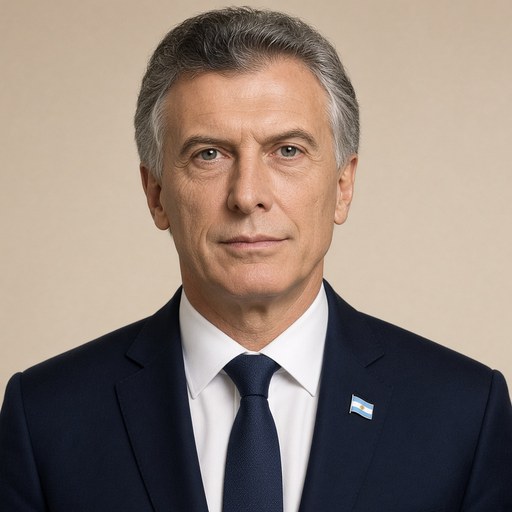
President Mauricio Macri presented the "Justice 2020" program.
 Mauricio Macri · President of Argentina
- Context
- Macri addressed lawyers and justice officials on May 10, 2016, to launch the 'Justice 2020' reform program aimed at modernizing Argentina's judicial system.
- Main themes
- Judicial reform, Justice 2020 program, rule of law, institutional trust, fight against impunity, drug trafficking, public security, judicial independence, human rights, domestic violence, modernization of justice, Argentina's transformation
- Duration
- ~11 min
- Words
- 1,288
- Sentences
- 35
- Readability
- 45
- Grade
- 16.1
- Syntax
- 3.65
- Vocabulary
- 1.96
Translated from Spanish
The broad sphere of national life a sentence belongs to. Every sentence has an Arena, so it is the denominator the other indices are read against.
Other35 sentences in 17 paragraphs
Good evening: It is once again a joy to be here; the one who is truly intimidated is me, as an engineer alone, with all the lawyers in this room, which means that “I have been left alone,” as Hugo Guerrero Marthineitz used to say. But clearly – coming back here from La Pampa, where there was a lot of joy, a lot of desire to move forward – I told them today that I took on the commitment, on December 10, to take care of the Argentines, to be close. That means putting myself entirely at the service of this country, of its entire community, trying to build tools and transformations that help people live better. It is a very big commitment, and precisely the central element that must exist for that commitment to be enhanced, to be energized, is the trust that has been lost between the people and their leaders for many years.
And that is the enormous challenge we are facing in this stage of change in Argentina; in a relationship, trust is the fundamental element, and in trust, the fundamental element is truth. Without it, we cannot generate this process; that is why my first reflection with you about the very important task you have to carry out is to play, to work for the truth, without fear of the truth, and in that, not only our government but all Argentines will be behind you supporting you as it should be.
And it is a moment in which we cannot be indifferent to what has happened in recent years, or perhaps in recent decades, where crime has worsened or grown like we never imagined before. And today, the ordinary citizen feels that the criminal, the murderer, the thief, the rapist always, with much impunity, finds some loophole through which to escape from this disruption they cause in society.
And worse if we look at what happened in the last ten years with drug trafficking, where there were clearly partners within the Argentine leadership for this to happen, but there must also have been incapacity and fear… a lot of fear. So, in the face of so many people in vulnerable situations, there is a special chapter, because as Chief of Government, I saw it up close and worked with the Supreme Court on the issue of domestic violence against women and children, and this has been very significant. So we need to really learn – as I have been saying and preaching around the world – that this new stage in Argentina is not like any previous one because this will capitalize on the learning from the mistakes we have made, and this will be a different energy and perspective moving forward.
So we must really have the courage to renew ourselves, to create instruments that creatively help us improve on this path. This is what our people expect.
As Germán said, and I agree, it is very difficult to imagine a united Argentina, with zero poverty and without drug trafficking, if we do not have a dynamic, intelligent, active, and high-quality justice system. I am one of those who believes – that is why I am here – that we have the human resources; there are many talented and creative Argentines who are capable of doing a great job, and that also includes the justice sector; it includes all sectors. I believe that in all sectors we have a lot of valuable people.
So I think this 2020 Plan, which I come to learn about because I will stay to listen to the presentation, because as an engineer I am restless and always want to learn a little more. But it seems to me that the three axes it proposes are the right ones: one is closeness, because clearly not only the Executive Government has to be close to the people, but also the Justice, since people need to feel it close, easily accessible.
For my part, I have a commitment – like all Argentines – to truly uphold human rights and not as a political banner, but with the human rights that mean that all Argentines, regardless of their reach or role in society, must feel protected, must feel sheltered and safeguarded within the National Constitution.
Another chapter of this reform is independence. Clearly, we have also taken on the commitment – and we are fulfilling it as it should be – that we will not be behind you pressuring, extorting, or squeezing, because for us that does not exist; for Cambiemos, that type of relationship does not exist. From our Government, we are here to help in whatever you need, to provide information, but the role of seeking the truth and enforcing the laws is clearly that of Justice.
And what we want, like all Argentines, is that there is no impunity for anyone, for those who have been, for those who are, or for those who will come. Justice must be equal for all and much more demanding with the most powerful, without a doubt.
And the third axis has to do with the 21st century, with this century that challenges us, that dares us to see if we are capable of having a place in it, and we have said yes. For that, this President is traveling the world saying that Argentina has returned, that it will have an active role and not to blame others for the things that happen to us, but to show, first to ourselves and then to the whole world, what we Argentines are capable of when we commit, when we work as a team, in an organized manner.
So, that same modernization, that same 21st century, we need at the time of administering justice. We cannot continue with processes that come from the time of the Viceroyalty, because that is a waste of time, and we know that time counts for everyone, but much more for those who are in exclusion and poverty, much more for those who really hope that their children at least receive tools that they could not have to be able to progress.
So, I congratulate Minister Germán, with whom I have been debating since we were in the city government, as well as with several whom I see here from the Superior Court of the City of Buenos Aires in my previous experience, and seeing how we have evolved.
I believe that this is an important moment in which we must have courage, generosity, and humility to sit at a table and dialogue, debate, and promote a reform, a serious reform. And that debate cannot only reach the members of the Judiciary; it must include universities, academics, professionals, NGOs, anyone who believes they have something to contribute, and from there, I am sure – I am absolutely sure – that something very good will come out, and we must commit to it.
Moreover, this must help us, I insist, for the unity of Argentines, for respect among Argentines, to end the culture of the misunderstood cleverness in the sense that the one who tricks the system is the one who has been successful over the last decades, because that is a very bad example for our youth. All of this is in our hands; it is in your hands.
So, trusting in the talent gathered here and in many others who perhaps could not come from their workplaces, with me here as President to accompany you and to help you in whatever you need, I trust that from this will come a reform that will contribute to building that Argentina in which a vast majority are very, very hopeful.
Thank you very much for listening to me.
The original Spanish. The tags above are read on the English translation's sentences.
Buenas noches: Nuevamente es una alegría estar acá, el que está realmente intimidado soy yo, como Ingeniero solito, con todos los abogados que hay en este salón, es decir que “me han dejado solo”, como decía Hugo Guerrero Marthineitz, pero claramente – volviendo para acá, de La Pampa, donde había mucha alegría, muchas ganas de salir adelante – yo les decía a ellos, hoy, que yo asumí el compromiso, el 10 de diciembre, de cuidar a los argentinos, de estar cerca. Eso significa ponerme íntegramente al servicio de este país, de toda su comunidad, tratando de construir herramientas y transformaciones, que le ayuden a la gente a vivir mejor. Es un compromiso muy grande y justamente el elemento central que tiene que existir para que ese compromiso se potencie, se dinamice es la confianza que, hace muchos años, se ha perdido entre la gente y sus dirigentes.
Y ese es el enorme desafío, que estamos encarando, en esta etapa de cambio, en la Argentina; en una relación la confianza es el elemento fundamental, y en la confianza el elemento fundamental es la verdad. Sin ella no podemos generar este proceso; por eso mi primera reflexión con ustedes sobre la tarea tan importante que tienen que llevar adelante es jueguen, trabajen por la verdad, sin miedo por la verdad y en eso no sólo nuestro gobierno, sino todos los argentinos vamos a estar detrás de ustedes apoyándolos como corresponde.
Y es un momento, en el cual no podemos estar ajenos a lo que pasó, en los últimos años, o tal vez en las últimas décadas, donde ha empeorado o crecido el delito como nunca imaginamos antes. Y hoy, el ciudadano común siente que el delincuente, el asesino, el ladrón, el violador siempre, con mucha impunidad, encuentra algún vericueto por el cual salvarse de esta alteración que genera en la sociedad.
Y peor si nos ponemos a ver lo que pasó, en los últimos diez años, con el narcotráfico, donde claramente hubo socios dentro de la dirigencia argentina para que esto suceda, pero también debe haber habido incapacidad y miedo… mucho miedo. Entonces, frente a tanta gente en situación vulnerable y hay ahí un capítulo especial, porque como Jefe de Gobierno lo vi de cerca y trabajé con la Corte Suprema en el tema, en el maltrato familiar a la mujer, a los chicos y esto ha sido muy grande. Entonces se necesita que realmente aprendamos – como yo vengo diciendo y predicando en el mundo – que esta nueva etapa, en la Argentina no es igual a ninguna anterior porque esta va a capitalizar el aprendizaje de los errores, que hemos cometido y esto va a ser una energía y una mirada distinta hacia adelante.
Entonces debemos realmente tener el coraje de renovarnos, de crear instrumentos que con creatividad nos ayuden a mejorar en este camino. Esto es lo que nuestra gente espera.
Como decía Germán y adhiero es muy difícil imaginar una Argentina unida, con pobreza cero y sin narcotráfico, sino tenemos una justicia dinámica, inteligente, activa y de extrema calidad. Yo soy de los que cree – por eso estoy acá – que los recursos humanos los tenemos, o sea hay muchos argentinos talentosos y creativos, que son capaces de hacer una gran labor y eso también incluye al sector de la Justicia; también incluye a todos los sectores. Yo creo que en todos los sectores tenemos muchísima gente valiosa.
Entonces creo que este Plan 2020, del cual vengo a aprender porque me voy a quedar para escuchar la presentación, porque como Ingeniero soy inquieto y siempre quiero aprender un poco más. Pero me parece que los tres ejes que plantea son los correctos: uno es la cercanía, porque claramente no sólo el Gobierno Ejecutivo tiene que estar cerca de la gente, también la Justicia, ya que la gente necesita sentirla cerca, de fácil acceso.
Por mi parte, yo tengo un compromiso -como todos los argentinos- de verdad con los derechos humanos y no como una bandera política, pero con los derechos humanos que significan que todos los argentinos, independientemente de su alcance o rol en la sociedad, tienen que sentirse protegidos, tienen que sentirse amparados y resguardados dentro de la Constitución Nacional.
Otro capítulo de esta reforma es la independencia. Claramente también hemos asumido como compromiso –y lo estamos cumpliendo como corresponde- que nosotros no vamos a estar detrás de ustedes presionando ni extorsionando ni apretando, porque para nosotros eso no existe, para Cambiemos no existe ese tipo de relaciones. Desde nuestro Gobierno estamos para ayudar en lo que necesiten, para facilitar información, pero el rol de buscar la verdad y hacer respetar las leyes, claramente es de la Justicia.
Y lo que queremos como todos los argentinos, es que no haya impunidades de nadie, de los que estuvieron ni de los que están ni de los que vendrán. La Justicia tiene que ser igual para todos y mucho más exigente con los más poderosos, sin lugar a dudas.
Y el tercer eje, tiene que ver con el siglo XXI, con este siglo que nos desafía, que nos reta a ver si somos capaces de tener un lugar en él y que nosotros hemos dicho que sí. Para eso, este Presidente está viajando por el mundo diciendo que la Argentina volvió, que va a tener un rol activo y no para echarle la culpa a los demás por las cosas que nos pasan, sino para demostrarles, primero a nosotros y, luego, al mundo entero, de qué somos capaces los argentinos cuando nos comprometemos, cuando trabajamos en equipo, organizadamente.
Entonces, esa misma modernización, ese mismo siglo XXI, lo necesitamos a la hora de la administración de la justicia. No podemos seguir con procesos que vienen desde la época del Virreinato, porque eso es una pérdida de tiempo y sabemos que el tiempo y sabemos que el tiempo cuenta para todos, pero muchos más para aquellos que están en la exclusión y en la pobreza, mucho más para aquellos que esperan realmente que sus hijos al menos, reciban herramientas que ellos no pudieron tener como para poder progresar.
Así que, felicito al ministro Germán, con el cual venimos debatiendo desde cuando estábamos en el gobierno de la Ciudad, al igual que con varios que veo acá integrantes del Tribunal Superior de la Ciudad de Buenos Aires en mi experiencia anterior, y viendo cómo evolucionamos.
Creo que es un momento importante en el cual tenemos que tener coraje, generosidad y humildad para sentarnos a una mesa y dialogar, debatir e impulsar una reforma, una reforma en serio. Y ese debate, no puede alcanzar solamente a los integrantes del Poder Judicial, tiene que estar las universidades, los académicos, los profesionales, las ONGs, todo aquel que crea que tiene algo para aportar y de ahí, seguro –estoy absolutamente seguro- que va a salir algo muy bueno y con lo cual nos tenemos que comprometer.
Además, esto nos tiene que ayudar, insisto, para la unidad de los argentinos, para el respeto entre los argentinos, para terminar con la cultura de la viveza criolla mal entendida en el sentido de que el que burla el sistema, es el que ha sido exitoso durante las últimas décadas, porque ese es un muy mal ejemplo para nuestros jóvenes. Todo esto está en nuestras manos, está en sus manos.
Así que, confiando en el talento aquí reunido y en el de muchos otros que quizás no habrán podido venir desde sus lugares de trabajo, estando yo aquí como Presidente para acompañarlos y para ayudarlos en lo que necesiten, confío que de esto saldrá una reforma que contribuirá a construir esa Argentina en la cual una enorme mayoría estamos muy, pero muy esperanzados.
Muchas gracias por escucharme. (APLAUSOS)