




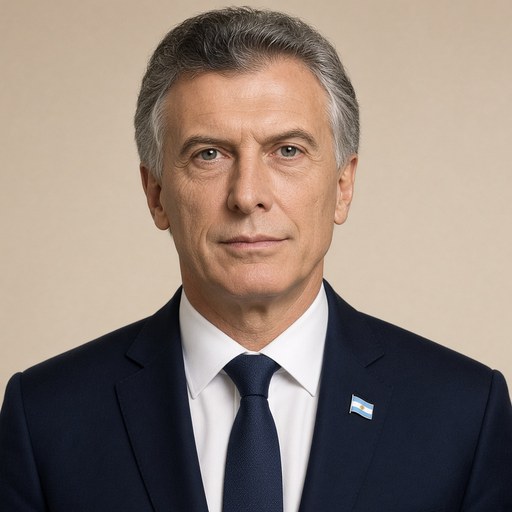
President Mauricio Macri presented the results of the Aprender Assessment.
 Mauricio Macri · President of Argentina
- Context
- Macri presented the 2018 Aprender Assessment results at a school in Jujuy, Argentina, highlighting significant improvements in student literacy and education quality.
- Main themes
- Aprender Assessment results, literacy improvement, mathematics education, transparency in governance, education quality, student learning outcomes, teacher training, educational reform, gap reduction in learning levels, Singapore math methodology
- Duration
- ~12 min
- Words
- 1,399
- Sentences
- 62
- Readability
- 64
- Grade
- 9.8
- Syntax
- 3.08
- Vocabulary
- 1.85
Translated from Spanish
The broad sphere of national life a sentence belongs to. Every sentence has an Arena, so it is the denominator the other indices are read against.
Other62 sentences in 9 paragraphs
Good day, good day! How could I not be happy to be here, having the opportunity to be with you in this province that I love so deeply, because I love this special way of being that the people of Jujuy have, this way of facing life. And, I am also happy to be in a school that you know, wonderful kids, is a place where the future is built, because we all dream that you will be the protagonists of the Argentina to come.
We are here, with Gerardo, all his team, the parents, the teachers, trying to ensure that you really have the tools you need for the future. And, I am also very happy because I have very good news to share with you and with all Argentinians. You know, those of you in 6th grade, that we have just conducted the test called the Evaluación Aprender. All the 6th graders have taken this evaluation. It has been carried out in schools from Jujuy to Tierra del Fuego, but this evaluation is not just any evaluation. This is related to a deep mandate, a mandate that the Argentine people gave us as a government, which is to govern with the truth on the table, because before what was done was not to evaluate, to try to hide under the carpet what we were teaching, how we were teaching it, whether it was working or not. And, we were not hiding some results; unfortunately, we were hiding that our kids were not learning. And, it was so serious that they decided to withdraw from the PISA tests in 2015, which is an international evaluation that our teachers know, where the world goes and evaluates comparatively whether we are teaching the kids, as I said at the beginning, everything they need to access a job of the future.
And, we arrived and in 2016 we conducted the first Evaluación Aprender, knowing that the truth was going to be uncomfortable, that it was going to generate something, a challenge, and the truth is that the results were even worse than we imagined. The results showed that 7 out of 10 kids who finished high school, and only half of them finished, only 7 out of 10 had the basic knowledge of mathematics, and only 5 out of 10 understood texts. We said, well, this is wrong, this needs to be reversed, we have to get to work. And, we chose to start working on language, and why did we choose language? Because if you cannot understand texts, you will not, teacher, principal, be able to learn geography or history, nor read a statement of a math problem to solve it, and tomorrow you will not be able to go to university, nor even take an evaluation to access a job. So, we decided, let’s start here. And what did it mean to start here? It meant sitting down with our school principals and teachers, and starting to agree on a work plan that sought to focus on training, which Gerardo just told me was the first request from the entire community, teachers, principals, parents. It is to train ourselves permanently to be up to the challenges. And, that work that has been going on for a couple of years we had to evaluate to see if we were doing well. So, we conducted, at the end of last year, the Evaluación Aprender 2018, and today, I want to share with you this immense joy that I have. Listen well, more than 570,000 students from all over the country, almost 20,000 schools, took this evaluation. More than 570,000, like all of you. And it showed that 8 out of 10 students in this country, in all provinces, achieved a superior level in Language. 8 out of 10. This is wonderful. And, furthermore, another important thing, in the last Evaluación Aprender of 2016 we had that 14.5 percent of the kids did not meet the minimum requirements in Language. That number dropped to 7.1 percent, which means that we also reduced the gap between those who learn the most and those who learn the least.
These are two incredible, foundational, central pieces of news. In Mathematics, we have just started, and in nine provinces we have seen improvements, but we hope that starting from the program we launched very recently, called Aprender Matemáticas, which is based on more modern teaching methods and systems that started in Singapore, continued in France, Mexico, and we have brought them and are sharing them with our beloved teachers, we hope that the results will follow the same line as Language, and that all of you will stop being afraid of Mathematics because mathematics is also something very beautiful.
But, all this that we are doing, and that I am sharing today with you, has to do with what I told you on March 1 in the inaugural speech of the legislative year, where Gerardo was there, accompanying me. I told you that we are building the structures, the deep foundations upon which a country grows. Those foundations that needed to be built and were not built because many times they have to do, as we just talked about with Gerardo, with works that are not seen, with things that do not shine but that if they are not there prevent the country from growing. And, being there generates the basis for development. And, among the many transformations we are making, for me, there is one that stands out, and that is this, education, because what is more structural than the education of our kids? What could be more structural than that? Nothing can be more important than that. And, we have talked about it and we have said it. How many times have we heard, Gerardo, the importance of education in speeches? So, the important thing is to do something different. Not to keep doing the same thing if the results are not good. And, here we gathered in the Federal Council of Education, national government, provinces, and we set to work with our directors, with our teachers, with the community of parents, and we obtained these results. We, the Argentinians, working as a team, have achieved these results in two years of work. What does this demonstrate? That it is possible, that if we work together and put our energy into doing, into building, things will improve every day. And, we will be able to do works like this because it is a work, but it is a different work because it does not have cement. We cannot touch it, but it is real because we are measuring it. We are not deceiving ourselves; we evaluated again and checked if we were on the right path. This is as important as today that we are starting to have energy back, energy from the Argentinians. We are starting to export gas, we are developing renewable energies, for example, in Jujuy with solar energy, which Jujuy will be a world power in solar energy.
And, why do I compare it with education? Because education is like the energy of the soul, it is what moves the country, because if there is education, everything is possible. Absolutely everything is possible.
That is why I want to end by thanking the principal, the teachers, and I want to highlight one more thing that I was forgetting, which is that, at the moment we started, we saw that there were schools that were much worse than the average. And, we said, this cannot be. And we chose the 3,000 schools that were the most fragile at this moment and we called them the “lighthouse schools,” and we put more love, more work, more teamwork into them, and today I also want to tell you that the lighthouse schools improved much more than the average of schools across the country. Much more. So I want another round of applause for yourselves for being a lighthouse school.
And, to say thank you, dear teachers, thank you for committing, thank you for believing that by working together we can build a better future for all the kids.
A huge kiss to all the people of Jujuy, to all the teachers, principals of the country, and let us commit to continue working together for the future of these kids. Thank you very much.
The original Spanish. The tags above are read on the English translation's sentences.
¡Buen día, buen día! Cómo no voy a estar feliz de estar acá, teniendo la posibilidad de estar con ustedes en esta provincia que amo tan profundamente, porque amo esta forma de ser tan especial que tienen los jujeños, esta forma de encarar la vida. Y, además, feliz de estar en una escuela que ustedes saben, maravillosos chicos, que es un lugar donde se construye futuro, porque todos soñamos que ustedes sean los protagonistas de la Argentina que viene.
Estamos acá, con Gerardo, todo su equipo, los padres, los docentes, tratando de que realmente tengan esas herramientas que hacen falta para el futuro. Y, también estoy muy contento porque tengo una muy buena noticia para compartir con ustedes y con todos los argentinos. Ustedes saben, los que están en 6° año, que acabamos de hacer la prueba esta que se llama la Evaluación Aprender. Todos los chicos de 6° han hecho esta evaluación. Se han hecho en las escuelas desde Jujuy hasta Tierra del Fuego, pero esta evaluación no es una evaluación más. Esto tiene que ver con un mandato profundo, un mandato que nos dio el pueblo argentino a nosotros como gobierno, que es el de gobernar con la verdad sobre la mesa, porque antes lo que se hacía era no evaluar, tratar de esconder debajo de la alfombra qué estábamos enseñado, cómo lo estábamos enseñando, si funcionaba o no funcionaba. Y, no escondíamos unos resultados, lamentablemente estábamos escondiendo que nuestros chicos no estaban aprendiendo. Y, fue tan grave que decidieron retirarse de las pruebas PISA en el 2015, que es una evaluación internacional, que nuestras docentes conocen, donde el mundo va y evalúa comparativamente si estamos enseñándoles a los chicos, como decía al principio, todo lo que necesitan para acceder a un trabajo del futuro.
Y, nosotros llegamos y en el 2016 hicimos la primera evaluación Aprender, sabiendo que la verdad iba a seguramente ser incómoda, que nos iba a generar algo, un desafío, y la verdad es que los resultados fueron todavía peores de lo que imaginamos. Los resultados nos dieron que 7 de cada 10 chicos que terminaban el secundario, que ya solamente terminaban la mitad, solamente 7 de cada 10 tenían los conocimientos básicos de matemáticas, y sólo 5 de cada 10 comprendían textos. Dijimos, bueno, esto está mal, esto hay que revertirlo, nos tenemos que poner a trabajar. Y, elegimos empezar a trabajar con el tema de lengua, y ¿por qué elegimos lengua? Porque si ustedes no pueden comprender textos tampoco, profesora, directora, van a poder aprender geografía ni historia, ni leer un enunciado de un problema de matemáticas para resolverlo, y el día de mañana no van a poder ir a la universidad, ni siquiera ir a una evaluación para acceder a un trabajo. Entonces, decidimos, empecemos por acá. Y ¿qué significó empezar por acá? Significó sentarse con nuestros directivos de todas las escuelas y los docentes, y empezar a acordar un plan de trabajo que buscó centrarse en la capacitación, que me decía recién Gerardo que en unas jornadas de trabajo, acá, con toda la comunidad, fue el primer pedido de toda la comunidad, docentes, directores, padres. Es capacitarnos permanentemente para estar a la altura de los desafíos. Y, ese trabajo que lleva ya un par de años teníamos que evaluarlo para ver si veníamos bien. Entonces, volvimos a hacer, fin del año pasado, la Evaluación Aprender 2018, y hoy, quiero compartir con ustedes esta enorme alegría que tengo. Escuchen bien, más de 570 mil alumnos de todo el país, casi 20 mil escuelas, hicieron esta evaluación. Más de 570 mil, como todos ustedes. Y dio que 8 de cada 10 alumnos de este país, en todas las provincias, dieron nivel superior de Lengua. 8 de cada 10. Esto es maravilloso. Y, además, otra cosa importante, en la última Evaluación Aprender del 2016 teníamos que el 14,5 por ciento de los chicos no tenían lo mínimo de Lengua, no alcanzaban los requisitos mínimos de Lengua. Ese numerito bajó a 7,1 por ciento, con lo cual, significa que también redujimos la brecha entre los que más aprenden y los que menos aprenden.
Estas son dos noticias increíbles, fundacionales, centrales. En Matemáticas recién empezamos, y en nueve provincias hemos tenido mejoras, pero esperamos que a partir del programa que lanzamos hace muy poco, que se llama Aprender Matemáticas, que basándonos en métodos, sistemas de enseñanza más modernos, que empezaron en Singapur, siguieron por Francia, México y los hemos traído y estamos compartiéndolos con los queridos docentes, esperamos que los resultados vayan en la misma línea que Lengua, y que todos ustedes dejen de tenerle miedo a la Matemática porque las matemáticas son algo muy lindo también.
Pero, todo esto que estamos haciendo, y que estoy compartiendo hoy con ustedes, tiene que ver con lo que les dije el 1 de marzo en el discurso inaugural del año legislativo, que estaba Gerardo, ahí, acompañándome. Yo les dije que estamos construyendo las estructuras, los cimientos profundos sobre los cuales crece un país. Esos cimientos que había que hacer y no se hacían porque muchas veces tienen que ver, como también recién hablábamos con Gerardo, con obras que no se ven, con cosas que no brillan pero que si no están impiden que el país crezca. Y, estando nos generan la base del desarrollo. Y, entre esas muchas transformaciones que venimos haciendo, para mí, hay una que sobresale, y es esta, la educación, porque ¿qué hay más estructural que la educación de nuestros chicos? ¿Qué hay más estructural que eso? Nada puede ser más importante que eso. Y, lo hemos hablado y lo hemos dicho. ¿Cuántas veces hemos escuchado, Gerardo, la importancia de la educación en los discursos? Entonces, lo importante es hacer algo distinto. No seguir haciendo lo mismo si los resultados no son buenos. Y, acá nos juntamos en el Consejo Federal de Educación gobierno nacional, provincias, y nos pusimos a trabajar con nuestros directores, con nuestros docentes, con la comunidad de padres, y obtuvimos estos resultados. Nosotros, los argentinos, trabajando en equipo, hemos obtenido estos resultados en dos años de trabajo. ¿Esto qué demuestra? Que sí se puede, que si trabajamos juntos y ponemos nuestra energía en el hacer, en el construir las cosas van a mejorar todos los días. Y, vamos a poder hacer obras como esta porque es una obra, pero es una obra distinta porque no tiene cemento. No la podemos tocar, pero es real porque la estamos midiendo. No nos engañamos, volvimos a evaluar y comprobar si íbamos por el camino correcto. Esto es tan importante como hoy que empezamos a tener energía de vuelta, energía de los argentinos. Empezamos a exportar gas, estamos desarrollando energías renovables, por ejemplo, en Jujuy con la solar, que Jujuy va a ser una potencia mundial en energía solar.
Y, ¿por qué la comparo con la educación? Porque la educación es como la energía del alma, es lo que mueve el país, porque si hay educación todo es posible. Absolutamente todo es posible.
Por eso, quiero terminar agradeciéndole a la directora, a las docentes, y quiero resaltar una cosa más que me estaba olvidando, que es que, en el momento en que arrancamos, vimos que había escuelas que estaban mucho peor que la media. Y, dijimos, esto no puede ser. Y elegimos las 3 mil escuelas que estaban más frágiles en este momento y las llamamos las “escuelas faro”, y sobre ellas pusimos más amor, más trabajo, más equipo, y hoy también quiero decirles que las escuelas faro mejoraron mucho más que el promedio de las escuelas de todo el país. Muchos más. Así que quiero otro aplauso para ustedes mismos por ser una escuela faro.
Y, decirles, gracias, queridas docentes, gracias por comprometerse, gracias por creer que trabajando juntos podemos construir un mejor futuro para todos los chicos.
Un beso enorme para todos los jujeños, para todos los docentes, directores del país, y a comprometernos a seguir trabajando juntos por el futuro de estos chicos. Muchas gracias.