




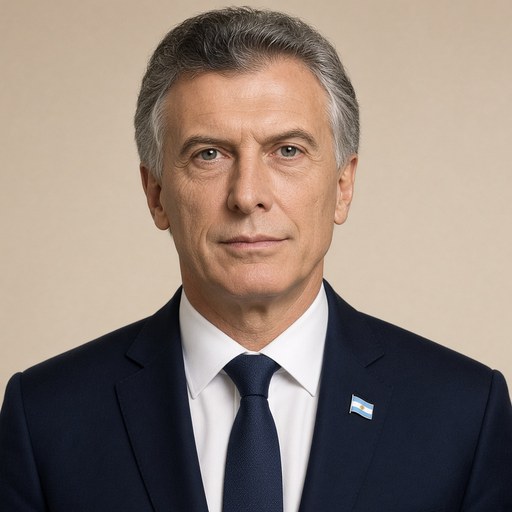
President Mauricio Macri presents the "One Million Vehicles" plan.
 Mauricio Macri · President of Argentina
- Context
- Macri addressed industry representatives in March 2017 to launch the 'One Million Vehicles' strategic plan aimed at boosting automotive production and employment by 2023.
- Main themes
- Automotive industry growth, One Million Vehicles plan, strategic agreement for 2023, job creation, investment and trust, economic recovery, long-term planning, public-private dialogue, agricultural sector linkages, Vaca Muerta energy agreement, credit and housing access
- Duration
- ~14 min
- Words
- 1,697
- Sentences
- 54
- Readability
- 48
- Grade
- 14.3
- Syntax
- 3.40
- Vocabulary
- 2.02
Translated from Spanish
The broad sphere of national life a sentence belongs to. Every sentence has an Arena, so it is the denominator the other indices are read against.
Other54 sentences in 23 paragraphs
So many years since we last saw each other, Torres, give me a hug, Torres, come here.
The truth is that seeing Torres back moved me, because with him we lived through very difficult moments, like many who are still protagonists in the automotive industry, and “Pigna” also experienced them from the side of the other terminals, during the “tequila” crisis, where the entire industry suffered. We were on the brink so many times that we almost toppled over, and when we saw our sales falling, collapsing, in desperation I met with Torres in Palomar. I said to him: “Torres, we won’t survive, what do we do? I am going to prepare a proposal for rotating shifts, something flexible, but you will have to accompany me to see the boss to explain it.” So we went to the Union to see Lorenzo Miguel and explained to him with Torres what we wanted to do. Then there was a strong deliberation, where Torres supported me and, of course, Barba Gutiérrez did not. Fortunately, Torres won and we managed to keep the terminal alive through that crisis. Today that terminal is Peugeot, because later Fiat moved to Córdoba. So those were difficult, tough moments, but they strengthened this industry that is so important for the country.
-I return to the road. Good morning to everyone: ministers, Governor, representatives of the automotive industry, representatives of the workers' families, deputies, senators, representatives of SMEs.
Today is a very special day for this industry, a day I would clearly call historic, and that is why we have called you here, because after months of joint work, of dialogue between the national government, the provinces, the representatives of the workers' families in the automotive industry, the terminal industries, SMEs, and the network of auto parts suppliers, we have reached this strategic agreement for 2023 that has two fundamental goals: to produce one million automobiles, and not only to protect the families of workers in this industry, which is so important, but also to grow it by more than 30,000 jobs.
This is nothing more and nothing less than another step in the journey we began fifteen months ago, doing things solidly, thinking in the long term, laying the foundations so that this can serve us to grow sustainably for many years, which we all know is the only way to rescue millions of Argentines from poverty. This is achieved by making fundamental decisions and always thinking in the long term, not allowing ourselves to be tempted by that short term that sometimes provides a brief relief only to leave everyone in a worse situation.
And that is why we started by resolving the issue of the currency controls, of the default, because on that path we began to build that central element that is present in this Hall today, which is trust. Along with trust comes investment, comes credit.
On Saturday we were in San Miguel launching the new Procrear loans, thirty-year loans, and that is also revolutionary for millions of Argentines who still do not have their own home, with what it means in each of our lives to have our own house. Now they can think about buying it, about accessing that credit to buy their home over thirty years.
Or a few days earlier, when I visited EXPOAGRO, a great engine that Argentina has, perhaps the most powerful “engine,” given that we are here in the automotive industry. We gave clear rules of the game, we told them we would be predictable, and in this way we need you to help us get the country moving. And the agricultural sector responded with investment, with growth, and in a few months brought us a record harvest of more than 130 million tons to the table.
And the automotive industry is one of those that knows and understands the most that when the agricultural sector moves, it is not just a matter of those who plant and harvest, but that machinery is bought, trucks, vans, fertilizers, all kinds of supplies are purchased, and the entire economy begins to move.
That is what we have recorded in recent months. In the last three months of the year, Argentina began to grow slowly, and for more than six months we have been generating formal jobs in Argentina. This was not something that happened by chance; it was the result of us starting to do what a country that wants and needs to grow needed, this is what happened, in line with increasing trust, generating more trust, we began to create spaces for dialogue.
The first, which was truly revolutionary for our future, was the Vaca Muerta agreement, because a country without energy is a country that cannot grow, and the poor energy policies of the previous government had left us in a state of absolute weakness. And there we sat down with the oil unions of Neuquén, with Mr. Guillermo Pererya, with Arévalo, and after tough months of negotiation with another Ministry, with Minister Aranguren, with the Governor of another province, in this case Neuquén, Omar Gutiérrez, the companies, all together looking at how we could turn that opportunity into a reality.
And that started. Every day new investments are being announced, which will not only bring us the energy we need for these auto parts suppliers, these terminals that are expanding to produce, but in generating them, they will see a revolution of employment in Neuquén and all the related areas.
And today I would say that it is the second great agreement, also after months of joint work, and what I hope—and I really hope that many are watching us at this moment—is that we can repeat this. But for that, humility, maturity, common sense, and a strong commitment to our future are needed, and to believe that the tool is this, listening to each other, seeking consensus in ideas, that each one contributes the best they have to offer so that the country can grow. This is undoubtedly the tool and the way.
But going to the topic of the day: I integrated into the family of the automotive industry for a few years and got to know it, admire it, and fall in love with it. It is a beastly work dynamic, a lot of work, piecework, but there is an enthusiasm in the automotive environment, a healthy competition to surpass oneself, to improve, and it is much more than that, hence the 90 direct jobs or the 150,000 indirect ones. It is the systematic incorporation of new technologies into the entire Argentine industry, which is enhancing the core of SMEs that we have.
And that is what we have sought with this agreement today, that this can grow, because we all know what happens around each SME, each family that begins to invest with their machine in technology acquisition. And that is why last year we worked a lot, and we thank Congress for supporting the SME Law that enhances all of this.
But as we also wanted to be more specific, because we knew and talked a lot with “Pigna” about this issue of auto parts suppliers, we promoted the Auto Parts Law, which was truly another great success, and we skillfully negotiated with Minister Cabrera, in a historic negotiation, with Brazil to accept that we had to develop our auto parts system, which had weakened a lot over the last twenty years, in order to increase the levels of integration that in the first stage we want to reach 35 percent of Argentine auto parts in each car we produce.
And that was achieved as a team, the representatives of the workers, the terminals, the representatives of the auto parts suppliers, the governments, and each of us has to do our part, in this case Córdoba, which is one of the great protagonists in the future of this industry.
So we are providing not only financing from the Government, simplification of procedures, relationships, approvals, we are looking at how to reduce the tax burden, and helping to see how we can also be part of the training processes, where undoubtedly companies have even more responsibility than we do in the path of training our people.
And with goals, as I said at the beginning, very ambitious, because it is not only about generating more than 30,000 jobs and manufacturing a million vehicles, but we want our auto parts suppliers to be part of global value chains. We want, by working together, to be able to export 35 percent of automobile production outside MERCOSUR, something we have never achieved.
And we want that entire system of continuous improvement, of commitment from everyone for competitiveness, which is nothing more than saying that each of us will put our best effort into doing things better every day. That is not at all a devaluation of the person, a loss of dignity; on the contrary, it feels very good to know that we are doing things better every day, that we are increasingly committed. That improves our self-esteem, and it also impacts that Argentines can access something as precious as the automobile, at prices comparable to economies similar to ours, which is what we all want. So we have many objectives ahead, but I am sure that by working this way we will achieve them.
That is why I know that the last fifteen months have been difficult, like any transition between an Argentina that could not and an Argentina that is being born. Between that Argentina of confrontation and this one that seeks to rescue these spaces for dialogue, for joint work. But believe me, the more I travel, the more I see you working, the more I visit each of those places, the more we talk about the possibilities, the more convinced I am that if we deepen this way of working, we have no limits in our future. We have a great future ahead.
But let us believe that the way is this, dialoguing, listening, without arrogance, with humility, with generosity, and with maturity.
I congratulate you all, and we will see each other very soon. Thank you.
The original Spanish. The tags above are read on the English translation's sentences.
Tantos años que no nos veíamos Torres, deme un abrazo Torres, venga.
La verdad que verlo a Torres de vuelta me emocionó, porque con él vivimos momentos muy difíciles, como muchos que todavía siguen siendo protagonistas en la industria automotriz, y también los vivió “Pigna” del lado de las otras terminales, durante el “tequila”, donde sufrió toda la industria. Estuvimos al borde tantas veces que casi volcamos y cuando vimos que se nos caía la venta, que se nos desplomaba la venta, desesperado me reuní con Torres en Palomar. Le dije: “Torres, no sobrevivimos, ¿qué hacemos? Yo voy a preparar una propuesta en la cual hagamos turnos rotativos, en algo flexible, pero me va a tener que acompañar a verlo al jefe para que se lo explique”. Ahí fuimos al Sindicato a verlo Lorenzo Miguel y le explicamos con Torres qué es lo que queríamos hacer. Después hubo una fuerte deliberación, donde Torres me apoyaba y, por supuesto, el Barba Gutiérrez no. Por suerte ganó Torres y logramos que la terminal sobreviva a esa crisis. Hoy esa terminal es Peugeot, porque al tiempo Fiat se fue para Córdoba. Así que fueron momentos difíciles, duros, pero que fueron fortaleciendo esta industria tan importante para el país.
-Vuelvo al camino. Buenos días a todos: ministros, Gobernador, representantes de la industria automotriz, representantes de la familia de los trabajadores, diputados, senadores, representante de las pymes.
Hoy es un día muy especial para esta industria, un día diría yo claramente histórico, y por eso lo hemos convocado, porque después de meses de trabajo conjunto, de diálogo entre el Gobierno nacional, las provincias, los representantes de la familia de trabajadores de la industria automotriz, las industrias terminales, las pymes, la red de autopartistas, alcanzamos este acuerdo estratégico al 2023 que tiene dos metas fundamentales: lograr producir un millón de automóviles, y no sólo cuidar a la familia de trabajadores de esta industria, que es tan importante, sino también hacerla crecer en más de 30 mil puestos de trabajo.
Esto no es más ni menos que un paso más de los que comenzamos a dar hace quince meses, haciendo las cosas con solidez, pensando en el largo plazo, echando bases para que esto nos pueda servir para crecer en forma sostenible muchos años, que todos sabemos que así es la única manera de rescatar a millones de argentinos de la pobreza. Esto se logra tomando decisiones de fondo y siempre pensando en el largo plazo, no dejándonos tentar con ese corto plazo que a veces es un alivio corto para después dejar a todo el mundo en una situación peor.
Y por eso arrancamos resolviendo el tema del cepo, del default, porque en ese camino empezamos a construir ese elemento central que hoy está presente en este Salón, que es la confianza. De la mano de la confianza viene la inversión, viene el crédito.
El sábado estuvimos en San Miguel lanzando los nuevos créditos Procrear, créditos a treinta años, y eso es también revolucionario para millones de argentinos que todavía hoy no tienen la vivienda propia, con lo que significa en la vida de cada uno de nosotros tener su propia casa. Ahora pueden pensar en que la pueden comprar, en que pueden acceder a ese crédito para comprar su vivienda a treinta años.
O algunos días antes, que fui a visitar EXPOAGRO, un gran motor que tiene la Argentina, tal vez el “motor” más potente, dado que estamos acá en la industria automotriz. Les dimos reglas de juego claras, le dijimos seremos previsibles, de esta manera necesitamos que ustedes nos ayuden a poner el país en marcha. Y el campo respondió con inversión, con crecimiento, y en pocos meses nos trajo a la mesa una cosecha récord de más de 130 millones de toneladas.
Y la industria automotriz es una de las que más sabe y entiende que, cuando el campo se mueve, no solamente es una cuestión de los que siembran y cosechan, sino que se compra maquinaria, se compran camiones, camionetas, fertilizantes, todo tipo de insumos, y comienza a moverse toda la economía.
Eso es lo que hemos registrado en los últimos meses. En los últimos tres meses del año la Argentina comenzó lentamente a crecer, y hace más de seis meses que en la Argentina generamos trabajo formal. Esto no fue algo producto del azar, fue producto de que comenzamos a hacer lo que necesitaba un país que quiere y que necesita crecer, esto fue lo que sucedió, en la línea de aumentar la confianza, de generar más confianza, comenzamos a generar espacios de diálogo.
El primero, que fue realmente revolucionario para nuestro futuro, fue el acuerdo de Vaca Muerta, porque un país sin energía es un país que no puede crecer, y la malas políticas energéticas del gobierno anterior nos habían dejado un estado de debilidad absoluta. Y ahí nos sentamos con los gremios petroleros de Neuquén, con el señor Guillermo Pererya, con Arévalo, y después de meses duros de negociación con otro Ministerio, con el ministro Aranguren, con el Gobernador de otra provincia, en este caso Neuquén, Omar Gutiérrez, las empresas, todos juntos viendo cómo transformábamos esa oportunidad en una realidad.
Y eso arrancó. Todos los días se están anunciando nuevas inversiones, que no sólo nos van a traer esa energía que necesitamos para que estas autopartistas, estas terminales que se están ampliando puedan producir, sino que en el generarlas van a ver una revolución de empleo en Neuquén y todas las áreas conexas.
Y hoy diría yo que es el segundo gran acuerdo, también después de meses de trabajo en conjunto, y lo que yo espero-y realmente espero que muchos nos estén viendo en este momento-es que esto lo podamos repetir. Pero para eso hace falta humildad, madurez, sentido común y un fuerte compromiso con nuestro futuro, y creer que la herramienta es ésta, el escucharnos, el buscar consenso en las ideas, que cada uno aporte lo mejor que tiene de sí para que el país pueda crecer. Esta sin duda es la herramienta y es el camino.
Pero yendo al tema del día: yo integré la familia de la industria automotriz unos años y supe conocerla, admirarla, enamorarme. Es una dinámica de trabajo bestial, se trabaja muchísimo, a destajo, pero es como un entusiasmo que hay en el ambiente automotriz, una sana competencia por superarse, por mejorar, y es mucho más, por eso, que los 90 puestos de trabajo directos o los 150 mil indirectos. Es la incorporación sistemática de nuevas tecnologías a toda la industria argentina, que va a potenciando el núcleo de pymes que tenemos.
Y eso es lo que hemos buscado con este acuerdo hoy, que esto pueda crecer, porque todos sabemos lo que pasa alrededor de cada pyme, de cada familia que comienza a invertir con su máquina en adquisición de tecnología. Y por eso el año pasado trabajamos mucho, y agradecemos al Congreso que haya apoyado la Ley Pyme que potencia todo esto.
Pero como queríamos además ser más específicos, porque sabíamos y dialogamos mucho con “Pigna” sobre el tema este de los autopartistas, impulsamos la Ley Autopartista, que realmente fue otro éxito muy grande, y supimos con habilidad con el ministro Cabrera, en una negociación histórica, negociar con Brasil y que acepte que nosotros teníamos que desarrollar nuestro sistema de autopartistas, que se había debilitado mucho durante los últimos veinte años, para así aumentar los niveles de integración que en la primera etapa queremos que lleguen al 35 por ciento de autopartes argentinas de cada auto que producimos.
Y eso se logró en equipo, los representantes de los trabajadores, de las terminales, los representantes de las autopartistas, los gobiernos, y cada uno tenemos que poner nuestra parte, en este caso Córdoba, que es una de las grandes protagonistas en el futuro de esta industria.
Entonces estamos poniendo no sólo financiamiento desde el Gobierno, simplificación de los trámites, las relaciones, las aprobaciones, estamos buscando cómo reducir la presión impositiva, y ayudando a ver cómo también podemos ser parte de las formas de capacitación, donde sin duda les cabe más responsabilidad todavía a las empresas que a nosotros en el camino de capacitar a nuestra gente.
Y con metas, como dije al principio, muy ambiciosas, porque no es sólo llegar a generar más de 30 mil puestos de trabajo y fabricar un millón de vehículos, sino que queremos que nuestras autopartistas sean parte de las cadenas globales de valor. Queremos, que trabajando juntos, podamos exportar el 35 por ciento de la producción de automóviles extra MERCOSUR, cosa que nunca hemos logrado.
Y queremos que todo ese sistema de mejora continua, de compromiso de todos por la competitividad, que no es más ni menos que decir que cada uno de nosotros va a poner lo mejor de sí para hacer las cosas cada día mejor. No es eso para nada una devaluación de la persona, una pérdida de dignidad, es al contrario, nos hace muy bien sentir que hacemos las cosas cada día mejor, que cada vez tenemos más nivel de compromiso. Eso nos mejora la autoestima, y eso además repercute en que los argentinos puedan acceder a algo tan preciado como el automóvil, a precios comparables con economías similares a la nuestra, que es lo que todos queremos. Con lo cual tenemos muchos objetivos por delante, pero estoy seguro que trabajando de esta manera los vamos a conseguir.
Por eso sé que han sido quince meses difíciles, como toda transición entre una Argentina que no pudo y una Argentina que está naciendo. Entre aquella Argentina de la confrontación y esta que busca rescatar estos espacios de diálogo, de trabajo en conjunto. Pero créanme que cuanto más viajo, más los veo trabajar, más los visito en cada uno de esos lugares, más dialogamos sobre las posibilidades, más convencido estoy de que si profundizamos esta forma de trabajar no tenemos límite en nuestro futuro. Tenemos un gran porvenir por delante.
Pero creamos que la forma es ésta, dialogando, escuchando, sin prepotencias, con humildad, con generosidad y con madurez.
Los felicito a todos y nos estaremos viendo muy pronto. Gracias.