




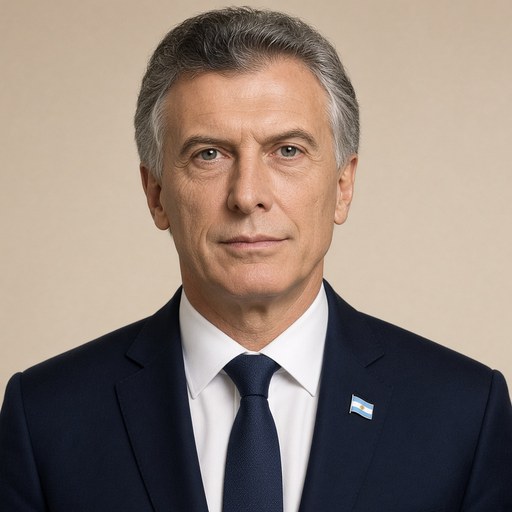
Press conference of President Macri and Chief of Cabinet Peña, following the results of the primaries.
 Mauricio Macri · President of Argentina
- Context
- Macri held a post-primary press conference on August 16, 2017, discussing election results alongside Chief of Cabinet Peña after Argentina's PASO primaries.
- Main themes
- 2017 Argentine primary election results, Peronism's future and cooperation, Province of Buenos Aires results, Cambiemos coalition performance, María Eugenia Vidal's role, political reform and electronic voting, Santiago Maldonado disappearance, Argentina's economic progress, October 2017 midterm elections
- Duration
- ~20 min
- Words
- 2,349
- Sentences
- 58
- Readability
- 36
- Grade
- 18.3
- Syntax
- 3.61
- Vocabulary
- 2.02
Translated from Spanish
This is an interview, press conference or exchange with other speakers. It is split into sentences and counted in the corpus, but its sentences are not tagged on the twelve indices.
58 sentences in 19 paragraphs
PRESIDENT.- God willing, in the next elections we will have electronic voting (Audio Jump) and we will make a good political reform so that the system improves and we continue to progress, but if there are no more questions, we will take our leave.
JOURNALIST.- Do you consider that, given what has happened in several Argentine provinces, including Córdoba, Santa Fe, the Province of Buenos Aires, and the Capital, Peronism as we have known it for the last 25 years is finished?
PRESIDENT.- We started very high, I would say that what I just mentioned in my words is valid. Argentines, and I dare to speak on behalf of all of them, expect proposals from Peronism, they expect cooperation from Peronism, given that they have governed practically uninterrupted for the last 25 years and the results of the work they have done are evident, which is the entire agenda of issues to be resolved that we have tackled in the last 19 months. But I hope that we can find areas of cooperation, common work, state policies, that strengthen the path we have begun to walk. To the extent that we achieve more agreement and that more issues are off the agenda of permanent discussion, Argentina will accelerate its growth, it will progress. So Peronism has a great opportunity to demonstrate that it heard the request of the Argentines.
JOURNALIST.- Much has been said, especially considering the electoral importance, about the Province of Buenos Aires. What is your reading of the provisional results? I believe they have already counted 25 percent of the tables. What is the key or what importance do you give to that provisional result in that district?
PRESIDENT.- I am very happy and grateful that a majority of Argentines, not only in the Province of Buenos Aires but throughout the country, have voted defending this return to dreaming, this just intention to grow, to improve, to progress, to no longer resign ourselves, to lose our fears. And they have done so despite the fact that it was a very difficult start because it has been 19 very tough months, where we had to make complex decisions, which I evaluated time and again trying to avoid them as much as possible, but given the state in which the country was, they had to be made, and I did so thinking it was the best for all Argentines and for the people of Buenos Aires in particular. And I thank them that despite those difficulties they believed that we are on the right path, that through this way we will grow, we will share, we will improve, and we will head towards what we all want: to be happy, to have a society where one can progress and project with their family, and for those in poverty to escape poverty and project themselves into the middle class.
I would like Marcos to also provide an interpretation of this.
PEÑA.- I would add to what Mauricio said the importance of knowing that the election in October is coming, this was a first step that, as we asked, and we are very pleased that the people of Buenos Aires have gone to vote, that Argentines have gone to vote, in a climate of great peace, to express themselves and convey a message about this change that we have been building together and that we sustain together. Now what is important is to keep working tomorrow, to keep working every day, but above all to keep working so that in October we are more, that we can continue to grow, because every vote is the possibility of adding a deputy, adding a senator, adding someone else to María Eugenia's team in the Provincial Legislature, in the deliberative councils, the more strength we build together, the faster we will get out.
JOURNALIST.- I would like to ask first: How many points do you think Governor María Eugenia Vidal made Cambiemos win this week? Considering her closing campaign speech, her role, what she said on an open television program. And on the other hand, I would like to ask about the disappearance of Santiago Maldonado, if you are aware of the investigation, what do you think about it?
PEÑA.- Regarding the first question, we have always been very clear, because we have known her for many years, that María Eugenia is an extraordinary woman, a woman who with great courage is leading a team in the Province, which we are supporting every day, but it is her task along with the people of Buenos Aires, and she and the entire team of candidates have run a very valuable campaign, touring the entire Province, with a constructive and positive message. We are very proud of María Eugenia and the entire team, also of Esteban, of Gladys, of Graciela, of Toti, of Guillermo Montenegro, of the entire team behind them, like Federico Salvai as campaign chief, Daniel Salvador; all those who make up a wonderful team. I also think it is worth highlighting the work of the Cambiemos mayors throughout the Province of Buenos Aires, they did a great job, and also of many candidates who were candidates in municipalities governed by other forces, young candidates, valuable candidates, who demonstrate a very deep renewal of the Buenos Aires political system. And in that coherence of a team, as Cambiemos has had throughout the country, that came to interpret that energy of change that Argentines have pushed.
Regarding the investigation, we have already stated, we are working with the judge, obviously accompanying very interested and concerned that the truth is known as soon as possible, so that he is found as soon as possible and from there know what has happened, and that Justice investigates thoroughly everything that is necessary. But the most important thing is to help everyone so that he appears and appears well.
JOURNALIST.- At this hour the former president has not yet spoken, they say from her bunker that they were going to wait for you to speak before perhaps acknowledging the result. The polls before today gave her as the winner in the Province of Buenos Aires or at least that is what her environment said. What is your reading? Do you think her figure as a leader of a political space is already exhausted?
PRESIDENT.- Whether she is going to speak or not is up to her, I was asked this morning why she did not vote… ask her, I am here to answer things that have to do with what I do every day and what I am going to do, everything I will continue to strive for so that every Argentine can live better. It would really be good if she also includes what I have said, that we can hear a future agenda from the sector she represents, because my dream is that more and more those who have followed her and believed in her are convinced that our team only wants to help them to be better, that we love this country, we love each and every Argentine, that what we have undertaken we do from the heart and that we would like the team to be made up of the 40 million Argentines, that we do not believe that this permanent confrontation helps at all, and that they allow themselves to think for a moment that perhaps they are wrong and that some of the proposals we are making may work, it cannot be that everything we propose seems wrong to them, it is too incredible that someone can reinforce their beliefs by denying reality in such a way. Argentina today has a third of Argentines in poverty, has severe problems in the public education system, has problems in how to deal with and confront drug trafficking, which is where we really need to confront. So why not all come together to work on this agenda of things we all believe in? Who can be against improving the quality of public education? Who can be against kicking drug trafficking out of Argentina; improving infrastructure in general in the country; generating more investment in the country because that way we will reduce poverty? Why can’t we work together in that direction? There is a moment in the day when, as president, I get frustrated that they manage to convince many Argentines that it is not worth collaborating, and the truth is that this is our country, it belongs to all of us, we all have to collaborate to move forward.
JOURNALIST.- It is well known that for Cambiemos it is very important to win in the Province of Buenos Aires. But what value do you add to the electoral victory of defeating Cristina Kirchner at the polls? And second, thinking about the future, about what may happen from now until October 22, do you fear that the results of the PASO will change, for example, that there will be a shift of votes from Randazzo to Cristina, which would substantially alter the electoral result?
PEÑA.- First, I think we have always said that for us what happened in the 24 provinces of Argentina was very important, we believe that sometimes, due to what naturally implies the Province of Buenos Aires and competing against a former president, with a very young and new team, a lot of focus was put there, but Argentina has to have a more federal vision, and what we see from Santa Cruz to what is happening in Chaco, in Jujuy, in Corrientes, in Neuquén, in La Pampa, not to mention Córdoba, Santa Fe, Mendoza, Entre Ríos, the City of Buenos Aires, in around 13 districts Cambiemos is winning or competing neck and neck with other political forces. And the possibility of if a victory in the Province of Buenos Aires is indeed realized, obviously in October all these results, has not been seen in more than 30 years in Argentina in a midterm election.
And the most important thing, and we always said it, is that the consolidation of Cambiemos as a national political force for us was the most important political data of this electoral year, because it is the first time in a long time that there is a coherent team in values, in ideas, and in a spirit of doing politics in every corner of Argentina, and that has generated that in many provinces that for a long time, like San Luis and Santa Cruz, were not competitive, today they are, and they are very competitive for Cambiemos. I think that is why also, and we said it before, our aspiration is to continue working to add more Argentines to the change, from now until October we have two months where we believe that many good things will happen, where we also believe that what is happening tonight will renew energy for many who perhaps doubted whether “this effort will be worth it or not, will these people come back, will this not work.” Today Argentines are giving that clear signal that this is working and we are moving forward and that there is no turning back. Hopefully, if we continue to do things well, more Argentines will join in October.
JOURNALIST.- In the weeks leading up to these elections, the dollar experienced a significant rise, and many attributed this to the possibility that Cristina Kirchner could win the elections in the Province of Buenos Aires. In light of these results that are being seen, what do you understand will happen and if you indeed understand that the market reacted this way in response to this possibility?
PRESIDENT.- Clearly. I also said a moment ago that we have begun to build trust among Argentines and between Argentina and the world, and that is a vital and central element that mobilizes a society. This is based on a government that tells the truth, that publishes statistics even if the numbers are bad and are bad news as it was throughout last year, with an INDEC now independent, an independent Central Bank; that tells the truth about the levels of insecurity and puts the problem of drug trafficking on the table; about how people invest their money; moving from 54th place in the world transparency ranking to improving to 20th place, or I believe we are already 19th in just 19 months. All of this has been generating trust, a return to the past generates the opposite, it generates the idea that Argentina may not have learned from its mistakes, may believe that going back to lying, going back to cheating, going back to breaking commitments is something good, and that would do a lot of damage to the future building we are doing.
Fortunately, I am proud of the Argentines and of the clarity they have had because, I insist, these have not been easy 19 months, they have been very tough and I am the first to know it, I have had to make many complex decisions that have cost people, but I have done it thinking it was to build that house on solid foundations so that we really have a future and no more patches, no more hiding the dishes under the carpet for the one who comes after, when the one who comes after is our children, our grandchildren. We have to build something so that from now to the next 20 or 30 years we do not stop growing.
I believe that we have ratified today that this is serious, that this is not just a brief moment of an election but a firm commitment from a majority of Argentines that will accelerate growth, will make it so that if we were going to grow next year more than this year, we will grow even more, and if investments were going to come, more investments will come. And if what Marcos says happens, that in October we manage to convince a few more to join, to feel part of it, that we need them, everything will be for the better. Thank you very much.
The original Spanish. The tags above are read on the English translation's sentences.
PRESIDENTE.- Dios quiera que ya las próximas elecciones tengamos voto electrónico (Salto de Audio) y que hagamos una buena reforma política para que mejore el sistema y sigamos progresando pero si no hay más preguntas nos retiramos ya.
PERIODISTA.- ¿Usted considera con lo que ha ocurrido en varias provincias argentinas, entre ellas Córdoba, Santa Fe, la Provincia de Buenos Aires y Capital, el peronismo como lo conocimos en los últimos 25 años está terminado?
PRESIDENTE.- Arrancamos muy arriba, yo diría que vale lo que les comenté recién en mis palabras. Los argentinos, y me animo hablar en nombre de todos ellos, esperan del peronismo propuestas, esperan del peronismo cooperación, dado que gobernaron prácticamente en forma ininterrumpida los últimos 25 años y los resultados del trabajo que realizaron están a la vista, que es toda la agenda de temas a resolver que hemos encarado en los últimos 19 meses. Pero yo espero que podamos encontrar áreas de cooperación, trabajo en común, políticas de Estado, que fortalezcan el camino que hemos empezado a recorrer. En la medida en que logremos más acuerdo y que más temas estén fuera de la agenda de la discusión permanente, la Argentina va a acelerar en su crecimiento, va a progresar. Así que el peronismo tiene una gran oportunidad de demostrar que escuchó el pedido de los argentinos
PERIODISTA.- Mucho se había hablado, sobre todo teniendo en cuenta la importancia electoral, de la Provincia de Buenos Aires ¿Cuál es la lectura que hace de los resultados provisorios? Creo que han ya escrutado el 25 por ciento de las mesas ¿Cuál es la clave o cuál es la importancia que le da a ese resultado provisorio en ese distrito?
PRESIDENTE.- Estoy muy contento y agradecido que una mayoría de argentinos, no solo en la Provincia de Buenos Aires sino en todo el país, hayan votado defendiendo esta vuelta a soñar, esta justa intención de crecer, de mejorar, de progresar, de no resignarnos más, de perder los miedos. Y lo han hecho a pesar de que fue un comienzo muy difícil porque han sido 19 meses muy duros, donde tuvimos que tomar decisiones complejas, que las evalué una y otra vez tratando de evitarlas al máximo, pero dado en el estado donde estaba el país hubo que tomarlas, y lo he hecho pensando que era lo mejor para todos los argentinos y para los bonaerenses en particular. Y les agradezco que a pesar de esas dificultades hayan creído que estamos yendo por el camino correcto, que por esta vía vamos a crecer, vamos a compartir, vamos a mejorar y vamos a ir rumbo a lo que todos queremos: ser felices, que sea una sociedad donde se puede progresar y proyectarse con su familia, y salir de la pobreza los que están en la pobreza y proyectarse a la clase media.
Me gustaría que Marcos también haga una interpretación de esto.
PEÑA.- Yo agregaría a lo que dijo Mauricio la importancia de saber que ahora viene la elección en octubre, esto fue un primer paso que como pedíamos y nos alegra mucho que hayan ido a votar los bonaerenses, hayan ido a votar los argentinos, en un clima de mucha paz, para poder expresarse y transmitir un mensaje sobre este cambio que hemos estado construyendo entre todos y que sostenemos entre todos. Ahora lo importante es seguir trabajando mañana, seguir trabajando todos los días, pero sobre todo también seguir trabajando para que en octubre seamos más, que podamos seguir creciendo, porque cada voto es la posibilidad de sumar un diputado, sumar un senador, sumar a alguien más al equipo de María Eugenia en la Legislatura Provincial, en los concejos deliberantes, cuanto más fuerza hagamos entre todos, más rápido vamos a salir.
PERIODISTA.- Preguntar en primer lugar: ¿Cuántos puntos creen que la gobernadora, María Eugenia Vidal, hizo que Cambiemos gane esta semana? Teniendo en cuenta su discurso de cierre de campaña, su rol, lo que dijo en un programa de televisión abierta. Y por otra parte preguntarle por la desaparición de Santiago Maldonado, si están al tanto de la investigación, ¿qué opinan al respecto?
PEÑA.-Respecto a lo primero hemos sido siempre muy claros, porque la conocemos hace muchos años, que María Eugenia es una mujer extraordinaria, una mujer que con mucha valentía está liderando a un equipo en la Provincia, que la estamos acompañando todos los días, pero a ella le toca esa tarea junto a los bonaerenses y realmente ella junto a todo el equipo de candidatos han hecho una campaña muy valiosa, recorriendo toda la Provincia, con un mensaje constructivo y positivo. Estamos muy orgullosos de María Eugenia y de todo el equipo, también de Esteban, de Gladys, de Graciela, de Toti, de Guillermo Montenegro, de todo el equipo que hay detrás de ellos, como Federico Salvai como jefe de campaña, Daniel Salvador; todos los que componen un equipo que es maravilloso. También creo que vale la pena destacar el trabajo de los intendentes de Cambiemos en toda la Provincia de Buenos Aires, hicieron un trabajo bárbaro, y también de muchos candidatos que fueron candidatos en municipios gobernados por otras fuerzas, candidatos jóvenes, candidatos valiosos, que demuestran una renovación muy profunda del sistema político bonaerense. Y en esa coherencia de un equipo, como ha tenido Cambiemos en todo el país, que vino a interpretar esa energía de cambio que los argentinos han empujado.
Respecto a la investigación, ya hemos planteado, estamos trabajando con el juez, acompañando obviamente muy interesados y preocupados por que se sepa la verdad lo antes posible, para que se lo encuentre lo antes posible y a partir de ahí saber qué es lo que ha pasado, y que la Justicia investigue a fondo todo lo que haga falta. Pero lo más importante es ayudar entre todos a que aparezca y aparezca bien.
PERIODISTA.- A esta hora la expresidente aún no hablado, dicen desde su bunker que iban a esperar justamente a que hablara usted para después quizá reconocer el resultado. Las encuestas antes de hoy la daban como ganadora en la Provincia de Buenos Aires o al menos eso decían desde su entorno ¿Qué lectura hace? ¿Cree que la figura de ella como líder de un espacio político ya está agotada?
PRESIDENTE.- Si ella va a hablar o no es tema de ella, ya me preguntaron a la mañana por qué no votaba… pregúntenle a ella, yo estoy acá para contestar las cosas que tienen que ver con lo que yo hago todos los días y lo que voy a hacer, de todo lo que me voy a seguir esforzando para que cada argentino pueda vivir mejor. Sería bueno realmente que también incluya ella lo que he dicho, que podamos escuchar una agenda de futuro por parte del sector que ella representa, porque mi sueño es que cada día más se convenzan aquellos que la han seguido y que han creído en ella que nuestro equipo lo único que quiere es ayudar a que estén mejor, que amamos a este país, amamos a cada uno de los argentinos, que esto que hemos encarado lo hacemos desde el corazón y que querríamos que el equipo esté formado por los 40 millones de argentinos, que no creemos en que esta confrontación permanente ayude en nada, y que se permitan pensar por un instante que por ahí están equivocados y que algunas de las propuestas que estamos haciendo pueden funcionar, no puede ser que todo lo que propongamos les parezca que está mal, es como demasiado increíble que alguien se pueda reforzar en sus creencias negando la realidad de semejante manera. La Argentina hoy tiene a un tercio de los argentinos en la pobreza, tiene severos problemas en el sistema educación pública, tiene problemas en cómo lidiar y confrontar con el narcotráfico, que ahí es donde verdaderamente tenemos que confrontar ¿Entonces por qué no sumarse todos a trabajar en esta agenda de cosas en las cuáles todos creemos? ¿Quién puede estar en contra de mejorar la calidad de la educación pública? ¿Quién puede estar en contra de echar a patadas al narcotráfico de la Argentina; en mejorar la infraestructura en general en el país; en generar más inversión en el país porque de esa forma vamos a reducir la pobreza? ¿Por qué no podemos trabajar juntos en esa dirección? Hay un momento del día que como presidente me frustro de que logren a convencer a muchos argentinos de que no vale la pena colaborar, y la verdad que este es nuestro país, es de todos, tenemos que todos colaborar para salir adelante.
PERIODISTA.- Es sabido que para Cambiemos es muy importante ganar en la Provincia de Buenos Aires ¿Pero qué valor le agrega al triunfo electoral el hecho de vencer a Cristina Kirchner en las urnas? Y segundo, pensando en el futuro, en lo que pueda llegar a pasar de aquí al 22 de octubre ¿Temen que los resultados de las PASO sufran algún cambio, por ejemplo que haya una mudanza de votos de Randazzo a Cristina, lo cual alteraría sustancialmente el resultado electoral?
PEÑA.- Primero que creo que siempre hemos dicho que para nosotros era muy importante lo que pasaba en las 24 provincias de la Argentina, creemos que a veces, producto de lo que naturalmente de lo que implica la Provincia de Buenos Aires y que compitiéramos contra una expresidenta, con un equipo muy joven y muy nuevo, que se pusiera mucho foco ahí, pero la Argentina tiene que tener una visión más federal, y lo que vemos desde Santa Cruz hasta lo que está pasando en Chaco, en Jujuy, en Corrientes, en Neuquén, en La Pampa, ni hablar en Córdoba, en Santa Fe, en Mendoza, Entre Ríos, la Ciudad de Buenos Aires, en alrededor de 13 distritos está ganando Cambiemos o compitiendo palo y palo con las otras fuerzas políticas. Y la posibilidad de si efectivamente se concreta un triunfo en la Provincia de Buenos Aires, obviamente en octubre todos estos resultados, no se había visto en más de 30 años en la Argentina en una elección de mitad término.
Y lo más importante, y lo decíamos siempre, es que la consolidación de Cambiemos como fuerza política nacional para nosotros era el dato político más importante de este año electoral, porque es la primera vez en mucho tiempo que hay un equipo coherente en valores, en ideas y en un espíritu de hacer política en cada rincón de la Argentina, y que eso ha generado que en muchas provincias que por ahí hace mucho tiempo, como en San Luis y en Santa Cruz, no eran competitivas, hoy lo son, y son muy competitivas para Cambiemos. Creo que por eso también, y lo decíamos antes, nuestra aspiración es seguir trabajando para sumar a más argentinos al cambio, de acá a octubre tenemos dos meses donde creemos que van a pasar muchas cosas buenas, donde creemos que también lo que está pasando esta noche va a renovar de energía a muchos que por ahí dudaban de si “este esfuerzo valdrá la pena o no, no será que vuelvan estos, que esto no funcione”. Hoy los argentinos están dando esa señal clara de que esto está funcionando y estamos yendo para adelante y de que no hay una vuelta atrás. Ojalá que si seguimos haciendo las cosas bien sean más los argentinos que se sumen en octubre.
PERIODISTA.- En las últimas semanas previas a estas elecciones el dólar pegó una escalada importante y muchos atribuyeron esto a la posibilidad de que Cristina Kirchner pudiera ganar las elecciones en la Provincia de Buenos Aires. Frente a estos resultados que se están viendo, ¿qué entiende que va a pasar y si efectivamente entiende que el mercado reaccionaba así frente a esta posibilidad?
PRESIDENTE.- Claramente. También dije hace un instante que hemos empezado a hacer crecer la confianza entre los argentinos y entre Argentina y el mundo, y es elemento vital y central que moviliza a una sociedad. Eso se basa en un Gobierno que dice la verdad, que publica las estadísticas aunque los números sean malos y sean malas noticias como fue durante todo el año pasado, con un INDEC ahora independiente, un Banco Central independiente; que dice la verdad sobre los niveles de inseguridad y pone el problema del narcotráfico sobre la mesa; sobre cómo invierte el dinero la gente; pasa del puesto 54 en el ranking de transparencia mundial a mejorar hasta el puesto 20, o creo que ya estamos 19 en tan solo 19 meses. Todo eso ha ido generando confianza, una vuelta al pasado genera lo contrario, genera pensar que la Argentina puede no haber aprendido de sus errores, puede creer que volver a mentir, volver a hacer trampa, volver a incumplir compromisos es algo bueno, y eso le haría mucho daño a la construcción de futuro que estamos haciendo.
Por suerte yo estoy orgulloso de los argentinos y de la claridad que han tenido porque, insisto, no han sido 19 meses fáciles, han sido muy duros y yo soy el primero en saberlo, he tenido que tomar muchas decisiones complejas, que le han costado a la gente, pero lo he hecho pensando que era para construir esa casa sobre bases sólidas para que realmente tengamos futuro y no más parches, no más esconder los platos debajo de la alfombra para el que viene después, cuando el que viene después son nuestros hijos, nuestros nietos. Nosotros tenemos que construir algo para que de acá a los próximos 20 o 30 años no paremos de crecer.
Creo que hayamos ratificado hoy que esto viene en serio, que esto no es que fue un veranito de una elección sino que es un compromiso firme de una mayoría de los argentinos va a acelerar el crecimiento, va a hacer que si íbamos a crecer el año que viene más que este, vamos a crecer aún más, y si iban a venir inversiones van a venir más inversiones. Y si pasa lo que dice Marcos de que en octubre logramos convencer a algunos más de que se sumen, que se sientan parte, que los necesitamos, todo va a ser para mejor. Muchas gracias.