




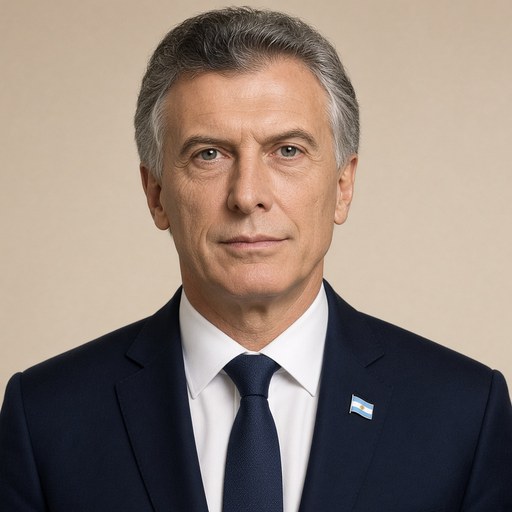
Press conference of President Mauricio Macri and Prime Minister of Canada, Justin Trudeau, on the occasion of the official visit of the high-level delegation from that country to Argentina, Casa Rosada.
 Mauricio Macri · President of Argentina
- Context
- Macri and Trudeau held a joint press conference in Buenos Aires on November 18, 2016, during Trudeau's first official visit to Argentina and South America as Prime Minister.
- Main themes
- Argentina-Canada bilateral relations, trade and investment, sustainable mining, human rights and democracy, gender equality, open government and transparency, climate change and environment, refugee cooperation, border security and drug trafficking, education exchange, middle class growth, SME development
- Duration
- ~26 min
- Words
- 3,155
- Sentences
- 80
- Readability
- 28
- Grade
- 18.8
- Syntax
- 3.49
- Vocabulary
- 2.02
Translated from Spanish
This is an interview, press conference or exchange with other speakers. It is split into sentences and counted in the corpus, but its sentences are not tagged on the twelve indices.
80 sentences in 32 paragraphs
MACRI.- Welcome everyone, but I especially want to welcome the Prime Minister of Canada, Justin Trudeau. Dear Justin, I am happy that you are visiting us, and we clearly take it as a gesture of affection, support, and trust that you have chosen Argentina as the first country to visit as Prime Minister in Latin America. We had already had the opportunity to meet at various global summits, and from the first words we exchanged, we knew that we share the same values and have the expectation of bringing solutions of prosperity, growth, and development to our peoples based on the defense of democracy, the defense of human rights, gender equality, and transparency.
And today, in this working meeting, we have established a very important future agenda, which starts precisely from strengthening our bilateral agenda, with a commitment to maintain an annual high-level dialogue, where we will deepen, from a government like ours, that seeks to implement an open government, with access to information to combat corruption, and Canada has already made great strides and will be a tremendous support in this stage we are embarking on in Argentina.
We also talked about exchanging experiences, throughout this commitment we have made, both countries, regarding the refugees we are receiving in both nations. We also discussed the importance of believing that the entrepreneurial spirit of both countries can be combined, enhancing trade, investments, and the development of quality jobs. And there, with a strong focus on the development of small businesses – SMEs – which are the ones called to generate new jobs, the largest number of new jobs in the coming world. And we also believe that there is enormous space for cooperation. Specifically, in one of those sectors: we have great respect for the great work that Canada has done in the development of mining resources, with perfect respect and care for the environment. And we believe that, by working together, Argentina is perhaps one of the countries with the greatest potential in the coming years in the development of sustainable mining, and we want to do it according to those parameters. Also, cooperation between both countries will help ensure that the environment is never endangered when developing mining or any other economic activity. And in our commitment to the environment, we also agreed today to work together in the Arctic and Antarctica, to assess how climate change is affecting the ecosystem; and there our scientists working together – as they have been doing for years – will make a tremendous contribution to this enormous problem, to this great uncertainty that exists in humanity.
There are also exchanges in education and in other aspects of security, because you have great experience in everything related to border security, and in this fight against drug trafficking and organized crime, it is also very important to work together with you and for you to help us improve as quickly as possible in that aspect as well.
But I will end as I began, thanking you for this visit; we value it very much, we truly believe that we are two very complementary countries. There is a huge current of sympathy in Argentina for Canada, and I am sure that if these commitments we have made are actively and seriously continued by our teams in the coming years, it will bring great benefits to both communities, great opportunities for progress for both countries. Thank you for being here, and it is a true honor and pleasure for us that you visit us.
TRUDEAU.- Thank you very much, President Macri, thank you Mauricio, good afternoon everyone, it is a pleasure for me to be in beautiful Buenos Aires, and I want to thank President Macri and all his team for the warm welcome they have given to me and my entire team. This is my first official visit as Prime Minister, not only to Argentina but to all of South America, and it has been a pleasure for me to have the opportunity to discuss issues that matter to Canadians and Argentinians as well.
The President and I have met and talked about the importance of strengthening the growth of the middle class in our countries; we have reached important agreements that we believe will be significant. Canada and Argentina have agreed to cooperate in several areas moving forward: first, we share the commitment to promote inclusive growth, innovation, and trade. Therefore, what we want is to restore access to Canadian pork in the Argentine market starting in August 2017. This is good for Canadian farmers and their families and will also allow Argentinians to access a high-quality Canadian product.
In addition, we will increase sustainable collaboration and collaboration in sustainable mining in Argentina.
Our two countries know the importance of democracy and the protection of people's rights. In this regard, we have agreed to restore consultations at the level of the State of Canada and Argentina on human rights. These consultations had been suspended since 2013, and we believe it is time to re-establish these meetings on an annual basis. Canada has had great success in resettling thousands of Syrian refugees; we are recognized as a world leader in this field, and we want to help our international partners meet their own goals. And for this reason, it is my pleasure to announce that we will assist and facilitate the resettlement of 3,000 Syrian refugees here in Argentina. Specifically, we will advise and assist in the areas of private sponsorship, security background checks, and integration.
Finally, the president and I agree on the importance of having a robust multilateral commitment. We know that within the broad global community, countries must collaborate to advance common goals. Therefore, Mauricio and I have agreed to work together with the WTO to promote a trade agenda that is progressive and inclusive, that creates good jobs for more people and that grows the middle class.
The agreements we have reached today are further evidence of the long friendship and partnership that exists between our two countries. Therefore, it will be a pleasure for me to have a closer and more productive relationship with President Macri in the years to come. These are exciting times for Canada, and they are also exciting times for Argentina; our governments can and will promote diversity by carrying out good governance that will create prosperity for all our citizens, and the way to do this is by working together.
Thank you very much.
JOURNALIST.- Good afternoon, we have already talked about how you are very favorable to trade, however, we see how in many parts of the world barriers against open trade are being raised. President Macri, I wanted to know what your opinion is regarding the elected President Trump, and to the Prime Minister, I wanted to ask what you think Canada can do to push back the power that Trump may have?
MACRI.- The vision we expressed today with the Prime Minister that the future lies in greater integration, greater exchange, the recent elections that have taken place in the world would demonstrate a contrary trend, but today I reiterate that I believe, coming from an Argentina that was isolated from the world for more than a decade, that the future is truly to believe that we can enrich ourselves through exchange, enriching ourselves internally and externally from diversity – as Justin said – and we bet on that. For this reason, we have also committed to promoting conversations between Mercosur and Canada, in addition to between Argentina and Canada, because we truly believe that from there more opportunities will arise to create quality jobs that provide solutions to the people who really need them, in the case of Argentina, to escape poverty and progress, and those in the middle class who also see their lives stagnated in many cases due to lack of opportunities for progress.
TRUDEAU.- The fact is that in our own countries and in the countries of our allies, neighbors, and partners around the world, there is a real anxiety on the part of citizens that progress is not working for them, perhaps, as it should, that their children will not have the same opportunities that previous generations have had; there is widespread anxiety in the middle class regarding economic success that helps and supports them, and the fact is also that it is a fact that cannot be debated that trade is good for economic growth and that it can and should be good for all citizens.
The challenge we face today is to demonstrate that we can create trade agreements that benefit small and medium-sized enterprises, that benefit the middle class and the communities that are their homes. Those are exactly the points where President Macri and I completely agree: we want to continue working to create economic growth for our countries in such a way that the benefits are shared by the entire population, in general. Therefore, it was a great achievement to be able to sign a historic agreement with Europe, on Canada's part, while new barriers against international trade are being raised. For this reason, it is important to emphasize that what we want is to strengthen the middle class and ensure that our citizens have a better life; this is a message we must continue to repeat and make resonate, and President Macri and I are completely in agreement on this matter. There are many similarities between Canada and Argentina: a modest-sized population, in a large geographical area, we are countries that have a tradition of openness to the world through immigration; being responsible for Arctic regions; innovation, research; we have a very similar alignment, we have a friendship that has existed for many years between our peoples; we are very similar and alike countries, and this same similarity is seen between both leaders today.
The reality is that we have seen that there is a real anxiety, around the world and in our own country, regarding trade agreements and globalization and economic growth, because people believe that economic growth is not serving the middle class and that it does not support the future growth of their children. We know that when there is a responsible approach to trade exchanges, it will create growth that will help all our citizens. This has been the great achievement we have achieved by signing the agreement between Europe and Canada, and this is how we will continue – both Mauricio and I and other Heads of State and Government around the world – to promote trade exchange, because it is the way to help the middle class and small and medium-sized enterprises.
It is necessary that we recognize the anxiety that can lead to nationalism and populism in some places, but we must use that very anxiety positively to assure peoples that we can jointly create economic opportunities for all our citizens, and this is something in which Canadians and Argentinians resemble each other, it is something in which Mauricio and I resemble each other, and for this reason, we want to work together for the world and for our citizens. Thank you very much.
JOURNALIST.- I wanted to ask your opinion regarding the environmental disaster caused by the cyanide spill from Barrick Gold at the Veladero mine, considering that a week ago, the Argentine Minister of the Environment, Sergio Bergman, said that for him it should not continue operating since it does not meet the standards of control and supervision.
TRUDEAU.- Canada is a country with a tremendous amount of natural resources; we have developed our natural resources over the last decades and centuries, and we will always have an element of our economy that will be based on the export of our natural resources, but at the same time, we understand that the world is changing and how we develop those natural resources sustainably and responsibly, taking into account the impacts and benefits to communities, remains something we strive for. Furthermore, Canada's expectations that its companies – both nationally and internationally – are very high; we are concerned, we worry every time there is an accident or a problem, however, we are fully committed to cooperating with local and national authorities to demonstrate that we are responsible actors in the world; we know that we must continue to develop good jobs for the middle class, that we must continue to protect communities and create environmental standards that benefit the middle classes. There are many people who try to make you choose between creating good jobs for the middle class or environmental protection, saying that you cannot have both; however, citizens know that the only way to create a better future is by creating jobs and protecting the environment, through technology, regulations, transparency, and openness, and through significant efforts and commitments to solve these challenges, and I know that we will be able to solve these challenges together.
JOURNALIST.- I wanted to know, there are those who say they want to know what the exact, specific achievements of your visit to Argentina are, and I would like to know what the benefits and precise examples of this are for Canadian companies. I know that they are looking for international capital in Argentina, so I would like to ask President Macri what he thinks the results will be.
TRUDEAU.- As we said, we are making progress to gain greater access for Canadian agricultural products, such as – for example – pork. We will export more pork products to Argentina, and we know that this will have benefits; it will be advantageous for Canadian farmers and producers and will also allow for the creation of more jobs. This is an area, moreover, in which we have a lot of experience in the country and we are experts.
We have agreed to cooperate in the area of renewable energy and nuclear energy; we already know that Canada has experience in this area. In general, what we have here, what we are announcing today, are not just specific elements, but a partnership in which we will work over the coming years to demonstrate that countries that are similar, that share the same values, the same priorities of wanting to grow the middle class, can cooperate in a way that benefits each other. This is an important message, and we are, right now, at the beginning, at the start of the relaunch of cooperation, collaboration, and friendship between Canada and Argentina.
We can point to various measures that we have agreed upon, such as the opening of the market to Canadian pork products in Argentina. This will make a difference in the lives of many Canadian farmers; in addition, we will collaborate on mining initiatives, which will create greater opportunities and jobs for Canadian mining companies, giving them the chance to partner with local industries and other specific areas such as energy and renewable resources and collaboration in energy production.
From this meeting, there will be many results, but what is important, what we are most proud of today, is this renewal of friendship between Canada and Argentina, which will create opportunities for citizens of both countries, to create economic success and to commit to continue working with our partners, our neighbors, and the rest of the world, because we know that this will make a difference, moving forward.
MACRI.- I agree with Justin that what is important is that today we are deciding to bet on a long-term alliance between Canada and Argentina, between Canada and Mercosur, believing that this will bring prosperity to both nations. And to all those issues that Justin mentioned as specific to the short term, I would also add the construction of infrastructure, where Canada is committed in its country; we have also launched the same, and so many Canadian companies or pension funds can also be protagonists in the construction of important infrastructure in Argentina. This, combined with all the industrial developments, mining, and environmental initiatives that we can undertake together.
JOURNALIST.- I wanted to insist on the topic of Mr. Donald Trump for the presidency of the United States, if both presidents feel concerned about whether he will fulfill his campaign promises, especially the impact it may have on the economies in Argentina, the closing of economic borders in this case, and also the role that Canada may play in front of a president who has certain policies towards refugees considering what we have heard from Donald Trump as a candidate. And I also have a second question for both related to whether they have spoken and what they have said about a request from Amnesty International to Prime Minister Trudeau to release Milagro Sala, a Jujuy activist who is detained in the North, and what has been said, and I would like to know what President Macri thinks.
TRUDEAU.- The fact is that the Canadian economy is deeply connected, intertwined with the U.S. economy; it is a relationship that goes far beyond a president or a prime minister and how they cooperate. It is about companies that work together; we are partners for 35 U.S. states, there is a great depth of ties and connections between people and companies in Canada and the United States that go far beyond the personalities or ideologies or perspectives of their leaders and the two people who are governing those countries at this moment. As I have said – repeatedly – I will work constructively with the U.S. president, regardless of who it is, over the years.
I know that Canadians want me to defend our interests and our values, and that is exactly what I intend to do.
Regarding Ms. Sala, I have exchanged views; the president and I have talked about this, and we have discussed the importance of transparency, openness, and the importance of the rule of law; we know that we will share a formal response – through the United Nations – and I have absolute confidence that we will address the issue responsibly, openly, and that the rule of law will be upheld, just as we do in our country.
MACRI.- Our relationship with the United States is not the same as Canada’s; we come from many years of not having relations with the United States and with practically the whole world. We have restarted, and from what I discussed over the phone the other day with President-elect Trump, he has the intention of continuing to strengthen the relationship between both countries. On the second point – as Prime Minister Trudeau reported – I mentioned that on Friday we will respond to the United Nations panel report, and we have also extended an invitation for him to visit Jujuy and Argentina to personally check what is reported in Jujuy, that all human rights and all current laws in Argentina are being respected.
Thank you very much to everyone, and we are in touch.
The original Spanish. The tags above are read on the English translation's sentences.
MACRI.- Bienvenidos a todos, pero muy especialmente quiero darle la bienvenida al Primer Ministro de Canadá, Justin Trudeau. Querido Justin estoy feliz de que nos estés visitando y claramente lo tomamos como un gesto de afecto, de apoyo, de confianza, el que hayas elegido a la Argentina como el primer país a visitar como Primer Ministro en América latina. Ya habíamos tenido la oportunidad de conocernos en las distintas cumbres globales y pudimos saber desde las primeras palabras que cruzamos que compartimos los mismos valores y tenemos las expectativa de llevarles a nuestros pueblos soluciones de prosperidad, de crecimiento, de desarrollo basadas en la defensa de la democracia, en la defensa de los derechos humanos, en la igualdad de género y la transparencia.
Y hoy, en esta reunión de trabajo, hemos conformado una agenda futura muy importante, que arranca justamente de fortalecer nuestra agenda bilateral, con un compromiso de mantener un diálogo anual de alto nivel, donde vayamos profundizando, desde un gobierno como el nuestro, que arranca a querer implementar un gobierno abierto, de acceso a la información para combatir la corrupción y ahí Canadá ya ha hecho grandes avances y va a ser un enorme apoyo en esta etapa que estamos emprendiendo en la Argentina.
Y también hablamos de intercambiar las experiencias, a lo largo de este compromiso que hemos asumido, ambos países, respecto a los refugiados, que estamos recibiendo en ambas naciones. También hemos hablado de la importancia de creer que el espíritu emprendedor de ambos países se puede combinar, potenciando el comercio, las inversiones, el desarrollo de empleos de calidad. Y ahí con un fuerte eje en el desarrollo de las pequeñas empresas – las Pymes – que son las que están llamadas a generar los nuevos empleos, la mayor cantidad de nuevos empleos en el mundo que viene. Y ahí también creemos que hay un enorme espacio de cooperación. En lo específico a uno de esos sectores: nosotros tenemos un enorme respeto por el gran trabajo que ha hecho Canadá en el desarrollo de los recursos mineros, con un perfecto respeto y cuidado del medio ambiente. Y ahí creemos que, también trabajando juntos, la Argentina es tal vez uno de los países con mayor potencialidad en los años por venir en el desarrollo de la minería sustentable y queremos hacerlo según esos parámetros. También la cooperación entre ambos países nos va a ayudar para que realmente jamás se ponga en peligro el medioambiente, cuando se desarrolle la minería o cualquier otra actividad económica. Y en el compromiso con el medioambiente también hemos acordado, hoy, trabajar en conjunto, en el Ártico y en la Antártida, para evaluar de qué manera está afectando el ecosistema el cambio climático; y ahí nuestros científicos trabajando juntos – como ya lo hacen desde hace años – van a hacer un enorme aporte a este enorme problema, a esta enorme duda que existe en la humanidad.
También están los intercambios en educación y en otros aspectos de la seguridad, porque ustedes tienen una gran experiencia en todo lo que es seguridad de fronteras y en esta lucha contra el narcotráfico y el crimen organizado es muy importante también trabajar en conjunto con ustedes y que nos ayuden a mejorar lo más rápido posible, en ese aspecto también.
Pero termino como empecé, agradeciéndote esta visita, la valoramos muchísimo, realmente creemos que somos dos países muy complementarios. Hay una enorme corriente de simpatía, en la Argentina, por Canadá y estoy seguro que si estos compromisos que hemos asumido, nuestros equipos los continúan seria y activamente, en los próximos años, eso va a traer grandes beneficios para ambas comunidades, grandes oportunidades de progreso para ambos países. Gracias por estar acá y es un verdadero honor y placer que nos visites. (APLAUSOS).
TRUDEAU.- Muchas gracias, presidente Macri, gracias Mauricio, buenas tardes a todos, es un placer para mí estar en la bella Buenos Aires y quiero darles las gracias al Presidente Macri y a todo su equipo por la bienvenida tan calurosa que nos han dado, a mí y a todo mi equipo. Esta es mi primera visita oficial como Primer Ministro, no sólo a la Argentina, sino a toda América del Sur y ha sido un placer para mí tener la oportunidad de debatir temas que importan a los canadienses y a los argentinos también.
El Presidente y yo nos hemos reunido y hemos hablado acerca de la importancia de fortalecer el crecimiento de la clase media en nuestros países; hemos llegado a acuerdos importantes que pensamos van a ser importantes. Canadá y Argentina han acordado cooperar en varias áreas de aquí al futuro: en primer lugar, compartimos el compromiso de promover un crecimiento, una innovación y un comercio inclusivos. Por ello lo que queremos es restaurar el acceso al cerdo canadiense, en el mercado argentino, a partir de agosto de 2017. Esto es bueno para los agricultores canadienses y sus familias y también hará que los argentinos puedan tener acceso a un producto canadiense de alta calidad.
Además aumentaremos la colaboración sostenible y la colaboración en la minería sostenible en la Argentina.
Nuestros dos países saben la importancia de la democracia y la protección de los derechos de las personas. Respecto a esto, hemos acordado restablecer las consultas a nivel de Estado de Canadá y Argentina sobre los derechos humanos. Estas consultas habían estado suspendidas desde el año 2013 y nosotros opinamos que es el momento de volver a establecer estas reuniones de manera anual. Canadá ha tenido un gran éxito a la hora de reasentar a miles de refugiados sirios; se nos reconoce como un líder mundial en este campo y queremos ayudar a nuestros socios internacionales a cumplir sus propios objetivos. Y por ello, es para mí un placer anunciar que vamos a ayudar y facilitar con el reasentamiento de 3.000 refugiados sirios, aquí en la Argentina. En concreto, vamos a asesorar y ayudar en las áreas de sponsorización privada, investigación de antecedentes de seguridad e integración.
Por último, el presidente y yo estamos de acuerdo en la importancia de tener un compromiso multilateral robusto. Sabemos que dentro de la comunidad mundial amplia, los países han de colaborar para poder avanzar en los objetivos comunes. Por eso, Mauricio y yo, hemos acordado trabajar juntos con la OMC para promover una agenda comercial, que sea progresiva e inclusiva, y que cree buenos empleos para más personas y que haga crecer a la clase media.
Los acuerdos a los que hemos llegado, en el día de hoy, son una demostración más de la larga amistad y asociación, que existe entre ambos países. Por ello, será un placer para mí tener una relación más cercana y productiva con el Presidente Macri, en los años venideros. Estos son tiempos apasionantes para Canadá y son tiempos apasionantes también para Argentina; nuestros gobiernos pueden y promoverán la diversidad llevando a cabo una gobernanza buena, que creará prosperidad para todos nuestros ciudadanos y la manera de hacerlo es trabajando juntos.
Muchas gracias.
PERIODISTA.- Buenas tardes, ya hemos hablado acerca de que ustedes son muy favorables al comercio, sin embargo vemos como en muchas partes del mundo se están subiendo barreras contra el comercio abierto. Presidente Macri quería saber ¿cuál es su opinión respecto al presidente electo Trump y al Primer Ministro quería preguntarle qué piensa que puede hacer Canadá para empujar el poder que tal vez tenga Trump?
MACRI.- La visión que expresamos hoy con el Primer Ministro de que el futuro pasa por una mayor integración, un mayor intercambio, las últimas elecciones que han habido en el mundo demostrarían una tendencia contraria, pero yo hoy reitero que creo, viniendo de una Argentina que estuvo aislada del mundo por más de una década, que el futuro realmente es creer en que podemos enriquecernos del intercambio, enriquecernos interna y externamente de la diversidad – como decía Justin – y apostamos a eso. Por eso, también, nos hemos comprometido a impulsar las conversaciones entre el Mercosur y Canadá, además de entre Argentina y Canadá, porque creemos realmente que a partir de ahí van a surgir más oportunidades de crear trabajo de calidad, que le den soluciones a la gente que realmente necesitan, en el caso de la Argentina, salir de la pobreza y progresar, y aquellos de la clase media que también ven estancadas su vida en muchos casos por falta de oportunidades de progreso.
TRUDEAU.- El hecho es que en nuestros propios países y en los países de nuestros aliados, vecinos y socios en todo el mundo existe una verdadera ansiedad, por la parte de los ciudadanos, de que el progreso no está funcionando para ellos, tal vez, como debiera, de que sus hijos no van a tener las mismas oportunidades que otras generaciones pasadas han tenido; existe una ansiedad generalizada en la clases media respecto al éxito económico que les ayuda y les apoya, y el hecho también es que es un hecho que no se puede debatir que el comercio es bueno para el crecimiento económico y que puede y debería ser bueno para todos los ciudadanos.
El reto al que nos enfrentamos, en la actualidad, es demostrar que se puede crear acuerdos comerciales, que beneficien a las pequeñas y medianas empresas, que beneficien a la clase media y a las comunidades que son sus hogares. Eso son exactamente los puntos donde el Presidente Macri y yo estamos totalmente de acuerdo: queremos seguir trabajando para crear un crecimiento económico para nuestros países de manera que los beneficios sean compartidos por toda la población, en general. Por ello, fue un gran logro el poder firmar un acuerdo histórico con Europa, por la parte de Canadá, a la vez que están saliendo nuevas barreras contra el comercio internacional. Por eso, hay que enfatizar que lo que queremos es fortalecer a la clase media y hacer que nuestros ciudadanos tengan una vida mejor; esto es un mensaje que tenemos que seguir repitiendo y hacer que resuene y el Presidente Macri y yo estamos totalmente de acuerdo a este respecto. Existen muchas similitudes entre Canadá y Argentina: la población de tamaño modesto, en una gran cantidad de superficie geográfica, somos países que tenemos una tradición de apertura hacia el mundo a través de la inmigración; el ser responsables de regiones árticas; la innovación, la investigación; tenemos un alineamiento muy igual, tenemos una amistad que ha existido durante muchos años entre nuestros pueblos; somos países muy similares y muy parecidos y esta misma similitud se ve entre ambos líderes, hoy en día.
La realidad es que hemos visto que hay una verdadera ansiedad, en todo el mundo y en nuestro propio país, respecto a los acuerdos comerciales y a la mundialización y el crecimiento económico, porque las personas creen que el crecimiento económico no está sirviendo a la clase media y que no apoya el crecimiento del futuro de sus hijos. Nosotros sabemos que cuando se tiene un enfoque responsable, respecto a los intercambios comerciales, se va a crear un crecimiento que ayudará a todos nuestros ciudadanos. Este ha sido el gran logro que hemos conseguido, al firmar el acuerdo entre Europa y Canadá y es así como vamos a seguir – tanto Mauricio, como yo y otros Jefes de Estado y de Gobierno del mundo – a promover el intercambio comercial, porque es la manera de ayudar a la clase media y a las pequeñas y medianas empresas.
Es necesario que reconozcamos la ansiedad, que puede llevar hacía el nacionalismo y el populismo en algunos lugares, pero que debemos utilizar esa ansiedad misma, de manera positiva para asegurar a los pueblos que podemos de común acuerdo crear oportunidades económicas para todos nuestros ciudadanos y esto es algo en lo que nos parecemos los canadienses y los argentinos, es algo en lo que nos parecemos Mauricio y yo, y por ello queremos trabajar juntos para el mundo y para nuestros ciudadanos. Muchas gracias.
PERIODISTA.- Le quería preguntar su opinión, a raíz del desastre ambiental que provocó el derrame de cianuro, de Barrick Gold, en la mina Veladero, considerando que hace una semana, el ministro de Medioambiente argentino, Sergio Bergman dijo que para él no tendría que seguir funcionando ya que no cumple los estándares de control y supervisión.
TRUDEAU.- Canadá es un país con una cantidad tremenda de recursos naturales, nosotros hemos desarrollado nuestros recursos naturales durante las últimas décadas y los últimos siglos y siempre tendremos un elemento de nuestra economía que se va a basar en la exportación de nuestros recursos naturales, pero a la vez entendemos que el mundo está cambiando y cómo desarrollemos esos recursos naturales de manera sostenible y responsable, teniendo en cuenta los impactos y los beneficios a las comunidades, sigue siendo algo en lo que nos esforzamos. Además las expectativas de Canadá de que sus empresas – tanto a nivel nacional como internacional – son muy altas, estamos preocupados, nos preocupamos cada vez que hay un accidente o un problema, sin embargo estamos totalmente comprometidos con la cooperación con las autoridades locales y nacionales para demostrar que somos actores responsables en el mundo; sabemos que tenemos que seguir desarrollando buenos trabajos para la clase media, que tenemos que seguir protegiendo a las comunidades y crear estándares medioambientales que beneficien a las clases medias. Hay muchas personas que intentan hacerle elegir a uno entre la creación de buenos empleos para la clase medio o la protección medioambiental diciendo que no se pueden tener ambas cosas; sin embargo los ciudadanos saben que la única manera de crear un futuro mejor es creando empleos y protegiendo el medioambiente, a través de la tecnología, de los reglamentos, de la transparencia y la apertura, y través de esfuerzos y compromisos importantes para resolver estos retos y yo sé que seremos capaces de resolver estos retos de manera conjunta.
PERIODISTA.- Quería saber, hay quienes dicen que quieren saber cuáles son los logros exactos, específicos de su visita a Argentina, quisiera saber cuáles son los beneficios y los ejemplos precisos de ello para las empresas canadiense. Yo sé que están buscando capital internacional, en la Argentina, así que quisiera preguntarle al Presidente Macri qué piensa que van a ser los resultados.
TRUDEAU.- Tal y como decíamos estamos avanzando para obtener mayor acceso para los productos agrícolas canadienses, como es – por ejemplo –el cerdo. Vamos a exportar más productos cárnicos de cerdo, a la Argentina, y sabemos que esto tendrá beneficios, será ventajoso para los ganaderos y productores canadienses y va a permitir, también, la creación de mayores puestos de empleos. Es un área, además, en la que tenemos mucha experiencia en el país y somos expertos.
Hemos acordado cooperar en el área de la energía renovable y en la energía nuclear, ya sabemos que Canadá tiene experiencia en este área. En general, lo que tenemos aquí, lo que estamos anunciando, en el día de hoy, no son solamente unos elementos concretos, sino una asociación en la que vamos a trabajar durante los años futuros para demostrar que los países que son parecidos, que tienen los mismos valores, las mismas prioridades de querer hacer crecer a la clase media, pueden cooperar de manera que se beneficien mutuamente. Este es un mensaje importante y nosotros estamos, ahora mismo, en el principio, en el comienzo del relanzamiento de la cooperación y colaboración y amistad entre Canadá y Argentina.
Podemos señalar distintas medidas que hemos acordado, como es la apertura del mercado a los productos de cerdo canadiense, en la Argentina. Esto hará una diferencia en las vidas de muchos ganaderos canadienses; además vamos a colaborar en iniciativas de minería, lo que creará mayores oportunidades y empleos para las empresas mineras canadienses, dándoles la oportunidad de asociarse con industrias locales y otras áreas específicas como es la energía y los recursos renovables y la colaboración en la producción energética.
A partir de esta reunión va a haber muchos resultados, pero lo importante, lo que más nos enorgullece, en el día de hoy, es esta renovación de la amistad entre Canadá y Argentina, que va a crear oportunidades para los ciudadanos de ambos países, para crear un éxito económico y para comprometernos para seguir trabajando con nuestros socios, nuestros vecinos y el resto del mundo, porque sabemos que esto hará una diferencia, de aquí al futuro.
MACRI.- Coincido con Justin que lo importante es que hoy estamos decidiendo apostar a una alianza a largo plazo, entre Canadá y Argentina, entre Canadá y el Mercosur, creyendo que eso va a traer prosperidad para ambas naciones. Y a todos esos temas que Justin mencionó como específicos del corto plazo, también, le sumaría la construcción de infraestructuras, donde Canadá está comprometido en su país, nosotros también hemos lanzado lo mismo y entonces muchas empresas o fondos de pensión canadienses pueden también ser protagonistas de la construcción de infraestructuras importantes en la Argentina. Eso sumado a todos los desarrollos industriales, de la minería, del medioambiente, que podamos hacer en forma conjunta.
PERIODISTA.- Quería insistir con el tema del señor Donald Trump para la presidencia de los Estados Unidos, si ambos presidentes se siente preocupados porque él cumpla con sus promesas de campañas, sobre todo el impacto que pueda tener en las economías en la Argentina, el cierre de fronteras económicas, en este caso, y también el rol que pueda jugar Canadá frente a un presidente que tenga determinadas políticas hacia los refugiados teniendo en cuenta lo que hemos escuchado de Donald Trump candidato. Y también tengo una segunda pregunta a ambos relacionadas con que si han hablado y qué han dicho sobre un pedido de Amnistía Internacional, al Primer Ministro Trudeau, para que se libere a Milagro Sala, una activista jujeña, que está detenida en el Norte y qué se han dicho y me gustaría saber qué opina el presidente Macri.
TRUDEAU.- El hecho es que la economía canadiense está conectada de manera profunda, entrelazada con la economía estadounidense, es una relación que va muchos más allá de un presidente o un primer ministro y de cómo ellos cooperen. Se trata de empresas que trabajan, somos socios para 35 estados estadounidenses, hay una gran profundidad de vínculos y conexiones entre personas y empresas de Canadá y Estados Unidos, que van mucho más allá de las personalidades o de las ideologías o perspectivas de sus líderes y de las dos personas que están gobernando esos países, en este momento. Como he dicho – de manera repetida – yo voy a trabajar de manera constructiva con el presidente estadounidense, independientemente de quién sea, a través de los años.
Yo sé que los canadienses quieren que yo defienda nuestros intereses y nuestros valores y eso es exactamente lo que pienso hacer.
Respecto a la señora Sala he intercambiado, hemos hablado el presidente y yo acerca de esto y hemos hablado acerca de la importancia de la transparencia, la apertura y la importancia del estado de derecho; sabemos que vamos a compartir una respuesta formal – a través de Naciones Unidas – y yo tengo confianza absoluta en el hecho de que vamos a tratar el tema de manera responsable, abierta y de que se cumpla con el estado de derecho, tal y como hacemos en nuestro país.
MACRI.- Nuestra relación con los Estados Unidos no es la misma que tiene Canadá, nosotros venimos de muchos años de no tener relaciones con Estados Unidos y con prácticamente todo el mundo, hemos recomenzado y por lo que conversé telefónicamente, el otro día, con el Presidente electo Trump, él tiene la vocación de continuar afianzando la relación entre ambos países. En lo segundo - como informó el Primer Ministro Trudeau – le comenté que el viernes vamos a contestar el Informe del panel de Naciones Unidas y además le hemos extendido una invitación para que vengan a visitar Jujuy y la Argentina y por sí mismo chequear lo que informa Jujuy, que se están respetando todos los derechos humanos y todas las leyes vigentes en la Argentina.
Muchas gracias a todos y estamos en contacto. (APLAUSOS)