





- Context
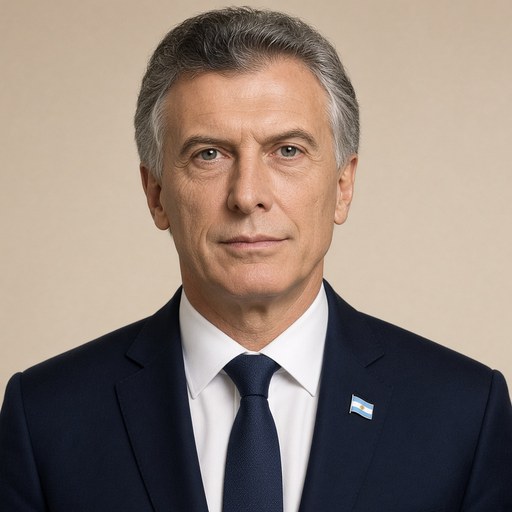
- Macri addressed a joint press conference with Japanese Prime Minister Shinzo Abe in Buenos Aires on November 21, 2016, marking the announcement of a strategic bilateral alliance.
- Main themes
- Argentina-Japan strategic partnership, bilateral trade and investment, Japanese business opportunities in Argentina, Kaizen and work culture, infrastructure cooperation, people-to-people exchanges, democracy and rule of law, economic reform in Argentina, Japanese-Argentine community, 2018 Youth Olympics collaboration, open economic policies, integration over protectionism
- Duration
- ~9 min
- Words
- 1,049
- Sentences
- 35
- Readability
- 30
- Grade
- 16.4
- Syntax
- 3.27
- Vocabulary
- 2.11
Translated from Spanish
The broad sphere of national life a sentence belongs to. Every sentence has an Arena, so it is the denominator the other indices are read against.
Other35 sentences in 19 paragraphs
And in our case, we have a deep respect, a current of affection towards the Japanese people, thanks to a very active local community that, in 2018, will celebrate 130 years. And from which we have always learned the importance of a work culture; the humility in the pursuit of continuous improvement, which over time gave rise to Kaizen, continuous improvement.
We believe that this kind of spirit, this kind of attitude is what our country needs: the commitment to the effort of every day; to understand that a country like ours, which has set out to reduce poverty to truly include almost a third of the population that today does not access the rights, the opportunities it deserves, will achieve this hand in hand with a culture of work, a culture of effort. And that is where this commitment that Japan is making to this new stage of the relationship is very important for us.
These agreements with Joint, with Jetro, are doors that open for that business strength, that entrepreneurial strength, that innovative strength that Japan has, combined with ours - which also has a huge entrepreneurial spirit - to generate results of progress for both communities.
Additionally, we also share passions for sports, for football, for the Olympics - which you will organize, and we will also, the Youth Olympics in 2018; there we also have a huge opportunity for collaboration, for cooperation. And we truly believe that this is the way; the path of cultural integration, the path of greater networking: that is the way to generate opportunities for progress, beyond the fears we are facing today and that traverse the world.
The solution does not lie in closing ourselves off; the solution lies in integrating. And that is what we Argentines are betting on, and that is why we have proposed to the world a new type of relationship, with clear, stable rules of the game over time, where we hope that those who come to invest in our capacity will truly be respected and will be happy with the decision they are making.
Thank you, Prime Minister, for the visit, and I hope this is the beginning of something very important for both countries. Thank you very much.
PRIME MINISTER SHINZO ABE.- Good morning, it is a great pleasure for me to be here on a visit, responding to President Macri's invitation to make an official visit to Argentina. This is the first visit to Argentina by a Japanese Prime Minister in 57 years, and I deeply thank President Macri and the people of Argentina for their warm hospitality.
Japan and Argentina have been building a friendship for over 100 years; in Argentina, there is a community of about 65,000 nikkei, descendants of Japanese origin, the third largest community in the Latin America and Caribbean region.
I hope to further promote favorable relations in the areas of politics, economy, and people-to-people exchanges. Today, I was able to have very significant exchanges of views with President Macri on measures aimed at strengthening the bilateral relationship, as well as cooperation in international forums.
Japan and Argentina are very important partners and share fundamental values such as democracy, human rights, and the rule of law.
Today, we have agreed to build a strategic partnership to advance the relations between our countries. We have also agreed to promote trade between the two countries; in the economic sphere, Japanese companies have a great interest in Argentina, which has enormous potential.
President Macri has been firmly promoting economic policies, and I am accompanied by a large number of Japanese businesspeople; these free and open economic policies are firmly promoted by President Macri and supported by the Japanese government.
After the first summit meeting between President Macri and myself - held in April - a framework was created to carry out discussions between the two countries with the participation of the respective business sectors. From now on, the public and private sectors united will promote Japanese participation and business opportunities in the infrastructure sector and other sectors in Argentina.
In October of this year, Argentina's rating improved, indicating the positive appreciation of the international community regarding the economic policies being carried out by President Macri. Going forward, economic instruments will be actively utilized to further promote private sector investment from Japan in Argentina.
Last September, in response to the strong desire of Japanese companies, negotiations began on the investment agreement with Argentina, so that this common desire could converge as soon as possible. I must emphasize the importance of the constant efforts by both governments to improve the investment climate, as well as for commercial development. And I have just heard from the President, and we have made the decision to carry out a Kaizen project for small and medium-sized enterprises; it is hoped that this project will contribute to improving productivity and strengthening competitiveness by introducing Japanese-style management systems in as many Argentine companies as possible.
From the first half of 2017, Argentina will hold the presidency of Mercosur, and we have a willingness to intensify dialogues and economic relations between Japan and Mercosur.
We have also exchanged observations about a series of challenges facing the international community; in particular, we share the recognition of peace and stability in the world and agree that it is important to ensure freedom of navigation in the oceans and air travel, as well as the importance of peacefully resolving conflicts. We have also exchanged views on the need to exert greater pressure on North Korea, as the nuclear missile threat from this country has escalated to an advanced stage. Likewise, I have reconfirmed to President Macri the commitment to demand that North Korea promptly resolve the abductions.
Next year, Argentina will host the WTO ministerial meeting and subsequently, in 2018, will be the venue for the G-20 Summit. In this way, the role that Argentina will assume on the international stage will become increasingly prominent.
For the first time, a Prime Minister has come, and after 57 years, I am visiting again as the Japanese Prime Minister; so, from now on, we would like to repeat visits to the region, including Argentina, the beautiful country that is progressing with great vigor. And thus, we will establish very strengthened relations between both countries.
The original Spanish. The tags above are read on the English translation's sentences.
Y en nuestro caso, nosotros tenemos un profundo respeto, una corriente de afecto hacia el pueblo japonés, gracias a una comunidad local muy activa que cumple, en 2018, 130 años. Y de la cual siempre también aprendimos la importancia de la cultura del trabajo; la humildad en la búsqueda de la superación permanente, que en el tiempo dio lugar al Kaizen, la mejora continua.
Creemos que ese tipo de espíritu, ese tipo de actitud es la que necesita nuestro país: la del compromiso con el esfuerzo de todos los días; entender que un país como el nuestro, que se ha propuesto reducir la pobreza hasta lograr, realmente, incluir a casi un tercio de la población que hoy no accede a los derechos, a las oportunidades que merece, lo vamos a lograr de la mano de la cultura del trabajo, de la cultura del esfuerzo. Y, ahí es donde esta apuesta que está haciendo Japón a esta nueva etapa de la relación, para nosotros, es muy importante.
Estos acuerdos con Joint, con Jetro, son puertas que se abren para que esa fuerza empresarial, esa fuerza emprendedora, esa fuerza innovadora que tiene Japón, combinada con la nuestra -que también, tenemos un enorme espíritu emprendedor- generen resultados de progreso para ambas comunidades.
Y, adicionalmente a eso también compartimos pasiones por el deporte, por el fútbol, por las olimpíadas -que ustedes van a organizar, y nosotros también, las de la Juventud en el 2018-; también ahí tenemos una enorme oportunidad de colaboración, de cooperación. Y creemos que, realmente, ese es el camino; el camino de la integración cultural, el camino de la mayor creación de redes: esa es la forma de generar oportunidades de progreso, más allá de los miedos que estemos enfrentando hoy y que recorren el mundo.
La solución no pasa por cerrarse, la solución pasa por integrarse. Y eso es a lo que apostamos los argentinos, y por eso le hemos planteado al mundo un nuevo tipo de vínculo, con reglas de juego claras, estables en el tiempo, donde esperamos que aquellos que vengan apuesten por nuestra capacidad, realmente sean respetados y sean felices de la decisión que están tomando.
Gracias, Primer Ministro, por la visita, y espero que esto sea el principio de algo muy importante para ambos países. Muchas gracias.
PRIMER MINISTRO SHINZO ABE.- Buenos días, me es un gran placer estar de visita aquí, respondiendo a la invitación del Presidente Macri de hacer una visita oficial a la Argentina. Esta es la primera visita a Argentina del Primer Ministro de Japón en dirección, en 57 años, y agradezco profundamente al presidente Macri y al pueblo de Argentina por su cálida hospitalidad.
Japón y Argentina han venido construyendo una relación de amistad a lo largo de más de 100 años; en Argentina hay una comunidad de unos 65.000 nikkei, descendientes de origen japonés, la tercera comunidad más grande de la región de América latina y el Caribe.
Espero promover aún más las relaciones favorables en los ámbitos de política, de economía y del intercambio entre las personas. Hoy he podido tener intercambios de puntos de vista muy significativos con el presidente Macri sobre las medidas encaminadas a fortalecer la relación bilateral, así como la cooperación en los foros internacionales.
Japón y Argentina son socios muy importantes y comparten valores fundamentales tales como la democracia, los derechos humanos y la supremacía de la ley.
Hoy, hemos acordado construir una relación de asociación estratégica para adelantar más las relaciones entre nuestros países. También hemos coincidido en promover el comercio entre los dos países; en el ámbito económico las empresas japonesas tienen mucho interés en la Argentina, que posee enorme potencialidad.
El presidente Macri ha venido promoviendo con firmeza las políticas económicas y me acompañan un gran número de empresarios japoneses; esas políticas económicas libres y abiertas las promueve firmemente el Presidente Macri y las apoya el gobierno japonés.
Después de la primera reunión cumbre entre el presidente Macri y yo -celebrada en abril- se creó un marco para llevar a cabo discusiones entre los dos países con participación del sector empresarial respectivo. De aquí en adelante los sectores públicos y privados unidos promoveremos participación japonesa y oportunidades de negocios en el sector de infraestructura y otros sectores en Argentina.
En octubre del presente año, mejoró la calificación de Argentina, lo que indica la apreciación positiva de la comunidad internacional sobre las políticas económicas que lleva a cabo el presidente Macri. En adelante, serán aprovechados activamente los instrumentos económicos para promover más la inversión del sector privado de Japón en Argentina.
El pasado septiembre, para responder al fuerte deseo de las empresas japonesas se dio inicio a las negociaciones sobre el acuerdo de inversiones con Argentina, para que este deseo común convergiera lo más pronto posible. Debo destacar la importancia de los constantes esfuerzos por parte de ambos gobiernos para mejorar el clima de inversiones, así como para el desarrollo comercial. Y también acabo de escuchar del señor Presidente y hemos tomado la decisión de llevar a cabo un proyecto de Kaizen para las pequeñas y medianas empresas; es de esperar que este proyecto contribuya a la mejora de la productividad y el fortalecimiento de la competitividad por la introducción del sistema de gerencia empresarial, al estilo japonés, en el mayor número posible de las empresas argentinas.
Desde el primer semestre del 2017, Argentina ocupará la presidencia del Mercosur, y tenemos una voluntad de intensificar los diálogos y las relaciones económicas entre Japón y Mercosur.
Asimismo, hemos intercambiado observaciones acerca de una serie de desafíos que enfrenta la comunidad internacional; en especial compartimos el reconocimiento sobre la paz y estabilidad en el mundo y coincidimos en la opinión de que es importante asegurar la libertad de navegación en los océanos y los vuelos aéreos, así como la importancia de solucionar pacíficamente los conflictos. También hemos intercambiado opiniones acerca de la necesidad de hacer mayor presión sobre Corea del Norte, ya que la amenaza nuclear de misiles de este país ha escalado a la etapa avanzada. De igual forma he reconfirmado, ante el señor presidente Macri, la voluntad de exigir a Corea del Norte la pronta solución de los secuestros.
El año que viene, Argentina será anfitrión de la reunión ministerial de la OMC y seguidamente, en el 2018, será la sede de la Cumbre del G-20. De esta forma, el rol que asumirá la Argentina en el escenario internacional será cada vez más destacado.
Por primera vez, un Primer Ministro llegó y después de 57 años de nuevo como Primer Ministro japonés estoy visitando; de manera que, de ahora en adelante, con mayor frecuencia quisiéramos repetir las visitas a la región, incluyendo a la Argentina, el país bello que progresa con todo vigor. Y, así vamos a establecer relaciones muy fortalecidas entre ambos países.