




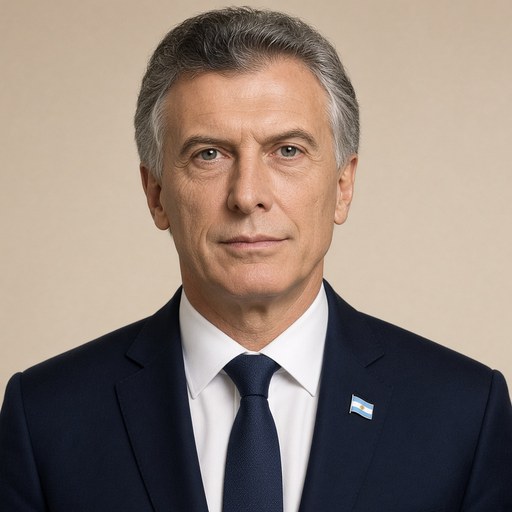
Words of President Macri at the closing of the 22nd UIA, CABA
 Mauricio Macri · President of Argentina
- Context
- Macri addressed the closing ceremony of the 22nd Argentine Industrial Union (UIA) congress in Buenos Aires on November 22, 2016, marking one year since his election.
- Main themes
- Industrial development, economic recovery and reform, cultural change, poverty reduction, quality employment, dialogue and collaboration, state modernization, telehealth and technology, truth-telling in governance, Argentine entrepreneurship, fiscal deficit and default, social infrastructure
- Duration
- ~21 min
- Words
- 2,534
- Sentences
- 93
- Readability
- 58
- Grade
- 11.9
- Syntax
- 3.29
- Vocabulary
- 1.86
Translated from Spanish
The broad sphere of national life a sentence belongs to. Every sentence has an Arena, so it is the denominator the other indices are read against.
Other93 sentences in 31 paragraphs
Good afternoon everyone, thank you for inviting me again to make this closing; thank you to Adrián for mentioning my dear and second father, Jorge; I remember coming and being on that side and seeing how Domingo Cavallo's face transformed with my uncle's speeches, which he didn't take so well at that time. But, as you said, Jorge's words from 22 years ago are still very relevant, as happens to us in many areas of everyday life.
But for a reason, today, a year ago, Argentines chose change, a change – I say – of values, a cultural change, a change that began and will take years, but that inspired the majority of Argentines to believe, which is what I asked of you when I came here, just under a year ago. And it really feels like yesterday and at the same time it feels like 10 years have passed, not because of how some say I have aged, because I am in my best moment, especially in football, but because of the number of unexpected things that have happened in Argentina and in the world. But that day I told you that I was standing here because I believed in Argentines, and I want to insist again that I deeply believe in your ability to undertake, to do, and to develop. And I need you to believe that you are capable, that the challenges the world presents us are indeed possible. And I also told you that the starting point was going to be difficult, I underestimated it, the situation in the country was infinitely worse than we imagined.
We found a broken country, a country not only in default but without energy, with a huge fiscal deficit, with one of the highest tax pressures in the region, with debts everywhere. But in the face of that, we had a great first success, which is that we avoided the fifth terminal crisis in less than 50 years, and it was not only because the government made decisions with courage and speed, but I would say that the most important thing was that we Argentines decided not to waste time looking for blame and to channel the anger and frustration into starting to build solutions. And there – I would say – what we also understood is that this new stage and as a fundamental tool in this cultural change – as you said Adrián – the way is dialogue, the way is to work together, the way is to tolerate, to think that there is always someone who can make a contribution, and all of that in a context of telling each other the truth.
And it was a strong bet, but it is a bet that has to do with my history, because I read many years ago that the strengths of people are measured by how capable they are of tolerating the truth. And I truly believe in the strengths of Argentines. That is why we chose this path and ended the "statistical blackout," and – unfortunately – reality emerged: more than 32 percent of Argentines in poverty… 32 percent and there we said that we would channel the anger, the shame into working together to reduce this scourge. And that is why - I have already said - I hope you evaluate my government.
And that is achieved – as the president of the Industrial Union also said – by generating quality employment, but also by putting the State back at the service of the people; not at the service of politics, of pettiness, of trickery, providing people with sewage, running water, access to security, quality public education, health, incorporating technology.
And there are so many things to do: last week, I was talking with Ignacio, in Tilcara, a wonderful place in this country, which I hope everyone knows, there in the Quebrada de Humahuaca. And we talked about a system, an application that we installed with the Ministry of Modernization, the Ministry of Health, at the "Garrahan" Hospital, of Telehealth. And he had to come, for several months, more than four times a year, because he is on the verge of a transplant. Can you imagine what it was for Ignacio to leave his school, he is twelve years old, his mother who had to accompany him, leaving her job at the fair, the cost, the trip, the stays, the loss of work, the loss of school? And now he – having this system that we installed a few weeks ago – will do his consultations without moving from Tilcara and we have already connected the entire Quebrada and the best part is that by the end of next year, we will have half of the providers that serve Pediatrics connected, and by the end of 2018, one hundred percent.
It is this joint work of Modernization, Arsat, Health and that will not only make many Argentines feel that they are close to their State, that they exist, that we care about them, but it will also serve to train doctors, who will be in contact with the best we have in Argentina and there are things that happen more frequently with diseases in the North, which will also serve to train those who are – in this case – at the "Garrahan," in the City of Buenos Aires. We are doing many of these things every day. Why? Because there are capable people in this country, there are people who are committed, who really want to change history.
But also – as you described – this year has been a tough year for industry and tough for many Argentines. That is why we carried out a proposal that expanded social assistance to the highest levels in our history. The new public budget - which is in the process of being approved - has the largest social spending in the history of Argentina. And why? Because we want everyone to be able to cross that bridge between the Argentina of today and the one we are going to build, we want no Argentine to be left behind. And that is the path we have chosen: the one of working together.
The good thing is that in 2017 we are going to grow, we are clearly going to grow because we have laid the foundations, based on these new values and clear policies. But the challenge is not that, the challenge is to grow 10, 20, 30 years consecutively, constantly, evenly. Because that will lead us – as you said – to development, that will lift Argentines out of poverty and for that we have to clearly face the structural challenges, putting them on the table, telling each other the truth.
That is why it is so important – and I am glad that we all bet on it – this Dialogue Table for Work and Production, so that together, and then sector by sector, we understand how we can improve with a fundamental axis, which is productivity or competitiveness, which we have lost – as Adrián said – but we will clearly regain, for the same reason I said before, because we have what it takes. And at that table, the first one who has to set the example, the first one who has to put in the effort, is the Government, is the State. First, by reducing the fiscal deficit, which affects everything we do.
And there I say it is clear that permanently going into debt to sustain a fiscal deficit is very bad, as is inflation, it is dreadful, it is horrible and it always condemns first those who have the least, from the citizen to the small and medium-sized enterprise. But we also have to say, apart from that diagnosis that we have all understood, what we are going to cut.
That is the discussion that begins in 2017. Because we need inner strength, we need not to be subject to the changes that happen in the world that, certainly, happen and also systematically surprise us. And the only way is to be balanced and today we are not.
What I described, which was the starting point, summarizes a tremendous imbalance. But I am sure that in this maturation, we all have to sit down together to debate sincerely and see how we correct those deviations.
Because that affects the other issue, which was also mentioned, the cost of capital, that we have improved a lot in terms of international financing. But we are lowering the rate locally, but we have to lower it more and I know that there are many who would like it to go down faster, but it is linked to the previous point.
As we also have to work from the Government and we are doing so, to reduce the cost of logistics, especially because it condemns those who are farthest from the ports. And to guarantee the provision of energy and not that in every peak, the one that suffers is the industry.
As we also have to work to reduce taxes, because with this level of taxes it is difficult to grow.
These are all the things we have to commit to as a Government. And I would also add something that we need interaction and that Minister Cabrera and the entire Government have as an obsession, which is simplification. We have created so many absurd rules, so much breeding ground for corruption that we have to eliminate and eliminate procedures and obstacles.
And who better than you who suffer them to tell us and point them out and we will try to do it as quickly as possible as we have been doing this year.
And the last thing we have to do as a Government and, perhaps, the most delicate thing that was reflected in my uncle's words, 22 years ago, is to make an intelligent integration into the world, clearly. Because I do not believe that by raising walls - as Blanco Villegas said at that time - we build solutions. The solution is to know how to integrate intelligently, defending the value of what we do and in that way, we will take advantage to improve and guarantee that growth for several decades.
And that is where we have to work together again. There is no such thing as a government going and negotiating without having the private sector by its side. That is what we want. Without giving anything away, trying to open doors, doors so that we can all grow.
But at that table, our friends who lead the unions are also present. And there I also tell them: we cannot go out into the world, we cannot accept the challenges of the 21st century, the tremendous technological innovation that crosses us and that crosses us even if we close ourselves off, with labor agreements from the 20th century and some from the first part of the 20th century.
We have to sit at the table and discuss all labor agreements again to defend jobs and create new ones, with courage. If we all want the same thing, we are people who want to generate work. And we also have to try and I hope we do and that we all put our grain of sand to finish convincing some who still doubt, to start correcting distortions, aberrations that we have had with the issue of work accidents, with the new ART Law.
And finally, the entrepreneurs. We clearly need to be all convinced of what we are doing, convinced that there is no other way. And in this world, those who do not advance disappear. And advancing means investing, investing, first, in training and then in technology. And that is what we all need. That is why the points that include the responsibility of the State to lower the cost of capital.
And we also need in this 21st century something central which is the environment, to take care of it, to generate a development that is sustainable and there energy efficiency is very important, especially in the coming years that, in addition to needing not to pollute, we need to consume the minimum necessary because it will take us a few years to fix the energy mess that was created.
I insist on what I told you at the beginning: all of this is based on us believing in ourselves, on trusting ourselves. The world has opened an opportunity for us like never before in our history.
Yesterday, not to go any further, after almost sixty years, the Prime Minister of Japan visited us. And what did he say? "I want to be a strategic partner of Argentina – he said – I want to be a strategic partner of each one of you." And the same had been said by Canada a week earlier and the European Union and the United States and China and several other countries. But it depends on each one of us, it does not depend on a government, it does not depend on a president, it depends on each person who inhabits or visits this country, seeing in us that tremendous potential we have. But that, in addition to having it, we are combining it with a life experience that has led us to understand that things do not happen overnight and that the tremendous and successive shortcuts we tried to take over the last few decades have led us to the starting point.
And while the world advanced, Argentina stopped. And now we understood that, with our effort, with the culture of work that we come from, is what will produce a different result. And Argentina will continue to be the center of much of what happens in the world. Because they see what we are capable of, they know that we are waking up.
That is why next year they will come for the World Economic Forum in Latin America and they will come for the WTO meeting and in 2018 they will come with the G-20. So, football-wise, I would say, we have the ball in the small area. We have to score goals, the goals that are work, that are seriousness, that are being predictable, being reliable. Never again tempt ourselves to cheat, never again tempt ourselves to think we are the smartest only to end up demonstrating that we were just blind to the opportunities we had.
It is not the Government, it is not the President, it is all of us and Argentina needs, for this to be real, for this to work, an industry, it needs many Américos Alladios that when one visits that plant, as I was lucky enough to visit, feels that more than a company it is a family, that wears the shirt, that loves what it does, that feels proud of what it does. And the people and the factory are the same, they are one identity. We need many, many ventures, many factories like that.
I hope that at this year's end we recharge our batteries and prepare to take off together towards several decades of growth.
Thank you very much everyone.
The original Spanish. The tags above are read on the English translation's sentences.
Buenas tardes a todos, gracias por invitarme, nuevamente, a hacer este cierre; gracias a Adrián, por haber citado a mi querido y segundo padre, que fue Jorge; recuerdo venir y estar de ese lado y ver cómo se le transformaba la cara a Domingo Cavallo, con los discursos de mi tío, que no le caían tan bien, en esa época. Pero, como vos dijiste, tienen mucha vigencia las palabras que dijo Jorge, hace 22 años, como nos pasa en muchos campos de la vida cotidiana.
Pero por algo, hoy, hace un año, los argentinos elegimos un cambio, un cambio – yo digo – de valores, un cambio cultural, un cambio que comenzó y que llevará años, pero que inspiró a la mayoría de los argentinos a creer, que eso es lo que les pedí yo, cuando vine acá, hace poco menos de un año. Y realmente parece ayer y a las vez parece que pasaron 10 años, no por como algunos dicen, por lo que envejecí, porque estoy en mi mejor momento, especialmente futbolístico, sino por la cantidad de cosas impensadas, que sucedieron en la Argentina y en el mundo. Pero ese día yo les dije que estaba aquí parado porque creía en los argentinos, y les quiero volver a insistir que creo profundamente en la capacidad de emprender, de hacer y de desarrollar que tienen ustedes. Y necesito que ustedes crean que son capaces, que realmente los desafíos que nos plantea el mundo son posibles. Y les dije, también, que el punto de partida iba a ser difícil, me quedé corto, la situación del país era infinitamente peor de la que imaginábamos.
Encontramos un país quebrado, un país no sólo en default, sino sin energía, con un déficits fiscal enorme, con una presión tributaria de las más altas de la región, con deudas por todos lados. Pero frente a eso, tuvimos un gran primer éxito, que es que evitamos la quinta crisis terminal, en menos de 50 años, y no fue sólo porque el gobierno tomó decisiones con coraje y velocidad, sino diría que lo más importante fue que los argentinos decidimos no perder tiempo en buscar culpables y canalizar el enojo y la bronca en empezar a construir soluciones. Y ahí – yo diría – que lo que también entendimos es que esta nueva etapa y como herramienta fundamental en este cambio cultural – como vos dijiste Adrián – el camino es el diálogo, el camino es trabajar juntos, el camino es tolerar, es pensar que siempre hay alguien que te puede hacer un aporte y todo eso en un contexto de decirnos la verdad.
Y fue una apuesta fuerte, pero es una apuesta que tiene que ver con mi historia, porque leía hace muchos años, que las fortalezas de las personas se miden en cuán capaces son de tolerar la verdad. Y yo creo realmente en las fortalezas de los argentinos. Por eso elegimos este camino y terminamos con el “apagón estadístico”, y – lamentablemente – surgió la realidad: más del 32 por ciento de los argentinos en la pobreza… 32 por ciento y ahí dijimos que íbamos a canalizar la bronca, la vergüenza en trabajar juntos para ir reduciendo este flagelo. Y es por lo cual - yo ya he dicho - espero que evalúen mi gobierno.
Y eso se logra – como también dijo el presidente de la Unión Industrial – generando empleo de calidad, pero también volviendo a poner al Estado al servicio de la gente; no al servicio de la política, de la pequeñez, de la trampa, dándole a la gente cloacas, agua corriente, acceso a la seguridad, a la educación pública de calidad, a la salud, incorporando la tecnología.
Y hay tantas cosas para hacer: la semana pasada, estuve hablando con Ignacio, en Tilcara, un lugar maravilloso de este país, que espero todos conozcan, ahí en la Quebrada de Humahuaca. Y hablamos por sistema, una aplicación que instalamos con el ministerio de Modernización, el ministerio de Salud, en el Hospital “Garrahan”, de Telesalud. Y él tenía que venir, hace ya varios meses, más de cuatro veces por años, porque está en vísperas de un trasplante. Se imaginan lo que era para Ignacio dejar su colegio, él tiene doce años, la mamá que lo tenía que acompañar, dejando su puesto en la feria, el costo, el viaje, las estadías, la perdida de trabajo, la perdida de colegio. Y ahora él – teniendo este sistema, que instalamos hace unas semana - va a hacer sus consultas sin moverse de Tilcara y ya conectamos toda la Quebrada y lo mejor es, que a fin del año que viene, vamos a tener conectados la mitad de los efectores que atienden Pediatría, y a fines del 2018, el cien por cien.
Es este trabajo conjunto de Modernización, Arsat, Salud y eso no sólo le va a hacer sentir a muchos argentinos, que están cerca de su Estado, que ellos existen, que nos preocupan, sino que también va a servir para capacitar a los médicos, que van a estar en contacto con lo mejor que tengamos en la Argentina y hay cosas que suceden con más frecuencia de enfermedades en el Norte, que también va a servir para capacitar a los que están - en este caso - en el “Garrahan”, en la Ciudad de Buenos Aires. De esas cosas estamos haciendo muchas todos los días. ¿Por qué? Porque hay gente capaz en este país, hay gente que se ha comprometido, que quiere realmente cambiar la historia.
Pero también – como describiste – este año fue un año duro para la industria y duro para muchos argentinos. Por eso, llevamos a cabo una propuesta que amplío la ayuda social a los niveles más altos de nuestra historia. El nuevo presupuesto público - que está en vías de aprobarse,- tiene el gasto social más grande de la historia de la Argentina. ¿Y por qué? Porque queremos que todos podamos cruzar ese puente entre la Argentina de hoy y la que vamos a hacer, queremos que no queden argentinos rezagados. Y ese es el camino que hemos elegido: el de trabajar juntos.
Lo bueno es que en el 2017 vamos a crecer, claramente vamos a crecer porque hemos echado las bases, en base a estos nuevos valores y a políticas claras. Pero el desafío no es ese, el desafío es crecer 10, 20, 30 años en forma consecutiva, constante, pareja. Porque eso nos va a llevar – como dijiste – al desarrollo, eso va a sacar a los argentinos de la pobreza y para eso tenemos que encarar los desafíos estructurales claramente, poniéndolos sobre la mesa, diciéndonos la verdad.
Por eso es tan importante – y me alegro que apostemos todos- a esta Mesa de Diálogo para el Trabajo y la Producción, para que todos juntos, y después sector por sector, entendamos de qué manera podemos mejorar con un eje fundamental, que es la productividad o la competitividad, que la hemos perdido – como dijo Adrián – pero claramente la vamos a ganar, por lo mismo que dije antes, porque tenemos con qué. Y en esa mesa, el primero que tiene que dar el ejemplo, el primero que tiene que poner el esfuerzo, es el Gobierno, es el Estado. Primero, reduciendo el déficit fiscal, que afecta a todo lo que hacemos.
Y ahí donde yo digo está claro que endeudarse permanentemente para sostener un déficit fiscal es muy malo, como también es la inflación, es espantosa, es horrible y condena siempre primero a los que menos tienen, desde el ciudadano a la pyme. Pero también hay que decir, aparte de ese diagnóstico que ya todos hemos entendido, qué vamos a recortar.
Esa es la discusión que comienza en el 2017. Porque necesitamos fortaleza interior, necesitamos no estar sujetos a los cambios que sucedan en el mundo que, por cierto, suceden y también nos sorprenden sistemáticamente. Y la única manera es estar equilibrados y hoy no estamos.
Esto que describí, que fue el punto de partida, resume un tremendo desequilibrio. Pero estoy seguro que en esta maduración, tenemos que todos juntos sentarnos a debatir con sinceridad y ver cómo vamos corrigiendo esos desvíos.
Porque eso afecta el otro tema, que también se mencionó, el costo del capital, que hayamos mejorado muchísimo en términos de financiamiento internacional. Pero estamos bajando la tasa localmente, pero tenemos que bajarla más y sé que hay muchos que querrían que baje más rápido, pero está ligado a lo anterior.
Como también desde el Gobierno tenemos que trabajar y lo estamos haciendo, para reducir el costo de la logística, sobre todo porque condena a aquellos que están más lejos de los puertos. Y para garantizar la provisión de energía y no que en cada pico, la que sufre sea la industria.
Como también tenemos que trabajar para ir reduciendo los impuestos, porque con este nivel de impuestos se hace difícil crecer.
Son todas las cosas a las que nos tenemos que comprometer como Gobierno. Y también le agregaría algo que necesitamos una interacción y que el ministro Cabrera y todo el Gobierno lo tienen como obsesión que es la simplificación. Hemos creado tantas reglas absurdas, tanto caldo para la corrupción que tenemos que eliminar y eliminar trámites y trabas.
Y quién mejor que ustedes que las sufren para decirnos y señalarnos y lo trataremos de hacer lo más rápido posible como lo hemos venido haciéndolo durante este año.
Y lo último que tenemos que hacer como Gobierno y, tal vez, lo más delicado que se reflejaba en las palabras de mi tío, hace 22 años, es hacer una integración al mundo inteligente, claramente. Porque yo no creo que levantando muros - como dijo en ese momento Blanco Villegas - construyamos soluciones. La solución es sabernos integrar inteligentemente, defendiendo el valor de lo que hacemos y de esa manera, vamos a sacar provecho para mejorar y garantizar ese crecimiento de varias décadas.
Y ahí es donde tenemos que de vuelta trabajar juntos. No existe que un gobierno vaya y negocie sin tener al sector privado al lado. Eso es lo que queremos. Sin regalar nada, tratando de abrir puertas, puertas para que todos podamos crecer.
Pero en esa mesa también están nuestros amigos que lideran los gremios. Y ahí también les digo a ellos: no podemos salir al mundo, no podemos aceptar los desafíos del siglo XXI, la tremenda innovación tecnológica que nos cruza y eso nos cruza aunque nos cerremos, con convenios laborales del siglo XX y algunos de la primera parte del siglo XX.
Tenemos que sentarnos a la mesa y discutir todos los convenios laborales de vuelta para defender los trabajos y crear nuevos, con coraje. Si todos queremos lo mismo, nosotros somos gente que queremos generar trabajo. Y también hay que tratar y espero que lo tratemos y que todos pongamos nuestro granito de arena para terminar de convencer a algunos que todavía dudan, empezar a corregir deformaciones, aberraciones que hemos tenido con el tema de accidentes de trabajo, con la nueva Ley de ART.
Y por último, los empresarios. Necesitamos claramente estar todos convencidos de lo que estamos haciendo, convencidos de que no hay otro camino. Y en este mundo, el que no avanza, desaparece. Y avanzar significa invertir, invertir, primero, en capacitación y, después, en tecnología. Y eso es lo que necesitamos todos. Por eso los puntos que incluye la responsabilidad del Estado de bajar el costo del capital.
Y también necesitamos en este siglo XXI con algo central que es el medio ambiente, cuidarlo, generar un desarrollo que sea sostenible y ahí es muy importante la eficiencia energética, sobre todo, en los próximos años que, además de necesitar no contaminar, necesitamos consumir lo mínimo necesario porque nos va a costar unos años arreglar el zafarrancho energético que nos hicieron.
Insisto en lo que les dije al principio: todo esto se basa en que creamos en nosotros mismos, en que confiemos en nosotros mismos. El mundo nos ha abierto una oportunidad como nunca antes en nuestra historia.
Ayer, sin ir más lejos, después de casi sesenta años, nos visitó el Primer Ministro de Japón. ¿Y qué es lo que dijo? “Quiero ser socio estratégico de Argentina –dijo-, quiero ser socio estratégico de cada uno de ustedes”. Y lo mismo había dicho Canadá una semana antes y la Unión Europea y Estados Unidos y China y varios países más. Pero depende de cada uno de nosotros, no depende un gobierno, no depende de un presidente, depende de que cada persona que habita o visite este país, vea en nosotros esa tremenda potencialidad que tenemos. Pero que, además de tenerla, la estemos combinando con una experiencia de vida que nos ha llevado a entender que las cosas no suceden de un día para el otro y que los tremendos y sucesivos atajos que quisimos tomar durante todas estas últimas décadas, nos llevaron al punto de salida.
Y mientras el mundo avanzaba, la Argentina se detuvo. Y que ahora entendimos que, con nuestro esfuerzo, con la cultura del trabajo de la que venimos, es la que vamos a producir un resultado distinto. Y la Argentina va a seguir siendo centro de mucho de lo que pase en el mundo. Porque ellos ven de lo que somos capaces, ellos saben que estamos despertando.
Por eso, el año que viene van a venir para el Foro Económico Mundial en América Latina y van a venir para la reunión de la OMC y en el 2018 van a venir con el G-20. Con lo cual, futbolísticamente, diría, la pelota la tenemos en el área chica. Nosotros tenemos que meter los goles, los goles que son trabajo, que son seriedad, que son ser previsibles, ser confiables. Nunca más tentarnos con hacer trampa, nunca más tentarnos con creernos los más vivos para terminar demostrando que solamente fuimos ciegos frente a las oportunidades que teníamos.
No es el Gobierno, no es el Presidente, somos todos y la Argentina necesita, para que esto sea real, para que esto funcione, una industria, necesita muchos Américos Alladios que cuando uno visita esa planta, como tuve la suerte de visitarla, sienta que más que una empresa es una familia, que tiene la camiseta puesta, que ama lo que hace, que se sienta orgulloso de lo que hace. Y el pueblo y la fábrica son lo mismo, son una misma identidad. Necesitamos muchos, muchos emprendimientos, muchas fábricas como esa.
Espero que en este final de año carguemos baterías y nos dispongamos para despegar todos juntos hacia varias décadas de crecimiento.
Muchas gracias a todos. (APLAUSOS)