




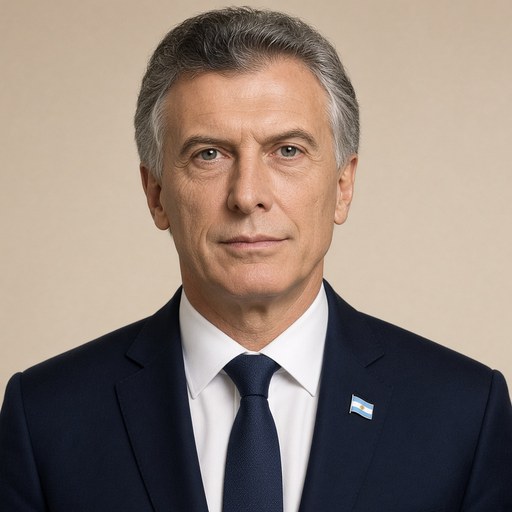
Press conference of the President of the Nation, Mauricio Macri, from the Presidential Residence of Olivos.
 Mauricio Macri · President of Argentina
- Context
- Macri held a press conference at the Presidential Residence of Olivos in July 2018, addressing Argentina's economic difficulties including inflation, unemployment, and campaign finance questions.
- Main themes
- Economic crisis and inflation, job creation and unemployment, political financing transparency, structural reforms, public trust and government accountability, Argentina's economic future, campaign finance irregularities, currency volatility
- Duration
- ~39 min
- Words
- 4,681
- Sentences
- 114
- Readability
- 36
- Grade
- 18.3
- Syntax
- 3.61
- Vocabulary
- 1.98
Translated from Spanish
This is an interview, press conference or exchange with other speakers. It is split into sentences and counted in the corpus, but its sentences are not tagged on the twelve indices.
114 sentences in 21 paragraphs
PRESIDENT.- They are ready to start with the questions, go ahead to the one who is first.
JOURNALIST.- A little over two years ago, you assumed the Government after winning the elections, very narrowly of course; then you won them widely. There was evidently a favorable expectation regarding what the Government would do from then on. Suddenly, a few months ago, everything collapses, or at least it seems that way. That is to say, inflation exceeding 30 percent, a demand for jobs that cannot be met, reduced consumption, permanent layoffs, and other socioeconomic problems and layoffs that fundamentally affect people, and I know your sensitivity regarding this, that at this moment there are people from Télam at the door who are suffering enormously, like other sectors. I want to ask the President of the Nation, whom I thank for having the frankness to hold this type of press conference to ask him everything, and I know he will tell the truth in his response, to respond to me. Thank you very much.
PRESIDENT.- Thank you, it was perhaps not a question, it was a description. I believe that the description you make expresses the anguish of many Argentines who feel in the face of this storm we are going through, that this could end in a crisis similar to others in the past. I want to tell you that I do not believe that it will be like that; I believe that we are clearly facing a storm, but we have known how to lower the sails and strengthen ourselves while maintaining our course. And I still absolutely believe in the future that lies ahead of us, and I am absolutely convinced that we are making the right effort. I believe that clearly the growth we were experiencing will decrease; we will have a few months in which what we are deciding and the things we have formulated need to mature, but we will resume growth next year, and employment will be generated again: just as we created 700,000 jobs in 2017, we will generate jobs in the future as we all need. Because we are here, and I am here understanding what happens to you, being very close to each of you, visiting you in your jobs, in your homes, listening and understanding what we all want together: to build a country where there are more opportunities with more justice, with more equity for all. But there are things we do not control, such as things that can happen in the world, but the important thing is that we are increasingly clearer, with better tools, with more strength to face the ups and downs that this volatile world in which we coexist may have; and also understanding much more clearly what the problems are that we have inherited, not only from previous governments but from previous decades, which are structural, and that today we are addressing with the truth on the table, as it should be - as you said, Roberto - telling the truth and saying this is the problem and it has a solution, and if we are all responsible, supportive, and fair, which is what I always try to be, as fair as possible, which means balance, justice, closeness, sensitivity, finding the solution that guarantees finding that better future, which I see as clearly as the first day.
JOURNALIST.- An investigation revealed that during the Cambiemos campaign there were fake contributors, that is, people who appeared on paper but who actually did not put in any money. In this sense, what message would you give to those people, most of whom are humble, although other cases of union leaders have also been known? And also in this sense, the big question is that if those people did not contribute to the Cambiemos campaign, where did that campaign money come from?
PRESIDENT.- We heard the Governor this afternoon; clearly, we have always presented the papers accounting for campaign expenses with the contributors, and we will continue to provide all the necessary information to the Justice, as it should be, and conducting an audit to clarify what happened. And it is clear that we need to take a step further; I believe we have already proposed it, it has been debated, and I hope a political financing law that truly modernizes and provides greater transparency materializes in Congress, starting with banking all contributions; that way there is no more discussion about whether I signed the receipt or not. I believe it is something that is within our reach to do, as we did in the City, where we improved the quality of the electoral process; I believe we have something pending in this regard, and I hope we can do it together in politics in the coming months.
JOURNALIST.- The accumulated inflation this year already exceeds 15 percent. What I want to ask you, President, is how you plan to tackle this inflation, whether by making changes to the tax regime or by making changes to the agricultural withholdings. Thank you very much.
PRESIDENT.- First, it is clear that even though it has not been as easy as we thought at the beginning to tame inflation - due to history, due to inflation incubated by the controls, due to tariffs, and now due to this storm that devalued our currency - it remains our absolute priority, because inflation is really what punishes those who have the least, the workers; it punishes SMEs, it punishes investment; ultimately, investment is what generates jobs, and we are committed to ensuring that there are more investments so that there are more jobs. So the objective is clearly to lower inflation, and the plan we have presented, which is part of the agreement with the Fund, will go in that direction: that the inflation we have this year, next year will drop by more than 10 points, and we hope that in the following year we will be close to single-digit inflation, which is what we all want, and what all normal countries have. You also mentioned the budget, which clearly has a reality that affects inflation, that affects the fragility that Argentina has had - and that is why this storm has cost us what it has - which is that we have to stop having a State that spends much more than we pay in taxes, because we have also said that we cannot pay more taxes, because every time we pay taxes, it is necessary consumption for many Argentines that cannot be realized, meaning that Argentines have to tighten their belts to pay taxes to a State that is never enough. We are working on that, and there is a combination of issues being raised, which are being discussed between Minister Dujovne with the support of Minister Frigerio and the various provincial economy ministers; after that, the dialogue will continue with the deputies and senators. And I hope that together, responsibly, we can start to solve something that we have been dragging on, I insist, for more than seventy years and that has prevented Argentina from developing to its full potential, a potential that we truly have. That is why I am convinced of the future we are heading towards, because it is enough to travel the country and see the things that are happening, the things that are developing positively, and that shows that there are many ways in a federal manner, not centralized but in each regional economy, to generate jobs, and that generates the future for Argentines. But we have to get this burden off our backs that prevents private sector work from developing.
JOURNALIST.- Considering that the objective is to reduce the fiscal deficit as part of the agreement with the Fund and on the other hand, salaries have deteriorated, in this context: How much do you imagine that the rates for electricity, gas, and transportation should increase by the end of the year so that this increase does not impact the salaries of workers who receive them each month? A percentage.
PRESIDENT.- That is a question more for the Minister of Economy, the Minister of Finance than for me. What I want to tell you is that all these years we have taken care of the salaries of workers; collective bargaining remains absolutely free, and each sector, based on its reality, will adjust salaries taking into account the increase in the basket and the reality of the consumption of its workers. And in the case of the State, it will be limited by the resources that each municipality, each province, and the Nation have, which already escapes to what inflation is but to the resources we have, because we just talked about having a State that unfortunately has gone much further, and that has generated for a long time that we have to accumulate debts - due to a State that today spends more than it has - and debts that we will have to pay as Argentines, especially our children and grandchildren. So I hope that together we can channel that. And part of this ordering and clarifying of so many lies has been, unfortunately, having to pay for services what they are worth, because we were running out of energy, out of infrastructure. Today, fortunately, we have a lot of new infrastructure under construction throughout the country, and also, among the things that are functioning positively, that is why I am so confident about the future, is that we have returned to producing energy in Argentina. So not only was Argentina's fragility having a fiscal deficit - that is, a State that spent much more than it received - and needing financing from the world, but we also had to buy energy from the world, and we did. At the rate that production is increasing in Vaca Muerta, in three years we will be net exporters of gas, and perhaps in four or five years we will be exporting more than half a million barrels of oil. This means jobs in Vaca Muerta; this year, 30,000 people are working there, meaning 30,000 families have good jobs, next year it will be 80,000, and in a couple of years it will be half a million people working to generate energy for Argentines and for the world. That is why we have a future, because with mining, with agriculture, with energy, with the automotive industry, with value-added services, with tourism, we are generating jobs throughout the country. As we strengthen our economy more, the private sector will generate those opportunities more. That is why we had to get organized, and that is what we are doing. And also learning to consume the necessary energy - all those memes that always tease me - is working; we are all learning to consume less energy, and that makes our bills at the end of the month not so harsh and that we take care of energy, and we need to import less while we finish producing our own.
JOURNALIST.- This weekend in Argentina, the G-20 finance meetings resume, just in a context of a trade war provoked by the tariffs imposed by the United States on several countries, including those in the European Union, especially at a time when this bloc is renegotiating a trade agreement with Mercosur. In that context, I would like to know your position on tariffs, whether these tariffs affect Argentina and in what way, and whether you are concerned about the political and economic uncertainty of your main partner in Mercosur, Brazil, to form a front in the face of this trade war.
PRESIDENT.- I want to say that we Argentinians are betting more than ever on this alliance with Brazil; we truly believe that it is a path towards progress for us. We have put and are putting a lot of energy into the negotiations with the European Union, which are somewhat stalled; we expect news in the coming days; we are also focused on future negotiations with Japan, Canada, and several other countries and blocs around the world. Furthermore, we believe in the integration of Mercosur and Argentina with the world. So, as President and exercising the Presidency of the G-20, we have created a space for dialogue to ensure that the tensions that are occurring between the United States, China, and the European Union find a solution that allows us to continue growing, because clearly, those countries that have integrated the most in the last twenty years are the ones that have grown the most. So we believe, after many years of isolation, that we need to enter the world, modernize ourselves, and strengthen our freedom, because the change that Argentina has chosen is fundamentally to work in freedom. What we are doing among ourselves, dialoguing, you ask questions, I answer, debating central issues of daily life as is happening in Argentina; sharing, being able to choose where to study, where to work, and trying to see what our creativity and possibilities are. And Argentinians—just as Brazilians must feel—we feel talented, capable of exporting our work to the world, which is why it is so important to strengthen this export profile of Mercosur and especially of Argentina, which lost it for a long time. And now, fortunately, exports are growing all the time; non-agro-industrial exports grew by 17 percent in May: this shows that there is a change in mentality and profile. And there are incredible things like meat, which is growing at 60 percent per year; think that every 100,000 more tons of meat we export means 10,000 additional jobs. Like the other day when I was in Carcarañá, Santa Fe, a town that was somewhat downcast, the slaughterhouse reopened and came back to life, and we are betting on exporting a million tons of meat in a few more years, and that will create more than 100,000 jobs directly and indirectly. So I believe that exportation is central to the future of MERCOSUR and especially for Argentinians, and that is what we are betting on. That is why we need to build infrastructure, we need to connect the entire country to the internet; the half-sanction of the project in the Senate is extremely important, and it needs to be consolidated in the Chamber of Deputies, because it develops more competition among large, medium, and small operators, and that will allow more people to have access to better quality cell signal and better internet connection, and that also allows everyone from their place to produce much better. So I believe that this is the path we are on and where we are heading towards the future.
JOURNALIST.- In this room, we have many journalists, except for the journalists from the Télam agency who were here at the door of the Presidential Residence after three weeks of conflict; I wanted to mention that and thank you for the opportunity to ask you, Mr. President. Regarding the agreement with the International Monetary Fund, the latest staff report from last week states that the halt to the reduction of export taxes is a proposal and an initiative put forward by the Argentine Government. However, so far, the Argentine Government's proposal has been doubtful. Specifically: will you comply with the halt to the reduction of export taxes or is it simply a promise to the Fund of dubious compliance?
PRESIDENT.- First, I want to say that I am the first to regret every Argentine who may lose their job or is about to lose a job, as Roberto said. But at the same time, I want to say that from day one, we set out to modernize the Argentine State, to put it at the service of Argentinians, because without a State that supports us, that facilitates, that helps you develop, this future we want will not be possible. And from that place, I have asked every official to make their department function, I insist, as it should be, at the service of Argentinians. And what the authorities of Télam have decided is that there was an overpopulation of people that occurred in the last four years of the previous government, and especially in the last months, and that it does not relate to providing an efficient service to Argentinians. So I believe that is the path they are following. Regarding export taxes, going back: for me, there is a gigantic future in developing each regional economy, and that regional economy oriented towards export, to provide goods and services to the rest of the world. The previous government, in what I consider a very misguided, unprecedented policy—because no one in the world does this—was taxing everyone who exported; the world defends itself through the WTO to prevent dumping, to prevent cheating between countries by subsidizing local productions against the production of another country. The only country in the world that punished exports was Argentina. And that is why, clearly, no private employment was generated in the last four years of the previous government, and exports collapsed. So what we are aiming for is to tell all Argentinians who have capacity and creativity to please export, because if you have an idea, you have a product, you will need other Argentinians to help you, and that will bring work to every corner of the country. That is why we removed export taxes not only from agriculture: from industry, from mining, from services, from everything, because we need to export because we need to generate jobs. So I do not believe that export taxes are an intelligent tax that will generate a future for us; on the contrary, it destroys our future. What all Argentinians need to pay—and for that, the AFIP is constantly improving its level of information and action—is the Income Tax; with the Income Tax, you share in your development, in your generation of wealth a part of what you generate with the rest of the Argentinians who have not been so lucky and need other goods and services provided by the State. So I believe that is the path; the path is to bet that from northern Argentina, we supply lithium to the entire world, and that today in Salta, Jujuy, and Catamarca is generating thousands and thousands of jobs, and there are even more projects starting than those that have already begun. And that is happening in every corner of the country. So we need to tell them: continue down that path, continue betting that from Argentina we can produce quality things that the world will value and will pay for, and will be paying for that Argentine work.
JOURNALIST.- Considering that—although the latest inflation index was released this week—we are already over 15 for the year, over 26 in the year-on-year comparison, do you have any exceptional measures decided to control inflation, which is, as you rightly said, the main reduction in the pockets of Argentinians? And do you also have any modifications in mind regarding the agreement with the International Monetary Fund, since for this year you had projected an inflation between 27 and 32 and you are approaching that target?
PRESIDENT.- We are focused, as from day one, on really putting a limit on inflation, which is a major problem we have in Argentina, which also prevents us from receiving more investments, because there are many companies in the world that are interested in coming to invest, but what happens is that they do not work in countries with inflation, because there are very few that have this level of inflation, so it is an absolute commitment. And that is why the discussion of the upcoming budget is so important, because that is what will bring us much closer; we have already made a significant step in the last year; if we manage to approve a budget with 1.3—the 1.3 that has already become famous—we will be much closer to that balance that lowers inflation and makes us stronger for any storm that may come from the world. So I believe we are understanding it; more and more Argentinians understand that. And that finally, it is what we do at home; we all want the State to do the same as all of you do every month, which is live with the resources you have, not going into debt infinitely, because that does not work, that does not exist.
JOURNALIST.- I wanted to make a clarification; you used the word "bankarizar" regarding campaign contributions; in the province in 2017, Cambiemos presented 90 percent of the contributions in cash; to cite an example, the party that came in second, which is Unidad Ciudadana, presented 90 percent of the contributions banked; I wanted to make that clarification. And I don’t know if you have seen the reports; there are social monotributistas, there are unemployed people, there are humble people from impoverished neighborhoods, from very impoverished neighborhoods in the Province of Buenos Aires; there are councilors from Cambiemos, there are former candidates from Cambiemos, and there are even mayors from Cambiemos, like Carlos Arroyo in Mar del Plata, who appear as contributors to a campaign in 2017, and they publicly stated that they did not contribute a peso: the cases are in court. The scandal has already taken down a provincial official in Buenos Aires. I ask you as a leader and reference of Cambiemos, the party that governs the country: why did this happen with the party that campaigned and came to power with transparency and the fight against corruption? Thank you very much.
PRESIDENT.- Thank you. The Governor has initiated an audit to understand why what you describe happened; let’s have a little patience and time, and besides, I believe that Judge Casanello is the one acting and investigating, so we will all know what it is about. I believe that we clearly need to move towards a system that guarantees the greatest possible transparency and that really establishes who can contribute, with what limits, and everything banked: I believe that will do a lot of good for politics in general, apart from having a more modern electoral system at some point, to give more transparency to the voting process itself.
JOURNALIST.- I wanted to ask you if you are considering suspending the application of some points of the Tax Reform, for example, the deduction of Income Tax.
PRESIDENT.- We have said that a list of alternatives has been made that has a column of expenses and another of income, and that is the discussion that has just begun with the different leaders. I have spoken with many governors, I have spoken with opposition deputies, with opposition senators, and I hope and believe that there will be a level of responsibility perhaps unprecedented in the history of our country, and that is part of this change, part of this change and this dialogue we are having, and understanding that only by putting the problems on the table and resolving them will we generate that future; there is no other way; continuing to want to hide the problems under the rug has not brought us here, and we have almost a third of Argentinians in poverty and many people who have not been able to choose what to work on, where to develop, where to live. So I believe that if we want to consolidate all these growths that we are beginning to see in Argentina, we need to resolve this budget issue, as most countries in the world have done, so we are neither less nor more, but we have to do it.
JOURNALIST.- We are about twenty days away from the second part of the debate in Parliament on the legalization of abortion; you know that it is a debate that has generated a lot of passion and also much political discussion. And in that context, Dr. Carrió, the Deputy from Cambiemos, said that you had enabled the debate because you were convinced, or had been assured, that in Parliament the "no" would win. I would like to know if this is true, if you deny the Deputy, and if you deny her, why do you think she said that.
PRESIDENT.- I think it is important to value what we are achieving, something that was taboo, something that could not be discussed, we are debating it as it should be. And there I want to reiterate that the path of debate must be within respect, with the ability to listen to others, to understand the diversity of visions and opinions, and I hope it ends that way. I opened the debate because I truly believe that Argentina has to do it, it is a path to growth, a path to knowing how to exercise our freedoms responsibly, that is why I spoke about how to do it, because it has to do with how we coexist. I believe that when Argentines choose change, we are talking about this, about change with transparency, change with creativity, change where problems are analyzed and we get to the heart of the matter; that is why we are also debating public education and how to renew it, and how to improve it and how to better train our teachers, and we want to evaluate to know where we are making mistakes, because without public education there is no future. So I believe that in everything we must present things with sincerity and seriousness, I believe that is the way, that is the path in which we believe we will have a great future ahead. That is why I believe that both political parties, unions, universities, the judiciary, we all have a very important role to play at this moment; it is essential that we dare to understand from what place we are going to contribute to an Argentina that wants to grow, to an Argentina that wants to leave the past behind and not continue looking for those responsible for what happened to us, but to put energy into that future we want to conquer and that is not going badly for us, I mean, beyond this storm we have achieved many things. But I believe that the attitude must be different, it must be the attitude of saying constructively from what place I am going to make my contribution, from what place, with equanimity, with seriousness, with sincerity, with sensitivity I am going to say from here I can help another Argentine have a better opportunity. So I believe that these debates enrich if we do them from that place, and we should not be afraid of them, on the contrary, the worst is to believe that we are not in a position to. I believe that Argentines have grown a lot, especially in these last years we have matured, we have understood, we have realized that continuing on the path we were on was not leading us anywhere, that we want to bet on living in democracy, on respecting human rights, on the obligations of each one. I believe that on that path we have built a lot, I insist, beyond what Roberto was saying at the beginning, that this storm shook us, we were taking off, we were growing very well, 13 out of 15 sectors were evolving wonderfully well, tourism not to mention, it has been a fundamental sword in the development of the country, we received more than 6 million tourists last year, even today despite this storm in Bariloche and throughout the country there is almost full occupancy in all vacation centers. That shows that there is an Argentina that beyond this storm continues to move, that remains vital. That is why I believe that we should not think that this storm will lead us to a crisis similar to those of the past, that is not true, we are clear about the course, making the right effort and knowing that if we persist and work together, because it is always together, the future will truly become a reality. Thank you very much to everyone.
The original Spanish. The tags above are read on the English translation's sentences.
PRESIDENTE.- Ya están listos para empezar con las preguntas, adelante al que le toca primero.
PERIODISTA.- Hace dos años y pico asumió al Gobierno habiendo ganado las elecciones, muy ajustadamente por supuesto; luego las ganó con amplitud. Evidentemente hubo una expectativa favorable a lo que iba a hacer el Gobierno de allí en más. De pronto, hace pocos meses, todo se derrumba, o por lo menos así parece. Es decir, inflación que supera el 30 por ciento, demanda de trabajo que no se consigue, consumo que se reduce, despidos permanentes y otros problemas socioeconómicos y de despidos que fundamentalmente para la gente, y conozco su sensibilidad al respecto, que en este momento hay en la puerta hay gente de Télam que está sufriendo enormemente, como otros sectores. Yo le quiero preguntar al señor Presidente de la Nación, que le agradezco que haya tenido la franqueza de hacer este tipo de conferencia de prensa para preguntarle todo y sé que va a decir la verdad en la respuesta, que me responda. Muchas gracias.
PRESIDENTE.- Gracias, no fue una pregunta tal vez, fue una descripción. Yo creo que esa descripción que vos haces expresa la angustia de muchos argentinos que sienten frente a esta tormenta que estamos atravesando, que esto puede terminar a una crisis similar a otras del pasado. Yo quiero decirles que no creo que sea así, yo creo que claramente estamos enfrentando una tormenta pero hemos sabido arriar las velas y fortalecernos manteniendo el rumbo. Y sigo creyendo, absolutamente, en el futuro que tenemos por delante, y estoy absolutamente convencido de que estamos haciendo el esfuerzo correcto. Creo que claramente el crecimiento al cual veníamos va a disminuir, vamos a tener unos meses en los cuales lo que estamos decidiendo y las cosas que hemos formulado tienen que madurar, pero vamos a retomar el crecimiento el año que viene, y va a volver a generarse empleo: así como generamos 700 mil puestos de trabajo en el 2017, volveremos a generar trabajo en el futuro como necesitamos todos. Porque estamos acá y yo estoy acá entendiendo lo que les pasa, estando bien cerca de cada uno de ustedes, visitándolos en sus trabajos, en sus casas, escuchando y entendiendo qué es lo que queremos todos juntos: es construir un país en el cual cada vez más haya más oportunidades con más justicia, con más equidad para todos. Pero hay cosas que no dominamos, como son las cosas que pueden pasar en el mundo, pero lo importante es que cada vez estamos más claros, con mejores herramientas, con más fortaleza para enfrentar los vaivenes que pueda tener este mundo volátil en el cual convivimos; y también entendiendo mucho más claro cuáles son los problemas que hemos heredado, no solo de gobiernos anteriores sino de décadas anteriores, que son estructurales, y que hoy estamos atacando con la verdad sobre la mesa, como corresponde -como usted dijo Roberto-, diciendo la verdad y diciendo este es el problema y tiene una solución, y si somos todos responsables, solidarios y ecuánimes, que es lo que siempre intento ser, lo más ecuánime posible, que eso significa equilibrio, justicia, cercanía, sensibilidad, encontrar la solución que garantice encontrar ese mejor futuro, que lo veo tan claro como el primer día.
PERIODISTA.- Una investigación reveló que durante la campaña de Cambiemos hubo aportantes truchos, es decir, gente que figuraba en los papeles pero que en realidad no había puesto dinero. En este sentido, qué mensaje le daría a esa gente, en su mayoría humildes, aunque se conocieron otros casos de dirigentes gremiales. Y también en este sentido, la gran pregunta es que si esa gente no aportó para la campaña de Cambiemos, ¿de dónde salió ese dinero de la campaña?
PRESIDENTE.- Ya la escuchamos a la Gobernadora hoy a la tarde, claramente nosotros siempre hemos presentado los papeles rindiendo los gastos de campaña con los aportantes, y seguiremos aportando toda la información necesaria a la Justicia, como corresponde, y haciendo una auditoría para que se clarifique lo sucedido. Y queda claro que tenemos que dar un paso más adelante, creo que ya lo hemos propuesto, se ha debatido y espero se materialice en el Congreso una ley de financiamiento de la política que realmente modernice y que dé mayor transparencia, empezando por bancarizarse todos los aportes; así no hay más discusión si firmé el recibo, si no lo firmé. Creo que es algo que está a la mano de que lo podamos hacer, como también lo hicimos en la Ciudad, que fuimos mejorando la calidad del proceso electoral, creo que en esto tenemos algo pendiente y espero que lo hagamos entre toda la política en los próximos meses.
PERIODISTA.- La inflación acumulada de este año ya supera el 15 por ciento, lo que le quiero preguntar, Presidente, es cómo piensa contender esta inflación, si haciendo cambios en el régimen tributario o haciendo cambios en las retenciones al campo. Muchas gracias.
PRESIDENTE.- Primero queda claro que por más que no haya sido tan fácil como pensamos en el inicio domar la inflación -por la historia, por la inflación incubada por el cepo, por las tarifas y ahora por esta tormenta que devaluó nuestra moneda- sigue siendo nuestra absoluta prioridad, porque la inflación es realmente lo que más castiga a los que menos tienen, al trabajador, es lo que castiga a la pymes, es lo que castiga a la inversión; en definitiva la inversión es lo que genera trabajo, y nosotros estamos comprometidos en que cada vez haya más inversiones para que haya más trabajo. Así que el objetivo es claramente bajar la inflación, y el plan que hemos presentado y que es parte del acuerdo con el Fondo va a en esa dirección: de que la inflación que tengamos este año, el año que viene va a bajar más de 10 puntos, y esperamos en el siguiente año ya estar cerca de la inflación de un dígito que es lo que todos queremos, y que es lo que tienen todos los países normales. Vos hablabas a la vez del presupuesto, que claramente acá hay una realidad que hace a la inflación, que hace la fragilidad que ha tenido a la Argentina -y por eso esta tormenta nos costó lo que nos costó- que es que tenemos que dejar de tener un Estado que gasta mucho más de lo que nosotros pagamos de impuestos, porque además ya hemos dicho que no podemos pagar más impuestos, porque cada vez que pagamos impuestos son consumos necesarios de muchos argentinos que no se pueden realizar, o sea que los argentinos tienen que ajustarse el cinturón para pagar impuestos a un Estado que nunca le alcanza. En esa tarea estamos y hay una combinación de temas que se están planteando, que se están discutiendo entre el ministro Dujovne con el apoyo del ministro Frigerio y los distintos ministros de economía de las provincias; después ese diálogo seguirá con los diputados y con los senadores. Y espero que entre todos en forma responsable empecemos a dar solución a algo que arrastramos, insisto, hace más de setenta años y que ha impedido que la Argentina se desarrolle en todo su potencial, potencial que realmente tenemos. Por eso estoy convencido de ese futuro al cual vamos, porque basta recorrer el país y ver las cosas que están sucediendo, las cosas que están desarrollándose positivamente, y eso demuestra que hay muchas maneras en forma federal, no centralizada sino en cada economía regional, de generar trabajo, y eso genera el futuro para los argentinos. Pero tenemos que sacar esta mochila de encima que impide que el trabajo en el sector privado se pueda desarrollar.
PERIODISTA.- Teniendo en cuenta que el objetivo es bajar el déficit fiscal a partir del acuerdo con el Fondo y por otro lado el salario se ha deteriorado, en este contexto: ¿Cuánto imagina usted que deberían aumentarse las tarifas de la luz, el gas y los transportes de acá a fin de año para que no vuelva a impactar este aumento sobre el salario de los trabajadores que reciben cada mes? Un porcentaje.
PRESIDENTE.- Eso es una pregunta más para el Ministro de Economía, el Ministro de Hacienda y Finanzas que para mí. Lo que yo te quiero decir es que todos estos años hemos cuidado el salario de los trabajadores, las paritarias siguen siendo absolutamente libres y cada sector, en función de su realidad, irá acomodando los salarios teniendo en cuenta el aumento de la canasta y de la realidad del consumo de sus trabajadores. Y en el caso del Estado estará limitado por también los recursos que tenga cada municipio, cada provincia y la Nación, que eso ya escapa a cuál sea la inflación sino es a los recursos que tenemos, porque acabamos de hablar que tenemos un Estado que lamentablemente ha ido mucho más allá y eso ha generado durante mucho tiempo que tengamos que acumular deudas- por un Estado que hoy gasta más de lo que tiene- y deudas que vamos a tener que pagar los argentinos y especialmente nuestros hijos y nuestros nietos. Entonces espero que entre todos vayamos canalizando eso. Y parte de este ordenamiento y sinceramiento de tantas mentiras ha sido, lamentablemente, volver a tener que pagar los servicios lo que valen, porque nos estábamos quedando sin energía, sin infraestructura. Hoy por suerte tenemos mucha infraestructura nueva en construcción por todo el país, y además, entre las cosas que están funcionando positivamente, por eso es que estoy tan confiado del futuro, es que hemos vuelto a producir energía en la Argentina. Entonces no solo la fragilidad de la Argentina era tener un déficit fiscal -o sea un Estado que gastaba mucho más de lo que le ingresaba- y necesitar financiamiento del mundo, sino que además teníamos que comprarle y le compramos energía al mundo. A la velocidad que está aumentando la producción en Vaca Muerta, vamos en tres años a ser exportadores netos de gas, y tal vez en cuatro o en cinco años ya estar exportando más de medio millón de barriles de petróleo. Eso es en términos de trabajo en Vaca Muerta, este año trabajan 30 mil personas, o sea son 30 mil familias que tiene un buen trabajo, el año que viene van a ser 80 mil y en un par de años van a ser medio millón de personas trabajando en generar energía para los argentinos y para el mundo. Por eso es que tenemos futuro, porque con la minería, con la agricultura, con la energía, con la industria automotriz, con los servicios de valor agregado, con el turismo, estamos generando trabajo en todo el país. Ya medida que fortalezcamos más nuestra economía, el sector privado más va a generar esas oportunidades. Para eso es que nos teníamos que ordenarnos y eso es lo que estamos haciendo. Y además aprendiendo a consumir la energía necesaria -todos esos memes que siempre me cargan- está funcionando, todos estamos aprendiendo a consumir menos energía, y eso hace que nuestras facturas a fin de mes no sean tan duras y que cuidemos la energía, y necesitemos menos de importar mientras terminamos de producir la propia.
PERIODISTA.- Este fin de semana en la Argentina se retoman las reuniones de finanzas del G-20, justo en un contexto de guerra comercial provocada por los aranceles fijados por Estados Unidos a varios países, incluso a los de Unión Europea, especialmente en un momento donde este bloque renegocia con el Mercosur un acuerdo comercial. En ese contexto quisiera saber de usted cuál es su postura sobre los aranceles, si estos aranceles afectan a Argentina y de qué manera, y si le preocupa la incertidumbre política y económica de su principal socio en el Mercosur, Brasil, para armar un frente delante de esta guerra comercial.
PRESIDENTE.- Quiero decir que los argentinos apostamos más que nunca a esta alianza con Brasil, realmente creemos que es para nosotros es un camino hacia el progreso. Hemos puesto y estamos poniendo mucha energía en la negociación con la Unión Europea, que está media trabada la negociación, esperamos novedades en los próximos días; también en la negociación futura con Japón, con Canadá y varios otros países y bloques del mundo. Y además creemos en la integración del Mercosur y de la Argentina con el mundo. Así que como Presidente y ejerciendo la Presidencia del G-20 hemos generado un ámbito de diálogo, para lograr que estas tensiones que están habiendo entre Estados Unidos, China y la Unión Europea encuentren una solución para permitirnos seguir creciendo, porque claramente aquellos países que más se integraron en estos últimos veinte años son los que más han crecido. Así que nosotros creemos, después de muchísimos años de aislamiento, que tenemos que ingresar al mundo, modernizarnos y fortalecer nuestra libertad, porque el cambio que eligió la Argentina fundamentalmente es trabajar en libertad. Esto que estamos haciendo entre nosotros, dialogar, ustedes preguntan, yo respondo, debatir temas centrales de la vida diaria de la gente como está sucediendo en la Argentina; el compartir, el poder elegir dónde estudiar, dónde trabajar y tratar de ver cuáles son nuestras creatividades y posibilidades. Y los argentinos -como a los brasileros les debe pasar- nos sentimos talentosos, capaces de poder exportar nuestro trabajo al mundo, por eso es tan importante fortalecer este perfil exportador del Mercosur y especialmente de la Argentina que lo perdió durante mucho tiempo. Y ahora por suerte las exportaciones están creciendo todo el tiempo, 17 por ciento las no agroindustriales crecieron en el mes de mayo: entonces esto muestra que hay un cambio de mentalidad y de perfil. Y hay cosas increíbles como la carne que está creciendo al 60 por ciento por año; piensen que cada 100 mil toneladas de carne más que exportemos son 10 mil puestos de trabajo adicionales. Como el otro día que estuve en Carcarañá, Santa Fe, un pueblo que estaba como abatido, se reabrió el frigorífico y volvió a vivir, y apostamos a exportar un millón de toneladas de carne en pocos años más, y esos van a ser más de 100 mil puestos de trabajo en forma directa e indirecta. Entonces creo que la exportación es central para el futuro del MERCOSUR y especialmente de los argentinos, y a eso apostamos. Por eso hay que hacer la infraestructura, hay que conectar todo el país a internet, la media sanción del proyecto en el Senado es importantísima, que se consolide en la Cámara de Diputados, porque desarrolla más la competencia entre los operadores grandes, medianos y chicos, y eso va a permitir que más gente tenga acceso a mejor calidad de señal de celular y mejor conexión a internet, y eso permite también que cada uno desde su lugar pueda producir mucho mejor. Entonces creo que en ese camino es en el que estamos y por ahí vamos hacia el futuro.
PERIODISTA.- En esta sala estamos muchos periodistas, salvo los periodistas de la agencia Télam que estuvieron acá en la puerta de la Residencia Presidencial después de tres semanas de conflicto; quería dar cuenta de eso y agradecer la posibilidad de preguntarle, Presidente. Con respecto al acuerdo con el Fondo Monetario Internacional, el último informe del staff de la semana pasada plantea que el freno a la reducción a las retenciones es una propuesta y una iniciativa planteada por el Gobierno argentino. Sin embargo hasta ahora el planteo del Gobierno argentino ha sido dudoso. Concretamente: ¿van a cumplir con el freno a la reducción de las retenciones o directamente es una promesa para el Fondo de dudoso cumplimiento?
PRESIDENTE.- Primero quiero decirle que soy el primero en lamentar cada argentino que pueda perder el trabajo o esté por perder un trabajo, como decía Roberto. Pero a la vez quiero decirle que desde el primer día nosotros nos propusimos modernizar el Estado argentino, ponerlo al servicio de los argentinos, porque sin un Estado que nos acompañe, que facilite, que te ayude a desarrollarte este futuro que queremos no va a ser posible. Y desde ese lugar le he pedido a cada funcionario que haga que su repartición funcione, insisto, como tiene que ser, al servicio de los argentinos. Y lo que han decidido las autoridades de Télam es que había una superpoblación de gente que se realizó en los últimos cuatro años del gobierno anterior, y especialmente en los últimos meses, y que no tiene que ver con eso de darles un servicio eficiente a los argentinos. Entonces creo que ese es camino que están siguiendo. En lo que hace a las retenciones, volviendo: para mi hay un gigantesco futuro desarrollando cada economía regional, y esa economía regional orientada a la exportación, a brindarle bienes y servicios al resto del mundo. El gobierno anterior, para mí en una política muy equivocada, inédita, porque nadie en el mundo lo hace, le cobraba impuestos a todos los que exportaban; el mundo se defiende a través de la OMC de que no hagan dumping, que no hagan trampa entre países subsidiando producciones locales en contra de la producción de otro país. El único país del mundo que castigaba las exportaciones era la Argentina. Y por eso, claramente, no se generó empleo privado en los últimos cuatro años del gobierno anterior, y las exportaciones se fueron desmoronando. Entonces a lo que estamos apuntando es a decirles a todos los argentinos que tienen capacidad y creatividad que por favor exporten, porque si ustedes tienen una idea, tienen un producto van a necesitar de otros argentinos para que los ayuden y eso a traer trabajo en cada rincón del país. Por eso sacamos las retenciones no solo al campo: a la industria, a la minería, a los servicios, a todo, porque tenemos que exportar porque necesitamos generar trabajo. Entonces no creo que la retención sea un impuesto inteligente y que nos genere futuro, al contrario, nos destruye el futuro. Lo que tienen que pagar todos los argentinos -y para eso la AFIP cada vez mejora en su nivel de información y de acción- es el impuesto a las Ganancias; con el impuesto a las Ganancias comparte en su desarrollo, en su generación de riqueza una parte de lo que genera con el resto de los argentinos que no han tenido tanta suerte y necesitan de otros bienes y servicios que se los provee el Estado. Entonces creo que ese es el camino, el camino es apostar a que desde el norte argentino se abastezca de litio al mundo entero, y eso hoy en Salta, en Jujuy y en Catamarca está generando miles y miles de puestos de trabajo, y son todavía más los proyectos que están comenzando de los que ya comenzaron. Y eso está pasando en cada rincón del país. Entonces necesitamos decirles: continúen por ahí, continúen apostando a que desde Argentina podamos producir cosas de calidad que el mundo va a valorar y que va a pagar, y va a estar pagando con eso trabajo argentino.
PERIODISTA.- Teniendo en cuenta que -si bien se conoció esta semana el último índice de inflación- ya estamos en más de 15 en lo que va del año, más de 26 en la comparación interanual, si tienen decidida alguna medida excepcional para controlar justamente la inflación que es, como bien dijo usted, la principal merma en el bolsillo de los argentinos. Y si también tienen pensada alguna modificación con respecto al acuerdo del Fondo Monetario Internacional, ya que para este año habían proyectado una inflación entre el 27 y el 32 y se están acercando a esa meta.
PRESIDENTE.- Estamos abocados, como desde el primer día, a realmente ir poniéndole límite a la inflación, que es un gran problema que tenemos en la Argentina, que además nos impide recibir más inversiones, porque hay muchas empresas en el mundo que están interesadas en venir a invertir, pero lo que les pasa es que ellos no trabajan en países con inflación, porque son ya muy poquitos los que tienen este nivel de inflación, con lo cual es un compromiso absoluto. Y por eso es tan importante la discusión del presupuesto que viene, porque eso es lo que nos va a acercar realmente muchísimo, ya hicimos un gran escalón en el último año; si logramos aprobar un presupuesto con 1,3 -el 1,3 que ya se ha hecho famoso- vamos a estar muchísimo más cerca de ese equilibrio que nos baja la inflación y que nos hace más fuertes para cualquier tormenta que pueda venir desde el mundo. Entonces creo que estamos entendiéndolo, cada vez más argentinos entendemos eso. Y que finalmente es lo que hacemos en casa, todos queremos que el Estado haga lo mismo que hacen todos ustedes todos los meses, que es viven con los recursos que tienen, no van endeudándose hacia el infinito, porque eso no funciona, eso no existe.
PERIODISTA.- Quería hacer una salvedad, usted dijo la palabra “bancarizar” por los aportes de campaña, en la provincia en el 2017 Cambiemos presentó el 90 por ciento de los aportes en efectivo; por citar un ejemplo, el partido que salió segundo, que es Unidad Ciudadana, presentó el 90 por ciento bancarizados los aportes, quería hacer esa salvedad. Y no sé si habrá visto los informes, hay monotributistas sociales, hay desempleados, hay personas humildes de barrios carenciados, de barrios muy carenciados de la Provincia de Buenos Aires; hay concejales de Cambiemos, hay ex candidatos de Cambiemos y hay hasta intendentes de Cambiemos, como el caso de Carlos Arroyo en Mar del Plata, que figuran como aportantes de una campaña en 2017 y ellos públicamente manifestaron que no aportaron un peso: los casos están en la Justicia. El escándalo ya se cargó a una funcionaria de la provincia de Buenos Aires. Le pregunto a usted como referente y líder de Cambiemos, el partido que gobierna el país: ¿Por qué pasó esto con el partido que hizo campaña y llegó al Gobierno con la transparencia y la lucha contra la corrupción? Muchas gracias.
PRESIDENTE.- Gracias a vos. La Gobernadora ha iniciado una auditoría para entender por qué pasó lo que vos describís, tengamos un poco de paciencia y tiempo, y aparte creo que el juez Casanello es el que está actuando e investigará, así que sabremos todos de qué se trata. Creo que claramente tenemos que ir a un sistema que garantice la mayor transparencia posible y que realmente fije quiénes son los que pueden aportar, con qué límites y todo bancarizado: creo que eso le va a hacer mucho bien a la política en general, aparte de tener un sistema electoral alguna vez más moderno, para darle más transparencia también al tema de la votación en sí misma.
PERIODISTA.- Quería preguntarle si evalúa suspender la aplicación de algunos puntos de la Reforma Tributaria, por ejemplo la deducción de Ganancias.
PRESIDENTE.- Hemos dicho que se ha hecho una lista de alternativas que tienen una columna de gastos y otra de ingresos, y esa es la discusión que se acaba de comenzar con los distintos referentes. He hablado con muchos de los gobernadores, he hablado con diputados de la oposición, con senadores de la oposición y espero y creo que va a haber un nivel de responsabilidad tal vez inédito en la historia de nuestro país y que es parte de este cambio, parte de este cambio y este diálogo que estamos teniendo, y de entender que solamente poniendo los problemas sobre la mesa y resolviéndolos es que vamos a generar ese futuro, no hay otra manera; seguir queriendo esconder los problemas debajo de la alfombra no ha llevado hasta acá, y tenemos a casi un tercio de los argentinos en la pobreza y mucha gente que no ha podido elegir en qué trabajar, dónde desarrollase, dónde vivir. Entonces creo que si queremos consolidar todos estos crecimientos que comenzamos a ver en la Argentina tenemos que resolver este tema del presupuesto, como lo han hecho la mayoría de los países del mundo, así que no somos menos ni somos más, pero tenemos que hacerlo.
PERIODISTA.- Estamos a veinte días aproximadamente de la segunda parte del debate en el Parlamento sobre la legalización del aborto, usted sabe que es un debate que ha generado muchas pasiones y también mucha discusión política. Y en ese marco la doctora Carrió, la Diputada por Cambiemos, dijo que usted había habilitado el debate porque estaba convencido, o le habían asegurado, que en el Parlamento iba a ganar el “no”. Quisiera saber si esto es cierto, si usted desmiente a la Diputada y si la desmiente por qué cree que dijo eso.
PRESIDENTE.- Pienso que lo importante es valorar lo que estamos logrando, algo que era tabú, que no se podía hablar lo estamos debatiendo como corresponde. Y ahí quiero reiterar que el camino del debate tiene que ser dentro del respeto, de la capacidad de escuchar al otro, de entender la diversidad de visiones y opiniones, y espero que termine de esa manera. Yo lo abrí el debate porque realmente creo que la Argentina tiene que hacerlo, es un camino al crecimiento, un camino a saber ejercer nuestras libertades con responsabilidad, por eso hablé de cómo hacerlo, porque tiene que ver con cómo convivimos. Creo que los argentinos cuando elegimos un cambio hablamos de esto, del cambio con transparencia, el cambio con creatividad, el cambio donde los problemas se analizan y se va al fondo de la cuestión; por eso estamos debatiendo también la educación pública y cómo renovarla, y cómo mejorarla y cómo capacitar mejor a nuestros docentes, y queremos evaluar para saber en qué nos estamos equivocando, porque sin educación pública no hay futuro. Entonces creo que en todo hay que plantear las cosas desde la sinceridad y la seriedad, creo que ese es el camino, ese es el camino en el cual creemos que vamos a tener un gran futuro por delante. Por eso creo que tanto los partidos políticos, los gremios, las universidades, la Justicia, todos tenemos un rol muy importante a llevar a cabo en este momento; es fundamental que nos animemos a entender desde qué lugar vamos a aportar a una Argentina que quiere crecer, a una Argentina que quiere dejar atrás el pasado y no seguir buscando los culpables de lo que nos pasó, sino poner la energía en ese futuro que estamos queriendo conquistar y que no nos está yendo mal, o sea, más allá de esta tormenta hemos logrado muchísimas cosas. Pero creo que la actitud tiene que ser otra, tiene que ser la actitud de decir constructivamente desde qué lugar voy a hacer mi aporte, desde qué lugar, con ecuanimidad, con seriedad, con sinceridad, con sensibilidad yo voy a decir desde acá puedo ayudar a que haya otro argentino que tenga una mejor oportunidad. Entonces creo que estos debates enriquecen si los hacemos desde ese lugar, y no hay que tenerles miedo, al contario, lo peor es creernos que no estamos en condiciones de. Yo creo que los argentinos hemos crecido mucho, especialmente en estos últimos años hemos madurado, hemos entendido, hemos comprendido que seguir por dónde íbamos no nos llevaba a ningún lugar, que nosotros queremos apostar a vivir en democracia, al respeto de los derechos humanos, de las obligaciones de cada uno. Creo que en ese camino hemos construido mucho, insisto, más allá de lo que planteaba Roberto al principio, que esta tormenta nos sacudió, estábamos despegando, estábamos creciendo muy bien, 13 de 15 sectores evolucionaban maravillosamente bien, el turismo ni que hablar, ha sido una espada fundamental en el desarrollo del país, hemos recibido más de 6 millones de turistas el último año, aun hoy a pesar de esta tormenta en Bariloche y en todo el país hay casi ocupación total en todos los centros de vacaciones. Eso muestra que hay una Argentina que más allá de esta tormenta se sigue moviendo, que sigue siendo vital. Por eso creo que no hay que creer que esta tormenta nos va a llevar a una crisis parecida a las del pasado, eso no es verdad, estamos acá claros en el rumbo, haciendo el esfuerzo correcto y sabiendo que si persistimos y trabajamos juntos, porque siempre es juntos, el futuro reamente va a ser realidad. Muchas gracias a todos.