




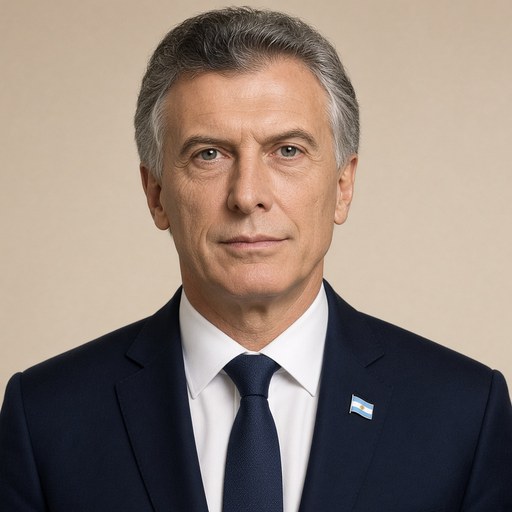
President Mauricio Macri at the reopening of the Mattievich slaughterhouse in the province of Santa Fe.
 Mauricio Macri · President of Argentina
- Context
- Macri addressed workers and officials at the reopening of the Mattievich slaughterhouse in Carcarañá, Santa Fe, celebrating Argentina's meat export policy reforms in July 2018.
- Main themes
- Meat export liberalization, slaughterhouse reopening, economic recovery, job creation, rural and regional economies, federalism, private investment, export growth, Vaca Muerta energy prospects, productivity tables, trade reform, community development
- Duration
- ~15 min
- Words
- 1,833
- Sentences
- 49
- Readability
- 46
- Grade
- 16.0
- Syntax
- 3.82
- Vocabulary
- 1.96
Translated from Spanish
The broad sphere of national life a sentence belongs to. Every sentence has an Arena, so it is the denominator the other indices are read against.
Other49 sentences in 16 paragraphs
Good day, good day to everyone, how are you doing?
It's wonderful to see José's excitement, to share in his emotion, and in all of yours. I was just speaking with you and your coworkers about what the reopening of this slaughterhouse means for Carcarañá.
The truth is, I believe this is the seventeenth or eighteenth time I've come to Santa Fe, Governor, and I think in two and a half years a President has never visited this thriving province so many times. And how nice it is to come on a festive day for the livestock family, and on a festive day for Carcarañá, because you really told me what the closure of this plant meant for the local community.
And this is the way to lift the country, with Argentines who bet on the future of our beloved Argentina, generating enormous hope in the communities where these factories, these plants are reopened. Because these factories are an opportunity for progress, they change the lives of many families who can project themselves; because as you told me - the youngest, 21 years old - without having to leave their town, one can project their family, and if their loved ones are here and they want to stay, they should be able to stay. That is the enormous challenge we have.
And how have we achieved this? We have achieved it by sitting down at a table, by dialoguing, by generating trust, and by keeping our word, something so important. We said, "We are going to allow the export of meat and we are going to remove the export taxes on meat, so get ready"; and we also created these tables, which José mentioned, these Productivity Tables where we all sit down, and there are many now, but the one for meat was one of the first, and there we sat down with the workers - I think I saw "Beto," hello "Beto" Fantini. We sat down with ministers from different areas that affect and require services for any sector to function. And we also brought in the historical bogeymen that have always been like bogeymen, which are Customs, AFIP, and SENASA, because in this new culture we are generating in Argentina, we are all a team, and all those agencies have to help everyone progress, to be able to run instead of walk, to help them, that’s what it’s about. And since that moment, we have not stopped growing in exports; month after month we export more and more, so new opportunities begin to expand and open up: it means more production, more slaughter, and more consumption.
José, imagine, I met him ten years ago, I was passing through here, I was starting to do politics at the national level, and José welcomed me with a little folder, frustrated because he had wanted to show it to Moreno, and Moreno, who was a particular character, didn’t even let him speak and, I don’t know, left him hanging. He told me all about that traumatic experience and said he had taken a sublingual because he thought he was having a heart attack after the meeting at the bar across from the Ministry of Economy; I remember all his story. It was very clear: the graph showed in color what was exported and in black and white what we kept, so he explained to me that the more we export, the more there is of the cuts we consume, because the world hasn’t realized that the richest thing is the barbecue. So we will have more barbecue to sell in the domestic market, more internal consumption, and at a cheaper price if we export more, not if we export less. I said, "How easy to understand, they will get it, José, don’t worry, sooner or later they will understand." Unfortunately, the factory had to close and many more because they didn’t understand it. But today we understood, we understood, and we are committed to opening more markets, we have to open markets, starting with the ones we already have, getting this plant approved so that hundreds more people in Carcarañá can return to work at their old slaughterhouse, which is the new slaughterhouse.
And we want to do the same for every sector, for every regional economy, because today we are clear, we are clear about the direction, we want to move away from being a state-centric country, where everything goes through the State and everything goes through Buenos Aires, to being a truly federal country where we generate quality private employment linked to exports, because the more we export, the stronger our country is, and that means there is more employment, more work for Argentines, and in every place, in every town, in every province. That is happening, and there are infinite opportunities, infinite.
Let me tell you that just yesterday I was meeting with the Minister of Energy to review the agenda, and the news about Vaca Muerta - you must have heard "Vaca Muerta," right? You who are linked to cattle must have found this strange name interesting - this deposit that was supposed to have a lot of gas, but the surprise is that it also has a lot of oil. So what we can aspire to is to double oil production in less than three years, reaching a million barrels; and we can export half of that, because we consume a little more than half a million; and if we export 500,000 barrels, that’s 14 billion dollars. And what’s important is not so much the dollars, but that to do all this we will generate tens of thousands of jobs, quality jobs; that already, for example, Vaca Muerta is impacting Santa Fe, because all the metalworking SMEs in Santa Fe are also working for Vaca Muerta, because they have to move huge amounts of sand, water, storage, tanks, and everything is moving, everything is moving.
And precisely Vaca Muerta was the first table we created for these Productivity Tables, where we also sat down with the unions - in this case from the oil sector - the companies, the provincial governments, and we all agreed on something basic: each one putting their best effort; that’s what a Productivity Table is about, that is, being more productive means being a little better every day, as simple as that, as simple as saying "every day I will improve, every day I will run a little faster"; why? Because we are in a world that competes, that doesn’t give you anything, and we want the good jobs, the best jobs to be for us. So the way to do it is to demonstrate what we are capable of doing every day to improve, and that’s where the State also has to collaborate.
That’s why we are making the effort for SENASA to do things faster, and I congratulate the people of SENASA here, because they have approved everything in record time; and the same with Customs, the same with AFIP, the same with the infrastructure that Vialidad has to do, because without roads…; the same with what Arsat is doing so that we have internet and that there is a law - which we had half approval a few days ago in the Senate - so that there is more access to the internet and fast, and quality in the signal, that it doesn’t cut out. Because everything is linked, you need to have the same tools that the Korean has, that the Japanese has, that the Brazilian has, that’s what it’s about.
And speaking of tools; one of the things we also work on in those Productivity Tables is to eliminate any more bullying, to eliminate any more mafia-like behaviors, what does that mean? That there is someone who stands in the middle of the road and tells you "if you want to pass here, you have to pay me this much," and that complicates life for everyone, to put it bluntly: it ruins everyone’s life, because we all have to pay that man, who does nothing. And what does that do? It makes what we do more expensive, so it doesn’t allow us to compete with the outside with our best price.
And there are many of those mafias that we are attacking, and one is the labor lawsuit industry - which we have talked about with Beto - that especially endangers SMEs that are fragile. And unfortunately, Governor, Santa Fe is the only large province that has not adhered to the ART Law, which has already had enormous success in Córdoba, Buenos Aires, Mendoza; and we need to have SECLO, we need to have all the tools that allow us to defend ourselves from that, to defend ourselves so that we protect the employment of all Argentines. And also that others who are about to enter are not afraid, because most Argentines are good, we are good people, we are hardworking people who do not want to invent a work accident to collect what is not due. So we have to get rid of those who in a mafia-like way complicate work for all of us. That’s what we are doing, what we are pushing for together.
That’s why I tell you: we are on the right track and we will move forward against all odds, and I know that it is difficult for many, I know that we are putting in the effort. But this is the way, this is the way of telling each other the truth, putting the best of each one, putting the State at the service of the people and no longer of politics, and through here we will progress; through here, what is happening today in Carcarañá will be repeated throughout the country, not always with meat, with different things, with different products, with different opportunities. What will be repeated is that in every place there will be a happy Argentine family being a protagonist, happy that a door has opened for them that allows them to demonstrate all they can contribute; because I have no doubt, that’s why I am standing here, of the talent, the capacity, the creativity that you Argentines have, that we all have when we work together.
That’s why I also tell the leadership: it is time for responsibility, as you had a few hours ago approving the Justina Law that allows for more transplants in Argentina; that you approved the Aconquija National Park in Tucumán; that you approved that many people living in irregular situations can have their property title to access water and electricity, basic services. That is the attitude: together for that Argentina that we dream of and that we deserve.
Congratulations José, congratulations to everyone, and with Beto we want as soon as possible for there to be hundreds more Carcarañenses working here, so we will help you in everything that is necessary.
Strength Carcarañá, strength Santa Fe, strength Argentina! Thank you very much!
The original Spanish. The tags above are read on the English translation's sentences.
Buen día, buen día a todos, ¿cómo andan?
Qué lindo ver la emoción de José, compartir la emoción de él, de todos ustedes, recién hablaba con vos y con tus compañeros de trabajo, de lo que significa para Carcarañá la reapertura de este frigorífico.
La verdad que creo que es la diecisieteava o la dieciochoava vez que vengo a Santa Fe, Gobernador, y creo que en dos años y medio un Presidente nunca vino tantas veces a esta provincia tan pujante. Y qué lindo venir en un día de fiesta para la familia ganadera, y en un día de fiesta para Carcarañá, porque realmente me contaban ustedes lo que significó para la comunidad local el cierre de esta planta.
Y esta es la manera de levantar el país, con argentinos que apuestan al futuro de nuestra querida Argentina, generando una enorme esperanza en las comunidades en donde estas fábricas, estas plantas se reabren. Porque estas fábricas son una oportunidad de progreso, es cambiarle la vida a muchas familias que se pueden proyectar; porque como vos me decías -el más joven, 21 años-, sin tener que irse de su pueblo uno puede proyectar su familia, y si acá están sus afectos y uno se quiere quedar, que se pueda quedar. Ese es el desafío enorme que tenemos.
¿Y cómo hemos logrado esto? Lo hemos logrado en base a sentarnos en una mesa, a dialogar, a generar confianza y a cumplir con la palabra, algo tan importante. Nosotros dijimos “vamos a permitir que se exporte la carne y vamos a sacarle las retenciones a las exportaciones de la carne, así que prepárense”; y además creamos estas mesas, que José mencionó, estas Mesas de Productividad donde nos sentamos todos, y ya son muchos, pero la de la carne fue una de las primeras, y ahí nos sentamos con los trabajadores -por ahí lo vi al “Beto”, hola “Beto” Fantini-. (APLAUSOS), nos sentamos con los ministros de distintas áreas que afectan y que requieren servicios para que cualquier sector funcione. Y también sentamos a los cucos de la historia que siempre fueron como cucos, que es la Aduana, la AFIP, el SENASA, porque en esta nueva cultura que estamos generando en la Argentina todos somos un equipo, y todas esas agencias tienen que ayudar a que cada uno pueda progresar, que pueda en vez de caminar, correr, que lo ayudemos, de eso se trata. Y desde ese momento no hemos parado de crecer en la exportación, mes a mes exportamos más y más, entonces se comienzan a ampliar y abrir y crear nuevas oportunidades: es más producción, es más faena y es más consumo.
José, imagínate, yo lo conocí hace 10 años, pasaba por acá, yo comenzaba a hacer política a nivel nacional, y José me recibió con una carpetita, que venía frustrado porque se la había querido mostrar a Moreno la carpetita, y Moreno que era un personaje particular ni lo dejó hablar y, no sé, lo dejó de cama. Él me contaba toda esa experiencia traumática y me dijo que había tomado un sublingual, porque pensó que se infartaba después de la reunión en el bar de enfrente de Economía; me acuerdo de todo el cuento de él. Era muy claro: el gráfico te mostraba en color lo que se exportaba y en blanco y negro lo que nos quedábamos nosotros, entonces me explicó que cuanto más exportemos, más hay de los cortes que consumimos nosotros, porque el mundo no se avivó que lo más rico es el asado. Con lo cual nosotros vamos a tener más asado para vender en el mercado interno, más consumo interno, y a precio más barato si exportamos más, no si exportamos menos. Yo dije “qué fácil de entender, te lo van a entender, José, tranquilo que tarde o temprano lo van a entender”. Lamentablemente tuvo que cerrar la fábrica y muchas más porque no lo entendieron. Pero hoy lo entendimos, lo entendimos y estamos con la vocación de abrir más mercados, tenemos que abrir mercados, empezando por los que ya tenemos, conseguir que aprueben esta planta para que cientos de personas más en Carcarañá vuelvan a trabajar a su viejo frigorífico, que es el nuevo frigorífico.
Y lo mismo queremos abrir para cada sector, para cada economía regional, porque hoy tenemos claro, tenemos claro cuál es el rumbo, queremos salir de ser un país Estado-céntrico, que todo pasa por el Estado y encima todo pasa por Buenos Aires, a ser un país verdaderamente federal donde generamos empleo privado de calidad, ligado a la exportación, porque cuánto más exportamos, más fuerte es nuestro país, y eso significa que hay más empleo, más trabajo para los argentinos, y en cada lugar, en cada pueblo, en cada provincia. Eso está sucediendo, y hay infinitas oportunidades, infinitas.
Déjenme comentarles que ayer justo estuve reunido con el Ministro de Energía para repasar la agenda, y las noticias sobre Vaca Muerta -ustedes habrá escuchado “Vaca Muerta”, ¿no?, ustedes que están ligados a la vaca, les llamó la atención este nombre raro seguramente-este yacimiento que se suponía y que tiene un montón de gas, pero la sorpresa es que tiene también un montón de petróleo. Entonces a lo que podemos aspirar es a que en menos de tres años dupliquemos la producción de petróleo, lleguemos a un millón de barriles; y podamos exportar la mitad de eso, porque nosotros consumimos un poco más de medio millón; y si exportamos 500 mil barriles son 14 mil millones de dólares. Y lo importante no son tanto los dólares, sino que para hacer todo eso vamos a generar decenas de miles de puestos de trabajo, trabajos de calidad; que ya, por ejemplo, Vaca Muerta está impactando sobre Santa Fe, porque todas las pymes metalmecánicas de Santa Fe están trabajando también para Vaca Muerta, porque tienen que mover cantidades enormes de arena, de agua, almacenamiento, tanques, y todo se mueve, todo se mueve.
Y justamente Vaca Muerta fue la primera mesa que hicimos de estas de la productividad, donde también nos sentamos con los gremios -en este caso del petróleo- las empresas, los gobiernos provinciales, y todos acordamos algo básico: cada uno poner lo mejor de sí; de eso se trata una Mesa de Productividad, es decir, ser más productivos es ser cada día un poco mejor, tan simple como eso, tan simple como decir “cada día me voy a superar, cada día voy a correr un poquito más rápido”; ¿por qué? Porque estamos en un mundo que compite, que no te regala nada, y que nosotros queremos que los buenos trabajos, los mejores trabajos sean para nosotros. Entonces la manera de hacerlo es demostrando lo que somos capaces de hacer cada uno todos los días para mejorar, y ahí es donde el Estado también tiene que colaborar.
Por eso el esfuerzo que estamos poniendo para que el SENASA haga las cosas cada vez más rápido, y felicito a la gente del SENASA acá, porque ha aprobado todo en tiempo récord; y lo mismo con la Aduana, lo mismo con la AFIP, lo mismo con la infraestructura que tiene que hacer Vialidad, porque sin rutas…; lo mismo que está haciendo Arsat para que tengamos internet y que haya una ley -que tenemos media sanción hace unos días en el Senado- para que cada vez haya más acceso a internet y rápido, y calidad en la señal, que no se nos corte. Porque todo está ligado, vos necesitás tener las mismas herramientas que tiene el coreano, que tiene el japonés, que tiene el brasilero, de eso se trata.
Y hablando de herramientas; una de las cosas que también trabajamos en esas Mesas de Productividad es en que no haya más prepotencias, que no haya más comportamientos mafiosos, ¿por qué eso que significa? Que hay uno que se te para en la mitad del camino y te dice “si querés pasar por acá me tenés que pagar tanto”, y eso le complica la vida a todos, hablando mal y pronto: le caga la vida a todos, porque todos tenemos que pagarle a ese señor, y que no hace nada. ¿Y eso qué hace? Encarece lo que hacemos, entonces no nos permite competirle al de afuera con nuestro mejor precio.
Y hay muchas de esas mafias que estamos atacando, y una es la de la industria de los juicios laborales -que lo hemos hablado con el Beto- que pone en peligro especialmente a las pymes que son frágiles. Y lamentablemente, Gobernador, Santa Fe es la única provincia grande que no ha adherido a la Ley de ART, que ha tenido ya un éxito enorme en Córdoba, en Buenos Aires, en Mendoza; y necesitamos tener el SECLO, necesitamos tener todas las herramientas que nos permitan defendernos de eso, defendernos para que cuidemos el empleo de todos los argentinos. Y además que otros que están por entrar no tengan miedo, porque la mayoría de los argentinos somos buenos, somos gente de bien, somos gente trabajadora que no queremos inventar un accidente de trabajo para cobrar lo que no corresponde. Entonces tenemos que sacarnos de encima a aquellos en forma mafiosa nos complican el trabajo a todos. De eso se trata lo que estamos haciendo, lo que estamos empujando entre todos.
Por eso les digo: estamos en el rumbo correcto y vamos a avanzar contra viento y marea, y sé que a muchos les está costando, sé que estamos poniendo el hombro. Pero este es el camino, este es el camino diciéndonos la verdad, poniendo lo mejor de cada uno, poniendo al Estado al servicio de la gente y no más de la política, y por acá vamos a progresar; por acá, esto que pasa hoy en Carcarañá, se va a repetir por todo el país, no siempre con la carne, con distintas cosas, con distintos productos, con distintas oportunidades. Lo que sí se va a repetir es que en cada lugar va a haber una familia argentina contenta de ser protagonista, contenta de que se le abrió una puerta por la cual le permite demostrar todo lo que puede aportar; porque no tengo ninguna duda, por eso estoy parado acá, del talento, de la capacidad, de la creatividad que tienen ustedes los argentinos, que tenemos todos cuando trabajamos juntos.
Por eso también a la dirigencia le digo: es la hora de la responsabilidad, como tuvieron hace pocas horas aprobando la Ley Justina que permite que haya más trasplantes en la Argentina; que aprobaron el Parque Nacional Aconquija en Tucumán; que aprobaron que mucha gente que vive en situación irregular pueda tener su título de propiedad para llegar al agua y a la luz, servicios básicos. Esa es la actitud: juntos por esa Argentina que soñamos y que merecemos.
Felicitaciones José, felicitaciones a todos, y con el Beto queremos lo antes posible que acá haya cientos de carcarañenses más trabajando, así que vamos a ayudarte en todo lo que sea necesario.
¡Fuerza Carcarañá, fuerza Santa Fe, fuerza Argentina! ¡Muchas gracias!