




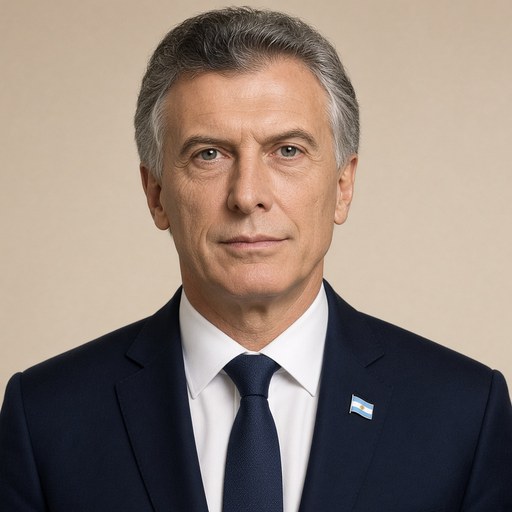
President Mauricio Macri signed an agreement for investments in Vaca Muerta.
 Mauricio Macri · President of Argentina
- Context
- Macri signed a major investment agreement for Vaca Muerta unconventional energy development on January 31, 2017, with unions, YPF, and international energy companies.
- Main themes
- Vaca Muerta investment agreement, unconventional energy development, labor-sector dialogue, job creation, energy self-sufficiency, renewable energy expansion, infrastructure development, poverty reduction, tariff reform, regional development in Neuquén
- Duration
- ~11 min
- Words
- 1,331
- Sentences
- 22
- Readability
- 19
- Grade
- 25.6
- Syntax
- 3.94
- Vocabulary
- 1.96
Translated from Spanish
The broad sphere of national life a sentence belongs to. Every sentence has an Arena, so it is the denominator the other indices are read against.
Other22 sentences in 13 paragraphs
Good afternoon, it is a pleasure to have you here again.
A few weeks ago, we surprised many, fortunately in a pleasant way, because lately in Argentina we have given unpleasant surprises for years; in this case, it was positive news, with a lot of future, in which we committed to basically work together with all the sectors involved around an important part of the country's future, the future of the country's energy, which is unconventional energy.
And what was missing, in this path of work and dialogue, was to finalize the terms with the labor organizations, with the workers, which required a few more weeks, but we were so confident in the work we were doing that we wanted to announce it anyway, because we knew that this was being done from a commitment, from the understanding that it is good for all Argentines, because not only will this bring a lot of jobs for Neuquén, for the surrounding areas, but it also enhances the future of the rest of Argentina, because with energy we can grow, we can develop, and in this way reduce poverty, which is clearly the main objective we have as a Government and as a Nation.
And we achieved this because we dared to believe in this impressive force that dialogue has on the basis of credibility, telling the truth, respecting each other, sitting at the table and trying to see things from the perspective of the other, and thus reaching this agreement that will allow us to develop a wonderful reserve that Argentina has; they say it is perhaps the second largest gas reserve in the world, the fourth of unconventional oil, and I insist, that opens doors to the development not only of direct jobs but of industries around this.
In this, we all had a commitment: the unions, led by Guillermo and Manuel, accepting to improve, modernize the execution of work to achieve greater efficiency; the companies, led by YPF, with Panamerican, with Total, with Exxon, with Shell, there are several, and we hope that more will come betting on these agreements to invest billions of dollars per year, and that in this way we can get out of something that we still struggle to understand why it happened to us; because each of those ships that entered Argentina bringing gas represented hundreds of jobs for Argentines that we lost, when we have the gas, which makes it inexplicable why we did something against ourselves. That tangled everything and generated an enormous level of tension, incapacity, intolerance, and lack of dialogue in the sector, which we have managed to recover. So I hope that this that began never stops again, that this dialogue continues and that the governments are there to help, because we need to build infrastructure, we need to build highways, we need to develop urban areas, because there will be many people moving to live in the region. And we also need to educate, as Minister Bullrich complained the other time that we did not invite him, because clearly there will have to be a huge effort in training, because we will need a lot of people who have never worked in the sector, to whom we have to give the tools so that they can also be protagonists and part of this.
And just as this will be a big change for Neuquén and perhaps neighboring provinces, very recently with renewable energies we have also confirmed another very important path of development, where in this case nine provinces are starting to be protagonists, and we hope that when we finish all the rounds of RenovAr there will be many more than nine, possibly more than twenty, that will have some prominence in the contribution of energy with those renewable resources we have.
Already today, with what we have signed, we will have the most important solar park in Latin America in Jujuy, wind farms that compare with the most important in the world in Chubut, biomass in Mesopotamia, and many more things, I insist, in nine that we hope will be more than twenty provinces. And again the same, doing something good for everyone, we generate jobs, because there too it is necessary to design, manufacture biodigesters, blades, solar panels, they need to be transported, installed, and operated. That is what it is about, that by creating foundations for the whole country to grow we are already growing, we are already generating good jobs.
In these days also, exactly today, Juanjo had to announce something that is not pleasant, clearly no one likes to have to say that tariffs need to be increased, but we have already raised this, we have discussed it, we have held public hearings, for the first time in twelve years we have had an RTI to discuss in depth the whole sector, how to improve, how to commit to invest, how to improve quality, how to divide cuts. And in this program it is necessary to restore what your production is worth, which is energy, because if not, what happened to us happens again, we run out of energy, and on top of that we waste it.
So I want to once again thank all Argentines for their understanding, for their tolerance, for their understanding that this is the way to have energy and be able to grow; that this is the way to tell each other the truth and create foundations for the future; and that this increase will bring us closer to only 47 percent of what it costs to produce energy, this that you do from the fields to the city, with these tariffs we reach 47 percent, and we started with something that was practically nothing. And it is a gradual path, one step every day, and if we also help as you have helped, because the truth is that in December we verified lower consumption at higher temperatures, at one degree more in temperature than last year there was lower consumption, meaning that there was much more awareness of the importance of saving, because energy pollutes, and it does not do us good to pollute the environment. That makes us very happy because it shows that many air conditioners were set to 24 degrees, as we asked, which achieves reasonable comfort and greatly reduces consumption, and of course, by lowering consumption, the individual bill that each one receives decreases. We are happy with these steps we are taking forward.
We are also happy because in December and January –in a few days Juanjo will announce it- cuts were greatly reduced, because for the first time in years we returned to do maintenance and prevention work, and that was a short time, we did not have the time we will have until the next summer, but in six months of serious work, there too with the unions, the companies, all together taking care to try to reduce the scourge that means for so many Argentines that the power goes out, that after hours they run out of water, and that suddenly they have spent days without energy and without water, that now we have greatly reduced those cuts and the duration of the cuts.
So I believe that all of this shows that the path we have embarked on is the path that will lead us to progress, the one of telling each other the truth, of working as a team, of understanding that things are not done overnight, but that progress comes from all of us striving together day after day.
So I congratulate you, I am sure that in a few months we will see a revolution of equipment arriving in Neuquén, and I hope that this continues to spread to the rest of Argentina so that what we set out to do more than a year ago is possible, and that the “yes, we can” is a reality.
Thank you very much and congratulations to all.
The original Spanish. The tags above are read on the English translation's sentences.
Buenas tardes, una alegría tenerlos acá nuevamente.
Hace algunas semanas sorprendimos a muchos, gratamente por suerte, porque últimamente en la Argentina durante años hemos dado sorpresas no gratas, en este caso ha sido una noticia positiva, de mucho futuro, en la cual nos comprometíamos básicamente a trabajar juntos todos los sectores involucrados alrededor de una parte importante del futuro del país, del futuro de la energía del país, que es la energía no convencional.
Y faltaba, en este camino de trabajo y de diálogo, el terminar de acordar los términos con las organizaciones de trabajo, con los trabajadores, que requerían unas semanas más, pero estábamos tan confiados en el trabajo que estábamos haciendo que lo quisimos anunciar igual, porque sabíamos que esto se hacía desde el compromiso, desde entendimiento de que es bueno para todos los argentinos, porque no sólo esto va a traer muchísimo trabajo para Neuquén, para las zonas aledañas, sino que además potencia el futuro del resto de la Argentina, porque con energía podemos crecer, podemos desarrollarnos, y de esa manera reducir la pobreza que claramente es el principal objetivo que tenemos como Gobierno y como Nación.
Y esto lo logramos porque nos animamos a creer en esta fuerza impresionante que tiene el diálogo sobre bases de credibilidad, diciendo la verdad, respetándonos, sentándonos en la mesa y tratando de ver cada uno las cosas desde el lado que lo ve el otro, y así llegar a este acuerdo que va a permitir desarrollar una reserva maravillosa que tiene la Argentina, dicen que es tal vez la segunda reserva de gas del mundo, la cuarta de petróleo no convencional, e insisto, eso abre puertas a el desarrollo no sólo del trabajo directo, sino de industrias alrededor de esto
En eso tuvimos un compromiso todos: los gremios, liderados por Guillermo y por Manuel, aceptando mejorar, modernizar la realización del trabajo para lograr mayor eficiencia; las empresas, lideradas YPF, con Panamerican, con Total, con Exxon, con Shell, son varias, y esperemos que cada vez vengan más apostando con estos acuerdos a invertir miles de millones de dólares por año, y que de esta manera logremos salir de algo que todavía nos cuesta entender por qué nos pasó; porque cada uno de esos barcos que ingresaron a la Argentina trayendo gas, fueron cientos de puestos de trabajo de argentinos que perdimos, cuando nosotros tenemos el gas, con lo cual es como inexplicable por qué hicimos algo en contra de nosotros mismos. Eso enmarañó todo y generó en el sector un enorme nivel de tensión, de incapacidad, de intolerancia, de falta de diálogo, que lo hemos logrado recuperar. Así que yo espero que esto que comenzó nunca más se detenga, que continúe este diálogo y que los gobiernos estemos ahí para ayudar, porque hay que construir infraestructura, tenemos que hacer autovías, tenemos que hacer desarrollo urbano, porque va a haber mucha gente que se va a mover a vivir en la región. Y también tenemos que educar, que la otra vez se nos quejó el ministro Bullrich que no lo invitamos, porque claramente acá va haber que hacer un enorme esfuerzo de capacitación, porque vamos a necesitar muchísima gente que nunca trabajó en el sector, a la cual le tenemos que dar las herramientas para que puedan ser también protagonistas y parte de esto.
Y así como esto va a ser un cambio grande para Neuquén y tal vez provincias aledañas, hace muy poco con las energías renovables hemos confirmado también otro sendero de desarrollo muy importante, donde en este caso nueve provincias arrancan a ser protagonistas, y esperamos que cuando terminemos todas las rondas de RenovAr sean muchas mucho más de nueve, posiblemente más de veinte, las que tengan algún protagonismo en el aporte de energías con esos recursos renovables que tenemos.
Ya hoy, con lo que tenemos firmado, vamos a tener el parque solar más importante de América Latina en Jujuy, parques eólicos que se comparan con los más importantes del mundo en Chubut, biomasa en la Mesopotamia, y muchísimas cosas más, insisto, en nueve que esperamos que sean más de veinte provincias. Y de vuelta lo mismo, haciendo algo bueno para todos, generamos trabajo, porque también ahí hace falta diseñar, fabricar biodigestores, paletas, paneles solares, hay que transportarlos, hay que instalarlos, hay que hacerlos operar. De eso se trata, que creando bases para que todo el país crezca ya estamos creciendo, ya estamos generando trabajo del bueno.
En estos días también, exactamente hoy, Juanjo tuvo que volver a anunciar algo que no es simpático, claramente a nadie le gusta tener que decir que hay que aumentar las tarifas, pero eso ya lo hemos planteado, lo hemos discutido, hemos hecho audiencias públicas, por primera vez en doce años hemos tenido una RTI para discutir a fondo todo el sector, de cómo mejorar, de cómo comprometernos a invertir, de cómo mejorar la calidad, de cómo dividir los cortes. Y en este programa hace falta ir recomponiendo lo que vale lo que ustedes producen, que es la energía, porque si no pasa lo que nos pasó, nos quedamos sin energía, y encima la malgastamos.
Entonces yo quiero una vez más agradecerles a todos los argentinos por la comprensión, por la tolerancia, por el entendimiento de que este es el camino para tener energía y poder crecer; que este es el camino de decirnos la verdad y crear bases para el futuro; y que este aumento ya nos va a ir acercando recién al 47 por ciento de lo que vale producir la energía, esto que hacen ustedes desde los campos hasta llegar al a ciudad, con estas tarifas llegamos al 47 por ciento, y arrancamos con algo que era prácticamente nada. Y es un camino gradual, de un paso todos los días, y que si además ayudamos como han ayudado, porque la verdad que en diciembre hemos verificado menores consumos a mayor temperatura, a un grado más de temperatura que el año pasado hubo menor consumo, o sea que hubo mucha más conciencia de la importancia de ahorrar, porque la energía contamina, y no nos hace bien contaminar el medio ambiente. Eso nos pone muy contentos porque se ve que muchos aires acondicionados se pusieron a 24 grados, como les pedimos, que se logra un confort razonable y eso baja enormemente el consumo, y por supuesto, al bajar el consumo, baja la boleta individual que cada uno recibe. Estamos contentos con estos pasos que estamos haciendo hacia adelante.
También contentos porque en diciembre y enero –en unos días Juanjo lo va a anunciar- bajaron mucho los cortes, porque por primera vez después de años volvimos a hacer trabajos de mantenimiento y prevención, y eso que fue poco tiempo, no tuvimos el tiempo que vamos a tener hasta el siguiente verano, pero en seis meses de trabajo serio, ahí también con los sindicatos, las empresas, todos juntos ocupándonos de tratar de reducir el flagelo que significa para tantos argentinos que se les corte la luz, que a las horas se queden sin agua, y que de golpe se hayan pasado días sin energía y sin agua, que ahora hayamos reducido enormemente esos cortes y la duración de los cortes.
Así que creo que todo eso demuestra que el camino que hemos emprendido es el camino que nos va a llevar a progresar, el de decirnos la verdad, de trabajar en equipo, de entender que las cosas no se hacen de un día para el otro, sino que el progreso viene de esforzarnos todos juntos día tras día.
Así que los felicito, estoy seguro que en unos meses vamos a ver una revolución de equipos llegando a Neuquén, y espero que eso siga contagiando al resto de la Argentina a que lo que nos propusimos hace ya más de un año era posible, y que el “sí, se puede” es una realidad.
Muchas gracias y felicitaciones a todos. (Aplausos)