




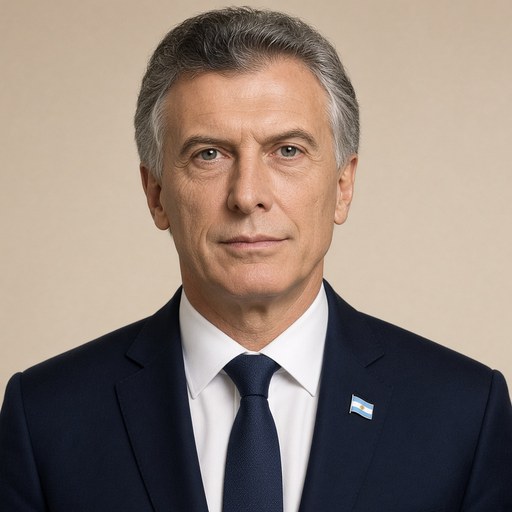
President Mauricio Macri toured the waterworks of the Salado River basin in the province of Buenos Aires.
 Mauricio Macri · President of Argentina
- Context
- Macri toured waterworks of the Salado River basin in Buenos Aires province on February 25, 2019, highlighting flood control infrastructure and economic progress.
- Main themes
- Salado River basin waterworks, flood and drought management, infrastructure investment, climate change adaptation, economic stabilization, fiscal responsibility, international trade and diplomacy, agricultural productivity, Buenos Aires province development, G20 reforms, Argentina's global image
- Duration
- ~12 min
- Words
- 1,382
- Sentences
- 35
- Readability
- 45
- Grade
- 16.6
- Syntax
- 3.58
- Vocabulary
- 1.97
Translated from Spanish
The broad sphere of national life a sentence belongs to. Every sentence has an Arena, so it is the denominator the other indices are read against.
Other35 sentences in 12 paragraphs
Thank you very much, María Eugenia, good morning, good morning, how are you? Good morning mayors, thank you also Pablo for being with us. I still don’t know what time it is because I am still adjusting to the time change from India, but I think it’s morning.
What I do want to highlight is the peculiarity of this, that Vidal and Macri “El Gato” are finishing the works of the Arroyo del Gato, it is quite a particular thing. The truth is that we are very happy, not only because it is a nice day for all the people of Buenos Aires but because it is a wonderful day in terms of the future, because this work is a work, like all the ones we have been doing, unfortunately postponed.
But as a joy and as good news, today it is indeed a priority, today it is indeed working with two dredges 24 hours, that means every day morning and night in double shifts. And with the earth that has been removed, we could practically fill all of 9 de Julio to the height of covering the Obelisk. So just imagine the amount of earth that has been moved so far in this work and that we hope will continue and finish, because clearly - as María Eugenia said - these different stages of the new channeling of the Arroyo Salado will reintegrate more than a million hectares into production. And that is work, that is work for many Argentines, that is opportunities for progress, in addition to the intermediate towns that you represent, which are 200,000 inhabitants who will no longer suffer when it starts to rain.
The truth is that rain and water will be a blessing that, as María Eugenia also said, will help us at a moment that is equally or more dramatic, which is the drought, which we experienced last year, we experienced last year and it was one of the three major blows to our economy, as much as the lack of financing for emerging markets, as the “notebooks” crisis, the drought played a very important role because it was the worst in 50 years. Had this work been completed, we would have had the water there with its channels and we could have taken advantage of it, which we are trying to do in a master plan throughout the country. Why?
Because climate change is a reality and it has come to stay, even though we are all committed to caring for the environment, we need to carry out adaptation works, as they are now called, to prepare for future floods and to conserve water because it is cyclically flooding-drought, drought-flood, so it is very important. But I also told you that all these works are future, they are the foundations, they are the bases that we are building to create that country that we all want, without denying the difficulties we have, we are still going through the aftershocks of 2018. But, as María Eugenia also said, the difference is that today we already have an economy that is starting to stabilize, we are beginning to understand something fundamental, which we have always understood in our homes but which in politics has led to a permanent confusion, which is that one cannot spend more than one has, one cannot live on borrowed money and that is what we are starting to organize.
Besides that we need infrastructure to grow, and for three years now we have started to change and we have put a focus as a State and at every level of Government, because you mayors who are here have also received money to carry out local works, what people need to progress are works: infrastructure works that improve their quality of life and increase their productive capacity, starting with connectivity works. And the third important thing that we have understood and that we are doing is connecting with the world, connecting with the world to exchange knowledge, to learn, and above all to take our products, to show what we are capable of doing.
And I just came back from this trip to India and Vietnam, places that are culturally so different, with histories so different from ours. But what I want to tell you - which I told María Eugenia - is wonderful: the level of attraction, curiosity, and affection they have for us is incredible; when one goes there and sees the different way of life they have and the completely different agendas they have, you say, why are they connected with us? If it’s not for football, it’s for tango, wine, our culture, our history, our landscapes, our way of being. But I guarantee you it was affection and eagerness, eagerness to do something with us, eagerness to participate. And everyone reaffirming what happened to us at the G20, everyone telling us “how well you are doing those reforms, how well you are coming back, how well you are building a future based on predictable rules, and on that situation is how we want to work.”
And the truth is that the other positive thing about this change we are carrying out is that more than a hundred companies traveled with us, most of them were small companies that had never traveled: the level of excitement that those representing the companies had - there were young people, not so young - everyone was thrilled. And many of them have already started selling, on their first trip. A small business from Mendoza with a product, a low-alcohol sangria that they had just launched six months ago, has already sold some containers on their first trip; some people from Misiones who went with mate, the yerba (I made Modi try it, he drank it all, the Indian Prime Minister, he loved it, because they love all kinds of infusions), they are mixing it with some local products and have also started selling.
Let’s imagine that Vietnam has 100 million inhabitants, and India has 1.3 billion inhabitants, both countries growing at 6, 7 percent: they have no way to produce the amount of food they need for their population, they have no way! And they have no better partner than Argentina to help them not only sell them technology to learn to produce more, animal and plant genetics to produce more, but in the meantime, during and after we can sell them a lot, not only products that we are used to selling, like grains and now legumes, but also dulce de leche, one sold dulce de leche in India, he was crazy, he started selling dulce de leche. These are great opportunities to take Argentine work to the world and we have them there.
We can, we must continue to work coherently along the lines we are going, to be credible, reliable, to continue organizing our affairs, not to wait for outsiders to come and solve our problems. And to always sit down to dialogue around a table and see what things we are doing wrong and we need to stop doing. And to have that discussion that is reflected in the public budget with honesty, telling the truth, not lying to people anymore that things can be free, that in the end we all pay for them and poorly. And I believe that is happening, I believe in Argentina it is happening that we are maturing, we are growing, we are understanding what happened to us not last year, what happened to us during the previous fifteen years and the previous thirty years, and that now we are going to recover, recover the lost time by bringing certainty and future opportunities to all our people.
And for that it is very important that we finish these works throughout the country, because this work, once completed, also helps the people of Córdoba, the people of Santa Fe, the people of La Pampa, because everything drains better, the water circulates better and is reused in each of the provinces as it should be. And we have many more projects so that from water we can create work and future opportunities for everyone.
Thank you María Eugenia, thank you Pablo, thank you all for being with us and let’s keep working together.
The original Spanish. The tags above are read on the English translation's sentences.
Muchas gracias María Eugenia, buenos días, buenos días, ¿cómo andan? Buenos días intendentes, gracias también Pablo por acompañarnos. Todavía no sé qué hora es porque estoy todavía con el cambio de horario de venir de la India, pero creo que es de mañana. Lo que sí quiero destacar es qué particularidad esto, que Vidal y Macri “El Gato” terminen las obras del Arroyo del Gato, es una cosa bastante particular. (RISAS) La verdad es que estamos muy contentos, no solo porque es un lindo día para todos los bonaerenses sino que es un maravilloso día en términos de futuro, porque esta obra es una obra, como todas las que venimos haciendo, lamentablemente postergada. Pero como alegría y como buena noticia es que hoy sí es una prioridad, hoy sí está trabajando con dos dragas 24 horas, eso significa todos los días mañana y noche en doble turno. Y ya con la tierra que sacó podríamos llenar toda la 9 de Julio a la altura de tapar el Obelisco prácticamente. Así que dimensionen la cantidad de tierra que se ha movido en lo que va de este trabajo y que esperamos que continúe y que termine, porque claramente -como decía María Eugenia- estas distintas etapas de la nueva canalización del Arroyo Salado terminan por reincorporar más de un millón de hectáreas a la producción. Y eso es trabajo, eso es trabajo para muchísimos argentinos, eso son oportunidades de progreso, además de las localidades intermedias que ustedes representan, que son 200 mil habitantes que no van a volver a sufrir cuando ven que se larga a llover. La verdad que la lluvia y el agua van a ser una bendición que, como también decía María Eugenia, nos va a ayudar en el momento que es igual o más dramático que es la sequía, que justamente la vivimos el año pasado, la vivimos el año pasado y fue uno de los tres golpes grandes que nos dio en nuestra economía, tanto como la falta de financiamiento para mercados emergentes, como la crisis de los “cuadernos”, la sequía tuvo un rol importantísimo porque fue la peor en 50 años. Teniendo esta obra terminada hubiésemos tenido el agua ahí con sus canales y la hubiésemos podida aprovechar, que esto estamos intentando hacer en un plan maestro en todo el país ¿Por qué? Porque el cambio climático es una realidad y ya vino para quedarse, por más que estamos todos comprometidos en cuidar el medio ambiente, pero tenemos que hacer obras de adaptación, como se les dice ahora, para prepararnos para las futuras inundaciones y para conservar el agua porque es cíclicamente inundación-sequía, sequía-inundación, entonces es muy importante. Pero les decía también que todas estas obras son futuro, son los cimientos, son las bases que estamos haciendo para construir ese país que todo queremos, sin negar las dificultades que tenemos, todavía estamos atravesando los coletazos del 2018. Pero, como decía también María Eugenia, la diferencia es que hoy ya tenemos una economía que empieza a ordenarse, empezamos a entender algo elemental, que lo entendimos siempre en nuestras casas pero que en la política se llevó a una confusión permanente, que es que no se puede gastar más de lo que uno tiene, no se puede vivir de prestado y eso lo estamos empezando a ordenar. Aparte que necesitamos infraestructura para crecer, y eso ya hace tres años que empezamos a cambiar y hemos puesto un eje como Estado y en cada nivel de Gobierno, porque ustedes los intendentes que están acá también han recibido dinero para hacer obras localmente, que lo que necesita la gente para progresar son obras: obras de infraestructura que le mejoren la calidad de vida y que le aumenten su capacidad productiva, empezando por las obras de la conectividad. Y la tercera cosa importante que hemos entendido y que estamos haciendo es vincularnos con el mundo, vincularnos con el mundo para intercambiar conocimientos, aprender, y sobre todo para llevar a nuestros productos, para mostrarles de lo que somos capaces de hacer. Y ahí justamente vengo de este viaje por la India y por Vietnam, lugares culturalmente tan distintos, con historias tan distintas a las nuestras. Pero lo que quiero decirles -que se lo decía a María Eugenia- que es maravilloso: el nivel de atracción, de curiosidad, de afecto que tienen por nosotros es increíble; cuando uno va allá y el diferente tipo de vida que tienen y las agendas completamente diferentes que tienen decís, ¿por qué están conectados con nosotros? Si no es por el fútbol es por el tango, el vino, nuestra cultura, nuestra historia, nuestros paisajes, nuestra forma de ser. Pero les garantizo que era afecto y ganas, ganas de hacer algo con nosotros, ganas de participar. Y aparte todos ratificando lo que nos pasó en el G20, todos diciéndonos “qué bien que están haciendo esas reformas, qué bien que están volviendo, qué bien que están construyendo un futuro sobre reglas previsibles, y sobre esa situación es que queremos trabajar”. Y la verdad que la otra cosa positiva de este cambio que estamos llevando adelante es que más de cien empresas viajaron con nosotros, la mayoría eran pequeñas empresas que nunca habían viajado: el nivel de excitación que tenían aquellos que representaban a las empresas -había gente joven, no tan joven-, todos enloquecidos. Y ya muchos de ellos empezaron a vender, en su primer viaje. Una pyme de Mendoza un producto, una sangría de baja graduación alcohólica que acababa de sacarlo hace seis meses, ya vendió unos contenedores en su primer viaje; unos misioneros que se fueron con el mate, la yerba (se lo hice probar a Modi, lo tomó todo, el Primer Ministro indio, le encantó, porque a ellos les encantan todo tipo de infusiones), lo están mezclando con unos productos locales y ya también lograron empezar vender. Imaginemos que Vietnam son 100 millones de habitantes, y la India son 1300 de habitantes, que vienen creciendo al 6, 7 por ciento ambos países: ¡no tienen manera de producir la cantidad de alimentos que necesitan para su población, no tienen manera!. Y no tienen mejor socio que la Argentina para ayudarlos no solo a venderles tecnología para que aprendan a producir más, genética animal y vegetal para que puedan producir más, sino que mientras tanto, durante y después les podemos vender muchísimo, no solo productos de los que estamos acostumbrados a vender, como los granos y ahora legumbres, sino también dulce de leche, uno vendió dulce de leche en la India, estaba como loco, empezó a vender dulce de leche. Son grandes oportunidades de llevar el trabajo argentino al mundo y las tenemos ahí. Nosotros podemos, tenemos que seguir coherentemente trabajando en la línea en que vamos de ser creíbles, confiables, seguir ordenando nuestras cosas, no esperar que los de afuera vengan a arreglar nuestros problemas. Y sentarnos siempre a dialogar alrededor de una mesa y ver qué son las cosas que estamos haciendo mal y las tenemos que dejar de hacer. Y dar esa discusión que se refleja en el presupuesto público con honestidad, diciendo la verdad, no mintiéndole más a la gente de que las cosas pueden ser gratis, que al final las pagamos todos y mal. Y yo creo que eso está pasando, yo creo en la Argentina está pasando que estamos madurando, estamos creciendo, estamos entendiendo lo que nos pasó no el año pasado, lo que nos pasó durante los anteriores quince años y anteriores treinta años, y que ahora vamos a recuperar, recuperar el tiempo perdido llevándole certidumbre y oportunidades de futuro a toda nuestra gente. Y para eso es importantísimo que terminemos estas obras por todo el país, porque esta obra también terminada ayuda a los cordobeses, a los santafesinos, a los pampeanos, porque todo drena mejor, circula mejor el agua y vuelve a ser aprovechada en cada una de las provincias como corresponde. Y tenemos muchos más proyectos para que del agua hagamos trabajo y oportunidades de futuro para todos. Gracias María Eugenia, gracias Pablo, gracias a todos por acompañarnos y a seguir trabajando juntos. (APLAUSOS)