




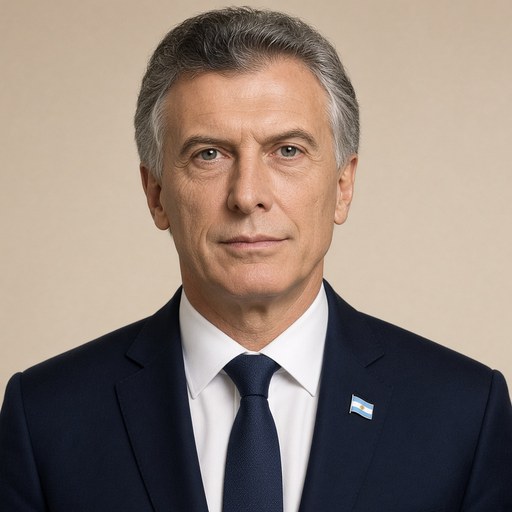
Words of President Macri at the 52nd Annual IDEA Colloquium in Mar del Plata.
 Mauricio Macri · President of Argentina
- Context
- Macri addressed business leaders at the 52nd Annual IDEA Colloquium in Mar del Plata on October 12, 2016, reviewing his first year of government reforms.
- Main themes
- Economic reforms and predictability, trust and institutional rebuilding, social policy and poverty reduction, Argentina's integration into the world, rule of law and independent institutions, unity and ending political division, public statistics and transparency, early childhood and social welfare programs, capital controls elimination, holdout agreement, inflation targets, job creation
- Duration
- ~33 min
- Words
- 3,962
- Sentences
- 137
- Readability
- 58
- Grade
- 12.2
- Syntax
- 3.41
- Vocabulary
- 1.84
Translated from Spanish
The broad sphere of national life a sentence belongs to. Every sentence has an Arena, so it is the denominator the other indices are read against.
Other137 sentences in 62 paragraphs
Mr. Head of Government, colleague Horacio; Mr. Governor of Santa Fe, Miguel; Mr. Governor of Salta, Urtubey - or husband of the year - Mr. former President of Chile, I don’t know if you know, but Urtubey, following the President's advice, has bet on love and you, as a wise man, should also preach the same, love is what moves us, so we are all happy. Officials; collaborators and members of IDEA: I should ask Mabel when was the first time I came to IDEA because I don’t remember, it was many years ago.
What I am sure of, and I remember, is that I never imagined I would be standing here as President of the Republic, these are things that life leads you to.
And the truth is that I would like to talk, more than about the first time, about the last time I came, which was last year, to this same Hall.
It was strange, because there was a desire to believe, but uncertainty weighed heavily, the anguish, the fear that things would not change. And I told you many things, some of which I will share, I brought a bunch of little papers.
I believe that on that day, except for a few small minorities, the majority thought I was a bit crazy, that all those things we said were not going to happen. I believe that in reality the only one who believed me was Narciso, because he comes and goes in time.
And the truth is that when I started reading today, which is what I want to share, some of the things I said, just a few, because we said many, I said: we have to generate predictability; we have to generate clear rules of the game; give signals of where we are going, with an independent INDEC, an independent Central Bank; tell those doomsayers to be careful with the capital controls, be careful with inflation, be careful with the dollars, we must not let ourselves be scared, because the mission of our government will be to rebuild that which is fundamental for Argentines, that engine that moves mountains, which is trust, trust that the outgoing government destroyed, putting the State at the service of being a refuge for politics.
In another paragraph I said: “The third challenge, which I also want to deepen and share with you, is to unite Argentina, because there have been too many years of division, of confrontation. And as an engineer, I understand that energy is applied to something, and applying it to fighting and dividing, takes away our power to build all that we need and that Argentines expect. That is why, when I talk about zero poverty, it first has to do with taking care of those who need us the most, with universal citizen income, with sewage, potable water for all Argentines, urbanizing slums, including, investing in everything that structurally changes everything, that generates opportunities to reduce poverty, for the creation of quality jobs, connecting the country physically and virtually.”
And the last thing I am going to read: “Next year, whoever organizes the IDEA Committee will be privileged, because all my Cabinet will be here to work with you on the policies. They will not have to suffer the one who comes or does not come, what conditions, what we do, what we can say, that is over. Please, the enemies are not here within Argentina, they are in the realities we have to face, and we have to set an example, I will set an example. The two names I am going to propose to the people will be two people who must meet three conditions: not being politically aligned, not being well-known or close to the President, and being prestigious jurists”
A year has passed and now I want to share with you, to give us encouragement and energy for all that we lack, which is a lot, thirty measures, some of which Stegmann covered in his very good speech, the truth is that I could sign and say “let’s eat” because I agree with everything the gentleman said, but they wouldn’t accept it, so here we are: end of the capital controls; agreement with the holdouts; elimination of export taxes, and now, starting last week, refund and reimbursement of taxes on exports in all regional economies; the SMEs Law and benefits for entrepreneurs; integration into the world; reconstruction of public statistics; inflation targets.
In social measures, many: Historical Reparation, which not only has to do with Justice, but also has to do with restoring the value of the work culture, if those who have worked, who have given everything to the country, are not recognized by society, it means we are not really valuing this as a fundamental element of our future.
Extension of family allowances; expansion of the Universal Child Allowance; Universal Pension for the Elderly; Federal Social Tariff; universal health coverage; Early Childhood Space, we have to build 4,000 and we have already started; 3,000 kindergartens, which we have already started; VAT refund for those who have Universal Allowance or receive the minimum pension; The State in Your Neighborhood, which is an innovation that is really working incredibly well, surely Caro Stanley, whom I saw is invited, will tell you, but it is all the State coming down together at the same time, in the same place to include, contain. Increase in unemployment insurance; increase in Income Tax by 160 percent; the Mobile Internet Access Plan in more than 1,300 cities, in addition to the switch to smart phones, which we have already achieved 500,000; increase in coverage for the AUH.
On the issue of drug trafficking: improvement of conditions in the Security Forces in equipment and salaries; 24-hour radar coverage of airspace; Federal Agreement for the fight against drug trafficking, for the first time in history we signed with all the governors, all working together, we all feel that this is something serious, that we share, that we do not deny, and I am sure that by working together we will resolve it.
And the Infrastructure Plan, which we call the most important in history, with a Railway Plan, with road infrastructure, 6,500 kilometers of roads, 2,800 of highways, the National Water Plan, the National Housing Plan, the Habitat Plan, the Flood Plan, the Energy Plan. All these things happened this year.
And the truth is that other very good things also happened, that in this change of climate, not only with the Forum, but in real facts, we had announcements of 48 billion dollars in investments to be made between now and the end of 2019, and that really marks a huge commitment from international entrepreneurs, from local entrepreneurs, betting on this new stage of Argentina, in which I believe that beyond all this that I have mentioned and shared, I say that the most important thing we have achieved together, those of us who bet on change, is to regain a climate of healthy coexistence, it is so important to wake up every day wanting to say “let’s see what I can do to improve reality, without aggression, without anyone believing they own the truth, and moreover, putting the truth as a fundamental lever to be able to cross that bridge to the future.”
This does not mean that the things we have ahead will be easy, they never were and they never will be, and less today in this world that presents itself full of challenges, where one looks, where one goes, there are conflicts, there are crises, but there are also opportunities.
We Argentines have some, I would say, enormous advantages, we have a short-term agenda that I would even call “accessible,” in which almost all of us agree, which begins with doubling food production, which we know we have the means to do, and adding value, branding, sophistication, to find niches.
Following the example of our Chilean brothers and developing sustainable mining, as Chile has done, as Australia does, as Canada does, Argentina can match the level of exports of the entire agricultural-livestock complex in sustainable mining exports. Recovering the power, the capacity for self-generated energy, with shale gas, tail gas. And not to mention, being one of the great protagonists of renewable energies, we have already had an enormous result in the first auction and this will not stop, we will have tens of thousands of megawatts produced with renewable energies.
And also in tourism. We all know that if Australia - which shares the distance to central countries, except for China which has a geographical advantage - has three times the tourists that Argentina has every year, working together with our Chilean brothers and with all of MERCOSUR, we have to triple the number of tourists.
And then we also have the capacity, fortunately, to produce services with added value, part of these tens of billions of dollars in announcements includes the main companies, several of which are here, that have been operating for years and tell me “whoever we find we will hire because now we are going to provide services from here, because talent, human resources, are absolutely valuable.”
But that without resigning that enormous entrepreneurial capacity that our country has, which is something wonderful. I would like all Argentines to be able to travel with me every week and verify the things I find, that I am surprised, that I am grateful for having gotten involved in politics to know my country better and to know more and more Argentines.
And that is why we are working from the Ministry of Production, with Minister Cabrera, in combination with Science and Technology, to support all the capacity to innovate, to give them the tools. We want to pass an entrepreneurship law that complements the SMEs Law which has already been a wonderful step forward and which, as Stegmann said here, is the majority future of job creation, which are the first ventures.
And let me share that in young people that entrepreneurial spirit continues. We have been working and Esteban, who is here, will surely comment tomorrow or the day after on the things that happen, the things that surprise us.
Recently in a contest at a school in Pilar, high school students developed an app for cell phones, which serves to alert everyone in the vicinity of the Luján River when there is a flood, they did it from scratch.
Or other kids, Esteban, in that contest which impressed me, who were growing potatoes in Santa Cruz - I didn’t know potatoes were grown in Santa Cruz - and with the waste from the potatoes they created a biodegradable film, in hours, something that with regular plastic takes a century, and they had developed it themselves. I asked them “But have you patented it yet?” because I was surprised, so young, so small, they were 15, 16 years old.
And not only the young people. Also, if you allow me, those things that happen in Argentina, that everyone should know so that we have self-esteem placed in doing, in overcoming. I found out that I have a neighbor in my weekend place, there on Route 8, who produces cables, I don’t know how many of you heard about this anecdote about the cables, that by chance a friend of his had a side job selling replacement cables there in New York, in a couple of stores. And he found out that in the Empire State the new elevators were not working, the cable could not withstand the speed, they were shaking. So he went, he had a contact and told him: “Look, I have an Argentine cable that can…” the guy said “What are you talking about?” It seems that the guy is a good salesman and they let him in for the test: the Germans, who sent back equipment, an American company and the Argentines who didn’t send the little cable they had as a spare, sent them the cables for the occasion. He goes to the first test, the German collapses; the American goes, collapses; the Argentine goes and - of course we have to reverse years of non-compliance - the guy tells them “No, the test is wrong, we’ll do it again this afternoon”
They repeated the test and the Argentine cable worked and the other two did not. They had to pass a new test. The guys said: “It can’t be, let the engineer come to explain to us why the Argentine cable works.”
He went, they explained, they bought all the cables, they ended up selling them the ones that replaced the World Trade Center, the new buildings.
And it was a small business that developed on Route 8, for so many years. I called them, I wanted to meet them and I said - and there was a very old gentleman, 70-something years old, who had been working all his life, his father had started - and I said to him: “Well, but how can I help you?” And he says: “Let’s start by not having my electricity cut off.” Because there I found out that, of course, his electricity was cut off, and the machine had no inertia and ruined all the cable, so they lost all the cables they had in production.
And another example I want to share with you: it is Mr. De la Parcossi, that is his last name; and the other is named Pirincho Zicarelli. During the campaign they took me there, to Saladillo, and he says: “I’m going to show you a factory, you’re going to be surprised.” I arrived, this gentleman who had not finished high school, proudly shows me a small workshop, where he had developed single-seat helicopters. I don’t know if any of you have seen them. And if one takes a second, it carries like it’s on a motorcycle, sitting a little higher than the first one.
And I said
- Is this…?
- No, it’s my development
- And how is it going for you?
- No, it’s going great, but I have this little workshop, I have the capacity to produce 28 and I always have sold a year in advance
- And were you able to patent it?
- No, I patented it in a few places, because I don’t have the money, and some are already copying me
I looked at all that and said
- It can’t be, have you never been… how many years have you been doing this?
- Decades, since BANADE, BICE
Well, if I win the election, I will come back and we will double the factory, how many can we sell per year?
One hundred.
Well, today I just spoke with Mayer, who is in charge of entrepreneurship, and he tells me that they have already approved the first contract to expand the factory in a first module, another for pre-financing of 5 million dollars, and another for working capital; and the plan is to reach 100 helicopters for export within 4 years and to triple the number of people employed in Saladillo. And in these cases, I am sure that you know much more than I do. Much more than I do.
And when I talk to you about this, it is not that I deny the enormous challenges we have. Because we have them, clearly. You listed many of them; and the first, the central one, is that we all have the obsession -as if it were something liturgical- of productivity.
As I tell my union colleagues, General Perón used to say, Urtubey, right? that the North Star of a country must be productivity. And I want to tell you that on that path of productivity, first, the one who has to take the fastest and most efficient steps is the State; because the State cannot be a burden, it cannot be an obstacle, a hindrance. It has to be a facilitator, it has to be the partner that every entrepreneur needs to take their first steps. Or someone who has already taken them and needs to reach more places in the world. And that is why we launched this most important Infrastructure Plan in history, because it is the State's responsibility to build those infrastructures.
And that is why we are trying to simplify. And we have to go reducing taxes and making them more rational, and there are many things we have to do, starting with recreating the importance, the value of public service: that the competition really matters, that people strive, that the State trains and that it happens, as it happens in many societies, that those who are well trained in the State may later move to the private sector and then, perhaps, return to the State. But we are all part of the same team, we nourish each other, we work together.
And I believe that also, after so many years of dealing with exotic characters who decided whether you sold or did not sell, at what prices, how it was, whether you had to go to Angola or if they would kill you; then everyone went to Angola, in single file.
We have to get back into the factories, we have to get back into the business, we have to take responsibility for reducing costs, for offering Argentines better products, at better prices, of better quality. And prepare, because all together, little by little, we are going to integrate into the world; it will take us years, we have years to do our homework together. And first, I insist, the Government, the State has to do it. And after my Government, the one that follows. Because we are all partners in creating jobs. The world is difficult, you just said: many traditional jobs are going to be destroyed.
So, we need to take advantage of that first agenda we have, but we all need to be obsessed with being part of this knowledge society; that fortunately it is not a coincidence that we have "Four Unicorns," that strange name they gave it, we said the other day at the Forum; I was with them, chatting.
We have many young people with creative capacity; we need to ensure that the conditions are created for them to be here, to stay, to not leave, to feel that we value them here.
And clearly, the other challenge that you also mentioned is education. Public education is the tool; we cannot continue to deepen the fracture between those who can pay and those who cannot. We need to start the evaluation processes, which is part of the agenda of telling ourselves the truth, of knowing where we are; we already know where we are.
When Esteban says: "Of every 4 kids who are going to start school - because they started on March 1st - only 2 will finish," it means that the one you have in the bank, sitting next to you, will not finish. And of the 2 who finish, only one understands texts. In other words, only one will be in a position to acquire a good job. It must urgently call us to action.
That is to say, we cannot lose another minute. We have to achieve, from society, that parents, teachers, the Government, all of us sit down and say "well, how are we going to correct this?" If we knew how to do it once, why can't we do it again? And without claiming that, because it would no longer serve, either. We have to do the most modern things that exist now, in access to technology, in pedagogical innovation, in flexible systems that we are already starting to implement. Also in the university issue: that there are credits, reduce careers, all things we have to debate.
Because we have to train, we have to give our young people the tools. If not, we condemn them to believe that just because they were in school, they will have something, that just because they were in university, they will have something, and no. It is not just about going to school or going to university. It is important to be there, to finish, to retain them. But it is important that they feel challenged, that they find content, that we have teachers and parents who understand that these are other tools, these are other times. And that, well, we have to adapt and be proud that they go faster than us. I have already gotten used to it: Antonia puts together puzzles much faster than I do, and that's it, it is what it is. I don't know what these kids have now, but they have it.
Fortunately, next Tuesday we have the first Educar test. All the kids, for the first time in history, from 5th year of secondary school and the last grade of primary school, will take an evaluation throughout the country, in public and private schools. And we will know; and it will surely hurt us, as it hurt us to know that the 32,... something is the poverty rate in Argentina.
But I am one of those who believes that when you see the situation, it hits you, it hurts, and if you have self-respect -because Argentines have it- we stand up and say "to work."
This is what I feel is happening in Argentina. That is why all the education ministers signed in Purmamarca; they chose a beautiful place, those who do not know Purmamarca yet do not know what they are missing.
And also, I would say that in this task, in this debate, I notice maturity in a majority of union leaders. There have been many years traveled, many accumulated frustrations. There is also space for dialogue, sector by sector, proposing a global agenda.
That is why today I signed the Decree for the Production and Labor Table, from which I hope many Tables will emerge and that each one or all of us understand that this challenge must call us all, because the country is our home. And we all know that we received a house, on December 10, with broken heating, roof problems, leaks, humidity, and bathrooms. And on top of that, when you have to repair it, it is worse, because all the unions come in, everyone is working, dust, you can't live, you get in a bad mood, it bothers you, it complicates you. But you endure it, as Argentines endured it, and I am very proud of the response that all of us who live in this country have had, understanding that we are laying the foundations for that Argentina that we deserve, for that Argentina that must include everyone. And fortunately, after more than five years without growth, next year we will grow again. That is wonderful news.
The issue is that we understand, definitively, that this is everyone's house, that this does not depend on a President, it does not depend on their Government; it depends on what each of us Argentines does. We are all valuable, we all have something to contribute, but you much more: you have talent, you have the ability to create, the ability to generate wealth; and from there, one can start to think about distribution or a State at the service of the people.
That is why I ask you, in the name of all Argentines: commitment, enthusiasm, the desire to demonstrate that what matters in life is overcoming, personal effort, that is what dignifies you.
And you, as leaders, each in your place, must convey that message. And not only put all your capacity, all your ingenuity, but also show solidarity and put your heart into it.
Thank you very much.
The original Spanish. The tags above are read on the English translation's sentences.
Señor Jefe de Gobierno, compañero Horacio; señor Gobernador de Santa Fe, Miguel; señor Gobernador de Salta, Urtubey- o marido del año- Señor ex presidente de Chile, no sé si sabe, pero Urtubey, siguiendo los consejos del Presidente, ha apostado al amor y usted, como un hombre sabio, también debe predicar lo mismo, el amor es lo que nos mueve, así que, estamos todos contentos. Funcionarios; colaboradores y miembros de IDEA: yo tendría que preguntarle a Mabel cuándo fue la primera vez que vine a IDEA porque no me acuerdo, fue hace muchos años atrás.
De lo que estoy seguro, y me acuerdo, es de que nunca imaginé que iba a estar parado acá como Presidente de la República, son cosas a las que te lleva la vida.
Y la verdad que querría hablar, más que de la primera vez, de la última vez que vine, que fue el año pasado, a este mismo Salón.
Fue raro, porque había ganas de creer, pero la incertidumbre pesaba, la angustia, el miedo de que las cosas no iban a cambiar. Y yo les dije muchas cosas, que algunas las voy a compartir, me traje un montón de papelitos.
Yo creo que ese día, salvo algunas pequeñas minorías, la mayoría pensó que yo estaba medio loco, que todas esas cosas que decíamos no iban a suceder. Yo creo que en relidad el único que me creyó fue Narciso, porque él viene y va en el tiempo.
Y la verdad que cuando me puse a leer hoy, que es lo que quiero compartir, algunas de las cosas que dije, poquitas, porque dijimos muchas, dije: tenemos que generar previsibilidad; tenemos que generar reglas de juego claras; dar señales de hacia dónde vamos, con un INDEC independiente, un Banco Central independiente; decirles a aquellos agoreros de que cuidado con el cepo, cuidado con la inflación, cuidado con los dólares, no nos tenemos que dejar asustar, porque la misión de nuestro gobierno va a ser reedificar eso que es fundamental para los argentinos, ese motor que mueve montañas, que es la confianza, confianza que el gobierno que termina destruyó, poniendo al Estado al servicio de ser un aguantadero de la política.
En otro párrafo dije: “El tercer desafío, que también quiero profundizar y compartir con ustedes, es el de unir a la Argentina, porque son demasiados años de división, de confrontación. Y como ingeniero entiendo que la energía se aplica a algo, y aplicarlo a pelear y dividir, nos resta potencia para poder construir todo eso que necesitamos y que los argentinos esperan. Por eso, cuando hablo de pobreza cero, primero tiene que ver con ocuparse de aquellos que más nos necesitan, con ingreso universal ciudadano, con cloacas, agua potable para todos los argentinos, urbanizando villas, incluyendo, invirtiendo en todo lo que cambia estructuralmente todo, que genere oportunidades para reducir la pobreza, para la creación de empleos de calidad, conectando física y virtualmente al país”.
Y lo último que voy a leer: “El año que viene, el que organice el Comité de IDEA, será un privilegiado, porque acá va a estar todo mi Gabinete para trabajar con ustedes las políticas. No va tener que sufrir el que viene o no viene, qué condiciones, qué hacemos, qué podemos decir, eso se acabó. Por favor, los enemigos no están acá dentro de la Argentina, están en las realidades que tenemos que enfrentar, y nosotros tenemos que dar el ejemplo, yo voy a dar el ejemplo. Los dos nombres que voy a proponer a la gente, van a ser dos personas que tengan que cumplir tres condiciones: no estar embanderados políticamente, no ser personas conocidas ni cercanas al Presidente, y ser prestigiosos juristas” (APLAUSOS)
Pasó un año y ahora quiero compartir con ustedes, para darnos ánimo y energía para todo lo que nos falta, que es mucho, treinta medidas, algunas recorrió Stegmann en su muy buen discurso, la verdad que podría firmar y decir “vamos a comer” porque adhiero a todo lo que dijo el señor, pero no me lo aceptarían, así que acá estamos: fin del cepo; acuerdo con los holdsouts; eliminación de retenciones a las exportaciones, y ahora, a partir de la semana pasada, devolución y reintegro de impuestos en las exportaciones en todas las economías regionales; la Ley de Pymes y beneficios para los emprendedores; integración al mundo; reconstrucción de las estadísticas públicas; metas de inflación.
En medidas sociales, muchísimas: Reparación Histórica, que no solo tiene que ver con la Justicia, sino que también tiene que ver con volver a poner en valor la cultura del trabajo, si a aquellos que han trabajado, que le han dado todo al país, la sociedad no los reconoce, es que no estamos realmente poniendo este valor como un elemento fundamental de nuestro futuro.
Extensión de las asignaciones familiares; ampliación de la Asignación Universal por Hijo; Pensión Universal al Adulto Mayor; Tarifa Social Federal; Cobertura universal de salud; Espacio de primera infancia, tenemos de construir 4.000 y ya comenzamos; 3.000 jardines, que ya comenzamos; devolución de IVA para aquellos que tienen Asignación Universal o cobran el haber mínimo; El Estado en tu Barrio, que es una innovación que realmente está funcionando increíblemente bien, seguramente Caro Stanley, que vi que está invitada, les va a contar, pero es todo el Estado junto bajando al mismo tiempo, en el mismo lugar para incluir, contener. Aumento del seguro de desempleo; suba del Impuesto a las Ganancias en un 160 por ciento; el Plan de Acceso a Internet Movil en más 1.300 ciudades, además del cambio a celulares inteligentes, que ya logramos 500.000; aumento del alcance a la AUH.
En el tema narcotráfico: mejora de condiciones en las Fuerzas de Seguridad en equipamiento y salarios; radarización 24 horas del espacio aéreo; Acuerdo Federal para la lucha contra el narcotráfico, por primera vez en la historia firmamos con todos los gobernadores, todos trabajando en conjunto, todos sentimos que esto es algo grave, que lo compartimos, que no lo negamos, y estoy seguro de que trabajando en conjunto lo vamos a ir resolviendo.
Y el Plan de Infraestructura, que llamamos el más importante de la historia, con un Plan Ferroviario, con infraestructura vial, 6.500 kilómetros de rutas, 2.800 de autopistas, el Plan Nacional de Agua, el Plan Nacional de Viviendas, el de Hábitat, el de Inundaciones, el de Energía. Todas cosas pasaron este año.
Y la verdad que también pasaron otras cosas que también son muy buenas, que en este cambio de clima, no solo con el Foro, sino en hecho reales, tuvimos anuncios de 48.000 millones de dólares de inversiones a realizarse entre acá a fines de 2019, y eso marca realmente un enorme compromiso del empresariado internacional, del empresariado local, apostando a esta nueva etapa de la Argentina, en la cual yo creo que más allá de todo esto que les he mencionado y que he compartido, yo digo que lo más importante que hemos logrado entre todos, aquellos que apostamos por el cambio, es volver a tener un clima de sana convivencia, es tan importante volver a levantarte todos los días con ganas de decir “a ver qué puedo hacer para mejorar la realidad, sin agresión, sin que nadie se crea el dueño de la verdad, y es más, poniendo la verdad como una palanca fundamental para poder cruzar ese puente hacia el futuro”.
Esto no significa que las cosas que tengamos por delante vayan a ser fáciles, nunca lo fueron y nunca lo van a ser, y menos hoy en este mundo que se presenta lleno de desafíos, dónde uno mira, dónde uno va, hay conflictos, hay crisis, pero también hay oportunidades.
Los argentinos tenemos algunas, yo diría, enormes ventajas, tenemos una agenda de corto plazo que yo hasta llamaría “accesible”, en la cual casi todos estamos de acuerdo, que comienza por duplicar la producción de alimentos, que sabemos que tenemos con qué, y agregarle valor, marca, sofisticación, para encontrar los nichos.
Seguir el ejemplo de nuestros hermanos chilenos y desarrollar la minería sustentable, como lo ha hecho Chile, como lo hace Australia, como lo hace Canadá, la Argentina puede igualar el nivel de exportaciones de todo el complejo agrícola-ganadero en exportaciones de minería sustentable. El recuperar la potencia, la capaciad de generación de energía propia, con el shale gas, el tail gas. Y ni qué hablar, ser uno de los grandes protagonistas de las energías renovables, ya hemos tenido un enorme resultado en la primera licitación y esto no va a parar, vamos a tener decenas de miles de megas producidos con energías renovables.
Y también en el turismo. Todos sabemos que si Australia -que comparte la distancia a los países centrales, salvo China que tiene una ventaja geográfica- tiene el triple de turistas que la Argentina todos los años, trabajando en conjunto con nuestros hermanos chilenos y con todo el MERCOSUR, nosotros tenemos que triplicar la cantidad de turistas.
Y después también tenemos la capacidad, por suerte, de producir servicios con valor agregado, en parte de estas decenas de miles de millones de dólares de anuncios están las principales empresas, que varias están acá, que hace años operan y que me dicen “persona que encuentre la tomamos porque ahora vamos a brindar servicios desde acá, porque el talento, el recurso humano, es absolutamente valioso”.
Pero eso sin resignar esa enorme capacidad emprendedora que tiene nuestro país, que es algo maravilloso. Yo querría que todos los argentinos pudiesen viajar conmigo cada la semana y verificar las cosas que yo encuentro, que yo me sorprendo, que agradezco el haberme involucrado en política para conocer más mi país y conocer cada vez más a los argentinos.
Y por eso estamos trabando desde el Ministerio de la Producción, con el ministro Cabrera, en combinación con Ciencia y Tecnología, para apoyar toda la capacidad de innovar, darles las herramientas. Queremos sacar una ley de emprendedorismo que complemente la Ley Pymes que ya ha sido un paso adelante maravilloso y que, como decía acá Stegmann, es el futuro mayoritario de la creación de empleo, que son los primeros emprendimientos.
Y déjenme compartir que en los jóvenes ese espíritu emprendedor continúa. Nosotros venimos trabajando y Esteban, que está por acá, les va a comentar seguramente mañana o pasado las cosas que pasan, las cosas que nos sorprenden.
Hace poco en un concurso en una escuela de Pilar, los chicos de secundaria desarrollaron un app para el celular, que sirve para avisarles a todos los que están en la vecindad del Río Luján cuando hay crecida, lo hicieron ellos así de la nada.
U otros chicos, Esteban, en ese concurso con el que yo quedé impresionado, que hacían papa en Santa Cruz –no sabía que se hacía papa en Santa Cruz- y con el residuo de la papa crearon un film biodegradable, en horas, algo que con el plástico habitual lleva un siglo, y lo habían desarrollado ellos. Yo les dije “¿pero ya lo patentaron?”, porque yo me sorprendía, tan jóvenes, tan chicos, tenían 15, 16 años.
Y no solo los jóvenes. También, si me permiten, esas cosas que pasan en la Argentina, que todos deberían saber para que tengamos la autoestima puesta en el hacer, en la superación. Yo me enteré que tengo un vecino en mi lugar de fin de semana, ahí en la Ruta 8, que produce cables, no sé cuántos se enteraron de esta anécdota de los cables, que de casualidad un amigo de él tenía como una changa vender cables de repuesto ahí en Nueva York, en un par de tiendas. Y se enteró que en el Empire States los ascensores nuevos no funcionaban, el cable no resistía la velocidad, trepidaban. Entonces él fue, tenía un contacto y le dijo: “mire, yo tengo un cable argentino que puede…”, el tipo le dijo “¿de qué estás hablando?” Se ve que el tipo es un buen vendedor y lo dejaron entrar en la prueba: los alemanes, que mandaron de vuelta un equipamiento, una empresa americana y los argentinos que no mandaron el cablecito que tenían de repuesto ahí, le mandaron los cables para la ocasión. Va a la primera prueba, el alemán colapsa; va el americano, colapsa; va el argentino y -por supuesto tenemos que revertir años de incumplimiento- el tipo les dice “no, la prueba está mal, la hacemos de vuelta a la tarde” (RISAS)
Volvieron a repetir la prueba y el cable argentino anduvo y los otros dos, no. Tuvieron que pasar una nueva prueba. Los tipos dijeron: “No puede ser, que venga el ingeniero para explicarnos por qué el cable argentino funciona”.
Fue, les explicaron, le compraron todos los cables, terminaron vendiéndoles también los que reemplazó el World Trade Center, los nuevos edificios.
Y era una pyme que se desarrolló en la Ruta 8, durante tantos años. Los llamé, los quise conocer y les dije -y había un señor muy grande ya, 70 y pico de años, toda su vida trabajando, su viejo había empezado- y yo le dije: “Bueno, pero ¿cómo lo puedo ayudar?”. Y me dice: “Empecemos por que no se me corte la luz”. (APLAUSOS) Porque ahí me enteré que, claro, se le cortaba la luz, y no tenía inercia la máquina y le arruinaba todo el cable, entonces perdían todos los cables que tenían en producción.
Y otro ejemplo que quiero compartir con ustedes: es el señor De la Parcossi, se llama de apellido; y el otro se llama Pirincho Zicarelli. En campaña me llevaron ahí, a Saladillo, y me dice: “Te voy a mostrar una fábrica, te vas a sorprender”. Llegué, este señor que no había terminado el secundario, me muestra todo orgulloso un pequeño taller, donde él había desarrollado helicópteros monoplaza. No sé si alguno los ha visto. Y que si lleva uno un segundo, lo lleva como si fuese en un moto, sentado un poquito más arriba que el primero.
Y yo dije
- ¿esto…?
- No, es un desarrollo mío
- ¿Y cómo le va?
- No, me va bárbaro, pero tengo este tallercito, tengo capacidad para producir 28 y tengo siempe vendido un año por adelantado
- ¿Y lo pudo patentar?
- No, lo patenté en pocos lugares, porque no tengo la plata, y ya algunos me lo están copiando
Yo miré todo eso y dije
- No puede ser, ¿usted nunca fue…hace cuántos años que estás?
- Décadas, cuando estaba el BANADE, el BICE
- Bueno, si yo gano la elección, voy a volver y vamos a duplicar la fábrica, ¿cuántos podemos vender por año?
- Cien
Bueno, hoy justo hablé con Mayer, que se ocupa del emprendedurismo, y me dice que ya le aprobaron el primer contrato para ampliar la fábrica en un primer módulo, otro para prefinanciación de 5 millones de dólares y otro para capital de trabajo; y el plan es llegar a 100 helicópteros de exportación dentro de 4 años y triplicar la gente empleada en Saladillo. Y de estos casos, estoy seguro que ustedes saben muchísimo más que yo. Muchísimo más que yo.
Y cuando les hablo de esto, no es que reniegue de los enormes desafíos que tenemos. Porque los tenemos, claramente. Vos listaste muchos de ellos; y el primero, el central, es que tengamos todos la obsesión -como si fuese algo litúrgico- de la productividad.
Como se lo digo a los compañeros gremialistas, que el General Perón decía, Urtubey, ¿no? que la estrella polar de un país debe ser la productividad. Y quiero decirles que en ese camino de la productividad, primero, el que tiene que dar los pasos más rápidos y más eficientemente, es el Estado; porque el Estado no puede ser una carga, no puede ser una traba, un obstáculo. Tiene que ser un facilitador, tiene que ser el socio que necesita cada emprendedor que necesita dar sus primeros pasos. O aquel que ya los dio y necesita llegar a más lugares en el mundo. Y por eso es que lanzamos este Plan de Infraestructura más importante de la historia, porque es responsabilidad del Estado construir esas infraestructuras.
Y por eso estamos tratando de simplificar. Y tenemos que ir reduciendo impuestos y hacerlos más racionales, y hay muchas cosas que tenemos que hacer, empezando por recrear la importancia, el valor de la carrera pública: que realmente el concurso valga, que la gente se esfuerce, que el Estado forme y que pase, como pasa en muchas sociedades, que el que se forma bien en el Estado, tal vez después circule hacia el sector privado y después, por ahí vuelve al Estado. Pero somos todos parte de un mismo equipo, que nos nutrimos, que trabajamos en conjunto.
Y yo creo que también ahí, después de tantos años de lidiar con personajes exóticos que decidían si ustedes vendían o no vendían, a qué precios, cómo era, si tenían que ir a Angola o si no los mataban; entonces iban todos a Angola, en fila india.
Hay que volver a meterse en las fábricas, hay que volver a meterse en la empresa, hay que volver a hacerse cargo de reducir los costos, de ofrecerle a los argentinos mejores productos, a mejores precios, de mejor calidad. Y prepararse, porque todos juntos, de a poco, vamos a integrarnos al mundo; nos va a llevar años, tenemos años para hacer los deberes entre todos. Y primero, insisto, lo tiene que hacer el Gobierno, el Estado. Y después de mi Gobierno, el que siga. Porque somos todos socios en conseguir empleo. El mundo está difícil, lo dijiste recién: se van a destruir muchos empleos tradicionales.
Entonces, necesitamos aprovechar esa primera agenda que tenemos, pero estar todos obsesionados por ser parte de esta sociedad del conocimiento; que por suerte no es casualidad que tengamos “Cuatro Unicornios”, ese nombre raro que le pusieron, lo decíamos el otro día en el Foro; estuve con ellos, charlando.
Tenemos muchos jóvenes con capacidad creativa; tenemos que lograr que se den las condiciones para que estén acá, para que se queden, para que no se vayan, para que sientan que acá los valoramos.
Y claramente, el otro desafío que vos también citaste, es la educación. La educación pública es la herramienta; no podemos seguir ahondando en la fractura entre los que pueden pagar y los que no lo pueden hacer. Necesitamos empezar los procesos de evaluación, que es parte de la agenda de decirnos la verdad, de saber dónde estamos; que ya sabemos dónde estamos.
Cuando Esteban dice: “De cada 4 chicos que van a comenzar el colegio –porque comenzaron el 1ro de marzo pasado- sólo 2 van a terminar”, quiere decir que el que tenés en el banco, compartiendo al lado tuyo, no va a terminar. Y de los 2 que terminan, uno solo comprende textos. O sea, uno solo va a estar en condiciones de adquirir un buen empleo. Nos tiene que llamar desesperadamente a la tarea.
Es decir, no podemos perder un minuto más. Tenemos que lograr desde la sociedad, que los padres, los docentes, el Gobierno, todos nos sentemos a decir “bueno ¿de qué manera vamos a corregir esto?”. Si supimos hacerlo una vez, ¿por qué no vamos a poder volver a hacerlo? Y sin reivindicar aquello, porque ya no serviría, tampoco. Hay que hacer lo más moderno que haya ahora, en el acceso a la tecnología, en la innovación pedagógica, en sistemas flexibles que ya estamos empezando a poner. También en el tema universitario: que haya créditos, reducir carreras, todas cosas que tenemos que debatir.
Porque hay que formar, hay que darles las herramientas a nuestros jóvenes. Si no, los condenamos a creer que como ellos estuvieron en el colegio, van a tener algo, que como estuvieron en la universidad van a tener algo, y no. No es solamente ir al colegio o ir a la universidad. Es importante estar, terminar, retenerlos. Pero es importante que se sientan desafiados, que sientan que encuentran contenidos, que tenemos maestros y padres que entienden que son otras herramientas, son otros tiempos. Y que, bueno, hay que adaptarse y estar orgullosos de que ellos vayan más rápido que nosotros. Yo ya me acostumbré: Antonia arma rompecabezas mucho más rápido que yo, y ya está, es así. No sé que tienen estos chicos de ahora, pero lo tienen.
Por suerte, el martes que viene tenemos la primera prueba Educar. Todos los chicos, por primera vez en la historia, de 5to año de secundario y del último grado de primaria, van a hacer una evaluación en todo el país, escuelas públicas y escuelas privadas. Y vamos a saber; y seguramente nos va a doler, como nos dolió saber que el 32,… algo es el índice de pobreza de la Argentina.
Pero yo soy de los que cree que cuando ves la cosa, te golpea, te duele, y si tenés amor propio -porque los argentinos lo tenemos- nos ponemos de pie y decimos “a la tarea”.
Esto es lo que yo siento que está sucediendo en la Argentina. Por eso firmaron todos los ministros de Educación, en Purmamarca; eligieron un lindísimo lugar, el que no conoza Purmamarca todavía, no sabe lo que se pierde.
Y también, diría yo que en esta tarea, en este debate, noto madurez en una mayoría de los líderes sindicales. Ya hay muchos años recorridos, muchas frustraciones acumuladas. También hay un espacio para dialogar, sector por sector, planteando una agenda global.
Por eso hoy firmé el Decreto para la Mesa de la Producción y el Trabajo, donde de ahí, espero que se desprendan muchísimas Mesas y que cada uno o todos entendamos que este desafío nos tiene que convocar a todos, porque el país es nuestra casa. Y sabemos todos que recibimos una casa, el 10 de diciembre, con la calefacción rota, problemas de techo, de goteras, de humedades, de baños. Y encima, cuando tenés que reparar es peor, porque entran todos los gremios adentro, todo el mundo trabajando, polvo, no podés vivir, te ponés de mal humor, te molesta, te complica. Pero la bancás, como bancaron los argentinos y yo estoy muy orgulloso de la respuesta que han tenido todos los que vivimos en este país, entendiendo que estamos echando bases para esa Argentina que nos merecemos, para esa Argentina que tiene que incluir a todos. Y por suerte, después de más de un lustro sin crecer, el año que viene vamos a volver a crecer. Esa es una noticia maravillosa.
El tema es que entendamos, definitivamente, que esta es la casa de todos, que esto no depende de un Presidente, no depende de su Gobierno; depende de lo que hacemos cada uno de los argentinos. Todos somos valiosos, todos tenemos algo que aportar, pero ustedes muchísimo más: ustedes tienen talento, ustedes tienen capacidad de crear, capacidad de generar riqueza; y a partir de ahí, uno puede empezar a pensar en distribuir o en un Estado al servicio de la gente.
Por eso les pido, en nombre de todos los argentinos: compromiso, entusiasmo, ganas de demostrar que lo que vale en la vida es la superación, el esfuerzo personal, eso es lo que te dignifica.
Y ustedes, como líderes, cada uno en su lugar, tiene que transmitir ese mensaje. Y no sólo poner toda su capacidad, todo su ingenio, sino también poner solidaridad y poner el corazón.
Muchas gracias. (APLAUSOS)