




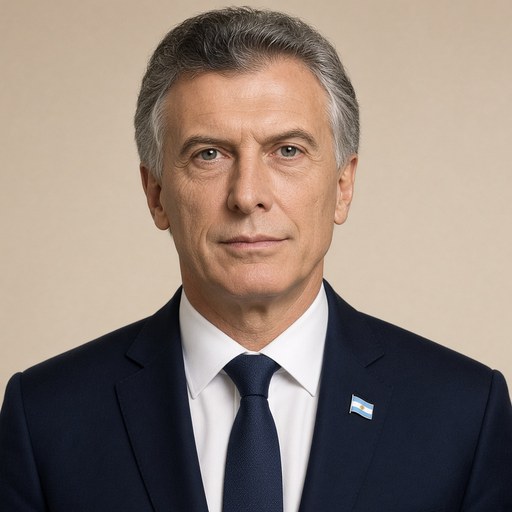
Words of President Macri at the 92nd anniversary of the Chamber of Commerce, CABA.
 Mauricio Macri · President of Argentina
- Context
- Macri addressed the Chamber of Commerce of Buenos Aires on its 92nd anniversary in November 2016, outlining Argentina's economic reforms and path to sustainable growth.
- Main themes
- Economic recovery and growth, poverty reduction, institutional strengthening, trade and competitiveness, cultural change, transparency and truth, social spending, foreign investment, energy sector, agriculture, tourism, value-added services exports
- Duration
- ~20 min
- Words
- 2,345
- Sentences
- 70
- Readability
- 50
- Grade
- 14.6
- Syntax
- 3.61
- Vocabulary
- 1.91
Translated from Spanish
The broad sphere of national life a sentence belongs to. Every sentence has an Arena, so it is the denominator the other indices are read against.
Other70 sentences in 31 paragraphs
Good afternoon, Mr. President, thank you for your words.
I am very glad to hear that we have many coincidences. First, in what our greatest concern is, what should be our greatest concern, which is to reduce poverty, to create opportunities so that more and more Argentinians have their own projects with which to develop themselves. And also to believe that the path is the strengthening of institutions, the development of our capacities, or what we can call "competitiveness."
In the 92 years of this Chamber, many things have happened; trade has changed in the world at a dizzying pace, I would say perhaps even more so in the last ten years.
A few days ago, we saw with Minister Cabrera what has happened in the world, and it is a result for those who decided to engage, to exchange more and more, generating a virtuous process of investment, which of course brought jobs, quality jobs, versus those who isolated themselves. And unfortunately, what we did in the last twelve years was deepen that isolation, and that resulted in stagnation and the failure to solve fundamental issues, starting with exclusion.
The first and positive thing is that today I am here because you, from the bottom up in most of Argentine society, decided to embark on the path of change, despite all the things that were said would happen to us if we dared to take this other route, in which today the majority not only are hopeful but deeply believe.
But this change is much more than an economic change; it is a cultural change, a profound cultural change. And it is based on fundamental elements that we are today reintegrating, reconciling with our daily lives: dialogue, respect, transparency, and truth, truth as a central value for our relationships, the truth in demonstrating that we are a courageous people, that we are capable of facing things as they are. And we do not want to continue deceiving ourselves; we do not want to remain in the darkness of denying the problems that are right in front of our noses, because by denying them, all we did was delay their solution.
But as Jorge said, the starting point was much more difficult than we imagined. We found a country truly broken, with all kinds of debts, in default, with a huge fiscal deficit, with one of the highest tax burdens in the region, without energy, and with a problematic relationship with practically all countries.
And in the face of this issue, we had a difficult year; you mentioned it, less sales, problems in organizing trade, for industry, for many people. But in the face of that, we did not decide to remain in complaint; we did not dwell on the inheritance; we decided to channel this pain, this anger, into saying "we are going to move forward." And we had a first great success, which was to avoid a fifth terminal crisis, to which it seemed we were condemned, and we said "no," because we have decided to embark on another path.
But as we also feel that this bridge that I invited you to build on March 1 between today's Argentina and that Argentina that we can, that we must, and that we are going to create, that bridge that all Argentinians must cross, is that we are promoting and are in the process of approving the 2017 budget, which will have the largest social spending in history, so that all Argentinians feel that the State is close, that the State extends a hand, a hand so that soon, with training, they can also be protagonists in the construction of that Argentina we all dream of.
And fortunately, it is the consensus of all that in 2017, after more than five years of stagnation, Argentina will grow again, hand in hand with agriculture, which will increase its production by more than 20%. Hand in hand with energy, which we are receiving from renewables - which was a success in the call - and thermal, more than 6 billion dollars, and we must add several thousand more with unconventional and conventional energy. Hand in hand with mining, which has also launched billions in investment throughout the north and the mountainous provinces. Hand in hand with tourism, which fortunately began to improve after years of isolation caused by the currency controls and all these obstacles, and the arrival of tourists who, fortunately, the more they get to know us, the more they fall in love and want to return. Hand in hand with the export of value-added services, which, Minister, we bet a lot on because it is quality work.
And fortunately, I can tell you that so far this year I have had the luck to receive, among many interested in investing in our country, many of the most important companies in the world saying that they will establish a base in Argentina. Why? Because of the talent, because of the quality of human resources, to provide services from here to all their other companies in other countries.
But of course, the challenge is not to grow in 2017; the challenge is to grow twenty years consistently, permanently, and to avoid that sawtooth that has done us so much harm, that has generated so much anger, that has generated so much resentment in our society. And for that, constant growth is the only way to systematically reduce poverty. For that, we must work together, together around a table, together with humility, together knowing that each one must make their contribution, as the boys did for the joy of all this weekend in the Davis Cup, what pride we all had as Argentinians!
That is why Jorge, you rightly highlighted the importance of this Table for Production and Work, where each of us must go knowing that in every decision we can agree on, in every space, sector by sector, regional economy by regional economy, we will be creating spaces for development, future opportunities for many Argentinians.
And as I tell my Peronist colleagues, the axis, the North Star, as General Perón said, must be productivity, which at the end of the day means that each one puts in their grain of sand, that each one makes their maximum effort.
And the first to do so must be the State, this Government with your support, because we must reduce the cost of capital, and for that, it is central to reduce the enormous fiscal deficit we have, which is nothing more than doing the same that each of you does in your homes, which is to live within your means and not to go into debt, not to pledge, not to mortgage the future. For that, I hope that starting next year we can sit around a table, in that and in all others, and that everyone goes to the table saying "I think this should be the priority and this can be postponed," because that is what reducing the deficit is about, not that each one tries to take as much as possible. And it is not enough to say "it is bad to go into debt," of course, it is bad to go into debt in the long term, but we must propose concrete solutions to achieve a balance that strengthens us.
The State must also guarantee energy supply - and fortunately, these successful tenders we have had for energy supply, much of it renewable, will protect the environment - because we have lost many jobs in these years with this mess of energy policy, because there were cuts, factory closures because we did not have energy. And how many projects could not come to settle because we could not guarantee energy.
We also need to reduce labor litigation because we must protect the jobs we have and create conditions for new jobs.
And we must reduce the tax burden and not always propose new taxes.
And we must solve our logistical problems, which are many; we have a huge country, and we must connect it physically and virtually. But fortunately, we have set it in motion; Minister Dietrich has already launched dozens of projects; we will double the number of highways in Argentina in four years, not only to connect but to protect the lives of thousands of Argentinians who have been losing their lives year after year without any government taking responsibility for solving this problem. And on top of that, they told us we were driving poorly; on these same roads, I believe we bring citizens from other parts of the world, and they would die twice as much; it is impossible to travel with so many trucks.
And also, as the President said, we must be smart and find a way to insert ourselves into the world, and we must do it together; it cannot be done only by a Government; it must be done by the Government with the productive sectors.
These are all tasks we must undertake, such as continuing to lower inflation, simplifying everyone's lives, not only as we did in the City of Buenos Aires, where we transformed physical procedures into virtual ones, but in all spaces, because time is one, and we must give time back to our people, time so they can create more, do more.
That is why we have launched the single window for Foreign Trade. That is why the SME Law generates a number of tools for those SMEs to grow and transform into medium-sized and then large companies, and that is what will make us all grow. We are pushing and hope that Congress will support us with the entrepreneurs' law, with the first job law.
And we hope that you will tell us, Jorge, what procedures bother you, what obstacles you have, and that together we will remove them. We must reverse the proof; we must stop having a State that hinders, that obstructs, to have a State that promotes, and then, when it promotes, when it gives you the right, if you do not comply, of course, it must apply the rigor of the law. But not the other way around.
And entrepreneurs must worry about renewing themselves, understanding that in this technological tsunami that crosses the world, closing yourself off will not save you; we have seen many countries that believe that isolation is a solution.
Globalization is not a problem; the problem is the enormous technological challenge we face, which will destroy traditional jobs and create new ones. And to be part of those new jobs, we must bet not only on science and technology; we must bet on training. And we need our entrepreneurs to invest in training their human resources more and better, and also to invest in technology, to bet on innovation. And all within a sustainable framework because we must have a commitment to the environment.
And our union leaders must understand, and fortunately, I notice them concerned about understanding what is happening in the world, and understand that labor agreements from the 20th century are no longer tools for growth in the 21st century. So we must sit down and discuss how we will not only protect the jobs we have but also generate millions more. I insist that this is the only path that leads us to defeat poverty.
But the central element, the one that will make this possible, is that we believe in ourselves, believe in our capabilities, understand that this path is a long one that has begun and will take years, but it does not matter how long it takes; what matters is that each day we are a little better, because that will give us an internal joy, it will give us the energy to get up day after day knowing that we are building a better future for our children and grandchildren. And not only are we believing, the world believes, the world visits us, the world has focused its attention on our country, and not only for energy, lithium, food production, but for us, because it believes in our talents; that is where we must know how to take advantage of this moment.
Next year, they will visit us time and again; we have the World Economic Forum for Latin America, we have the Agroindustrial Forum, we have the Tourism Forum, we have the WTO meeting, all occasions where they will visit us from all over the world and come to see what they can do, what they can invest in, to look for a partner, and that is where you have a leading role. And in 2018, the G20 with the countries that make it up, with the highest authorities, with the most important businesspeople in the world.
Many things have happened to us this year that is ending. I believe that the most important thing we have achieved is to be here able to dialogue without tensions, without aggression, understanding that we have many things to resolve. But the path is no longer shortcuts; it is no longer the misinterpreted cleverness of taking advantage of the one next to you; it is no longer lying. Truco is a wonderful game that has brought us together so many times, but it is a card game that cannot be applied to life. The quality of life we want for ourselves, for our families, is based on commitment, on being predictable, on being credible, on being trustworthy, on recovering that of shaking hands and that it is not necessary to sign so many contracts - forgive me, lawyers. That is what it is about.
So just as Del Potro did two sets down, he did not think it was impossible; he played so much for so much. And this is what we Argentinians must do, get up every morning and say "I will give my maximum effort." I am sure that if we all do the same, the only thing that awaits us will be a wonderful future.
Thank you very much to all.
The original Spanish. The tags above are read on the English translation's sentences.
Buenas tardes, Presidente, gracias por sus palabras.
Me alegra mucho escuchar que tenemos muchas coincidencias. Primero en cuál es nuestra mayor preocupación, cuál debe ser nuestra mayor preocupación, que es reducir la pobreza, generar oportunidades para que cada vez más argentinos tengan un proyecto propio, con el cual desarrollarse. Y además creer que el camino es el fortalecimiento de las instituciones, el desarrollo de nuestras capacidades, o lo que podemos llamar “competitividad”.
En 92 años de esta Cámara han pasado muchas cosas, el comercio fue cambiando en el mundo vertiginosamente, diría yo que tal vez aún más en estos últimos diez años.
Veíamos con el ministro Cabrera hace unos días lo que ha pasado en el mundo, y es un resultado para aquellos que decidieron relacionarse, intercambiar cada día más generando un proceso virtuoso de inversión, que por supuesto trajo trabajo, trabajo de calidad, versus aquellos que se aislaron. Y lamentablemente nosotros en los últimos doce años lo que hicimos fue profundizar ese aislamiento, y eso trajo como consecuencia el estancamiento y la no solución de los temas de fondo, empezando por la exclusión. (APLAUSOS)
Lo primero y lo positivo es que hoy yo estoy acá porque ustedes, desde abajo para arriba en la mayoría de la sociedad argentina, decidieron emprender el camino del cambio, a pesar de todas las cosas que nos decían que nos iban a suceder si nos animábamos a tomar esta otra vía, en la cual hoy la mayoría no sólo estamos esperanzados sino que creemos profundamente.
Pero este cambio es mucho más que un cambio económico, es un cambio cultural, es un profundo cambio cultural. Y que se basa en elementos fundamentales que hoy estamos como reincorporando, reconciliando con nuestra vida diaria: el diálogo, el respeto, la transparencia y la verdad, la verdad como valor central para vincularnos, la verdad en demostración de que somos un pueblo con coraje, que somos capaces de asumir las cosas como son. Y no queremos seguir engañándonos, no queremos seguir en la oscuridad de negar las cosas que tenemos frente a nuestras narices como problemas, porque al negarlos lo único que hicimos fue demorar su solución.
Pero como decía Jorge, el punto de partida fue muchísimo más difícil del que imaginamos. Encontramos un país verdaderamente quebrado, con todo tipo de deudas, en default, con un déficit fiscal enorme, con una carga impositiva de las más altas de la región, sin energía, y con un problema de relación con prácticamente todos los países.
Y frente a este tema tuvimos un año difícil, lo dijiste, menos ventas, problemas en ordenamiento para el comercio, para la industria, para mucha gente. Pero frente a eso no decidimos quedarnos en la queja, no nos pasamos ahondando en la herencia, decidimos canalizar este dolor, esta bronca, en decir “vamos a salir adelante”. Y tuvimos un primer gran éxito que fue evitar una quinta crisis terminal, a la cual parecía que estábamos condenados, y dijimos “no”, porque hemos decidido emprender otro camino.
Pero como también sentimos que este puente que el 1° de marzo les invité a construir entre la Argentina de hoy y esa Argentina que podemos, que debemos y que vamos a hacer, ese puente que tenemos que cruzar todos los argentinos, es que impulsamos y estamos en trámites de aprobar el presupuesto 2017, que va a tener el mayor gasto social de la historia, para que todos los argentinos sientan que el Estado está cerca, que el Estado les tiende una mano, una mano para que en breve, con capacitación, puedan ser también parte protagonista de la construcción de esa Argentina con la cual todos soñamos.
Y por suerte es el consenso de todos que en el 2017, después de más de cinco años de estancamiento, la Argentina va a volver a crecer, de la mano del campo, que va a aumentar su producción más del 20%. De la mano de la energía que estamos recibiendo entre renovables -que fue un éxito la convocatoria- y térmica, más de 6.000 millones de dólares, y a eso hay que sumarle varios miles más con la energía no convencional y la convencional. De la mano de la minería, que también ha largado miles de millones de inversión en todo el norte y las provincias cordilleranas. De la mano del turismo, que por suerte empezó a mejorar después de años de aislamiento que el cepo y todas estas trabas había ocasionado, y la llegada de turistas que por suerte cuanto más nos conocen más se enamoran y quieren volver. De la mano de la exportación de servicios con valor agregado a los cuales, Ministro, apostamos mucho porque es trabajo de calidad.
Y por suerte les puedo comentar que en lo que va de este año he tenido la suerte de recibir, entre tantos interesados en invertir en nuestro país, a muchas de las empresas más importantes del mundo diciendo que van a hacer una base en la Argentina. ¿Por qué? Por el talento, por la calidad del recurso humano, para desde acá darles servicios a todas sus otras empresas en otros países.
Pero claro, el desafío no es crecer en el 2017, el desafío es crecer veinte años en forma constante, permanente, y evitar ese serrucho que tanto daño nos ha hecho, que tanto enojo, que tanto resentimiento generó en nuestra sociedad. Y para eso el crecimiento constante es el único camino para reducir sistemáticamente la pobreza. Para eso tenemos que trabajar juntos, juntos alrededor de una mesa, juntos con humildad, juntos sabiendo que cada uno tiene que hacer su aporte, como lo hicieron los muchachos para alegría de todos el fin de semana en la Copa Davis, ¡qué orgullo tuvimos todos los argentinos! (APLAUSOS)
Por eso Jorge bien destacaste la importancia de esta Mesa por la Producción y el Trabajo, donde cada uno tenemos que ir sabiendo que en cada decisión que podamos acordar, que podamos ponernos de acuerdo, en cada espacio, sector por sector, economía regional por economía regional, estaremos creando espacios para el desarrollo, oportunidades de futuro para muchos argentinos.
Y como se lo digo a los compañeros peronistas, el eje, la estrella polar, como decía el General Perón, tiene que ser la productividad, que al final del día significa que cada uno pone su granito de arena, que cada uno hace su máximo esfuerzo.
Y el primero que lo tiene que hacer es el Estado, es este Gobierno con el apoyo de ustedes, porque hay que reducir el costo del capital, y para eso es un elemento central reducir el enorme déficit fiscal que tenemos, que no es más ni menos que hacer lo mismo que hace cada uno de ustedes en sus casas, que es vivir con lo que ganan y no endeudarse, no empeñarse, no hipotecar futuro. Para eso es que espero que a partir del año que viene nos sentemos alrededor de una mesa, en esa y en todas, y que todos vayan a la mesa diciendo “yo pienso que esto tiene que ser la prioridad y esto lo podemos postergar”, porque de eso se trata reducir el déficit, no de que cada uno trate de sacar lo máximo posible. Y no alcanza con decir “es malo endeudarse”, claro que es malo endeudarse en el largo plazo, pero hay que proponer soluciones concretas para lograr un equilibrio que nos fortalezca.
El Estado también tiene que garantizar el suministro energético - y por suerte estas licitaciones exitosas que hemos tenido para el suministro de energía, y mucho con renovable, que va a cuidar el medio ambiente- porque hemos perdido muchos trabajos en estos años con este mamarracho de política energética, porque había cortar, cerrar fábricas porque no teníamos energía. Y cuántos proyectos no pudieron venir a radicarse porque no le podíamos garantizar la energía.
También tenemos que reducir la litigiosidad laboral, porque tenemos que cuidar los trabajos que tenemos y lograr condiciones para nuevos trabajos.
Y tenemos que reducir la carga impositiva y no siempre proponer nuevos impuestos.
Y tenemos que resolver nuestros problemas logísticos, que son muchos, tenemos un país enorme y lo tenemos que conectar física y virtualmente. Pero por suerte lo hemos puesto en marcha, el ministro Dietrich ya ha lanzado decenas de obras, vamos a duplicar la cantidad de autopistas en la Argentina en cuatro años, para no sólo conectarnos sino cuidar la vida de miles de argentinos que la han venido perdiendo año tras año sin que ningún gobierno se haga cargo de resolver este problema. Y encima nos decían que manejábamos mal, en estas mismas rutas creo que traemos a otros ciudadanos de otras partes del mundo y se matarían el doble, es imposible viajar con tanto camión.
Y también, como lo dijo el Presidente, hay que ser inteligentes y encontrar una manera de insertarnos en el mundo, y lo tenemos que hacer juntos, no lo tiene que hacer solamente un Gobierno, lo tiene que hacer el Gobierno con los sectores productivos.
Son todas tareas que tenemos que emprender, como seguir bajando la inflación, como simplificar la vida de todos, no sólo como lo hicimos en la Ciudad de Buenos Aires que transformamos en trámites virtuales a lo que antes había que ir físicamente, sino en todos los espacios, porque el tiempo es uno y tenemos que devolverle tiempo a nuestra gente, tiempo para que pueda crear más, hace más.
Por eso la ventanilla única de Comercio Exterior que hemos puesto en marcha. Por eso la Ley Pyme que genera una cantidad de herramientas para que esas pymes puedan crecer y transformarse en medianas y después en grandes, y eso es lo que nos va a hacer crecer a todos. Estamos empujando y esperamos que el Congreso nos acompañe con la ley de emprendedores, con la ley primer empleo.
Y esperamos que ustedes nos digan, Jorge, qué trámites les molestan, qué trabas tienen, y que juntos las vayamos removiendo. Tenemos que invertir la prueba, tenemos que dejar de tener un Estado que traba, que obstaculiza, para tener un Estado que fomenta y que después, cuando fomenta, cuando te da la derecha, si no cumplís por supuesto te tiene que aplicar el rigor de la ley. Pero no al revés.
Y los empresarios tienen que preocuparse por renovarse, por entender que en este tsunami tecnológico que cruza al mundo no te salva que te cierres, hemos visto a muchos países que creen que en el aislarse hay una solución.
La globalización no es un problema, el problema es el enorme desafío tecnológico que enfrentamos, que va a destruir trabajos tradicionales y va a crear nuevos. Y para ser parte de esos trabajos nuevos es que tenemos que apostar no sólo a la ciencia, a la tecnología, tenemos que apostar a la capacitación. Y necesitamos que nuestros empresarios inviertan en capacitar más y mejor a sus recursos humanos, y también que inviertan en tecnología, que apuesten a la innovación. Y todo dentro de un marco sustentable, porque tenemos que tener un compromiso con el medio ambiente.
Y nuestros sindicalistas entender, y que por suerte los noto preocupados ocupándose de entender esto que está pasando en el mundo, y entender que convenios laborales del siglo XX ya no son herramientas para crecer en el siglo XXI. Entonces tenemos que sentarnos y discutir de qué manera no sólo vamos a cuidar los trabajos que tenemos sino vamos a generar millones de trabajos más. Insisto que ese es el único camino que nos lleva a derrotar la pobreza.
Pero el elemento central, el que va a hacer que esto sea posible, es que creamos en nosotros mismos, creamos en nuestras capacidades, entendamos que este camino es un camino largo que comenzó y llevará años, pero no importa el tiempo que nos lleve, lo que importa es que cada día estemos un poco mejor, porque eso nos va a dar una alegría interna, nos va a dar la energía de levantarnos mañana tras mañana sabiendo que estamos construyendo un futuro mejor para nuestros hijos y nuestros nietos. Y no sólo nosotros estamos creyendo, el mundo cree, el mundo nos visita, el mundo ha focalizado la atención en nuestro país, y no sólo por la energía, el litio, la producción de alimentos, sino por nosotros, porque cree en nuestros talentos, es ahí donde tenemos que saber aprovechar este momento.
El año que viene nos van a visitar una y otra vez, tenemos el Foro Económico Mundial para América Latina, tenemos el Foro Agroindustrial, tenemos el Foro del Turismo, tenemos la reunión de la OMC, todas ocasiones donde nos van a visitar de todas partes del mundo y van a venir a ver qué es lo que pueden hacer, en qué pueden invertir, a buscar un socio, y ahí es donde ustedes tienen un rol protagónico. Y en el 2018 el G20 con los países que lo integran, con las máximas autoridades, con los empresarios más importantes del mundo.
Son muchas cosas las que nos pasaron en este año que está terminando. Yo creo que lo más importante que hemos logrado es estar acá pudiendo dialogar sin tensiones, sin agresión, entendiendo que tenemos muchísimas cosas por resolver. Pero el camino no es más el atajo, no es más la viveza criolla mal entendida de sacarle ventaja al de al lado, no es más mentir. El Truco es un juego maravilloso que nos ha convocado tantas veces, pero es un juego de cartas que no se puede aplicar a la vida. La calidad de vida que queremos para nosotros, para nuestras familias, se basa en el compromiso, se basa en ser previsibles, en ser creíbles, en ser confiables, en recuperar eso de darnos la mano y que no hace falta firmar tantos contratos-que me perdonen los abogados-. De eso se trata. (APLAUSOS)
Así que como hizo Del Potro dos sets abajo, no se puso a pensar que era imposible, jugó tanto por tanto. Y esto es lo que tenemos que hacer los argentinos, levantarnos cada mañana y decir “voy a dar mi máximo esfuerzo”. Estoy seguro de que si todos hacemos lo mismo lo único que nos depara va a ser un maravilloso futuro.
Muchas gracias a todos. (APLAUSOS)