




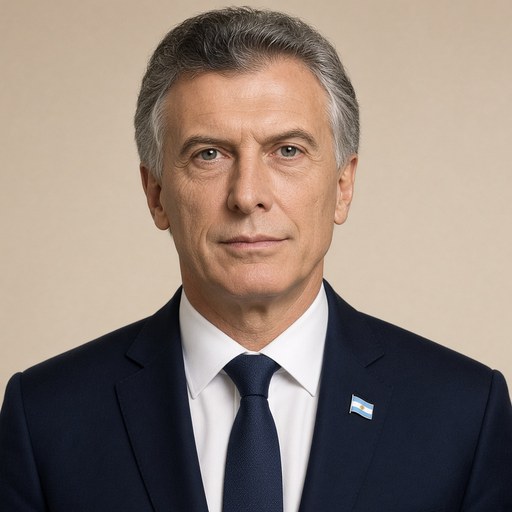
Words of Mauricio Macri at the inauguration of the academic cycle at the National University of Rosario.
 Mauricio Macri · President of Argentina
- Context
- Macri addressed students and faculty at the National University of Rosario on March 14, 2016, to inaugurate the academic cycle and outline his government's education reform agenda.
- Main themes
- Education reform, educational evaluation and quality, early childhood education, teacher recognition, digital technology in education, extended school hours, trust and social cohesion, youth and university life, national educational agenda, Purmamarca ministerial agreement
- Duration
- ~6 min
- Words
- 752
- Sentences
- 15
- Readability
- 35
- Grade
- 20.8
- Syntax
- 4.24
- Vocabulary
- 1.84
Translated from Spanish
The broad sphere of national life a sentence belongs to. Every sentence has an Arena, so it is the denominator the other indices are read against.
Other15 sentences in 12 paragraphs
Good morning everyone, thank you, Governor, for welcoming me to your province once again; Madam Mayor, thank you to the authorities of this house for this invitation that honors me: I will start by saying that a synonym for youth is vitality, strength, momentum, passion, and tireless energy.
That is why when one reaches this age, which is already somewhat old, people want to acknowledge the work you do; they say: “you look like a kid” and one feels happy, and if there is a place where that energy is lived, it is in a university, where the vocation to learn, to debate, to discuss, to research, to see if boundaries can be overcome is breathed, where one imagines where they will project themselves.
So I believe there is a huge challenge when we see that half of the kids in Argentina today finish school; and of those who finish, only half understand text, which is why we have had to create tools that try to correct – like the CBC – this inability to understand and to continue projecting oneself based on knowledge.
But there is very good news that I want to share with you today: a few weeks ago, all together, in Purmamarca, a wonderful place that anyone who does not know it has a pending assignment, in Jujuy, all the Ministers of Education gathered, with Esteban Bullrich, Minister of Education of the Nation, the Minister of Education of Santa Fe was also there, and they agreed on the foundations of this revolution that we have to produce in education in Argentina, which begins by accepting that the pedagogical agenda must focus on innovation, what we are doing today – according to the Rector – innovating in something that has never happened before, which must incorporate digital platforms, new technologies because they are already central, absolutely necessary tools, although not sufficient, and we have to work on extending school hours. Because most schools – Governor – do not have double shifts, and we also have to finish understanding that everything starts in early childhood, in childhood.
That is why we have to achieve not only that all kids have kindergarten at five, at four, but also at three years old, and the other issue, the central one, that will be in the debate and that I need is the support of all of you: it is evaluation.
We come from years in which we have believed that the solution is to deny problems, not to understand them, to accept them and face them, and if we do not evaluate, we do not know where we stand.
So it is essential to have an Institute of Evaluation of Educational Quality and Equity that is absolutely independent, that does not publish the number that the President, the Governor, the Mayor, or the School Director likes. That publishes the truth so that the entire community, the children, the parents, everyone knows where we are failing and there start to correct, and there, also, recovering the most important, most central role on the path to that future, which is that of the teacher.
That is why I am here to say thank you, Rector, thank you, Dean, thank you, teachers, we need to face this challenge in the only way it can be faced, which is by dialoguing and together.
So, I believe that the most important thing about Purmamarca, the most beautiful thing that happened that day was that all together, all the Ministers of Education, most of whom were not from “Cambiemos,” all agreed that this agenda was central, was vital, and that we will tackle it with honesty, telling the truth, because without truth, the most central element that mobilizes a society, which is trust, cannot be built.
When I trust the person next to me, I delegate, I bet that if I go down one path and they go down this one, we will meet further ahead together and not that I have to travel both paths because the other is not trustworthy. And this is the process in which we all have to be committed.
So, thanking you from the bottom of my heart for the invitation, in honor of being a guest at the Faculty of Law and truly trusting all of you, as I always say, in all Argentinians, I am here because I trust you and I know that together we will build that country we dream of.
Thank you very much and good morning.
The original Spanish. The tags above are read on the English translation's sentences.
Buenos días a todos, gracias señor Gobernador por recibirme en su provincia una vez más; señora Intendenta, gracias a las autoridades de la casa por esta invitación que me distingue: voy a arrancar diciendo que sinónimo de juventud es vitalidad, es fuerza, es ímpetu, es pasión, es energía incansable.
Por eso cuando una llega a esta edad, que ya está medio jovato, la gente quiere reconocerte lo que trabajás; te dicen: “parecés un pibe” y uno se pone contento y si hay un lugar donde esa energía se vive es en una universidad, es donde se respira la vocación de aprender, de debatir, de discutir, de investigar, de ver si se pueden superar fronteras, donde uno imagina hacía dónde se va a proyectar.
Entonces creo que hay un enorme desafío cuando vemos que la mitad de los chicos, en la Argentina, hoy, terminan el colegio; y de los que terminan sólo la mitad comprende texto, con lo cual le hemos tenido que ir creando herramientas que tratan de corregir – como el CBC – esta incapacidad de entender y de seguirse proyectando a partir del conocimiento.
Pero hay muy buenas noticias, que yo quiero hoy compartir con ustedes: hace pocas semanas, todos juntos, en Purmamarca, un lugar maravilloso, que quien no lo conoce tiene una asignatura pendiente, en Jujuy, se reunieron todos los ministros de Educación, con Esteban Bullrich, ministro de Educación de la Nación, también estaba el ministro de Educación de Santa Fe y acordaron las bases de esta revolución, que tenemos que producir en la educación, en la Argentina, que comienza por aceptar que la agenda pedagógica tiene que enfocar a la innovación, lo que estamos haciendo hoy – según el Rector – innovando en algo que nunca había sucedido, que tiene que recoger las plataformas digitales, las nuevas tecnologías porque ya son herramientas centrales, absolutamente necesarias, aunque no suficientes y tenemos que trabajar en extender las jornadas horarias. Porque la mayoría de las escuelas – señor Gobernador – no tiene doble escolaridad y además tenemos que terminar de entender que todo arranca en la primera infancia, en la niñez.
Por eso, tenemos que ir logrando no sólo que se cumpla, con que todos los chicos tengan jardín a los cinco, a las cuatro, sino que también a los tres años y el otro tema, el central, que va a estar en el debate y que yo necesito es el apoyo de todos ustedes: es la evaluación.
Venimos de años, en los cuales hemos creído que la solución es negar los problemas, no entenderlos, aceptarlos y enfrentarlos y si no evaluamos no sabemos en dónde estamos parados.
Entonces es fundamental tener un Instituto de Evaluación de la Calidad y Equidad Educativa absolutamente independiente, que no publique el número que le guste el Presidente, al Gobernador o al Intendente o al Director de la escuela. Que publique la verdad para que toda la comunidad, los niños, los padres, todos sepamos en qué estamos fallando y ahí empezar a corregir y ahí, también, recuperando el rol más importante, más central en el camino hacia ese futuro, que es el del docente.
Por eso yo estoy acá para decirles gracias Rector, gracias Decano, gracias docentes, necesitamos que este desafío lo encaremos de la única manera que se puede encarar que es dialogando y juntos.
Entonces, creo que lo más importante de Purmamarca, lo más lindo que pasó ese día fue que todos juntos, todos los ministros de Educación, que la mayoría no era de “Cambiemos”, todos acordaron que esa agenda era central, era vital y que la vamos a encarar con honestidad, diciendo la verdad, porque sin verdad no se construye el elemento más central que moviliza una sociedad que es la confianza.
Cuando yo confío en el que tengo al lado, delego, apuesto a que si voy por el otro camino y él va por este, junto vamos a encontrarnos más adelante y no que yo tenga que recorrer los dos caminos porque el otro no es confiable. Y este es el proceso en el cual tenemos que estar todos comprometidos.
Así que, agradeciéndoles de corazón la invitación, en honor de ser huésped de la Facultad de Derecho y de verdad confiando en todos ustedes, como digo siempre, en todos los argentinos, estoy acá porque confío en ustedes y sé que juntos vamos a construir ese país que soñamos.
Muchas gracias y buenos días.