




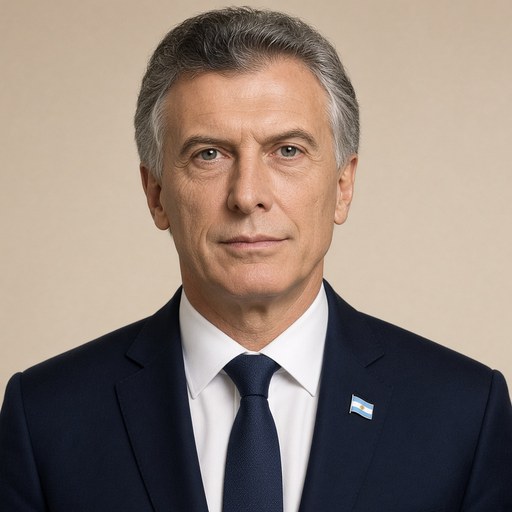
Words of President Mauricio Macri at the presentation of the Political Reform Bill.
 Mauricio Macri · President of Argentina
- Context
- Macri presented a Political Reform Bill to Congress at a Cultural Center event in Argentina on June 23, 2016, marking 100 years of universal suffrage.
- Main themes
- Political reform bill, electronic voting, electoral transparency, democratic participation, campaign finance regulation, mandatory presidential debate, government transition, political party financing, electoral system modernization, Argentina's democratic history, anti-corruption measures
- Duration
- ~10 min
- Words
- 1,218
- Sentences
- 38
- Readability
- 40
- Grade
- 15.6
- Syntax
- 3.47
- Vocabulary
- 1.98
Translated from Spanish
The broad sphere of national life a sentence belongs to. Every sentence has an Arena, so it is the denominator the other indices are read against.
Other38 sentences in 20 paragraphs
Good morning everyone; dear authorities who are with us.
First of all, I want to thank so many Argentines who have sent me messages regarding my knee, which I will have surgery on when I leave here. I want to tell you that this must be my ninth or tenth knee operation, because although I have never had great talents for sports, I have always been a lover of sports, so while playing football, I have systematically injured myself; I have not had luck with injuries, so this is a regular occurrence for me. This time it did not happen while playing football, it happened while playing paddle, but it is part of having knees that do not function very well. Fortunately, technology has improved a lot and it is getting faster every time. So in a few minutes, I will resolve this little problem and then comes the gym stage for rehabilitation to continue playing sports.
But today we have gathered here, precisely in the year that marks one hundred years since Argentina first elected a president by secret and universal vote, which at that time was a great advance—clearly, we still needed to incorporate women's voting.
And in this Cultural Center, which is becoming more and more a meeting place for all Argentines every day, we are taking a very important step forward; we are sending a bill to Congress for an ambitious political reform, as I mentioned in that video, which will be a change for our democracy and for the entire country.
And when I talk about the country, I talk about every Argentine who wants to defend their ideas, debate their ideas; about every young person who votes for the first time; or about every man or woman who wants to vote and be sure that what they vote for is respected. For many years, there has been a discussion about changing the voting system.
And that is what we promised during the campaign, and I reaffirmed on March 1, as that video indicates, because I feel that election day is a day of meeting, a day where we can clearly express our preferences, or our differences, our diversity, but if we do it in a context of respect, that helps to unite Argentines more, because we all have the right to choose who will be our mayor, our governor, our president; and political parties, regardless of their size, also have the right to defend their ideas.
That is why I want to congratulate the team that led this, and all those who participated, because I have been informed that all provinces participated, more than 41 political parties, legislative blocs, judges, academics, and civil society organizations. It was a profound debate under the understanding that we need to unite Argentines, and that a transparent, equitable electoral system of the 21st century helps to unite Argentines.
In that work, which took many weeks, and we saw in the footage the meetings, a first stage of reforms was concluded. I wanted many more, but I was told that we had to go, as “Mustard” Merlo says, “step by step.” But this first stage already resolves many fundamental issues: the first has to do with ending paper ballots and all the things we know happened around that, with electronic voting, with technology, so that in a short time we know who won, and that everyone can vote because it is not that they cannot find their ballots, that they disappear.
The second is to clarify the electoral system, enough of these “accompanying” lists, what they call “collectors,” multiple candidacies, which clearly did not help to respect the democratic decision of the people.
And the third is to give better tools to the Electoral Chamber, to enforce electoral laws, which have clearly been violated and that we all really want to be enforced; and also to control the financing of electoral campaigns in a timely manner. Just in these hours, we learned that the Justice system is advancing in a case from an election that took place a decade ago; that should have better tools so that such tricks do not happen in future campaigns.
But we also tackled a very controversial issue, which fortunately I was able to help advance in this last campaign, but which we believe must be included in the law, which is the mandatory presidential debate, because it is a positive, intelligent tool for citizens to compare what is being proposed in a single space.
And also to address another issue, which was very controversial in this last occasion, which is the transition between one government and another, which we have also incorporated.
Then, for this second stage, we will tackle an independent electoral body that will take charge of the entire electoral system; the financing of political parties in a broad sense will also remain, which will help to give greater transparency to politics; and the issue of ending all indefinite re-elections will remain.
And one issue that obsesses me is that those of us who embrace the career of public service with dedication, love, and commitment have as much time as possible to solve the problems that our society has, with concrete solutions, and for that, we need to concentrate the campaigns.
Last year, we all saw that there were almost elections every weekend in Argentina, and obviously, time is one, and if we live in campaign mode, we have less time to work for our people. I believe we need to work on concentrating the electoral calendar. In that line of concentration, we will also continue to evaluate, over time, whether the PASO have been a valuable instrument or not to improve the electoral system.
But I want to insist today on some things I just mentioned: we arrived here and we are sending this project after a profound debate among all. That is something very valuable: that we are committed to deepening the recovery of the custom, the habit of dialogue, of exchange, is fundamental.
And these tools are also critical; we need the election to be a moment of unity, of transparency, of tranquility. The Argentina of progress is the Argentina that moves away from trickery; the Argentina of the future is the one that bets on building trust. And the first act, almost, of trust in this political coexistence is election day.
So, we need to move away from that politics where the one who steals the most ballots is the smartest, the one who delays the counts and it takes 7, 8 hours to know who won; and the uncertainty, and the doubt. All of that is what we need to leave behind, because we have much to do.
We are at a moment of change in our country, where we have committed to work together, putting energy into growing, developing our capabilities, enhancing our talents that, thank God, we have and many. So, we need to simplify, make transparent, modernize these fundamental instruments.
So I reiterate my congratulations, Rogelio, Adrián, to all who have participated. I hope that Congress, as soon as possible, can turn these proposals into law, and that we all know with certainty that we have taken a great step forward in our future coexistence. Thank you very much to everyone.
The original Spanish. The tags above are read on the English translation's sentences.
Buenos días a todos; queridas autoridades que nos acompañan.
Ante todo quiero agradecerles a tantos argentinos que me han enviado mensajes por el tema de la rodilla, que me voy a operar cuando salga de acá. Quiero decirles que debe ser como mi novena o décima operación de rodillas, porque por más que nunca he tenido grandes talentos para el deporte, siempre he sido amante del deporte, entonces jugando al fútbol me las he ido lastimando sistemáticamente, no he tenido suerte con las lesiones, entonces esto para mí es una habitualidad, esta vez no me pasó jugando al fútbol, me pasó jugando al paddle, pero es parte de que tengo unas rodillas que no funcionan muy bien, pero por suerte la tecnología mejoró mucho y cada vez se hace más rápido. Así que en minutos resolveré este problemita y después vendrá la etapa de gimnasio para rehabilitarse para seguir haciendo deporte.
Pero hoy los hemos convocado, justo en el año en el que ya se cumplen cien de que la Argentina eligió por primera vez presidente con el voto secreto y universal, que en ese momento fue un gran avance -claramente todavía faltaba incorporar el voto de la mujer.
Y en este Centro Cultural, que cada día se convierte más en un lugar de encuentro de todos los argentinos, estamos dando un paso adelante muy importante, estamos enviando un proyecto de ley al Congreso para una reforma política ambiciosa, como yo planteaba en ese video, que va a ser un cambio para nuestra democracia y para todo el país.
Y cuando hablo de país, hablo de cada argentino que quiere defender sus ideas, debatir por sus ideas; de cada joven que vota por primera vez; o de cada hombre o mujer que quiere votar y estar seguro de que lo que vota se respeta. Hace muchos años que se viene discutiendo que hay que cambiar el sistema de votación.
Y eso es lo que prometimos en la campaña, y ratifiqué el 1° de marzo, como marca ese video, porque yo siento que el día de la elección es un día de encuentro, es un día donde claramente podemos expresar nuestras preferencias, o nuestras diferencias, nuestra diversidad, pero si lo hacemos en un contexto de respeto, eso ayuda a unir más a los argentinos, porque todos tenemos derecho a elegir quién va a ser nuestro intendente, nuestro gobernador, nuestro presidente; y los partidos políticos, independientemente de su tamaño, tienen derecho también a defender sus ideas.
Por eso quiero felicitar al equipo que condujo esto, y a todos los que participaron, porque participaron, me han informado, todas las provincias, más de 41 partidos políticos, bloques legislativos, jueces, académicos y organizaciones de la sociedad civil. Fue un profundo debate bajo este entendimiento de que tenemos que unir a los argentinos, y que un sistema electoral transparente, equitativo, del siglo XXI, ayuda a unir a los argentinos.
En ese trabajo, que llevó muchas semanas, y veíamos en la filmación las reuniones, se concluyó en una primera etapa de reformas, yo quería muchas más, pero me dijeron que había que ir, como dice “mostaza” Merlo, “paso a paso”. Pero esta primera etapa ya resuelve muchísimos temas de fondo: el primero tiene que ver con terminar con las boletas de papel y todas las cosas que sabemos que sucedían alrededor de eso, con el voto electrónico, con la tecnología, que en poco tiempo sepamos quién ganó, y que todos puedan votar porque no es que no encuentran sus boletas, que desaparecen.
La segunda es clarificar el sistema electoral, basta de estas listas “acople”, las que llaman “colectoras”, candidaturas múltiples, que claramente no ayudaban a respetar la decisión democrática del pueblo.
Y lo tercero es darle mejores herramientas a la Cámara Electoral, para hacer cumplir las leyes electorales, que claramente se han violado y que realmente queremos todos que se cumplan; y también a controlar el financiamiento de las campañas electorales en tiempo y forma. Justo en estas horas nos enteramos que la Justicia avanza en una causa de una elección que pasó ya hace una década; eso debería tener mejores herramientas para que ese tipo de trampas no sucedan en las futuras campañas.
Pero también encaramos un tema que fue muy controvertido, que por suerte yo pude ayudar en esta última campaña a que se avance, pero que creemos que tiene que incluirse en la ley, que es el debate presidencial obligatorio, porque es una herramienta positiva, inteligente, para que los ciudadanos podamos comparar qué es lo que nos están proponiendo en un solo ámbito.
Y también arreglar otro tema, que fue muy controvertido en esta última ocasión, que es la transición entre un gobierno y el otro, que también lo hemos incorporado.
Después quedará, para esta segunda etapa, encarar un órgano electoral independiente que se haga cargo de todo el sistema electoral; quedará el financiamiento de los partidos políticos en un sentido amplio, que eso va ayudar también a darle mayor transparencia a la política; quedará el tema de terminar con todas las reelecciones indefinidas.
Y un tema a mí me obsesiona, que los que abrazamos con dedicación, con amor y con compromiso la carrera del servicio público, tengamos la mayor cantidad de tiempo posible para resolver los problemas que tiene nuestra sociedad, con soluciones concretas, y para eso hay que concentrar las campañas.
El año pasado todos vimos que casi hubo elecciones todos los fines de semana en la Argentina, y obviamente el tiempo es uno, y si vivimos de campaña menos tiempo tenemos para trabajar por nuestra gente. Creo que hay que trabajar en concentrar el calendario electoral. En esa línea de concentrar, también se seguirá evaluando, con tiempo, si las PASO han sido un instrumento valioso o no para mejorar el sistema electoral.
Pero quiero hoy insistir en algunas cosas que comenté recién: llegamos acá y estamos enviando este proyecto después de un profundo debate entre todos. Eso es algo muy valioso: que estemos comprometidos a profundizar la recuperación de la costumbre, del hábito del diálogo, del intercambio, es fundamental.
Y estas herramientas también son críticas; necesitamos que la elección sea un momento de unidad, de transparencia, de tranquilidad. La Argentina del progreso es la Argentina que se aleja de la trampa; la Argentina del futuro es la que apuesta a la generación de confianza. Y el primer acto, casi, de la confianza en esta convivencia política, es el día de la elección.
Entonces, tenemos que irnos de esa política que el que roba más boletas es el más vivo, el que demora los conteos y son 7, 8 horas para saber quién ganó; y la incertidumbre, y la duda. Todo eso es lo que tenemos que dejar atrás, porque tenemos mucho para hacer.
Estamos en un momento de cambio en nuestro país, donde nos hemos comprometido a trabajar juntos, poniendo la energía en crecer, en desarrollar nuestras capacidades, en potenciar nuestros talentos que, gracias a Dios, los tenemos y muchos. Entonces, tenemos que simplificar, transparentar, modernizar estos instrumentos fundamentales.
Así que reitero mi felicitación, Rogelio, Adrián, a todos los que han participado. Espero que el Congreso, en el menor tiempo posible, pueda transformar en ley estas propuestas, y que ya todos sepamos con certeza que hemos dado un gran paso adelante en nuestra futura convivencia. Muchas gracias a todos.