




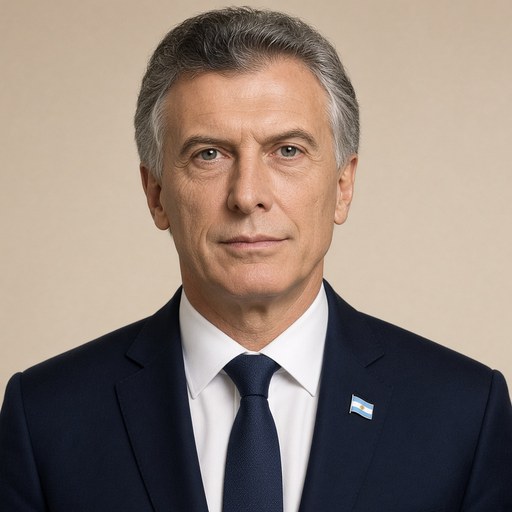
Words from President Mauricio Macri on the veto of the occupational emergency law.
 Mauricio Macri · President of Argentina
- Context
- Macri addressed Argentines to explain his veto of an occupational emergency law, arguing it would harm employment and entrench poverty, on May 20, 2016.
- Main themes
- Veto of occupational emergency law, economic freedom vs. state control, poverty reduction, employment generation, trust in reform path, SME support, first job law, political opposition obstruction, Argentine economic inheritance, dialogue and democratic change
- Duration
- ~16 min
- Words
- 1,924
- Sentences
- 76
- Readability
- 64
- Grade
- 10.6
- Syntax
- 3.31
- Vocabulary
- 1.89
Translated from Spanish
The broad sphere of national life a sentence belongs to. Every sentence has an Arena, so it is the denominator the other indices are read against.
Other76 sentences in 24 paragraphs
Good day to everyone. Thank you, Governor, for joining me; I know you were at the Congress yesterday making a very just claim for all the people of Buenos Aires, and I am sure that, in this Argentina of dialogue, you will do well. You will do well so that all the people who inhabit this wonderful province will do well.
But today I want to call on you and reflect with you, not as the President of the Republic, but as just another citizen trying to share his anxieties, his concerns, and also his dreams.
I want to convey to you the enormous confidence and tranquility I have in the path we have embarked upon. I am sure that this path is the one that leads us to that future we dream of and that we all deserve. And I do not say this from the place of a leader who thinks he knows everything, because I always told you during the campaign that if you were looking for a magician, that was not me. The magicians had to be seen in Las Vegas, where they say Copperfield is; and that the problems we inherited cannot be solved overnight. But I did tell you that we would resolve them by taking small steps every day. And that is what we have started to do. That is why I am sure that in a year we will begin to see the fruits of this path we have started to walk.
But I also tell you that we are still in a debate that has been going on for years, a debate in which those who governed us until recently think that as a model for our economy, as a model for our lives, there must be a State that subjugates us all. Because they believe that Argentines cannot live in freedom.
That is why they propose laws that freeze employment, clamps on work, regardless of all those who today work in the informal economy or those who do not have jobs, and regardless of the fact that this law will bring more poverty. And why? Because clearly those who are in poverty are easier to manipulate, to subjugate; because they are afraid that we may exercise that freedom.
The growth, the development of each Argentine in freedom will allow them to decide, and that is precisely what I believe, what the majority of Argentines are believing. And that is why, wanting to hinder that progress, they propose laws aimed at preventing us from moving forward, laws that distrust what we are capable of doing as Argentines if we gain that freedom.
And the worst part is that today we can see on our cell phones testimonies from the former President, from the former Chief of Staff, saying that this type of law is bad, just a short time ago, only a couple of years or months ago, they said: “this type of law does not generate more employment, it is not good for progress.”
And what is happening now? Why are they pushing it? Because from politics they want to put obstacles in our way, they do not want us to progress, they do not want us to have these new opportunities. Moreover, they say, “we do not want this Government to do well,” regardless of the fact that if our Government does poorly, the important thing is not that this President does poorly, the important thing is that it goes poorly for all Argentines, it goes poorly for all Buenos Aires residents, for the workers of Cresta Roja, for everyone, because we live in this country, thank God, because this country is a wonderful country.
But that is why we voted for this change, and that is why we will continue to vote in favor of our freedom. This change established a central axis, which must be to walk together towards zero poverty. We know—I insist—that it is not from today to tomorrow. We know that we have inherited a difficult situation: five years without generating employment in this country, quality employment.
But the good thing is that we have started, the good thing is that we have already begun to generate and nurture this little plant called trust, which as it grows will generate more enthusiasm around us, around each of the Argentines, in our potential. That is why there are so many local and foreign companies studying where to invest, starting to invest. And that is also why it was simple for me, it was easy, to call them a few weeks ago to the Government House, and hundreds of companies signed that they would not lay off workers for the next ninety days. But many of them also said, “I don’t know why we signed this, because we are thinking of hiring people, because we are seeing Argentina today with optimism.”
And also, not resting on that, we have promoted a First Job Law, so that the young people who today work at Cresta Roja—not you, who are quite old, I’m talking about the young people—can easily access that first job. And we have also promoted measures, while we wait for the SME Law, that unblock the functioning of SMEs, measures that have been demanded for more than twenty years, because they suffocated our small businesses.
And what do we all want? For small businesses to grow, to transform into medium-sized businesses, and then into large businesses. Why? Because that growth is accompanied by more work for Argentines. And large companies then require new small businesses to work for them; and that growth of each of those units, which are Argentines working, leads to the growth of the whole.
I am committed to taking care of Argentines and helping them all cross that bridge, which I have invited you to build, between what we are and what we can and will be. And that is why we have taken many measures to help at this moment: more than a million more children now have Universal Child Allowance; more family allowances, more for those who work temporarily, even when they are not working; measures for retirees.
Yesterday or the day before yesterday, the law was approved by which we return the VAT on the basic basket to those who receive the minimum wage, and many more measures that try to accompany this process, this transition between this difficult moment and that future we are building.
And I wanted to come back here, I wanted to come back here because this is a demonstration of how we have to work. Cresta Roja was another of the broken things that the outgoing government left us: a company that was bankrupt, that had abandoned its task. And we did not issue an arbitrary law, we did not impose a decree. We sat down with the Governor, with the Minister of Labor, with the Minister of Production of the Nation, of the Province, with the unions, with the workers, we looked for a good businessman to help us in the re-operation, that is, in the start-up of the factory, of the plant.
And we began incipiently, and from the last time I came until today, 50% more employees, five more shifts. That demonstrates the way we have to work, which is by listening to each other, by dialoguing. This is the way, this is the form, there is no other, believe me, there is no other: this is the way. That is why today, in the exercise of this constitutional power I have, I will veto the law that for me is anti-employment.
A law against Argentines, a law that demonstrates that we do not trust our future. That is why I tell you that those who told me: “But look, it’s not convenient for you, it’s demagogic, you will save those drums, for example, it’s convenient for you to let it pass.” And I said, I did not come here to do what is convenient for me, I came here to help Argentines have a better opportunity.
And it reminded me—I told him—when I just started at Boca, 22 years ago—much time has passed, I’m quite old now—I don’t know if some of the Boca fans here will remember. When I just started, the situation arose that many wanted Maradona to be the coach of Boca. And I thought, beyond my affection and admiration for Maradona, that at that moment, due to his personal problems, he was not the best coach for Boca. And they came to tell me: “but look, it’s not convenient for you, let it go…” And I said, how am I going to do something that I think is bad for Boca? I have to do what I think is good for Boca, and if it is good for Boca, in the long run it will also be good for me. And what I did led me to win 17 titles.
And if I thought that way at that time, at 35 years old, today at 57, much more firm in my convictions, I want to tell you that I will not lie to you. I committed to telling you the truth, and that is why on every occasion I will do what I think is best for your future, not for this President. And moreover, I will do it because I respect you, because I trust you. I know that more freedom will give you more progress, and I believe in the creativity, in the capacity, in the tenacity of Argentines.
And I know that if we know how to organize ourselves, which is what we have always lacked, if we know how to lay the foundation and grow this trust that is being born in Argentina, this investment process will lead us to more and more work. And more work means more future, more joy, more love, more family.
That is why I also value very much that we met yesterday at the Salary Council, Minister, with the companies, the chambers, and the workers, not only to dignify the minimum wage, not only to raise unemployment insurance from 400 pesos to 3,000, after a decade without adjustment, but to open the tables for productivity discussion, because productivity—as General Perón said—is the polar star that must guide this country. Because at that table we will defend and create new jobs, jobs that compete with our brothers in Latin America, with brothers around the world, because everyone wants work. Everywhere there are people worried about getting a job; it is not just our concern: in Asia, in Europe, in the United States, in Latin America.
That is why we have to be smart, be together, believe in ourselves, because we are capable people, and the world, like never before, has opened a door for us. That same world that competes with us also wants to come here to invest because it believes in you. It believes in what you are capable of doing.
So let’s tell them: here we are, welcome, we trust in ourselves. We will not put up obstacles, we will add, we will dialogue. And I hope to dialogue every day: with the workers, with the companies, with the Governors, so that we have a federal Argentina, an Argentina betting on this future that we dream of so much and that we deserve so much.
That is why I say thank you, thank you for joining me, and I need us to stay together. Thank you all.
The original Spanish. The tags above are read on the English translation's sentences.
Buen día a todos. Gracias Gobernadora por acompañarme, sé que ayer estuvo en el Congreso planteando un reclamo muy justo para todos los bonaerenses, y estoy seguro que, en esta Argentina del diálogo, le va a ir bien. Le va a ir bien para que le vaya bien a toda la gente que habita esta maravillosa provincia.
Pero hoy los quiero convocar y quiero reflexionar con ustedes, no como el Presidente de la República, sino como un ciudadano más que trata de compartir sus angustias, sus preocupaciones y también sus sueños.
Quiero transmitirles la enorme confianza y tranquilidad que tengo en el camino que hemos emprendido. Estoy seguro que este camino es el que nos lleva a ese futuro que soñamos y que todos merecemos. Y no se los digo del lugar de aquel líder que cree que lo sabe todo, porque yo siempre les dije durante la campaña, que si buscaban un mago, ese no era yo. Los magos había que ir a verlos a Las Vegas, donde dicen que está Copperfield; y que los problemas que heredamos no se resuelven de un día para el otro. Pero sí les dije que los íbamos a resolver dando pequeños pasos todos los días. Y eso es lo que hemos empezado a hacer. Por eso estoy seguro que en un año vamos a comenzar a ver los frutos de este camino que hemos empezado a recorrer.
Pero también les digo que seguimos en un debate que lleva años, un debate en el cual, aquellos que nos gobernaron hasta hace poco, piensan que como modelo de nuestra economía, como modelo de nuestras vidas, tiene que haber un Estado que nos someta a todos. Porque ellos creen que los argentinos no podemos vivir en libertad.
Por eso nos proponen leyes que congelan el empleo, cepos al trabajo, sin importarles todos aquellos que hoy trabajan en negro o los que no tienen trabajo, y sin importarles que esa ley va a traer más pobreza ¿Y por qué? Porque claramente aquellos que están en la pobreza son más fáciles de manipular, de someter; porque ellos tienen miedo a que podamos ejercer esa libertad.
El crecimiento, el desarrollo de cada uno de los argentinos en libertad les va a permitir decidir, y es justamente en lo que yo creo, en lo que la mayoría de los argentinos estamos creyendo. Y por eso, queriendo trabar ese progreso, es que proponen leyes que apuntan a que no podamos avanzar, leyes que desconfían de lo que somos capaces de hacer los argentinos si ganamos esa libertad.
Y lo peor es que hoy podemos ver en nuestro celular testimonios de la ex Presidenta, del ex Jefe de Gabinete, diciendo que este tipo de leyes son malas, hace poco tiempo atrás, sólo un par de años o meses, ellos decían: “este tipo de leyes no generan más empleo, no son buenas para el progreso ”
¿Y qué pasa ahora? ¿Por qué la impulsan? Porque desde la política quieren ponernos palos en las ruedas, no quieren que progresemos, no quieren que tengamos estas nuevas oportunidades. Es más, dicen “no queremos que le vaya bien a este Gobierno”, sin importarles que si le va mal a nuestro Gobierno, lo importante no es que le vaya mal a este Presidente, lo importante es que le va mal a todos los argentinos, le va mal a todos los bonaerenses, a los trabajadores de Cresta Roja, a todos, porque vivimos en este país, gracias a Dios, porque este país es un país maravilloso.
Pero por eso votamos este cambio, y por eso vamos a seguir votando a favor de nuestra libertad. Este cambio fijó un eje central, que tiene que ser caminar juntos hacia pobreza cero. Sabemos -insisto- que no es de hoy para mañana. Sabemos que hemos heredado una situación difícil: cinco años sin generar empleo en este país, empleo de calidad.
Pero lo bueno es que comenzamos, lo bueno es que ya empezamos a generar y a regar esta plantita que se llama confianza, que a medida que vaya creciendo va generando más entusiasmo alrededor de nosotros, de cada uno de los argentinos, en nuestra potencialidad. Por eso hay tantas empresas locales y extranjeras estudiando en qué invertir, comenzando a invertir. Y por eso también me fue simple, me fue fácil, convocarlos hace algunas semanas a Casa de Gobierno, y cientos de empresas firmaron que no iban a despedir trabajadores por los próximos noventa días. Pero además muchos de ellos dijeron “no sé para qué firmamos esto, porque nosotros estamos pensando en tomar gente, porque estamos viendo hoy a la Argentina con optimismo”.
Y también, no durmiéndonos en eso, hemos impulsado una Ley Primer Empleo, para que los jóvenes que hoy trabajan en Cresta Roja -no vos que estás bastante jovato, hablo de los jóvenes- puedan acceder a ese primer trabajo con facilidad. Y también hemos impulsado medidas, mientras esperamos la Ley Pyme, que destraban el funcionamiento de las Pymes, medidas que hace más de veinte años se reclamaban, porque asfixiaban a nuestras pequeñas empresas.
¿Y qué queremos todos? Que las pequeñas empresas crezcan, se transformen en medianas empresas, después en grandes empresas. ¿Por qué? Porque ese crecimiento es acompañado con más trabajo para los argentinos. Y las grandes empresas después requieren de nuevas pequeñas empresas que trabajen para ellas; y ese crecimiento de cada una de esas unidades, que son argentinos trabajando, lleva al crecimiento del conjunto.
Yo estoy comprometido a cuidar a los argentinos y a ayudarlos a que todos crucemos ese puente, que les he invitado a construir, entre lo que somos y lo que podemos y vamos a ser. Y por eso hemos tomado muchísimas medidas para ayudar a este momento: más de un millón de chicos más tienen hoy Asignación Universal por Hijo; más asignaciones familiares, más para aquellos que trabajan en forma temporaria, aún cuando no trabajan; medidas para los jubilados.
Ayer o anteayer se aprobó la ley por la cual le devolvemos el IVA de la canasta básica a aquellos que cobran las mínimas, y muchas medidas más que tratan de acompañar este proceso, esta transición entre este momento difícil y ese futuro que estamos construyendo.
Y quise volver acá, quise volver acá porque esta es una demostración de cómo tenemos que trabajar. Cresta Roja fue otra de las cosas rotas que nos dejó el gobierno saliente: una empresa que estaba quebrada, había abandonado su tarea. Y no sacamos una ley arbitraria, no impusimos un decreto. Nos sentamos con la Gobernadora, con el Ministro de Trabajo, con el Ministro de Producción de la Nación, de la Provincia, con los sindicatos, con los trabajadores, buscamos un buen empresario que nos ayude en la re-operación, o sea en la puesta en marcha de la fábrica, de la planta.
Y comenzamos incipientemente, y de la última vez que vine a hoy, 50% más de empleados, cinco turnos más. Eso demuestra la forma en que tenemos que trabajar, que es escuchándonos, dialogando. Este es el camino, esta es la forma, no hay otra, créanme que no hay otra: éste es el camino. Por eso hoy, en uso de esta facultad constitucional que tengo, voy a vetar la ley que para mí es anti-empleo.
Una ley contra los argentinos, una ley que demuestra que no confiamos en nuestro futuro. Por eso les digo que aquellos que me dijeron: “Pero mirá, no te conviene, es demagógico, te vas a ahorrar esos bombos, por ejemplo, te conviene dejar que pase”. Y yo dije, yo no vine acá para hacer lo que a mí me conviene, yo vine acá para ayudar a que los argentinos tengan una mejor oportunidad.
Y me hizo acordar –le dije a él-, apenas comencé en Boca, hace 22 años –ha pasado mucho tiempo, estoy bastante jovato-, no sé si se acordarán algunos de los boquenses aquí presentes. Apenas arranqué se planteó la situación de que muchos querían que Maradona fuese el técnico de Boca. Y yo pensaba, más allá de mi afecto y mi admiración por Maradona, que en ese momento, debido a sus problemas personales él no era el mejor técnico para Boca. Y vinieron a decirme: “pero mirá, no te conviene, dejá que…” Y yo dije ¿cómo voy a hacer algo que yo pienso que es malo para Boca? Yo tengo que hacer lo que pienso que es bueno para Boca, y si es bueno para Boca, a la larga va a ser bueno para mí también. Y eso que hice me llevó a obtener 17 títulos.
Y si ya pensaba de esa manera en ese momento, a los 35 años, hoy con 57, mucho más firme en mis convicciones, les quiero decir que yo no les voy a mentir. Yo me comprometí a decirles la verdad, y por eso en cada ocasión voy a hacer lo que piense que es mejor para su futuro, no para este Presidente. Y además, lo voy a hacer porque los respeto, porque confío en ustedes. Yo sé que más libertad les va a dar más progreso, y yo creo en la creatividad, en la capacidad, en la tenacidad de los argentinos.
Y sé que si nos sabemos organizar, que es lo que siempre nos ha faltado, si sabemos cimentar y hacer crecer esta confianza que está naciendo en la Argentina, este proceso de inversión nos va a llevar a más y más trabajo. Y más trabajo es más futuro, es más alegría, es más amor, es más familia.
Por eso valoro también mucho que nos hayamos reunido ayer en el Consejo del Salario, Ministro, con las empresas, las cámaras y los trabajadores, para no sólo dignificar el salario mínimo, no sólo pasar de 400 pesos a 3.000 el seguro de desempleo, después de una década que no se ajustaba, sino para abrir las mesas de discusión de productividad, porque la productividad –como decía el General Perón- es la estrella polar que tiene que guiar a este país. Porque en esa mesa vamos a defender y crear nuevo trabajo, trabajo que compite con nuestros hermanos de Latinoamérica, con los hermanos del mundo, porque todos quieren trabajo. En todas partes hay gente preocupada por conseguir un trabajo, no es sólo nuestra preocupación: en Asia, en Europa, en Estados Unidos, en América Latina.
Por eso tenemos que ser inteligentes, estar juntos, creer en nosotros, porque somos gente capaz, y el mundo como nunca antes, nos ha abierto una puerta. Ese mismo mundo que nos compite, también quiere venir acá a invertir, porque cree en ustedes. Cree en lo que vos sos capaz de hacer.
Entonces digámosle: acá estamos, bienvenidos, confiamos en nosotros mismos. No vamos a poner trabas, vamos a sumar, vamos a dialogar. Y espero dialogar todos los días: con los trabajadores, con las empresas, con los Gobernadores, para que tengamos una Argentina federal, una Argentina apostando por este futuro que tanto soñamos y tanto merecemos.
Por eso les digo gracias, gracias por acompañarme, y necesito que sigamos juntos. Gracias a todos.