




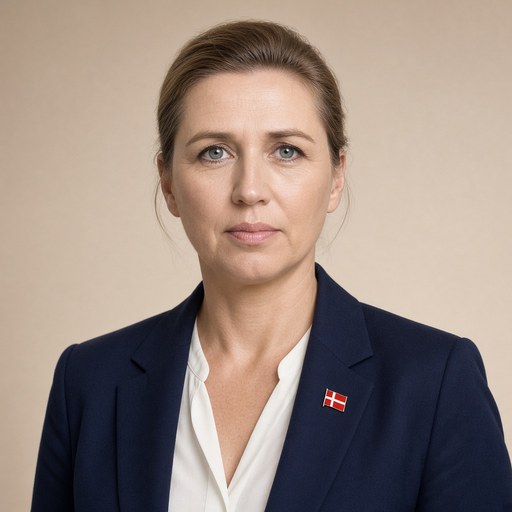
Prime Minister Mette Frederiksen's introduction at the press conference in the Prime Minister's Office on the coronavirus on 6 April 2020
 Mette Frederiksen · Prime Minister of Denmark
- Context
- Frederiksen addressed a press conference on April 6, 2020, announcing Denmark's first cautious phase of reopening after the COVID-19 lockdown, conditional on stable infection numbers.
- Main themes
- COVID-19 pandemic response, phased reopening of Denmark, public health measures, hospitalization statistics, social distancing and individual responsibility, economic impact, healthcare system capacity, collective solidarity, cautious and controlled approach
- Duration
- ~23 min
- Words
- 2,770
- Sentences
- 238
- Readability
- 66
- Grade
- 6.9
- Syntax
- 2.40
- Vocabulary
- 1.92
Translated from Danish
The broad sphere of national life a sentence belongs to. Every sentence has an Arena, so it is the denominator the other indices are read against.
Other238 sentences in 124 paragraphs
Welcome to the press conference here at the Prime Minister's Office.
The recent press conferences have not exactly been short. This one will not be either. There is much to say.
When I stood here a week ago, we reached an agreement. Each and every one of us.
If the numbers of hospitalizations due to corona continued to go in the right direction. And if we all continued to keep our distance. Then we could begin to open Denmark again after Easter. Gradually. Cautiously. In a controlled manner.
What does it look like now – a week later?
First, the numbers. 503 patients are hospitalized. Of these, 139 are in intensive care. It is a stable development.
187 have unfortunately died. Every single death is a tragedy. My thoughts and condolences go to you, the bereaved.
It is serious. But the numbers for hospitalizations are still going in the right direction.
It is important in this context to remember that the figures we see today are the result of the responsibility we Danes showed three to four weeks ago. There is a delay from when one gets infected to when one may be hospitalized.
Similarly, the way we behave now will only show in the numbers in three to four weeks.
Corona spreads quickly. But it affects our bodies slowly.
This makes this disease particularly insidious. For it can – so to speak – lure us into a trap as a society. Make us believe that we have it under control. Make us careless. So the disease again has room to flare up.
That is why it deeply concerns us when we hear that some have begun to take it all a bit more lightly. Planning Easter lunches. Taking the whole family shopping. Gathering a bit more than a few weeks ago. And forgetting or neglecting to keep distance from each other.
A small shift in our behavior as individuals can have serious consequences for our entire community.
We have never as a society, citizens, and human beings been more dependent on each other than we are at this time. Our common future is currently determined by our actions individually. How we interact with each other.
Everyone must take that responsibility on their own shoulders. We must stand together by keeping our distance.
All of Denmark bears the burden. Everyday life has lost its coherence. Rhythms have been broken. The loneliness of many is growing.
So is the desire to return to everyday life. I believe we all feel that way. Not least all of you whose jobs, businesses, and livelihoods are at risk.
The disease leaves long traces.
But we have – so far – through a collective effort – avoided the unfortunate reality that we see elsewhere. Body bags in trucks. Patients in the hallways. A healthcare system in collapse.
That is the red curve on the health minister's figure.
The coronavirus does not distinguish between an Italian, an American, or a Dane. The only reason we do not have the same misfortune here is that we acted early.
In this way, we have hit the green curve on the figure. The curve where the healthcare system can keep up. Where there is a hospital bed and a ventilator for everyone who needs it.
It will only remain that way if we continue. We cannot take anything for granted.
At the same time, we must keep our society, our economy, and the rest of our healthcare system alive.
Therefore, I will today present the first, cautious phase of a reopening of Denmark.
This is conditional on the numbers remaining stable and our behavior continuing to be responsible. Not just in the next week. But for a long time to come.
If we see – during Easter – that things are slipping, and that we are no longer taking responsibility, then my message is very clear: We will not reopen Denmark after Easter.
I understand all of you who are concerned about whether the infection will take off again. Who ask: Is this a step too early?
I also understand those of you who, on the other hand, are impatient to get started. Who ask: Is it not going too slowly?
The answer is that if we are to have a chance to reopen Denmark. Cautiously and controlled. Then we must find a delicate balance.
Pragmatic, realistic, and responsible. Exactly what we usually can do in Denmark.
It will be like walking a tightrope. If we stand still along the way, we will fall. If it goes too fast, it can go wrong. Therefore, we must take one cautious step at a time.
We do not know when we will again have solid ground under our feet.
If we knew that, it would all be easier to manage and endure. But that is not the case.
If we open Denmark too quickly, we risk the infection rising so sharply that we have to shut down again. That must not happen.
It will both severely impact public health and the economy if we take two steps forward and one back.
But if we open too late, it can also have serious consequences. For employment and for our business community. And also for our health.
When the healthcare system is currently focused on corona. And other operations and treatments are postponed. And citizens do not contact their own doctor. We risk that other patients get caught in the crossfire.
Therefore, we must also open up some of the other activities in the healthcare system.
The opening I present today is based on the authorities' professional assessments.
The health authorities' message is that it is both appropriate and defensible to begin a controlled opening.
But on one condition:
That everyone – everyone – continues to keep their distance, wash their hands, and avoid meeting too many.
That is the crucial prerequisite.
If we do that. And if we collectively manage to keep the numbers stable.
Then the government – from Wednesday, April 15 – will begin to open the country's nurseries, kindergartens, after-school programs, and school classes for students from grades 0-5.
Right now, many public employees are working from home. You should continue to do so – even after Easter.
Some private employees are also working from home. It is a good idea to continue doing that where it is possible.
But we will also engage in dialogue with business and employee organizations about how private employees who are currently working from home can return to work, provided that it is done in a fully health-wise defensible manner.
The opening of institutions and schools for the youngest means that more parents will have more working peace at home. You need that. We all need that. Because the tasks are piling up.
We know that small children in nurseries and kindergartens cannot keep as much distance as the rest of us.
And I understand well if school teachers, educators, or children may be concerned about getting infected.
Therefore, the following rules will apply when the opening is to be organized locally:
- Children and adults should be outside as much as possible.
- Inside, there should be greater distance.
- There should be more thorough cleaning.
- If children or adults are the least bit ill, they should stay home.
The frameworks and hygiene must be in place before each school and institution can open.
Exactly how the reopening will be at your school and institution must be determined collectively by the health authorities, municipalities, leaders, and staff.
It is you who will concretely take on the big task. In a very short time. It will be difficult. But we have great trust in you. And I will ask everyone to show patience and understanding. And know – that when the nursery, kindergarten, and school open – nothing will be as it was before corona.
There is, in general, much that will not be as before. Everyday life will not return for the time being. We will have to live with many restrictions for many months to come.
And we may – perhaps forever – have to get used to interacting with each other in new ways. What we have become good at now – washing hands, coughing into our sleeves, staying home if we are the least bit ill – we must continue to do.
The message from the authorities is clear: If we are to be completely sure that we can continue to keep the disease under control before we open more places – we must continue to take particularly good care of our elderly and vulnerable.
The experts need time before they can see what the changes mean. The corona has a delay.
The prerequisite for us to open one place is that we may extend the closure of Denmark in other places.
The government therefore extends the following restrictions temporarily for about four weeks – until May 10:
We may still gather a maximum of 10 people in one place.
The borders will remain closed, so we shield ourselves from infection from outside.
Therefore, we are fully engaged in looking at how we can minimize the risk that may arise when people travel to Denmark for work. And we extend the strict travel advisories to the rest of the world.
All of you students from grades 6 to 10 must still attend school from home, also temporarily until May 10. This also applies to boarding schools and free vocational schools.
And there will – unfortunately – be no final exams in primary school this year. For those who were to take the exam, the latest annual grade will be made the exam grade.
I know that this is a sad message. Many young people naturally wish for a normal conclusion to the school year and a long school time.
To you young people who are about to complete a youth education, in high school, on HF, vocational schools, and health education: The government's proposal is that you should be allowed to take exams, in a different and limited way.
Higher education, churches, libraries, community life, cinemas, and everything that is closed today – will still be closed.
The same applies to large shopping centers.
I know that this is a tough time. Among other things for small businesses such as hairdressers, masseurs, cafes, bars, restaurants, and other places where close contact cannot be avoided. You will not be able to open now either.
But if we succeed with the very first phase of the opening, it will be a priority for us to see if it is possible to ease some of the restrictions for some of you in the next phase.
I also say this as a message to the banks. Many of you have taken responsibility in this situation. Provided credit lines. Canceled dividends. Thank you for that.
But that does not apply to everyone.
There are too many examples of small businesses that have difficulty obtaining the necessary credit or are offered far too high interest rates.
That will not do in this situation.
One thing is credit in the bank. Another thing is rent.
There is also a need for helpfulness here. Therefore, a direct appeal to the large rental companies, that you also show social responsibility. Postpone the rents.
We citizens – we must try to do what we can to help the local shops and businesses where we live and are.
If you have the means, consider buying some takeout. Perhaps a gift card. Help keep the wheels turning locally.
Only through a collective effort can we mitigate some of the serious consequences for employees and businesses.
To all of you who have worked hard to plan festivals, markets, and other large events over the summer, I unfortunately also have a serious message.
The ban on large gatherings will remain in place until the end of August.
I know that this is an unpleasant message to receive. There are many of you passionate individuals who have worked hard to get the fantastic events up and running, where Danes gather, rejoice, and enjoy life.
We are now looking at whether the aid packages cover broadly enough also in relation to you.
The Parliament has already passed historic aid packages. Almost 300 billion kroner. Together with the parties, we will now discuss whether we can improve those packages even more. This also applies to the liberal professions and small and medium-sized enterprises.
All good suggestions are welcome. The Liberal Party has, for example, proposed that the companies that are now receiving money from the state treasury are simultaneously obliged not to pay dividends to their shareholders.
That is a good proposal.
But no matter how much we do in Denmark. It has – and will have – a huge impact what happens in the rest of the world.
In the USA – the world's largest economy – 10 million Americans have now registered as unemployed. That is many, many more than during the financial crisis.
About 750,000 Danish jobs depend directly on our exports to other countries.
When the rest of the world shuts down, it hits us particularly hard. But everything we can do ourselves. We must do.
Now that we can begin a cautious opening, it is also due to the authorities having significantly expanded the scope of testing. So we can follow the development more closely and react more quickly.
It is the authorities' plan to test even more – including the staff on the front lines – so we know who can go to work.
More tests in the future will also clarify who has had the disease. To find out how many have become immune. This will also help that more can be allowed to, for example, visit vulnerable relatives.
And you, who are fighting on the front lines – whether in the elderly sector, social sector, or within health – you must of course have the right equipment. It is a problem that not everyone can get it now. There is a hard effort to procure more masks and other protective equipment, which we both lack in Denmark and in many other countries.
Today, I have informed the parties in Parliament about the opening plan that the government has prepared based on the authorities' recommendations.
At the same time, I have agreed with the parties in Parliament that we will initiate negotiations in five tracks. Some of them are already underway.
- On aid to the cultural and community sector
- On the efforts regarding socially vulnerable individuals and those who work with them
- On exams and their precise organization in youth education
- On the healthcare system and the bottlenecks that unfortunately arise
- And not least on improving and expanding the economic aid packages.
An opening of Denmark will occur simultaneously with the disease still raging.
We are facing the paradox that more and more Danes will become infected. More will be hospitalized. And more will unfortunately die. Until we find a vaccine or treatment.
Until that day arrives, we in Denmark must do what we can to stay on the green curve. Find the balance. So the healthcare system can continue to keep up. And so Denmark can get through this well.
The green curve is not as steep as the red one. But it is still a curve we must go through.
Therefore, I will conclude by saying the most important thing:
Everything I have said today exists right now only on paper.
It is still only a possibility.
It is up to each and every one of us – you and me and everyone else – whether what has been said today will even become a reality.
It will only become a reality if we all continue to take good care of each other and ourselves during this corona time.
When we closed down Denmark, the government said that we would rather take one step too far than one step too short.
Now that we are to begin to gradually open Denmark, it is the opposite. We would rather take one step too short than too far.
Everything – everything – depends on your behavior, my behavior, our behavior. Initially over Easter, but also in the time after. Everywhere – privately and publicly – in our society.
We must stand together to maintain distance. That was true when we closed down. It is also true now, as we cautiously begin to open up.
We did not choose the coronavirus ourselves. But we choose our response.
That is what it is all about.
The original Danish. The tags above are read on the English translation's sentences.
Velkommen til pressemødet her i Statsministeriet.
De seneste pressemøder har ikke ligefrem været korte. Det bliver det her heller ikke. Der er meget at sige.
Da jeg stod her for en uge siden – indgik vi en aftale. Hver og én af os.
Hvis tallene for indlæggelser med corona fortsat gik den rigtige vej. Og hvis vi alle fortsat holdt afstand. Så kunne vi begynde at åbne Danmark igen efter påske. Gradvist. Forsigtigt. Kontrolleret.
Hvordan ser det ud i nu – en uge senere?
Først tallene. 503 patienter er indlagte. Heraf er 139 på intensiv. Det er en stabil udvikling.
187 er ulykkeligvis døde. Hvert eneste dødsfald er en tragedie. Mine tanker og medfølelse går til jer efterladte.
Det er alvorligt. Men tallene for indlæggelser går stadig den rigtige vej.
Det er vigtigt i den forbindelse at huske på, at de tal, vi ser i dag, er resultatet af den ansvarlighed, vi danskere udviste for tre til fire uger siden. Der er den forsinkelse, fra man bliver smittet, og til man eventuelt bliver indlagt.
Tilsvarende vil den måde, vi opfører os på nu, først vise sig i tallene om tre til fire uger.
Corona spreder sig hurtigt. Men rammer vores kroppe langsomt.
Det gør den her sygdom ekstra lumsk. For den kan – så at sige – lokke os i en fælde som samfund. Få os til at tro, at vi har styr på det. Gøre os uforsigtige. Så sygdommen igen får plads til at blusse op.
Derfor bekymrer det os dybt, når vi hører, at nogle er begyndt at tage det hele lidt mere afslappet. Planlægger påskefrokoster. Tager hele familien med ud at handle. Samles lidt flere end for få uger siden. Og glemmer eller lader være med at holde afstand til hinanden.
Et lille skred i vores adfærd som individer kan få alvorlig betydning for hele vores fællesskab.
Vi har aldrig som samfund, borgere og mennesker været mere afhængige af hinanden, end vi er det i den her tid. Vores fælles fremtid bestemmes lige nu af vores handlinger hver især. Hvordan vi omgås hinanden.
Alle må tage det ansvar på egne skuldre. Vi skal stå sammen ved at holde afstand.
Hele Danmark bærer byrden. Hverdagen har mistet sammenhæng. Rytmer er blevet brudt. Ensomheden hos mange vokser.
Det samme gør ønsket om at komme tilbage til hverdagen. Sådan tror jeg, at vi alle sammen har det. Ikke mindst alle jer, hvis job, forretning og livsgrundlag er i fare.
Sygdommen trækker lange spor.
Men vi har – indtil videre – ved en fælles kraftanstrengelse – undgået den ulykkelige virkelighed, som vi ser andre steder. Ligposer i lastbiler. Patienter på gangene. Et sundhedsvæsen i sammenbrud.
Det er den røde kurve på sundhedsministerens figur.
Corona-virus skelner ikke mellem en italiener, amerikaner eller dansker. Den eneste grund til, at vi ikke har samme ulykke her, er, at vi har handlet tidligt.
På den måde har vi ramt den grønne kurve på figuren. Den kurve, hvor sundhedsvæsenet kan følge med. Hvor der er en sygeseng og en respirator til alle, der behøver det.
Sådan bliver det kun ved med at være, hvis vi bliver ved. Vi kan ikke taget noget som helst for givet.
Samtidig skal vi holde liv i vores samfund, vores økonomi og resten af vores sundhedsvæsen.
Derfor vil jeg i dag præsentere første, forsigtige fase af en genåbning af Danmark.
Den forudsætter, at tallene fortsat er stabile, og at vores adfærd fortsat er ansvarlig. Ikke kun den næste uge. Men i lang tid fremover.
Hvis vi kan se – i løbet af påsken – at tingene skrider, og at vi ikke længere løfter ansvaret, så er min besked meget klar: Så kommer vi ikke til efter påske at genåbne Danmark.
Jeg forstår godt alle jer, der er bekymrede for, om smitten igen vil tage fart. Som spørger: Er det her en postgang for tidligt?
Jeg forstår også jer, der omvendt er utålmodige efter at komme i gang. Som spørger: Går det ikke for langsomt?
Svaret er, at hvis vi skal have en chance for at genåbne Danmark. Forsigtigt og Kontrolleret. Så skal vi finde en hårfin balance.
Pragmatisk, realistisk og ansvarligt. Netop dét, vi plejer at kunne i Danmark.
Det bliver som at gå på en line. Står vi stille undervejs, vil vi falde. Går det for hurtigt, kan det gå galt. Derfor må vi tage ét forsigtigt skridt ad gangen.
Vi ved ikke, hvornår vi igen har fast grund under fødderne.
Hvis vi vidste det, var det hele nemmere at overskue og holde ud. Men sådan er det ikke.
Åbner vi Danmark for hurtigt, så risikerer vi, at smitten stiger så voldsomt, at vi må lukke ned igen. Det må ikke ske.
Det vil både gå hårdt ud over folkesundheden og økonomien, hvis vi tager to skridt frem og et tilbage.
Men åbner vi for sent, kan det også få alvorlige konsekvenser. For beskæftigelsen og for vores erhvervsliv. Og også for vores sundhed.
Når sundhedsvæsnet lige nu er fokuseret på corona. Og andre operationer og behandlinger bliver udskudt. Og borgere ikke henvender sig til egen læge. Så risikerer vi, at andre patienter kommer i klemme.
Derfor skal vi også åbne for noget af den anden aktivitet i sundhedsvæsnet.
Den åbning, jeg præsenterer i dag, er baseret på myndighedernes faglige vurderinger.
Sundhedsmyndighedernes budskab er, at det både er hensigtsmæssigt og forsvarligt at begynde en kontrolleret åbning.
Men på én betingelse:
At alle – alle – fortsætter med at holde afstand, vaske hænder og undgår at mødes for mange.
Det er den helt afgørende forudsætning.
Hvis vi gør det. Og hvis vi i fællesskab formår at holde tallene stabile.
Så vil regeringen – fra onsdag den 15. april – begynde at åbne landets vuggestuer, børnehaver, fritidsordninger og skoleklasser for elever fra 0.-5. klasse.
Lige nu arbejder mange offentligt ansatte hjemme. Det skal I blive ved med – også efter påske.
En del privatansatte arbejder også hjemme. Det er en god ide, at blive ved med det, dér hvor det kan lade sig gøre.
Men vi vil også gå i dialog med erhvervs- og lønmodtagerorganisationer om, hvordan privatansatte, der lige nu arbejder hjemmefra, kan møde på arbejde igen, forudsat at det foregår fuldt sundhedsfagligt forsvarligt.
Åbningen af institutioner og skoler for de mindste, betyder at flere forældre får mere arbejdsro derhjemme. Det har I brug for. Det har vi alle brug for. For opgaverne står i kø.
Vi ved godt, at små børn i vuggestuer og børnehaver ikke kan holde så meget afstand, som vi andre.
Og jeg forstår godt, hvis skolelærere, pædagoger eller børn, kan være bekymrede for at blive smittet.
Derfor vil følgende regler gælde, når åbningen skal tilrettelægges lokalt:
- Børn og voksne skal være så meget som muligt ude.
- Inde skal der være større afstand.
- Der skal gøres grundigere rent.
- Er børn eller voksne det mindste syge, skal man blive hjemme.
Rammerne og hygiejnen skal være på plads, før den enkelte skole og institution kan åbne.
Præcis hvordan genåbningen vil være på jeres skole og institution, skal sundhedsmyndighederne, kommunerne, lederne og medarbejderne finde ud af i fællesskab.
Det er jer, der konkret skal løfte den store opgave. På meget kort tid. Det bliver svært. Men vi har stor meget tillid til jer. Og jeg vil bede alle om at vise tålmodighed og forståelse. Og vide – at når vuggestuen, børnehaven og skolen åbner – så er der ikke noget, der er som før corona.
Der er i det hele taget meget, der ikke bliver som før. Hverdagen kommer ikke tilbage foreløbig. Vi vil skulle leve med mange restriktioner mange måneder endnu.
Og vi skal – måske for altid – vænne os til at omgås hinanden på nye måder. Det, vi er blevet gode til nu – at vaske hænder, hoste i ærmet, blive hjemme, hvis vi er det mindste syge – det skal vi blive ved med.
Budskabet fra myndighederne er klart: Hvis vi skal være helt sikre på, at vi kan blive ved med at have sygdommen under kontrol, før vi åbner flere steder – så skal vi blive ved med at passe særligt godt på vores ældre og sårbare.
Eksperterne skal bruge tid, før de kan se, hvad ændringerne betyder. Coronaen har forsinkelse.
Forudsætningen, for at vi kan åbne ét sted, er, at vi må forlænge lukningen af Danmark andre steder.
Regeringen forlænger derfor følgende restriktioner foreløbigt i cirka fire uger - frem til den 10. maj:
Vi må stadig maksimalt være 10 personer samlet på ét sted.
Grænserne vil fortsat være lukkede, så vi skærmer os mod smitte udefra.
Derfor er vi i fuld gang med at se på, hvordan vi kan minimere den risiko, der kan være, når folk rejser til Danmark for at arbejde. Og vi forlænger de skærpede rejsevejledninger til hele resten af verden.
Alle I elever fra 6. til 10. klassetrin skal stadig gå i skole hjemmefra, ligeledes foreløbigt frem til 10. maj. Det gælder også efterskoler og frie fagskoler.
Og der bliver – desværre – ingen afsluttende eksamener i folkeskolen i år. For dem der skulle have været til eksamen, vil seneste årskarakter blive gjort til prøvekarakteren.
Jeg ved godt, at det er en trist besked. Rigtig mange unge ønsker sig selvfølgelig en almindelig afslutning på skoleåret og på en lang skoletid.
I unge, der står overfor at afslutte en ungdomsuddannelse, i gymnasiet, på HF, erhvervsskolerne og sundhedsuddannelser: Regeringens forslag er, at I skal have lov til at gå til eksamen, på en anden og begrænset måde.
Videregående uddannelser, kirker, biblioteker, foreningsliv, biografer og alt det, der er lukket i dag – vil stadig være lukket.
Det samme gælder storcentre.
Jeg ved godt, at det er hård tid. Blandt andet for små erhvervsdrivende som frisører, massører, cafeer, barer, restauranter og andre steder, hvor tæt kontakt ikke kan undgås. I vil heller ikke kunne åbne nu.
Men hvis vi lykkedes med den allerførste fase af åbningen, så vil det være en prioritet for os at se på, om det kan lade sig gøre at lempe nogle af restriktionerne for nogle af jer i den næste fase.
Det siger jeg også som en besked til bankerne. Mange af jer har taget ansvar i den her situation. Givet kassekredit. Aflyst udbytter. Tak for det.
Men det gælder ikke alle.
Der er for mange eksempler på små erhvervsdrivende, som har svært ved at få den nødvendige kredit, eller som bliver budt alt for høje renter.
Den går ikke i den her situation.
En ting er kredit i banken. En anden ting er huslejen.
Også her er der brug for hjælpsomhed. Derfor en direkte appel til de store udlejningsvirksomheder, om at I også udviser samfundssind. Udskyd huslejerne.
Vi borgere – vi må prøve at gøre, hvad vi kan for at hjælpe de lokale butikker og virksomheder dér, hvor vi bor og er.
Hvis du har overskuddet, så overvej at købe noget take away. Måske et gavekort. Hjælp med at holde hjulene i gang lokalt.
Kun ved en fælles indsats kan vi afbøde nogle af de alvorlige konsekvenser, der er for lønmodtagerne og erhvervslivet.
Til alle jer, der har arbejdet hårdt med at planlægge festivaller, markeder og andre store begivenheder henover sommeren, har jeg desværre også en alvorlig melding.
Forbuddet mod de store forsamlinger fastholdes til og med august.
Jeg ved, at det er en træls besked at få. I er rigtig mange ildsjæle, der har slidt og slæbt for at få de fantastiske arrangementer på benene, hvor danskerne samles, glædes og nyder livet.
Vi kigger nu på, om hjælpepakkerne dækker bredt nok også i forhold til jer.
Folketinget har allerede vedtaget historiske hjælpepakker. Næsten 300 milliarder kroner. Sammen med partierne vil vi nu drøfte, om vi kan forbedre de pakker endnu mere. Det gælder også i forhold til de liberale erhverv og de små og mellemstore virksomheder.
Alle gode forslag er velkomne. Venstre har for eksempel foreslået, at de virksomheder, der nu får penge af statskassen, samtidig forpligtes til ikke at udbetale udbytte til deres aktionærer.
Det er et godt forslag.
Men uanset hvor meget vi gør i Danmark. Så har det – og så får det – en kæmpe stor betydning, hvad der sker i resten af verden.
I USA – verdens største økonomi – har 10 millioner amerikanere nu meldt sig arbejdsløse. Det er mange, mange flere end under finanskrisen.
Omkring 750.000 danske arbejdspladser afhænger direkte af vores eksport til andre lande.
Når resten af verden lukker ned, rammer det os særlig hårdt. Men alt det, vi selv kan gøre. Det skal vi gøre.
Når vi nu kan begynde en forsigtig åbning, skyldes det også, at myndighederne har udvidet omfanget af test markant. Så vi kan følge udviklingen tættere og reagere hurtigere.
Det er myndighedernes plan at teste endnu flere – blandt andet personalet, som står i frontlinjen – så vi ved, hvem der kan komme på arbejde.
Flere test skal i fremtiden også afklare, hvem der har haft sygdommen. For at finde ud af, hvor mange, der er blevet immune. Det vil også hjælpe på, at flere kan få lov til for eksempel at besøge den svage pårørende.
Og I, der kæmper i frontlinjen – hvad enten det er på ældreområdet, socialområdet eller inde for sundheden – I skal selvfølgelig have det rette udstyr. Det er et problem, at alle ikke kan få det nu. Der arbejdes hårdt på at skaffe flere masker og andre værnemidler, som vi både mangler i Danmark og i mange andre lande.
Jeg har i dag orienteret Folketingets partier om den åbningsplan, som regeringen har tilrettelagt på baggrund af myndighedernes anbefaling.
Samtidig har jeg aftalt med Folketingets partier, at vi indleder forhandlinger i fem spor. Nogle af dem er allerede i gang.
- Om hjælp til kultur- og foreningslivet
- Om indsatsen i forhold til socialt udsatte og dem, der arbejder med dem
- Om eksamener og deres præcise tilrettelæggelse på ungdomsuddannelserne
- Om sundhedsvæsenet og de pukler, der desværre opstår
- Og ikke mindst om at forbedre og udvide de økonomiske hjælpepakker.
En åbning af Danmark vil ske samtidig med, at sygdommen stadig raser.
Vi ser ind i det paradoks, at stadig flere danskere vil blive smittet. Flere vil blive indlagt. Og flere vil desværre dø. Indtil vi finder en vaccine eller behandling.
Indtil den dag oprinder, skal vi i Danmark gøre, hvad vi kan for at blive på den grønne kurve. Finde balancen. Så sundhedsvæsnet kan blive ved med at følge med. Og så Danmark kan komme godt igennem.
Den grønne kurve er ikke så stejl som den røde. Men det er stadig en kurve, vi skal igennem.
Derfor vil jeg slutte med at sige det allervigtigste:
Alt det jeg har sagt i dag. Det findes lige nu kun på papir.
Det er stadig kun en mulighed.
Det er op til hver enkelt af os – dig og mig og alle de andre – om det, der er sagt i dag, overhovedet skal blive til virkelighed.
Det bliver kun til virkelighed, hvis vi alle fortsætter med både at passe godt på de andre og på os selv i den her corona-tid.
Da vi lukkede Danmark ned, sagde regeringen, at vi hellere ville tage ét skridt for langt end et skridt for kort.
Når vi nu skal i gang med stille og roligt at åbne Danmark, er det omvendt. Så vi hellere tage et skridt for kort end for langt.
Alt – alt – afhænger af din adfærd, min adfærd, vores adfærd. I første omgang hen over påske, men også i tiden efter. Alle steder – privat og offentligt – i vores samfund.
Vi bliver nødt til at stå sammen om at holde afstand. Det gjaldt, da vi lukkede. Det gælder også nu, hvor vi forsigtigt skal begynde at åbne.
Vi har ikke selv valgt coronaen. Men vi vælger selv vores modsvar.
Det er det, det hele handler om.