




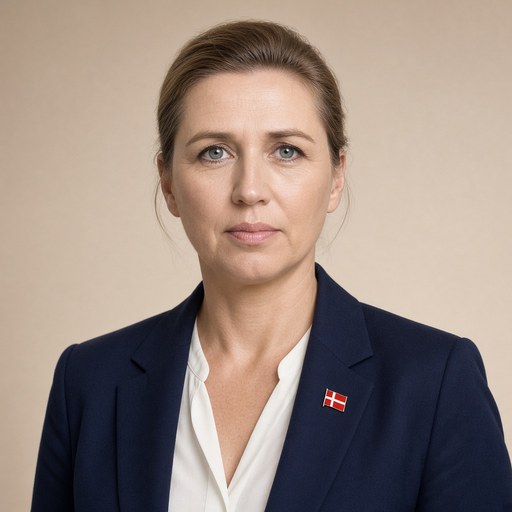
The Prime Minister's speech at the closing debate of the Folketing on May 23, 2022.
 Mette Frederiksen · Prime Minister of Denmark
- Context
- Frederiksen addressed the Folketing closing debate on May 23, 2022, focusing on Denmark's response to Russia's invasion of Ukraine and new security realities.
- Main themes
- Russia-Ukraine war, Danish foreign and security policy, NATO and collective defense, democracy vs authoritarianism, Danish military contributions, geopolitical shifts, COVID-19 pandemic response, Danish national identity and solidarity, climate crisis, migration pressure, China's rise, rules-based international order
- Duration
- ~40 min
- Words
- 4,835
- Sentences
- 538
- Readability
- 63
- Grade
- 6.2
- Syntax
- 2.24
- Vocabulary
- 2.08
Translated from Danish
The broad sphere of national life a sentence belongs to. Every sentence has an Arena, so it is the denominator the other indices are read against.
Other538 sentences in 306 paragraphs
The world changed on February 24.
There is war in Europe. Can you believe we are experiencing it again?
Therefore, in this closing speech, I will turn my gaze outward.
Towards the fateful moment that the world finds itself in.
And the major decisions that it presents to Denmark.
* * *
Putin's war is brutal. Unjust. Inhumane.
We have seen it.
The bombed cities. Hospitals, schools, and apartment blocks. Where people just a short time ago lived a life like you and I.
Now the houses lie in ruins. Families have been driven into flight.
Mass graves with dead civilians. Children, women, and men. Accounts of abuse and rape.
This is the reality right now – on our own continent.
All over the world, free people have risen in protest.
We have done so here in Denmark as well.
Thank you to all of you Danes who have supported Ukraine and the Ukrainian people.
All of you – citizens, businesses, and organizations – who have donated money, clothing, and emergency aid. Helped families to safety. Opened your homes to the displaced. Welcomed them into the community.
With your actions – each and every one of you – you show what Denmark is. What we stand for.
* * *
Who are we?
A small country. A thoughtful people. Who do not engage in grand gestures and lofty words.
Staying grounded serves us best. Whether we like it or not, that mentality runs deep within us.
But there is also another story. About a country – a people – that can achieve so much. Perhaps more than we ourselves believe.
Just look at how we have managed through the pandemic.
We are one of the countries in the world that has had the lowest excess mortality. And one of the countries that has come out of the crisis economically the best.
This is due to the efforts of each individual citizen here in the country.
Through the collective power of our actions, we have saved lives. Protected our societal model.
Right now, several countries around the world are struggling to keep the infection under control. Here at home, we must also prepare for the possibility that infections may rise again in the fall.
Therefore, the government – before summer – will present a strategy for the continued management of COVID-19. We will discuss this with the parties in the Folketing.
But here and now, we look forward to a summer in Denmark. With parties, concerts, cultural life, and reunions with old friends.
Imagine, a summer with festivals again! And with the Tour de France on Danish soil.
All of this. We can thank each other for. Our community stands strong.
* * *
That certainty. That belief in ourselves and each other. We must use it now.
We stand in a new foreign and security policy reality.
The war in Ukraine. An aggressive Russia.
But also rising tensions in Southeast Asia.
China is militarizing. And is on course to overtake the USA as the world's largest economy.
And we see new security threats. Cyberattacks. Attacks on democratic discourse.
And demographics are changing. In the next ten years, Africa's population will grow by a fifth. This will create increased pressure on Europe's borders at a time when the asylum system has failed.
On top of all this comes the climate crisis. Which is already affecting the living conditions of millions of people.
The tectonic plates of the world are shifting. Economically, militarily, demographically.
We cannot take our values for granted. On the contrary – we must persistently fight for them.
Democracy. Human rights. Respect for the right of sovereign states to determine their own fate. All that which we have built our free society upon.
And which protects against the advance of authoritarian forces.
The war in Ukraine clearly shows us that we are in a struggle between those who want democracy. And those who want the opposite.
Those who support the rules-based international order. With respect for the freedom and sovereignty of smaller states. Against those who do not play by the rules.
Brave and visionary politicians before us have engaged Denmark in the communities of the free world. In the UN. In NATO. And since in the EU.
Institutions that have ensured peace and prosperity in Europe and the West for decades.
We see the strength of those communities now. Europe and the USA stand more united than ever.
When unfreedom knocks on Europe's door. There is no such thing as neutrality.
Putin thought he could divide us. He could not. The West must remain united. Now is the time to show who we are. And what we are.
Ukraine must win the war.
* * *
Denmark has a long and proud tradition of engaging in the world.
When civil wars broke out in the Balkans in the 1990s, we sent soldiers, tanks, and planes to protect civilians.
For many years, Danish fighter jets have contributed to NATO's collective air defense.
Recently, a Danish combat battalion was deployed to Latvia. So there are now 1,000 Danish soldiers in the Baltic countries. This is the largest Danish military contribution in recent times.
In recent months, I have visited many of the brave men and women who carry out tasks on our behalf. Here at home and out in the world.
We have some fantastic soldiers. Thank you for your invaluable efforts for Denmark.
With the Dannebrog on your shoulder, you are engaged. Professional. And have the skills to solve even very difficult tasks. To collaborate – even when things get tough.
That is what we are known for in the world. And that is what makes us a sought-after partner in many places.
Denmark is a country you can count on.
We are also carrying that legacy now.
Denmark is sending weapons and military equipment to Ukraine. Humanitarian aid to the victims of the war.
We have promised the Ukrainians that we will help rebuild their country. We have already begun. The first Danish excavators have arrived.
In the midst of the crisis. We are helping Ukraine build the future.
* * *
I am deeply grateful for the leadership that the parties behind the national compromise have taken on.
A warm thank you to Mr. Jakob Ellemann-Jensen from the Liberal Party. Ms. Pia Olsen Dyhr from the Socialist People's Party. Ms. Sofie Carsten Nielsen from the Radicals. And Mr. Søren Pape Poulsen from the Conservative People's Party.
You were ready. And we quickly agreed. That when the world changes. Denmark must not stand still.
For a moment, we set aside our disagreements and stood together for a historic agreement on Danish defense and security.
Thank you for the courage and willingness to take responsibility. And thank you to the parties that have subsequently supported it.
* * *
On June 1, we must decide whether we will abolish the defense opt-out and participate in European cooperation on security and defense.
For me, the vote is primarily about what kind of country we want to be.
Do we want to fight for the values and the communities that have made Denmark a free, safe, and prosperous society?
Or do we want to leave the responsibility to others?
Denmark is today the only country in the EU that has a defense opt-out.
All other countries are part of the European cooperation on security and defense. Including Sweden and Finland, which are now also seeking NATO membership.
This means that we do not even have the option to contribute in the defense area. Even when we might wish to. When it would be in Denmark's interest.
I do not believe that this serves us well.
That is why I will vote yes on June 1. I do so with my heart.
There is once again a wall running through our continent. Between democracy and freedom. On one side. And oppression and darkness on the other side.
I believe that more conflicts will arise. And either directly or indirectly threaten Denmark.
We must be able to defend ourselves. Better and stronger. Therefore, we must stand stronger together with our allies.
We must be involved. For real.
A stronger European cooperation on security and defense will also benefit NATO. NATO Secretary General Jens Stoltenberg said just last week.
The transatlantic cooperation will continue to be a cornerstone of Denmark's security.
If we strengthen the EU, we also strengthen NATO.
* * *
Several questions keep coming up in the debate about the defense opt-out.
Is this the first step towards abolishing all of Denmark's EU opt-outs?
Will there be an EU army?
And will it be politicians in Brussels who can decide to deploy Danish soldiers in the future?
I would like to say a few words about that.
The vote is solely about the defense opt-out. Nothing else.
There is no EU army. We have our own national defense. Just as Sweden has theirs. Germany has theirs.
With our national defense, we can choose to cooperate with other countries. We can do that today in NATO. If we say yes to cooperation in Europe, we will also be able to do so within the framework of the EU – and thereby allow Danish defense to participate in cooperation with other EU countries, for example in the Balkans.
But it will still be us here in Denmark who sovereignly decide whether Danish soldiers should be deployed or not.
It is one of the hardest decisions to make as a politician. To send Danish soldiers away. It must and shall be a decision made by the Danish Folketing.
For me, there is no doubt: It will benefit Denmark. Give us more options. Strengthen our security. If we say yes to participating in European cooperation on security and defense.
When the world changes. This time to something worse and more uncertain. We cannot just stand still.
That is why I wholeheartedly recommend a yes on June 1.
* * *
We also feel the new security policy reality in the Realm of Denmark. Increased military presence. Growing attention to the Arctic.
This calls for even closer cooperation between Denmark, Greenland, and the Faroe Islands.
We agree to condemn Russia's invasion of Ukraine. On the necessity of standing together with our allies in the West.
A year ago, we decided to strengthen our cooperation on foreign, security, and defense policy issues that are particularly relevant to the Faroe Islands and Greenland.
We have begun that work.
In my view, it is a natural part of the development of a strong, modern, and equal realm.
* * *
Security also concerns our energy supply.
Europe must quickly become independent of Russia.
Russian gas and oil must be phased out and replaced with green energy.
Denmark is among the countries in the world that have come the furthest with the green transition.
Now we are further increasing the pace.
With a massive expansion of renewable energy. More offshore wind, onshore wind, and solar energy. Energy efficiency improvements. And not least district heating, so we can reduce heating bills.
Recently, Esbjerg really made it onto the world map.
Denmark has joined forces with Germany, the Netherlands, and Belgium on an ambitious plan for the North Sea.
With the Esbjerg Declaration, we will quadruple our offshore wind capacity by 2030. And decuple it by 2050.
This could cover the current electricity consumption of 230 million European households.
And it would correspond to at least half of the offshore wind energy that the entire EU will need to reach the goal of climate neutrality by 2050.
We will make the North Sea the green power plant of all of Europe.
And create thousands of good Danish green jobs.
Denmark shows that it is possible to combine high climate ambitions with welfare, jobs, and economic growth.
* * *
This is not least due to the course we set together almost three years ago.
When the Folketing got a new political majority. And Denmark a new government.
With the understanding paper, we agreed on what is probably the most ambitious climate goal in the world: 70 percent by 2030.
So how far have we come in these three years?
Not just a third.
Not just halfway.
With the agreements we have made. And the proposals we have put forward. Most recently, a proposal for a green tax reform. With a high and more uniform tax on CO2.
We have come more than two-thirds of the way to the 70 percent by 2030.
Thank you to all the parties here in the chamber that have made this possible. There are many of you!
And a special thank you to the Socialist People's Party. The Radicals. And the Unity List.
Thank you for your stubbornness. Your insistence that we should strive higher than we thought was possible. It is largely your merit that we have come this far.
Not just you party leaders. But especially all the spokespersons. Thank you for the good, close cooperation that you have every single day with the ministers of the government.
In Denmark, the green transition is no longer a choice. We must solve the climate crisis. There is no alternative.
The green transition is now one of the cornerstones upon which our society rests. Jobs. Prosperity. Welfare. And sustainability.
We will not be driven by fear. But by ambition. For a greener, safer, and freer future for our children and grandchildren.
* * *
The war in Europe now has significant economic consequences.
We are currently experiencing the largest price increases in almost 40 years.
A liter of milk. 12 kroner. A pack of beef. 50 kroner. Butter. 25 kroner. And gasoline is up to more than 16 kroner per liter.
Inflation is a ghost that walks through our economy.
It challenges many Danish families. And it challenges us politically.
Tax cuts, some say. I understand that well. I would like to help provide tax cuts. So that wage earners have more money in their hands.
Still, it is not that simple.
For if we are to do it in a way that does not just worsen inflation.
Then those tax cuts must be financed.
And we are not talking about small amounts.
If we were to offset the costs that Danes have this year as a result of inflation. For example, with tax cuts.
It would cost society over 35 billion kroner – in immediate extra expenses.
That is more than the total expenses for student grants.
It is the salary expenses for almost every 10th public employee.
It is more than what it costs to run all Danish nursing homes.
That is why we have said – again and again – that we cannot keep everyone whole.
For unless one is prepared to implement massive cuts in our welfare. And this government is not. It is not possible to compensate one-to-one for the rising prices.
But that is not the same as saying that we cannot do anything at all.
We have already agreed to help more than 400,000 households that are particularly hard hit by rising energy prices.
And we have proposed a one-time payment of 5,000 kroner to the pensioners who have the least.
The pensioners who only have their state pension. Perhaps a small savings. Who do not have the opportunity to work. And who in no way live in luxury.
These are pensioners who are used to planning their purchases. Flipping through the discount flyers.
And for whom it is not about skipping a vacation. Because they probably couldn't afford one in the first place.
But where it is now simply about making everyday life work.
Here, 5,000 kroner means something. Tax-free.
This is a proposal that has received broad support here in the Folketing.
It is also a proposal that is targeted. That is temporary. And therefore also responsible.
We have now proposed that the funds be found by reducing public investment in construction this year and next year.
Compared to other countries that – with a different economic starting point – have adopted more comprehensive aid packages. We in Denmark have precisely been restrained in doing anything that could worsen inflation.
We must hold on to that.
We must also handle this crisis in a way that both is responsible and fair.
Where we pursue a responsible economic policy. And where we are also able to help those who are hardest hit.
I hope for the support of the Folketing in this.
And we know that it is possible.
* * *
During the pandemic, we supported the Danish economy.
We provided wage compensation to employees who were sent home. Help to businesses that were affected by lockdowns. Various support schemes for the sectors that were most vulnerable.
This was only possible because we stood on a foundation of a solid, sustainable Danish economy.
Created through decades of reforms.
We had something to withstand when the crisis hit.
But I believe that many along the way thought: Can we afford this? At one point, I also warned against becoming complacent in economic policy.
That we should not start financing permanent expenses with borrowed money.
And we did not do that either. These were temporary aid packages. That have since been phased out.
The expansive economic policy. Where we promote demand. Kickstart the economy. Get people into work.
This is classic social democratic crisis policy.
But this crisis is different.
The economy is already fully operational. Unemployment is low. Capacity is strained.
Therefore, the remedy is different.
And even though economists expect inflation to fall to a lower level next year.
We fundamentally do not know how long it will last.
Therefore, I will warn against being too dogmatic in economic policy.
As a social democrat and as prime minister, I am focused on finding the right balance. What we do must be responsible. And it must be fair.
Therefore, we must first and foremost be pragmatic.
The handling of the pandemic shows us that.
At that time, questions were raised about whether the economic policy was too expansive. There was criticism that we were taking on too much debt.
But already this year, our debt is expected to be lower than before the pandemic.
We are one of the only countries in Europe that had a surplus in public finances in 2021. In fact, Denmark's surplus last year was the highest in the entire EU.
The results speak for themselves.
At first, we thought we had the highest growth in 15 years. It turned out to be the highest growth in 27 years.
Not since former Prime Minister Poul Nyrup Rasmussen stood at this podium and opened the Folketing in 1994 has Denmark had a higher growth rate than we had last year.
And I could go on.
We have the lowest unemployment in 13 years.
And there has never – I repeat: never – been more people in work than there are now.
All the good key figures. We do not necessarily feel them in our everyday lives. When we are in the supermarket. When we have to pay the heating bill.
Most Danes experience a more strained personal economy. And many are worried. And this time, there may be a longer gap than ever before between what you experience in your bank account and the economic key figures.
It can be a tough time for many Danes. We must keep unemployment down. And continue to combine fairness and responsibility.
* * *
Denmark has a healthy and strong economy.
This is primarily due to the willingness to work that each individual demonstrates in our society. That one, as it is popularly described, gets up, makes packed lunches – perhaps sometimes one with mackerel – and goes to work.
It is also due to an enterprising and innovative Danish business community. You are simply skilled. At running businesses and making money. But just as importantly: At taking responsibility that is greater than what can be seen on the bottom line.
And finally, I also believe that we collectively here in the Folketing can stand tall.
For despite the disagreements that may come to dominate more and more as we soon enter the last year of the electoral term.
The truth is that there is a very broad majority behind the vast majority of the policies that have been adopted here in this chamber over the past three years.
We found the balances.
We must do so again.
So that we here and now pursue a policy that does not worsen inflation. That simultaneously helps those who have the least.
And where we subsequently take responsibility for new reforms.
* * *
In August, the government will present a 2030 plan. It will form the framework for Denmark's overall economic policy.
It will be a strict 2030 plan.
Where there will not be many new funds to work with in the public sector.
For when we have ensured that the funds follow when we fortunately have more children and elderly. So that each kindergarten or nursing home does not have to start each year by cutting back.
And when we have also created room for permanent investments in our defense and security. So that we can live up to the promise we have made to our allies in NATO.
There will be historically few funds left for new welfare improvements or other new initiatives.
The 2030 plan will, however, show how we can establish a new green space that makes it possible to invest in our climate and environment.
Overall, it will be a 2030 plan that clearly shows that there will be a need for tough prioritizations in the years to come.
This will require that we dare to tackle bureaucracy in the public sector. So that we free up time and welfare for the individual citizen.
It will also require that new and larger expenses are financed. Either through savings elsewhere. Or through more reforms.
The government is already working on this.
With Denmark Can More I we increase the labor supply by 12,000 people. GDP by 17.5 billion kroner in 2030. And at the same time, we invest significantly in education.
With
Denmark Can More II we pave the way to free ourselves from Putin's gas and accelerate the green transition.
Now we are preparing
Denmark Can More III
.
It is my ambition that we continue the course with a comprehensive release of employees in the public sector. So that the funds, and not least the time, that is currently used in our welfare society, is used more wisely.
* * *
One of the areas in our welfare that we need to address is our health.
The Danish healthcare system is far better than its reputation.
We have free and equal access to treatment. Highly specialized hospitals. And skilled employees who have performed a remarkable feat during the pandemic.
We can be proud of that.
But even before the pandemic, it was clear that there are some fundamental problems in the healthcare system:
It is not reasonable that people have to wait for treatment and walk around with pain or ailments that could have been avoided.
It is also not fair to the patients who have to lie in the corridors because there are not enough hospital rooms.
And it is not fair to the employees who are too busy because they lack colleagues.
In many places, the pace is too fast. The work pressure is high. It affects both patients and employees.
* * *
For several years, we have talked about the need to improve our healthcare system.
A lot has already been achieved. We have become better at treating cancer. And fewer Danes die today from cardiovascular disease.
But notice what we talk about when we talk about the healthcare system.
Kroner and øre. Response times and treatment backlogs. Rights and guarantees. Systems and structures.
Are we not forgetting to talk about what is most important?
You as a patient. You as an employee. All of us who are relatives.
All the fates that intertwine every day in and out of each other in hospital corridors and waiting rooms.
Illness and accident can strike anyone.
Ourselves. Someone we care about. And I believe that we can all recall the feeling. The wait for the next examination. The next answer from the doctor. The fragility. The uncertainty.
It is when we are most vulnerable that we truly need a strong welfare society.
Then we need enough time. For security. And care. Time for employees to do what they are trained to do. Treat, care for, and help us.
That care, that presence, cannot be achieved through efficiency.
There is a need for new solutions.
* * *
Since the government took office nearly three years ago, we have agreed on the largest boost to welfare in 10 years. Allocated funds for 1,000 new nurses. For a strengthened psychiatry. And for better conditions for mothers giving birth.
But more money alone cannot solve all problems.
On Friday, we reached a very broad agreement on a healthcare reform. Thank you for that!
With the agreement, we strengthen the local healthcare system. That was what we promised before the election. Up to 25 new local hospitals. A strengthened emergency response. More coherent treatment pathways. More health services must be brought out into the municipalities. Closer to the citizens.
We also agree to give nurses and midwives the opportunity to independently perform certain tasks that currently require delegation from a doctor.
A nurse should no longer need a doctor's permission to take a blood sample from a patient.
A midwife should be able to help a woman in labor with a local anesthetic injection on her own.
And the home care nurse who visits a citizen at home should be able to vaccinate or provide fluid supplements – without first having to call the medical emergency service.
It may sound like technicalities. But it has great significance for the patients.
It should not be the case that an elderly citizen with pneumonia is repeatedly hospitalized when it could have been prevented. Follow-up treatment must be strengthened.
We must – to put it simply – let reason prevail. Let employees use their professionalism.
* * *
These are good steps in the right direction.
But it will not solve all the problems.
In the coming years, there will be more elderly people. That is a good thing. We live longer. Medical science is improving.
But we will also see more Danes with chronic illnesses. And at the same time, there will be a shortage of employees in local welfare.
Today, almost every second nurse is employed part-time. The same goes for eight out of ten social and health care workers in the municipalities.
Eight percent of all nurses leave their profession before ten years have passed. That corresponds to 1,000 nurses every five years.
How do we create a good working environment for the employees who solve life-critical tasks every day?
How do we get more young people to choose meaningful education in welfare?
And above all: How do we ensure that all Danes who come into contact with the healthcare system every day receive the care and security they need?
We need to find those answers.
In the government, we do not delude ourselves into thinking that there are any quick fixes.
Therefore, we will invite patients, employees, relatives, and politicians to join the work.
Together, we will look at what is needed to create more trust. More collaboration across sectors. More time for employees to do what is most important.
And we must take the next important steps in psychiatry. We live in a time when far too many people are suffering mentally.
Prevention must be better. Treatment must be timely for those who need help.
And more broadly, we must look at how we support resilience and community so that distress does not take hold of so many children.
And we know well that wage development in the entire public sector needs to be scrutinized. The wage structure committee is already working on this.
A healthcare system and welfare where the individual comes before the system. I am not the first prime minister to wish for that. Nor will I be the last.
Now we have taken some important steps. But we are not done yet.
* * *
A stronger Denmark. A greener future. A freer world.
That is what we are working for.
As Ukraine's President Zelenskyy said when he spoke to us Danes on May 4:
"The dream of peace will come true."
Putin must not win.
It is the story of Europe that is at stake. It is the future of Europe that is at stake.
A Denmark that takes responsibility. Delivers more than expected.
That is what we can do.
That is what we do.
That is who we are.
Denmark can do more.
The original Danish. The tags above are read on the English translation's sentences.
Verden forandrede sig den 24. februar.
Der er krig i Europa. Tænk, at vi igen skulle opleve det.
Derfor vil jeg i denne afslutningstale vende blikket udad.
Mod den skæbnestund, som verden befinder sig i.
Og de store beslutninger, som det stiller Danmark over for.
* * *
Putins krig er brutal. Uretfærdig. Umenneskelig.
Vi har set det.
De sønderbombede byer. Hospitaler, skoler og boligblokke. Hvor mennesker for kort tid siden levede et liv som du og jeg.
Nu ligger husene i ruiner. Familierne er drevet på flugt.
Massegrave med dræbte civile. Børn, kvinder og mænd. Beretninger om overgreb og voldtægter.
Det er virkelighed lige nu – på vores eget kontinent.
Over hele verden har frie folk rejst sig i protest.
Det har vi også gjort her i Danmark.
Tak til alle jer danskere, der har støttet Ukraine og det ukrainske folk.
Alle jer – borgere, virksomheder og organisationer – der har doneret penge, tøj og nødhjælp. Hjulpet familier i sikkerhed. Åbnet jeres hjem for de fordrevne. Taget imod dem i lokalsamfundet.
Med jeres handlinger – hver især – viser I, hvad Danmark er. Hvad vi står for.
* * *
Hvem er vi?
Et lille land. Et besindigt folk. Som ikke giver sig af med store armbevægelser og vidtløftige ord.
Ved jorden at blive, det tjener os bedst. Hvad end vi vil det eller ej, så ligger den mentalitet dybt i os.
Men der er også en anden fortælling. Om et land – et folk – der kan så utroligt meget. Måske mere end vi selv tror.
Se bare, hvordan vi har klaret os gennem pandemien.
Vi er et af de lande i verden, der har haft den laveste overdødelighed. Og et af de lande, der er kommet økonomisk bedst ud af krisen.
Det skyldes indsatsen fra hver enkelt borger her i landet.
Ved vores handlingers kollektive kraft har vi reddet liv. Beskyttet vores samfundsmodel.
Netop nu kæmper flere lande rundt om i verden med at holde smitten under kontrol. Også herhjemme skal vi forberede os på, at smitten kan stige igen til efteråret.
Derfor vil regeringen – inden sommer – præsentere en strategi for den fortsatte corona-håndtering. Den vil vi drøfte med Folketingets partier.
Men her og nu. Ser vi frem til en sommer i Danmark. Med fester, koncerter, kulturliv og gensyn med gamle venner.
Tænk, en sommer med festivaler igen! Og med Tour de France på dansk jord.
Alt det. Det kan vi takke hinanden for. Vores fællesskab står stærkt.
* * *
Den vished. Den tro på os selv og hinanden. Den skal vi bruge nu.
Vi står i en ny udenrigs- og sikkerhedspolitisk virkelighed.
Krigen i Ukraine. Et aggressivt Rusland.
Men også stigende spændinger i Sydøstasien.
Kina opruster militært. Og har kurs mod at overhale USA som verdens største økonomi.
Og vi ser nye sikkerhedstrusler. Cyberangreb. Angreb på den demokratiske samtale.
Og demografien forandrer sig. I løbet af de næste ti år vil Afrikas befolkning vokse med en femtedel. Det vil skabe øget pres på Europas grænser i en tid, hvor asylsystemet har spillet fallit.
Oven i alt det kommer klimakrisen. Som allerede nu påvirker levevilkårene for millioner af mennesker.
Verdens plader flytter sig. Økonomisk, militært, demografisk.
Vi kan ikke tage vores værdier for givet. Vi skal tværtimod – vedholdende – kæmpe for dem.
Demokrati. Menneskerettigheder. Respekten for suveræne staters ret til selv at bestemme. Alt det, som vi har bygget vores frie samfund på.
Og som er værnet mod, at autoritære kræfter vinder frem.
Krigen i Ukraine viser os med al tydelighed, at vi befinder os i en kamp mellem dem, der vil demokratiet. Og dem, der vil det modsatte.
Dem, der støtter det regelbaserede, internationale samfund. Med respekt for også mindre staters frihed og suverænitet. Mod dem, der ikke spiller efter reglerne.
Modige og fremsynede politikere før os har engageret Danmark i den frie verdens fællesskaber. I FN. I NATO. Og siden EU.
Institutioner, der i årtier har sikret Europa og Vesten fred og fremgang.
Styrken af de fællesskaber ser vi nu. Europa og USA står mere samlet end nogensinde.
Når ufriheden banker på Europas dør. Så findes neutralitet ikke.
Putin troede, han kunne splitte os. Det kunne han ikke. Vesten skal forblive samlet. Det er nu, vi skal vise, hvem vi er. Og hvad vi er.
Ukraine skal vinde krigen.
* * *
Danmark har en lang og stolt tradition for at engagere os i verden.
Da borgerkrigene brød ud på Balkan i 1990’erne, sendte vi soldater, kampvogne og fly for at beskytte civilbefolkningen.
Igennem mange år har danske kampfly bidraget til NATO’s fælles luftforsvar.
For nylig blev en dansk kampbataljon udsendt til Letland. Så der nu er 1.000 danske soldater i de baltiske lande. Det er det største danske militære bidrag i nyere tid.
De seneste måneder har jeg besøgt mange af de modige mænd og kvinder, der løser opgaverne på vor andres vegne. Herhjemme og ude i verden.
Vi har nogle fantastiske soldater. Tusind tak for jeres uvurderlige indsats for Danmark.
Med Dannebrog på skulderen er I engagerede. Professionelle. Og har evnerne til at løse selv meget vanskelige opgaver. Til at samarbejde – også når tingene spidser til.
Det er det, vi kendes for ude i verden. Og det er det, der gør os til en eftertragtet samarbejdspartner mange steder.
Danmark er et land, man kan regne med.
Den arv løfter vi også nu.
Danmark sender våben og militært udstyr til Ukraine. Humanitær hjælp til ofrene for krigen.
Vi har lovet ukrainerne, at vi vil hjælpe med at genopbygge deres land. Vi er allerede gået i gang. De første danske gravemaskiner er ankommet.
Midt i krisen. Hjælper vi Ukraine med at bygge fremtiden.
* * *
Jeg er dybt taknemmelig for det lederskab, som partierne bag det nationale kompromis har taget på sig.
En varm tak til hr. Jakob Ellemann-Jensen fra Venstre. Fru Pia Olsen Dyhr fra SF. Fru Sofie Carsten Nielsen fra Radikale Venstre. Og hr. Søren Pape Poulsen fra Konservative Folkeparti.
I stod klar. Og vi blev hurtigt enige om. At når verden forandrer sig. Så skal Danmark ikke stå stille.
For en stund lagde vi uenighederne på hylden og stod sammen om en historisk aftale om dansk forsvar og sikkerhed.
Tak for modet og viljen til at tage ansvar. Og tak til partierne, der efterfølgende har bakket op.
* * *
Den 1. juni skal vi beslutte, om vi vil afskaffe forsvarsforbeholdet og deltage i det europæiske samarbejde om sikkerhed og forsvar.
For mig handler afstemningen først og fremmest om, hvilket land vi vil være.
Vil vi kæmpe for de værdier og for de fællesskaber, som har gjort Danmark til et frit, trygt og rigt samfund?
Eller vil vi overlade ansvaret til andre?
Danmark er i dag det
eneste
land i EU, der har et forsvarsforbehold.
Alle andre lande er med i det europæiske samarbejde om sikkerhed og forsvar. Også Sverige og Finland, der nu også søger optagelse i NATO.
Det betyder, at vi ikke engang har muligheden for at bidrage på forsvarsområdet. Selv når vi måtte ønske det. Når det vil være i Danmarks interesse.
Det mener jeg ikke, at vi er tjent med.
Derfor stemmer jeg ja den 1. juni. Det gør jeg med hjertet.
Der går igen en mur igennem vores kontinent. Mellem demokrati og frihed. På den ene side. Og undertrykkelse og mørke på den anden side.
Jeg tror, at flere konflikter vil komme til. Og enten direkte eller indirekte true Danmark.
Vi skal kunne forsvare os selv. Bedre og stærkere. Derfor skal vi stå stærkere sammen med vores allierede.
Vi skal være med. Rigtigt.
Et stærkere europæisk samarbejde om sikkerhed og forsvar vil også gavne NATO. Det sagde NATOs generalsekretær, Jens Stoltenberg så sent som i sidste uge.
Det transatlantiske samarbejde vil fortsat være en hjørnesten i Danmarks sikkerhed.
Styrker vi EU. Styrker vi også NATO.
* * *
Flere spørgsmål går igen i debatten om forsvarsforbeholdet.
Er det her første skridt til at afskaffe alle Danmarks EU-forbehold?
Kommer der en EU-hær?
Og vil det fremover være politikere i Bruxelles, der kan træffe beslutning om at udsende danske soldater?
Det vil jeg gerne sige et par ord om.
Afstemningen handler udelukkende om forsvarsforbeholdet. Intet andet.
Der findes ingen EU-hær. Vi har vores eget nationale forsvar. Ligesom Sverige har deres. Tyskland deres.
Med vores nationale forsvar kan vi vælge at samarbejde med de andre lande. Det kan vi i dag i NATO. Hvis vi siger ja til samarbejdet i Europa, vil vi også kunne gøre det i regi af EU – og derved lade dansk forsvar indgå i et samarbejde med andre EU-lande på eksempelvis Balkan.
Men det vil fortsat være os her i Danmark, der suverænt bestemmer, om danske soldater skal udsendes eller ej.
Det er en af de sværeste beslutninger at tage som politiker. At sende danske soldater afsted. Det må og skal og vil være en beslutning, der tages af det danske Folketing.
For mig at se er der ingen tvivl: Det vil gavne Danmark. Give os flere muligheder. Styrke vores sikkerhed. Hvis vi siger ja til at deltage i det europæiske samarbejde om sikkerhed og forsvar.
Når verden forandrer sig. Denne gang til noget, der er værre og mere usikkert. Så kan vi ikke bare blive stående.
Derfor anbefaler jeg helhjertet et ja den 1. juni.
* * *
Også i Rigsfællesskabet mærker vi den nye sikkerhedspolitiske virkelighed. Øget militær tilstedeværelse. Stigende opmærksomhed på Arktis.
Det kalder på et endnu tættere samarbejde mellem Danmark, Grønland og Færøerne.
Vi er enige om at fordømme Ruslands invasion af Ukraine. Om nødvendigheden af at stå sammen med vores allierede i Vesten.
For et år siden besluttede vi at styrke vores samarbejde om de udenrigs-, sikkerheds- og forsvarspolitiske spørgsmål, der har særlig relevans for Færøerne og Grønland.
Det arbejde er vi gået i gang med.
Det er i mine øjne en naturlig del af udviklingen af et stærkt, moderne og ligeværdigt rigsfællesskab.
* * *
Sikkerhed handler også om vores energiforsyning.
Europa skal hurtigst muligt gøre sig uafhængig af Rusland.
Russisk gas og olie skal udfases og erstattes med grøn energi.
Danmark er blandt de lande i verden, der er kommet længst med den grønne omstilling.
Nu sætter vi tempoet yderligere op.
Med en massiv udbygning af vedvarende energi. Mere havvind, landvind og solenergi. Energieffektiviseringer. Og ikke mindst fjernvarme, så vi kan få gjort varmeregningerne mindre.
Forleden kom Esbjerg virkelig på verdenskortet.
Danmark er gået sammen med Tyskland, Nederlandene og Belgien om en ambitiøs plan for Nordsøen.
Med Esbjerg-erklæringen vil vi firedoble vores havvindkapacitet i 2030. Og tidoble den i 2050.
Det vil kunne dække det nuværende strømforbrug hos 230 millioner europæiske husstande.
Og det vil svare til mindst halvdelen af den havvindenergi, som hele EU skal bruge for at nå målet om klimaneutralitet frem mod 2050.
Vi vil gøre Nordsøen til hele Europas grønne kraftværk.
Og skabe tusindvis af gode danske grønne arbejdspladser.
Danmark viser, at det er muligt at kombinere høje klimaambitioner med velfærd, arbejdspladser og økonomisk vækst.
* * *
Det skyldes ikke mindst den kurs, som vi satte sammen for næsten tre år siden.
Da Folketinget fik et nyt politisk flertal. Og Danmark en ny regering.
Med forståelsespapiret blev vi enige om det nok mest ambitiøse klimamål i verden: 70 procent i 2030.
Hvor langt er vi så nået på de tre år?
Ikke kun en tredjedel.
Ikke kun halvvejs.
Med de aftaler, vi har indgået. Og de forslag, vi har lagt frem. Senest et udspil til en grøn skattereform. Med en høj og mere ensartet afgift på CO2.
Så er vi kommet mere end to tredjedele af vejen til de 70 procent i 2030.
Tak til alle partier her i salen, der har været med til at gøre det muligt. I er mange!
Og en særlig tak til SF. Radikale Venstre. Og Enhedslisten.
Tak for jeres stædighed. Jeres insisteren på, at vi skulle stræbe højere, end vi selv troede var muligt. Det er i høj grad jeres fortjeneste, at vi er kommet så langt.
Ikke kun jer partiledere. Men i særdeleshed også alle ordførerne. Tak for det gode, tætte samarbejde, som I har hver eneste dag med regeringens ministre.
I Danmark er grøn omstilling ikke længere et valg. Vi skal løse klimakrisen. Der findes intet alternativ.
Den grønne omstilling er nu en af de grundpiller, som vores samfund hviler på. Arbejdspladser. Velstand. Velfærd. Og bæredygtighed.
Vi lader os ikke styre af frygten. Men af ambitionen. Om en grønnere, sikrere og friere fremtid for vores børn og børnebørn.
* * *
Krigen i Europa har nu betydelige økonomiske konsekvenser.
Vi oplever lige nu de største prisstigninger i næsten 40 år.
En liter mælk. 12 kroner. En pakke oksekød. 50 kroner. Smør. 25 kroner. Og benzinen er oppe i mere end 16 kroner literen.
Inflationen er et spøgelse, der går gennem vores økonomi.
Det udfordrer mange danske familier. Og det udfordrer os politisk.
Skattelettelser, er der nogen, der siger. Det forstår jeg godt. Jeg vil gerne være med til at give skattelettelser. Så lønmodtagerne får flere penge mellem hænderne.
Alligevel er det ikke så simpelt.
For hvis vi skal gøre det på en måde, der ikke bare gør inflationen værre.
Så skal de skattelettelser finansieres.
Og det er ikke småpenge, vi taler om.
Hvis vi skulle udligne de omkostninger, som danskerne har i år som følge af inflationen. For eksempel med skattelettelser.
Så vil det koste samfundet over 35 milliarder kroner – i umiddelbare ekstraudgifter.
Det er mere end de samlede udgifter til SU.
Det er lønudgifterne til næsten hver 10. offentligt ansatte.
Det er mere end, hvad det koster at drive alle danske plejehjem.
Det er derfor, vi har sagt – igen og igen – at vi kan ikke holde alle skadesfri.
For medmindre man er parat til at gennemføre massive nedskæringer i vores velfærd. Og det er denne regering ikke. Så er det ikke muligt at kompensere én til én for de stigende priser.
Men det er ikke det samme som, at vi slet intet kan gøre.
Vi har allerede aftalt at hjælpe mere end 400.000 husstande, der er særlig hårdt ramt af de stigende energipriser.
Og vi har fra regeringens side foreslået et engangsbeløb på 5.000 kroner til de pensionister, der har mindst.
De pensionister, der kun har deres folkepension. Måske en lille opsparing. Som ikke har muligheden for at komme i arbejde. Og som på ingen måde lever i sus og dus.
Det er pensionister, der er vant til at planlægge deres indkøb. Bladre tilbudsaviserne igennem.
Og for hvem det ikke handler om at droppe en ferie. For den havde de næppe råd til i forvejen.
Men hvor det nu simpelthen handler om at få hverdagen til at hænge sammen.
Her betyder 5.000 kroner noget. Skattefrit.
Det er et forslag, der har mødt bred opbakning her i Folketinget.
Det er samtidig et forslag, der er målrettet. Som er midlertidigt. Og som derfor også er ansvarligt.
Vi har nu foreslået, at pengene findes ved at nedjustere de offentlige anlægsinvesteringer i år og næste år.
Sammenlignet med andre lande, der – med et andet økonomisk udgangspunkt – har vedtaget mere omfattende hjælpepakker. Så har vi i Danmark netop været tilbageholdende med at gøre noget, der kan forværre inflationen.
Det skal vi holde fast i.
Også denne krise skal vi håndtere på en måde, der
både
er ansvarlig og retfærdig.
Hvor vi fører en ansvarlig, økonomisk politik. Og hvor vi samtidig evner at hjælpe dem, der er hårdt ramt.
Det håber jeg på Folketingets opbakning til.
Og vi ved jo, at det kan lade sig gøre.
* * *
Under corona holdt vi hånden under dansk økonomi.
Vi gav lønkompensation til medarbejdere, der blev hjemsendt. Hjælp til virksomheder, der blev ramt af nedlukninger. Forskellige støtteordninger til de brancher, der var mest udsatte.
Det kunne kun lade sig gøre, fordi vi stod på et fundament af en solid, holdbar dansk økonomi.
Skabt gennem årtiers reformer.
Vi havde noget at stå imod med, da krisen ramte.
Men jeg tror nu alligevel, at mange undervejs tænkte: Har vi råd til det? På et tidspunkt advarede jeg også selv mod, at der ikke gik fartblindhed i den økonomiske politik.
At vi ikke begyndte at finansiere varige udgifter med lånte penge.
Og det gjorde vi netop heller ikke. Det var
midlertidige
hjælpepakker. Som siden er faldet bort.
Den ekspansive økonomiske politik. Hvor vi fremmer efterspørgslen. Sætter gang i økonomien. Får folk i arbejde.
Det er klassisk, socialdemokratisk krisepolitik.
Men denne krise er anderledes.
Der er i forvejen fuldt blus på økonomien. Ledigheden er lav. Kapaciteten er presset.
Derfor er kuren en anden.
Og selvom økonomerne forventer, at inflationen vil falde til et lavere niveau næste år.
Så ved vi dybest set ikke, hvor lang tid det varer.
Derfor vil jeg advare mod at være for dogmatisk i den økonomiske politik.
Som socialdemokrat og som statsminister er jeg optaget af, at vi finder den rigtige balance. Det, vi gør, skal være ansvarligt. Og det skal være retfærdigt.
Derfor må vi først som sidst være pragmatiske.
Det viser corona-håndteringen os.
Dengang blev der sat spørgsmål ved, om den økonomiske politik var for ekspansiv. Der var kritik af, at vi optog for meget gæld.
Men allerede i år. Forventes vores gæld at være lavere end før pandemien.
Vi er et af de eneste lande i Europa, der havde overskud på de offentlige finanser i 2021. Faktisk var Danmarks overskud sidste år det højeste i hele EU.
Resultaterne taler for sig selv.
Først troede vi, at vi havde den højeste vækst i 15 år. Det skulle ende med at blive den højeste vækst i 27 år.
Ikke siden tidligere statsminister Poul Nyrup Rasmussen stod på denne talerstol og åbnede Folketinget i 1994, har Danmark haft en højere vækst end den, vi havde sidste år.
Og jeg kunne blive ved.
Vi har den laveste arbejdsløshed i 13 år.
Og der har aldrig – jeg gentager: aldrig – været flere i arbejde, end der er nu.
Alle de gode nøgletal. Dem mærker vi ikke nødvendigvis i hverdagen. Når vi står i supermarkedet. Når vi skal betale varmeregningen.
De fleste danskere oplever en mere presset privatøkonomi. Og mange er bekymrede. Og den her gang er der måske længere end nogensinde før mellem det, du oplever på bankkontoen, og de økonomiske nøgletal.
Det kan blive en hård tid for mange danskere. Vi skal holde arbejdsløsheden nede. Og fortsat kombinere retfærdighed og ansvarlighed.
* * *
Danmark har en sund og stærk økonomi.
Det skyldes først og fremmest den virkelyst, hver enkelt udviser i vores samfund. At man, som det populært beskrives, står op, smører madpakker – måske engang imellem én med makrel – og tager på arbejde.
Det skyldes også et entreprenant og innovativt dansk erhvervsliv. I er slet og ret dygtige. Til at drive virksomhed og tjene penge. Men nok så vigtigt: Til at tage et ansvar, der er større end det, man kan se på bundlinjen.
Og endelig mener jeg også, at vi kollektivt herinde i Folketinget kan ranke ryggen.
For trods de uenigheder, der måske kommer til at fylde stadigt mere, nu hvor vi snart går ind i det sidste år af valgperioden.
Så er sandheden jo den, at der står meget brede flertal bag langt hovedparten af den politik, der er vedtaget her i salen de seneste tre år.
Vi fandt balancerne.
Det skal vi gøre igen.
Så vi her og nu fører en politik, der ikke forværrer inflationen. Som samtidig hjælper dem, der har mindst.
Og hvor vi efterfølgende tager ansvar for nye reformer.
* * *
Til august vil regeringen præsentere en 2030-plan. Den skal danne rammen om Danmarks overordnede økonomisk politik.
Det bliver en stram 2030-plan.
Hvor der ikke bliver mange nye penge at gøre godt med i den offentlige sektor.
For når vi har sørget for, at pengene følger med, når vi heldigvis bliver flere børn og ældre. Så den enkelte børnehave eller plejehjem ikke skal starte hvert år med at skære ned.
Og når vi samtidig har skabt plads til varige investeringer i vores forsvar og sikkerhed. Så vi kan leve op til det løfte, vi har givet vores allierede i NATO.
Så vil der være historisk få penge tilbage til nye velfærdsforbedringer eller andre nye tiltag.
2030-planen vil dog vise, hvordan vi kan etablere et nyt grønt råderum, der gør det muligt at investere i vores klima og miljø.
Samlet set vil det være en 2030-plan, der med al tydelighed viser, at der bliver behov for skrappe prioriteringer i årene fremover.
Det vil både kræve, at vi tør tage livtag med bureaukratiet i den offentlige sektor. Så vi frigør tid og velfærd til den enkelte borger.
Det vil også kræve, at nye og større udgifter finansieres. Enten af besparelser andre steder. Eller gennem flere reformer.
Det er regeringen allerede i gang med.
Med Danmark kan mere I
øger vi arbejdsudbuddet med 12.000 personer. BNP med 17½ milliarder kroner i 2030. Og samtidig investerer vi markant i uddannelse.
Med
Danmark kan mere II
lægger vi vejen til at gøre os fri af Putins gas og sætter tempoet op i den grønne omstilling.
Nu er vi i gang med at forberede
Danmark kan mere III
.
Det er min ambition, at vi fortsætter kursen med en omfattende frisættelse af medarbejderne i den offentlige sektor. Så de penge, og ikke mindst den tid, der i dag bruges i vores velfærdssamfund, bruges klogere.
* * *
Et af de områder i vores velfærd, hvor vi skal tage fat, er vores sundhed.
Det danske sundhedsvæsen er langt bedre end sit rygte.
Vi har fri og lige adgang til behandling. Højt specialiserede sygehuse. Og dygtige medarbejdere, der har ydet en kraftpræstation under pandemien.
Det kan vi være stolte af.
Men allerede inden corona stod det klart, at der er nogle grundlæggende problemer i sundhedsvæsnet:
Det er ikke rimeligt, at mennesker må vente på behandling og gå rundt med smerter eller gener, som kunne være undgået.
Det er heller ikke rimeligt over for de patienter, der må ligge på gangene, fordi der ikke er hospitalsstuer nok.
Og det er ikke rimeligt over for de medarbejdere, der har for travlt, fordi de mangler kolleger.
Mange steder løbes der for stærkt. Arbejdspresset er stort. Det går ud over både patienter og medarbejdere.
* * *
I flere år har vi talt om behovet for at gøre vores sundhedsvæsen bedre.
Rigtig meget er allerede lykkedes. Vi er blevet bedre til at behandle kræft. Og færre danskere dør i dag af en hjertekarsygdom.
Men læg mærke til, hvad vi taler om, når vi taler om sundhedsvæsnet.
Kroner og ører. Responstider og behandlingspukkel. Rettigheder og garantier. Systemer og strukturer.
Glemmer vi ikke at tale om det, der er vigtigst?
Dig som patient. Dig som medarbejder. Alle os, der er pårørende.
Alle de skæbner, der hver dag fletter sig ind og ud af hinanden på hospitalsgangene og i venteværelserne.
Sygdom og ulykke kan ramme alle.
Os selv. Én vi holder af. Og jeg tror, at vi alle kan genkalde os følelsen. Ventetiden på den næste undersøgelse. Det næste svar fra lægen. Skrøbeligheden. Uvisheden.
Det er, når vi er allermest sårbare, at vi for alvor har brug for et stærkt velfærdssamfund.
Så har vi brug for, at der er tid nok. Til tryghed. Og omsorg. Tid til, at medarbejderne kan gøre det, de er uddannet til. Behandle, pleje og hjælpe os.
Den omsorg, det nærvær, kan vi ikke effektivisere os frem til.
Der er brug for nye løsninger.
* * *
Siden regeringen trådte til for snart tre år siden, har vi aftalt det største løft af velfærden i 10 år. Sat penge af til 1.000 nye sygeplejersker. Til en styrket psykiatri. Og til bedre forhold for fødende.
Men flere penge kan i sig selv ikke løse alle problemer.
I fredags indgik vi en meget bred aftale om en sundhedsreform. Tak for det!
Med aftalen styrker vi det nære sundhedsvæsen. Det var det, vi lovede før valget. Op til 25 nye nærhospitaler. En styrket akutindsats. Mere sammenhængende behandlingsforløb. Flere sundhedstilbud skal ud i kommunerne. Tættere på borgerne.
Vi er også enige om at give sygeplejersker og jordemødre mulighed for selvstændigt at udføre bestemte opgaver, som i dag kræver delegation fra en læge.
En sygeplejerske skal ikke længere have en læges tilladelse til at tage en blodprøve fra en patient.
En jordemoder skal på egen hånd kunne hjælpe en fødende i smerter med en lokalbedøvende indsprøjtning.
Og hjemmesygeplejersken, der besøger en borger i hjemmet, skal kunne vaccinere eller give væsketilskud – uden først at skulle ringe til lægevagten.
Det kan lyde som teknik. Men det har stor betydning for patienterne.
Det skal ikke være sådan, at en ældre borger med lungebetændelse bliver indlagt igen og igen, når det kunne være forebygget. Den opfølgende behandling skal styrkes.
Vi skal – sagt helt enkelt – lade fornuften råde. Lade medarbejderne bruge deres faglighed.
* * *
Det er gode skridt i den rigtige retning.
Men det vil
heller
ikke
løse alle problemerne.
De kommende år vil der blive flere ældre. Det er glædeligt. Vi lever længere. Lægevidenskaben bliver bedre.
Men vi vil også blive flere danskere med en kronisk sygdom. Og samtidig vil der mangle medarbejdere i den nære velfærd.
I dag er næsten hver anden sygeplejerske ansat på deltid. Det samme gælder otte ud af ti af sosu’erne i kommunerne.
Otte procent af alle sygeplejersker forlader deres fag, inden der er gået 10 år. Det svarer til 1.000 sygeplejersker hvert femte år.
Hvordan skaber vi et godt arbejdsmiljø for de medarbejdere, som hver dag løser livsvigtige opgaver?
Hvordan får vi flere unge til at vælge de meningsfulde uddannelser i velfærden?
Og frem for alt: Hvordan sørger vi for, at alle de danskere, der hver dag er i kontakt med sundhedsvæsnet, får den omsorg og tryghed, som de har brug for?
De svar. Dem er vi nødt til at finde.
I regeringen bilder vi os ikke ind, at der er nogen snuptagsløsninger.
Derfor vil vi invitere både patienter, medarbejdere, pårørende og politikere med i arbejdet.
Sammen skal vi se på, hvad der skal til for at skabe mere tillid. Mere samarbejde på tværs. Mere tid for medarbejderne til at gøre det, der vigtigst.
Og vi skal tage de næste vigtige skridt i psykiatrien. Vi lever i en tid, hvor alt for mange mennesker har ondt i sindet.
Forebyggelsen skal være bedre. Behandlingen skal være i rette tid til dem, der har behov for hjælp.
Og bredere skal vi se på, hvordan vi understøtter robusthed og fællesskab, så mistrivslen ikke får fat i så mange børn.
Og vi ved godt, at lønudviklingen i hele den offentlige sektor skal kigges efter i sømmene. Det er lønstrukturkomiteen i fuld gang med.
Et sundhedsvæsen og en velfærd, hvor mennesket kommer før systemet. Det er jeg ikke den første statsminister, der har ønsket sig. Næppe heller den sidste.
Nu har vi taget nogle vigtige skridt. Men vi er ikke færdige endnu.
* * *
Et stærkere Danmark. En grønnere fremtid. En friere verden.
Det er det, vi arbejder for.
Som Ukraines præsident Zelenskyy sagde, da han talte til os danskere den 4. maj:
”Drømmen om fred vil gå i opfyldelse.”
Putin må ikke vinde.
Det er historien om Europa, der er på spil. Det er fremtiden for Europa, der er på spil.
Et Danmark, der tager ansvar. Løfter mere, end der forventes.
Det er det, vi kan.
Det er det, vi gør.
Det er dem, vi er.
Danmark kan mere.