





- Context
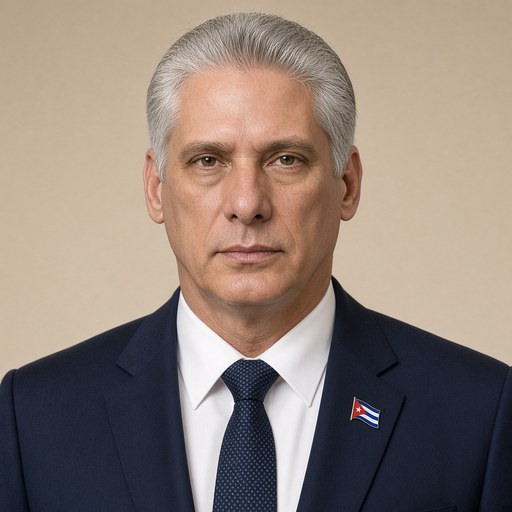
- Díaz-Canel addressed the closing session of the X Congress of the Union of Journalists of Cuba on July 14, 2018, in Havana.
- Main themes
- Cuban journalism and public media, defense against media warfare, revolutionary heritage of the press, resistance to foreign influence and disinformation, role of journalists in national sovereignty, ICT challenges for developing economies, unity of the Communist Party and press, rejection of commercialization, ideological struggle, anti-Cuba campaigns
- Duration
- ~15 min
- Words
- 1,779
- Sentences
- 54
- Readability
- 37
- Grade
- 16.1
- Syntax
- 3.37
- Vocabulary
- 2.34
Translated from Spanish
The broad sphere of national life a sentence belongs to. Every sentence has an Arena, so it is the denominator the other indices are read against.
Other54 sentences in 32 paragraphs
Dear national journalism award winners;
Dear journalists:
After our most recent tours of several provinces and the sessions of this Congress, both of which allow us to share experiences and reflections with the national press in a closer manner, I have come to better understand why Fidel once asked you to consider him one of your own.
Cuban journalists have the undeniable merit of having sustained the voice of the nation in the most adverse circumstances and times, with admirable loyalty, a high sense of responsibility, talent, intelligence, and a contagious enthusiasm that always generates interesting proposals.
Nothing less was expected and is expected from those who take pride in belonging to a profession ennobled since its origins by intellectuals of the stature of José Martí, Fidel Castro, and the brightest leaders of the Revolution, from 1868 to the present day.
Today, after long and exhausting years under the simultaneous siege of the most severe material shortages and the unacceptable misunderstandings from some of our own sources, it is legitimate to recognize that most of you have had to fight very hard to exercise with dignity a profession that demands not only talent and effort but also very high ideals to reject, amid great economic sacrifices, the offers of relatively "generous" payments that the lucrative industry of campaigns against Cuba, opportunistically and cynically, makes available to those who have a price or naively believe in the false libertarian discourse of the market's apologists.
We could say that the media landscape has never been so challenging and daunting, but we would be unfair to the history of a Revolution that has known no respite in its arduous endeavor to conquer all justice and that, from day one, as recalled by the phrase of Fidel that has presided over the Congress, understood the central role of journalism in the defense of the besieged stronghold.
How could we imagine the rapid advance of the Rebel Army without the numerous clandestine and guerrilla press or without Radio Rebelde? What would the newly born Revolution have been without the brilliant "Operation Truth"? Was the media war that stole the name of the Apostle, broadcasting from an airplane, not defeated with technologies and new journalistic projects that revolutionized radio and television at the time and still do today?
Thanks to the understanding that its truth needs journalism, Cuba was able to build a system of public media whose main strength is you, the journalists, more effective the more authentic, original, and creative you are in telling the nation and the world the truth that "needs" them.
What we can say now is that while the revolution of ICT, the era of the Internet, and the tyranny of companies engaged in the communications business pose increasingly strong challenges to us in our condition as a developing economy, the country has not submitted to the rules of its adversary nor ceded sovereignty in the name of rapid modernity.
And that, no matter how many attempts rain down to take us back to the past of sensationalism and private press under new masks, neither the Cuban public media nor its journalists are for sale.
I do not accuse unjustly. I point to the open war being waged against us from media that, under the umbrella of better times in the always fragile relations with the powerful neighbor that despises us, have been escalating their attacks on what unites us — the Party — and what defends us — our press — continuously disqualifying both and trying to fracture and separate what comes from the same root and grows from the same trunk.
Referring to the type of mission that these media attempt to fulfill with surprising articulation that belies their supposed freedom, M. H. Lagarde has drawn with irony but without euphemisms, the new class of leaders that is being sold to us from those spaces. I recommend reading the complete text of "The New Revolutionaries," in which Lagarde states: "...The new revolutionaries swear and affirm that they are not salaried by official thought, but they accept scholarships at universities in the United States or receive journalism courses in the Netherlands, where they surely teach them to defend socialism in Cuba. We must presume that such courses and scholarships are free.
"The new revolutionaries call for disobedience when unity is most needed. For them, experts also in politics, the 'judicial' persecution of leftist leaders in Latin America, the attempts at soft coups, and invasions in Venezuela and Nicaragua have nothing to do with Cuba.
"The new revolutionaries are democratic and respectful of opposing opinions, which is why those who do not share their positions are: submissive, sheep, obedient, mediocre, Taliban, Khmer Rouge, Stalinists, officialists, and repressors.
"The main mission, therefore, of the new revolutionaries is to divide something that, without a doubt, they sometimes manage to do."
The text of Lagarde is just a bit longer, but these ideas are enough, as they define the most urgent challenge of this time in this part of the world.
I know that the theoretical documents and the debates of the Congress, without ignoring, forgetting, or underestimating the internal urgencies, which ultimately also turn out to be strategic, have pointed to the centrality of that battle that will never cease, between the logic of capital, selfish and exclusive, and our socialist and Martian logic, Fidelista, supportive, and generous.
Because, although they sell us another version of events, the stubborn reality is too evident, painfully charging those who believed that the wolf was a sheep.
One is or is not, since the times of Shakespeare.
Of course, the Congress has been much more than that central debate, and we are glad. First of all, it is worth celebrating that we have reached this tenth edition with the Social Communication Policy, a document that finally defines, as a citizen's right and as a public good, access to information, communication, and knowledge; that grants the greatest authority to the press directors; that transcends society and establishes obligations in that sense for institutions, organizations, authorities; that defends the values and symbols of the nation and orders respect for the diversity that we are. It declares communication as a strategic resource of the direction of the State and the Government and defines the public nature of broadcasting and communication services and recognizes only two types of ownership for mass media: state and social.
The UPEC and the Faculty of Communication of the University of Havana have been active participants in the development of the policy and its adjustment and adaptation to current times. Practically the entire profession has participated in fundamental discussions for its subsequent application. There is enthusiasm in the Congress for the doors it opens to historical and recent concerns of the sector, such as management systems that grant greater autonomy to the media and their strengthening, ordering, and technological renewal. I understand that those who are not invited to the analysis because they are not part of the UPEC, nor of the Cuban society that earned with sacrifice and effort the exclusive right to discuss how to design the future, may be enraged.
And, of course, we are not surprised that they have begun to unleash rivers of intrigue against the Party and the country's media system, the salaried agents of global single thought in its local or foreign version. What did they expect? What do they suggest? Do they expect us to hand over, for example, our news agencies to the arms of the market and our journalists to the streets? Well, no. Our Télam will not be bled dry. The International Monetary Fund does not rule in Cuba.
From the news I have received from the first days of the Congress, this has been a successful event, with an economy of reports and solid and contributory proposals, from the experience of the organization's bases in the media and in academia. I believe this is because the UPEC has not ceased to function in these years, not even in the most disconcerting and difficult times, when they lost their natural and formal leader, brother Moltó, as I know you like to call him, due to the spirit of camaraderie he left as a working style and his special relationship with the bases at any level.
His brilliant definition of what UPEC is for, his battle to involve young people in every struggle Cuba faced, and his ability to promote even the push for computerization, the use of social networks, and the intense utilization of the contributions from the Faculty, leave a marked path that from today a renewed national committee will follow without breaking continuity.
The summaries of the commissions will be a useful working tool to take on the new media spaces, fearlessly, creatively on the offensive, overcoming the technological advantages of the colonizing platforms with the talent and creativity that our battling nature and the cultural and political legacy left to us by Fidel, which Raúl and his companions from the historical generation continue to deliver, have given us.
I do not forget the strongest demands you have made to us: the salary, insufficient and anchored in old resolutions that must be discarded; the precarious material situation of the media and journalists, a topic in which light is beginning to be seen at the end of the tunnel of our eternal shortages, at least in the provinces, where the needs of journalists and their media have been taken into account in the use of 1% of the territorial contribution.
No one is better prepared than you to understand that what is pending is much more than the need of a profession. It is the need of a noble and hardworking people, whose human, heroic, and moving stories are still to be fully told. As it is yet to resemble more the country that we are, the country that our media show. Material resources may be lacking, but moral resources and revolutionary ethics can never be lacking, which you contribute daily, the same that Víctor Joaquín and Aroldo defend. For defending these values, we are Cuba!
As I have asked you to consider me one more, I also feel a high responsibility in the great task that lies ahead for you and for us, the Party, the State, and the Government to settle our numerous debts with the past and recent history, which is at the same time with the future.
Yes, the truth needs you. And the Revolution, as Martí and Fidel taught us, is that truth greater than ourselves.
We will see each other on the path toward that horizon that we owe to ourselves.
Thank you very much.
The original Spanish. The tags above are read on the English translation's sentences.
Estimados premios nacionales de Periodismo;
Queridos periodistas:
Después de nuestros más recientes recorridos por varias provincias y de las jornadas de este Congreso, escenarios ambos que nos permiten compartir experiencias y meditaciones con la prensa nacional de un modo más cercano, he comprendido mejor por qué Fidel les pidió una vez que lo consideraran uno de ustedes.
Los periodistas cubanos tienen el mérito indiscutible de haber sostenido la voz de la nación en las circunstancias y las horas más adversas, con admirable lealtad, elevado sentido de responsabilidad, talento, inteligencia y contagioso entusiasmo que genera siempre interesantes propuestas.
No se esperaba y no se espera menos de quienes se enorgullecen de pertenecer a un gremio ennoblecido desde sus orígenes por intelectuales de la talla de José Martí, Fidel Castro y los más brillantes líderes de la Revolución, desde 1868 hasta nuestros días.
Hoy, tras largos y fatigosos años bajo el asedio simultáneo de las más severas carencias materiales y las inaceptables incomprensiones de algunas de nuestras propias fuentes, es legítimo reconocer que la mayoría de ustedes ha tenido que batallar muy duro para ejercer con dignidad un oficio que demanda, no solo talento y esfuerzo, también ideales muy elevados para rechazar, en medio de grandes sacrificios económicos, las ofertas de pagos relativamente “generosos” que la lucrativa industria de las campañas contra Cuba, oportunista y cínicamente, pone a disposición de quienes tienen un precio o creen ingenuamente en el falso discurso libertario de los apologistas del mercado.
Podríamos decir que nunca fue tan retador y desafiante el panorama mediático, pero seríamos injustos con la historia de una Revolución que no ha conocido tregua en su arduo empeño de conquistar toda la justicia y que, desde el primer día, como lo recuerda la frase de Fidel que ha presidido el Congreso, entendió el papel central del periodismo en la defensa de la fortaleza sitiada.
¿Cómo imaginar sin la numerosa prensa clandestina y guerrillera o sin Radio Rebelde el rápido avance del Ejército Rebelde? ¿Qué habría sido de la recién nacida Revolución sin la brillante “Operación Verdad”? ¿Acaso la guerra mediática que robó el nombre del Apóstol, trasmitiendo desde un avión, no fue vencida con tecnologías y nuevos proyectos periodísticos que revolucionaron la radio y la televisión en su momento y hoy todavía?
Gracias a la comprensión de que su verdad necesita del periodismo, Cuba pudo construir un sistema de medios públicos cuya principal fortaleza son ustedes, los periodistas, más eficaces mientras más auténticos, originales y creativos al contar a la nación y al mundo la verdad que “los necesita”.
Lo que podemos decir ahora es que si bien la revolución de las TIC, la era de Internet y la tiranía de las empresas que se dedican al negocio de las comunicaciones, nos plantean desafíos cada vez más fuertes en nuestra condición de economía subdesarrollada, el país no se ha sometido a las reglas de su adversario ni ha cedido soberanía en nombre de la veloz modernidad.
Y que, por más que lluevan intentos de devolvernos al pasado de sensacionalismo y prensa privada bajo máscaras nuevas, ni los medios públicos cubanos ni sus periodistas están en venta.
No acuso injustamente. Apunto a la abierta guerra que se nos hace desde medios que, bajo el paraguas de mejores tiempos en las siempre frágiles relaciones con el vecino poderoso que nos desprecia, han ido escalando en el ataque a lo que nos une —el Partido— y lo que nos defiende —nuestra prensa—, descalificando continuamente a ambos y tratando de fracturar y separar lo que viene de una misma raíz y crece en un mismo tronco.
Aludiendo al tipo de misión que esos medios intentan cumplir con sorprendente articulación que desmiente su supuesta libertad, M. H. Lagarde, ha dibujado con ironía pero sin eufemismos, la nueva clase de líderes que se nos vende, desde esos espacios. Recomiendo la lectura completa de “Los nuevos revolucionarios” de quienes Lagarde afirma: “…Los nuevos revolucionarios juran y perjuran que no son asalariados del pensamiento oficial, pero aceptan becas en universidades de Estados Unidos o reciben cursos de periodismo en Holanda, donde seguro les enseñan a defender el socialismo en Cuba. Debemos presuponer que tales cursos y becas son gratuitos.
“Los nuevos revolucionarios llaman a la desobediencia cuando más hace falta la unión. Para ellos, expertos también en política, nada tienen que ver con Cuba la persecución ‘judicial’ de los líderes de izquierda en América Latina, los intentos de golpes blandos e invasiones en Venezuela y Nicaragua.
“Los nuevos revolucionarios son democráticos y respetuosos de las opiniones contrarias, por eso quienes no compartan sus posiciones son: sumisos, corderos, obedientes, mediocres, talibanes, khmers rojos, estalinistas, oficialistas y represores.
“La principal misión, por tanto, de los nuevos revolucionarios es la de dividir algo que sin dudas, a veces, consiguen.”
Es apenas un poco más largo el texto de Lagarde, pero bastan estas ideas, por cuanto definen el más urgente desafío de esta época en esta parte del mundo.
Sé que los documentos teóricos y los debates del Congreso, sin desconocer, olvidar o desestimar las urgencias internas, que a la postre también resultan estratégicas, han apuntado a la centralidad de esa batalla que jamás cesará, entre la lógica del capital, egoísta y excluyente, y nuestra lógica socialista y martiana, fidelista, solidaria y generosa.
Porque, aunque nos vendan otra versión de los hechos, la testaruda realidad está demasiado a la vista, pasando dolorosa factura a los que creyeron que el lobo era oveja.
Se es o no se es, desde los tiempos de Shakespeare.
Por supuesto, que el Congreso ha sido mucho más que ese debate central y nos alegra. En primer lugar, vale celebrar que llegamos a esta décima edición con Política de Comunicación Social, documento que define, por fin, como un derecho ciudadano y como bien público, el acceso a la información, la comunicación y el conocimiento; que otorga la mayor autoridad a los directivos de la prensa; que transversaliza a la sociedad y establece obligaciones en ese sentido para instituciones, organismos, autoridades; que defiende los valores y símbolos de la nación y ordena el respeto a la diversidad que somos. Que declara a la comunicación como recurso estratégico de la dirección del Estado y el Gobierno y define el carácter público de los servicios de radiodifusión y comunicación y reconoce solo dos tipos de propiedad para los medios de comunicación masiva: la estatal y la social.
La UPEC y la Facultad de Comunicación de la Universidad de La Habana han sido parte activa de la elaboración de la política y de su ajuste y adecuación a los momentos actuales. Prácticamente la totalidad del gremio ha participado en discusiones fundamentales para su posterior aplicación. Hay entusiasmo en el Congreso por las puertas que abre a preocupaciones históricas y recientes del sector, como los sistemas de gestión que otorgan mayor autonomía a los medios y su fortalecimiento, ordenamiento, renovación tecnológica. Entiendo que rabien los que no están invitados al análisis porque no son parte de la UPEC, ni de la sociedad cubana que se ganó con sacrificio y esfuerzos el derecho exclusivo a discutir cómo diseñar el futuro.
Y, por supuesto, no nos asombra que hayan comenzado a lanzar ríos de intriga contra el Partido y el sistema de medios del país los asalariados del pensamiento único mundial en su versión criolla o extranjera. ¿Qué esperaban? ¿Qué sugieren? ¿Acaso que entreguemos, por ejemplo, nuestras agencias de noticias a los brazos del mercado y a sus periodistas a la calle? Pues no. Nuestra Télam no será desangrada. El Fondo Monetario Internacional no manda en Cuba.
Por las noticias que he recibido de las primeras jornadas del Congreso, ha sido este un evento exitoso, con economía de informes y planteamientos sólidos y aportadores, desde la experiencia de las bases de la organización en los medios y en la academia. Creo que esto se debe a que la UPEC no ha dejado de funcionar en estos años, ni siquiera en los más desconcertantes y duros, cuando perdieron a su líder natural y formal, al hermano Moltó, como sé que les gusta llamarlo, por el espíritu de camaradería que dejó como estilo de trabajo y su especial relación con las bases a cualquier nivel.
Su brillante definición de para qué sirve la UPEC, su batalla por sumar a los jóvenes a cuanta pelea tuviera Cuba y su capacidad para promover incluso el impulso a la informatización, al uso de las redes sociales y al aprovechamiento intenso de los aportes de la Facultad, dejan una ruta marcada por la que desde hoy transitará un comité nacional renovado sin quebrar la continuidad.
Los resúmenes de las comisiones serán un útil instrumento de trabajo para asumir los nuevos espacios mediáticos, sin temores, creativamente a la ofensiva, venciendo las ventajas tecnológicas de las plataformas colonizadoras con el talento y la creatividad que nos dio nuestra naturaleza batalladora y la herencia cultural y política que nos dejó Fidel, que nos siguen entregando Raúl y sus compañeros de la generación histórica.
No olvido las demandas más fuertes que ustedes nos han hecho: el salario, insuficiente y anclado en viejas resoluciones que es preciso desechar; la situación material precaria de los medios y de los periodistas, tema en el que ya comienza a verse la luz al final del túnel de nuestras eternas escaseces, al menos en provincias, donde las necesidades de los periodistas y sus medios han sido tomadas en cuenta en el empleo del 1% de la contribución territorial.
Nadie mejor preparado que ustedes para entender que lo pendiente es mucho más que la necesidad de un gremio. Es la necesidad de un pueblo, noble y trabajador, cuyas historias humanas, heroicas y conmovedoras están aún por contarse a plenitud. Como está por parecerse más al país que somos, el país que nuestros medios muestran. Pueden faltar recursos materiales, pero nunca puede faltar el recurso moral y la ética revolucionaria, la cual ustedes cotidianamente aportan, esa que defienden Víctor Joaquín y Aroldo. ¡Por defender estos valores, somos Cuba!
Como les he pedido considerarme uno más, siento también una elevada responsabilidad en la gran tarea que nos queda por delante a ustedes y a nosotros, el Partido, el Estado y el Gobierno para saldar nuestras numerosas deudas con la historia pasada y reciente, que es al mismo tiempo con el futuro.
Sí, la verdad necesita de ustedes. Y la Revolución, nos lo enseñaron Martí y Fidel, es esa verdad más grande que nosotros mismos.
Nos estaremos viendo en el camino hacia ese horizonte que nos debemos.
Muchas gracias (Ovación).