




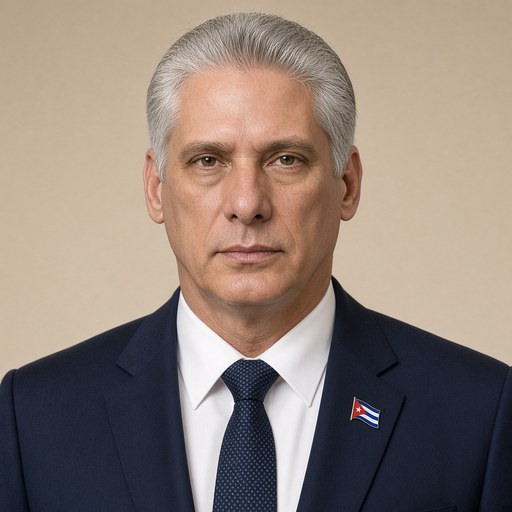
President Díaz-Canel: Cuba continues to be a reference point and a meeting place for those of us who aspire to a better world.
 Miguel Díaz-Canel · President of Cuba
- Context
- Díaz-Canel addressed the closing of the Meeting of Solidarity with Cuba and Against Imperialism in Havana on May 2, 2024, attended by over 1,100 activists from 58 countries.
- Main themes
- International solidarity with Cuba, US economic blockade against Cuba, Palestinian cause and Gaza genocide, world peace and sovereignty, anti-imperialism, Latin American integration, social and popular movements, May Day celebrations, youth activism, condemnation of US policy
- Duration
- ~12 min
- Words
- 1,389
- Sentences
- 34
- Readability
- 17
- Grade
- 20.6
- Syntax
- 3.81
- Vocabulary
- 2.42
Translated from Spanish
The broad sphere of national life a sentence belongs to. Every sentence has an Arena, so it is the denominator the other indices are read against.
Other34 sentences in 32 paragraphs
Havana, May 2, 2024.- Cuba continues to be a reference point and a meeting place for those of us who aspire to a better world, and that means that the family of solidarity is also growing and that in the new generations the feeling of solidarity is increasing.
The First Secretary of the Central Committee of the Communist Party and President of the Republic, Miguel Díaz-Canel Bermúdez, stated the above at the closing of the Meeting of solidarity with Cuba and against imperialism, which concluded this Thursday in Havana.
The assertion of the Head of State was regarding the presence in the country, to participate in the celebrations for May Day, of more than 1,100 members of committees of solidarity with Cuba, political movements, trade union organizations, social movements, and other support networks from 58 countries across five continents, 70 percent of whom arrived on the Island for the first time, many of them young.
Since April 30, friends of Cuba have carried out productive mobilizations, debates, and exchanges at the grassroots level, among other activities. At the closing of the Meeting, they approved declarations for the peace and sovereignty of peoples; of solidarity with Cuba, and of support for the people of Palestine.
The final session was attended by members of the Political Bureau, Roberto Morales Ojeda, Secretary of Organization of the Central Committee, and Ulises Guilarte de Nacimiento, General Secretary of the Central Workers' Union of Cuba, among other leaders of the country and leaders and representatives of international movements.
The axes of the exchange were the dynamization of international solidarity, the Palestinian cause, and the condemnation of the genocide committed by the Zionist regime in the Gaza Strip, world peace, and the struggle and condemnation of the economic, commercial, and financial blockade imposed by the United States government against Cuba.
In his opening remarks, Ulises Guilarte de Nacimiento conveyed "a fraternal and militant greeting" to the participants and described their presence in Cuba as a brave and revolutionary gesture.
He characterized the conclave as an essential moment of international solidarity and an integrative gathering of wills and convictions in one of the most complex moments in humanity.
He expressed the solidarity of Cuba and the social movements gathered in Havana with the American university students who are being repressed by the U.S. police for defending the rights of the Palestinian people.
Guilarte de Nacimiento reaffirmed the commitment of the Cuban Revolution, along with its heroic people, to continue defending peace, social justice, Latin American and Caribbean integration, and the just causes of all peoples.
Before the closing of the Meeting, the activists met in commissions, one of which, dedicated to the struggle of solidarity, social, and popular organizations in defense of the peace and sovereignty of peoples, was attended by Díaz-Canel.
In the workshop, they exchanged and reached consensus on working tools to continue the fight against the blockade, especially the results of the international tribunal that met in the European Parliament last November against this criminal policy.
Among other speakers, the young American David Adler, coordinator of the Progressive International, pointed out that the blockade is not only economic; it is also, he said, a social and cultural blockade that affects all countries in the world as it is a threat and a violation of international law.
"Because we defend life, we are here," expressed the prominent Argentine activist Graciela Ramírez, who emphasized that "saving Cuba and standing up for Palestine is today the soul of the world."
"For Cuba and Palestine, which are today the destiny of humanity," she added, we must increase the denunciation, not only physically but also on social media.
In the plenary session and closing of the Meeting of solidarity with Cuba and against imperialism, the Hero of the Republic of Cuba and president of the Cuban Institute of Friendship with the Peoples (ICAP), Fernando González Llort, emphasized that the presence of 1,144 activists was a demonstration of the broad and growing movement of solidarity with Cuba, which extends across more than 150 countries and groups more than 1,650 friendship and solidarity organizations, although this expands to other organizations and groups.
We take pride in every show of love, support, and donation that we receive, expressed the president of ICAP, who praised the permanent marches, caravans, and sit-ins that take place around the world to denounce the blockade, which he conceptualized as the fundamental obstacle to Cuba's economic and social development.
González Llort joined the consensus of the meeting, which called to continue and convene new actions that denounce the interventionist and extraterritorial nature of this U.S. policy, which has lasted for more than 60 years.
"My dear friends defenders of international solidarity, sisters and brothers of the Cuban Revolution, we want to thank you all for being here in Cuba; we thank you for your participation in the meeting in which we share a common commitment, that of human solidarity," expressed President Miguel Díaz-Canel Bermúdez to the members of the solidarity movements with Cuba and with the struggle of peoples for their true emancipation.
In his opening words, he reviewed the active global movement of solidarity with Cuba, highlighted the importance of the continental meetings scheduled for this year in various regions, and thanked the public actions that take place every weekend in many parts of the world in favor of the Island and against the blockade.
Referring to the numerous presence in the country of members of social movements, he pointed out that "each friend who visits us is further evidence that Cuba is neither alone nor isolated, and is indeed beating in the hearts of millions of women and men around the world."
"We recognize," he added, "the generous efforts that you make to combine solidarity actions with cooperation projects, and from here we reaffirm that Cuba will continue to raise the flags of peace, solidarity, and cooperation with the peoples."
The President praised the participation of the visitors in the May Day celebrations. "Our people," he pointed out, "experienced yesterday (Wednesday) a demonstration of unity and discipline in all the municipalities of the country," and more than four million Cubans, he affirmed later, participated, although the enemy's campaigns strive to minimize it, he denounced.
The leader later evaluated the moments of extreme complexity that the planet is experiencing today, with serious threats to world peace—because war, he reflected, "is the language used by hegemonic powers to resolve conflicts"; the growth of poverty; the impacts of climate change; the depletion of natural resources, and an increasingly abysmal inequality between the rich and the poor.
"The current international economic order must be changed, and that change must also be promoted from solidarity," Díaz-Canel emphasized, who called "to constantly analyze the contradictions of this world full of uncertainty, which we must change."
After evaluating statistical data from international organizations on poverty and the economy, he pointed out that "far from globalizing solidarity, friendship, and respect, the world resorts to war, sanctions, coercive measures, pressures, blockades, raising walls, and above all to war, to genocide."
The President denounced the aggression against the Palestinian people, and said we cannot be indifferent to the daily crime that has been committed against that brotherly people for seventy-five years; and nothing—he added—"can justify the brutal Zionist escalation of the last six months."
He also presented an analysis of the correlation of forces today in Latin America and emphasized Cuba's support for the peoples of the region and their demands.
In his comments on the Cuban reality, he delved into the impact that the intensification of the blockade and the inclusion of the Island in the arbitrary list of state sponsors of terrorism is having on our people.
And despite this, he noted, the country not only resists but strives to move forward and develop, prioritizing the strengthening of unity, as called for by the leader of the Revolution, Army General Raúl Castro Ruz.
And we do this, he said, "seeking more participation from our people in all our processes and in decision-making."
"By working this way," he said later, "we face adversity; by working this way, we overcome the challenges and obstacles imposed on us by the blockade and the maximum pressure policy of the United States; and if by working this way we achieve results, we share the results among all, strengthening unity."
The original Spanish. The tags above are read on the English translation's sentences.
La Habana, 2 de Mayo de 2024.- Cuba sigue siendo un referente y un espacio de encuentro para los que aspiramos a un mundo mejor, y eso significa que también la familia de la solidaridad está creciendo y que en las nuevas generaciones el sentimiento de solidaridad se está incrementando.
El Primer Secretario del Comité Central del Partido Comunista y Presidente de la República, Miguel Díaz-Canel Bermúdez, señaló lo anterior en la clausura del Encuentro de solidaridad con Cuba y contra el imperialismo, que concluyó este jueves en La Habana.
La aseveración del Jefe de Estado fue a propósito de la presencia en el país, para participar en las celebraciones por el Primero de Mayo, de más de 1 100 integrantes de comités de solidaridad con Cuba, movimientos políticos, organizaciones sindicales, movimientos sociales y otras redes de apoyo, de 58 países de los cinco continentes, el 70 por ciento de los cuales llegaron a la Isla por primera vez, muchos de ellos jóvenes.
Desde el pasado 30 de abril, las y los amigos de Cuba realizaron movilizaciones productivas, debates e intercambios en las bases, entre otras actividades. En la clausura del Encuentro aprobaron declaraciones Por la paz y la soberanía de los pueblos; De solidaridad con Cuba, y De Apoyo al pueblo de Palestina.
La sesión final contó con la presencia de los miembros del Buró Político, Roberto Morales Ojeda, Secretario de Organización del Comité Central, y Ulises Guilarte de Nacimiento, Secretario General de la Central de Trabajadores de Cuba, entre otros dirigentes del país y líderes y representantes de movimientos internacionales.
Los ejes del intercambio fueron la dinamización de la solidaridad internacional, la causa palestina y la condena al genocidio que comete el régimen sionista en la franja de Gaza, la paz mundial, y la lucha y condena al bloqueo económico, comercial y financiero de los gobiernos de Estados Unidos contra Cuba.
En las palabras inaugurales, Ulises Guilarte de Nacimiento transmitió «un saludo fraterno y militante» a los participantes, y calificó de gesto valiente y revolucionario su presencia en Cuba.
Caracterizó el cónclave como un momento esencial de solidaridad internacional e integrador de voluntades y convicciones en uno de los momentos más complejos de la humanidad.
Expresó la solidaridad de Cuba y los movimientos sociales reunidos en La Habana con los estudiantes universitarios norteamericanos que están siendo reprimidos por la policía estadounidense por defender los derechos del pueblo palestino.
Guilarte de Nacimiento ratificó el compromiso de la Revolución cubana, junto a su heroico pueblo, de continuar defendiendo la paz, la justicia social, la integración latinoamericana y caribeña y las causas justas de todos los pueblos.
Antes de la clausura del Encuentro, los activistas se reunieron en comisiones, en una de las cuales, la dedicada a la lucha de las organizaciones de solidaridad, sociales y populares en defensa de la paz y la soberanía de los pueblos, participó Díaz-Canel.
En el taller se intercambió y se consensuaron herramientas de trabajo para continuar la lucha contra el bloqueo, en especial los resultados del tribunal internacional que sesionó en el Parlamento Europeo, en noviembre pasado, contra esta criminal política.
Entre otros oradores, el joven estadounidense David Adler, coordinador de la Internacional Progresista, señalaría que el bloqueo no es solo económico, es también, dijo, un bloqueo social y cultural, que afecta a todos los países del mundo al ser una amenaza y una violación al derecho internacional.
«Porque defendemos la vida, estamos aquí», expresaría la destacada activista argentina Graciela Ramírez, quien enfatizó que «salvar a Cuba y levantarse por Palestina es hoy el alma del mundo».
«Por Cuba y Palestina, que son hoy el destino de la humanidad», agregó, es que debemos incrementar la denuncia, y no solo en lo físico, sino también en las redes sociales.
En la sesión plenaria y clausura del Encuentro de solidaridad con Cuba y contra el imperialismo, el Héroe de la República de Cuba y presidente del Instituto Cubano de Amistad con los Pueblos (ICAP), Fernando González Llort, subrayó que la presencia de 1 144 activistas era una muestra del amplio y creciente movimiento de solidaridad con Cuba, que se extiende por más de 150 países y agrupa a más de 1 650 organizaciones de amistad y solidaridad, aunque esta se expanda a otras organizaciones y agrupaciones.
Nos enorgullece cada muestra de amor, respaldo y donativo que recibimos, expresó el presidente del ICAP, quien exaltó las permantes marchas, caravanas, plantones que se realizan en el mundo para denunciar el bloqueo, que es, conceptuó, el obstáculo fundamental para el desarrollo económico y social de Cuba.
González Llort se unió al consenso del encuentro, que llamó a continuar y convocar nuevas acciones que denuncien el carácter injerecista y extraterritorial de esta política de EE.UU, que ya dura más de 60 años.
«Mis queridos amigos defensores de la solidaridad internacional, hermanas y hermanos de la Revolución cubana, a todos les queremos dar las gracias por estar aquí en Cuba; les agradecemos por su participación en el encuentro en el que compartimos un mismo compromiso, el de la solidaridad humana», expresó el Presidente Miguel Díaz-Canel Bermúdez a los miembros de los movimientos de solidaridad con Cuba y con la lucha de los pueblos por su verdadera emancipación.
En sus palabras iniciales hizo un repaso por el activo movimiento mundial de solidaridad con Cuba, resaltó la importancia de los encuentros continentales que están previstos para este año en varias regiones, y agradeció las acciones públicas que tienen lugar todos los fines de semana en muchas partes del mundo a favor de la Isla y en contra del bloqueo.
Al referirse a la numerosa presencia en el país de miembros de movimientos sociales, apuntó que «cada amigo que nos visita, es una evidencia más de que Cuba no está sola ni aislada, y sí latiendo en el pecho de millones de mujeres y hombres en todo el mundo.
«Distinguimos —añadió— los generosos esfuerzos que ustedes realizan para combinar las acciones solidarias con los proyectos de cooperación, y desde aquí les ratificamos que Cuba continuará levantando las banderas de la paz, la solidaridad y la cooperación con los pueblos».
El Presidente ponderó la participación de los visitantes en las celebraciones por el Primer de Mayo. «Nuestro pueblo —apuntó— vivió ayer (miércoles) una demostración de unidad y disciplina en todos los municipios del país», y más de cuatro millones de cubanas y cubanos, afirmó más adelante, participaron, aunque las campañas del enemigo se esfuercen por minimizarlo, denunció.
El mandatario evaluó más adelante los momentos de extrema complejidad que vive hoy el planeta, con graves amenazas a la paz mundial —porque la guerra, reflexionó, «es el lenguaje que se usa por las potencias hegemónicas para resolver los conflictos»—; el crecimiento de la pobreza; los impactos del cambio climático; el agotamiento de los recursos naturales, y una desigualdad entre pobres y ricos cada vez más abismal.
«El actual orden económico internacional hay que cambiarlo y ese cambio hay que promoverlo también desde la solidaridad», subrayó Díaz-Canel, quien convocó «a analizar constantemente las contradicciones de este mundo lleno de incertidumbre, el que debemos cambiar».
Tras evaluar datos estadísticos de organizaciones internacionales sobre pobreza y economía, apuntó que «lejos de globalizar la solidaridad, la amistad, el respeto, el mundo acude a la guerra, a las sanciones, a las medidas coercitivas, a las presiones, a los bloqueos, a levantar muros y sobre todo a la guerra, al genocidio».
El Presidente denunció la agresión al pueblo palestino, y, dijo, no podemos ser indiferentes ante el crimen cotidiano que hace setenta y cinco años se comete contra ese hermano pueblo; y nada —agregó— «puede justificar la brutal escalada sionista de los últimos seis meses».
También presentó un análisis sobre la correlación de fuerzas hoy en América Latina y subrayó el apoyo de Cuba a los pueblos de la región y sus demandas.
En sus comentarios sobre la realidad cubana, ahondó en el impacto que está teniendo para nuestro pueblo el recrudecimeinto del bloqueo y la inclusión de la Isla en la arbitraria lista de países patrocinadores del terrorismo.
Y a pesar de ello, acotó, el país no solo resiste, sino que se esfuerza por seguir adelante y desarrollarse, teniendo como prioridad fortalecer la unidad, a lo que ha llamado el líder de la Revolución, General de Ejército Raúl Castro Ruz.
Y lo hacemos, dijo, «buscando más participación de nuestro pueblo en todos nuestros procesos y en la toma de decisiones».
«Trabajando así —dijo más adelante— enfrentamos la adversidad; trabajando así, superamos los desafíos y los retos que nos imponen el bloqueo y la política de máxima presión de los Estados Unidos; y si trabajando así, logramos resultados, y los resultados los compartimos entre todos fortaleciendo la unidad».