




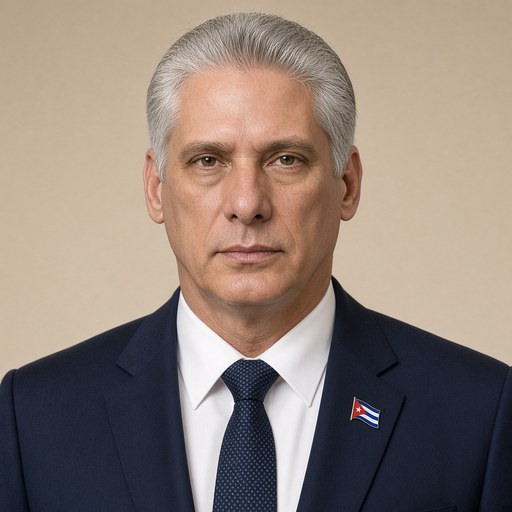
Speech at the Closing of the International Meeting of Solidarity with Cuba and Against Imperialism
 Miguel Díaz-Canel · President of Cuba
- Context
- Díaz-Canel addressed over 1,000 international delegates at the closing of a solidarity meeting in Havana, held alongside International Workers' Day commemorations on May 3, 2024.
- Main themes
- International solidarity with Cuba, anti-imperialism, US blockade against Cuba, International Workers' Day, new international economic order, trade union movements, international brigades, Cuba's resistance and sovereignty, global solidarity networks, youth participation in solidarity movements, Fidel Castro's legacy
- Duration
- ~43 min
- Words
- 5,126
- Sentences
- 157
- Readability
- 26
- Grade
- 17.6
- Syntax
- 3.38
- Vocabulary
- 2.28
Translated from Spanish
The broad sphere of national life a sentence belongs to. Every sentence has an Arena, so it is the denominator the other indices are read against.
Other157 sentences in 102 paragraphs
Dear friends and defenders of international solidarity;
Sisters and brothers of the Cuban Revolution:
We want to thank you all for being here in Cuba. We appreciate your participation in the Meeting, where we share a common feeling and a common commitment: that of human solidarity, which is also for you, with your expressions, solidarity with the Cuban Revolution and with the struggle of peoples for their true emancipation.
Celebrating International Workers' Day, as we did yesterday in Cuba, alongside representatives of the working class and solidarity movements and friends of Cuba, is a great honor and a gesture of bravery that our heroic people thank all of you for.
It is also an honor for the Cuban people to have the significant presence and participation of young people in the International May Day Brigade and in the union delegations that visit us.
In this Meeting, which has convened as part of the activities commemorating International Workers' Day, more than 1,000 delegates have participated, and 70% of them are coming to Cuba for the first time. This means that Cuba continues to be a reference and a meeting place for those of us who aspire to a better world; it means that the family of solidarity is also growing; and it means that in the new generations, the feeling of solidarity is also germinating.
These have been days of intense activities. Recently, we held two days of extensive debate analyzing the exclusionary and unjust International Economic Order and also discussing proposals for a much-needed New International Economic Order.
Yesterday, friends and solidarity organizations with Cuba from Canada, Uruguay, the United States, Argentina, and Ecuador were also honored and awarded. We reiterate our congratulations and gratitude to all of them.
We also salute the work of the Latin American and Caribbean Continental Network of Solidarity with Cuba and just causes; the approval of more than 100 resolutions against the blockade in the United States; the 40th anniversary of uninterrupted friendship with our Australian solidarity friends, who will visit us in December of this year; and also the 30th anniversary of the Canadian Che Guevara brigade, which is present here.
We recognize the valuable work of trade union and solidarity organizations in Europe and the United States to disseminate the results of the International Tribunal against the blockade, which took place in Brussels in November 2023.
We highlight the importance of continental meetings of solidarity with Cuba, which are scheduled for this year in the People's Republic of China for the Asia-Pacific region, and in France for the European area.
We are confident that these events will also be vital scenarios for the continuity and strengthening of the movement of solidarity with Cuba.
Likewise, we thank the demonstrations, car and bicycle caravans, sit-ins, and other public actions that take place every weekend, every month, in various cities around the world, led by you, demanding the lifting of the intensified blockade and the exclusion of Cuba from the list of countries that supposedly support terrorism.
We recognize the importance of continuing to promote the movement of international brigades and group visits to Cuba, because there is no better way to understand our reality than by sharing with us, as you have done in these days, experiencing our resistance, our creativity, and our spirit of struggle and victory.
At the same time, every friend who visits us is further evidence that Cuba is not alone or isolated, but continues to beat in the hearts of millions of women and men around the world.
We acknowledge the generous efforts you make to combine solidarity actions with cooperation projects. From here, we reaffirm that Cuba will continue to raise the banners of peace, solidarity, and cooperation with the peoples.
The three declarations approved today by acclamation also represent the feelings of the Cuban people, of its workers and farmers, of its intellectuals and artists, of its youth and students, and constitute a commitment for us.
The work in the three commissions reflects the understanding of the attendees regarding the global scenario and the situation in Cuba. It also reflected the consensus that exists regarding the main demands of the friends of the Island.
Our people demonstrated unity and discipline yesterday in all the municipalities of the country. Economic conditions forced us to celebrate the historic International Workers' Day with gatherings and not with the traditional massive parade in Havana; but in almost all provinces and municipalities, despite the guidance, there were parades. This has a lot to do with revolutionary fervor, and it was a day where the joys were extraordinary.
It also constituted a worthy tribute to the legacy of Commander in Chief Fidel Castro Ruz, a paradigm of the solidarity of the Cuban people, in the context of the 65th anniversary of the triumph of the Revolution.
Thus, the gatherings and parades of May Day, led by the people, in which you, international delegates, participated, is also a clear demonstration of unity, commitment, and support for the Revolution, that Cuba lives and works and that we are going all out.
In the face of enemy media and subversive actions, whose objective is to provoke a regime change in Cuba, the vast majority of the humble and working people have demonstrated, once again this May Day, in squares and cities, that they are willing to defend their independence, their sovereignty, their right to live in peace, without blockades, without sanctions, and without surrender, without selling out or kneeling, without renouncing their history and their principles.
I was struck today that the wires of international agencies, as always, with their media intoxication, manipulated the figures, the content, and the success of the celebration of May Day in Cuba. Some of them said: thousands of Cubans participated in very small, non-traditional events.
We must make it clear to the imperialist gentlemen that not thousands of Cubans participated: more than four million Cubans participated!
I believe that we all share the conviction of the complexity of the international and regional situation, which moves us to concern and also calls us to action.
This event takes place at a time of extreme global complexity: there are threats to world peace, war is the language used by hegemonic powers to resolve conflicts; poverty is increasing; the impacts of climate change are growing; there is a depletion of natural resources, and a growing inequality between the poor and the rich, which explains and expresses the limits to which the current International Economic Order has reached. This current International Economic Order must be changed, and that change must also be promoted from unity and solidarity.
We must constantly analyze the contradictions of this world full of uncertainties that we must change.
In the midst of the most colossal scientific and technical development of all time, the world has regressed three decades in terms of reducing extreme poverty, with levels of hunger not seen since 2005.
Eight hundred million people in the world suffer from hunger; 760 million people, mostly women, cannot read or write.
The so-called Third World has more than 84 million children out of school; there are more than 660 million people without electricity, and only 36% of the population uses the Internet in the least developed countries and in landlocked developing nations.
When turning to financial markets, Southern nations have faced interest rates up to eight times higher than those of developed countries. About one-fifth of developing economies liquidated more than 15% of their international foreign exchange reserves to cushion the pressure on their national currencies.
In 2022, twenty-five developing nations had to dedicate more than one-fifth of their total income to servicing public debt, which amounts to a new form of slavery. Just that year, global military spending, as mentioned here, reached the figure of 2.24 trillion dollars.
Achieving inclusive universal participation in the digital economy will require investing at least 428 billion dollars in our countries by 2030. This demand could be met with just 19% of that annual spending on armaments.
The financial support of the International Monetary Fund to the least developed countries and other low-income countries, from 2020 to the end of November 2022, did not exceed the equivalent of what the Coca-Cola company has spent just on advertising its brand in the last eight years; meanwhile, less than 2% of the already deficient Official Development Assistance has been able to be dedicated to science, technology, and innovation capacities in our countries.
According to ECLAC, in 2024, the economies of Latin America and the Caribbean will continue on a path of low growth, and all subregions will grow less than in 2023. We will continue to be in Latin America and the Caribbean the most unequal region on the planet.
The number of inhabitants in this region who qualify as poor is 183 million, which is equivalent to 29% of the population, and of them, 72 million live in extreme poverty. It deeply wounds that half of those figures correspond to children and adolescents.
Job creation between 2014 and 2023 has been the lowest in the region since the 1950s. Of the 292 million employed people, one in two is in informal jobs, and four out of ten have incomes below the minimum wage. The gender gap in employment and also in income is widening.
Four out of five children under ten years old in Latin America and the Caribbean cannot read or write. And these are not figures invented by Cuba; they are in the preliminary balance of the economies of Latin America and the Caribbean from ECLAC, published in December 2023 in the Social Panorama of Latin America and the Caribbean from ECLAC; in the Report on the Situation and Prospects of the World Economy for 2024, from the United Nations, published in January 2024; and in The crossroads of education in Latin America and the Caribbean, a report from UNICEF and the World Bank dating from March 2023.
That is why our peoples have a historical thirst for justice. And, in the face of so much uncertainty and despair unleashed by capitalist elites, we need more and more certainty and confidence in the triumph of our ideas, in the triumph of unity, and in the triumph of solidarity.
Far from globalizing solidarity, friendship, and respect, the world resorts to war, sanctions, coercive measures, pressures, blockades, building walls, and, above all, to war, to genocide. This demonstrates that capitalism has no answer to the current problems of humanity.
We have the case of Palestine. In one way or another, on more than one occasion, we have all pointed out the dangers of the impunity with which Israel acts, thanks to the complicity and support of the United States government and despite the serious risks of regionalizing the conflict in the Middle East, a serious threat to international peace and security. Only an imperial mindset, an interventionist purpose can deny that peace and stability in that region depend, primarily, on a broad, just, and lasting solution to the Israeli-Palestinian conflict, which includes the creation of a sovereign and independent Palestinian state within the borders prior to 1967, with East Jerusalem as its capital and guaranteeing the right of return for refugees to their land.
Together with you, we demand the immediate admission of the State of Palestine as a full member of the United Nations.
We cannot be indifferent to the daily crime that has been committed against the brotherly Palestinian people for 75 years. Nothing can justify the brutal Zionist escalation of the last six months, the serious violations of International Humanitarian Law, the war crimes and crimes against humanity that have turned a small strip of inhabited land into a training ground for a bloodthirsty army.
The United Nations Security Council must fulfill its mandate and put an end to the impunity of Israel, the occupying power, before the questionable credibility of its resolutions, besieged by the imperial veto of the United States, completely disappears among the rubble of Gaza.
Cuba has always been in solidarity with the Palestinian cause. Today, hundreds of Palestinian students are studying in our country; we have a permanent exchange with them, and our people have marched in front of the U.S. Embassy in Cuba demanding an end to the aggression against Palestine. Together with them, we have shared conversations, debates, and also public expressions of protest.
We have told those young people that they are also children of Cuba, and all Cubans feel like fathers and mothers to those Palestinian youths who study with us, who also share the daily life of the Cuban people. We do everything possible to ensure they become good professionals, good patriots, so that they will be useful to their people and their cause in the future. In all of them, we increasingly observe determination and commitment to the Palestinian cause, and that is why we are sure that they, from here, from Cuba, are also part of the present and future of Palestine. Long live Free Palestine!
Likewise, we express our support for the cause of the Sahrawi people, who can continue to count on a faithful and loyal friend in Cuba.
We support the cause of the Syrian people.
We also express our support for the young people who are currently demonstrating at universities in the United States and who are facing repression and police brutality.
Regarding our region of Latin America and the Caribbean, it is well known that the Monroe Doctrine, two centuries after it was enunciated, continues to threaten the destiny of what Martí called Our America.
Imperialism persists in its project of domination over our lands, financing and promoting violence, destabilization, and increasingly generating discourses of hate, attacking leftist and progressive forces and attempting to erase the history of struggle and resistance of the Latin American and Caribbean peoples.
Despite the sanctions and coercive measures imposed by the United States, which are compounded by pressures and blackmail on our nations, the nature of the revolutionary processes in Venezuela, Bolivia, and Nicaragua has been preserved; the governments of Mexico, Brazil, Colombia, and Honduras, led by López Obrador, Lula, Petro, and Xiomara, along with their peoples, contributed to maintaining the correlation of forces in favor of progressivism in our region.
The right, however, has shown the capacity to react to obstruct the management of governments that assumed mandates with leftist social agendas, and its strong opposition has overthrown some governments and continues to undermine others.
In some countries, progressive forces were unable to return to or maintain executive power, and their effects are evident with governments servile to the United States, potentially very dangerous for the peace and stability of Latin America and the Caribbean, because they are countries and governments that have opened their borders to the U.S. Southern Command.
The United States has opted for the wear and tear of progressivism and the deepening of divisions within alliances to obstruct its advance and prepare right-wing alternatives with possibilities of returning to power.
A special mention within this entire situation is deserved by our dear Caribbean brothers, who stoically resist the pressures from the United States to divide them and achieve the break of their cherished and historic unity.
From here, we reiterate the strongest condemnation of the violent incursion of the Ecuadorian police into the diplomatic headquarters of Mexico in Quito on April 5. This flagrant violation of International Law, of the Vienna Convention on Diplomatic Relations, of the right to asylum, and of the sovereignty of dear Mexico is absolutely unjustifiable.
We urge the restoration of former Vice President Jorge Glas to his condition prior to the assault on the Mexican Embassy and to redirect his case in accordance with International Law.
Ten years after the adoption in Havana of the Proclamation of Latin America and the Caribbean as a Zone of Peace, we call for respect and strict compliance with its principles: that the region continues to be internationally recognized for its commitment to peace and regional stability. This is a matter of utmost importance for the present and future of the peoples.
We congratulate the Venezuelan people for the development of the new electoral process in a climate of peace and in adherence to their Constitution, for the compliance with the electoral schedule despite the threats and actions of the right in complicity with the United States. The attempt on the life of Nicolás Maduro, our brother Venezuelan president, has also not ceased to be present, a topic on which we have expressed our total repudiation.
A dozen electoral processes carried out in the twenty-four years of the Bolivarian and Chavista Revolution endorse the credibility and strength of the Venezuelan electoral system.
We reiterate once again Cuba's rejection of external interference and impositions that seek to influence the functioning of Venezuelan institutions and affect the stability and tranquility that characterize the society of that brother country.
We express our recognition and all our solidarity support to the Nicaraguan brothers, who resist the media siege and the interventionist attempts of imperialism and its allies to undermine their constitutional order.
To the Plurinational State of Bolivia, we extend our support and solidarity in the defense of its sovereignty over its natural resources and against destabilizing attempts.
The sister Republic of Haiti is facing a new and very serious crisis. The international community has a great debt to its people, who have been subjected to reprehensible punishments by imperial powers and have been forced to pay an unjustly high price for being the protagonists of the first social revolution on the continent.
Haiti needs assistance and cooperation for development that is genuine, sufficient, and effective, not aggression and interference in its internal affairs. The Haitian people have the right to find a peaceful, sustainable, and lasting solution to the challenges they face, based on full respect for their self-determination, sovereignty, and independence.
Cuba has offered fraternal and selfless cooperation to Haiti in areas of great impact for its people: even under current circumstances, we maintain a medical brigade there that provides services to the children of that people who need it.
We also reaffirm the just demands for reparations and compensation for the damages of slavery and colonialism of our Caribbean brothers who need and deserve fair, special, and differentiated treatment.
Of course, we very sincerely support the right to independence of the Puerto Rican people. And we express our solidarity with the situation that the beloved Argentine people are currently experiencing.
What can I say about Cuba, if you know it? We are not exempt from the consequences of the multidimensional crisis of current capitalism. Our situation is further aggravated by the economic, commercial, and financial blockade imposed by the United States for more than six decades, intensified to the extreme by the administrations of Donald Trump and Joe Biden. Both administrations have tried to suffocate our economy while allocating millions of dollars to subversive plans and media campaigns aimed at breaking national unity around the Revolution and the Party.
We believe that there are two components to this imperial purpose of destroying the Cuban Revolution: economic suffocation and media intoxication.
Regarding economic suffocation, we can say that it has its references in the Mallory Memorandum of April 6, 1960, in which they intended that to overthrow the Cuban Revolution, there needed to be a policy of maximum pressure that would provoke the economic suffocation of the country, leading to popular discontent, complicating the social situation, and this would lead to the explosion with which the Revolution would fall.
This has intensified in these times, as you have denounced, and has intensified even more when we were placed on a list of countries that supposedly support terrorism, which you know is not true: Cuba supports solidarity. Cuba does not send armed forces or troops to any country in the world to aggress; we did so in Angola at the request of the African countries, and it was to end apartheid and achieve independence alongside the Africans of those countries. The troops we send to the world are troops of doctors, teachers, and internationalist cooperators!
You have been able to appreciate in recent days, when you have interacted with workplaces, in cities and camps you have visited, the difficulties we face and the creative and determined effort of our people to overcome these difficulties, and this keeps intact the will to continue building a socialist society that is increasingly just, prosperous, and sustainable, an endeavor that receives extraordinary encouragement from the countless expressions of solidarity from millions of friends around the world, like you.
Regarding media intoxication, we can say that there is a well-orchestrated and articulated campaign by the Government of the United States with international media, and especially on social networks, to discredit the Cuban Revolution, to discredit the Cuban Revolution. That is why social networks also today become a trench of combat, and a mobile to defend ourselves in that trench also becomes a weapon.
Those networks are equally dangerous; in them, Cuba is attacked, and there is digital assassination, virtual lynching, assassination of reputations and leaderships; there is a whole capitalism of surveillance.
It must be said that social networks have become the largest factory of hate and a platform for cultural colonization by the United States. There is cyberbullying, incitement to violence, exacerbation of individualism and narcissism; they are filled with slanders, perjuries, and defamations. There is an exploitation of the imagination and feelings of people, and, as a famous Brazilian academic –also mentioned by Frei Betto in a conference in January of this year in Cuba– says, all those who are users of social networks become at the same time free labor, free raw material, and finally merchandise, because all our data is sold as merchandise; therefore, it is also a sophisticated system of exploitation. That is why we must educate our peoples in the ethical use of social networks to defend just causes and also to promote knowledge, solidarity, respect, and cooperation.
In this campaign of media intoxication, there is already a script that is written: protests are called for, then it is articulated that there is police repression, that there are political prisoners, that the government does not take care of the people, and that a regime change is necessary. These are the concepts of Non-Conventional Warfare that the Government of the United States applies against Cuba and against other countries in the area.
In the face of this, we have set as priorities to continue strengthening our unity based on the call made by Army General Raúl Castro Ruz in the speech he delivered on January 1, on the occasion of the 65th anniversary of the triumph of the Revolution, when he said that unity was the most precious thing we had and that it should be cared for like the apple of our eye.
How do we try to strengthen unity? By seeking more participation from our people in all processes and in decision-making. That is why we are constantly encouraging the creation of spaces where the people can express their concerns, criticize, propose, and from there decisions can be made; spaces where, in addition to proposing solutions, they participate in the implementation of those solutions, and spaces where the people can exercise popular control over everything we do together and in which we participate, because by working this way we face adversity; by working this way we overcome the challenges and obstacles imposed on us by the blockade and the maximum pressure policy of the United States; and if by working this way we achieve results and share those results among all, we are strengthening unity.
We have also set as a priority to perfect ideological work, and for us, the concept of ideological work means, above all, what is done well in favor of the Revolution and in favor of our people. That is why we are insisting a lot on ensuring that all institutions function properly, that all programs move forward.
We have proposed a work system in which the main leaders of the Revolution are visiting all the provinces of the country every month, and each month we visit a different municipality in the country. There we appreciate the places that function well and are inspiring, because in those, the groups of workers and the leaderships, despite the intensified blockade, are capable of doing things better, with more efficiency, with more commitment, and those become inspiring.
We also visit the places that function poorly, and we try to establish a matrix between what works well, to serve as inspiration, and what works poorly, so that inspired by this, it can advance, and that what works well can become the rule and not the exception. In recent months, we have also been able to see how we have an intermediate position where things that worked or had poor performance last year are beginning to transition now towards good performance, contributing to the people and to the Revolution.
Here we present the concept of creative resistance. The issue is not just to resist: the issue is to resist, grow, overcome difficulties, and move forward, and not to condemn the economic and social development of our country. As we did during the pandemic, when with Cuban vaccines, with the participation of our entire people, with our Health System, we were able to face that pandemic at a time of intensified blockade; when we were denied the right to have medicinal oxygen; when we were denied the right to buy ventilators and to acquire vaccines, and those things were accomplished by the Cuban people with their talent, their will, their effort, and their commitment.
We are convinced, and we appreciate it every day in our exchanges with the population, that this country has enough dignity, talent, and will to rise with its own efforts above the siege and, moreover, to leap over it.
A third priority is the implementation of a set of economic measures that will gradually lead us, amid this complex situation, to macroeconomic stabilization and also to a whole group of actions that will enhance the national economy, national productions, and the better relationship between the state sector and the non-state sector of the economy in line with the National Economic and Social Development Plan until 2030, and here everything will depend on our ability to execute and implement the measures already announced and others that will also be applied in these times, which in no way form part of a neoliberal package, as U.S. imperialism has tried to manipulate.
The first measure taken was to increase incomes in the Health and Education sectors. No neoliberal program starts, nor does it even do so, by increasing incomes in sectors that are very committed to society and that are so important for the life and education of our people.
In all the measures being applied, there is always the criterion that they are implemented when the conditions are created and when there are compensatory measures in place to prevent them from affecting sectors that may be in a situation of greater vulnerability. That approach is not capitalist, that approach is not neoliberal: that approach is a social justice approach that can only be achieved with socialist construction.
The fourth priority is the call within our society, with our people, to a process of reflection, debate, and analysis to distinguish deviations and negative trends, which in these times of economic crisis have proliferated in our society, in order to also counteract, eliminate, and overcome them. All these are tasks, top-priority tasks that require the critical observance and firm combat of all Cuban revolutionaries, of our entire people, and we have supported them with processes of popular discussion.
We are developing three processes that began with the Party's militancy, but that are now in all the workers' collectives and will reach the community level, where we are reflecting on the speech of the Army General on the 65th Anniversary of the triumph of the Revolution; on the economic measures announced by the Prime Minister in the last session of the National Assembly in December 2023, and also on a material prepared by the Central Committee of the Party regarding negative trends.
Dear sisters and brothers of solidarity:
Cuba has resisted more than 60 years of a genocidal blockade, accompanied by terrorist attacks and countless actions to destroy the Revolution.
Today we are living one of the most difficult moments in the face of the reinforcement of economic, commercial, and financial persecution, but the unity of our people keeps us firm in the defense of our social conquests. That is the legacy of Fidel and Raúl and it is our commitment to the present and to the future!
Our struggle will continue day by day, week by week, month by month, year after year, until the Government of the United States lifts that cruel, immoral, and unjustifiable policy.
Our people deserve to live in peace and on equal terms, to truly demonstrate what we are capable of advancing and building in Cuban socialism.
That is why we face each day with the spirit of struggle and work and with the experience gained in more than 150 years of struggle, alongside the exemplary Historical Generation led by the current leader of the Cuban Revolution, Army General Raúl Castro Ruz, who, on the occasion of the 65th Anniversary of the triumph of 1959, exalted, above so many virtues of the brave Cuban people, the sacred unity that is at the base of every triumph over the neighboring empire that despises us.
Raúl, in that very speech, conveyed to us a synthesis of the lessons he received while sharing the years of revolutionary struggle with his brother Fidel, and in that way he expressed to us that it was very important and decisive in the current moments – and that is how we are defending it – the unity; not to lose serenity and confidence in victory no matter how insurmountable the obstacles may seem, how powerful the enemies are, or how great the dangers are, and to learn and draw strength from every setback until transforming it into victory.
From Martí, from Fidel, from Raúl, and from Che we learned the value of solidarity; we learned to give solidarity and to be grateful for the solidarity you give us.
From here we declare a No to war, to hegemony, to interference, to coercive measures, to aggression, to the raising of walls, and to blockades.
Long live friendship, peace, solidarity, and unity among our peoples and all workers of the world!
In the struggle for peace, solidarity, and cooperation, you can always count on the modest, but determined contribution of Cuba!
Until Victory Always!
The original Spanish. The tags above are read on the English translation's sentences.
Queridas amigas y queridos amigos defensores de la solidaridad internacional;
Hermanas y hermanos de la Revolución Cubana:
A todos les queremos dar las gracias por estar aquí en Cuba. Les agradecemos por su participación en el Encuentro, en el que compartimos un mismo sentimiento y un mismo compromiso: el de la solidaridad humana, que es también para ustedes con sus expresiones, la solidaridad con la Revolución Cubana y con la lucha de los pueblos por su verdadera emancipación.
Celebrar el Día Internacional de los Trabajadores, como lo hicimos ayer en Cuba, junto a representantes de la clase trabajadora y de los movimientos solidarios y amigos de Cuba es un gran honor y es un gesto de valentía que nuestro heroico pueblo les agradece a todos ustedes.
También constituye un honor para el pueblo cubano la significativa presencia y participación de jóvenes en la Brigada Internacional Primero de Mayo y en las delegaciones sindicales que nos visitan (Aplausos).
En este Encuentro, que ha sesionado dentro de las actividades de la conmemoración del Día Internacional de los Trabajadores, han participado más de 1 000 delegados, y el 70 % de ellos llegan por primera vez a Cuba. Eso significa que Cuba sigue siendo un referente y espacio de encuentros para los que aspiramos a un mundo mejor; eso significa que también la familia de la solidaridad está creciendo; y eso significa que en las nuevas generaciones también el sentimiento de solidaridad está germinando (Aplausos).
Estos han sido días de jornadas intensas. Recientemente celebramos dos días de amplio debate en análisis sobre el excluyente e injusto Orden Económico Internacional y también sobre las propuestas para un Nuevo Orden Económico Internacional tan necesario.
Ayer también fueron condecorados y premiados amigos y organizaciones solidarias con Cuba, de Canadá, Uruguay, Estados Unidos, Argentina y Ecuador. A todos les reiteramos las felicitaciones y nuestro agradecimiento.
Saludamos también el trabajo de la Red Continental Latinoamericana y Caribeña de Solidaridad con Cuba y las causas justas (Aplausos); la aprobación de más de 100 resoluciones contra el bloqueo en Estados Unidos; el aniversario 40 de una amistad ininterrumpida con los amigos de la solidaridad australianos, quienes nos visitarán en diciembre de este año; y también el aniversario 30 de la brigada canadiense Che Guevara, aquí presente (Aplausos).
Reconocemos el valioso trabajo de organizaciones sindicales y de solidaridad en Europa y Estados Unidos para divulgar los resultados del Tribunal Internacional contra el bloqueo, que tuvo lugar en Bruselas en noviembre de 2023.
Resaltamos la importancia de los encuentros continentales de solidaridad con Cuba, que están previstos para este año en la República Popular China para la región Asia-Pacífico, y en Francia para el área de Europa (Aplausos).
Estamos seguros de que estos eventos también serán escenarios de vital importancia para la continuidad y el fortalecimiento del movimiento de solidaridad con Cuba.
De igual manera agradecemos las manifestaciones, caravanas de autos y bicicletas, los plantones y otras acciones públicas que tienen lugar todos los fines de semana, todos los meses, en disímiles ciudades del mundo, protagonizados por ustedes, exigiendo el levantamiento del recrudecido bloqueo y la exclusión de Cuba de la lista de países que supuestamente apoyan el terrorismo.
Reconocemos la importancia de continuar impulsando el movimiento de brigadas internacionales y las visitas de grupos a Cuba, porque no existe mejor forma de conocer nuestra realidad que compartiendo con nosotros, como lo han hecho ustedes en estos días, viviendo nuestra resistencia, nuestra creatividad y nuestro espíritu de lucha y de victoria.
Al mismo tiempo, cada amigo que nos visita es una evidencia más de que Cuba no está sola ni aislada, sino que sigue latiendo en el pecho de millones de mujeres y hombres en todo el mundo.
Distinguimos los generosos esfuerzos que ustedes realizan para combinar las acciones solidarias con los proyectos de cooperación. Desde aquí les ratificamos que Cuba continuará levantando las banderas de la paz, la solidaridad y la cooperación con los pueblos.
Las tres declaraciones aprobadas hoy por aclamación representan también el sentir del pueblo cubano, de sus obreros y campesinos, de sus intelectuales y artistas, de sus jóvenes y estudiantes, y constituyen para nosotros un compromiso.
El trabajo en las tres comisiones refleja la comprensión de los asistentes sobre el escenario global y sobre la situación de Cuba. Reflejó a su vez la coincidencia que existe frente a las principales demandas de los amigos de la Isla.
Nuestro pueblo dio ayer una demostración de unidad y disciplina en todos los municipios del país. Las condiciones económicas nos obligaron a celebrar el histórico Día Internacional de los Trabajadores con concentraciones y no con el tradicional y masivo desfile en La Habana; pero en casi todas las provincias y municipios, a pesar de lo orientado, hubo desfiles (Aplausos). Esto tiene que ver mucho con el fervor revolucionario, y fue un día donde las alegrías fueron extraordinarias.
Constituyó también un digno homenaje al legado del Comandante en Jefe Fidel Castro Ruz, paradigma de la solidaridad del pueblo cubano, en el contexto del Aniversario 65 del triunfo de la Revolución.
De esa manera, concentraciones y desfiles del Primero de Mayo, protagonizado por el pueblo, en el que participaron ustedes, delegados internacionales, es también muestra fehaciente de la unidad, del compromiso y del apoyo a la Revolución, de que Cuba vive y trabaja y de que vamos con todo.
Frente a las acciones mediáticas y subversivas enemigas, cuyo objetivo es provocar un cambio de régimen en Cuba, la inmensa mayoría del pueblo humilde y trabajador ha demostrado, una vez más este Primero de Mayo, en plazas y ciudades, que está dispuesto a defender su independencia, su soberanía, su derecho a vivir en paz, sin bloqueos, sin sanciones y sin rendiciones, sin venderse ni arrodillarse, sin renunciar a su historia y a sus principios (Aplausos).
Me llamaba la atención que hoy los cables de las agencias internacionales, como siempre, con su intoxicación mediática, manipulaban la cifra, el contenido y el éxito de la celebración del Primero de Mayo en Cuba. Algunos de ellos decían: participaron miles de cubanos en actos muy pequeños, no tradicionales.
Tenemos que aclararles bien a los señores imperialistas que no participaron miles de cubanos: ¡Participaron más de cuatro millones de cubanos! (Aplausos.)
Creo que en todos nosotros existe la convicción de la complejidad de la coyuntura internacional y regional, la cual nos mueve a la preocupación y también nos convoca a la acción.
Este evento se produce en un momento de extrema complejidad global: hay amenazas a la paz mundial, la guerra es el lenguaje que su usa por las potencias hegemónicas para resolver los conflictos; crece la pobreza; cada vez son mayores los impactos del cambio climático; hay un agotamiento de los recursos naturales, y una creciente desigualdad entre pobres y ricos, lo cual explica y expresa los límites a los que ha llegado el actual Orden Económico Internacional. A ese Orden Económico Internacional actual hay que cambiarlo, y ese cambio hay que promoverlo también desde la unidad y desde la solidaridad.
Hay que analizar constantemente las contradicciones de este mundo lleno de incertidumbres que debemos cambiar.
En medio del más colosal desarrollo científico-técnico de todos los tiempos, el mundo ha retrocedido tres décadas en materia de reducción de la pobreza extrema, con niveles de hambruna no vistos desde el año 2005.
Ochocientos millones de personas en el mundo padecen de hambre; 760 millones de personas, en su mayoría mujeres, no saben leer ni escribir.
El llamado Tercer Mundo presenta más de 84 millones de niños sin escolarizar; hay más de 660 millones de personas sin electricidad, y solo el 36 % de la población utiliza Internet en los países menos adelantados y en las naciones en desarrollo sin litoral.
Al acudir a los mercados financieros las naciones del Sur se han enfrentado a tasas de interés hasta ocho veces superiores a las de los países desarrollados. Alrededor de una quinta parte de las economías en desarrollo liquidaron más del 15 % de sus reservas internacionales de divisas para amortiguar la presión sobre las monedas nacionales.
En el año 2022, veinticinco naciones en desarrollo tuvieron que dedicar más de una quinta parte de sus ingresos totales al servicio de la deuda pública, lo que equivale a una nueva forma de esclavitud. Solo ese año el gasto militar mundial, como aquí se mencionó, alcanzó la cifra de 2,24 millones de millones de dólares.
Lograr la participación universal inclusiva en la economía digital requerirá invertir en nuestros países como mínimo 428 000 millones de dólares para el año 2030. Esta demanda podría cubrirse con apenas el 19 % de ese gasto anual en armamento.
El apoyo financiero del Fondo Monetario Internacional a los países menos adelantados y a otros de renta baja, desde el año 2020 hasta finales de noviembre de 2022, no sobrepasaba el equivalente a lo que ha gastado la empresa Coca-Cola solo en la publicidad de su marca en esos últimos ocho años; mientras tanto, menos del 2 % de la ya deficiente Ayuda oficial al desarrollo se ha podido dedicar a capacidades de ciencia, tecnología e innovación en nuestros países.
Según la CEPAL, en 2024 las economías de América Latina y el Caribe seguirán la senda de bajo crecimiento, y todas las subregiones crecerán menos que en el año 2023. Seguiremos siendo en América Latina y el Caribe la región más desigual del planeta.
Se cuenta en 183 millones el número de habitantes de esta región que califican como pobres, eso equivale al 29 % de la población, y de ellos, 72 millones viven en la extrema pobreza. Lacera profundamente que la mitad de esas cifras corresponde a niños y a adolescentes.
La creación de empleos entre los años 2014 y 2023 ha sido la más baja en la región desde la década de 1950. De los 292 millones de personas ocupadas, una de cada dos se encuentra en empleos informales y cuatro de cada diez tienen ingresos inferiores al salario mínimo. Se amplía la brecha de género en el empleo y también en los ingresos.
Cuatro de cada cinco menores de diez años en América Latina y el Caribe no saben leer ni escribir. Y estos no son datos inventados por Cuba, están en el balance preliminar de las economías de América Latina y el Caribe de la CEPAL, publicado en diciembre de 2023 en el Panorama Social de América Latina y el Caribe de la CEPAL; en el Informe de la Situación y Perspectivas de la Economía Mundial de 2024, de la Organización de las Naciones Unidas, publicado en enero de 2024; y en La encrucijada de la educación en América Latina y el Caribe, un informe de la UNICEF y el Banco Mundial que data de marzo de 2023.
Es por eso que nuestros pueblos tienen una sed histórica de justicia. Y, ante tanta incertidumbre y desesperanza desplegada por las élites capitalistas, necesitamos cada vez más certeza y confianza en el triunfo de nuestras ideas, en el triunfo de la unidad y en el triunfo de la solidaridad.
Lejos de globalizar la solidaridad, la amistad y el respeto, el mundo acude a la guerra, a las sanciones, a las medidas coercitivas, a las presiones, a los bloqueos, a levantar muros y, sobre todo, a la guerra, al genocidio. Eso demuestra que el capitalismo no tiene ninguna respuesta para los problemas actuales de la humanidad.
Ahí tenemos el caso de Palestina. De algún modo y en más de una ocasión, todos hemos señalado los peligros de la impunidad con la que actúa Israel, gracias a la complicidad y el apoyo del Gobierno de Estados Unidos y a pesar de los graves riesgos de regionalización del conflicto en el Oriente Medio, una seria amenaza para la paz y la seguridad internacional. Solo una mentalidad imperial, un propósito intervencionista puede negar que la paz y estabilidad en esa región dependen, en primer término, de una solución amplia, justa y duradera al conflicto israelí-palestino, que contemple la creación de un Estado palestino soberano e independiente en las fronteras anteriores a 1967, con Jerusalén Oriental como su capital y garantizando el derecho al retorno de los refugiados a su tierra.
Junto a ustedes, demandamos el ingreso inmediato del Estado de Palestina como miembro pleno de la Organización de las Naciones Unidas (Aplausos).
No podemos ser indiferentes ante el crimen cotidiano que hace 75 años se comete contra el hermano pueblo palestino. Nada puede justificar la brutal escalada sionista de los últimos seis meses, las graves violaciones al Derecho Internacional Humanitario, los crímenes de guerra y de lesa humanidad que han convertido a una mínima franja de tierra habitada en campo de entrenamiento de un ejército sanguinario.
El Consejo de Seguridad de las Naciones Unidas debe cumplir su mandato y poner fin a la impunidad de Israel, potencia ocupante, antes de que la cuestionable credibilidad de sus resoluciones, asediadas por el veto imperial de Estados Unidos, termine de desaparecer entre los escombros de Gaza.
Cuba se ha solidarizado siempre con la causa palestina. Hoy en nuestro país estudian cientos de estudiantes palestinos, con ellos tenemos un intercambio permanente, con ellos nuestro pueblo ha desfilado frente a la Embajada norteamericana en Cuba demandando que cese la agresión a Palestina. Junto a ellos hemos compartido conversatorios, debates y también manifestaciones de expresión pública.
A esos jóvenes les hemos dicho que son hijos también de Cuba (Aplausos), y todos los cubanos nos sentimos padres y madres de esos jóvenes palestinos que estudian con nosotros, que comparten también la cotidianidad del pueblo cubano. Hacemos todo lo posible porque se forjen como buenos profesionales, como buenos patriotas, para que sean en el futuro útiles a su pueblo y a su causa (Aplausos). En todos ellos cada vez observamos decisión y compromiso con la causa palestina, y por eso estamos seguros de que ellos desde aquí, desde Cuba, son también parte del presente y del futuro de Palestina. ¡Viva Palestina Libre! (Exclamaciones de: “¡Viva!”)
De igual manera, manifestamos nuestro apoyo a la causa del pueblo saharaui que puede seguir contando con un amigo fiel y leal en Cuba.
Apoyamos la causa del pueblo sirio (Aplausos).
Planteamos también nuestro apoyo a los jóvenes que hoy se manifiestan en las universidades de los Estados Unidos y que están recibiendo represión y brutalidad policial (Aplausos).
Con relación a nuestra región de América Latina y el Caribe, para todos es conocido que la Doctrina Monroe, dos siglos después de enunciada, sigue amenazando el destino de lo que Martí llamó Nuestra América.
El imperialismo persiste en su proyecto de dominación sobre nuestras tierras, financia y promueve la violencia, la desestabilización, y cada vez engendra más los discursos de odio, ataca a las fuerzas de izquierda y progresistas y pretende borrar la historia de lucha y resistencia de los pueblos latinoamericanos y caribeños.
A pesar de las sanciones y medidas coercitivas impuestas por Estados Unidos, a las que se suman las presiones y chantajes sobre nuestras naciones, se preservó la naturaleza de los procesos revolucionarios en Venezuela, Bolivia y Nicaragua; los gobiernos de México, Brasil, Colombia y Honduras, gobiernos encabezados por López Obrador, Lula, Petro y Xiomara (Aplausos), junto a sus pueblos, contribuyeron a mantener la correlación de fuerzas a favor del progresismo en nuestra región.
La derecha, sin embargo, ha mostrado capacidad de reacción para obstaculizar la gestión de los gobiernos que asumieron mandatos con agendas sociales de izquierda, y su fuerte oposición derrocó a algunos gobiernos y continúa torpedeando a otros.
En algunos países las fuerzas progresistas no pudieron retornar o mantener el poder ejecutivo, y sus efectos están a la vista con gobiernos serviles a Estados Unidos, potencialmente muy peligrosos para la paz y la estabilidad de América Latina y el Caribe, porque son países y gobiernos que han abierto sus fronteras al Comando Sur estadounidense.
Estados Unidos ha optado por el desgaste del progresismo y la profundización de las divisiones a lo interno de las alianzas para obstaculizar su avance y preparar alternativas de derecha con posibilidades de regresar al poder.
Una mención especial dentro de toda esta coyuntura merecen nuestros queridos hermanos caribeños, quienes estoicamente resisten las presiones de Estados Unidos para dividirlos y lograr el quiebre de su apreciada e histórica unidad.
Desde aquí reiteramos la más enérgica condena a la violenta irrupción de la policía ecuatoriana en la sede diplomática de México en Quito, el pasado 5 de abril. Esta violación flagrante del Derecho Internacional, de la Convención de Viena sobre Relaciones Diplomáticas, del derecho al asilo y de la soberanía del entrañable México, es absolutamente injustificable.
Instamos a restituir al ex vicepresidente Jorge Glas a su condición previa al asalto de la Embajada mexicana y a reencauzar su caso en correspondencia con el Derecho Internacional.
A diez años de la adopción en La Habana de la Proclama de América Latina y el Caribe como Zona de Paz, llamamos al respeto y estricto cumplimiento de sus postulados: que la región siga siendo reconocida internacionalmente por su compromiso con la paz y la estabilidad regional. Ese es un asunto de máxima importancia para el presente y el futuro de los pueblos.
Felicitamos al pueblo venezolano por el desarrollo del nuevo proceso electoral en un clima de paz y en apego a su Constitución, por el cumplimiento del cronograma electoral a pesar de las amenazas y acciones de la derecha en complicidad con los Estados Unidos. No ha dejado de estar presente tampoco el intento de magnicidio contra Nicolás Maduro, nuestro hermano presidente venezolano, tema sobre el cual hemos expresado todo nuestro repudio (Aplausos).
Una treintena de procesos electorales desarrollados en los veinticuatro años de la Revolución Bolivariana y Chavista avalan la credibilidad y fortaleza del sistema electoral venezolano.
Reiteramos una vez más el rechazo de Cuba a las injerencias e imposiciones externas que pretenden influir en el funcionamiento de las instituciones venezolanas y afectar la estabilidad y la tranquilidad que caracterizan a la sociedad de ese hermano país.
Expresamos el reconocimiento y todo el apoyo solidario a los hermanos nicaragüenses, que resisten el asedio mediático y los intentos injerencistas del imperialismo y sus aliados para quebrantar su orden constitucional.
Al Estado Plurinacional de Bolivia extendemos el respaldo y la solidaridad en la defensa de su soberanía sobre sus recursos naturales y frente a los intentos desestabilizadores.
La hermana República de Haití enfrenta una nueva y muy grave crisis. La comunidad internacional tiene una gran deuda con su pueblo, que fue sometido a repudiables castigos por potencias imperiales y ha sido forzado a pagar injustamente un alto precio por protagonizar la primera revolución social del continente.
Haití necesita asistencia y cooperación para el desarrollo que resulten verdaderas, suficientes y efectivas, no agresión e injerencia en sus asuntos internos (Aplausos). El pueblo haitiano tiene derecho a encontrar una solución pacífica, sostenible y duradera a los desafíos que enfrenta, basada en el pleno respeto a su libre determinación, soberanía e independencia.
Cuba ha ofrecido fraternal y desinteresada cooperación a Haití en áreas de gran impacto para su pueblo: aun en las circunstancias actuales mantenemos una brigada médica allí que brinda servicios a los hijos de ese pueblo que lo necesitan (Aplausos).
Refrendamos igualmente las justas demandas de reparación y compensación por los daños de la esclavitud y el colonialismo de los hermanos caribeños que necesitan y merecen un trato justo, especial y diferenciado.
Por supuesto que apoyamos de manera muy sentida el derecho a la independencia del pueblo puertorriqueño (Aplausos). Y expresamos nuestra solidaridad con la situación que hoy está viviendo el querido pueblo argentino (Aplausos).
Qué decirles sobre Cuba, si ustedes lo conocen. No estamos exentos de las consecuencias de la crisis multidimensional del capitalismo actual. Nuestra situación se agrava, además, por el bloqueo económico, comercial y financiero que aplica Estados Unidos desde hace más de seis décadas, arreciado hasta el extremo por las administraciones de Donald Trump y Joe Biden. Ambas administraciones han intentado asfixiar nuestra economía mientras destinan millones de dólares a planes subversivos y campañas mediáticas dirigidas a quebrar la unidad nacional en torno a la Revolución y al Partido.
Nosotros consideramos que hay dos componentes de este propósito imperial de destruir a la Revolución Cubana: la asfixia económica y la intoxicación mediática.
Con relación a la asfixia económica podemos decir que tiene sus referentes en el Memorando de Mallory, del 6 de abril de 1960, en el cual pretendían que para derrocar a la Revolución Cubana era necesario que hubiera una política de máxima presión que provocara la asfixia económica del país, que condujera entonces al descontento popular, que complicara la situación social y esto llevara al estallido con el cual la Revolución caería.
Eso en estos tiempos se ha recrudecido, como ustedes han denunciado, y se ha recrudecido mucho más cuando nos ubicaron en una lista de países que supuestamente apoyan el terrorismo, que ustedes saben que no es cierto: Cuba apoya la solidaridad. Cuba no manda fuerzas armadas ni tropas a ningún país del mundo para agredir; lo hicimos en Angola por solicitud de los países africanos y fue para acabar con el apartheid y para lograr la independencia junto a los africanos de esos países (Aplausos prolongados). ¡Las tropas que enviamos al mundo son tropas de médicos, maestros y cooperantes internacionalistas! (Aplausos prolongados.)
Ustedes en estos días han podido apreciar, cuando han intercambiado con centros laborales, en ciudades y campamentos que han visitado, las dificultades que enfrentamos y el esfuerzo creativo y decidido de nuestro pueblo para superar las dificultades, y esto mantiene intacta la voluntad de continuar construyendo una sociedad socialista cada vez más justa, próspera y sostenible, empeño que recibe un extraordinario aliento con las incontables muestras de solidaridad de millones de amigos en todo el mundo, como ustedes.
En cuanto a la intoxicación mediática podemos decir que hay toda una campaña bien orquestada y articulada por parte del Gobierno de Estados Unidos con los medios internacionales, y sobre todo en las redes sociales, para desacreditar a la Revolución Cubana, para desprestigiar a la Revolución Cubana. Por eso las redes sociales también hoy se convierten en una trinchera de combate, y un móvil para defendernos en esa trinchera se convierte también en un fusil.
Esas redes son igualmente peligrosas, en las mismas a Cuba se le ataca y hay asesinato digital, linchamiento virtual, asesinato de reputaciones y liderazgos; hay todo un capitalismo de vigilancia.
Hay que decir que las redes sociales se han convertido en la mayor fábrica de odio y plataforma de colonización cultural por parte de los Estados Unidos. Está el ciberacoso, la inducción a la violencia, la exacerbación del individualismo y el narcicismo; se llena de calumnias, perjurios, difamaciones. Hay una explotación del imaginario y de los sentimientos de las personas, y, como dice un famoso académico brasileño –mencionado también por Frei Betto en una conferencia en enero de este año en Cuba–, todos los que son usuarios de las redes sociales se convierten a la vez en mano de obra gratuita, materia prima gratuita y finalmente mercancía, porque todos nuestros datos son vendidos como mercancía; por lo tanto, es también un sofisticado sistema de explotación. Por eso tenemos que educar a nuestros pueblos en el uso ético de las redes sociales para defender las causas justas y también para promover el conocimiento, la solidaridad, el respeto y la cooperación.
En esta campaña de intoxicación mediática ya hay un libreto que está escrito: se convoca a protestas, después se articula que hay represión policial, que hay presos políticos, que el gobierno no se ocupa del pueblo y que es necesario el cambio de régimen. Son los conceptos de la Guerra No Convencional que aplica el Gobierno de los Estados Unidos contra Cuba y contra otros países del área.
Ante esto, nosotros nos hemos planteado como prioridades seguir fortaleciendo nuestra unidad a partir del llamado que hizo el General de Ejército Raúl Castro Ruz en el discurso que pronunció el 1ro. de enero, en ocasión del Aniversario 65 del triunfo de la Revolución, cuando dijo que la unidad era lo más preciado que teníamos y que había que cuidarla como la niña de nuestros ojos.
¿Cómo tratamos de fortalecer la unidad? Buscando más participación de nuestro pueblo en todos los procesos y en la toma de decisiones. Por eso constantemente estamos alentando a la creación de espacios donde el pueblo plantee sus inquietudes, critique, proponga y a partir de ahí se tomen decisiones; espacios donde además de proponer soluciones, participe en la implementación de esas soluciones, y espacios también donde el pueblo pueda hacer control popular de todo lo que hacemos de manera conjunta y en lo que participamos, porque trabajando así enfrentamos la adversidad; trabajando así superamos los desafíos y los retos que nos imponen el bloqueo y la política de máxima presión de los Estados Unidos; y si trabajando así logramos resultados y los resultados los compartimos entre todos, estamos fortaleciendo la unidad.
Nos hemos planteado también como una prioridad perfeccionar la labor ideológica, y para nosotros el concepto del trabajo ideológico significa, sobre todo, lo que se hace bien a favor de la Revolución y a favor de nuestro pueblo. Por eso estamos insistiendo mucho en que todas las instituciones funcionen adecuadamente, que todos los programas salgan adelante.
Hemos planteado un sistema de trabajo en el cual los principales dirigentes de la Revolución estamos visitando todos los meses todas las provincias del país, y cada mes visitamos un municipio distinto del país. Ahí entonces apreciamos los lugares que funcionan bien y son inspiradores, porque en esos los colectivos de trabajadores y los liderazgos, a pesar del bloqueo recrudecido, son capaces de hacer las cosas de una mejor manera, con más eficiencia, con más compromiso, y esos se convierten en inspiradores.
Visitamos también los lugares que funcionan mal, y tratamos de establecer una matriz entre lo que funciona bien, para que sea inspirador, y lo que funciona mal, para que inspirados en esto vaya avanzando, y que lo que funciona bien vaya pasando a ser una regla y no una excepción. En los últimos meses hemos podido apreciar también cómo tenemos una posición intermedia donde cosas que trabajaron o tuvieron un mal desempeño el pasado año empiezan a transitar ahora hacia el buen desempeño, aportando al pueblo y a la Revolución.
Aquí planteamos entonces el concepto de resistencia creativa. El tema no es solo resistir: el tema es resistir, crecer, vencer las dificultades y avanzar, y no condenar el desarrollo económico y social de nuestro país. Como lo hicimos en la pandemia, cuando con vacunas cubanas, con la participación de todo nuestro pueblo, con nuestro sistema de Salud, pudimos enfrentar esa pandemia en un momento de bloqueo recrudecido; cuando nos negaron el derecho a tener oxígeno medicinal; cuando nos negaron el derecho a vendernos ventiladores pulmonares y a poder adquirir vacunas, y esas cosas las hizo el pueblo cubano con su talento, su voluntad, su empeño y su compromiso (Aplausos).
Estamos convencidos, y lo apreciamos todos los días en nuestros intercambios con la población, de que este país cuenta con dignidad, talento y voluntad suficientes para levantarse con sus propios esfuerzos por encima del cerco y, además, saltarlo.
Una tercera prioridad es la implementación de un grupo de medidas económicas que nos lleven paulatinamente, en medio de esta situación compleja, a una estabilización macroeconómica y también a todo un grupo de acciones que permitan potenciar la economía nacional, las producciones nacionales, la mejor relación entre el sector estatal y el sector no estatal de la economía en función del Plan Nacional de Desarrollo Económico y Social hasta el 2030, y aquí todo dependerá de nuestra capacidad de ejecutar e implementar adecuadamente las medidas ya anunciadas y otras que también se irán aplicando en estos tiempos, que para nada forman parte de un paquete neoliberal, como ha tratado de manipular el imperialismo yanqui.
La primera medida que se tomó fue subir los ingresos en el sector de la Salud y la Educación. Ningún programa neoliberal inicia ni, incluso, lo hace subiendo los ingresos en sectores muy comprometidos con la sociedad y que son tan importantes para la vida y para la educación de nuestro pueblo.
En todas las medidas que se están aplicando siempre se busca como criterio que se aplican cuando están creadas las condiciones y cuando están las medidas de compensación para evitar que estas afecten a los sectores que puedan estar en una situación de mayor vulnerabilidad. Ese enfoque no es capitalista, ese enfoque no es neoliberal: ese enfoque es un enfoque de justicia social que solo se puede lograr con la construcción socialista (Aplausos).
La cuarta prioridad es la convocatoria dentro de nuestra sociedad, con nuestro pueblo, a un proceso de reflexión, de debate y de análisis para distinguir desviaciones y tendencias negativas, que en estos tiempos de crisis económica han proliferado en nuestra sociedad, para también contrarrestarlas, eliminarlas y superarlas. Todas estas son tareas, prioridades de primer orden que llevan la observancia crítica y el combate firme de todos los revolucionarios cubanos, de todo nuestro pueblo, y las hemos apoyado con procesos de discusión popular.
Estamos desarrollando tres procesos que comenzaron con la militancia del Partido, pero que ahora están en todos los colectivos obreros y van a llegar hasta nivel de comunidad, donde estamos reflexionando sobre el discurso del General de Ejército en el Aniversario 65 del triunfo de la Revolución; sobre las medidas económicas anunciadas por el Primer Ministro en la última sesión de la Asamblea Nacional el pasado diciembre de 2023, y también sobre un material que elaboró el Comité Central del Partido con relación a las tendencias negativas.
Queridas hermanas y hermanos de la solidaridad:
Cuba ha resistido más de 60 años de un bloqueo genocida, simultaneado con ataques terroristas e innumerables acciones para destruir la Revolución.
Hoy vivimos uno de los momentos más difíciles ante el reforzamiento de la persecución económica, comercial y financiera, pero la unidad de nuestro pueblo nos mantiene firmes en la defensa de nuestras conquistas sociales. ¡Ese es el legado de Fidel y de Raúl y es nuestro compromiso con el presente y con el futuro!
Nuestra lucha continuará día a día, semana a semana, mes a mes, año tras año, hasta que el Gobierno de Estados Unidos levante esa política cruel, inmoral e injustificable.
Nuestro pueblo merece vivir en paz y en igualdad de condiciones, demostrar realmente lo que somos capaces de avanzar y construir en socialismo cubano (Aplausos y exclamaciones de: “¡Viva Cuba!”).
Por eso enfrentamos cada día con ímpetu de lucha y de trabajo y con la experiencia ganada en más de 150 años de lucha, junto a la ejemplar Generación Histórica que encabeza el líder actual de la Revolución Cubana, el General de Ejército Raúl Castro Ruz, quien al conmemorarse el Aniversario 65 del triunfo de 1959 ha exaltado, por encima de tantas virtudes del bravo pueblo cubano, la sagrada unidad que está en la base de cada triunfo sobre el imperio vecino que nos desprecia.
Raúl en ese propio discurso nos transmitía una síntesis de los aprendizajes que él recibió compartiendo los años de lucha revolucionaria con su hermano Fidel, y de esa manera nos expresó que era muy importante y decisiva en los momentos actuales –y así lo estamos defendiendo– la unidad; no perder la serenidad y la confianza en el triunfo por insalvables que parezcan los obstáculos, poderosos los enemigos o grandes los peligros, y aprender y sacar fuerzas de cada revés hasta transformarlo en victoria.
De Martí, de Fidel, de Raúl y del Che aprendimos el valor de la solidaridad; aprendimos a entregar solidaridad y a agradecer la que ustedes nos entregan.
Desde aquí nos pronunciamos por un No a la guerra, a la hegemonía, a la injerencia, a las medidas coercitivas, a las agresiones, al levantamiento de muros y a los bloqueos.
¡Viva la amistad, la paz, la solidaridad y la unidad entre nuestros pueblos y todos los trabajadores del mundo! (Exclamaciones de: “¡Viva!”)
¡En la lucha por la paz, la solidaridad y la cooperación pueden contar siempre con la modesta, pero decidida contribución de Cuba! (Aplausos.)
¡Hasta la Victoria Siempre! (Exclamaciones de: “¡Siempre!”)
(Ovación.)