




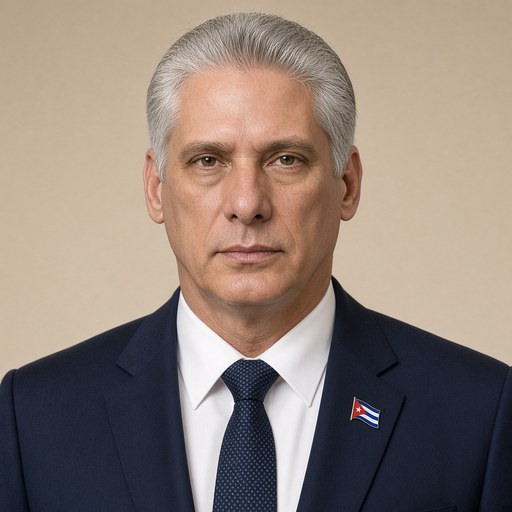
History teaches us that when there is a correct strategy, when there is unity of objectives and a sense of nation, all obstacles can be overcome.
 Miguel Díaz-Canel · President of Cuba
- Context
- Díaz-Canel addressed the National Assembly of People's Power in April 2019 to mark the new Cuban Constitution's proclamation and its historical links to the 1869 Guáimaro assembly.
- Main themes
- Cuban constitutional history, national unity, April 10 anniversary, Cuban Revolution, José Martí, role of women in Cuban society, U.S. imperialism as threat, socialist constitution of 2019, historical continuity, Guáimaro assembly of 1869
- Duration
- ~28 min
- Words
- 3,362
- Sentences
- 130
- Readability
- 37
- Grade
- 14.4
- Syntax
- 3.27
- Vocabulary
- 2.40
Translated from Spanish
The broad sphere of national life a sentence belongs to. Every sentence has an Arena, so it is the denominator the other indices are read against.
Other130 sentences in 84 paragraphs
Dear Army General Raúl Castro Ruz, First Secretary of the Central Committee of the Communist Party of Cuba;
Comrade Machado;
Commanders of the Revolution;
President Lazo;
Dear deputies:
It is impossible to speak in this extraordinary session of the National Assembly of People's Power, in which we have focused the debate on economic issues, without making a mandatory and heartfelt reference to the historical significance of the event we experienced just three days ago in the solemn session of our Parliament.
José Martí, although he did not live it, described the events of April 10, 1869, with words that still impress 150 years later. Through him, we better understand the history of that small town where on that day the seed of the nation was sown and which inscribed its name in the memory of the country, transitioning, in just a month, from the summit to the ashes.
Twenty-three years had passed when the following was published in Patria (and I quote only fragments): "Guáimaro free was never more beautiful than in the days when it was about to enter into glory and sacrifice (...). The families of the heroes, eager to see them, came to where their heroism, in order to comply with the law, was going to be greater (...). Like brides came the wives; and the children, as when they speak of the supernatural (...). It was that the East and the Villas and the Center, composed spontaneously of the pernicious local souls, formed the national soul, and the revolution entered the republic."
It is impossible to find more perfect words than those of Martí to describe that composition of the national soul when "the revolution entered the republic."
Evaluating the facts and the role of men in them, the Apostle declared in 1892: "Neither Cuba nor history will ever forget that the one who became first in war began by demanding respect for the law." Photo: Juvenal Balán
Neither Cuba nor history, we can repeat today, will forget the act of last Wednesday, the 10th, and its links to that event that defined us as a nation, on an April 10, a century and a half ago.
Our Army General, who was one of the first in the war, has also been the first to propose, lead, and demand the essential updating of the law, out of respect for it.
The chroniclers of this time will not have the challenge, brilliantly overcome by Martí, of narrating the harsh contradictions among the founding heroes. Precisely, thanks to 151 years of battle for emancipation, that day we do not discuss, but proclaim.
We were not tasked, as the founding heroes were, with building a government before conquering freedom. First, freedom was rescued and sustained, for more than a generation of revolutionaries, in arduous years of creation and resistance.
Thus, the Constitution we have just proclaimed has a great history. Its root lies in that first one that was born fighting from the womb of the Republic in Arms and then was affirmed in three other constitutions during the war to be reborn in 1901, in the worst circumstances, from an assembly shackled by Yankee intervention.
In 1940, another Constitution, a conquest of several generations of Cubans, was celebrated without being fulfilled. And it was violated and buried by a despot, but upon his death, it ignited the spark of a Revolution destined to fulfill its fundamental mandates of justice.
Many years later, in 1976, the people would embody their most radical aspirations in another Constitution, the first socialist one, which, after some reforms, brought us to the Magna Carta that was proclaimed this April 10, precisely in honor of this history.
I always say that the newly proclaimed Constitution is robust because it was nourished by that history of intense search for national guidance that we have briefly described and also by the most recent and lengthy months of analysis, debates, and adjustments that involved the majority of the people in its construction, the same people who later supported it in a Referendum in an irrefutable manner.
A parallel between that historic April 10 and that of three days ago points to other vital links: we do not need to decide on the flags in our act, because the red triangle was already chosen in 1869, the one that "proudly shone in the fight,/ without puerile and romantic bravado;/ the Cuban who does not believe in it/ should be whipped for cowardice!" as we learned from the unsurpassable verses of Bonifacio Byrne.
It will not be said that a woman now claimed the place that her gender deserves. From Ana Betancourt to Vilma Espín, the contribution of women to the Revolution is infinite. And justice has finally been done. Women are the majority in this Parliament, as in everything important in our society.
But there are other circumstances that equal the moments of then and now. All of Cuba, like Guáimaro 150 years ago, has a tenacious and greedy enemy lurking nearby.
And just as the Spanish army launched itself with hatred upon Guáimaro a month after that beautiful day of the first national Constitution, the neighboring empire threatens, once again, to launch itself upon Cuba. And in fact, it launches itself every day with senseless measures that escalate in aggressiveness and malice.
Guáimaro's response to the Spanish assault, like that of Bayamo before, was to set fire to everything that could not be defended. And Martí also described that as if he had seen it: "Neither the mothers cried, nor the men hesitated, nor did the weak heart look on as those cedars and mahogany fell. With their hands, they set the holy city ablaze, and when night fell, the sacrifice was reflected in the sky (...). The people went to the forest (...). And in the land, a good hand hid the act of the Constitution. It is necessary to go and find it!"
Thus, Martí ends that beautiful journalistic piece titled "April 10."
We are passionate about history, it is true. But if we return to it time and again, it is not only for the pleasure that national glory brings. We return because there lie the most formidable reserves of Cuban morality, always besieged, and always ready to turn to ashes whatever material good it possesses, rather than extend its arms to be chained by the adversary.
What Martí asked to go and find in 1892 is that entry of the revolution into the republic, which will always have pending tasks. In our case, it is the permanent battle to uphold sovereignty and achieve all justice with the greatest possible sum of prosperity.
The current U.S. administration, which despises multilateralism and has decided to return the world to its worst times, using the most shameless threats, with insolent interference and constant ultimatums, which include the possibility of invasions, has publicly declared, more than once, its intention to destroy any alternative development different from the savage capitalism that attempts to develop in the region.
Venezuela, Nicaragua, and Cuba are the nations whose political processes the Monroeists of the Trump administration do not accept. They, unable to fulfill their electoral promises of recovering the industry and the national greatness of the United States, are sinking into a swamp of ridiculous lies by claiming that three Latin American nations, which are fighting to overcome the inherited underdevelopment, threaten the powerful empire.
They have gone all out against Venezuela, repeating the script of their criminal aggressions against Cuba since the early years of the Revolution, including state terrorism and blackmailing other nations to break regional unity.
The novelty lies in the tactics of unconventional warfare, which range from the symbolic to the real: from so-called fake news—lies wrapped in false news attire—to sabotage of the computer networks that sustain the vitality of the country. The empire literally cuts off the light and water to Venezuelans, while its spokespersons and the puppet of the moment tear their garments before the world because the Bolivarian Government rejects the false humanitarian aid.
Hypocrites, criminals, thieves of the Venezuelan national treasury: there is no other way to qualify those who try to subdue the brave people by hunger and deprivation, while they sharpen their teeth to devour the riches with which nature abundantly endowed that sister nation, placed by Bolívar and Chávez in a place of honor on the map of America for its contribution to the independence of the continent. Photo: Juvenal Balán
We cannot underestimate the escalation of these aggressions. Beyond the threats, typical of the merchants of politics, with the rise to decision-making positions of deceitful, mediocre, and criminal politicians, the financial persecution and commercial blockade against Cuba have grown.
They have rolled back our already precarious relations with our country to the worst level by fabricating false acoustic incidents, channeling millions in funds to counter-revolution and political subversion, arming mendacious and spurious lists, attempting to activate the odious Helms-Burton Law, which seeks to return us to the beginning of this story, when we were a nation enslaved by another empire.
This year they have made an effort to give us deadlines with the possible application of Title III of the law of slavery, as it should really be called. They have done so, year after year, since 1996, with a style of life savers. Now they postpone it for a month or a few days, with arrogant threats, as if holding a sword capable of cutting off our heads over all of us, if we do not surrender.
What is the Helms-Burton all, if not the blockade of 60 years turned into law?
What more can they do to us after 60 years of persecution, aggression, and threats?
On April 10, the First Secretary of the Communist Party of Cuba, Army General Raúl Castro Ruz, expressed here:
"We have been alerting about the aggressive behavior that the U.S. government has unleashed against the region of Latin America and the Caribbean. It does so in the name of the Monroe Doctrine, with an arrogant McCarthyist disdain for socialism, self-determination, and the sovereign rights of the peoples of the region."
As he has alerted us, it is clear that there is an intention to tighten the noose around Cuban sovereignty, intensifying the blockade and especially the financial persecution. Credits and financing from third nations are being obstructed due to pressures from the United States; while internally we still carry the burdens of administrative inefficiency, the import mentality, the lack of savings, and insufficient income from exports, among other ills of which we cannot exclude the manifestations of corruption and illegalities, unacceptable today, as always, in the Revolution.
Faced with that map of tremendous challenges, we run the risk of believing that there are no exits. But history has something to tell us. Fidel, Raúl, Almeida, Camilo, Che, the generation of our parents and grandparents faced, with less experience and even fewer resources, more serious and darker moments. And they emerged victorious.
History teaches us that when there is a correct strategy, when there is unity of objectives and a sense of nation, all obstacles can be overcome. Photo: Juvenal Balán
The difficult scenarios I have described about the current moment present us with two absolute priorities: preparation for defense and the economic battle at the same time.
The strategy is to work tirelessly with alternatives, already designed, without abandoning a single one of the objectives set for the greater well-being of our people.
To those who arrogantly and disdainfully ignored the call for the world to open up to Cuba, we will respond by demonstrating that we did hear their appeal and we will open ourselves more and more to those who act sovereignly in the interest of promoting and developing common policies in favor of the survival of the human species, as Fidel defended at the Earth Summit in 1992.
That philosophy moves us when we guide reflection and debate on economic issues.
Today we have evaluated the progress of the implementation of the Guidelines. And the information provided is very important because it clarifies for all of us the intensity and complexity of the work done and especially of what remains to be done.
It is not little, really, what has been implemented in the last decade: 206 policies, at a rate of 20 per year. Only in 2018, 47 were approved, and the pace of implementation increased, thanks to greater experience, organization, and participation of the Central State Administration Bodies.
A permanent follow-up by the Party and the Government on the implementation, through the progress of the fundamental programs, has allowed us to distinguish the results and negative experiences. And their differentiated analysis has not only facilitated correcting them but has also prevented the repetition of mistakes, as the First Secretary of the Party has indicated to us.
More detail is needed in the preparation, organization, and training of each process, experiment, or procedure, and also of the people involved in them.
We also advocate for the incorporation of jurists, from the very conception of the policies, in the design of legal norms, so that these are coherent with the fundamental objectives and immunize our state apparatus against the distortions that may be generated by voluntarism and improvisation.
Finally, although no less important, we are obliged to maximize the dynamism of the processes, clearly defining the route in the implementation schedules. So far, we have not achieved that.
With equal emphasis, we have examined the formulation and progress of the National Economic and Social Development Plan up to 2030.
The objective analysis of the current conditions of the country and the international environment has led us to propose an economic planning in three stages: from 2019 to 2021, from 2022 to 2026, and from 2027 to 2030.
But the current situation demands that we realistically focus on the first of these stages, aware that we face additional difficulties that may worsen. To this end, six strategic sectors have been identified that generate the greatest impact on the economy, in which efforts and resources will be concentrated, without neglecting the rest.
These sectors are: tourism, the biotechnology and pharmaceutical industry, the electro-energy sector related to renewable energy sources, food production, the export of professional services, and construction.
To put it in good Cuban terms: the harshness of the moment demands that we establish very clear and defined priorities, so as not to return to the difficult times of the special period.
Today, we have as strengths a more diversified economy integrated internationally, tourism development, and the biotechnology and pharmaceutical industry, greater potential for exports, superior construction capabilities, hydraulic networks, transportation and communications, and reserves in savings and import substitution, which must be leveraged more.
We aim to develop a government management with a more efficient public and business administration, with fewer obstacles and bureaucracy, with greater transparency and participation; with a direct and permanent link to the social bases; with more effective social communication, greater computerization, more scientific research grounded in demands and needs, and a more active and impactful role of universities in the economy and production.
With the strengthening of the socialist state enterprise, which is our greatest productive force; with an attentive ear to those who have knowledge and experiences to contribute; with constant visits to territories and communities; with a deep and agile legislative exercise; with greater autonomy for municipalities and systematic follow-up on those who ensure development programs.
Without fear of change; taking a little piece off the problems every day; maximizing the strengths of collective leadership and defending with discipline and commitment the guidelines of our Party.
Waging a permanent ethical battle against corruption and illegalities; organizing and strengthening non-state management forms; revitalizing our communities, and instilling beauty and attention to detail as life practices.
Being accountable to the people and stimulating their indispensable participation in solving each problem. Systematizing the best practices. Overcoming the inertia of the weary. Infecting the committed with enthusiasm and optimism. Understanding that the beauty of the worst moment lies in the size of the challenges.
The list of tasks is infinite, but I want to focus on those that require more immediate action and I call on everyone to join us in taking them on:
First, the updating of the Economic Plan for the most complex situations.
We aim to immediately implement pending economic measures related to demands and needs; with the reorganization of domestic trade; with the functioning of the business system, agricultural and non-agricultural cooperatives, and self-employment.
Agriculture, exportable productions, tourism, import substitution, foreign investment, and productive linking with all possible national production will be at the center of our actions as a government.
Now more than ever, it is essential to save and manage resources well, especially energy resources, so that their use yields greater returns; to manage credits and different forms of financing adequately, with more emphasis on investments.
In these circumstances, it is essential to attend to and leverage all the potential present in the human resources and skilled workforce we have.
We will continue to advance in the process of computerizing society and working intensively to improve food supplies, housing and transportation, the quality of services, even amid the suffocating financial persecutions that make it particularly difficult, and sometimes impossible, to import essential goods and resources.
Comrades:
This Legislature faces intense months and perhaps years ahead, but we must work as quickly as possible so that the Constitution is expressed in laws more in tune with our time and needs.
And we have no right to delay changes longer than absolutely necessary.
We take on the mandate to change everything that must be changed and to correct everything that hinders and delays the path to possible prosperity in the shortest time and with the highest quality.
What will not change is our attitude towards those who hold the sword against us.
The answer is: No, imperialists, we Cubans do not surrender, nor do we accept laws about our destinies that are outside the Constitution. In Cuba, we Cubans are in charge, and of course, the Cuban women too.
Title III is no worse than I or II, which are in the action portfolio against the entire people of Cuba, simply to rob us of our lands, seize our homes, take possession of scarce natural resources, and seduce and buy our people. All to punish us for being the bad example that so many oppressed peoples have wanted to follow.
No one will take from us, neither by seduction nor by force, "the Homeland that our parents won standing up," as Rubén Martínez Villena said in manly verses.
Cuba continues to trust in its strength, in its dignity, and also in the strength and dignity of other sovereign and independent nations. But it also continues to believe in the American people, in the homeland of Lincoln, who is ashamed of those who act outside universal law in the name of the entire American nation.
And look at how history reserves answers, that on a day like April 11, 1959, exactly 60 years ago, Fidel said – and with this I want to conclude –:
"Our people will be all the greater the greater the obstacles they face; history will speak more of our people the more difficulties they have to overcome; the future will do more justice to them the more they are slandered today, and it can only be said that here a society was organized where all the peoples of the world could come to learn what justice was, what democracy was, and that knew how to defend it and sustain it, and, although we do not know what fate has in store for us, we do have enough certainty to say that our Revolution will triumph because we will know how to defend it, or that our people will perish if necessary to defend it."
Let us defend these convictions in the massive popular demonstrations, throughout Cuba, on the next First of May.
We will see each other in the squares of the Homeland, because we are Cuba and we are continuity!
Homeland or Death!
We will continue to overcome!
The original Spanish. The tags above are read on the English translation's sentences.
Querido General de Ejército Raúl Castro Ruz, Primer Secretario del Comité Central del Partido Comunista de Cuba;
Compañero Machado;
Comandantes de la Revolución;
Presidente Lazo;
Queridos diputadas y diputados:
Es imposible hacer uso de la palabra en esta sesión extraordinaria de la Asamblea Nacional del Poder Popular en la cual hemos centrado el debate en temas económicos, sin hacer referencia obligada y sentida a la significación histórica del hecho que vivimos hace apenas tres días en la sesión solemne de nuestro Parlamento.
José Martí, aunque no lo vivió, describió los acontecimientos del 10 de abril de 1869 con palabras que 150 años después impresionan todavía. Por él conocemos mejor la historia de ese pequeño pueblo donde aquel día anidó la semilla de la nación y que inscribió su nombre en la memoria del país, al transitar, en apenas un mes, de la cumbre a las cenizas.
Habían pasado 23 años, cuando se publicó en Patria lo siguiente (y cito solo fragmentos): «Guáimaro libre nunca estuvo más hermosa que en los días en que iba a entrar en la gloria y el sacrificio (…). Las familias de los héroes, anhelosas de verlos, venían adonde su heroísmo, por ponerse en la ley, iba a ser mayor (…). Como novias venían las esposas; y las criaturas, como cuando les hablan de lo sobrenatural (…). Era que el Oriente y las Villas y el Centro, de las almas locales perniciosas componían espontánea el alma nacional, y entraba la revolución en la república».
Es imposible encontrar palabras más perfectas que las de Martí para describir aquella composición del alma nacional cuando «entraba la revolución en la república».
Evaluando los hechos y el papel de los hombres en ellos, sentenció el Apóstol en 1892: «Ni Cuba ni la historia olvidarán jamás que el que llegó a ser primero en la guerra comenzó siendo el primero en exigir el respeto de la ley». Foto: Juvenal Balán
Ni Cuba ni la historia, podemos repetir nosotros hoy, olvidarán el acto del pasado miércoles 10 y sus enlaces con aquel acontecimiento que nos definió como nación, un 10 de abril, siglo y medio atrás.
Nuestro General de Ejército, quien fue de los primeros en la guerra, ha sido también el primero en proponer, conducir y exigir la actualización imprescindible de la ley, por respeto a ella.
No tendrán los cronistas de este tiempo el desafío, superado brillantemente por Martí, de narrar las duras contradicciones entre los héroes fundadores. Precisamente, gracias a 151 años de batalla por la emancipación es que ese día no discutimos, sino proclamamos.
No nos tocó tampoco, como sí a los héroes fundadores, construir gobierno antes de conquistar la libertad. Primero la libertad fue rescatada y sostenida, por más de una generación de revolucionarios, en arduos años de creación y resistencia.
Así, la Constitución que recién proclamamos tiene una gran historia. Su raíz está en aquella primera que nació peleando del seno de la República en Armas y luego se afirmó en otras tres constituciones durante la guerra para volver a nacer en 1901, en las peores circunstancias, de una asamblea maniatada por la intervención yanqui.
En 1940 otra Constitución, conquista de varias generaciones de cubanos, fue festejada sin llegar a cumplirse. Y fue violada y sepultada por un déspota, pero al morir encendió la chispa de una Revolución destinada a cumplir sus mandatos de justicia fundamentales.
Muchos años después, en 1976, el pueblo plasmaría sus anhelos más radicales en otra Constitución, la primera socialista, que tras algunas reformas nos trajo hasta la Carta Magna que se ha proclamado este 10 de abril, justamente en honor a esta historia.
Siempre digo que la Constitución recién proclamada es robusta, porque se nutrió de esa historia de intensa búsqueda de la guía nacional que hemos descrito brevemente y también de los más recientes y largos meses de análisis, debates y ajustes que involucraron en su construcción a la mayoría del pueblo, el mismo que luego la respaldó en Referendo de modo irrefutable.
Un paralelo entre aquel histórico 10 de Abril y el de hace tres días apunta a otros enlaces vitales: no necesitamos en nuestro acto decidir sobre las banderas, porque ya en 1869 se escogió la del triángulo rojo, la que «orgullosa lució en la pelea,/ sin pueril y romántico alarde;/ ¡al cubano que en ella no crea/ se le debe azotar por cobarde!», como aprendimos con los versos insuperables de Bonifacio Byrne.
Tampoco se dirá que una mujer reclamó ahora el lugar que su género merece. De Ana Betancourt a Vilma Espín es infinito el aporte femenino a la Revolución. Y se ha hecho por fin justicia. Las mujeres son mayoría en este Parlamento, como en todo lo importante en nuestra sociedad.
Pero hay otras circunstancias que igualan los momentos de entonces y de ahora. Cuba entera, como Guáimaro hace 150 años, tiene a un enemigo tenaz y codicioso acechando cerca.
Y así como el ejército español se lanzó con odio sobre Guáimaro un mes después de aquel día hermoso de la primera Constitución nacional, el imperio vecino amenaza, otra vez, con lanzarse sobre Cuba. Y de hecho se lanza todos los días con medidas insensatas que escalan en agresividad y en saña.
La respuesta de Guáimaro al asalto español, como antes la de Bayamo, fue el incendio de todo lo que no podía ser defendido. Y eso también lo describió Martí como si lo hubiera visto: «Ni las madres lloraron, ni los hombres vacilaron, ni el flojo corazón se puso a ver cómo caían aquellos cedros y caobas. Con sus manos prendieron la corona de hogueras a la santa ciudad, y cuando cerró la noche, se reflejaba en el cielo el sacrificio (…). Al bosque se fue el pueblo (…). Y en la tierra escondió una mano buena el acta de la Constitución. ¡Es necesario ir a buscarla!».
Así termina Martí esa bella pieza periodística titulada «El 10 de abril».
Nos apasiona la historia, es cierto. Pero si volvemos una y otra vez a ella, no es solo por el placer que da la gloria nacional. Volvemos porque ahí están las más formidables reservas de la moral cubana, asediada siempre, y siempre dispuesta a convertir en cenizas cuanto bien material posee, antes que extender sus brazos para que el adversario los encadene.
Lo que Martí pidió ir a buscar en 1892 es esa entrada de la revolución en la república, que siempre tendrá tareas pendientes. En nuestro caso, se trata de la permanente batalla por sostener la soberanía y alcanzar toda la justicia con la mayor suma de prosperidad posible.
La actual administración estadounidense, que desprecia el multilateralismo y ha decidido regresar al mundo a sus peores tiempos, utilizando las más impúdicas amenazas, con injerencia insolente y constantes ultimátums, que incluyen la posibilidad de invasiones, ha declarado públicamente, más de una vez, su propósito de destruir cualquier alternativa de desarrollo diferente al capitalismo salvaje que intente desarrollarse en la región.
Venezuela, Nicaragua y Cuba son las naciones cuyos procesos políticos no aceptan los monroístas de la administración Trump. Ellos, impedidos de cumplir con sus promesas electorales de recuperación de la industria y la grandeza nacional estadounidense, se hunden en un pantano de mentiras ridículas al asegurar que tres naciones latinoamericanas, que luchan por superar el subdesarrollo heredado, amenazan al poderoso imperio.
Contra Venezuela se han empleado a fondo, repitiendo el guion de sus criminales agresiones a Cuba desde los primeros años de la Revolución, incluyendo el terrorismo de Estado y el chantaje a otras naciones, para quebrar la unidad regional.
La novedad está en las tácticas de guerra no convencional, que van de lo simbólico a lo real: desde las llamadas fake news –mentiras envueltas en falsos trajes noticiosos– hasta sabotajes a las redes informáticas que sostienen la vitalidad del país. El imperio literalmente corta la luz y el agua a los venezolanos, al mismo tiempo que sus voceros y el títere de turno se rasgan las vestiduras ante el mundo porque el Gobierno bolivariano rechaza la falsa ayuda humanitaria.
Hipócritas, criminales, ladrones del tesoro nacional venezolano: no hay otra forma de calificar a los que tratan de rendir por hambre y carencias al mismo bravo pueblo al que le roban sus recursos financieros, mientras se afilan los dientes para devorar las riquezas con que la naturaleza dotó en abundancia a esa hermana nación, colocada por Bolívar y Chávez en un lugar de honor en el mapa de América por su contribución a la independencia del continente. Foto: Juvenal Balán
No podemos subestimar la escalada de estas agresiones. Más allá de las amenazas, típicas de los mercaderes de la política, con el ascenso a cargos decisorios de políticos falaces, mediocres y criminales, ha crecido la persecución financiera y el bloqueo comercial contra Cuba.
Ellos han hecho retroceder hasta el peor nivel las precarias relaciones con nuestro país fabricando falsos incidentes acústicos, canalizando fondos millonarios a la contrarrevolución y la subversión política, armando listas mendaces y espurias, intentando activar la odiosa Ley Helms-Burton, que pretende devolvernos al principio de esta historia, cuando éramos una nación esclava de otro imperio.
Este año se han esmerado en darnos plazos con la posible aplicación del título III de la ley de la esclavitud, como en realidad debería llamarse. Lo han hecho, año por año, desde 1996, con estilo de perdona vidas. Ahora lo aplazan por un mes o por unos días, con arrogantes amenazas, como quien sostiene sobre todas nuestras cabezas una espada capaz de cortarlas, si no nos rendimos.
¿Qué es la Helms-Burton toda, sino el bloqueo de 60 años convertido en ley?
¿Qué más pueden hacernos después de 60 años de persecución, agresiones y amenazas?
El pasado 10 de abril, el Primer Secretario del Partido Comunista de Cuba, General de Ejército Raúl Castro Ruz, aquí expresó:
«Hemos venido alertando sobre la conducta agresiva que el Gobierno estadounidense ha desatado contra la región de América Latina y el Caribe. Lo hace en nombre de la Doctrina Monroe, con un arrogante desprecio macartista hacia el socialismo, la libre determinación y los derechos soberanos de los pueblos de la región».
Como él nos ha alertado, a todas luces se busca estrechar el cerco contra la soberanía cubana, recrudeciendo el bloqueo y en especial la persecución financiera. Se obstaculizan los créditos y los financiamientos de terceras naciones por presiones de Estados Unidos; mientras internamente aún arrastramos los fardos de la ineficiencia administrativa, la mentalidad importadora, la falta de ahorro y los insuficientes ingresos por exportaciones, entre otros males de los que no podemos excluir las manifestaciones de corrupción y las ilegalidades, inaceptables hoy, como siempre, en la Revolución.
Situados frente a ese mapa de tremendos retos, corremos el riesgo de creer que no hay salidas. Pero la historia tiene algo que decirnos. Fidel, Raúl, Almeida, Camilo, Che, la generación de nuestros padres y abuelos, enfrentaron, con menos experiencia e incluso menos recursos, momentos más graves y oscuros. Y salieron victoriosos.
La historia nos enseña que cuando hay una estrategia correcta, cuando existe unidad de objetivos y sentido de nación todos los obstáculos pueden ser derribados. Foto: Juvenal Balán
Los difíciles escenarios que he descrito sobre el momento actual nos plantean dos prioridades absolutas: la preparación para la defensa y la batalla económica al mismo tiempo.
La estrategia es trabajar sin descanso con alternativas, ya diseñadas, sin abandonar ni uno solo de los objetivos planteados en función de un mayor bienestar para nuestro pueblo.
A quienes desoyeron con soberbia y desprecio el llamado para que el mundo se abriera a Cuba, responderemos demostrando que sí escuchamos su apelación y nos abriremos cada vez más a quienes actúan soberanamente en el interés de promover y desarrollar políticas comunes a favor de la supervivencia de la especie humana, como lo defendió Fidel en la Cumbre de la Tierra en 1992.
Esa filosofía nos mueve cuando orientamos la reflexión y el debate sobre temas económicos.
Hoy hemos evaluado la marcha de la implementación de los Lineamientos. Y es muy importante la información que se ha dado, porque nos esclarece a todos en cuanto a la intensidad y la complejidad del trabajo hecho y especialmente de lo que queda por hacer.
No es poco, realmente, lo que se ha implementado en la última década: 206 políticas, a razón de 20 por año. Solo en 2018 fueron aprobadas 47 y subieron los ritmos de implementación, gracias a una mayor experiencia, organización y participación de los Organismos de la Administración Central del Estado.
Un seguimiento permanente del Partido y el Gobierno a la implementación, a través de la marcha de los programas fundamentales, nos ha permitido distinguir los resultados y experiencias negativas. Y su análisis diferenciado, no solo nos ha facilitado corregirlos, sino que ha evitado la repetición de errores, tal como nos lo ha indicado el Primer Secretario del Partido.
Se precisa más detalle en la preparación, organización y capacitación de cada proceso, experimento o procedimiento y también de las personas involucradas en ellos.
Defendemos igualmente que haya juristas incorporados, desde la concepción misma de las políticas, en el diseño de las normas legales, de manera que estas sean coherentes con los objetivos fundamentales y que inmunicen a nuestro aparato estatal frente a las distorsiones que puedan generar el voluntarismo y la improvisación.
Por último, aunque no menos importante, estamos obligados a dinamizar al máximo los procesos, definiendo bien la ruta en los cronogramas de implementación. Hasta ahora no lo hemos logrado.
Con igual énfasis hemos examinado la formulación y los avances del Plan Nacional de Desarrollo Económico Social hasta el 2030.
El análisis objetivo de las condiciones actuales del país y el entorno internacional, nos ha llevado a proponer una planificación de la economía en tres etapas: de 2019 a 2021, de 2022 a 2026 y de 2027 a 2030.
Pero la actual coyuntura nos exige con realismo, conscientes de que enfrentamos dificultades adicionales que pueden agravarse, centrarnos en la primera (de ellas). Para ello se han identificado los seis sectores estratégicos que generan un mayor impacto en la economía, en los cuales se centrarán los esfuerzos y recursos, sin desatender el resto.
Esos sectores son: el turismo, la industria biotecnológica y farmacéutica, el electroenergético relacionado con las fuentes renovables de energía, la producción de alimentos, la exportación de servicios profesionales y la construcción.
Para decirlo en buen cubano: la crudeza del momento nos exige establecer prioridades bien claras y definidas, para no regresar a los difíciles momentos del periodo especial.
Hoy tenemos como fortalezas una economía más diversificada e insertada internacionalmente, desarrollo turístico y de la industria biotecnológica y farmacéutica, mayores potencialidades para las exportaciones, superiores capacidades constructivas, redes hidráulicas, transporte y comunicaciones y reservas en el ahorro y la sustitución de importaciones, que es preciso aprovechar más.
Nos proponemos desarrollar una gestión de Gobierno con una administración pública y empresarial más eficiente, con menos trabas y burocracia, con mayor transparencia y participación; con un vínculo directo y permanente con las bases sociales; con una más eficaz comunicación social, mayor informatización, más investigaciones científicas afincadas en las demandas y necesidades, y un rol más activo y de mayor impacto de las universidades en la economía y la producción.
Con el fortalecimiento de la empresa estatal socialista, que es nuestra mayor fuerza productiva; con el oído atento a quienes tienen conocimientos y experiencias que aportar;con visitas constantes a los territorios y comunidades; con un profundo y ágil ejercicio legislativo;con mayor autonomía para los municipios y un seguimiento sistemático a quienes aseguran los programas de desarrollo.
Sin temor al cambio; quitando todos los días un pedacito a los problemas;aprovechando al máximo las fortalezas de la dirección colectiva y defendiendo con disciplina y compromiso las orientaciones de nuestro Partido.
Librando una batalla ética permanente contra la corrupción y las ilegalidades; ordenando y fortaleciendo las formas de gestión no estatales; reanimando nuestras comunidades, e instalando la belleza y la cultura del detalle como prácticas de vida.
Rindiendo cuentas al pueblo y estimulando su participación indispensable en la solución de cada problema. Sistematizando las mejores prácticas. Venciendo la inercia de los cansados. Contagiando de entusiasmo y optimismo a los comprometidos. Entendiendo que la belleza del peor momento está en el tamaño de los desafíos.
Es infinita la lista de tareas, pero quiero detenerme en las que exigen acción más inmediata y convoco a todos a acompañarnos al asumirlas:
En primer lugar, la actualización del Plan de la Economía para las situaciones más complejas.
Nos proponemos poner en marcha de inmediato medidas económicas pendientes que tienen que ver con demandas y necesidades; con la reorganización del comercio interior; con el funcionamiento del sistema empresarial, las cooperativas agropecuarias y no agropecuarias y el trabajo por cuenta propia.
La agricultura, las producciones exportables, el turismo, la sustitución de importaciones, la inversión extranjera y el encadenamiento productivo con toda la producción nacional posible, estarán en el centro de nuestras acciones como Gobierno.
Ahora más que nunca es imprescindible ahorrar y controlar bien los recursos, fundamentalmente los energéticos, para que su uso aporte mayores rendimientos; gestionar adecuadamente los créditos y diferentes formas de financiamientos, con más hincapié en las inversiones.
En estas circunstancias es imprescindible atender y aprovechar todo el potencial presente en los recursos humanos y la fuerza de trabajo calificada con que contamos.
Seguiremos avanzando en el proceso de informatización de la sociedad y trabajando intensamente para mejorar los abastecimientos alimenticios, la vivienda y el transporte, la calidad de los servicios, aun en medio de las asfixiantes persecuciones financieras que hacen particularmente difícil, y a veces imposible, la importación de bienes y recursos de primera necesidad.
Compañeras y compañeros:
A esta Legislatura le esperan meses y acaso años intensos, pero debemos trabajar con la mayor celeridad posible para que la Constitución se vaya expresando en leyes más a tono con nuestro tiempo y necesidades.
Y no tenemos derecho a demorar los cambios más tiempo que el absolutamente imprescindible.
Asumimos el mandato de cambiar todo lo que deba ser cambiado y corregir todo lo que entorpezca y retrase el camino a la prosperidad posible en el menor tiempo y con la mayor calidad.
Lo que sí no cambiará será nuestra actitud frente a los que sostienen la espada contra nosotros.
La respuesta es: No, señores imperialistas, los cubanos no nos rendimos, ni aceptamos leyes sobre nuestros destinos que estén fuera de la Constitución. En Cuba mandamos los cubanos y, por supuesto, las cubanas.
El título III no es peor que el I ni el II, que están en la cartera de acciones contra todo el pueblo de Cuba, sencillamente para robarnos las tierras, arrebatarnos las casas, apoderarse de los escasos recursos naturales y seducir y comprar a nuestra gente. Todo para castigarnos por ser el mal ejemplo que tantos pueblos oprimidos han querido seguir.
Nadie va a arrebatarnos, ni por la seducción ni por la fuerza, «la Patria que los padres nos ganaron de pie», como lo dijo en versos viriles Rubén Martínez Villena.
Cuba sigue confiando en sus fuerzas, en su dignidad y también en la fuerza y la dignidad de otras naciones soberanas e independientes. Pero sigue creyendo también en el pueblo norteamericano, en la Patria de Lincoln, que se avergüenza de quienes actúan al margen de la ley universal en nombre de toda la nación norteamericana.
Y miren si la historia reserva respuestas, que un día como el 11 de abril de 1959, hace exactamente 60 años, Fidel dijo –y con esto quiero terminar–:
«Nuestro pueblo será tanto más grande cuanto más grandes sean los obstáculos que tiene delante; más hablará de nuestro pueblo la historia cuanto más dificultades tenga que vencer; más justicia le hará el porvenir cuanto más se le calumnie hoy, y solo podrá decirse que aquí se organizó una sociedad donde todos los pueblos del mundo pudieron venir a aprender lo que era justicia, lo que era democracia, y que supo defenderla y supo sostenerla, y, aunque no sabemos lo que el destino nos depare, sí tenemos la seguridad suficiente para decir que nuestra Revolución triunfará porque sabremos defenderla, o que nuestro pueblo perecerá si es preciso perecer para defenderla».
Defendamos estas convicciones en las masivas manifestaciones populares, en toda Cuba, el próximo Primero de Mayo.
¡Nos veremos en las plazas de la Patria, porque somos Cuba y somos continuidad!
¡Patria o Muerte!
¡Seguiremos venciendo!
(Ovación.)