





- Context
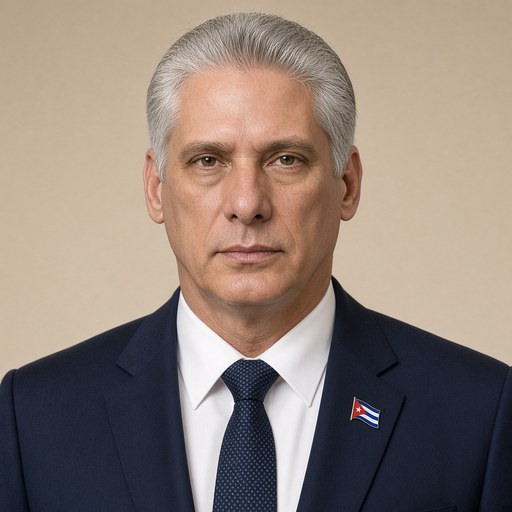
- Díaz-Canel addressed Caribbean heads of state at the VIII CARICOM-Cuba Summit on December 6, 2022, celebrating 50 years of Cuba-Caribbean diplomatic relations.
- Main themes
- Cuba-CARICOM relations, South-South cooperation, Caribbean solidarity, 50th anniversary of diplomatic relations, Haiti crisis, health cooperation, COVID-19 vaccines and biotechnology, education and scholarships, Fidel Castro legacy, post-pandemic recovery, triangular cooperation, sovereignty and self-determination
- Duration
- ~18 min
- Words
- 2,164
- Sentences
- 88
- Readability
- 26
- Grade
- 15.8
- Syntax
- 3.05
- Vocabulary
- 2.45
Translated from Spanish
The broad sphere of national life a sentence belongs to. Every sentence has an Arena, so it is the denominator the other indices are read against.
Other88 sentences in 58 paragraphs
Honorable Prime Ministers and Presidents of CARICOM member countries;
Dr. Carla Natalie Barnett, Secretary-General of the Community;
Excellency Mr. Didacus Jules, Director-General of the Organization of Eastern Caribbean States;
Excellency Mia Amor Mottley, Prime Minister of Barbados;
Distinguished heads of delegations and special guests:
We are gathered here today to joyfully celebrate the 50th anniversary of relations between the brother countries of the Caribbean and Cuba.
This date invites us to reflect on the achievements of these years and how much more we can do for the well-being of Caribbean nations.
It is an honor for Cuba to participate in the VIII CARICOM-Cuba Summit and a true pleasure to finally meet again in person.
Exchanging among brothers, as we have done regularly and consistently over the past 20 years, is something we owe to a proposal from the historical leader of the Cuban Revolution, Commander-in-Chief Fidel Castro Ruz, thanks to whose initiative the celebration of these meetings was agreed upon in the common will to consolidate special ties of friendship and collaboration within the framework of South-South cooperation.
I bring you a hug from Army General Raúl Castro Ruz, an admirer of the dignity of our Caribbean brothers and an unwavering defender of the relationship between our peoples and governments.
This meeting transcends formal relations and attests to deep bonds of brotherhood. It also evidences the continuity of the ideals and work of historical leaders who forged the foundations for the consolidation of relations, framed in principles of solidarity, friendship, selflessness, and gratitude.
These precepts, along with the conviction of our belonging to the Caribbean, are part of the legacy, in terms of thought and action, deeply humanist and internationalist of Commander-in-Chief Fidel Castro Ruz.
What he expressed at the first CARICOM-Cuba meeting in 2002 we reaffirm today unequivocally: “The children of Cuba are and will be at your complete disposal.”
It will always be necessary and moving to remember that the brave decision of Errol Barrow of Barbados; Forbes Burnham of Guyana; Michael Manley of Jamaica; and Eric Williams of Trinidad and Tobago in 1972 was decisive for the Caribbean and Cuba to develop their relations to the highest political level, honoring the existing ties between our peoples based on our common colonial past. To them, eternal tribute.
Dear friends:
The post-pandemic world, if a post-pandemic world exists, demands more solidarity, more understanding, more cooperation, and more unity from governments.
As so many times throughout its dramatic history, today the sister nation of Haiti is going through a particularly complex situation. On behalf of Cuba, which advocates for stability and peace in Haiti; which defends the right of its people to find a peaceful solution, through dialogue, to their great challenges, we reaffirm here our willingness to continue providing our assistance to that brotherly people.
From here, we call for raising the quality of international solidarity with Haiti, based on full respect for the sovereignty and self-determination of that people, especially in the current context, marked by painful challenges, such as the recent resurgence of cholera that the country is facing.
We urgently urge other regional and international actors to join in the search for concrete formulas and projects for triangular cooperation, as well as to provide resources and technologies that can be transferred as substantive aid to Haiti.
Esteemed friends:
Cuba's cooperative relations with the brother nations of the Caribbean have surely allowed us to contribute to the development of their countries in such sensitive sectors as health and education; but at the same time, they have provided us with invaluable contributions.
Living harmoniously with our Caribbean neighbors, with their customs, histories, traditions, and popular culture has mutually enriched us.
Our historic commitment to the health of the peoples of the Caribbean is not situational, and that is why it has been maintained in the most difficult moments. In that spirit, we are prepared to donate 144,000 doses of COVID-19 vaccines to the subregion.
We invite the clinical use of our biotechnological medicines for the treatment and prevention of COVID-19, an experience we have already shared with some of the countries represented here; as well as other innovative products resulting from the development of Cuban science.
We also reiterate our willingness to share experiences in health to address common problems in the region.
I wish to assure you that the offer of scholarships to study Medicine and other careers, as well as the training of highly qualified personnel in various sectors, will continue to be a priority in our relationship with CARICOM countries. Today, there are 851 Caribbean scholarship students on our Island, and more than 6,000 graduates since the arrival of the first students.
More than 2,000 Cuban doctors, technicians, nurses, sports trainers, engineers, and teachers are currently working in CARICOM countries. We have the utmost willingness to maintain and consolidate the ties and exchanges that strengthen this cooperation for our mutual benefit.
I take this opportunity to recognize the courage of the authorities of the countries gathered here, in defense of the presence of Cuban professionals and technicians, in the face of the colossal and cynical campaign of our enemies against Cuban medical collaboration, which seeks to deprive the Caribbean population of the health services offered by Cuba.
Solidarity has characterized the course of bilateral ties. This reality has allowed us to enjoy long-standing links and a high level of political-diplomatic dialogue. It is our responsibility to perfect exchanges to design and continue working in search of opportunities and the realization of joint projects.
We must increase efforts to make the Center for the Stimulation of Development of Children, Adolescents, and Young People with Special Educational Needs in Guyana a regional reference, and advance in the project of the Regional School of Arts of the Caribbean, based in Jamaica.
A fundamental aspect for the development of nations is the diversification of energy sources, prioritizing those that are renewable.
In that endeavor, the Ministry of Energy and Mines of Cuba has linked itself to the Caribbean Center for Renewable Energy and Energy Efficiency to jointly seek alternatives in our nations, while uniting efforts and experiences to make better use of the international financing available in this area.
It could be thought that language differences represent a barrier between our peoples; on the contrary, we consider it an area with great potential for cooperation in both directions. Educational systems require it, and we have the human resources for it.
Esteemed heads of delegation:
In recent years, we have witnessed a notable increase in the impact caused by the effects of climate change and natural disasters, particularly in the Small Island Developing States, where the intensification of extreme weather phenomena is already evident and practically irreversible: droughts, hurricanes, soil and seabed degradation, sargassum influx, rising temperatures, among others.
We are witnessing a stage of increasing exchanges between scientists and environmental agencies and progress in preparing our nations for disaster risk mitigation.
It is vital to continue promoting actions to preserve the Caribbean ecological system and understand the severity of the impact of climate change, preparing for the worst-case scenario. For this, we have advanced response protocols in the Caribbean and highly qualified personnel.
At the VI CARICOM-Cuba Summit, we signed the Agreement between the Civil Defense of Cuba and the Caribbean Disaster and Emergency Management Agency, which has made it possible to expand and integrate early warning systems in the region. By virtue of this, in recent years, dozens of specialists from the region have been trained in Cuba in disaster response management with the participation of the scientific community and UNESCO. Several rescue teams from the Caribbean have participated in the courses that Cuba offers at the Regional Training Center for Rescue and Firefighters.
Excellencies:
The recovery of our countries in this post-pandemic stage is by no means an easy task. Nations, already suffering from the imprint of an unjust international financial system that benefits the more developed, struggle to rise in a scenario of global and multilateral crisis that threatens us with particular force.
Our economies have the potential for intraregional exchange. We know that achieving smooth and mutually beneficial trade is complex, but we can and must take advantage of commercial niches and enhance their development. Let us exploit to the fullest and effectively the capacities of each one in function of a regional economic articulation that prioritizes complementarity, producing each country what is most competitive for it and exchanging goods and services to the extent of the financial possibilities available to us.
In 2017, we signed the Second Additional Protocol of the CARICOM-Cuba Trade and Cooperation Agreement. In 2021, the tariff concessions granted by Cuba to the Caribbean Community under the Protocol came into effect. With the necessary legal backing, this instrument will constitute a step forward in promoting and identifying trade with tariff benefits and an incentive for entrepreneurs.
Another area in which we can advance is in investments. Cuba has a broad investment portfolio in various spheres of the economy. Government structures, in constant improvement, are ready to attend to your requests. The Mariel Special Development Zone offers incentives to foreign investors, and its geographical location places it at the center of important international maritime routes.
Caribbean brothers:
I wish to reiterate Cuba's deep gratitude to the members of CARICOM, to its General Secretariat, for their solidarity and support in the face of the impact of the COVID-19 pandemic and after the unfortunate accidents and natural events that occurred in our country this year, which have caused loss of human lives and significant material damage. The resources made available to the country by the Caribbean peoples have materially and spiritually nourished the efforts to recover.
We also want to express our gratitude for the unconditional and sustained support of CARICOM States, in all the forums made available to them, for the legitimate demand that the illegal and unjust economic, commercial, and financial blockade imposed on Cuba for more than 60 years be lifted. We also thank them for their condemnation of the unilateral inclusion of Cuba in the illegitimate list of state sponsors of terrorism.
In particular, we deeply value the dignified stance taken by our Caribbean brothers in denouncing the exclusion of Cuba and other countries from the continent from the so-called IX Summit of the Americas, which took place this year in Los Angeles, United States.
We feel extremely satisfied with the close relations that CARICOM and Cuba have forged over the years. It was an endeavor of Commander-in-Chief Fidel Castro Ruz and Army General Raúl Castro to maintain unity among our countries, solidary cooperation, support each other in the challenges imposed by our colonial past, back common positions in the international arena, and, above all, define the essence of our friendship.
Esteemed colleagues, brothers, friends:
I am confident that this meeting will demonstrate that the unity of peoples is essential for human improvement and to achieve a more just, equitable, and sustainable world. We are convinced that this meeting will reinforce the indestructible nature of our ties.
I thank you for your unwavering solidarity and friendship towards Cuba. When we receive you in Cuba or, as now, when we visit you, Cubans feel among true brothers.
Know that we always keep you in mind, that when a calamity or event occurs in one of your countries, we suffer it as our own. We will always, always stand by you, supporting you and sharing our modest resources!
Together we have managed to establish a paradigm in international relations in which respect and solidarity prevail, demonstrating that a better world is possible. That was the dream of our predecessors and will be the endeavor of their successors.
Before concluding, allow me a brief anecdote.
Doctor Antonio Romero, president of the Chair of Caribbean Studies at the University of Havana, recounts that the great Jamaican economist and prominent Caribbean scholar, Norman Girvan, once expressed in Havana that Cuba should try to resolve what he considered a dichotomy in terms of national identity: to define itself as a Caribbean country or as a Latin American country. After a year of debates, Cuban scholars of the Caribbean concluded that “Cuba is, due to its historical experience and not only its geographical position, both a Latin American country and a Caribbean country.” Girvan, who died in Cuba in April 2014, then confessed that this was the key he had not considered in his deep relationship with Cuba and the Revolution, and that this absolutely explained why Cuba was seen by the Caribbean as the bridge between them and the rest of Latin America.
We want to always be that bridge between the two identities we share, for the good of our peoples and the integration that will save us.
I take the words of Army General Raúl Castro in 2017, at the meeting in Antigua and Barbuda, to reaffirm that the Caribbean can always count on Cuba! So it has been and so it will be!
Thank you very much!
The original Spanish. The tags above are read on the English translation's sentences.
Honorables Primeros Ministros y Presidentes de los países miembros de CARICOM;
Doctora Carla Natalie Barnett, secretaria general de la Comunidad;
Excelentísimo Señor Didacus Jules, director general de la Organización de Estados del Caribe Oriental;
Excelentísima Mia Amor Mottley, primera ministra de Barbados;
Distinguidos jefes de delegaciones e invitados especiales:
Nos reúne hoy la feliz celebración del aniversario 50 de las relaciones entre los hermanos países del Caribe y Cuba.
La fecha nos invita a reflexionar sobre los logros de estos años y cuánto más podemos hacer por el bienestar de las naciones caribeñas.
Es un honor para Cuba participar en la VIII Cumbre CARICOM-Cuba y un verdadero placer reencontrarnos, por fin, de forma presencial.
Intercambiar entre hermanos, como ocurrió de manera regular y constante durante los últimos 20 años, es algo que debemos a una propuesta del líder histórico de la Revolución Cubana, el Comandante en Jefe Fidel Castro Ruz, gracias a cuya iniciativa se acordó la celebración de estos encuentros en la voluntad común de consolidar especiales lazos de amistad y colaboración en el marco de la cooperación Sur-Sur.
Les traigo un abrazo del General de Ejército Raúl Castro Ruz, admirador de la dignidad de los hermanos caribeños y defensor incansable de la relación entre nuestros pueblos y gobiernos.
Este encuentro trasciende las relaciones formales y da fe de profundos vínculos de hermandad. Evidencia, además, la continuidad del ideario y la obra de líderes históricos, quienes forjaron las bases para la consolidación de las relaciones, enmarcadas en principios de solidaridad, amistad, desinterés y gratitud.
Estos preceptos, junto a la convicción de nuestra pertenencia al Caribe, forman parte del legado, en cuanto al pensamiento y la acción, profundamente humanista e internacionalista del Comandante en Jefe Fidel Castro Ruz.
Lo que él expresara en el primer encuentro CARICOM-Cuba en el año 2002 lo ratificamos hoy de manera inequívoca: “Los hijos de Cuba están y estarán a la entera disposición de ustedes”.
Siempre será preciso y emocionante recordar que la valiente decisión de Errol Barrow, de Barbados; Forbes Burnham, de Guyana; Michael Manley, de Jamaica, y Eric Williams, de Trinidad y Tobago, en 1972, fue determinante para que el Caribe y Cuba desarrollaran sus relaciones al máximo nivel político, honrando los vínculos existentes entre nuestros pueblos a partir del pasado colonial común. A ellos, el eterno tributo.
Queridos amigos:
El mundo pospandémico, si es que existe una pospandemia, reclama de los gobiernos más solidaridad, más entendimiento, más cooperación y más unidad.
Como tantas veces a lo largo de su dramática historia, hoy la hermana nación haitiana atraviesa una situación particularmente compleja. En nombre de Cuba, que aboga por la estabilidad y la paz en Haití; que defiende el derecho de su pueblo a encontrar una solución pacífica, a través del diálogo, a sus grandes desafíos, ratificamos aquí la disposición a continuar brindando nuestra ayuda a ese hermano pueblo.
Desde aquí convocamos a elevar la calidad de la solidaridad internacional con Haití, sobre la base del pleno respeto a la soberanía y a la autodeterminación de ese pueblo, especialmente en la actual coyuntura, marcada por retos tan dolorosos, como el reciente rebrote de cólera que enfrenta ese país.
Instamos con urgencia a otros actores regionales e internacionales a unirse en la búsqueda de fórmulas y proyectos concretos de cooperación triangular, así como a brindar recursos y tecnologías que puedan transferirse como ayuda sustantiva a Haití.
Estimados amigos:
Las relaciones de cooperación de Cuba con las naciones hermanas del Caribe seguramente nos han permitido contribuir al desarrollo de sus países en sectores tan sensibles como la salud y la educación; pero al mismo tiempo nos han aportado una contribución invaluable.
Convivir armoniosamente con los vecinos pueblos caribeños, con sus costumbres, historias, tradiciones y cultura popular nos ha enriquecido mutuamente.
Nuestro histórico compromiso con la salud de los pueblos del Caribe no es coyuntural y por eso se ha mantenido en los momentos más difíciles. En esa voluntad se inscribe la disposición de donar a la subregión 144 000 dosis de las vacunas contra la COVID-19.
Invitamos al uso clínico de nuestros medicamentos biotecnológicos para el tratamiento y la prevención de la COVID-19, experiencia que ya hemos compartido con algunos de los países aquí representados; así como de otros productos innovadores resultantes del desarrollo de la ciencia cubana.
Igualmente, reiteramos la voluntad de compartir experiencias en materia de salud para enfrentar problemáticas comunes de la región.
Deseo asegurar que el ofrecimiento de becas para estudiar Medicina y otras carreras, así como la formación de personal altamente calificado en diversos sectores seguirá siendo prioridad en la relación con los países de CARICOM. Hoy suman 851 los becarios caribeños en nuestra Isla, y más de 6 000 los graduados desde el arribo de los primeros estudiantes.
Más de 2 000 médicos, técnicos, enfermeros, entrenadores deportivos, ingenieros y profesores cubanos laboran hoy en los países de CARICOM. Tenemos la mayor disposición de mantener y consolidar los vínculos e intercambios que fortalezcan esta cooperación, en beneficio mutuo.
Aprovecho para reconocer la valentía de las autoridades de los países aquí reunidos, en defensa de la presencia de los profesionales y técnicos cubanos, frente a la descomunal y cínica campaña de nuestros enemigos contra la colaboración médica cubana, que intenta privar de los servicios de salud ofrecidos por Cuba a la población caribeña.
La solidaridad ha caracterizado la marcha de los nexos bilaterales. Esa realidad ha permitido que podamos disfrutar de vínculos de larga data y alto nivel de diálogo político-diplomático. Nos corresponde perfeccionar los intercambios para diseñar y continuar trabajando en la búsqueda de oportunidades y en la realización de proyectos conjuntos.
Debemos incrementar los esfuerzos para convertir en un referente regional el Centro de Estimulación del Desarrollo de Niños, Adolescentes y Jóvenes con Necesidades Educativas Especiales, en Guyana, y avanzar en el proyecto de la Escuela Regional de Artes del Caribe, con sede en Jamaica.
Un aspecto fundamental para el desarrollo de las naciones es la diversificación de las fuentes de energía, priorizando aquellas que son renovables.
En ese empeño, el Ministerio de Energía y Minas de Cuba se ha vinculado al Centro Caribeño de Energía Renovable y Eficiencia Energética para, juntos, buscar alternativas en nuestras naciones, a la vez que unen sus esfuerzos y experiencias para obtener un mejor provecho de los financiamientos internacionales disponibles en esta materia.
Pudiera pensarse que las diferencias de idiomas representan una barrera entre nuestros pueblos; por el contrario, consideramos que constituye un área con gran potencial para la cooperación en ambos sentidos. Los sistemas educativos así lo requieren y contamos con los recursos humanos para ello.
Estimados jefes de delegación:
En los últimos años hemos presenciado un incremento notable del impacto provocado por los efectos del cambio climático y los desastres naturales, en particular a los Pequeños Estados Insulares en Desarrollo, donde la intensificación de los fenómenos meteorológicos extremos ya es ostensible y prácticamente irreversible: sequías, huracanes, deterioro de los suelos y lechos marinos, arribazón de sargazos, incremento de las temperaturas, entre otros.
Asistimos a una etapa de crecientes intercambios entre los científicos y agencias medioambientales y de avance en la preparación de nuestras naciones para la mitigación del riesgo de desastres naturales.
Es vital continuar impulsando acciones para preservar el sistema ecológico caribeño y comprender la severidad del impacto del cambio climático, preparándonos para el peor escenario. Para ello, contamos en el Caribe con avanzados protocolos de enfrentamiento y con personal altamente calificado.
En la VI Cumbre CARICOM-Cuba firmamos el Acuerdo entre la Defensa Civil de Cuba y la Agencia Caribeña para el Manejo de Desastres y Emergencias, que ha posibilitado expandir e integrar los sistemas de alerta temprana en la región. En virtud del mismo, en los últimos años decenas de especialistas de la región se han capacitado en Cuba en el manejo de la respuesta a desastres naturales con la participación de la comunidad científica y de la UNESCO. Varios cuerpos de rescatistas del Caribe han participado en los cursos que Cuba ofrece en el Centro Regional de Entrenamiento de Salvamento y Bomberos.
Excelencias:
La recuperación de nuestros países en esta etapa pospandémica no es tarea en lo absoluto sencilla. Las naciones, ya aquejadas por la impronta de un sistema financiero internacional injusto que beneficia a los más desarrollados, luchan por levantarse en un escenario de crisis global y multilateral que nos amenaza con especial fuerza.
Nuestras economías tienen potencial para el intercambio intrarregional. Sabemos que resulta complejo lograr un comercio fluido y mutuamente beneficioso, pero podemos y debemos aprovechar nichos comerciales y potenciar su desarrollo. Explotemos al máximo y con eficacia las capacidades de cada uno en función de una articulación económica regional que priorice la complementariedad, produciendo cada país lo que le resulte más competitivo e intercambiando bienes y servicios en la medida de las posibilidades financieras de las que disponemos.
En 2017 firmamos el Segundo Protocolo Adicional del Acuerdo de Comercio y Cooperación CARICOM-Cuba. En 2021 entraron en vigor las concesiones arancelarias otorgadas por Cuba a la Comunidad del Caribe en virtud del Protocolo. Con el respaldo legal necesario, este instrumento constituirá un paso de avance en la promoción e identificación de un comercio con beneficios arancelarios y un incentivo para los empresarios.
Otra área en la que podemos avanzar es en la de las inversiones. Cuba cuenta con una amplia cartera de inversiones en diversas esferas de la economía. Las estructuras gubernamentales, en constante perfeccionamiento, están listas para atender sus solicitudes. La Zona Especial de Desarrollo Mariel ofrece incentivos al inversor extranjero y su ubicación geográfica la coloca al centro de importantes rutas marítimas internacionales.
Hermanos caribeños:
Deseo reiterar el profundo agradecimiento de Cuba a los miembros de CARICOM, a su Secretaría General, por su solidaridad y apoyo ante el impacto de la pandemia de la COVID-19 y tras los lamentables accidentes y eventos naturales ocurridos en nuestro país este año, que han provocado pérdidas de vidas humanas y cuantiosos daños materiales. Los recursos puestos a disposición del país por los pueblos caribeños han alimentado material y espiritualmente los esfuerzos para recuperarnos.
Queremos expresar, además, la gratitud por el incondicional y sostenido respaldo de los Estados de CARICOM, en todas las tribunas que se han puesto a su disposición, al legítimo reclamo de que cese el ilegal e injusto bloqueo económico, comercial y financiero impuesto a Cuba desde hace más de 60 años. Agradecemos, igualmente, su condena a la unilateral inclusión de Cuba en la ilegítima lista de Estados patrocinadores del terrorismo.
De manera particular, valoramos profundamente la digna postura asumida por los hermanos caribeños al denunciar la exclusión de Cuba y otros países del continente de la llamada IX Cumbre de las Américas, que tuvo lugar este año en Los Ángeles, Estados Unidos.
Nos sentimos sumamente satisfechos por las estrechas relaciones que CARICOM y Cuba han forjado a través de los años. Fue un empeño del Comandante en Jefe Fidel Castro Ruz y del General de Ejército Raúl Castro mantener la unidad entre nuestros países, la cooperación solidaria, apoyarnos ante los retos que nos impone el pasado colonial, respaldar posiciones comunes en la arena internacional y, sobre todo, definir la esencia de nuestra amistad.
Estimados colegas, hermanos, amigos:
Tengo la certeza de que este encuentro demostrará que la unidad de los pueblos es esencial para el mejoramiento humano y para alcanzar un mundo más justo, equitativo y sostenible. Estamos convencidos de que este encuentro reforzará el carácter indestructible de nuestros nexos.
Agradezco su inquebrantable solidaridad y amistad hacia Cuba. Cuando los recibimos en Cuba o, como ahora, cuando los visitamos, los cubanos nos sentimos entre verdaderos hermanos.
Sepan que siempre los tenemos presentes, que cuando ocurre una calamidad o un hecho en uno de sus países, la sufrimos como propia. ¡Siempre, siempre, estaremos al lado de ustedes, apoyándolos y compartiendo nuestros modestos recursos!
De conjunto hemos logrado establecer un paradigma en las relaciones internacionales en el que priman el respeto y la solidaridad, demostrando que un mundo mejor es posible. Ese fue el sueño de nuestros predecesores y será el empeño de sus continuadores.
Antes de concluir, permítanme una anécdota.
Cuenta el Doctor Antonio Romero, presidente de la Cátedra de Estudios del Caribe de la Universidad de La Habana, que el gran economista jamaicano y destacado estudioso del Caribe, Norman Girvan, expresó una vez en La Habana que Cuba debería tratar de resolver lo que él consideraba como una dicotomía en términos de identidad nacional: definirse como un país caribeño o como un país latinoamericano. Después de un año de debates, los estudiosos cubanos del Caribe concluyeron que “Cuba es, por su experiencia histórica y no solo por su posición geográfica, tanto un país latinoamericano como un país caribeño”. Girvan, quien murió en Cuba en abril de 2014, confesó entonces que esa era la clave que él no había considerado en su entrañable relación con Cuba y la Revolución, y que eso explicaba, de manera absoluta, por qué Cuba era vista por el Caribe como el puente entre ellos y el resto de Latinoamérica.
Queremos ser siempre ese puente entre dos identidades que compartimos, por el bien de nuestros pueblos y la integración que habrá de salvarnos.
Tomo las palabras del General de Ejército Raúl Castro en 2017, en la cita de Antigua y Barbuda, para ratificar que ¡el Caribe siempre podrá contar con Cuba! ¡Así ha sido y así será!
¡Muchas gracias! (Aplausos.)