




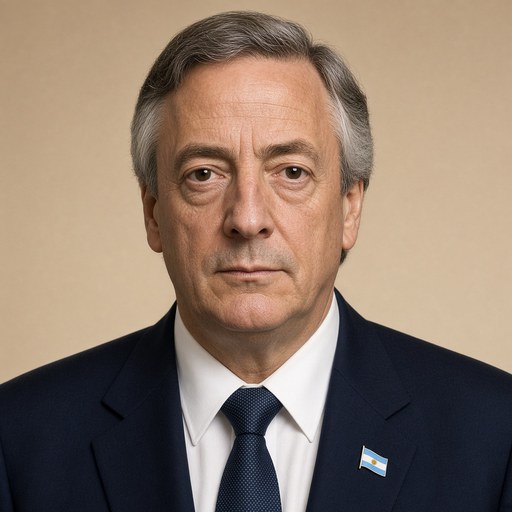
Néstor Kirchner at the Legislative Assembly in Congress, 2005
 Néstor Kirchner · President of Argentina
- Context
- Kirchner addressed the Argentine Legislative Assembly on March 1, 2005, to inaugurate congressional sessions and report on the state of the nation.
- Main themes
- State of the nation address, economic recovery from crisis, national dignity and self-esteem, debt and fiscal policy, rebuilding public institutions, social inclusion and poverty reduction, political unity and collective action, memory truth and justice, education and public health, Argentina's future development
- Duration
- ~104 min
- Words
- 12,440
- Sentences
- 452
- Readability
- 32
- Grade
- 15.5
- Syntax
- 3.22
- Vocabulary
- 2.25
Translated from Spanish
The broad sphere of national life a sentence belongs to. Every sentence has an Arena, so it is the denominator the other indices are read against.
Other452 sentences in 310 paragraphs
Mr. Vice President of the Nation; Mr. President of the Honorable Chamber of Deputies of the Nation; members of the Diplomatic Corps; governors; ministers of the National Executive Power; representatives of the Armed Forces and Security; national authorities; legislators; ladies and gentlemen, people of my homeland:
We come to inaugurate the sessions of the Honorable Congress of the Nation, as provided for in paragraph 8 of Article 99 of the Constitution of the Argentine Nation.
Our fundamental law establishes this as the occasion when the President reports to the Legislative Assembly on the state of the Nation.
That is what it is about. Taking note of the state in which the affairs of the Nation find themselves, reviewing what has been accomplished so far, and marking the directions we must follow.
Without hypocrisy, with an outstretched hand to receive contributions that help to further clarify that situation, we come to reflect with the aim of highlighting the point where we find ourselves, the order that events hold, and, consequently, the probable course that events will take.
It is a contribution that seeks for us to act as a whole, all aware of how much we can contribute to the pursuit of the great national objectives, based on what we have already achieved and the goals we promise to obtain.
It is not unnecessary at this moment and in this place to remember where we come from in order to value the situation in its exact dimension. Stripped of voluntarism, without subordinating strategic decisions to urgencies, nor proceeding slowly in processes so that delays cause more harm than that which has been suffered and that we are overcoming.
It is the facts that sometimes emphatically mark how much we have advanced, how much we still have to go, and at other times, how difficult it is to rebuild what has been destroyed.
We always clarify that we come from the deepest crisis, climbing step by step what has been and is the Calvary of Argentina. Overcoming with effort what constituted the worst crisis in our history.
We have said inside and outside the country that we are not the government of default, that we are not the government of convertibility, that we are not the government of eternal indebtedness.
Everyone knows that we do not say this to evade challenges nor to deepen differences.
We take upon our shoulders, with determination and conviction, the responsibilities that the hour demands of those of us who have the political initiative at this historic moment.
We want to stitch up the terrible wounds caused by the wrong policies applied in the past. We want to overcome the frustration into which our crisis has plunged us.
We dream of leaving those who succeed us a better country, a country where the next government can focus on consolidating, not on rebuilding, on creating, not on restoring, on growing with dignity, not just including by overcoming poverty and indigence.
Our recurrent crises have hindered the permanence of correct policies, our mistakes have prevented a consistent course from being followed.
We do not want to return to the past. We want, with memory, truth, and justice, to build the foundations of a solid future.
At the center of the construction of that future is the recovery of national dignity, the revaluation of the self-esteem of the Argentine people, and the overcoming of empty criticism, the constant bad omen.
We want to leave behind the time of the always self-fulfilling prophecy, always betting on the failure of others and announcing that everything will go wrong.
Discredit has not been limited to the role of institutions; it has penetrated much deeper into the heart of each one regarding each other.
We Argentines must revalue the value of solidarity, relearn joint action, revalue the collective without stifling the individual capacities that bring harmony through their diversity and plurality.
We must recreate national values under new paradigms that allow our flag to extend protectively over each Argentine.
After the long night, after seeing up close the risks of self-destruction, after having suffered what we had to live through, we must maintain a constant course in the direction that shows us how much we can do, the enormous possibilities that our rapid recovery offers.
We aspire at this time, when we face the greatest responsibilities, to create the political conditions in which choices are made based on the best qualities shown by each one and not by the ability to criticize the actions of others.
Thinking and acting positively is what will allow us to correct mistakes, perfect systems and institutions, and continue proven effective schemes.
Recovering, rebuilding, repairing is part of the task that the whole must assume. It is not about doing it from any nostalgic, evocative place or returning to the past.
Recovering public education, rebuilding a public health system, repairing the damage caused by exclusion with promotion and social development, putting national industry back on its feet, revaluing what is Argentine, are part of the necessary changes we must make for the Republic of Argentina to build its better future.
Recovering, rebuilding, repairing, acting must materialize in daily and constant action, with a sense of change.
Responsible change, institutional quality, adherence to the Constitution and the law, a strong fight against impunity and corruption, active policies to combat unemployment, poverty, and exclusion, have been and are part of our dreams.
We are not willing to set aside our dreams, our ideals, and our convictions in the name of a supposed pragmatism.
As we know that these dreams will not materialize magically, we are willing to give our best to make them a reality.
We know it will not be easy, because important interests are at stake. We do not fear. We will not stop.
We know that those who show the most impatience are precisely the great responsible parties for our decline.
The same ones who dismantled the state for their interests and businesses, those who benefited from the loss and regression of public power, those who enriched themselves favored by the interested permissiveness of other times, complain today about the absence of the State, trying once again to bring water to their mill at the expense of others.
The Argentine people have memory and know that those who contributed to generating gigantic businesses at the expense of the public treasury, or those who only knew how to criticize but were incapable of solving even the slightest problem, cannot be the ones to rebuild the country.
This time in continental and world history is marked by change in favor of the peoples, and the Argentine people are the main protagonists of the changes we are producing.
The resistance to those changes wants to present each existing problem as a product of government errors, trying to hide behind those who are impatient their intentions to preserve their interests contrary to the whole.
Thus, they are functional to each other. The supporters of the past and those who supposedly want to change everything instantly and magically help each other to try to prevent every real and concrete improvement.
With the memory of what we had to suffer, with memory of the responsibilities that correspond to each one, we Argentines must deepen the changes, consolidate growth, and be optimistic about our future.
We have the opportunity and we must not waste it. We must inaugurate a new era based on an economic policy that ensures sustainable growth, with production and employment, with fiscal balance, prioritizing internal consumption, investment, job creation, and integration into the world through the multiplication of our export capacity.
A revitalized Argentina through the improvement of its infrastructure with public works that improve the quality of life of millions of compatriots with better education and more health.
We must take the steps that allow us to leave behind a country that was taken over by interests and where genocides, thieves, and corrupt individuals proliferated, to become a Nation that, based on a national project, reinstalls upward mobility so that children can aspire to live better than their parents.
This must accompany the change of paradigms. We Argentines must put things in their place.
Enough of rewarding the cunning; let us give their place to the intelligent. Enough of rewarding wealth at any cost; let us reward the honest. Enough of justifying the clever tricks; let us reward the hardest workers.
If we do not change in this, we will expose ourselves to always stumbling over the same stones.
We must reinstall the values of solidarity at the center of our ethics and assume individual responsibilities so that each one fulfills their obligations as they should.
Amid old problems, but without fears and seeking solutions; facing what constitutes new challenges and walking in the right direction, we Argentines are living a stage that we must take advantage of to consolidate a new time, and we can be rationally optimistic about our future.
In this historical and social framework and with this political conceptualization, we address what is undoubtedly, at this historical stage, the pivotal point of the Argentine issue.
We have completed, in these days, the process of exchanging our debt in default. The majority of bondholders from Argentina and around the world have presented their bonds for the exchange.
In this way, with great effort, our country has left behind the default, and today the Argentine debt must be considered fully restructured.
Due to its complexity in terms of the number of titles, currencies, and jurisdictions involved, due to its amount, due to the particularities of the global situation that determined the absence of credit assistance, and due to being carried out within the framework of a net debt reduction with international multilateral credit organizations, the process has been unique and exceptional.
For the first time in Argentine history, a debt restructuring process has culminated in a drastic reduction of the country's indebtedness.
The Republic of Argentina, with the exceptional characteristics we have pointed out, has been able to successfully carry out the largest debt exchange in default in world history and has done so within the framework of the largest debt reduction in history.
Locally, this is the first time that a debt restructuring process has had the active participation of Parliament, in observance of the different competencies that each of the powers has in matters of public borrowing.
The Republic of Argentina has committed in that process efforts compatible with our growth and prioritized internal needs so that it is a sustainable effort.
For the first time, it can be said that debt will not be paid at the expense of the hunger and thirst of the Argentine people.
On Thursday of this week, we will inform the country of the exact numbers, based on last-minute operations still in processing. But it is worth highlighting that once again, fortunately, economists and local gurus failed in their forecasts, and politicians with a penchant for oracles and fortune-tellers were wrong in their prophecies, once again.
Sometimes I think that one cannot be wrong so many times and always do so in good faith.
I sense that some, who have never managed to build their own success, only recognize themselves in the failure of others, even if that other is the Argentine people and not, as they believe, the failure of the current government.
The realization of this achievement, far from ending the inherited problems, puts us in a position to assume with the same firmness new challenges.
In another order, in these months we have entered the final stage of renegotiating public service contracts. We know it will be a stage of tough negotiation in which this Honorable Congress will also have a say, and it is important to explicitly clarify some points.
We are absolutely clear that this is the most important pending discussion of interests.
In that discussion, it will be decided, no more and no less, the quality of the services we receive and the investments that entrepreneurs are willing to make to guarantee the best provision of those services.
The government has taken on the responsibility of defending the interests of Argentine citizens, of public service users, and of the people.
The government, in the name of Argentine citizens, public service users, and the people, will demand contracts that ensure the provision of the best possible service, and for that, it will seek to commit the largest investments from those who seek their profit by exploiting those services.
We are fully aware that in that discussion of economic interests and the way we resolve it, the Argentina that will replace the Argentina of looting, of shady deals, of exploitation, of taking advantage of the advantages given by dominant positions, and of easy profit guaranteed at the expense of those who have the least, will take shape.
It is an unequal dispute. We know the formidable interests, concrete and specific, that are at stake.
Let me provide an example, a quick approach to the problem. Of the 7.8 billion that the media, that is, oral, written, or televised press, generated last year in advertising in our country, official advertising barely exceeds 100 million, and the set of companies that are its counterpart in this negotiation spent directly or indirectly almost 1.2 billion. This explains many things. It is just a matter of knowing how to read.
We want to reach a good port, and that is why we make this clarification. We know that we are discussing economic interests, and we know which side we are on. This time, the Argentine people will have in the government their first defender of their interests.
There is a point in the discussion where public interests and private interests can be reconciled. The invitation to the true entrepreneurs who know that in capitalism every economic activity involves risk is for them to discuss in good faith to find that compatible point where there is good service and reasonable profit.
This is not a discussion about whether the rule should be public provision or private provision of what constitutes public services. It is not about raising flags of nationalization or privatization. It is about adding competitiveness to our economy, generating jobs, and providing adequate services.
I want it to be known that we will have no problems in those renegotiations that respect those parameters. We seek efficiency in service provision, and we can achieve it with a concessionaire or by assuming the function by the State.
We will not hesitate to make the decisions we have to make, nor will we have exorbitant demands beyond what the economic reality of the services indicates, but it is necessary to clarify from the State that the government will defend the rights of the Argentine people with nails and teeth.
This renegotiation has deadlines set by law and must be carried out in our country according to its regulations without any court or arbitrator intervening, no matter how contrived the interpretation of the treaties may be to activate supposed competencies.
No treaty signed by Argentina can have delegated to arbitrators the management of economic policy in a state of emergency. Argentine laws today guarantee foreign investments without risk.
We will not force anyone to stay in the Argentine Republic doing charity with their money, nor do we intend to force anyone to lose what is theirs. Whoever wants to share the work with us will be welcome.
On serious bases, it is necessary to complete a process of restructuring contracts addressing the rights of consumers, especially those with low incomes, the investment process, and also business profitability.
To simultaneously achieve those objectives, we must look ahead, paying attention to future flows of income and profits, without being tied to past contracts that corresponded to an economic and social model that turned out to be largely unviable.
The way we advance will largely condition the pace of our recovery. The manner in which we do it will be important because the progress must occur towards greater efficiency and legal certainty.
The establishment of clear and stable rules of the game, properly debating the regulatory framework that we have submitted and sanctioning the respective norms, will imply a significant overcoming of the past, adding institutional quality and state control to an important area of activity.
In economic matters, the results of the applied policies are firmly positive on all fronts. Fiscal solidity, low inflation, recovery of income in progress, and therefore improvement in consumption, expansion of investments, increase and diversification of exports, and creation of genuine employment underpin a process of consolidation.
The Argentine Republic has already experienced 11 consecutive quarters of production increase.
Not only has it been possible to activate immobilized productive capital, but investment has also expanded, and notable increases in productivity have been achieved.
The improvement in productivity has allowed for an increase in the mass of wages paid both through greater employment, an increase in hours worked, and wage increases.
The improvement of regional economies played a central role in the improvement of the Product and were the engine of the country's recovery from within.
Consumption and investment have expanded, and particularly the latter, which depends on maintaining future expansion, is very close to historical maximum values when measured at current values and in relation to Gross Domestic Product.
Exports reached a historic record in 2004, exceeding 34 billion and showing remarkable market diversification in addition to a strong increase in industrial exports.
The primary fiscal surplus of both the Nation and the Provinces is at the highest historical values of the last 50 years. The validity of the fiscal responsibility law provides transparency along with the appropriate instruments to maintain the fiscal solidity that public accounts show today.
The retail inflation rate for the entire year of 2004 was 6.1 percent, measuring December against December of the previous year.
The country has not made use of external credit and has netly canceled debt to international credit organizations in terms of capital and interest for almost 10 billion dollars.
In that framework, the recovery of reserves has been crucial, which now stand at 20 billion dollars, that is, 11 billion more (21 billion if we add the payments made).
More than 2.5 million new jobs have been created, of which more than 70 percent correspond to the private sector of the economy. This has meant that the unemployment rate, from the peak of the crisis, has decreased from almost 25 percent to just over 12 percent.
We have achieved a strong reduction in poverty and indigence. We estimate that at least 3.2 million people have come out of poverty and 3.5 million from indigence. Continuing these policies is a central decision and task of the government.
The financial system now operates without restrictions, has recapitalized, refinances a significant part of corporate debts, especially of SMEs, while new credit, which was severely contracted due to the crisis, is again being offered at rates lower than those existing in the 1990s.
This improvement in the situation that we have been detailing also allows the State to assume a proactive role in activity through very specific measures:
There is a regime in force for VAT refunds on investments and accelerated depreciation, whereby once the projects enter the regime, exports will increase by about 3 billion dollars a year.
Part of the interest rate for SMEs for working capital and the purchase of national capital goods has been covered for a total of 350 million pesos in 2004, which will be expanded to 850 million for this year.
The law for the promotion and expansion of software has been promoted and regulated. The country has regained its status as free of foot-and-mouth disease with vaccination, reopening more than 40 external markets.
Agreements have been made that allowed the reopening of the Río Santiago Shipyard, the La Plata railway workshops, radars will be built in the country, and the airplane factory in Córdoba has been rehabilitated.
To create an integrated society, with social mobility and well-being, it is necessary to decisively address the issues that constitute the true hard core of our program for sustainable growth, production, and employment with social justice.
This central point of the program consists of income distribution, investments, integration into the world, and the promotion of technological developments. There lies the heart of the medium and long-term scheme of our policy.
We must continue with a gradual process of improving income distribution, and therefore in affirming consumption as the engine of our growth.
On that path, it is imperative that we avoid distributive conflicts between sectors and between activities. We must not act with complacency or ease. In the certainty that wealth cannot be created or distributed from nothing, we must understand that the only solid process is one in which there is an effective increase in production and an adequate distribution of those achievements.
Income must move at the pace of increased investments, greater employment, and productivity. Ignoring this will open the door to sterile disputes that generate inflationary pressures.
Each sector, each activity, especially those experiencing a strong process of expansion, investment, and profit increase, must act with social responsibility.
The expansion of production requires a strong investment process in all types of infrastructure, from energy, roads, and communications. This requires combining the investment efforts of the State with those of private companies.
In agriculture, industry, construction, and services, investment must rise by at least another two and a half percentage points of Gross Domestic Product. The State will promote productive investment and reinvestment while continuing the trend marked in these years of greater presence of taxes that reflect the contributory capacity (in this way, the share of profits in total revenue and regarding VAT has reached unprecedented levels).
Credit must again become an instrument of the investment process, especially supporting the financing of SMEs. The real barriers to entry that exist due to the backlog created during the crisis must continue to be reviewed based on the positive prospects regarding future flows of income and profits that many companies have today.
Our insertion into the world should not be marked by purely financial and, therefore, speculative aspects, which end up favoring financial rent and affecting external competitiveness. For us, insertion into the world must be foreign trade and direct productive foreign investment.
In our economic policy scheme, a realistic exchange rate, pro-production and pro-national employment remains fundamental.
With and from Mercosur, we must continue negotiations for market openings. The negotiation with China, the relationship with developing countries, the South-South Agreement presents exceptional potential for market opening and integration.
Using Mercosur as leverage outward should not hinder the deepening and expansion towards the entire South American community. The effective implementation of the Asunción Treaty, which is currently only partially fulfilled, must ensure balanced benefits for us.
In promoting technological development lies the key to defining a new productive and occupational profile. Initiatives such as digital literacy, nanotechnology, biotechnology, satellite technology, and nuclear technology for peace take on special significance there.
Returning to the point of investments, we must say that, consistent with the importance we attach to the issue, the Argentine Republic plans and executes public works, so that for the year 2005, investment will amount to 4.606 billion pesos, which will mean an increase of 51 percent compared to 2004.
In 2004, we executed works for the sum of 3.046 billion, that is, 90 percent higher than in 2003 and 300 percent more than in 2002.
We have completed more than 20,000 homes, we are building 70,000 homes and more than 24,000 home improvements, and we are tendering 103,000 homes and 55,000 improvements.
The "Federal Housing Construction Plan" (of 120,000 homes) and the "Federal Housing Improvement Plan-Better Living" (140,000 improvements) will materialize investments for this year of 2.2 billion, 88 percent more than the 1.172 billion invested in 2004.
The State's investment in housing allows for economic growth, job creation, and improvement in the quality of life of the sectors most affected by the previous exclusion model. Construction workers increased from 111,609 in the third quarter of 2002 to 212,412 in the third quarter of 2004, and estimates bring that figure to almost 260,000 workers today.
In road infrastructure, works worth 1.057 billion pesos have been executed, and it is planned to execute 1.367 billion for 2005. The total of tenders to date amounts to 4.876 billion pesos.
In addition to the investment in maintenance across the entire national road network, strategically important works are being executed. The Paso de Jama RN58 road corridor, the Capricorn Corridor RN81, Route 40 in Mendoza, the Rosario-Córdoba Highway RN9, the Metropolitan Region of Buenos Aires RP6 bypass, National Route No. 3 in Tierra del Fuego, and National Route 14.
In sanitation, the "Water plus Work" Program stands out, which executes works through cooperatives of unemployed individuals who are thus reintegrated into the labor market and benefited by the very works executed. 62 million pesos in 2004 and 72 million for this year have allowed and will allow for inclusion and improvement in quality of life.
In addition to the Railway Program, which includes more than 250 projects that will benefit 2,000,000 inhabitants with an investment of over 3,000 million pesos by 2008, the Telecommunications Trust Fund has been launched, the facilities of the coal mine in Río Turbio will be modernized, and port facilities will be improved.
Among the numerous projects that would result from a very extensive enumeration and that are included in the respective report, it is worth highlighting the significance of the start of the construction and expansion of gas pipelines that will transport gas from the North and the South, in addition to the Patagonian pipeline that will supply mountain towns.
In terms of electricity transport, the Mendoza-San Juan, Comahue-Cuyo, Northeast-Northwest, Choele Choel-Puerto Madryn, Puerto Madryn-Pico Truncado lines will be constructed and completed, and the Pico Truncado-Río Gallegos line will be put out to tender. Thus, it can be said that Argentina, in energy matters, is a federal and truly integrated country.
The recovery of the Postal Service and the establishment of Correo Oficial de la República Argentina S.A. have allowed for the preservation of service continuity, the maintenance of jobs, the safeguarding of assets, and the generation of profits.
Focusing on quality as a priority at both the management and service levels, ISO 9001 certification has already been obtained for telegraphic operations service, and certification for the rest of the areas of the Management System will continue.
In the energy sector, we cannot overlook the strategic creation of ENARSA, with the mission of participating in the hydrocarbons and energy market.
ENARSA will act so that the State has instruments to ensure that energy resources are exploited rationally, for the development of associated infrastructure in order to ensure availability and pricing of products compatible with the level of Argentine and international competitiveness. It will give a strong boost to offshore areas with environmental sensitivity, developing deposits in deep zones until reaching an exploratory maturity state to meet the demand for gas and oil and to promote the sustainable industrial development of the regions.
Tourism, as a strategic socioeconomic activity, presents the best conditions to become a motor and support for economic activity, job creation, and investment attraction. Statistics show that the number of arrivals from different destinations to the country in January 2005 increased by 7.1 percent compared to the same month of the previous year, and had grown by 11.1 percent between 2003 and 2004, reaching an estimated 3,000,000 visitors who generate foreign exchange income of around 2,300 million dollars.
The enactment of the National Tourism Law, the opening of markets such as those of Israel, China, the Russian Federation, and Scandinavia, and the adoption of the Federal Strategic Plan for Sustainable Tourism will result in significant growth in the activity.
In terms of employment, it has grown uninterruptedly throughout all the months of our government. This is the longest period of employment growth that Argentina has known in over twenty-five years.
This growth has been led by the industrial sector, whose jobs require technical and professional qualifications. It began in the interior of the country, and for the first time in many years, the net creation of registered jobs exceeded precarious employment.
During the 1990s, of every 100 jobs created, only 10 percent were registered jobs. Today, 70 percent of the jobs created are formal, dignified, and with social protection.
Active policies marked a new stage in collective bargaining. The salary increases granted by the Government energized negotiations, and 358 collective agreements that group more than one and a half million workers allowed for improved salaries and the reopening of negotiation topics such as working time, training, and worker health and safety.
The minimum wage increased by 125 percent and is now set at 450 pesos. Pensions were raised by 36 percent at their base, and benefits below 1,000 pesos were increased by 10 percent.
Thanks to these measures, we can now say that there is no university teacher with an income level below the poverty line.
Defending and reinforcing the path of growth with the creation of decent jobs and adequate income distribution with predictability and balance in labor relations is a central issue.
We have changed the course in labor matters, and following the enactment of Law 25,877 on Labor Organization, which replaced a shameful norm repudiated by Argentine society, the rights and obligations arising from the labor relationship operate within a clear framework of indisputable legitimacy.
The Ministry of Labor, in coordination with the AFIP, has monitored the social security situation of more than 87,000 companies, surveyed 300,000 workers, and this year will strengthen its actions.
By combining efforts with provincial administrations for the implementation of joint plans and operations, greater successes will be achieved in the fight to eradicate child labor and combat unregistered work, which is illegal work and violates fundamental rights.
Together with companies, unions, technical schools, training centers, and technological organizations, we resumed the task of professional training and invested in the education and training of unemployed and active workers.
The reformulation of the Heads of Household program will promote the employability of those receiving subsidies and protect families in situations of social vulnerability.
In terms of Social Development, we seek as a State to apply social policies focused on the person, the family, and the community.
We believe that problems are overcome not only with the investment and growth measures we have adopted but also with ethical commitment. This is the added value we seek to give to social investment.
We prioritize the promotion of opportunities in order to create from social policy family, patrimonial, and community assets, installing social tools, supplies, and goods to overcome deficiencies, not only material but also of opportunities.
We take the region into account, as only from the reliable knowledge of each reality can social impact actions be guaranteed.
We carry out intersectoral and interdisciplinary work from management. The Ministries of Social Development, Health, Labor, Education, Federal Planning, and Economy manage social policies in an associated manner.
The coordinating instrument is the National Council of Social Policies, and the National Advisory Council made up of civil society organizations. The latter was created with a comprehensive perspective in January of this year.
We seek to build this same articulation with the different provincial and municipal jurisdictions, as we understand that by promoting the participation of civil society organizations, we are generating institutional spaces that will allow for the establishment of sustainable development processes.
An example of this articulation is the launch of the Community Integrating Centers Program, carried out through management and agreements made with national, provincial, and local actors.
In this first stage, the preliminary stages for the construction of 258 Centers have been formalized. The CIC is the physical space where health and social promotion actions, job creation and training, educational support, early stimulation, and child development will take place to be alongside the most vulnerable communities in our country, enabling the rights of those who have the least.
Another example is the training we are conducting with leaders and local actors from various civil, grassroots, and religious organizations to consolidate better policies.
The My Town Program seeks to provide citizens in communities that have been isolated from growth and development with management solutions tailored to their needs. This program is also a concrete expression of the integration of efforts and the impact that working together produces in a community. Today we are in the provinces of Chubut, Jujuy, Corrientes, Río Negro, reaching 33 municipalities, and we will continue to work with this criterion in other territories.
In the various national plans we implement, concrete social policies are expressed, which articulate the actions of national and provincial plans in a Federal Network seeking equity.
Social policies as conceived here refer directly to the social needs detected in each territory and must necessarily promote the active participation of all local actors to provide an effective response to them.
"The most urgent hunger" consists of a plan aimed at families living in socially disadvantaged situations and nutritional vulnerability. It has become a state policy in food matters, beyond the emergency, because it aims to raise the quality of life of the entire population and encompasses the improvement of health and nutrition in the medium and long term. This year, the delivery of food, modules, or tickets reached 4,460,000 people.
Another line of the Plan is the Reinforcement of School Food Services, which benefits 1,221,543 students. Its purpose is to improve the nutritional level of children attending schools in situations of greater socio-educational risk, at the Initial Level and 1st and 2nd cycles of Basic General Education and/or State Public Management Special Education Schools, through the provision of funds for food reinforcement of diets financed by provincial jurisdictions.
With the support provided to these dining halls and community dining halls, we are currently reaching 1,985,470 people.
Another line is the one that works with the Ministry of Social Development alongside INTA promoting family and community gardens/farms. Technical assistance has been provided to those who, due to their scale, can transform into productive ventures.
The total number of beneficiaries receiving assistance in gardens is 3,133,000 people.
The Families Plan is considered central to our state policy because it seeks to promote the values that cohere, articulate, and make a harmonious family life possible.
It includes actions for protection, prevention, assistance, accompaniment, and promotion. It reaches 196,159 families with an income plan. Additionally, with support for 238 special projects for their strengthening, it works directly with another 140,000 families and indirectly with 700,000. The focus is on women as mobilizers and transformers.
A very strong presence of support is provided by the Social and Health Development Train, with which we reach 61,228 people from the three corridors of the country, and this year we are enabling one more corridor.
Another line of work is the Program for the Attention of Children and Adolescents at Risk, which assisted 38,052 young people in 16 provinces and also allowed for the development of 94 special projects and training in the management of childhood and adolescence policies for 6,232 local government officials.
In response to Domestic Violence, Child Abuse, and Sexual Abuse, in addition to actions coordinated with the provinces, 24 training sessions were carried out. We have also executed specific projects on domestic violence, reproductive health, responsible motherhood and fatherhood, rights, and citizenship.
As part of the continuous training process, home caregivers have been trained throughout the country to care for people with disabilities or terminal illnesses. A total of 74 special projects supporting organizations for the disabled have been completed.
The Youth Program aims to work very strongly with this age group, which has been one of the most marginalized in the lost decade for equity of the 90s.
Beyond the figures, this abandonment must be reversed, and today we are doing so through education and training, in a vigorous public policy, where social development also matters, which is what we aim to achieve through the INCLUIR Program. The specific programs aimed directly at youth benefited 205,626 young people this year and indirectly benefited 140,000 young people.
Regarding non-contributory assistance pensions, we currently provide coverage to 410,000 people; it is necessary to highlight that the granting of this benefit this year was historic. We had more than 100,000 pending applications that had been delayed for up to 14 years. Working 24 hours with strong support from staff and universities, we brought an area so sensitive to Argentines up to date.
Throughout the country, vulnerable families have been assisted with direct assistance of personal items, housing equipment, etc., totaling 1,875,000 units.
The Hands to Work Plan was also designed with the aim of supporting the most vulnerable communities so that they can progressively achieve economically sustainable social development through their inclusion. It has allowed for the generation of employment and the improvement of the quality of life of 410,000 entrepreneurs and their families, through the development of 31,500 ventures. Support was provided to 155 organizations dedicated to microfinance.
From the social economy, we aimed to improve the income of vulnerable populations, as we understand that this generates society to the extent that it establishes relationships between identities, collective histories, diverse competencies, and areas that link productive activities with social reproduction.
Strengthening the idea of creating family, patrimonial, and community assets and installing social tools, the National Institute of Associativism and Social Economy has formed 2,499 new worker cooperatives across the country, included in the housing emergency plans, water and work, Community Integrating Centers, and National Public Works in general.
The National Institute of Indigenous Affairs, in the current year, has returned and delivered the community title of approximately 300,000 hectares of land to indigenous communities.
6,000 scholarships were granted to students belonging to these communities at the secondary level.
56,000 people and members of indigenous communities were also directly benefited, financing projects aimed at improving traditional production and their housing and habitat conditions.
The Arraigo Program benefited 6,199 vulnerable families occupying national public lands who obtained their property regularization and purchase-sale tickets, through payment plans that allow them to access property. The State created the Social Land Bank, for the registration of properties that can be allocated for social purposes.
Our goal as a State is to help others to be able to. We are convinced that it is necessary to work towards generating equality of opportunities in order to realize social justice.
We want a State for all and not just for a few. A representative, ethical State, aware of its place and responsible for its functions, the result of values, not just stated, that we try to carry into practice permanently.
In Public Health, we have launched the Federal Health Plan, in a historic agreement between the Nation and the Provinces that seeks to strengthen primary care through the reform of the system to provide greater equity in both access and financing.
Through the coordination of efforts from different jurisdictions and with a focus centered on seeking health for the entire population, problems are simultaneously addressed from the perspective of efficiency.
We will have a fairer system, with equal opportunities for the entire population, balancing the large differences that we currently have and that are reflected in health conditions.
The Nacer Argentina Program includes comprehensive protection for all pregnant women without explicit coverage, up to 45 days after childbirth and for their children up to six years old. We have already registered 100,000 beneficiaries and signed agreements so far with 5 provinces. The goal we have set is to cover 100 percent of the beneficiary population across the provinces, which we estimate to be a total of 3 million pregnant women and children.
In the last quarter, we delivered the 400,000th Remediar first aid kit, providing 120 million free treatments to low-income and highly vulnerable families. The figures demonstrate the strong redistributive impact of the Remediar Program and its continuity.
To date, 71 percent of prescribed medications are recorded in generic names, which indicates the high acceptance rate of the implementation of the law on Prescription of Medications by their Generic Name.
We have initiated a process of regionalization of social security that will allow for a more agile process of contracting comprehensive medical coverage with greater purchasing power.
The National Nutrition Survey is being conducted, which represents the largest study carried out to date in the country regarding nutrition.
The National Community Doctors Program, which has already incorporated 1,100 doctors into care centers and will incorporate another 2,000 in the coming months, involves postgraduate training for primary care oriented towards social and community health. It is carried out with the collaboration of 17 universities and by the end of the year, it will be training 6,500 professionals.
At Argentina's initiative, the Intergovernmental Commission on Health and Development of MERCOSUR and Associated States has been created, with the aim of promoting the development of research aimed at formulating regional strategies that incorporate social and health issues into the South American integration agenda, contributing to social progress and the reduction of poverty. Normalizing an institution like PAMI means restoring dignity to our elders by providing them with a social security service. Understanding that the key to doing this was to prevent resources from being lost due to corruption or inefficiency, on one hand, we promoted a change in the contracting model, and on the other, we recovered benefits that had been neglected for years, seeking to provide our elders with a better quality of life. For every peso we recover from corruption or inefficiency, we gain another to improve care for beneficiaries. We have already changed the contracting method in the provinces of San Juan, Chubut, and Entre Ríos. We will continue with Jujuy, Río Negro, and Neuquén, and so on. With the Attorney General's Office, we have agreed to establish a Fiscal Investigation Unit within PAMI, to investigate all reports of possible crimes. The institute pays its providers on time, and public hospitals are beginning to receive what they are owed for the care of affiliates. Bids are being made with significant cost reductions that impact the establishment of true reference prices for the system. The relationship between costs and the quality of services has improved significantly. The same goods are being acquired at significantly lower prices, allowing us to reach more affiliates with services.
In terms of the Environment, a process of review and construction of a New Environmental Agenda 2004/2007 has been carried out, with a strong participatory character and federal imprint, involving 22 provinces, civil society organizations, and the business sector.
We have developed the First National Inventory of Native Forests and are constantly monitoring the situation at the national level, in addition to establishing the Center for Clean Production Information and Sustainable Consumption.
Through the National Fire Management Plan, we have transferred funds to provinces and distributed aerial means (helicopters and water bombers), supplies to combat fires, such as equipment for fighters, fireproof clothing, tools, pumps, communication equipment, hoses, in addition to having the National Brigade of fighters with their own equipment.
The celebration in Buenos Aires of the meeting of the Tenth Session of the Conference of the Parties to the United Nations Framework Convention on Climate Change and Argentina's presidency at the summit held in Kyoto, Japan, have successfully marked the importance given to environmental care.
Presenting to the world the existence of environmental creditors like our country and the group of countries in the same situation and the symmetrical existence of environmental debtors, mainly among the most industrialized countries, and demanding just reparations within the framework of that Protocol, can be a viable path for environmentally sustainable development.
Climate change, protection of native forests, and water control must be the main axes of a State policy on environmental matters, together with provinces and municipalities.
In terms of improving institutional quality, within the framework of our functional competence, through the Ministry of Justice and Human Rights, we have taken significant steps.
We have collaborated, with the National Constitution as a framework, in a profound renewal of the Supreme Court of Justice that was demanded by society; we have established, self-limiting our own powers, methods of selection with participation and transparency as never before in the history of the country, and we are producing the largest coverage of vacancies in the Judiciary that has ever occurred in the history of our democracy, with similar methods.
Regarding the relationship between the judicial function and society, conditions have been created to address the debate on the profound renewal of substantive legislation, starting with criminal law, hoping to complete the realization of the Legal Digest by the end of this year, a task pending since 1994, and we support the bill that, after more than one hundred and fifty years, comes to fulfill the Constitution to establish trial by jury in criminal matters.
To address the critical prison situation, which reflects years of neglect, disinvestment, and improvisation combined with the impact of the severe crisis, we have implemented a Prison Plan that includes the physical aspect, the training of prison personnel, and the relationship between inmates and society.
The Penitentiary Infrastructure Program has included agreements with provinces for an amount of 74,700,000 pesos. Bids have been called for the construction of the Federal Center of NOA, in Salta, the Federal Complex of the Litoral, in Santa Fe, and the Federal Complex for Convicts, in Buenos Aires. Bids have also been made for the expansion of Unit 11 in Chaco, the Federal Penitentiary Complex in Ezeiza, and that of Marcos Paz, totaling 3,300 places in the short term.
The National Work in Prisons Program includes the work of 2,700 inmates, to which another 939 who are taking training courses are added. Seventy companies have shown interest in productive ventures, and seven of them have already been realized.
We continue to develop a firm and decisive policy to contribute to the understanding of human rights as an essential feature of democracy and the construction of citizenship.
Especially in our Homeland, ravaged by the impunity of serious human rights violations, it is necessary to emphasize that there is no democracy, security, or State, without the rule of law and without unrestricted respect for human rights.
Keeping in memory what happened to us, without anchoring ourselves in the past, the search for truth and justice and the end of impunity are among the most cherished banners of our society and our government.
Among many other important activities worthy of mention in the field of human rights, undertaken with total openness towards all non-governmental organizations operating in that area and with the understanding that the best reparation for the victims and society itself is the profound change of the institutions that facilitated the impunity of abhorrent acts, it is worth highlighting the creation of the Memory Space in what was the headquarters of the ESMA.
The continuity of the Azucena Villaflor de Devicenti award, the creation of the Memory Archive, the establishment of the Special Unit for the Investigation of the Disappearance of Children as a consequence of State Terrorism, collaboration in the search and identification of remains, and reparative compensations also constitute important contributions to this task.
Nothing solid can be built on the foundations of impunity, unhealed pain, injustice, and the concealment of the abhorrent crimes that truncated a generation of Argentines and emptied the State of moral content.
Justice, truth, and memory are constitutive premises of a new State and of the National Government's commitment to the unwavering ethical examples that for more than three decades have been given by the human rights defense organizations, led by the Mothers and Grandmothers of Plaza de Mayo.
Memory, truth, and justice are what we pursue regarding the execrable attacks perpetrated against the Israeli embassy and AMIA, a constant suffering of the Argentine people.
With the aim of clarifying and punishing those responsible, to avoid impunity and concealment, we have ordered the Intelligence Secretariat to transfer, starting today, to the headquarters of the Fiscal Investigation Unit of the AMIA attack, the 400,000 pages that make up the data related to both attacks, which are grouped into 1,747 folders contained in 114 boxes.
In the Inter-American Commission on Human Rights, the Republic of Argentina, based on the Grossman report, will promote the opening of a process of friendly settlement, expressly accepting the responsibility of the State in the point related to the denial of justice.
Education is the only good that contributes to developing the personal capacities of our citizens while generating the conditions for integrated and sustained economic-social development of the country.
Quality education for all our children and young people is the main strategy that a nation can promote to generate true equality of opportunities, so that it is the ability of each of them and not their social origin that determines the horizon they can access.
The lack of education not only becomes one of the main causes of social inequality but is also at the root of processes of marginalization, unemployment, and social violence that have increased over the last few decades.
Therefore, the established objectives consist of creating conditions for equal opportunities for access to quality learning, universalizing the graduation from basic and secondary levels, incorporating children with greater needs into kindergarten at an earlier age, massively integrating digital literacy and a second language into all schools, increasing the level of demand and dedication to the studies of our students, improving the working conditions and training of our teachers, and recovering the possibility of having a national educational system with more homogeneous structures and quality.
We have prioritized educational and scientific policies with the aim of reversing the main aspects of a crisis caused by decades of neglect.
Today we can proudly say that in less than two years we have more than doubled the educational budget of the National State. There has never been such a significant increase in Argentine history. Adding the resources that we have recently allocated to the university budget, we can affirm that we are witnessing the highest level of educational investment by the national state, both in terms of total investment in education in the country and as a percentage of the national GDP.
This is not a minor issue. It is enough to remember that just a little over a couple of years ago, some brief Minister of Economy maintained that the solution for the country lay in reducing its university budget.
These resources have allowed us to begin the most important process of building new schools in recent decades, to contribute scholarships for students, books, uniforms, computers, school supplies, and monetary support to the most needy schools to advance in educational equality for all our boys and girls.
They have also allowed us to substantially improve the salary and working conditions of our teachers. The increase and extension of the teaching incentive, the recent restoration of retirement rights, and the progress towards a common floor of dignity for the salaries of teachers and professors are examples of this delayed and deserved improvement.
A few days ago, on the occasion of announcing some of these improvements, I was able to recall with teachers and union leaders from the sector that I, unlike many politicians, had never visited the White Tent, but that nevertheless, in these decisions and in many others, the spirit of those struggles was present.
Those politicians left promises in the tent that the government made sure not to fulfill and that we had to pay for.
Let this exercise of memory serve not as reproach but as a school of political learning for every Argentine and every leader about a different way of doing politics, of a different social commitment.
But we have not only addressed the historical deterioration of the material aspects of schools by strengthening the concrete conditions in which teachers and students find themselves in classrooms daily. We have also made enormous progress towards structuring a national educational system that has been profoundly fragmented and anarchized due to a lack of coordination between jurisdictional policies and the weak presence of the National State.
In this direction, we have decisively advanced in generating national parameters that, with the agreement of the Federal Council of Education, allow us to improve the quality of education and equalize the learning that our boys and girls acquire in any place in the country where they live. These national parameters will allow us to homogenize the graduation levels of our students throughout the national territory.
Thus, among other actions, we have promoted the Law that sets a minimum of 180 days of classes, the Basic Learning Frameworks that year by year propose what our students should learn, and modified the evaluation mechanisms to increase the levels of demand and recover the culture of effort that was historically a hallmark of Argentine education.
No less budgetary and political effort has been directed towards universities and the scientific-technological system. We have done so with deep respect for academic autonomy and the particular characteristics required for intellectual and scientific production. But we have also shared the commitment to work to improve academic quality, excellence, and the relevance of work by generating from the National State clear guidelines regarding the need to direct the training of professionals and scientific-technological research towards the main social and productive problems facing our country.
We are convinced that the growing investment we are developing in this field does not only benefit the social sector that can access the higher levels of the educational system. We are investing in the whole of society, mainly in those who benefit from the professional work and scientific advances produced by our graduates if, instead of finding other job destinations outside the country, they stay to contribute to the improvement of the living conditions of their people.
We must express our recognition for the response we have received from all the universities and the Centers and Institutes of scientific research. Recovering their best traditions, they have been making great efforts to channel all their potential for work and creation into the demands required for building an alternative development model.
Improving education is a long-term task, and concrete objectives must be set. We aspire to allocate at least 6 percent of GDP to education in five years.
As we do not want to remain in simple discourse, we have arranged that in an effort we will share with the provinces that cannot, starting from the month classes begin, both jurisdictions achieve that no teacher in this beloved homeland remains below 700 pesos.
We know that this does not solve the entire problem, but it is a great advance. The national effort, as in the case of the incentive, and the effort that the provinces make will be a contribution to a better start to the school year.
We must act with greatness, participate widely, and promote plurality; the challenge involves building a knowledge society, a society where education, science, and technology allow us to access the levels of growth and social equality that our children deserve.
In terms of federal relations between the Nation and the Provinces, the Ministry of the Interior and the entire National Administration have carried out an important coordination task to prevent the existence of different jurisdictions from working against citizens.
In electoral matters, in a milestone destined to produce changes in our political culture, the law has been passed that enables the unification of national elections on a permanent date in our calendar.
In terms of security, which we approach as a State policy, we have returned to the traditional scheme of concentrating in a suitable environment for coordination with the provinces the totality of security forces.
The Secretariat of Security, the Federal Police, the National Gendarmerie, the Naval Prefecture, and now also the recently created Airport Security Police, integrate a civil security system that respects the guidelines of the Internal Security Law and advances in integrated collaboration.
The creation of the National Criminal Intelligence Directorate, the establishment, with the provinces, of the Unique System of Criminal Records, and the future Unified Criminal Intelligence Network will allow for greater efficiency in the fight against crime, especially serious crimes.
Although this is a chronic problem that will require constant efforts to achieve solid advances that change social perception, the detailed coordination of efforts with the provinces, especially with the one that appeared as the most impactful scenario in this matter, the Province of Buenos Aires, has made it possible to dismantle the most organized professional gangs and severely limit the activity of extortion kidnappings that were taking place, especially in the metropolitan area.
We work tirelessly to ensure that the exercise of the legitimate citizen right to express themselves freely in demand of the most varied issues can be carried out within the framework of respect for the laws and the rights of other citizens. The dissuasive task that is deployed, with unarmed and identified personnel, highly trained to contain and prevent disturbances, is bearing fruit, and there is a noticeable improvement that the citizenry perceives, values, and demands.
A permanent and tireless deployment to achieve levels of citizen security worthy of a normal country, tireless vigilance to prevent the repetition of terrorist acts, constant alertness and struggle against drug trafficking, economic subversion, and money laundering are the tasks we must attend to daily.
Of course, the improvement will not lead to the total suppression of any of these crimes, but the most important thing is that our action puts criminals on the defensive and establishes that there will be no place for impunity or complicity.
It is about transforming the scenario of structural corruption into a hostile environment for the violation of norms, and in this sense, we can analyze as a test case the episode of drug trafficking discovered in Ezeiza in which the son of the head of the airport authority and members of a private company would be involved, a circumstance that, known by their superiors, was not enough for immediate separation.
The case itself highlights that the problem lies not only in the existence or effectiveness of controls but also in the corruption of those who are supposed to control. This is not a minor issue. A control can be circumvented. A control can fail. In fact, it happens everywhere in the world and has at times resulted in brutal tragedy.
Here we are facing something that has been recurrent in our country: the complicity or omission of those who should control, with criminals. Therefore, the government acted drastically against the operational responsible for the control of the most important airport in the country. Without half measures. Now it is up to the judiciary to determine responsibilities.
In immigration matters, we have shifted from an expulsive policy to a receptive one, and as a result, the Committee for the Elimination of Racial Discrimination of the United Nations has made an explicit recognition of our country.
The National Registry of Persons has delivered almost 1 million ID cards across the country, increased security measures in the document production circuit, reduced delayed procedures by 350,000, exceeded document production by 10 percent, and increased the historical documentation rate of newborns by more than 25 percent.
In the area of settling debts and postponed commitments, we have begun to fulfill the obligations contracted with the men who offered their lives for our Homeland. With the significant increase in the amount of pensions, the veterans of the Malvinas War are beginning to feel that a solidary and grateful country is taking care of them after years of ungrateful postponement.
The Census of Veterans conducted will allow us to know them, to know who they are, to know what they need, and in this way, targeted policies will be applied in the sector, offering clear responses in just compensation for what they have provided.
A Nation with memory, that fulfills its history, will be able to stand up and walk the path of its future, in democracy and freedom, to have the opportunity to be better.
A Nation with memory must also remember its dramas. On December 30, the Argentine people suffered the terrible pain caused by the death of 193 young lives who had attended a concert.
A change in behavior from those who call, those who organize, those who attend, and those who must control is the least that can arise from that terrible drama.
Memory, truth, justice, and punishment for those responsible is what all Argentines are obliged to guarantee.
We, without the intention of using that misfortune whose pain we feel as our own, are today, as we will always be, extending the hand of solidarity to the victims, to the survivors, and to their families.
It is well known that the defense of sovereignty, of our interests and national resources, as well as our will to achieve sustainable development and integrate at the regional level from a strong national identity, constitute essential axes of a national project that requires the participation of all Argentines.
In this line, the Ministry of Defense, with the support of the United Nations Development Program, continues to develop the project "National Defense in the Democratic Agenda," which expands the debate to regional forums throughout the country.
At a point that identifies our foreign policy by multilateralism, peace, and respect for the self-determination of peoples, along with defense policy, is our military presence in various parts of the world, under the mandate of the United Nations.
The most recent mission we are part of is that of Haiti, initiated with the agreement of this Congress in 2004. Knowing that the problems of that country do not require responses only of a military nature, we advocate for the world, supranational organizations, financial institutions, and member states to make commitments to also help politically, economically, and culturally.
Within the framework of what is called MINUSTAH, and authorized by law 25.906, a first contingent of men from the three armed forces, a relocatable hospital, helicopters, vehicles, electric generators, water purification plants, communication equipment, fuel, and refrigeration equipment was sent.
The behavior was exemplary, both in military and humanitarian aspects, followed by a second contingent that is already on the ground.
It is worth highlighting, in terms of institutional quality, the unrestricted compliance with the National Constitution regarding the entry and exit of troops, as authorization was not only requested for each case but also the Law that regulated what is stipulated in article 75, paragraph 28 of our fundamental Law was promoted.
For the first time in our history, the Annual Joint Exercises Plan covering the activities of 2004 and 2005 was sent to this Congress for approval, so that the various institutional competencies play together.
Technological ventures are also supported that, while satisfying operational requirements of the Armed Forces, contribute to national development.
A new National Aerospace Verification and Control System was established to be developed in stages and with the participation of INVAP.
The rollout of the Pampa AT-63 aircraft is an interesting example of a positive collaborative dynamic between the public and private sectors.
The repair and maintenance of helicopters and the re-equipping and repair of heavy vehicles by the Army is another noteworthy item.
The mid-life repair of the Navy's flagship, which will be completed this year, will allow the traditional training voyages to resume thanks to the work of local labor.
The transformation of the Aeronautical Police into an Airport Security Police and its integration into the internal security system will not only improve airport controls but also ensure full compliance with the Internal Security Law.
This transfer and the changes brought about by publicly known circumstances, along with the legal establishment of a security coordination authority at airports, will surely also bring improvements within the Air Force by exclusively fulfilling its main purpose.
Foreign policy is inextricably linked to the country we are, to the country we want to be, to the project of the country we want to build.
In this regard, we have reaffirmed our determination not to renounce our autonomy in decision-making and to participate actively and constructively in favor of a new world order capable of guaranteeing a sustainable development strategy with social inclusion.
A new world order that, on the internal and Latin American level, allows us to increase job creation, raise income levels for the poorest, and provide them with general access to education, health, housing, and vital services.
Multilateralism is the most effective instrument to fight for peace, security, the defense of human rights, and to win the battle against poverty and exclusion, diseases, international terrorism, drug trafficking, transnational crimes, and environmental degradation.
It has been an honor for Argentina to hold the Presidency of the United Nations Security Council, and from there we have had the opportunity to present our positions on the most important issues on the global agenda.
In the main regional forums, Argentina has participated by presenting initiatives and coordinating positions.
This year we will host the IV Summit of the Americas, which will be themed "Creating Jobs to Combat Poverty and Strengthen Democratic Governance."
The members participating in the XIX Summit of the Rio Group will also meet here to coordinate actions that address the current challenges of the region and strengthen this mechanism of political consultation and coordination.
During the past year, we received the largest number of presidents from other states in recent memory in such a short time. We have reached important agreements and treaties with all of them, so it is evident that there is greater global integration and the respect that our country commands abroad.
Let us take as a lesson a true paradox that the situation itself highlights. It happens that after the 1990s, when Argentina was showcased as a star pupil of the Washington Consensus, as it strictly applied the advice of indiscriminate opening and renounced the main instruments to defend its production, it ended up burning and falling into the greatest international isolation in memory. That is, proclaiming openness and globalization, we were walking towards the greatest isolation. Today, when we defend our own and steadfastly maintain our capacity to decide Argentine solutions to Argentine problems, we are integrated into the world, we open markets, and we diversify our exports.
In other words, when we decided to be ourselves is when the world began to value us the most, despite the fact that some of these ideas have been condemned by the scribes of the market as isolationist.
Among our priorities is the strengthening, expansion, and deepening of Mercosur and also the establishment of the South American Community.
Regionalism is the way we will enhance our possibilities on the international stage, without exempting us from seeking bilateral relations with countries or blocks of countries independently, as achieved in energy matters with Bolivia and Venezuela.
Latin American integration will not be easy nor will it be obtained instantly, but it corresponds to the interests of our countries to achieve it.
The agreements reached with China, India, Pakistan, Vietnam, Morocco, and Korea open a new and interesting phase to not only increase the volume of our exports but also to explore new associative forms for productive investment.
Argentina is regaining levels of international credibility, which translates into better conditions for its social, political, and institutional recovery.
We reiterate in this context our firm commitment to work for the recovery of full sovereignty over the Malvinas Islands, South Georgia, and South Sandwich Islands, and the surrounding maritime spaces, and, in accordance with the international community, we express to the United Kingdom our call to resume negotiations as soon as possible, with the aim of achieving a peaceful, just, and lasting solution to the dispute, taking into account the constitutional provision to respect the way of life of the islanders. This permanent stance constitutes a state policy and responds to a collective aspiration of the people of our homeland.
As will be easily noticed, it is impossible to summarize in a speech the entirety of what we have done in the short time of our administration. Moreover, the multitude of changes and their own magnitude make that period appear to the observer as if it were much longer.
But we have not been spectators or commentators of reality. Those who emptied the country, those who plundered the Argentine people, those who filled their pockets with the businesses they created for themselves, those who simply criticize and believe they know everything, those who daily pressure us or simply lie, have not managed to empty our souls or extinguish our dreams.
With mistakes and successes, with constant action that will surely be perfectible, facing all winds, we are building brick by brick, step by step, the Argentina we once dreamed of.
We arrived with a staff and the yearning of a people, and here we are. Strong in our convictions, determined to change this homeland that we dream of as great.
The task is immense, and we call on everyone, with humility, to come and lend a hand, to build a new development model that allows us to recover the best of Argentine tradition and its pioneers.
The time has ended when only natural resources, labor force, and capital were the only dynamic factors capable of leading development models. Today, the main capital that nations possess is the capacity of their inhabitants, the educational, cultural, and scientific level of their people directed towards productive processes.
In the face of neoliberal models that pushed the country to develop a model of "spurious competitiveness" based on the super-exploitation of its labor force, the deterioration of natural resources, and financial speculation, it is necessary to propose a model of "genuine competitiveness" whose main support is the ability to add value to our production through scientific and technological development and the highest qualification of our people's work.
The new international order shows us that those countries that manage new technologies applied to information and production are the ones capable of leading the advancement of humanity and producing more wealth to distribute among their inhabitants. We Argentines are in a position to put all our energy, even that of those who today dedicate it only to fighting or destroying or criticizing what others do, into that construction.
Let us once again endow the State with the neurons that were taken from it, let us work hard to achieve our dreams, let us build an educational model that is in line with the times, and above all, let us trust in our own strengths.
We are overcoming obstacles that seemed insurmountable. No one, or very few, believed that we would be capable of achieving it, and yet we are achieving it.
"They won't be able to do this or that," they told us. "They won't be able to do that other thing," they say.
It is that alongside the Argentina that allows itself to dream and work every day, there is another Argentina that tries to pull back, that bets on failure almost as an exercise in self-destruction.
We will not relent. This short time we have been in government proves that. The millions of individual efforts of Argentines who get up every day prove that. Of course it can be done, yes it can be done, yes it can be done!
If we are ourselves, if we defend our ideas, if we defend our dreams, our convictions, if we stand with dignity in the face of problems, it can be done. Do not have any doubt that it can be done.
When one reaches the responsibility that I now hold, one cannot engage in short-term historical speculations.
In this high responsibility that the Argentine people have given me, I have no problem assuming all the costs necessary to build a country with equity, with justice, with morality, and with dignity.
No one has absolute truth, but it is also true that it is time for those who led us to a critical situation, which one sees when traveling through the homeland, to assume and know how to assume their responsibilities in today's Argentina. Millions of poor people were left behind by leaders with empty speeches talking about the poor and the national wealth within the homeland and handing them over to international tables.
We did not come to make double talk; what we say within our homeland, we say outside. We do not seek to please abroad and please at home while having an absolutely equivocal discourse on both sides.
Therefore, gentlemen legislators, the homeland requires a lot of determination from all, it requires that we also update ourselves, it requires that we think of Argentina with absolute plurality. But it also requires that each of us, starting with the President of the Nation, permanently have the capacity for self-criticism and know how to look inward.
I believe that there are many who have never done so; I also say that they should do it, I want to tell you this with absolute sincerity.
When we talk about these years, Argentina did not arrive by chance at the explosive situation of 2001, when it seemed that the homeland was exploding in our hands. We did not arrive by chance at the number of excluded and marginalized that Argentina had and still has; we did not arrive by chance at external debt; we did not arrive by chance at the countless critical situations that you all know.
Argentines: we have to act, and many must look absolutely inward, because Argentines have memory, and I am sure that in this stage of history, in a plural and supportive manner, they will refound the new alternative time of the Nation.
Surely in the management we are carrying out, we daily make mistakes in building the new alternative country that needs to be made. We are always willing to self-criticism, but self-criticism does not mean renouncing ideas, thought, the vision of the country, and the construction of a just and equitable society, and a country with national determination in the concert of nations.
That is why I deeply thank the Argentines, to those who suffer, to those who many times have seen and still see themselves absolutely helpless, and to all those who, like many of you, from different institutional places in the Nation, thinking of the country and without measuring circumstantial costs, have supported this epic of returning to our homeland a new and glorious Nation.
Thank you very much.
The original Spanish. The tags above are read on the English translation's sentences.
Señor vicepresidente de la Nación; señor presidente de la Honorable Cámara de Diputados de la Nación; miembros del Cuerpo Diplomático; señores gobernadores; señores ministros del Poder Ejecutivo Nacional; representantes de las Fuerzas Armadas y de Seguridad; autoridades nacionales; señores legisladores; señoras, señores, pueblo de mi Patria:
Venimos a dejar inauguradas las sesiones del Honorable Congreso de la Nación, conforme lo dispone el inciso 8 del artículo 99 de la Constitución de la Nación Argentina.
Nuestra ley fundamental establece ésta como la ocasión en que el Presidente da cuenta ante la Asamblea Legislativa del estado de la Nación.
De eso se trata. Tomar nota del estado en que los asuntos de la Nación se encuentran, repasar lo hasta aquí recorrido y marcar los rumbos que debemos seguir.
Sin hipocresías, con la mano tendida para recibir los aportes que contribuyan a esclarecer más aún aquella situación, venimos a reflexionar con la finalidad de que se pueda resaltar el punto donde nos encontramos, el orden que los acontecimientos guardan y, en consecuencia, el probable rumbo que seguirán los hechos.
Es un aporte que busca que podamos actuar como un conjunto, sabedores todos de cuánto podemos aportar para la prosecución de los grandes objetivos nacionales, en función de lo que ya hemos alcanzado y los logros que nos prometemos obtener.
No resulta ocioso en este momento y en este lugar recordar de dónde venimos para poder valorar la situación en su exacta dimensión. Despojados de voluntarismos, sin subordinar a las urgencias lo que constituyen las decisiones estratégicas, ni proceder con lentitud en los procesos de modo que las tardanzas provoquen más daño que el sufrido y que estamos superando.
Son los hechos los que con toda contundencia marcan a veces cuánto hemos avanzado, cuánto nos falta por recorrer y otras tantas, cuánto cuesta reconstruir lo que ha sido destruido.
Aclaramos siempre que venimos de la más profunda crisis escalando peldaño a peldaño lo que ha sido y es el calvario de Argentina. Superando con esfuerzo lo que constituyó la peor crisis de nuestra historia.
Hemos dicho adentro y afuera del país que no somos el gobierno del default, que no somos el gobierno de la convertibilidad, que no somos el gobierno del endeudamiento eterno.
Saben todos que no lo decimos para evadir los desafíos ni para ahondar diferencias.
Tomamos sobre nuestras espaldas, con decisión y convicciones, las responsabilidades que la hora reclama a quienes contamos en este momento histórico con la iniciativa política.
Queremos suturar las terribles heridas que produjeron las políticas erradas aplicadas en el pasado. Queremos superar la frustración en que nuestra crisis nos sumiera.
Soñamos con dejar a quienes nos sucedan un país mejor, un país donde el próximo gobierno pueda dedicarse a consolidar, no a reconstruir, a crear, no a restaurar, a hacer crecer con dignidad, no sólo a incluir venciendo la pobreza y la indigencia..
Nuestras crisis recurrentes han obstaculizado la permanencia de las políticas correctas, nuestros errores han impedido que se continúe un mismo rumbo.
No queremos volver al pasado. Queremos, con memoria, verdad y justicia, construir las bases de un sólido futuro.
En el centro de la construcción de aquel futuro está la recuperación de la dignidad nacional, la revalorización de la autoestima del pueblo argentino y la superación de la crítica vacía, el mal augurio constante.
Queremos dejar atrás el tiempo de la profecía siempre autocumplida, apostando siempre al fracaso de los demás y anunciando que todo va a salir mal.
El descrédito no se ha limitado al papel de las instituciones, ha calado mucho más hondo en el corazón de cada uno respecto de cada uno de los otros.
Los argentinos tenemos que revalorizar el valor de la solidaridad, reaprender la actuación conjunta, revalorizar lo colectivo sin ahogar las capacidades individuales que le aportan armonía por su diversidad y pluralidad.
Tenemos que recrear los valores nacionales tras nuevos paradigmas que permitan que nuestra bandera se extienda protectora sobre cada uno de los argentinos.
Después de la larga noche, después de ver de cerca los riesgos de la autodestrucción, después de haber sufrido los que nos tocó vivir, debemos mantener rumbo constante en el sentido que nos viene mostrando lo mucho que podemos hacer, las enormes posibilidades que ofrece nuestra rápida recuperación.
Aspiramos en este tiempo en que nos tocan las más grandes responsabilidades, a crear las condiciones políticas en las que se elija en función de las mejores cualidades mostradas por cada uno y no por la capacidad de criticar las acciones de los demás.
Pensar y actuar en positivo es lo que permitirá ir corrigiendo errores, perfeccionar sistemas e instituciones y dar continuidad a esquemas de probada eficacia.
Recuperar, reconstruir, reparar, es una parte de la tarea que el conjunto debe asumir. No se trata de hacerlo desde ningún lugar nostálgico, evocativo o de regreso al pasado.
Recuperar la escuela pública, reconstruir un sistema de salud pública, reparar con promoción y desarrollo social el daño provocado por la exclusión, volver a poner en pie a la industria nacional, revalorizar lo argentino, son parte de los necesarios cambios que debemos realizar para que la República Argentina construya su futuro mejor.
Recuperar, reconstruir, reparar, actuar, debe concretarse en una acción diaria y constante, con sentido de cambio.
Cambio responsable, calidad institucional, apego a la Constitución y a la ley, fuerte lucha contra la impunidad y la corrupción, políticas activas para combatir el desempleo, la pobreza y la exclusión, han sido y son parte de nuestros sueños.
No estamos dispuestos a dejar, en nombre de un pretendido pragmatismo, nuestros sueños, nuestros ideales y nuestras convicciones de lado.
Como sabemos que esos sueños no se concretarán mágicamente, estamos dispuestos dejar lo mejor de nosotros para hacerlos realidad.
Sabemos que no será fácil, porque se tocan importantes intereses. No tememos. No nos detendremos.
Sabemos que los que más impaciencia muestran son precisamente los grandes responsables de nuestra decadencia.
Los mismos que desguazaron el estado en función de sus intereses y negocios, los que se favorecieron con la pérdida y el retroceso del poder público, los mismos que se enriquecieron favorecidos por la permisividad interesada de otros tiempos, se quejan hoy por la ausencia de Estado, intentando nuevamente llevar agua para su molino a costa de los demás.
El pueblo argentino tiene memoria y sabe que los mismos que contribuyeron a generar gigantescos negocios a costa del erario público, o los que sólo supieron criticar pero fueron incapaces de resolver ni el más mínimo problema, no pueden ser los que reconstruyan el país.
Este tiempo de la historia continental y mundial está signado por el cambio a favor de los pueblos, y el pueblo argentino es el principal protagonista de los cambios que estamos produciendo.
La resistencia a esos cambios quiere presentarnos cada problema de los existentes como producto de errores del gobierno, tratando de escudar detrás de los que se impacientan sus intenciones de preservación de sus intereses contrarios al conjunto.
Así, son funcionales unos a otros. Los partidarios del pasado y los que supuestamente quieren cambiar instantánea y mágicamente todo, se ayudan para intentar impedir cada mejora real y concreta.
Con el recuerdo de lo que nos tocó sufrir, con memoria de las responsabilidades que a cada uno le corresponden, los argentinos debemos profundizar los cambios, consolidar el crecimiento y ser optimistas respecto de nuestro futuro.
Tenemos la oportunidad y no debemos desperdiciarla. Tenemos que inaugurar una nueva época sobre la base de una política económica que asegure el crecimiento sustentable, con producción y empleo, con equilibrio fiscal, priorizando el consumo interno, la inversión, la creación de trabajo y la integración al mundo a través de la multiplicación de nuestra capacidad exportadora.
Una Argentina revitalizada por la mejora de su infraestructura con obras públicas que mejoren la calidad de vida de millones de compatriotas con mejor educación y más salud.
Tenemos que dar los pasos que nos permitan dejar atrás un país del que se adueñaron los intereses y proliferaran los genocidas, ladrones y corruptos, para ser una Nación que sobre la base de un proyecto nacional reinstale la movilidad ascendente de modo que los hijos puedan aspirar a vivir mejor que sus padres.
Esto tiene que acompañar al cambio de los paradigmas. Los argentinos debemos poner las cosas en su lugar.
Basta de premiar al vivo, demos su lugar al inteligente. Basta de premiar la riqueza a cualquier costo, premiemos a los honestos. Basta de justificar las avivadas, premiemos al más trabajador.
Si no cambiamos en esto nos expondremos a tropezar siempre con las mismas piedras.
Tenemos que reinstalar en el centro de nuestra ética los valores de la solidaridad y asumir las responsabilidades individuales para que cada uno cumpla como debe sus obligaciones.
En medio de los viejos problemas, pero sin temores y buscando soluciones; enfrentando lo que constituyen los nuevos desafíos y caminando en el buen sentido, los argentinos vivimos una etapa que debemos aprovechar para consolidar un nuevo tiempo y podemos ser racionalmente optimistas respecto de nuestro futuro.
En este marco histórico y social y con esta conceptualización política, es que abordamos lo que sin lugar a dudas es, en esta etapa histórica, el punto nodal de la cuestión argentina.
Hemos culminado, en estos días, el proceso de canje de nuestra deuda en cesación de pagos. La mayoría de los bonistas de la Argentina y de todo el mundo han presentado al canje sus bonos.
De esta manera, con gran esfuerzo, nuestro país ha dejado atrás el default, debiendo hoy considerarse íntegramente reestructurada la deuda argentina.
Por su complejidad en cuanto a número de títulos, monedas y jurisdicciones involucradas, por su monto, por las particularidades de la situación mundial que determinaron la ausencia de ayuda crediticia, por haberse realizado en el marco de una reducción neta de deuda con los organismos multilaterales de crédito internacional, el proceso ha resultado único y excepcional.
Por vez primera en la historia argentina un proceso de reestructuración de deuda ha culminado con una drástica disminución del endeudamiento del país. (Aplausos)
La República Argentina, con las excepcionales características que hemos señalado, ha podido concretar exitosamente el más gigantesco canje de deuda en cesación de pagos de la historia mundial y lo ha hecho en el marco de la concreción de la quita más grande de la historia.
En lo local, se trata de la primera vez que un proceso de reestructuración de deuda ha tenido activa participación del Parlamento, en observancia de las distintas competencias que cada uno de los poderes tiene en materia de empréstito público.
La República Argentina ha comprometido en ese proceso esfuerzos compatibles con nuestro crecimiento y priorizado las necesidades internas de modo que se trate de un esfuerzo sustentable.
Por primera vez podrá decirse que no se pagará deuda sobre el hambre y la sed del pueblo argentino.
El día jueves de esta semana informaremos al país los números exactos, en función de operaciones de última hora todavía en curso de procesamiento. Pero vale la pena destacar que una vez más, afortunadamente, economistas y gurúes vernáculos fallaron en sus pronósticos y políticos con vocación de oráculos y pitonisas se equivocaron en sus profecías, también una vez más.
A veces pienso que uno no puede equivocarse tantas veces y hacerlo siempre de buena fe.
Intuyo que algunos, que nunca han logrado construir un éxito propio sólo se reconocen a sí mismos en el fracaso del otro, aunque ese otro sea el pueblo argentino y no como ellos creen el fracaso del gobierno de turno.
La concreción de este logro, lejos de culminar con los problemas heredados, nos pone en ocasión de asumir con la misma firmeza nuevos desafíos.
En otro orden, en estos meses entramos en la última etapa de la renegociación de los contratos de servicios públicos. Sabemos que será una etapa de dura negociación en la que también este Honorable Congreso tendrá la palabra y es importante dejar explícitamente aclarados algunos puntos.
Tenemos absolutamente en claro que se trata de la más importante discusión de intereses pendiente.
En esa discusión se decidirá, ni más ni menos, la calidad de los servicios que recibamos y las inversiones que los empresarios están dispuestos a realizar para garantizar la mejor prestación de aquellos.
El gobierno ha tomado a su cargo con responsabilidad la defensa del interés de los ciudadanos argentinos, de los usuarios de los servicios públicos y del pueblo.
El gobierno, en nombre de los ciudadanos argentinos, de los usuarios de los servicios públicos y del pueblo, exigirá contratos que aseguren la prestación del mejor servicio posible y para ello buscará comprometer las mayores inversiones de parte de quienes buscan su ganancia explotando esos servicios. (Aplausos)
Tenemos plena conciencia que en esa discusión de intereses económicos y del modo que la resolvamos se perfilará la Argentina que sustituirá a la Argentina del saqueo, del negociado, la expoliación, el aprovechamiento de las ventajas que dan las posiciones dominantes y la ganancia fácil, garantizada a costa de los que menos tienen.
Se trata de una disputa desigual. Sabemos los formidables intereses, concretos y puntuales que están en juego.
Vaya por caso un ejemplo, una rápida aproximación al problema. De los 7.800 millones que los medios de comunicación, es decir la prensa oral, escrita o televisada, facturaron el año pasado en concepto de publicidad en nuestro país, la publicidad oficial apenas supera los 100 millones y el conjunto de las empresas que son su contraparte en esta negociación gastaron directa o indirectamente casi 1.200 millones. Esto explica muchas cosas. Sólo se trata de saber leer.
Queremos arribar a buen puerto y por eso hacemos esta aclaración. Sabemos que discutimos intereses económicos y sabemos de qué lado estamos. Esta vez, el pueblo argentino tendrá en el gobierno el primer defensor de sus intereses.
Hay un punto de la discusión en que los intereses públicos y los intereses privados pueden compatibilizarse. La invitación a los verdaderos empresarios que saben que en el capitalismo toda actividad económica implica riesgo, es para que discutan con buena fe para encontrar ese punto compatible en que existan un buen servicio y una ganancia razonable.
No se trata de una discusión respecto de si la regla debe ser la prestación pública o la prestación privada de lo que constituyen los servicios públicos. No se trata de levantar banderas de estatización o de privatización. Se trata de sumar competitividad a nuestra economía, generar trabajo y dar servicios adecuados.
Quiero que se sepa que no tendremos problemas en aquellas renegociaciones que respeten esos parámetros. Buscamos eficiencia en la prestación del servicio y podemos obtenerla con un concesionario o asumiendo la función por parte del Estado.
No nos va a temblar el pulso para tomar las decisiones que tengamos que tomar, ni tendremos exigencias exorbitantes a lo que la realidad económica de los servicios indique, pero es forzoso aclarar desde el Estado que el gobierno defenderá con uñas y dientes los derechos del pueblo argentino.
Esta renegociación tiene plazos otorgados por la ley y debe realizarse en nuestro país conforme a sus normas sin que deba inmiscuirse tribunal ni árbitro alguno por amañada que resulte la interpretación que de los tratados se haga para activar supuestas competencias.
Ningún tratado firmado por Argentina puede haber delegado en árbitros el manejo de la política económica ante una situación de emergencia. Las leyes argentinas garantizan hoy las inversiones extranjeras sin riesgo.
No obligaremos a nadie a quedarse en la República Argentina haciendo beneficencia con su plata, ni pretendemos obligar a nadie a perder lo que es suyo. Quien quiera compartir el trabajo con nosotros, será bienvenido.
Sobre bases serias es necesario culminar un proceso de reestructuración de los contratos atendiendo los derechos de los consumidores, sobre todo los de bajos ingresos, el proceso de inversiones y también la rentabilidad empresaria.
Para lograr simultáneamente esos objetivos deberá mirarse hacia delante, prestando atención a los flujos futuros de ingresos y utilidades, sin quedar atados a contratos del pasado que correspondían a un modelo económico y social que terminó siendo largamente inviable.
El modo en que avancemos resultará en buena medida condicionante del ritmo de nuestra recuperación. El modo en que lo hagamos cobrará importancia pues el avance tiene que producirse hacia la mayor eficiencia y la seguridad jurídica.
El establecimiento de reglas de juego claras y estables, debatiendo debidamente el marco regulatorio que hemos remitido y sancionando las normas respectivas, implicará una importante superación del pasado, sumando calidad institucional y control del Estado a un ámbito importante de la actividad.
En materia económica los resultados de las políticas aplicadas son firmemente positivos en todos los planos. Solidez fiscal, baja inflación, recuperación del ingreso en progreso y, por ende, mejora del consumo, expansión de las inversiones, aumento y diversificación de las exportaciones y creación de empleo genuino, basamentan un proceso de consolidación.
La República Argentina lleva ya 11 trimestres consecutivos de aumento de la producción.
No sólo se pudo poner en marcha capital productivo inmovilizado, también se ha expandido la inversión y logrado notables aumentos de productividad.
La mejora de la productividad ha permitido incrementar la masa de salarios pagados tanto por el lado del mayor empleo, el incremento de las horas trabajadas y las subas de salarios.
La mejora de las economías regionales jugó un papel central en la mejora del Producto y fueron el motor de la recuperación del país desde el interior.
El consumo y la inversión se expandieron, y en particular ésta, de la que depende mantener la expansión futura se encuentra, medida a valores corrientes y en relación al Producto Bruto Interno muy cerca de los valores históricos máximos.
Las exportaciones han llegado durante el 2004 a un récord histórico que supera los 34.000 millones y muestran una notable diversificación de mercados además de un fuerte incremento en las exportaciones industriales.
El superávit fiscal primario tanto de la Nación como de las Provincias se ubica en los mayores valores históricos de los últimos 50 años. La vigencia de la ley de responsabilidad fiscal brinda transparencia junto con los instrumentos adecuados para mantener esa solidez fiscal que hoy muestran las cuentas públicas.
La tasa de la inflación minorista para el total del año 2004 ha sido del 6,1 por ciento midiendo diciembre contra diciembre del año anterior.
El país no ha hecho uso del crédito externo y en forma neta ha hecho cancelación de deuda a los organismos internacionales de crédito en concepto de capital e intereses por casi 10.000 millones de dólares.
En ese marco fue importantísima la recuperación de reservas que ya se ubican en 20.000 millones de dólares, es decir 11.000 millones más (21.000 si adicionamos los pagos hechos).
Se han creado más de 2,5 millones de nuevos puestos de trabajo de los cuales más del 70 por ciento corresponden al sector privado de la economía. Ello ha significado que la tasa de desempleo, desde el momento máximo de la crisis, se reduzca de casi el 25 por ciento a poco más del 12 por ciento.
Hemos logrado una fuerte reducción de la pobreza y de la indigencia. Estimamos que al menos 3,2 millones de personas han salido de la situación de pobreza y 3,5 millones de una situación de indigencia. Continuar estas políticas es decisión y tarea central del gobierno.
El sistema financiero funciona ya sin restricciones, se ha recapitalizado, refinancia una parte importantes de las deudas empresarias, sobre todo de las PYMES, al tiempo que el crédito nuevo, fuertemente contraído a causa de la crisis, vuelve a ser ofertado a tasas que son menores que las existentes en la década del 90.
Esta mejora de la situación que venimos detallando posibilita también que el Estado asuma un rol proactivo de la actividad a través de medidas muy puntuales:
Se encuentra en vigencia un régimen de devolución de IVA a las inversiones y de amortización acelerada por el cual una vez que los proyectos entren en régimen aumentarán unos 3.000 millones de dólares al año las exportaciones.
Se ha cubierto parte de la tasa de interés a empresas PYME para capital de trabajo y compra de bienes de capital nacionales por un total de 350 millones de pesos en el 2004, los que se ampliarán a 850 millones para este año.
Se promovió y puso en vigencia reglamentada la ley de promoción y expansión del software. Se ha recuperado la posición de país libre de aftosa con vacunación reabriéndose más de 40 mercados externos.
Se realizaron acuerdos que permitieron la reapertura del Astillero Río Santiago, los talleres ferroviarios de La Plata, se construirán los radares en el país, se ha rehabilitado la fábrica de aviones de Córdoba.
Para crear una sociedad integrada, con movilidad social y con bienestar es necesario abordar con decisión los temas que constituyen el verdadero núcleo duro de nuestro programa de crecimiento sustentable, producción y empleo con justicia social.
Este punto central del programa está constituido por la distribución del ingreso, las inversiones, la integración al mundo, la promoción de desarrollos tecnológicos. Allí se sitúa el corazón del esquema de mediano y largo plazo de nuestra política.
Debemos continuar con un proceso gradual de mejora de la distribución del ingreso, y por ende en la afirmación del consumo como motor de nuestro crecimiento.
En ese camino es imperioso que evitemos pujas distributivas entre sectores y entre actividades. No debemos actuar con complacencia o facilismo. En la certeza de que no se puede ni crear ni distribuir riqueza a partir de la nada, debemos entender que el único proceso sólido es aquel en el que existe un efectivo aumento de la producción y cuenta con una adecuada distribución de esos logros.
Los ingresos deben moverse al ritmo del aumento de las inversiones, del mayor empleo y de la productividad. Ignorar esto abrirá la puerta a estériles disputas generadoras de presiones inflacionarias.
Cada sector, cada actividad, muy especialmente aquellos que viven un fuerte proceso de expansión, inversión y aumento de utilidades, debe actuar con responsabilidad social.
La expansión de la producción requiere un fuerte proceso de inversiones en todo tipo de infraestructura, desde energía, caminos, comunicaciones. Esto requiere aunar el esfuerzo inversor del Estado como el de las empresas privadas.
En el agro, la industria, la construcción y los servicios, la inversión debe subir por lo menos otros dos puntos y medio del Producto Bruto Interno. Desde el Estado se favorecerá la inversión y reinversión productiva al tiempo de seguir la tendencia marcada en estos años de mayor presencia de impuestos que reflejan la capacidad contributiva (de ese modo la participación de ganancias en la recaudación total y respecto del IVA ha alcanzado niveles sin precedentes.
El crédito debe volver a constituirse en un instrumento del proceso de inversiones, especialmente de apoyo al financiamiento de las empresas PYMES. Las verdaderas barreras de entrada que existen por el stock de arrastre, originado durante la crisis, deberán seguir revisándose en función de las positivas perspectivas en materia de flujos futuros de ingresos y utilidades que muchas empresas hoy tienen.
Nuestra inserción en el mundo no debe estar signada por lo puramente financiero y, por ende, especulativo, que termina jugando a favor de la renta financiera y afecta la competitividad externa. Para nosotros inserción en el mundo debe ser comercio exterior e inversión extranjera productiva directa.
En nuestro esquema de política económica sigue siendo fundamental un tipo de cambio realista, pro producción y pro empleo nacional.
Con y desde el Mercosur debemos proseguir negociaciones de apertura de mercados. La negociación con China, la relación con países en desarrollo, el Acuerdo Sur-Sur presentan un excepcional potencial de apertura e integración de mercados.
Usar hacia afuera como palanca el Mercosur no debe obstaculizar la profundización y la expansión hacia toda la comunidad sudamericana. La efectiva puesta en marcha del Tratado de Asunción, hoy cumplido sólo en forma parcial, debe asegurarnos beneficios equilibrados.
En la promoción del desarrollo tecnológico está la clave para la definición de un nuevo perfil productivo y ocupacional. Iniciativas como la alfabetización digital, nanotecnología, biotecnología, tecnología satelital y nuclear para la paz cobran allí especial significación.
Volviendo al punto de las inversiones, debemos decir que, coherente con la importancia que al tema otorgamos, la República Argentina planifica y ejecuta obras públicas, de modo que para el año 2005 la inversión ascenderá a 4.606 millones de pesos que significarán un incremento del 51 por ciento respecto del año 2004.
En el año 2004 hemos ejecutado obras por la suma de 3.046 millones, es decir un 90 por ciento superior al año 2003 y un 300 por ciento más que en año 2002.
Hemos terminado más de 20.000 viviendas, estamos construyendo 70.000 viviendas y más de 24.000 mejoramientos de viviendas y licitamos 103.000 viviendas y 55.000 mejoramientos.
El “Plan Federal de Construcción de Viviendas” (de 120.000 viviendas) y el “Plan Federal de Mejoramiento de Viviendas-Mejor Vivir” (140.000 mejoramientos) materializarán inversiones para este año de 2.200 millones, un 88 por ciento más que los 1.172 millones invertidos en el 2004.
La inversión del Estado en vivienda permite crecimiento económico, generación de puestos de trabajo y mejora de la calidad de vida de los sectores más castigados por el modelo de exclusión precedente. Los obreros de la construcción pasaron de 111.609 en el tercer trimestre de 2002 a 212.412 en el tercer trimestre del 2004 y las estimaciones llevan esa cifra a casi 260.000 trabajadores en la actualidad.
En materia vial se ejecutaron obras por 1.057 millones de pesos y se prevé ejecutar para el 2005 1.367 millones. El total de licitaciones asciende a la fecha a 4.876 millones de pesos.
Además de la inversión en mantenimiento sobre el total de la red vial nacional, se ejecutan obras de importancia estratégica. El corredor vial Paso de Jama RN58, el Corredor de Capricornio RN81, la Ruta 40 en Mendoza, la Autopista Rosario Córdoba RN9, la Circunvalación de la Región Metropolitana de Buenos Aires RP6, la Ruta Nacional Nro. 3 en Tierra del Fuego y la Ruta Nacional 14.
En saneamiento se destaca el Programa Agua más Trabajo, que ejecuta obras a través de cooperativas de desocupados que resultan así reingresados al mercado laboral y favorecidos por las propias obras ejecutadas. 62 millones de pesos en el 2004 y 72 millones para este año han permitido y permitirán inclusión y mejora de la calidad de vida.
Además del Programa Ferroviario, que incluye más de 250 obras que favorecerán a 2.000.000 de habitantes con una inversión de más de 3.000 millones de pesos hasta el 2008, se puso en marcha el Fondo Fiduciario de las Telecomunicaciones, se modernizarán las instalaciones del yacimiento carbonífero de Río Turbio, y se mejoran instalaciones portuarias.
Entre múltiples obras que resultarían de una muy extensa enumeración y que figuran en la memoria respectiva, cabe destacar la trascendencia del inicio de la construcción y ampliación de gasoductos que transportarán desde el Norte y desde el Sur, además del Patagónico que abastecerá pueblos cordilleranos.
En transporte de energía eléctrica, se construirán y finalizarán las líneas Mendoza-San Juan, Comahue-Cuyo, Noreste-Noroeste, Choele Choel-Puerto Madryn, Puerto Madryn-Pico Truncado, y se licitará la línea Pico Truncado-Río Gallegos. Así podrá decirse que Argentina en materia energética es un país federal y verdaderamente integrado.
La recuperación del Correo y la constitución de Correo Oficial de la República Argentina S. A., han permitido preservar la continuidad del servicio, mantener las fuentes laborales, resguardar los bienes y obtener ganancias.
Focalizando en la calidad la prioridad tanto a nivel de gestión como de servicio, se obtuvo ya la certificación ISO 9001 para el servicio de operaciones telegráficas y se continuará la certificación para el resto de las áreas del Sistema de Gestión.
En lo energético no podemos dejar de destacar la estratégica creación de ENARSA, con la misión de participar en el mercado de hidrocarburos y energía.
ENARSA actuará para que el Estado disponga de instrumentos para que los recursos energéticos se exploten racionalmente, para el desarrollo de la infraestructura asociada de modo de asegurar disponibilidad y precio de los productos compatibles con el nivel de competitividad argentina e internacional. Dará un fuerte impulso a las áreas off-shore con sensibilidad ambiental, desarrollando yacimientos en zonas profundas hasta alcanzar un estado de madurez exploratoria de las mismas para satisfacer la demanda de gas y petróleo e impulsar el desarrollo industrial y sustentable de las regiones.
El turismo como actividad socioeconómica estratégica presenta las mejores condiciones para convertirse en un motor y sostén de la actividad económica, la generación de empleo y la captación de inversiones. Las estadísticas muestran que el número de llegadas de diferentes destinos al país en enero del 2005 se incrementó un 7,1 por ciento respecto al mismo mes del año anterior, y había crecido entre el 2003 y el 2004 un 11,1 por ciento hasta llegar al estimado de 3.000.000 de visitantes que generan un ingreso de divisas de alrededor de los 2.300 millones de dólares.
La sanción de la Ley Nacional de Turismo, la apertura de mercados como los de Israel, China, Federación Rusa y Escandinavia y la adopción del Plan Federal Estratégico de Turismo Sustentable redundarán en un crecimiento importante de la actividad.
En materia de empleo, durante todos los meses de nuestro gobierno creció en forma ininterrumpida. Este es el período más prolongado de crecimiento del empleo que Argentina conoce desde hace más de veinticinco años.
Este crecimiento estuvo liderado por el sector industrial, cuyos puestos de trabajo exigen calificación técnica y profesional. Comenzó en el interior del país y, por primera vez en muchos años, la creación neta de empleo registrado superó al empleo precario.
Durante la década del 90 de cada 100 puestos de trabajo que se creaban sólo el 10 por ciento eran empleos registrados. Hoy el 70 por ciento de los empleos creados son formales, dignos y con protección social.
Las políticas activas marcaron una nueva etapa de la negociación colectiva. Los incrementos salariales otorgados por el Gobierno dinamizaron la negociación y 358 convenios colectivos que agrupan a más de un millón y medio de trabajadores permitieron mejorar salarios y reabrir materias de negociación como tiempo de trabajo, capacitación, seguridad y salud de los trabajadores.
El salario mínimo vital y móvil creció un 125 por ciento y hoy está fijado en 450 pesos. Las jubilaciones fueron elevadas en su piso un 36 por ciento y los haberes inferiores a 1.000 pesos se incrementaron un 10 por ciento.
Por virtud de estas medidas recién ahora podemos decir que no ha quedado docente universitario con nivel de ingresos por debajo de la línea de pobreza.
Defender y reforzar el camino del crecimiento con creación de empleo decente y adecuada distribución del ingreso con previsibilidad y equilibrio en las relaciones laborales es un tema central.
Hemos cambiado el rumbo en materia de Trabajo, y a partir de la sanción de la ley 25.877 de Ordenamiento Laboral que vino a reemplazar una norma vergonzosa y repudiada por la sociedad argentina, los derechos y obligaciones que se derivan de la relación laboral operan en un marco claro de indiscutible legitimidad.
El Ministerio de Trabajo, en coordinación con la AFIP ha fiscalizado la situación frente a la seguridad social de más de 87.000 empresas, relevado a 300.000 trabajadores y este año reforzará su acción.
Aunando los esfuerzos con las administraciones provinciales para la implementación de planes y operativos conjuntos, se lograrán mayores éxitos en la lucha por erradicar el trabajo infantil y combatir el trabajo no registrado, que es trabajo ilegal y viola derechos fundamentales.
Junto con empresas, sindicatos, escuelas técnicas, centros de formación y organismos tecnológicos se retomó la tarea de capacitación profesional y se invierte en la educación y formación de trabajadores desocupados y en actividad.
La reformulación de los planes Jefes y Jefas de hogar permitirá promover la empleabilidad de los que perciben subsidio y proteger a las familias en situación de vulnerabilidad social.
En materia de Desarrollo Social, buscamos como Estado aplicar las políticas sociales con eje en la persona, la familia y la comunidad.
Creemos que las problemáticas se superan no sólo con las medidas de inversión y crecimiento que hemos adoptado, sino con compromiso ético. Este es el valor agregado que tratamos de ponerle a la inversión social
Priorizamos la promoción de oportunidades con el fin de crear desde la política social activos familiares, patrimoniales y comunitarios, instalando herramientas sociales, insumos y bienes para superar las carencias, no sólo materiales sino de oportunidades.
Tenemos en cuenta a la región, pues sólo a partir del conocimiento fehaciente de cada realidad se pueden garantizar acciones de impacto social.
Hacemos desde la gestión un trabajo intersectorial e interdisciplinario. Los Ministerios de Desarrollo Social, Salud, Trabajo, Educación, Planificación Federal y Economía gestionan las políticas sociales de manera asociada.
El instrumento articulador es el Consejo Nacional de Políticas Sociales, y el Consejo Consultivo Nacional integrado por organizaciones de la sociedad civil. Este último creado con una mirada integral en enero de este año.
Esta misma articulación intentamos construir con las distintas jurisdicciones provinciales y municipales, pues entendemos que promoviendo la participación de las organizaciones de la sociedad civil estamos generando espacios institucionales que permitirán establecer procesos de desarrollo sustentable.
Un ejemplo de dicha articulación es la puesta en marcha del Programa de los Centros Integradores Comunitarios, llevados adelante a partir de gestiones y acuerdos realizados con actores nacionales, provinciales y locales.
En esta primera etapa se han formalizado las etapas previas a la construcción de 258 Centros. El CIC es el ámbito físico donde se desarrollarán acciones de salud y de promoción social, de creación y capacitación para el trabajo, de apoyo educativo, de estimulación temprana y desarrollo infantil para estar junto a las comunidades más vulnerables de nuestro país, viabilizando los derechos de los que menos tienen.
Otro ejemplo es la capacitación que estamos haciendo con líderes y actores locales de distintas organizaciones civiles, de base y religiosas, para consolidar mejores políticas.
El Programa Mi Pueblo busca en aquellas comunidades que han quedado aisladas del crecimiento y desarrollo, poner al alcance de los ciudadanos soluciones de gestión adecuadas a sus necesidades. Este programa es también una expresión concreta de la integración de esfuerzos y del impacto que produce en una comunidad el trabajar juntos. Hoy estamos en las provincias de Chubut, Jujuy, Corrientes, Río Negro, llegando a 33 municipios, y seguiremos trabajando con este criterio en otros territorios.
En los diversos planes nacionales que implementamos se expresan políticas sociales concretas, que articulan las acciones de los planes nacionales y provinciales en una Red Federal buscando la equidad.
Las políticas sociales así concebidas hacen referencia directa a las necesidades sociales detectadas en cada territorio y, necesariamente, deben promover la participación activa de todos los actores locales para dar una eficaz respuesta a las mismas.
“El hambre más urgente” consiste en un plan dirigido a familias que viven en situaciones socialmente desfavorables y de vulnerabilidad nutricional. Se constituyó en política de Estado en materia alimentaria, más allá de la emergencia, porque tiende a elevar la calidad de vida de toda la población y abarca el mejoramiento de la salud y la nutrición en el mediano y largo plazo. Este año la entrega de alimentos, módulos o tickets alcanzó a 4.460.000 personas.
Otra línea del Plan es el Refuerzo a los Servicios Alimentarios Escolares que beneficia a 1.221.543 alumnos. Su finalidad es mejorar el nivel nutricional de los niños que asisten a escuelas en situación de mayor riesgo socioeducativo, de Nivel Inicial y 1º y 2º ciclo de Educación General Básica y/o Escuelas de Educación Especial de Gestión Pública Estatal, mediante el envío de fondos para refuerzo alimentario de las dietas financiadas por las jurisdicciones provinciales.
Con el apoyo que se brinda a estos comedores y a los comedores comunitarios hoy estamos llegando 1.985.470 personas.
Otra línea es la que trabaja el Ministerio de Desarrollo Social junto al INTA promoviendo huertas/granjas familiares y comunitarias. Se brindó asistencia técnica a aquellos que por su escala pueden transformarse en emprendimientos productivos.
La cantidad de beneficiarios totales que reciben asistencia en huertas es de 3.133.000 personas.
El Plan Familias es considerado central en nuestra política de Estado, porque busca promover los valores que cohesionan, articulan y hacen posible una vida armoniosa en familia.
Contempla acciones de protección, prevención, asistencia, acompañamiento y promoción. Llega con un plan de ingresos a 196.159 familias. Además, con el apoyo a 238 proyectos especiales para su fortalecimiento, trabaja con otras 140.000 familias de manera directa y 700.000 de manera indirecta. El eje es la mujer como movilizadora y transformadora.
Una presencia muy fuerte de contención la produce el Tren de Desarrollo Social y Sanitario, con el cual llegamos desde los tres corredores del país a 61.228 personas, y este año estamos habilitando un corredor más.
Otra línea de trabajo es el Programa de Atención a Niños y Adolescentes en Riesgo, que asistió a 38.052 jóvenes en 16 provincias y que permitió también el desarrollo de 94 proyectos especiales y la capacitación en gestión de políticas de niñez y adolescencia a 6.232 funcionarios de gobiernos locales.
Frente a la Violencia Familiar, Maltrato Infantil y Abuso Sexual se llevaron adelante, además de acciones articuladas con las provincias, 24 instancias de capacitación. También hemos ejecutado proyectos específicos en violencia familiar, salud reproductiva, maternidad y paternidad responsable, derechos y ciudadanía.
Como parte del proceso continuo de capacitación se formaron cuidadores domiciliarios en todo el país para atender personas con discapacidad o con patología terminal. Se concretaron 74 proyectos especiales de apoyo a organizaciones de discapacitados.
El Programa para jóvenes tiende a trabajar muy fuertemente con este grupo etario, que ha sido uno de los más postergados en la década perdida para la equidad de los ’90.
Más allá de las cifras, este abandono debe ser revertido y hoy lo estamos haciendo desde la educación y la capacitación, en una política pública vigorosa, donde importa también el desarrollo social, que es lo que pretendemos hacer desde el Programa INCLUIR. Los programas específicos orientados a la juventud de manera directa favorecieron este año a 205.626 jóvenes y de manera indirecta a 140.000 jóvenes.
En cuanto a pensiones asistenciales no contributivas a la fecha brindamos cobertura a 410.000 personas; es necesario destacar que el otorgamiento de este beneficio en este año fue histórico. Teníamos más de 100.000 trámites pendientes que llevaban un atraso de hasta 14 años. Trabajando 24 horas con un fuerte apoyo del personal y de las universidades pusimos al día un área tan sensible para los argentinos.
En todo el país se asistieron a las familias vulnerables con una asistencia directa de elementos personales, equipamiento para la vivienda, etc., de 1.875.000 unidades.
El Plan Manos a la Obra también fue pensado con el objetivo de apoyar a las comunidades más vulnerables para que estas, progresivamente y a partir de su inclusión, puedan lograr un desarrollo social económicamente sustentable. El mismo ha permitido generar empleo y mejorar la calidad de vida de 410.000 emprendedores y sus familias, a través del desarrollo de 31.500 emprendimientos. Se apoyaron a 155 organizaciones dedicadas a las microfinanzas.
Desde la economía social, se orientó a mejorar el ingreso de la población vulnerable, pues entendemos que ello genera sociedad en la medida que establece relaciones entre identidades, historias colectivas, diversas competencias y ámbitos que enlazan las actividades productivas con la reproducción social.
Fortaleciendo la idea de crear activos familiares, patrimoniales y comunitarios e instalando herramientas sociales, el Instituto Nacional de Asociativismo y Economía Social ha formado 2.499 nuevas cooperativas de trabajo en todo el país, comprendidas en los planes de emergencia habitacional, de agua y trabajo, Centros Integradores Comunitarios y Obra Pública Nacional en general.
El Instituto Nacional de Asuntos Indígenas, en el corriente año, ha devuelto y entregado el título comunitario de aproximadamente 300.000 hectáreas de tierra a comunidades originarias.
Se otorgaron 6000 becas a estudiantes pertenecientes a dichas comunidades del nivel medio.
También se benefició directamente a 56.000 personas e integrantes de las comunidades originarias, financiando proyectos tendientes a mejorar la producción tradicional y sus condiciones de vivienda y hábitat.
El Programa Arraigo benefició a 6.199 familias vulnerables ocupantes de tierras fiscales nacionales que obtuvieron su regularización dominial y boletos de compra-venta, a través de planes de pago que les permitan acceder al patrimonio. Es Estado creó el Banco Social de Tierras, para el registro de inmuebles que pueden ser afectados a fines sociales.
Nuestro objetivo como Estado es ayudar para que otros puedan. Estamos convencidos de que es necesario trabajar por la generación de igualdad de oportunidades para poder efectivizar la justicia social.
Queremos un Estado para todos y no sólo para unos pocos. Un Estado representativo, ético, conciente de su lugar y responsable de sus funciones, fruto de los valores, no sólo enunciados, que intentamos llevar permanentemente a la práctica.
En Salud Pública hemos puesto en marcha el Plan Federal de Salud, en un histórico acuerdo entre la Nación y las Provincias que busca fortalecer la atención primaria mediante la reforma del sistema para dotarlo de mayor equidad tanto en el acceso como en el financiamiento.
Por medio de la coordinación de los esfuerzos de las distintas jurisdicciones y con un enfoque centrado en la búsqueda de la salud para toda la población, se encaran simultáneamente los problemas también desde la eficiencia.
Tendremos un sistema más justo, con igualdad de oportunidades para toda la población, equilibrando las grandes diferencias que hoy tenemos y que se reflejan en las condiciones sanitarias.
El Programa Nacer Argentina contempla la protección integral de toda mujer embarazada sin cobertura explícita, hasta los 45 días posteriores al parto y a sus hijos hasta los seis años. Hemos empadronado ya a 100.000 beneficiarios y firmado convenios hasta el momento con 5 provincias. La meta que nos planteamos es cubrir el 100 por ciento de la población beneficiaria del conjunto de provincias, lo que se estimamos en un total de 3 millones mujeres embarazadas y niños.
En el último trimestre entregamos el botiquín Remediar número 400.000, llevando provistos ya 120 millones de tratamientos gratuitos a familias de bajos ingresos y alta vulnerabilidad. Las cifras evidencian el fuerte impacto redistributivo del Programa Remediar y su continuidad.
A la fecha, el 71 por ciento de los medicamentos recetados se consigna en nombre genérico, lo que marca el alto índice de aceptación que obtiene la aplicación de la ley de Prescripción de Medicamentos por su Nombre Genérico.
Iniciamos un procedimiento de regionalización de las obras sociales que permitirá un proceso de contratación de cobertura médica integral más ágil y con mayor poder de compra.
Se ejecuta la Encuesta Nacional de Nutrición, que significa el mayor estudio realizado hasta la fecha en el país en materia de nutrición.
El Programa Nacional de Médicos Comunitarios, que ya incorporó 1.100 médicos a los centros de atención e incorporará en meses más otros 2.000, implica capacitación de postgrado para una atención primaria orientada a la salud social y comunitaria. Se realiza con la colaboración de 17 universidades y hacia fin de año estará formando 6.500 profesionales.
Por iniciativa de la Argentina se ha creado la Comisión Intergubernamental de Salud y Desarrollo del MERCOSUR y Estados Asociados, con el objetivo de promover el desarrollo de investigaciones tendientes a la elaboración de estrategias regionales que incorporen la temática social y de salud en la agenda de integración sudamericana contribuyendo al progreso social y la disminución de la pobreza. Normalizar una institución como el PAMI significa devolver a nuestros mayores la dignidad de tener una obra social a su servicio. Entendiendo que la clave para hacerlo estaba en lograr evitar que los recursos se pierdan a causa de la corrupción o de la ineficiencia, por un lado, impulsamos el cambio en el modelo de contratación, y por el otro, recuperamos prestaciones por años relegadas, buscando brindar a nuestros abuelos una mejor calidad de vida. Por cada peso que sacamos a la corrupción o a la ineficiencia, ganamos otro para mejorar la atención a los beneficiarios. Cambiamos ya el modo de contratación en las Provincias de San Juan, Chubut y Entre Ríos. Seguiremos por Jujuy, Río Negro y Neuquen y así sucesivamente. Con la Procuración General de la Nación hemos convenido establecer una Unidad Fiscal de Investigaciones dentro del PAMI, para investigar todas las denuncias de probables delitos. El instituto paga al día a sus prestadores y los hospitales públicos empiezan a recibir lo que les corresponde por la atención de afiliados. Se realizan licitaciones con importantes reducciones de costos que impactan conformando verdaderos precios de referencia para el sistema. La relación entre los costos y la calidad de las prestaciones ha mejorado sensiblemente. Los mismos bienes son adquiridos con importantes bajas en los precios, lo que permite llegar con prestaciones a más afiliados.
En materia de Medio Ambiente, se ha llevado a cabo un proceso de revisión y construcción de una Nueva Agenda Ambiental 2004/2007, de fuerte carácter participativo e impronta federal, del que participaron 22 provincias, organizaciones de la sociedad civil y del sector empresario.
Hemos elaborado el Primer Inventario Nacional de Bosques Nativos y se hace un seguimiento constante de la situación a nivel nacional, además de dejar instituido el Centro de Información de Producción Limpia y Consumo Sustentable.
A través del Plan Nacional de Manejo del Fuego hemos transferido fondos a provincias y distribuido medios aéreos (helicópteros y aviones hidrantes), insumos para combatir incendios, como equipos para combatientes, ropa ignífuga, herramientas, motobombas, equipos de comunicaciones, mangueras, además de contar con la Brigada Nacional de combatientes con su propio equipo.
La celebración en Buenos Aires de la reunión del Décimo Período de Sesiones de la Conferencia de las Partes de la Convención Marco de las Naciones Unidas sobre Cambio Climático y la Presidencia Argentina en la cumbre realizada en Kyoto, Japón, han marcado exitosamente la importancia brindada al cuidado del medio ambiente.
Plantear al mundo la existencia de acreedores ambientales como nuestro país y el conjunto de países en igual situación y la simétrica existencia de deudores ambientales, principalmente entre los países más industrializados, y requerir justa reparaciones en el marco de ese Protocolo, puede ser un camino viable para el desarrollo ambientalmente sustentable.
Cambio climático, protección del bosque nativo y control de agua tienen que ser los ejes principales de una política de Estado en materia ambiental, junto a provincias y municipios.
En materia de mejoramiento de la calidad institucional, en el marco de nuestra competencia funcional, por intermedio del Ministerio de Justicia y Derechos Humanos, hemos dado pasos trascendentes.
Hemos colaborado, con la Constitución Nacional como marco, en una profunda renovación de la Corte Suprema de Justicia que era reclamada por la sociedad (Aplausos) ; hemos instaurando, autolimitando facultades propias, métodos de selección con participación y transparencia como nunca en la historia del país, y estamos produciendo la más gigantesca cobertura de vacantes en el Poder Judicial a que haya habido lugar en la historia de nuestra democracia, con similares métodos.
En cuanto a la relación de la función judicial y la sociedad, se crearon las condiciones para encarar el debate sobre la renovación profunda de la legislación de fondo, comenzando por la penal, esperando dejar concluida la realización del Digesto Jurídico al final de este año, tarea pendiente desde 1994, y auspiciamos el proyecto de ley que tras más de ciento cincuenta años viene a cumplir la Constitución para instaurar el juicio por jurados en materia penal.
Para afrontar la crítica situación carcelaria, que evidencia años de desidia, desinversión e improvisación sumados al impacto de la grave crisis, hemos implementado un Plan Carcelario que contempla el aspecto edilicio, la formación del personal penitenciario y la relación entre el interno y la sociedad.
El Programa de Infraestructura Penitenciaria ha incluido convenios con provincias por un monto de 74.700.000 pesos. Se ha llamado a licitación para la construcción del Centro Federal del NOA, en Salta, el Complejo Federal del Litoral, en Santa Fe y el Complejo Federal de Condenados, en Buenos Aires. Se ha licitado también la ampliación de la Unidad 11 en Chaco, el Complejo Penitenciario Federal en Ezeiza y el de Marcos Paz, sumando en total 3.300 plazas en el corto plazo.
El Programa Nacional de Trabajo en Cárceles incluye el trabajo de 2700 internos, a los que se suman otros 939 que realizan cursos de capacitación. Setenta empresas se han interesado en emprendimientos productivos y siete de ellos ya se han concretado.
Continuamos desarrollando una política firme y decidida para contribuir a la comprensión de los derechos humanos como un rasgo esencial de la democracia y de la construcción de ciudadanía.
Sobre todo en nuestra Patria, asolada por la impunidad de gravísimas violaciones de los derechos humanos, es necesario recalcar que no hay democracia, seguridad ni Estado, sin estado de derecho y sin respeto irrestricto a los derechos humanos.
Guardando memoria de lo que nos pasó, sin anclarnos por ello en el pasado, la búsqueda de verdad y justicia y el fin de la impunidad son unas de las más preciadas banderas de nuestra sociedad y de nuestro gobierno.
Entre muchas otras importantes actividades destacables en materia de derechos humanos, encaradas con total apertura hacia el conjunto de las organizaciones no gubernamentales que operan en ese ámbito y en la comprensión de que la mejor reparación para las víctimas y la propia sociedad es el cambio profundo de las instituciones que facilitaron que hechos aberrantes quedaran impunes, merece que destaquemos la creación del Espacio de la Memoria en lo que fuera la sede de la ESMA.
La continuidad del premio Azucena Villaflor de Devicenti, la creación del Archivo de la Memoria, la conformación de la Unidad Especial de Investigación de la Desaparición de Niños como consecuencia del Accionar del Terrorismo de Estado, la colaboración con la búsqueda e identificación de restos, las indemnizaciones reparatorias, constituyen también aportes importantes en esta tarea.
Nada sólido se puede construir sobre los cimientos de la impunidad, el dolor no reparado, la injusticia y el ocultamiento de los crímenes aberrantes que truncaron una generación de argentinos y vaciaron de contenidos morales al Estado.
La justicia, la verdad y la memoria son presupuestos constitutivos de un nuevo Estado y del compromiso del Gobierno Nacional con los inclaudicables ejemplos éticos que por más de tres décadas vienen dando los organismos defensores de los Derechos Humanos, con las Madres y las Abuelas de Plaza de Mayo a la cabeza.
Memoria, verdad y justicia es lo que perseguimos respecto de los execrables atentados perpetrados contra la embajada de Israel y la AMIA, sufrimiento constante del pueblo argentino.
Con la finalidad del esclarecimiento y el castigo a los responsables, para evitar la impunidad y el encubrimiento, hemos ordenado a la Secretaría de Inteligencia el traslado, a partir de hoy, a la sede de la Unidad Fiscal de Investigación del atentado a la AMIA, de las 400.000 fojas que componen los datos referidos a ambos atentados, que se agrupan en 1.747 carpetas contenidas en 114 cajas.
En la Comisión Interamericana de Derechos Humanos, la República Argentina, en base al informe Grossman, promoverá la apertura de un proceso de solución amistosa, aceptando expresamente la responsabilidad del Estado en el punto vinculado a la denegatoria de justicia.
La educación es el único bien que contribuye a desarrollar las capacidades personales de nuestros ciudadanos al mismo tiempo que genera las condiciones de un desarrollo económico-social integrado y sostenido del país.
Una educación de calidad para todos nuestros niños y jóvenes es la principal estrategia que puede propiciar una nación para generar una verdadera igualdad de oportunidades, de modo que sea la capacidad de cada uno de ellos y no su origen social el factor que determine el horizonte al que puedan acceder.
La falta de educación no sólo se convierte en una de las principales causas de la desigualdad social sino que está en la base de los procesos de marginación, desocupación y violencia social que se incrementaron durante las últimas décadas.
Por ello los objetivos fijados consisten en crear condiciones para la igualdad de posibilidades de acceso a aprendizajes de calidad, universalizar el egreso de los niveles básico y medio, incorporar más tempranamente al jardín a los niños con mayores necesidades, integrar masivamente la alfabetización digital y en una segunda lengua a todas las escuelas, aumentar el nivel de exigencia y dedicación al estudio de nuestros alumnos, mejorar las condiciones de trabajo y capacitación de nuestros docentes, recuperar la posibilidad de contar con un sistema educativo nacional con estructuras y calidad más homogéneas.
Hemos priorizado las políticas educativas y científicas con el objetivo de revertir los principales aspectos de una crisis causada por décadas de desatención.
Hoy podemos decir con orgullo que en menos de dos años hemos más que duplicado el presupuesto educativo del Estado Nacional. No existe en la historia argentina un incremento de tal magnitud. Sumando los recursos que en los últimos días hemos volcado hacia el presupuesto universitario podemos afirmar que nos encontramos ante la participación más alta de inversión educativa del Estado nacional, tanto respecto de la inversión total en educación del país como del porcentaje del PBI nacional.
No es esta una cuestión menor. Baste recordar que hace apenas un poco más de un par de años algún breve ministro de economía sostenía que la solución del país pasaba por la reducción de su presupuesto universitario.
Estos recursos nos han permitido comenzar el proceso de construcción de escuelas nuevas más importante de las últimas décadas, contribuir con becas para estudiantes, libros, guardapolvos, computadoras, útiles escolares y apoyos monetarios a las escuelas más necesitadas para avanzar en la igualdad de oportunidades educativas para todos nuestros chicos y chicas.
También nos han permitido mejorar sustantivamente las condiciones salariales y laborales de nuestros docentes. El incremento y la prórroga del incentivo docente, la reciente restitución de los derechos jubilatorios y el avance hacia un piso común de dignidad para el salario de maestros y profesores son ejemplos de esta postergada y merecida mejora.
Hace unos días, con motivo de anunciar algunas de estas mejoras, pude recordar junto a docentes y dirigentes gremiales del sector que quien habla, a diferencia de muchos políticos, nunca había visitado la Carpa Blanca, pero que sin embargo, en estas decisiones y en otras tantas, estaba el espíritu de aquellas luchas.
Aquellos políticos dejaron en la carpa promesas que en el gobierno se encargaron de no cumplir y que tuvimos que pagar nosotros.
Sirva el ejercicio de memoria no como reproche sino como escuela de aprendizaje político por parte de cada argentino y de cada dirigente acerca de una forma distinta de hacer política, de un compromiso social diferente.
Pero no sólo hemos atendido el histórico deterioro de los aspectos materiales de las escuelas fortaleciendo las condiciones concretas con que se encuentran en las aulas diariamente docentes y alumnos. También hemos dado enormes avances en dirección a estructurar un sistema educativo nacional profundamente fragmentado y anarquizado por falta de articulación entre las políticas jurisdiccionales y débil presencia del Estado Nacional.
En esta dirección hemos avanzado decididamente en generar parámetros nacionales que, con el acuerdo del Consejo Federal de Educación, permitan mejorar la calidad de la educación e igualar los aprendizajes que incorporan nuestros chicos y jóvenes en cualquier lugar del país donde vivan. Esos parámetros nacionales que nos permitirán homogeneizar los niveles de egreso de nuestros alumnos en todo el territorio nacional.
Así, entre otras acciones, hemos impulsado la Ley que fija un mínimo de 180 días de clase, los Núcleos Básicos de Aprendizaje que año por año proponen qué es lo que nuestros alumnos deben aprender y modificado los mecanismos de evaluación para aumentar los niveles de exigencia y recuperar la cultura del esfuerzo que fuera patrimonio histórico de la educación argentina.
No menos esfuerzo presupuestario y político hemos volcado hacia las universidades y el sistema científico-tecnológico. Lo hemos hecho con profundo respeto por la autonomía académica y las características particulares que requiere la producción intelectual y científica. Pero también compartiendo el compromiso de trabajar para mejorar la calidad académica, la excelencia y la pertinencia del trabajo a partir de generar desde el estado Nacional orientaciones claras respecto de la necesidad de volcar la formación de profesionales y la investigación científico tecnológica hacia las principales problemáticas sociales y productivas que enfrenta nuestro país.
Estamos convencidos de que la creciente inversión que desarrollamos en este campo no favorece únicamente al sector social que puede acceder a los niveles superiores del sistema educativo. Estamos invirtiendo en el conjunto de la sociedad, principalmente en quienes se benefician con el trabajo profesional y los avances científicos que producen nuestros egresados si, en lugar de encontrar otros destinos laborales fuera del país, se quedan para contribuir al mejoramiento de las condiciones de vida su pueblo.
Debemos expresar nuestro reconocimiento a la respuesta que hemos obtenido del conjunto de las universidades y los Centros e Institutos de investigación científica. Recuperando sus mejores tradiciones, vienen realizando grandes esfuerzos para volcar toda su potencialidad de trabajo y creación en las exigencias que requiere la construcción de un modelo de desarrollo alternativo.
Mejorar la educación es una tarea de largo plazo y deben fijarse los objetivos concretamente. Aspiramos a llegar en cinco años a destinarle por lo menos el 6 por ciento del PBI.
Como no queremos quedarnos en el simple discurso, hemos dispuesto que en un esfuerzo que vamos a compartir con las provincias que no puedan, a partir del mes de inicio de las clases, ambas jurisdicciones logremos que ningún docente de esta querida Patria quede por debajo de los 700 pesos.
Sabemos que esto no soluciona todo el problema, pero es un gran avance. El esfuerzo nacional, como en el tema del incentivo, y el esfuerzo que las provincias hagan, será un aporte al mejor inicio del año escolar.
Debemos actuar con grandeza, participar ampliamente y favorecer la pluralidad, el desafío implica construir una sociedad del conocimiento, una sociedad donde la educación, la ciencia y la tecnología nos permitan acceder a los niveles de crecimiento e igualdad social que nuestros hijos se merecen.
En materia de relaciones federales entre la Nación y las Provincias, el Ministerio del Interior y el conjunto de la Administración Nacional han realizado una importante tarea de coordinación para que evitar que la existencia de distintas jurisdicciones opere en contra de los ciudadanos.
En materia electoral, en un hito que está destinado a producir cambios en nuestra cultura política, se ha sancionado la ley que posibilita la unificación de los comicios nacionales en una fecha permanente de nuestro calendario.
En materia de seguridad, que encaramos como una política de Estado, hemos retornado al esquema tradicional de concentrar en un ámbito propicio para la coordinación con las provincias el total de las fuerzas de seguridad.
La Secretaría de Seguridad, la Policía Federal, la Gendarmería Nacional, la Prefectura Naval y ahora también la recientemente creada Policía de Seguridad Aeroportuaria, integran un sistema civil de seguridad que respeta los lineamientos de la ley de Seguridad Interior y avanza en la colaboración integrada.
La creación de la Dirección Nacional de Inteligencia Criminal, la conformación, con las provincias del Sistema Único de Registros Criminales y la futura Red Unificada de Inteligencia Criminal, permitirán dotar de mayor eficiencia a la lucha contra los delitos, en especial los delitos graves.
Aunque se trata de un problema crónico que requerirá constantes esfuerzos para lograr avances sólidos que logren cambiar la percepción social, la coordinación detallada de esfuerzos con las provincias, en especial con la que aparecía como el escenario más impactante en la materia, la Provincia de Buenos Aires, ha posibilitado desarticular las bandas profesionales más organizadas y limitado severamente la actividad de secuestros extorsivos que se desarrollaba, sobre todo en el conurbano.
Trabajamos incansablemente para lograr que el ejercicio del legítimo derecho ciudadano a expresarse libremente en reclamo de los más variados asuntos pueda realizarse en el marco del respeto a las leyes y los derechos de los demás ciudadanos. La tarea disuasiva que se despliega, con personal desarmado e identificado, altamente capacitado para contener y prevenir desmanes, está dando frutos y se percibe una sensible mejoría que la ciudadanía advierte, valora y reclama.
Un despliegue permanente e incansable para lograr niveles de seguridad ciudadana propios de un país normal, infatigable vigilia para impedir la repetición de actos terroristas, constante alerta y lucha contra el narcotráfico, la subversión económica y el lavado de dinero son las tareas en que diariamente debemos ocuparnos.
Por supuesto, la mejoría no llegará a la supresión total de ninguno de esos delitos, pero lo más importante es que nuestra acción ponga a los delincuentes a la defensiva y quede establecido que no habrá lugar para la impunidad ni el silencio cómplice.
Se trata de trocar el escenario de la corrupción estructural por un escenario hostil a la violación de las normas, y en este sentido podemos analizar como caso testigo el episodio de narcotráfico descubierto en Ezeiza en el que estaría involucrado el hijo del jefe aeronáutico del aeropuerto e integrantes de una empresa privada, circunstancia que, conocida por sus superiores, no bastó para la separación inmediata.
El propio caso pone blanco sobre negro que el problema no radica sólo en la existencia o eficacia de los controles sino también en la corrupción de quienes deben controlar. No es una cuestión menor. Un control puede ser burlado. Un control puede fallar. De hecho sucede en todas partes del mundo y en alguna oportunidad ha devenido en brutal tragedia.
Aquí estamos frente a algo que ha sido recurrente en nuestro país: la complicidad u omisión de quienes debieran controlar, con los delincuentes. Por ello el gobierno actuó en forma drástica sobre los responsables operacionales del contralor del aeropuerto más importante del país. Sin medias tintas. Ahora le toca determinar responsabilidades a la justicia.
En materia migratoria, se pasó de una política expulsiva a una receptiva y como resultado el Comité para la Eliminación de la Discriminación Racial de las Naciones Unidas hizo un explícito reconocimiento a nuestro país.
El Registro Nacional de las Personas entregó casi 1 millón de DNI en todo el país, incrementó las medidas de seguridad en el circuito de producción de documentos, redujo en 350 mil los trámites demorados, superó en un 10 por ciento la producción documentaria e incrementó en más de un 25 por ciento el índice histórico de documentación de recién nacidos.
En el plano de saldar deudas y compromisos postergados, hemos iniciado el cumplimiento de la contraída con los hombres que ofrecieron sus vidas por nuestra Patria. Con el importante incremento dispuesto en el monto de las pensiones, los veteranos de guerra de Malvinas comienzan a sentir que un país solidario y agradecido se ocupa de ellos tras años de ingrata postergación.
El Censo de Veteranos realizado permitirá conocerlos, saber quiénes son, saber qué necesitan y de ese modo se aplicarán políticas focalizadas en el sector, ofreciendo respuesta clara en compensación justa por lo que supieron brindar.
Una Nación con memoria, que cumple con su historia, podrá ponerse de pie y andar el camino de su futuro, en democracia y libertad, para tener oportunidad de ser mejor.
Una Nación con memoria debe recordar también sus dramas. El pasado 30 de diciembre el pueblo argentino sufrió el terrible dolor provocado por la muerte de 193 jóvenes vidas que habían concurrido a un recital.
Un cambio de conducta de los que convocan, de los que organizan, de los que concurren y de los que deben controlar es lo menos que puede surgir de ese terrible drama.
Memoria, verdad, justicia y castigo a los responsables es lo que todos los argentinos estamos obligados a garantizar.
Nosotros, sin ánimo de utilizar para nada esa desgracia cuyo dolor sentimos propio, estamos hoy como estaremos siempre, extendiendo la mano solidaria de la ayuda a los damnificados, a los sobrevivientes y a sus familiares.
Sabido es que la defensa de la soberanía, de nuestros intereses y recursos nacionales, así como nuestra voluntad de alcanzar un desarrollo sustentable e integrarnos a nivel regional desde una fuerte identidad nacional, configuran ejes esenciales de un proyecto de Nación que requiere la participación de todos los argentinos.
En esa línea el Ministerio de Defensa, con apoyo del Programa de Naciones Unidas para el Desarrollo, sigue desarrollando el proyecto “La defensa nacional en la agenda democrática” que amplía el debate a foros regionales de todo el país.
En un punto que identifica nuestra política exterior por el multilateralismo, la paz y el respeto a la autodeterminación de los pueblos, con la política de defensa, se ubica nuestra presencia militar en diversas partes del mundo, bajo el mandato de las Naciones Unidas.
La misión más reciente que integramos es la de Haití, iniciada con acuerdo de este Congreso en el 2004. Sabiendo que los problemas de ese país no requieren de respuestas sólo de índole militar, bregamos para que el mundo, los organismos supranacionales, las instituciones financieras y los estados miembros, tomen compromisos para ayudar también política, económica y culturalmente.
En el marco de la llamada MINUSTAH, y autorizado por ley 25.906 se envió un primer contingente de hombres de las tres fuerzas, un hospital reubicable, helicópteros, vehículos, generadores eléctricos, plantas potabilizadoras de agua, equipos de comunicaciones, combustible y equipos frigoríficos.
El comportamiento fue ejemplar, tanto en el aspecto militar como el humanitario y a aquel le siguió un segundo contingente que ya está en el terreno.
Vale la pena destacar, en orden a la calidad institucional, el irrestricto cumplimiento de la Constitución Nacional en lo que a ingreso y egreso de tropas se refiere, en tanto no sólo se solicitó autorización para cada caso sino que se propició la Ley que reglamentó lo pautado en el artículo 75 inciso 28 de nuestra Ley fundamental.
Por primera vez en nuestra historia se envió a este Congreso para su aprobación el Plan anual de ejercicios conjuntos que abarca las actividades del 2004 y 2005, de modo que juegan combinadamente las distintas competencias institucionales.
También se respaldan emprendimientos tecnológicos que a la vez que satisfacen requerimientos operacionales de las Fuerzas Armadas aporten al desarrollo nacional.
Se estableció un nuevo Sistema Nacional de Verificación y Control Aeroespacial a desarrollar por etapas y con participación del INVAP.
La salida de taller del avión Pampa AT-63 constituye un interesante ejemplo de una dinámica colaborativa positiva entre lo público y lo privado.
La reparación y mantenimiento de helicópteros y el reequipamiento y reparación de vehículos pesados por parte del Ejército es otro ítem destacable.
La reparación de media vida del buque insignia de la Armada que culminará este año, permitirá que por el trabajo de la mano de obra local se reanuden los tradicionales viajes de instrucción.
La transformación de la Policía Aeronáutica en una Policía de Seguridad Aeroportuaria y su integración al sistema de seguridad interior posibilitará no sólo una mejora en los controles de aeropuertos sino también el cumplimiento acabado de la Ley de Seguridad Interior.
Ese traslado y los cambios producidos por las circunstancias de conocimiento público, y la constitución por ley de una autoridad de coordinación de seguridad en aeropuertos, seguramente producirá también mejoras al interior de la Fuerza Aérea por cumplimiento exclusivo de su finalidad principal.
La política exterior está indisolublemente ligada al país que somos, al país que queremos ser, al proyecto de país que queremos construir.
En este plano, hemos reafirmado la determinación de no renunciar a nuestra autonomía en las decisiones y participar de manera activa y constructiva a favor de un nuevo orden mundial que sea capaz de garantizar una estrategia de desarrollo sustentable con inclusión social.
Un nuevo orden mundial que en el plano interno y latinoamericano nos permita incrementar la generación de empleo, aumentar los niveles de ingresos de los más pobres y darles acceso general a la educación, la salud, la vivienda y los servicios vitales.
El multilateralismo es el instrumento más eficaz para luchar por la paz, la seguridad, la defensa de los derechos humanos y para poder ganar la batalla contra la pobreza y la exclusión, las enfermedades, el terrorismo internacional, el narcotráfico, los delitos transnacionales y la degradación ambiental.
Ha sido para Argentina un honor la Presidencia del Consejo de Seguridad de Naciones Unidas, y desde allí hemos tenido posibilidad de llevar nuestras posturas en los temas más importantes de la agenda mundial.
En los principales foros regionales la Argentina ha participado presentando iniciativas y concertado posiciones.
Este año seremos anfitriones de la IV Cumbre de las Américas que llevará por lema “Crear trabajo para enfrentar la pobreza y fortalecer la gobernabilidad democrática”.
También se reunirán aquí los miembros participantes de la XIX Cumbre del Grupo de Río, para concertar acciones que permitan afrontar los desafíos actuales de la región y fortalecer este mecanismo de consulta y concertación política.
En el curso del año pasado hemos recibido la mayor cantidad de presidentes de otros estados de que se tenga memoria en tan corto tiempo. Hemos arribado a importantes acuerdos y convenios con todos ellos, de modo que es evidente la mayor integración mundial y el respeto que nuestro país despierta en el exterior.
Válganos de enseñanza una verdadera paradoja que la situación por sí resalta. Ocurre que tras la década del noventa, en que Argentina era exhibida como alumna destacada del Consenso de Washington, pues aplicaba a rajatabla los consejos de apertura indiscriminada y renunciaba a los principales instrumentos para defender su producción, culminó incendiándose y quedando en el más grande aislamiento internacional de que se tenga memoria. Es decir, proclamando apertura y globalización caminábamos hacia el más grande aislamiento. Hoy, cuando defendemos lo nuestro y sostenemos contra viento y marea nuestra capacidad para decidir de manera argentina los problemas argentinos, estamos integrados al mundo, abrimos mercados y diversificamos nuestras exportaciones.
Es decir, cuando nos decidimos a ser nosotros mismos es cuando el mundo más comienza a valorarnos, a pesar de que algunas de estas ideas han sido condenadas por los escribas del mercado como aislacionistas.
Entre nuestras prioridades se ubica el fortalecimiento, la ampliación y la profundización del Mercosur y además constituir la Comunidad Sudamericana.
El regionalismo es la manera en que potenciaremos nuestras posibilidades en el ámbito internacional, sin que ello nos exima de buscar relaciones bilaterales con países o bloques de países también en forma independiente, como los logrados en materia energética con Bolivia y Venezuela.
La integración latinoamericana no será fácil ni se obtendrá instantáneamente, pero corresponde a los intereses de nuestros países lograrla.
Los acuerdos alcanzados con China, India, Pakistán, Vietnam, Marruecos, Corea, abren una fase nueva e interesante para, además de incrementar el volumen de nuestras exportaciones, explorar nuevas formas asociativas para la inversión productiva.
La Argentina viene recuperando niveles de credibilidad internacional y eso redunda en mejores condiciones para su recuperación social, política e institucional.
Reiteramos en este ámbito nuestro firme compromiso para trabajar por la recuperación del ejercicio pleno de soberanía sobre las Islas Malvinas, Georgias y Sandwich del Sur y los espacios marítimos circundantes y, concordantemente con la comunidad internacional, expresamos al Reino Unido nuestro llamado para reanudar las negociaciones a la brevedad posible, con el objetivo de lograr una solución pacífica, justa y duradera de la disputa, teniendo en cuenta la disposición constitucional de respetar el modo de vida de los habitantes de las islas. Esta postura permanente constituye una política de Estado y responde a un anhelo colectivo del pueblo de nuestra Patria.
Como se advertirá con facilidad, es imposible resumir en un discurso la totalidad de lo que hemos hecho en el corto tiempo que lleva nuestra gestión. Es más, el cúmulo de los cambios y su propia magnitud hacen aparecer ante los ojos del observador ese lapso como si fuera mucho mayor.
Pero nosotros no hemos sido espectadores ni comentaristas de la realidad. Los que vaciaron el país, los que saquearon al pueblo argentino, los que se llenaron los bolsillos con los negocios que para sí mismo se crearon, los que simplemente critican y creen que todo lo saben, los que diariamente nos presionan o simplemente mienten, no lograron vaciarnos el alma ni apagar nuestros sueños.
Con errores y aciertos, con una acción constante que seguramente será perfectible, enfrentando todos los vientos, vamos ladrillo a ladrillo, paso a paso, construyendo cada día la Argentina con la que una vez soñamos.
Llegamos con un bastón y el anhelo de un pueblo, y aquí estamos. Fuertes en nuestras convicciones, decididos a cambiar esta Patria que soñamos grande.
La tarea es inmensa y los convocamos a todos, con humildad, para que vengan a poner el hombro, para construir un nuevo modelo de desarrollo que permita recuperar lo mejor de la tradición argentina y de sus pioneros.
Se acabó el tiempo en que sólo los recursos naturales, la fuerza de trabajo y el capital eran los únicos factores dinámicos capaces de encabezar los modelos de desarrollo. Hoy el principal capital que poseen las naciones es la capacidad de sus habitantes, el nivel educativo, cultural y científico de su gente volcado a los procesos productivos.
Frente a los modelos neoliberales que empujaron al país a desarrollar un modelo de “competitividad espuria” basado en la superexplotación de su mano de obra, el deterioro de los recursos naturales y la especulación financiera, es necesario proponer un modelo de “competitividad genuina” cuyo sustento principal es la capacidad de agregar valor a nuestra producción a través del desarrollo científico tecnológico y la más alta calificación del trabajo de nuestro pueblo.
El nuevo orden internacional nos muestra que aquellos países que manejan las nuevas tecnologías aplicadas a la información y la producción son los que están en condiciones de liderar el avance de la humanidad y de producir más riquezas para distribuir entre sus habitantes. Los argentinos estamos en condiciones de poner toda nuestra energía, aún la de aquellos que hoy la dedican sólo a pelear o a destruir o criticar lo que otros hacen, en esa construcción.
Dotemos nuevamente al Estado de las neuronas que le sacaron, trabajemos fuertemente para lograr nuestros sueños, construyamos un modelo educativo acorde a los tiempos y, sobre todo, confiemos en nuestras propias fuerzas.
Estamos superando obstáculos que parecían insalvables. Nadie, o muy pocos, creían que seríamos capaces de lograrlo y sin embargo lo estamos logrando.
No van a poder con esto o con aquello nos decían. No podrán con aquello otro, nos dicen.
Es que al lado de la Argentina que se permite soñar y trabajar todos los días, hay otra Argentina que trata de tirar para atrás, que apuesta al fracaso casi en un ejercicio de autodestrucción.
No vamos a aflojar. Este corto tiempo que llevamos de gobierno prueba eso. Los millones de esfuerzos individuales de los argentinos que todos los días se levantan, prueba eso. ¡Claro que se puede, sí se puede, sí que se puede!
Si somos nosotros mismos, si defendemos nuestras ideas, si defendemos nuestros sueños, nuestras convicciones, si nos paramos con dignidad frente a los problemas, se pude. No tengan ninguna duda que se puede.
Cuando se llega a la responsabilidad que hoy me toca ostentar, no se puede estar en especulaciones de corto nivel histórico.
En esta alta responsabilidad que me dio el pueblo argentino, no tengo ningún problema en asumir todos los costos que sean necesarios para ir construyendo un país con equidad, con justicia, con moral y con dignidad.
No hay nadie que tenga la verdad absoluta, pero también es cierto que es hora de que en la Argentina de hoy asuman y sepan asumir sus responsabilidades aquellos que nos llevaron a una situación límite, que uno ve cuando recorre la patria. Millones de pobres que quedaron de la mano de dirigentes con discursos vacíos hablando de los pobres y la riqueza nacional adentro de la patria y entregándolos a las mesas internacionales.
Nosotros no vinimos a hacer el doble discurso; lo que decimos dentro de nuestra Patria, lo decimos afuera. No buscamos quedar bien afuera y quedar bien adentro y tener un discurso absolutamente equívoco en los dos lados.
Por eso, señores legisladores, la patria requiere de mucha decisión de todos, requiere que nos actualicemos también, requiere que pensemos la Argentina con absoluta pluralidad. Pero también requiere que cada uno de nosotros, empezando por quien es presidente de la Nación, permanentemente tenga la capacidad de autocrítica y sepa mirarse hacia adentro.
Yo creo que hay muchos que nunca lo han hecho, también digo que lo hagan, se los quiero decir con absoluta sinceridad.
Cuando se hable de estos años, la Argentina no llegó por casualidad a la situación explosiva de 2001, cuando parecía que la patria nos explotaba en la mano. No llegamos por casualidad a la cantidad de excluidos y marginados que tuvo y que tiene la Argentina aún; no llegamos por casualidad al endeudamiento externo; no llegamos por casualidad a las situaciones límite innumerables que todos ustedes conocen.
Argentinos y argentinas: tenemos que hacer y muchos se tienen que mirar absolutamente para adentro, porque los argentinos tienen memoria y los argentinos estoy seguro que en esta etapa de la historia, en forma plural y solidaria van a refundar el nuevo tiempo alternativo de la Nación.
Seguramente en la gestión que estamos llevando adelante, cotidianamente cometemos errores en la construcción de la nueva alternativa de país que hay que hacer. Siempre estamos dispuestos a la autocrítica, pero autocrítica no significa renunciar a las ideas, al pensamiento, a la visión de país y a la construcción de una sociedad justa y equitativa, y a un país con decisión nacional en el concierto de las naciones.
Por eso les agradezco profundamente a los argentinos, a las argentinas, a los que sufren, a los que muchas veces se vieron y se ven aún absolutamente desamparados y a todos aquellos que como muchísimos de ustedes, de los distintos lugares institucionales de la Nación, pensando en el país y sin medir costos circunstanciales, han acompañado esta epopeya de devolverle a nuestra Patria una nueva y gloriosa Nación.
Muchísimas gracias.