




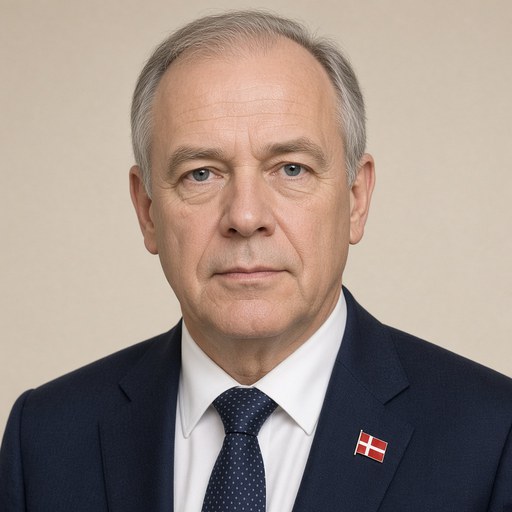
Prime Minister Poul Nyrup Rasmussen's constitutional speech at Gladsaxe Town Hall on June 5, 2000.
 Poul Nyrup Rasmussen · Prime Minister of Denmark
- Context
- Rasmussen delivered a Constitution Day speech at Gladsaxe Town Hall on June 5, 2000, marking Danish constitutional democracy and urging support for an upcoming referendum.
- Main themes
- Danish constitution and democracy, national togetherness and cohesion, welfare state and social equality, employment and economic progress, Social Democratic governance, September 28 2000 referendum, immigration and national identity, public services and welfare, active participation in society, Danish history and constitutional anniversary
- Duration
- ~39 min
- Words
- 4,700
- Sentences
- 148
- Readability
- 52
- Grade
- 13.8
- Syntax
- 3.18
- Vocabulary
- 1.83
Translated from Danish
This is an interview, press conference or exchange with other speakers. It is split into sentences and counted in the corpus, but its sentences are not tagged on the twelve indices.
148 sentences in 17 paragraphs
I am so glad that so many have taken the time to come here this afternoon. I hope you can keep your energy up, even those of you who are standing. I think it is impressive because our constitution is not something that one simply notes. There is a good reason to remember it on the one occasion each year that we do. The special thing about the constitution is that it is about togetherness; it is not so much about myself, it is about some fundamental rights we affirm towards each other, but it is not only about some demands we make of the state; it is also, for me, about the state having to ensure, that society has to ensure, that we can all be here together, that we all have a role to play in our lives and in our common society. The constitution is the glue that binds us together as a nation and as a people, contributing to the cohesion of our country and ensuring our freedom and democracy. I think it is important to remember this because there are so many who are pulling at the Danish population; some believe that we should kick out those who have a different background than ourselves, others believe that we should privatize and cut back on the welfare state and leave it to the free market forces.
I believe it is important that we, on Constitution Day today, also remember that Denmark is at its best when we participate, when we are active, when all people have something they can use their lives for in our country, and in a similar way, it is also important in our history to remember that the periods when Denmark participates, is active and outward-looking, are when we do best. It is that active line that I would so dearly like to see maintained also when we, in due time, have to vote on September 28, 2000. It is not the interest of a small group; it is not really the interest of the elite that we are fighting for when we vote on September 28, 2000. It is the interest of the broad population. I am sure that each and every one of you knows that the upper part of society has always been able to manage, even when things were at their worst for us; it is the broad population we need to think about, how do we provide the broad population with moderate incomes, low incomes, the unemployed, the weakest, the best conditions so that we can stand together? That is the task, and that is what drives us Social Democrats.
Last year we celebrated the 150th anniversary of the Constitution; we did so because we remember and maintain that we are a country, a nation, that we have a sense of togetherness, that we have a democracy and a freedom and a community. It has succeeded for us over 150 years to hold together in maintaining and developing our political life and our democracy. It is not something that comes by itself; it came because we wanted it, because we politically decided it, because we followed up year after year, because we also occasionally made unpopular decisions, but necessary decisions, not just in themselves, but because they were connected to wanting to ensure. And then we Social Democrats came to power 7 years ago, as the chairman mentioned a moment ago, and since 1993 we have all been busy, really busy. In close cooperation, we Danes have managed to bring order to matters, not completely and entirely, much remains to be done, but 200,000 people have found work, which may be the most important of all. Seven years ago, I am sure many of you can remember that you knew someone who had become unemployed. Today, many know someone who has found work, and that is perhaps the most important thing for us Social Democrats. Everyone knows how bad it is if one’s father or mother does not have a job. Everyone knows who will pay the price if there is high unemployment in our country. We have not yet achieved full employment, but the dream that many shook their heads at seven years ago about getting everyone into work, that dream is no longer something one shakes one’s head at. There is something else that is also important. In some places in Europe, the rising employment came at the expense of equality between different social classes; here it did not come despite, but together with greater equality among population groups, and I think that is also worth remembering on Constitution Day today. We have gotten many people into work, but we have not done so by creating greater differences among us; we have done it at the same time as the differences among us have become a little smaller. That is incredibly important because it is also part of being Danish, that few have too much and fewer have too little. We have used the money wisely and properly; we have used it wisely and ensured that there is also something to withstand a new crisis tomorrow or the day after, but at the same time, we have not used the money to give each other tax cuts, but for better services. Children have had it a little better; more parents have been able to go to work because they could have their children looked after; the level of service has improved, not good enough, but it has improved.
It is clear that the task that presents itself now is whether we can ensure that the good progress, the good times we have had in the past 7 years can continue, as the chairman also reminded us. I believe it was Kampmann who once formulated it, make good times better, and back then as now, it applies, can we be sure that we can make the good times we have even better? The answer is that we cannot be sure of that; it cannot happen automatically; it does not happen under any circumstances; it requires, now as before, a clear political line and course; it requires that we know where we want to go; it also requires that we dare to say what it costs us to get there.
My point is that if we clearly and distinctly say to each other that the way forward is still not to promise each other tax cuts, the way forward is still not to privatize our hospitals or let children follow the money, as I usually say with a slight rephrasing, when the Liberal Party suggests it; the way forward is also not to promise a certain population group gold and green forests at the expense of everyone else.
On Constitution Day, I think one should be a little cautious about criticizing many other parties, but still, they do not hold back. If we take the Danish People’s Party, for example, it is no art to promise tax cuts of 270 billion kroner and then cuts of 70 billion kroner; something is missing there, and it is also no art to promise tax cuts if one forgets to tell the population what it is that one proposes from the Danish People’s Party. I, for my part, will not participate in abolishing the state co-financing of unemployment benefits and sick pay; that is what they want. I will also not participate in abolishing the parental leave schemes; that is what they want, and I will not contribute to a situation where an unemployed person who today receives a public AMU course as a condition for being able to get a job financed by the public will now have to pay for it themselves in the future; that is something they forget to mention, but nonetheless, it is in the Danish People’s Party’s own party program, and I think that should also be said. One must stand by what one believes; one must stand by how one thinks development should take shape; one must tell the whole truth, for only then does the population have the broad basis to assess where we should go. I do not believe much in those one-sided recipes, either to the left or to the right; I believe that a party like ours, the Social Democrats, should not just be lured by polling institutes that say if you write off that part of the population that is uncertain about the future and stick to the secure, the enthusiastic, the well-educated, then it will go well. I also do not believe in that part of the polling professors who say if you let one half take care of itself and stick to the others, then it will also go well. I believe that Social Democrats are born to solve the most difficult task, time and time again throughout our history, to keep the population together. We are a party of bridge builders.
We must build bridges in our party, build bridges between the people, the working class, and between the layers of the population in our party. We must build bridges between those who are for the future. Is there something for me? What about my children and my grandchildren? How will I manage? We must build bridges; we must not divide, and that is what it is all about. When we are to shape the future, we must ensure the sustainable society. I, the Social Democrats, and the Government have now introduced the sustainable society. We feel we can do it with honesty and with hope intact now after 7 years. The sustainable society is, for me, the society where we do not quarrel with each other, but where we set a common course. The sustainable society means to me that we say to each other, yes, you also matter, and therefore you should also have a chance, and you should have a job, and you should not fear being lonely when you grow old. We have said that in the sustainable society, there are 4 things we will concentrate on with the money in the future over the next 2, 3, 4 years.
First, it is elderly care; we will ensure everything we can so that elderly care, especially for the weakest in nursing homes and elderly centers, can have a better quality of life, can receive a little more care, can receive acceptable care from the individual person’s perspective. We will ensure that elderly care also involves combating loneliness and the fear of being alone. Secondly, we will ensure that what we have added to our hospitals can continue; there are improvements, and the heart plans are now functioning, but we can do more. The hospitals must have greater quality and must be prioritized just like elderly care. Thirdly, there are our public schools; in many places, they function well, but there are also many places that need investment and renewal in buildings. Finally, fourthly, there are those who have not yet found work; the last groups must get into work. Those are the 4 things we say to each other.
So, should we not concentrate on that and refrain from promising all sorts of other things, but say that these are the 4 things we must now gather our economy and efforts around? We have put that on the agenda, and we have initiated it now. A comprehensive national dialogue with the population about it. We have held 4 national hearings. We have followed up with 21 regional hearings, and we will continue. We do not want to sit in Christiansborg in offices or behind thick walls and decide everything. We want to shape the quality uplift of the 4 areas together with you. You should come and tell us what is wrong, come with good ideas. We cannot promise that all ideas will be implemented in practice, but the useful ones, those that stand the test of time, will. Ideas are good, but ideas only become sustainable when one can see results, and there will be points where we must be measured on whether something came out of the dialogue with the population.
The municipal negotiations are the first test of what came out of the national hearings. People have come in droves and provided many good ideas. The municipal economic negotiations in these weeks are the first step. The next step is my own opening speech in October and the budget proposal for next year. Again, it will not be gold and green forests, but the ideas we can bring forward will also shape my opening speech and the budget for the year 2001, and the next again will be next year’s municipal economic negotiations in the summer of 2001, and the next again will be the budget for the year 2002, and then we just need to get through a parliamentary election in between, but then we will continue from there. I believe all of this is within reach; I also believe it should be said on Constitution Day today that it is not only a question of money; it is also a question of us standing together and helping each other to do better in practice in everyday life. Let me take the elderly sector; I know it myself from my own mother, who lives in an elderly center. Very straightforward, if you have been to Christmas Eve at an elderly center and experienced that there were some old people who did not receive Christmas gifts because no one came, and there were also no one who came to pick up the elderly people so they could go home to their families; they just sat there alone. Suddenly, a friends’ association appears at the elderly center and ensures that there is indeed a gift for the old person, and I think it is incredibly important to learn from that, that the state and municipalities can manage something, but ultimately, if loneliness is to be truly combated in everyday life, it is important that relatives are involved, that neighbors are involved, that a circle of people is formed around our elderly centers in Denmark, where we all help to make things work.
A responsibility for our society is also a responsibility for my neighbor. It is important that we all acknowledge a reasonable responsibility for each other; the neighbor’s problem is not just the neighbor’s; it is, in a way, also mine and my grandparents’ problem. It is not just theirs; it is, in a way, also my task, and in a way, the problem of the weakest is not just theirs or society’s; it is also mine. Constitution Day should today also be our common day of responsibility, not to absolve ourselves of the welfare state’s obligations, but to revive the good old words that have been on our flag and our banners since our childhood in the labor movement, rights and duties and duties and rights; that was what it was all built on, and we also need to remember that again.
Then there is the referendum; now he comes here again and wants us to vote in a referendum – we are somewhat concerned about that, Poul Nyrup, for can we be sure that we can preserve our Danishness – can we be sure to keep what we have? Are we not losing something if we do as you recommend on September 28, 2000? Should we not say no in order to better secure what we have, and we have managed, and the economy is doing well, as you yourself are talking about; why are you asking us to vote yes on September 28, 2000?
What drives you? I must start by saying that what drives me is not the elite or those who are well off, for they will manage just fine. What drives me is the people with average incomes. The other half of society, they are all the ones who drive me, and it is a historically strong feeling that our country, Denmark, has always fared best when we have actively participated in cooperation. We are enormously dependent on the world around us because our welfare and prosperity actually rely on one-third of our entire income being derived from our collaboration with others. If we are to have a good debate about the common currency, and I will truly strive for us to have that, let me say three things. There is no such thing as a stupid question; there is no one here or out there in Denmark who should be worried about asking questions about this. I can understand that many are in doubt; there are no stupid questions, all questions are equally valid and justified. Let us bring it to the table and discuss it thoroughly. Secondly, I believe it is very important to tell the truth about Denmark's position in Europe. Denmark is not a small country that can decide everything completely independently of others. When the truth must come out, one of the most crucial differences from the 1950s and 1960s, when everything was booming, to now, is that our mutual economic dependence is very, very different from what it was 30 to 40 years ago. Let me just give a small example.
Once in the 60s, we could determine the interest rate; if we needed to raise the interest rate to protect ourselves, we could do that, and if we needed to lower the interest rate to attract investments, we could do that. It is not like that anymore. Today, we do not solely determine the interest rate, and those who claim otherwise are not telling the truth; we are deeply dependent on others. We have seen over the last 2, 3, 4 years that every time the Deutsche Bundesbank and now today with the European Central Bank raises the interest rate, it takes 2 hours – then we also raise the interest rate at Danmarks Nationalbank – in fact, it doesn’t even take 2 hours – last time I received a little note on my desk while I was sitting in the Folketing, it took 14 minutes. Our independence is 14 minutes of deliberation time to raise the interest rate just as much as the others. I am not saying this to criticize anyone or to criticize you who are in doubt or to criticize you who have decided to say no. I am just asking that we take a moment to think about what our country's situation is, and since our country is so enormously dependent on other countries, how do we best give our country the best opportunities to succeed in the future? That was my second point. The third point I want to mention to you is also something that has happened over the last 30 years. I remember back 30 years ago, there was no such thing as international speculative capital. It did not mean as much as it does now. Back then, we talked about how multinational forces and companies had to be tamed. We could not allow Coca-Cola and others to exploit the poor labor force in developing countries, build on child labor, and refuse to recognize labor rights and the right to organize and negotiate a collective agreement and fight for their rights. I had almost forgotten it and did not believe it was possible, but I actually believe that the old dream of having a world where there is a human face around market forces is no longer history or a fantasy, but is within reach. All the older people in Denmark who think of their children and grandchildren when they cast their vote on September 28, 2000. I would say do not think only of yourselves; you can surely manage on your own, even if it becomes a no, I have no doubt about that, but also think about what is best for your children and grandchildren. By that, I mean it is like an elite driver who cancels their car insurance; they cannot be completely sure that they will not run into a car accident in the future. We should not say no to taking out insurance against international speculation. We should say yes, in my best opinion. Many here today can remember just about 15 to 20 years back when we had the oil crisis in Denmark in 1974 and 1979. I was somewhat younger back then than you, but I can at least remember seeing many of the people who became unemployed back then. But why did they become unemployed during the great oil crisis of the 1970s? They did so because we had not learned to cooperate; they did so because we thought we could devalue our way out of the crisis, but so did everyone else, and the result was that hundreds of thousands of Danish workers and employees ended up unemployed, and that is what drives me; that is what I do not want to see again.
That is what we must not see again, and that is what solidarity is about. I would so much dislike to see that after a no, if it were to be a no on September 28, 2000, and a couple of years later we run into some international crisis because no one can guarantee that there will not be an international crisis in the future, and I would so much dislike to see some say to themselves, if only we had been members together with the others so we could protect ourselves; that must not happen, and that is why I say this, also for the sake of this small country Denmark, which has done well and strongly on its own, but certainly also by being together with others, that this small country Denmark fares best in a community also in 10 years, 20 years, and 30 years. This little Danish boat, which rocks a bit on the frothing sea, needs some good large tugboats alongside to which we can throw ropes if the waves rise too high and crash over the railing, and I do not want to see Danish workers lose their jobs again, as in the 1970s, because we are isolated, because we could not figure out how to cooperate. The big ones will manage just fine; it is the small countries I am talking about. We have rules to protect the little man in Denmark and the little woman, excuse me. The big ones will always manage, that is why we also have rules in Europe to protect the small countries from the big ones; otherwise, power will reside with the big ones. When some say to me, yes, but it does not matter economically whether we say yes or no on September 28, 2000, it is only political, then I must say to you – thank you very much – can you remember how much political time we have spent when the economy has gone poorly here in the country? I can remember Per Hækkerup's August Agreement in the 1970s. It was both politics and economics; it is always politics and economics – they are interconnected; the economy is not a goal in itself, but if the economy is not under control, then we do not do anything politically other than talk about the economy. Politics and economics cannot be separated in reality, and let me therefore say – yes, it is true that an interest rate difference of ¾% may not mean much in the grand scheme of things, but an interest rate difference of ¾% means a lot for investments in our country, and it also means a lot for the half of the population that has taken flexible loans in recent years, and it also means a lot for those who need to take out new loans to change houses or something else. Some say to me that I cannot be ashamed to say that – I say, I must tell about it if the whole truth is to come out, and excuse me, an interest rate change also means that things are going in the wrong direction with job losses; some say it is only 6,000 jobs – I say every single job lost is one too many – some say it will develop and balance out in the long term – I say we do not have time to wait that long, and I do not think there is any reason for people to see their real wages decrease to achieve the same number of jobs. A no unfortunately means that we do not have the secure course that we have now. A yes means that we can continue the stable progress we have now. It is clear that it is a big decision to move from our own currency to a common currency; I will be the first to say that, and it is clear that it also entails that we do not have the same freedom of action when it comes to devaluing our krone or appreciating our krone – I will also be the first to say that.
But it is equally certain that we are in a different time now than we were 10 or 15 years ago, and we must protect ourselves against speculation from international economies that are faceless and just suddenly appear. You must remember that there is not a stock exchange that is not open somewhere on the globe 24 hours a day.
For me, it is about securing Denmark in community and not in isolation; for me, it can be metaphorically equated with the fact that we are best off being out on the football field fighting our battle rather than sitting in the locker room or on the bench, and for me, it is also about a country like ours not being isolated. We are not Norway with billions of cubic meters of oil and natural gas; we are not Iceland with 200 nautical miles and plenty of fish; we are not Switzerland with Swiss watches; we are Denmark, and we are right here, and we must think of each other, and we must have a broad outlook and not inwardness, and therefore I must also say to SF and the Red-Green Alliance – I do not understand you in all good nature and in all friendship; I do not understand you. How can the left in Denmark turn against a cooperating Europe when the whole rest of the left in Europe supports a common currency? What is the alternative we are now to develop when there is no alternative? What is it that we are starting over with when we cannot start over; the others are not in doubt, and they will continue their cooperation even if we choose isolation. Denmark does not benefit from isolation. Denmark benefits from community, and Denmark is best served by having the stable foundation from which we can continue the fight for a sustainable society, for the elderly, for the sick, for the last groups that need to enter the labor market, and my personal experience from my own family has been to see who gets hit when there is a crisis in our country. Who is it that gets hit when the economy is not fully booming – yes, again, it is not those at the top – it is ordinary people, and it is the poorest in our country who get hit, and I think we should remember that; it is about politics to be there where decisions are made; it is about a new European vision where we once and for all must create peace and tolerance among all peoples in Europe so that the war we knew does not return again. There was a little girl who came to me just recently and said, if you could summarize in just two words why my father and mother should vote yes on September 28, 2000, what would you say, she asked. She was not very old, maybe 6 or 7 years, so I said for your sake, and that is how I will conclude.
The original Danish. The tags above are read on the English translation's sentences.
Hvor er jeg dog glad for at så mange har ofret nogle timer for at komme her i eftermiddag. Jeg håber I kan holde kraften gående også jer der står op. Jeg synes det er flot, fordi vores grundlov er ikke en, som man bare noterer sig. Der er en god grund til at mindes den ene gang om året vi gør. Det særlige ved grundloven er, at den handler om sammenhørighed, den handler ikke så meget om mig selv, den handler om nogle grundlæggende rettigheder vi bekræfter overfor hinanden, men den handler ikke alene om nogle krav vi stiller til staten, den handler også for mig om, at staten skal stå inde for, samfundet skal stå inde for, at vi skal kunne være her alle sammen, at vi alle sammen har en rolle at spille i vores liv og i vores fælles samfund. Grundloven er det kit der binder os sammen som nation og som folk, der bidrager til vores lands sammenhængs kraft og den sikrer vores frihed og demokrati. Jeg synes det er vigtigt at huske, fordi er er så mange, som river i den danske befolkning, nogle mener, at vi skal sparke de mennesker ud af landet, som har en anden baggrund end os selv, andre mener, at vi skal privatisere og nedskrive velfærdssamfundet og overlade det til de frie markedskræfter.
Jeg tror det er vigtigt, at vi på Grundloven i dag også husker, at Danmark har det bedst når vi deltager, når vi er aktive, når alle mennesker har noget de kan bruge deres liv til i vores land, og på tilsvarende måde er det også vigtigt i vores historie at huske på, at de perioder, hvor Danmark deltager, er aktive og udadvendt, da går det os bedst, det er den aktive linie jeg så gruelig gerne ville se fastholdt også når vi til sin tid skal stemme den 28. september 2000. Det er jo ikke en enkelt lille gruppes interesse, det er jo i virkeligheden heller ikke elitens interesse vi slås for, når vi skal stemme den 28. september 2000. Det er den brede befolknings interesse. Jeg er sikker på, hver eneste af jer godt ved, at den øverste del af samfundet har jo altid kunnet klare sig, også da det gik dårligst for os, det er den brede befolkning vi skal tænke på, hvordan giver vi den brede befolkning med jævne indkomster, lavindkomster, de arbejdsløse, de svageste de bedste vilkår for at vi kan stå sammen, det er det der er opgaven og det er det, der driver os socialdemokrater.
Sidste år fejrede vi Grundlovens 150 års jubilæum, det gjorde vi fordi vi mindes og fastholder, at vi er et land en nation, at vi har en sammenhørighed, at vi har et demokrati og en frihed og et fællesskab, det er lykkedes os gennem 150 år, at holde sammen derom at fastholde og udvikle vores politiske liv og vores demokrati. Det er jo ikke noget, der kommer af sig selv, det kom fordi vi ville det, fordi vi politisk havde besluttet det, fordi vi fulgte op år for år, fordi vi også af og til traf upopulære beslutninger, men nødvendige beslutninger ikke bare i sig selv, men fordi det hang sammen med at ville det sikre. Og så kom vi Socialdemokrater så til for 7 år siden, som formanden sagde det for et øjeblik siden og siden 1993 har vi alle sammen haft travlt, rigtigt travlt. I tæt samarbejde har vi danskere fået bragt orden i sagerne ikke fuldt og helt, meget skal gøres, men 200.000 mennesker er kommet i arbejde, hvad der måske er det vigtigst af alt. For 7 år siden er jeg sikker på mange af jer kan huske, at man kendte en der var blevet arbejdsløs. I dag kender mange en der er kommet i arbejde og det er måske for os Socialdemokrater det vigtigste af alt. Alle ved, hvor slemt det er, hvis ens far eller mor ikke har arbejde. Alle ved, hvem det er, der kommer til at betale prisen, hvis der er stor arbejdsløshed i vores land. Vi har ikke fået fuld beskæftigelse endnu, men den drøm mange rystede lidt på hovedet af for 7 år siden om at få alle i arbejde, den drøm ryster man jo ikke længere på hovedet af. Der er noget andet, der også er vigtigt. Nogle steder i Europa kom den stigende beskæftigelse på bekostning af lighed mellem de forskellige samfundslag, her kom den ikke på trods af, men sammen med større lighed mellem befolkningsgrupper, det synes jeg også er værd at huske på Grundlovsdag i dag. Vi har fået mange mennesker i arbejde, men vi har ikke fået det ved at skabe større forskelle mellem os, vi har fået det samtidigt med at forskellene mellem os er blevet lidt mindre, det er fantastisk vigtigt, for det er også det at være dansk, at få har for meget og færre for lidt. Vi har brugt pengene fornuftigt og ordentligt; vi har brugt dem klogt og sikret os, at der også var til at stå imod en ny krise i morgen eller i overmorgen, men samtidig brugt pengene ikke til at give hinanden skattelettelser, men til bedre service. Børnene har fået det lidt bedre, flere forældre har kunnet komme i arbejde, fordi de kunne få passet deres børn, serviceniveauet er blevet bedre, ikke godt nok, men bedre er det blevet.
Det er klart den opgave der melder sig nu. Kan vi nu sikre os, at den gode fremgang, de gode tider vi har haft i de 7 år kan fortsætte, sådan som formanden også mindede os om. Jeg tror det var Kampmann, der engang formulerede det, gør gode tider bedre og dengang som nu gælder det jo, kan vi være sikre på, at vi kan gøre dem bedre de gode tider vi har og svaret er, at det kan vi ikke være sikre på, det kan ikke foregå automatisk, det sker ikke under hvilke som helst vilkår, det kræver nu som før klar politisk linie og kurs, det kræver, at vi ved hvor vi vil hen, det kræver også, at vi tør sige det, hvad det koster os at komme derhen.
Min pointe er, at hvis vi klart og tydeligt siger til hinanden vejen fremover er stadigvæk ikke at love hinanden skattelettelser vejen fremover er stadigvæk heller ikke at privatisere vores hospitaler eller lade børnene følge pengene, som jeg plejer at sige med en lettere omskrivning, når partiet Venstre stiller det i udsigt; vejen fremover er heller ikke at love en bestemt befolkningsgruppe guld og grønne skove på bekostning af alle andre.
På Grundlovsdagen skal man være lidt varsom synes jeg med at kritisere mange andre partier, men alligevel de holder sig jo ikke tilbage. Hvis vi nu tager Dansk Folkeparti f.eks., det er jo ikke nogen kunst at love skattelettelser på 270 mia. kr. og derefter besparelser på 70 mia. kr., så mangler der ligesom noget og det er jo heller ikke nogen kunst at love skattelettelser, hvis man glemmer at fortælle befolkningen, hvad det så er man foreslår fra Dansk Folkeparti, jeg vil i hvert tilfælde ikke være med til at afskaffe den statslige medfinansiering af dagpenge og sygedagpenge, det er jo det man vil. Jeg vil heller ikke være med til at ophæve børnepasningsorlovsordningerne, det er jo det man vil og jeg vil heller ikke medvirke til, at en arbejdsløs som i dag får et offentligt AMU-kursus som betingelse for at kunne komme på arbejde finansieriet af det offentlige, det skal han nu selv betale fremover, det glemmer man at fortælle, men ikke desto mindre står det i Dansk Folkepartis eget partiprogram og det synes jeg også skal siges, man må stå ved det man mener, man må stå ved, hvordan man synes udviklingen skal forme sig, man må fortælle hele sandheden for først der får befolkningen det brede grundlag for at vurdere, hvor vi skal hen. Jeg tror ikke meget på de der ensidige opskrifter hverken til venstre eller til højre, jeg tror på, at et parti som vores Socialdemokratiet ikke bare skal lade sig lokke af meningsmålingsinstitutter der siger, hvis du afskriver den del af befolkningen, der er usikker på fremtiden og holder sig til de sikre, de begejstrede, de veluddannede, så skal det nok gå godt. Jeg tror heller ikke på den del af meningsmåligsprofessorerne der siger, hvis du nu lader den ene halvdel passe sig selv og holder dig til de andre så skal det også nok gå godt. Jeg tror på, at Socialdemokrater er født til at løse den vanskeligste opgave, hver gang og hele tiden gennem vores historie, holde sammen på befolkningen. Vi er et parti af brobyggere.
Vi skal bygge broer i vores parti, bygge broer mellem folket, slaget og mellem befolkningens lag i vores parti. Vi skal bygge broer mellem dem, der er for fremtiden. Er der noget til mig? Hvad med mine børn og mine børnebørn? Hvordan skal jeg klare mig? Vi skal bygge bro, vi skal ikke splitte og det er det, det hele går ud på, når vi derfor skal forme fremtiden skal vi sikre det holdbare samfund. Jeg, Socialdemokratiet og Regeringen har introduceret det holdbare samfund nu. Vi føler vi kan gøre det ved ærlighed og med fortrøstningen i behold nu efter 7 år. Det holdbare samfund er for mig det samfund, hvor vi ikke skændes med hinanden, men hvor vi sætter os en fælles kurs. Det holdbare samfund er for mig ensbetydende med, at vi siger til hinanden, ja du har også betydning og derfor skal du også have en chance og du skal have et job og du skal ikke frygte at blive ensom når du bliver gammel. Vi har sagt i det holdbare samfund, der er 4 ting vi vil koncentrere os om med pengene i fremtiden i de næste 2, 3, 4 år.
Det er for det første ældreomsorg, vi vil sikre alt, hvad vi kan for, at ældre omsorgen specielt de svageste på plejehjem og ældrecentre kan få en bedre livskvalitet, kan få lidt mere omsorg, kan få en acceptabel omsorg fra det enkelte menneskes synspunkt. Vi vil sikre, at den ældreomsorg også indebærer, at vi bekæmper ensomheden og frygten for, at blive alene for det andet vil vi sikre, at det vi har tilført vores sygehuse kan fortsætte, der er forbedringer og hjerteplanerne fungerer nu, men vi kan gøre mere. Sygehusene skal have en større kvalitet og skal prioriteres ligesom ældreomsorgen. For det tredje er der vore Folkeskoler, mange steder fungerer de godt, men der er også mange steder brug for investeringer og fornyelse i bygninger og endelig for det fjerde er der dem, der ikke har fået arbejde endnu, de sidste grupper skal i arbejde. Det er de 4 ting vi siger til hinanden.
OK skal vi så ikke koncentrere os om det og lade være med at love alt muligt andet, men sige, at det er de 4 ting vi nu må samle økonomi og kræfter, det har vi sat på dagsorden og det har vi igangsat nu. En omfattende national dialog med befolkningen om. Vi har holdt 4 nationale høringer. Vi har fulgt op med 21 regionale høringer og vi fortsætter. Vi vil ikke have, at vi sidder inde på Christiansborg i kontorerne eller bag de tykke murer og beslutter alle ting. Vi vil forme de 4 områders kvalitetsløft sammen med jer. I skal komme og fortælle, hvad der er galt, komme med gode ideer. Vi kan ikke love, at alle ideer bliver omsat i praksis, men de brugbare, dem der står distancen bliver det. Ideer er gode, men ideer bliver først holdbare, når man kan se resultater og der bliver da punkter, hvor vi skal måles på om der nu kom noget ud af den dialog med befolkningen.
Kommuneforhandlingerne er den første test på, hvad der kom ud af de nationale høringer. Folk er kommet i massevis og har givet masser af gode ideer. Kommune økonomiforhandlinger i disse uger er det første trin. Det næste trin er min egen åbningstale til oktober og Finanslovsforslaget for næste år. Igen bliver det ikke guld og grønne skove, men de ideer vi kan tage frem kommer også til at præge min åbningstale og Finansloven år 2001 og det næste igen ja det bliver næste års Kommune økonomiforhandlinger til sommeren år 2001 og næste igen bliver så Finansloven til år 2002 og så skal vi lige have klaret et Folketingsvalg ind imellem, men så fortsætter vi også derudaf. Alt det tror jeg er inden for rækkevidde, jeg tror også det skal siges på Grundlovsdagen i dag, at det ikke alene er et spørgsmål om penge, det er også et spørgsmål om, at vi står sammen og hjælpes om at gøre det bedre i praksis i hverdagen. Lad mig tage det med ældresektoren, jeg ved det jo selv fra min egen mor, som bor på et ældrecenter. Meget lige ud af posen, hvis man har været til juleaften på et ældrecenter og oplevet, at der var nogle gamle mennesker, som ikke fik julegaver, fordi der var ikke nogen, der kom og der var heller ikke nogle, der kom og hentede de ældre mennesker for, at de kunne komme hjem til familien, de sad bare der alene. Pludselig dukker der så en vennekredsforening op på det ældrecenter og sørger for, at der altså er en gave til det gamle menneske og det synes jeg er fantastisk vigtigt at tage ved lære af, at staten og kommunerne kan godt klare noget, men til syvende og sidst, hvis ensomheden skal bekæmpes virkelig i hverdagen så er det vigtigt, at de pårørende er med, at naboen er med, at der dannes en ring af mennesker omkring vores ældrecentre i Danmark, hvor vi alle sammen hjælper til med at få tingene til at fungere.
Et ansvar for vores samfund er også et ansvar for min nabo. Det er vigtigt, at vi alle sammen vedstår os et fornuftigt ansvar for hinanden, naboens problem er ikke kun naboens, det er egentlig et eller andet sted også mit og mine bedsteforældres problem. Det er egentlig ikke bare deres, det er et eller andet sted også min opgave, og på en måde er de svagestes problem ikke kun deres eller samfundets, det er også mit. Grundlovsdag skal i dag også være vores fælles ansvarsdag ikke for at fraskrive os velfærdssamfundets forpligtigelser, men for at genoplive de gode gamle ord, som jo har stået på vores flag og vores faner siden vores barndom i arbejderbevægelsen, rettigheder og pligter og pligter og rettigheder, det var det, det hele byggede på og det har vi også brug for at mindes om igen.
Så er der den folkeafstemning, nu kommer han så her igen og vil have os til at stemme ved en folkeafstemning – vi er noget bekymret for det Poul Nyrup, for kan vi nu være sikker på, at vi kan bevare vores danskhed – kan vi være sikre på at beholde det vi har? Mister vi nu ikke noget, hvis vi gør som du anbefaler den 28. september 2000. Burde vi ikke sige nej for, at vi bedre kan sikre det vi har og vi har dog klaret os og det går jo godt med økonomien, som du selv står og taler om, hvorfor beder du os så om at stemme ja den 28. september 2000.
Hvad er det der driver dig? Jeg må jo starte med at sige, det der driver mig det er ikke eliten eller dem, der har deres på det tørre for de skal såmænd nok klare sig. Det der driver mig er folk med jævne indkomster. Den anden halvdel af samfundet det er alle dem, der driver mig og det er en historisk stærk følelse af, at vores land Danmark har altid haft det bedst, hvis vi har deltaget aktivt i et samarbejde. Vi er kolossalt afhængig af verden omkring os, fordi vores velfærd og velstand bygger i virkeligheden for 1/3 af hele vores indtægt på, at vi netop er sammen med de andre. Hvis vi skal have en god debat om den fælles valuta, og det vil jeg virkelig bestræbe mig på vi får, så lad mig sige 3 ting. Der findes ikke noget dumt spørgsmål, der er ingen her eller ude omkring i Danmark, der skal være bekymret for at stille spørgsmål til det her. Jeg kan godt forstå, at mange er i tvivl, der findes ikke nogle dumme spørgsmål alle spørgsmål er lige gode og berettiget. Lad os få det op på bordet og få det diskuteret igennem og for det andet tror jeg det er meget vigtigt at fortælle sandheden om Danmarks placering i Europa. Danmark er ikke et lille land, der kan beslutte alting fuldstændigt uafhængig af de andre. Når sandheden skal frem er en af de mest afgørende forskelle fra 1950’erne og 1960’erne, hvor det hele buldrede derudaf, og så nu, hvor vores gensidige afhængighed økonomisk er meget, meget anderledes end den var for 30 – 40 år siden. Lad mig bare givet et lille eksempel.
En gang i 60’erne var det sådan, at der kunne vi bestemme renten, hvis vi havde brug for at sætte renten op for at beskytte os, så kunne vi gøre det, hvis vi havde brug for at sætte renten ned for at tiltrække investeringer, så kunne vi gøre det. Sådan er det slet ikke mere. I dag bestemmer vi ikke alene renten, og dem der påstår det, taler ikke sandt, vi er dybt afhængig af de andre. Vi har set igennem de sidste 2, 3, 4 år, at hver gang Deutsche Bundesbank og nu i dag med den Europæiske Centralbank hæver renten, så går der 2 timer – så hæver vi også renten i Danmarks Nationalbank – ja der går ikke engang 2 timer – sidst fik jeg en lille seddel ind på bordet, da jeg sad i Folketinget, der gik 14 minutter. Vores selvstændighed er 14 minutters betænkningstid til at hæve renten lige så meget som de andre. Jeg siger det ikke for at kritisere nogle eller for at kritisere jer, der er i tvivl eller for at kritisere jer der har bestemt jer for at sige nej. Jeg beder bare om, at vi et øjeblik tænker over, hvad vores lands situation er og når det nu er sådan, at vores land er så kolossalt afhængig af de andre lande, hvordan giver vi så bedst vores land de bedste muligheder for at klare sig i fremtiden. Det var mit 2. punkt. Det 3. punkt jeg vil nævne for jer, det er også noget, der er sket de sidste 30 år. Jeg kan huske dengang for 30 år siden, da var der jo ikke noget der hed international spekulations kapital. Det var ikke noget der betød så meget, som det gør nu. Dengang talte vi om, at nu måtte de multinationale kræfter og selskaber tæmmes. Vi kunne ikke have, at Coca-Cola m.fl. udnyttede den fattige arbejdskraft i u-landende, byggede på børnearbejde og nægtede at anerkende faglige rettigheder og retten til at organisere sig og tegne en overenskomst og kæmpe for sin ret. Jeg havde næsten glemt det og ikke troet det var muligt, men jeg mener i virkeligheden, at den gamle drøm om at få en verden, hvor der er et menneskeligt ansigt omkring markedskræfterne ikke længere er historie eller fantasifostre, men er indenfor rækkevidde. Alle de ældre mennesker i Danmark, som tænker på deres børn og deres børnebørn, når de skal sætte kryds den 28. september 2000. Der vil jeg sige tænk ikke alene på jer selv, I kan sikkert godt klare jer selv, også hvis det bliver et nej, det er jeg ikke i tvivl om, men tænk også på, hvad der er bedst for jeres børn og børnebørn. Med det mener jeg, det er som en elitebilist, der opsiger sin bilforsikring, så kan han jo ikke være fuldstændig sikker på han ikke engang i fremtiden løber ind i en bilulykke. Vi skal ikke sige nej til at tegne en forsikring mod international spekulation. Vi skal sige ja efter min bedste opfattelse. Der sidder mange her i dag der kan huske bare ca. 15 – 20 år tilbage dengang vi havde oliekrise i Danmark i 1974 og 1979. Jeg var noget yngre dengang som I, men jeg kan i hvert tilfælde huske, at jeg har set mange af de mennesker, der blev arbejdsløse dengang, men hvorfor blev de det under den store oliekrise i 1970’erne. Det blev de, fordi vi ikke havde lært at samarbejde, det blev dem, fordi vi troede vi kunne devaluere os ud af krisen, men det gjorde alle de andre også og resultatet blev at 100.000 vis af danske arbejdere og funktionærer kom ud i arbejdsløshed og det er det, der driver mig, det er det jeg ikke vil se igen.
Det er det vi ikke skal se igen og det er det solidaritet handler om. Jeg vil så nødig se, at vi efter et nej, hvis det måtte blive et nej den 28. september 2000 og et par år senere løber ind i en eller anden international krise for
ingen
kan garantere, at der ikke engang i fremtiden kommer en international krise og der vil jeg så nødig se, at nogle siger til sig selv, havde vi dog bare været medlem sammen med de andre så vi kunne værne os, det må ikke ske, og derfor er det jeg siger, også af hensyn til, at dette lille land Danmark, som har klaret sig godt og stærkt på egen kraft, men sandelig også i kraft af, at være sammen med de andre, at dette lille land Danmark klarer sig bedst i et fællesskab også om 10 år og 20 år og 30 år. Denne lille danske båd, der gynger lidt på det frådende hav skal have nogle gode store bugserbåde ved siden af man kan hive tove over til, hvis bølgerne står for højt og slår ind over rælingen og jeg vil ikke en gang til som i 1970’erne, se danske arbejderfunktionærer miste deres job, fordi vi er isoleret, fordi vi ikke kunne finde ud af at samarbejde. De store skal jo nok klare sig, det er de små lande jeg taler om. Vi har regler for at beskytte den lille mand i Danmark og lille kvinde undskyld. De store skal jo altid klare sig, derfor har vi også regler i Europa for at beskytte de små lande mod de store, ellers sidder magten jo hos de store. Når nogle siger til mig, ja men det betyder ikke noget økonomisk om vi siger ja eller nej den 28. september 2000, det er kun politisk, så må jeg sige til jer – tak skal I ellers have – kan I huske hvor meget politisk tid vi har brugt, når det gik dårligt med økonomien her i landet. Jeg kan huske Per Hækkerups august-forlig i 1970’erne. Det var både politik og økonomi, det er altid politik og økonomi – det hænger sammen, økonomi er ikke et mål i sig selv, men hvis der ikke er styr på økonomien, så bestiller vi ikke andet politisk end at snakke økonomi. Politik og økonomi kan ikke skilles ad i realiteten og lad mig derfor sige – ja det er rigtigt, at en renteforskel på 3⁄4% måske ikke betyder så meget i den store sammenhæng, men en renteforskel på 3⁄4% betyder altså meget for investeringerne i vores land og det betyder altså også meget for den halvdel af befolkningen, der har taget flex-lån de seneste par år og det betyder altså også meget for dem, der skal tage nye lån for at skifte hus eller noget andet. Nogle siger til mig, at det kan jeg ikke være bekendt at sige – jeg siger, det må jeg da fortælle om, hvis hele sandheden skal frem og undskyld mig en renteændring betyder altså også, at det går i den forkerte retning med tab af arbejdspladser, nogen siger det er kun 6.000 arbejdspladser – jeg siger hver eneste arbejdsplads, der er tabt er en for meget – nogen siger det udvikler sig og udligner sig på langt sigt – jeg siger så længe har vi ikke tid til at vente og jeg synes ikke der er nogen grund til, at folk skal gå ned i realløn for at opnå det samme antal arbejdspladser. Et nej er desværre ensbetydende med, at vi ikke har den sikre kurs som vi har nu. Et ja er ensbetydende med, at vi kan fortsætte den stabile fremgang vi har nu. Det er klart det er en stor beslutning at tage at gå fra egen valuta til fællesvaluta, det skal jeg være den første til at sige og det er klart det indebærer også at vi ikke har den samme handlefrihed, når det gælder at nedskrive vores krone eller opskrive vores krone – det skal jeg også være den første til at sige.
Men det er lige så givet, at vi er i en anden tid nu end vi var for 10 eller 15 år siden, og vi skal beskytte os mod spekulation fra international økonomi som er ansigtsløs og bare er der pludseligt. I skal huske på, at der er ikke en fondsbørs, der ikke er åben et eller andet sted på kloden alle 24 timer.
For mig handler det om, at sikre Danmark i fællesskab og ikke i isolation, for mig kan det billedligt talt sidestilles med, at vi har det bedst med at være ude på fodboldbanen og kæmpe vores kamp end at sidde i omklædningsrummet eller reservebænken og for mig handler det altså også om, at et land som os ikke skal isoleres. Vi er ikke Norge med milliardvis af kubikmeter olie og naturgas vi er ikke Island med 200 sømil og masser af fisk vi er ikke Schweiz med Schweizerure, vi er Danmark og vi er lige her og vi skal tænke på hinanden og vi skal have udsyn og ikke indadvendthed og derfor må jeg også sige til SF og Enhedslisten – jeg forstår jer ikke i al godmodighed og i al venskabelighed, jeg forstår jer ikke. Hvordan kan venstrefløjen i Danmark vende sig imod et samarbejdende Europa når hele resten af venstrefløjen i Europa går ind for en fællesvaluta, hvad er det for et alternativ vi nu skal udvikle, når der ikke er et alternativ. Hvad er det for noget vi starter forfra med, når vi ikke kan starte forfra, de andre er ikke i tvivl og de vil fortsætte deres samarbejde, selvom vi vælger isolation. Danmark er ikke tjent med isolationen. Danmark er tjent med fællesskabet og Danmark er bedst tjent med, at vi får det stabile grundlag, hvor vi kan fortsætte kampen for det holdbare samfund, for de ældre, for de syge mennesker, for de sidste grupper der skal ind på arbejdsmarkedet og min personlige erfaring fra min egen familie har jo været at se, hvem der bliver ramt, når der er krise i vores land. Hvem er det, der bliver ramt når der ikke er fuldt fart på i økonomien – ja igen det er jo ikke dem i toppen – det er almindelige mennesker og det er de fattigste i vores land, der bliver ramt, og det synes jeg vi skal huske, det handler om politik at være med der, hvor der besluttes, det handler om ny europæisk vision, hvor vi en gang for alle skal skabe fred og fordragelighed mellem alle folk i Europa, så den krig vi kendte ikke kommer tilbage igen. Der var en lille pige, som kom til mig for ganske nylig og sagde, at hvis du bare med 2 ord kunne sammenfatte, hvorfor min far og mor skal stemme ja den 28. september 2000, hvad vil du så sige spurgte hun. Hun var ikke ret gammel måske 6 eller 7 år, så sagde jeg for din skyld og det vil jeg også slutte med at sige.