




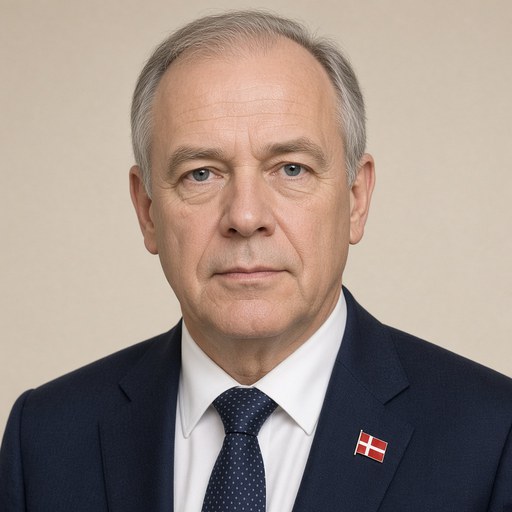
Prime Minister Poul Nyrup Rasmussen's Midsummer speech June 23, 2000, Nyborg Strand.
 Poul Nyrup Rasmussen · Prime Minister of Denmark
- Context
- Rasmussen addressed a Midsummer gathering at Nyborg Strand on June 23, 2000, making the case for Danish participation in the eurozone and European cooperation.
- Main themes
- Danish national identity, European integration and the euro, community and solidarity, the Great Belt Bridge as symbol of progress, overcoming doubt about change, globalization and economic interdependence, Danish values versus nationalism, poverty reduction and international solidarity, Denmark's influence in Europe
- Duration
- ~13 min
- Words
- 1,555
- Sentences
- 73
- Readability
- 63
- Grade
- 9.6
- Syntax
- 2.95
- Vocabulary
- 1.89
Translated from Danish
The broad sphere of national life a sentence belongs to. Every sentence has an Arena, so it is the denominator the other indices are read against.
Other73 sentences in 9 paragraphs
Congratulations on the wonderful tradition you have every year. One can never go wrong with community and togetherness.
But also congratulations on the magnificent Great Belt Bridge. We Danes have truly become a nation of bridge builders, but many were still skeptical before the Great Belt Bridge was completed. Would this work? Did the bridge mean fewer jobs and less prosperity? How would Nyborg manage, and why couldn't we just keep what we already had, many said. And I am sure you can remember that. When the bridge was finally there, I believe even the greatest doubter had to give in. Look at Nyborg, look at the many towns around us. Most places have never flourished more than they do now, and that has essentially been the case time and again over the years; when changes came, we were in doubt. When the new was to be built, we were not sure, but when we held on and carried out the course we had set, it went well.
The Danish is so beautiful, and when it comes down to it, what is Danishness really? One of the things I personally value most about being Danish is the ability our country has always had to simultaneously uphold our values and be in solidarity with the countries around us, which, just as much as us, influence the world. Because we have never been a closed country; we have never been a nation that was self-sufficient. H.C. Andersen said, "to travel is to live." Holger Drachmann wrote it in his midsummer song, "the journey through life – around the world." Halfdan Rasmussen writes it in one of his very beautiful poems, "there are so many countries and millions of children, whom I love all together."
We are one big family, and we live in peace and quiet and take good care of the earth, so it is nice to live here. I have always believed that Danishness is more than money. The Dutch are just as Dutch as they have always been after they shared currency with others. The Finns are just as Finnish as they have always been, but perhaps they have taken the consequences. That we live in a new world, where we must tell each other that if we want to have it in the world as we have it here in our part, then money should not dictate on their terms alone. That is the best thing about Danishness. I believe we should be proud of our values and the national, but at the same time, we must be aware that national values are something different from nationalistic inward-looking petty attitudes. We should not isolate ourselves; we should not turn inward. We should not let intolerance take over. It is fair enough to be in doubt; we were also in doubt about the bridge, and I tell you, I was indeed also in doubt throughout all the years in Europe, but my doubt was removed at a certain point when it became clear to me that Denmark cannot fight its battle for community and solidarity and care for the weakest in our country if we do not do it together with others. Cooperation has always been our strength between the regions, and now we have even built a bridge to that. Yes, we have even built a bridge to Sweden, so there is no lack of tolerance in the Danish people. It is a tradition that we can rightly be proud of.
We are involved where decisions are made and not outside. May I tell you that the other day it struck me when visiting some of the countries to the south in Europe – Portugal, for example, how poor that country was ten years ago, how poor Portuguese workers were ten years ago. What solidarity really is, is also that the struggle of others out of their poverty is in a way our struggle; our wealth and our welfare only become truly beautiful when we can see that others are also doing better, when poor Portuguese people can also see a future, a job, work in security. And that is where I would so dearly like to go this evening.
Dear everyone, the world is changing now much faster than before. Denmark's pensioners tell themselves that back when I was young and in the labor market, it depended solely on us in Denmark. Now we are very dependent on the countries around our own country. Therefore, it is our task to constantly ask ourselves the question of how we ensure that Denmark is best positioned, strongest positioned with the greatest influence on our own future. For one thing is certain, the international will not disappear. The changes that come to us from outside will not go away; there is not an hour in the 24 hours of the day where there is not somewhere on the globe a financial market that is open and money speculators who buy and sell Danish jobs as well. Therefore, we need to secure our country where decisions are made that affect our country, and there are some who say to me: Yes – but Poul, can't it just wait, can't we just postpone it? And things are going well in Denmark now – you say it yourself, and that is true, but we cannot wait, we cannot postpone it, because just think if in 5 or 6 years we really need help from others, then it is not certain that we are qualified to receive help from others. It is a bit like the elite driver who considers canceling his own car insurance because things are going well right now. I am sure that far, far most Danes prefer to have control over their own situation. We want influence over how Nyborg's municipal council is composed because Nyborg's municipal politics is about providing Nyborg with the best conditions. We want influence over how our country's parliament is composed, and therefore we must also have influence over how our neighbors' decisions affect us. Like the union representative who wants to ensure that employers do not determine wages and working conditions for his employees without him being there.
Dear everyone, we are in solidarity with each other when it really matters. Young and old want the best for each other; that is the core of the Danish welfare society. That we want something together, that our neighbors are not just an indifferent size, that we care about each other. We must protect our society. We must take good care of our society. We must help each other, and every single Dane must know that if one gets into trouble, there is a society with a strong and helping hand. We have come a long way, but we must go much further, and we must do it together, both inwardly and outwardly. We have initiated a series of public hearings, which we summarize under the heading "the sustainable society." We want this country to continue to hold together. We want that regardless of whether one is named Rasmussen, Jensen, or Hamid, one should have work here in the country. One should be able to speak Danish here in the country, and one should have equal rights and obligations here in the country, and we will not accept new divides in our country. We want to be a Danish people that holds together and thrives together. It should not just be fine words, but it should also be practical action in the healthcare system, in elder care everywhere. Danes should continue to be proud of their country; that is the very core.
Here on St. John's Eve, we have a symbol that we must protect ourselves and stand together against threats from within and without; that is the very core of St. John's Eve. But protecting ourselves against external forces is one of the reasons we light bonfires here at midsummer. Danes have celebrated St. John's since the days of Odin and Thor, but did we know that the custom of the bonfire and witches is quite new? It only came to us sometime in the 1920s, and it came from outside. Yes, in fact, it came with a group of German immigrants; what do you say to that? But we embraced it, and today we regard it as a completely natural thing, just as we do with the bridge.
I have a wish this evening, which is that regardless of the discussions we have ahead of us, our political debates about Denmark's future and upcoming elections, parliamentary elections, municipal elections, and perhaps about the biggest future decision we must make on September 28, I have a great wish that we can hold together, that we can strengthen our community, that we can listen to each other with respect, that we can give each other the handshake that regardless of what opinions we have, what views we hold, we are equally good Danes for that. And if we can do that, then we can also conduct a proper debate, and I am sure we can also make a proper decision for the benefit of Denmark's future. After all, that is what it is all about. Have a great summer and a continued wonderful St. John's Eve. Thank you all very much.
The original Danish. The tags above are read on the English translation's sentences.
Tillykke med den flotte tradition I har hvert år. Man går aldrig forkert af fællesskab og sammenhold.
Men også tillykke med den store flotte Storebæltsbro. Vi danskere er i sandhed blevet et folk af brobyggere, men mange var jo alligevel skeptiske før Storebæltsbroen stod færdig. Vil det her nu fungere? Betød broen færre arbejdspladser og mindre velstand? Hvordan skulle Nyborg klare sig og hvorfor kunne vi ikke bare beholde det vi nu engang havde, sådan sagde mange. Og jeg er sikker på, at I kan huske det. Da broen så endelig var der, tror jeg selv den største tvivler måtte overgive sig. Se på Nyborg, se på de mange byer omkring os. De fleste steder har aldrig blomstret mere end som nu og sådan har det jo i grunden været gang på gang i alle årene, når forandringerne kom, var vi i tvivl. Når det nye skulle bygges var vi ikke sikre, men når vi så alligevel holdt fast og gennemførte den kurs vi havde lagt, så gik det godt.
Det er så smukt det danske og når det kommer til stykket, hvad er danskhed så egentlig? En af de ting jeg personligt sætter højest ved at være dansk er den evne, som vores land altid har haft ved en gang at værne om vores værdier og samtidig være solidariske med landene omkring os, som i lige så høj grad som os påvirker omverdenen. Fordi vi har jo aldrig været et lukket land, vi har aldrig været en nation, der var sig selv nok. H.C. Andersen sagde det 'at rejse er at leve'. Holger Drachmann skrev det i sin midsommervise 'rejsen gennem livet – verden rundt'. Halfdan Rasmussen skriver det i et af sine meget smukke digte 'der er så mange lande og millioner af børn, som jeg elsker alle sammen'.
Vi er en stor familie og vi lever i fred og ro og passer godt på jorden, så her er rart at bo. Jeg har altid ment, at danskhed er mere end penge. Hollænderne er jo lige så hollandske, som de altid har været efter, at de har delt valuta med de andre. Finnerne er lige så finske, som de altid har været, men de har måske alligevel taget konsekvensen. At vi lever i en ny verden, hvor vi må sige til hinanden, at hvis vi vil have det i den verden som vi har det her i vores del, så skal pengene ikke bestemme på deres præmisser alene. Det er det bedste ved danskhed. Jeg mener, vi skal være stolte af vores værdier og det nationale, men samtidig skal vi være klar over, at nationale værdier er noget andet end nationalistiske indadvendte småtskårne holdninger. Vi skal ikke isolere os, vi skal ikke vende os indad. Vi skal ikke lade intolerancen tage over. Det er fair nok at være i tvivl, det var vi også med broen og jeg siger jer, at jeg var såmænd også i tvivl undervejs gennem alle årene i det europæiske, men min tvivl blev fjernet på et vist tidspunkt, da det stod mig klart, at Danmark ikke kan kæmpe sin kamp for fællesskab og solidaritet og omsorg med de svageste i vores land, hvis vi ikke gør det i fællesskab med de andre. Samarbejde har altid været vores styrke mellem landsdelene og nu har vi oven i købet bygget en bro dertil. Ja selv til Sverige har vi bygget en bro, så det mangler ikke på tolerance i det danske folk. Det er en tradition, som vi med rette kan være glade for.
Vi hører med, der hvor beslutningerne træffes og ikke udenfor. Må jeg sige til jer, at forleden slår det mig, når man besøger nogle af landene sydpå i Europa – Portugal f.eks., hvor fattigt det land var for 10 år siden, hvor fattige portugisiske arbejdere var for 10 år siden. Hvad solidaritet egentlig er, er jo også, at de andres kamp ud af deres fattigdom på en måde er vores kamp, vores rigdom og vores velfærd, bliver først rigtig smukt, når vi kan se de andre også klarer sig bedre, når fattige portugisiske folk også kan se en fremtid, et job, et arbejde i tryghed. Og det er der jeg så frygtelig gerne vil hen i aften.
Kære alle sammen verden forandrer sig nu meget hurtigere end før. Danmarks pensionister siger til sig selv, dengang jeg var ung og var på arbejdsmarkedet, da beroede det alene på os selv i Danmark. Nu er vi meget afhængige også af landene rundt om vores eget land. Derfor er det vores opgave hele tiden at stille os selv det spørgsmål, hvordan sikrer vi os at Danmark er bedst placeret, stærkest placeret med størst indflydelse på vores egen fremtid. For én ting er sikkert, det internationale forsvinder ikke. De forandringer, der kommer udefra til os bliver ikke væk, der findes ikke en time i døgnets 24 timer, hvor der ikke et eller andet sted på jordkloden er et finansmarked, som holder åbent og pengespekulanter, der køber og sælger også danske arbejdspladser. Derfor har vi brug for at sikre vores land der, hvor der træffes beslutninger, som påvirker vores land og der er så nogle, der siger til mig: Ja – men Poul kan det ikke bare vente, kan vi ikke bare udskyde det. Og det går jo godt i Danmark nu – du siger det jo selv og det er sandt nok, men vi kan ikke vente, vi kan ikke udskyde det, for tænk jer engang, hvis vi om 5 eller 6 år virkelig har brug for hjælp fra de andre, så er det ikke sikkert, at vi er kvalificeret til at få hjælp fra de andre. Det svarer lidt til elitebilisten, der overvejer at opsige sin egen bilforsikring for det går jo meget godt lige nu. Jeg er sikker på, at langt langt de fleste danskere har det bedst med at bestemme over egen situation. Vi vil have indflydelse på, hvordan Nyborg kommunalbestyrelse sammensættes, fordi Nyborg kommunalpolitik går ud på at skaffe Nyborg de bedste betingelser. Vi vil have indflydelse på, hvordan vores lands parlament sammensættes og derfor skal vi også have indflydelse på, hvordan vores naboers beslutninger påvirker os. Som tillidsmanden, der vil have sig frabedt, at arbejdsgiverne ordner løn- og arbejdsvilkår for hans ansatte uden, at han er der.
Kære alle sammen vi er solidariske med hinanden, når det virkelig gælder. Unge som ældre vil hinanden det bedste, det er det, der er kernen i det danske velfærdssamfund. At vi vil noget i fællesskab, at vores naboer ikke bare er en ligegyldig størrelse, at vi bekymrer os om hinanden. Vi skal beskytte vores samfund. Vi skal passe godt på vores samfund. Vi skal hjælpe hinanden og hver eneste dansker skal vide, at kommer man galt afsted, så er der et samfund med en stærk og hjælpende hånd. Vi er nået langt, men vi skal meget længere og vi skal gøre det i fællesskab indadtil og udadtil. Vi har igangsat en række folkehøringer, som vi sammenfatter under overskriften 'det holdbare samfund'. Vi vil, at det her land hænger sammen fortsat. Vi vil, at uanset man hedder Rasmussen, Jensen eller Hamid, så skal man have arbejde her i landet. Man skal kunne dansk her i landet og man skal have lige rettigheder og pligter her i landet og vi vil ikke acceptere nye kløfter i vores land. Vi vil være et dansk folk, der hænger sammen og har det godt sammen. Det skal ikke bare være fine ord, men det skal også være praktisk handling i sygehusvæsenet i ældreomsorgen alle steder. Danskerne skal fortsat kunne være stolte af deres land, det er selve kernen.
Her på Sankt Hans har vi et symbol om, at vi skal værne os og stå sammen mod trusler indefra og udefra, det er selve kernen i Sankt Hans aften. Men at værne os mod de ydre kræfter er jo en af grundene til, at vi tænder bål her ved midsommer. Sankt Hans har danskerne fejret siden Odin og Thors dage, men vidste vi, at skikken med bålet og hekse er ret ny. Den kom først til os engang i 1920’erne og den kom udefra. Ja faktisk kom den med en gruppe tyske indvandrer, hvad siger I så? Men vi tog det jo til os og i dag betragter vi det som en hel naturlig ting ligesom vi gør det med broen.
Jeg har et ønske i aften, det er, at vi uanset vores diskussioner vi har foran os, vores politiske debatter om Danmarks fremtid og kommende valg. Folketingsvalg, Kommunevalg og måske om den største fremtidsbeslutning vi skal træffe den 28. september, har jeg et stort ønske, at vi kan holde sammen, at vi kan styrke vores fællesskab, at vi kan lytte til hinanden i respekt, at vi kan give hinanden det håndslag, at uanset hvilke holdninger vi har, hvilke meninger vi har, så er vi lige gode danskere for det. Og kan vi det, så kan vi også gennemføre en ordentlig debat og så er jeg sikker på vi også kan gennemføre en ordentlig beslutning til gavn for Danmarks fremtid. Det er trods alt det, det beror på. Rigtig god sommer og en fortsat rigtig dejlig Sankt Hans aften. Tak skal I have alle sammen.