




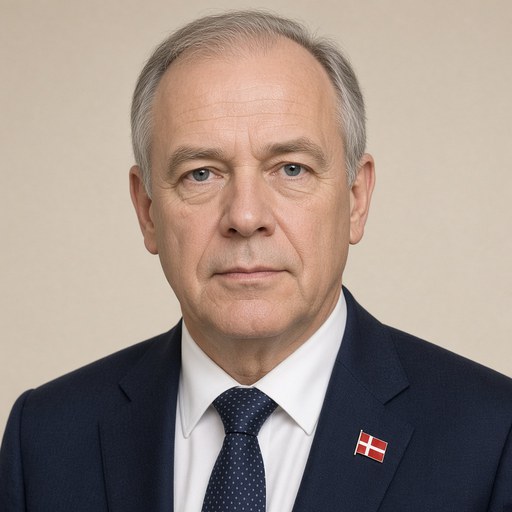
Prime Minister Poul Nyrup Rasmussen's speech at the Vrå Family Festival, August 13, 2000.
 Poul Nyrup Rasmussen · Prime Minister of Denmark
- Context
- Rasmussen addressed the Vrå Family Festival on August 13, 2000, urging Danes to support joining the euro ahead of the September 28 referendum.
- Main themes
- Danish euro referendum, economic sovereignty, international capital markets, globalization, currency speculation, European integration, solidarity, welfare state protection, Danish identity, isolation vs. cooperation
- Duration
- ~34 min
- Words
- 4,074
- Sentences
- 249
- Readability
- 68
- Grade
- 7.7
- Syntax
- 2.81
- Vocabulary
- 1.89
Translated from Danish
The broad sphere of national life a sentence belongs to. Every sentence has an Arena, so it is the denominator the other indices are read against.
Other249 sentences in 31 paragraphs
Dear everyone. I would like to start by saying that we are in a lovely place. We have a green Danish nature around us. A silence, a community, which might lead us to the thought that we can manage on our own. If we just ensure that the green hedges are a bit higher. Ensure that the driveways become a bit more difficult to access, then perhaps we could manage on our own. Peace and quiet. No one with a different skin color, no one with a different language, and our own currency, then everything should be fine. I actually think that is the biggest and most fundamental question we have for our referendum on September 28, 2000.
I believe that quite a few people have not yet fully felt – and I do not blame them – experienced or seen the changes that have occurred around our country in the last 20 – 30 – 40 years. Thirty – forty years ago, we could determine the value of our money and our interest rates ourselves, and we could decide our trade with other countries. If we could not send enough goods to other countries, we could change the price by devaluing the krone. I believe that many Danes may not yet fully - at this point in the referendum - have felt or heard that internationalization and the very strong international capital forces have fundamentally changed the living conditions of our country.
I know that there are quite a few who are currently trying to give the Danes the impression that we should just return to the Danish idyll – the village idyll – and keep everyone else out - shut off. But I assure you, that is no longer possible. It is indeed unfortunate that we do not control everything ourselves. But since we do not, it would be fundamentally wrong to give the Danes the impression that here in our own little beautiful garden, we are the only ones who decide. And that we can determine employment and values ourselves. That would be a betrayal. That would place our little country in the hands of the capital market – and I do not want that to happen.
Where did it come from that we gave up some of our independence? Yes, we have given up some of our independence with open eyes – we saw that we needed to have some minimum requirements for the environment; we knew that acid rain does not stop at Padborg, but crosses borders. We knew that international binding cooperation was necessary to protect us from pollution from other countries; we also knew that something more was needed regarding the economy, so we would not be so vulnerable. But there was something else that came without us really noticing it. In fact, since the early 70s and especially since 1982, we have liberated capital movements in Europe in such a way that they can move across borders at a speed of 1/10 of a second. Did you know – you may know this, but just think about it – that there is not a single hour in the 24 hours of the day when there is not a stock exchange – a stock exchange somewhere in the world that is open. Buying and selling stocks, papers, and money. Trading with them without us being there. Without us fully knowing what is going on, and there are many instances where jobs in Ballerup municipality can suddenly change owners without us being informed until the matter is a reality. That is the whole force – the international economic force – that Denmark finds itself in the midst of. That is the whole change that has taken place, which we must now remember when we take a stand.
I do not want to see a country – Denmark – that at the beginning of this new century becomes a plaything for economic forces that are not democratically structured. Remember that international capital forces can, in an afternoon – as George Soros, an American speculator, has said – speculate against a currency with as much money as the value of what we produce in a year – what is called the Danish gross national product. It was the man who brought the Bank of England to its knees; it was also the man who was one of the strategists behind the pressure on the Swedish economy. Just 5-6 years ago, Sweden had to raise interest rates to 500% in an attempt to stem the speculative pressure. Yes, I did not misspeak: 500%. The Swedish crown had to be devalued, written down in value, and Sweden had to implement the most extensive social cuts in the last 30 years. They are slowly regaining what was lost, but they are still not at the same level as us. I am not saying that it was only the speculators who pulled the rug out from under Sweden's welfare level at that time. I am saying that a wrong policy had been pursued along the way, especially during the conservative period, but it is best that one can determine for oneself how to get out of a crisis. So that it is not the speculators who force one to do things one otherwise would not have had to do if one had had time, and if one determined in one's own country.
Then there is solidarity. I was reminded of solidarity again when I saw the Liberal Party's new proposal - take from the poor developing countries and give to the hospitals. I find it unsympathetic. We will certainly improve our hospitals, but we should not do it at the expense of solidarity with the developing countries. And it is the same in Europe. I firmly believe that if we have a crisis in a single country, we use all our energy to solve those problems, and then we cannot manage to remember solidarity with the poor people.
The common currency, the euro, means that we can create a stable area that is strong and defensible against the international economic forces. Thus, we will also have the basis needed to be even more solidary towards the third world, which is so desperately needed.
Dear everyone, I have four reasons that are quite crucial for me to say 'Yes' to the common currency, the euro, on September 28.
First, because of ourselves. Our Danish welfare society. All of us. The weakest in our society. The first reason is families with average incomes. The first reason is all the people who need a strong, cohesive, well-functioning welfare society. The first reason is not the elite. They will manage – those with business class and international credit cards. It is not to criticize them; I just note that they will always be able to manage and have always been able to manage. My first reason is the others. The whole Denmark that needs a welfare society that is strong. That is my first reason.
I have seen them – I am old enough by now. When we had a crisis in the 70s. In 1974 and in 79, when thousands of Danish workers lost their jobs. I have not seen them all, but I have seen many – too many – and I have told myself, if you are to use your life politically also in international work, then you must use it to prevent that from ever happening again.
After 8 years of extensive work under social democratic leadership in the government, we have rolled back unemployment to before the time when the global crisis hit in 1973-74. Now we can be proud and say that unemployment is lower than it has been in the last 27 years. But it only came about through very hard work from the Danish population and a very strong unity among us in Denmark. And we knew where we were headed. It took 25 - 27 years, and the same applies in Europe. If we look at the specter of unemployment in Europe, we can see that 1974 was a fateful year in Europe. That was when unemployment rose to these millions of people. Many countries have not overcome it yet, and therefore my point is also that the reason we still have high unemployment in Europe is not the EU's fault. It is a lack of European cooperation. That is also why we need to develop it.
So my first argument is welfare - the welfare society.
Well, what about the financial crises, Poul Nyrup, we have gotten over that. No, we have not gotten over it. I do not know how many of you knew this, but in 1998 - that is only 2 years ago - the National Bank of Denmark had to use 40 billion kroner to protect the Danish krone against speculation. And we all know that an attack on the krone is an attack on society. At that time, the money came back again because we maintained our economic course. But it does not always succeed in getting the money back again. I cannot guarantee you that there will not be international financial crises in the future – there will be. So what is 40 billion kroner, Poul Nyrup? It is more than we spend on the Danish healthcare system in a year. Therefore, it is not pocket change. Therefore, it is incredibly important that we understand that these faceless market forces need a political framework around them – just like in Denmark. A human face that we must create. It took us 100 years in Danish society. Under social democratic leadership, we have built this welfare society – Denmark – up. Day by day, month by month, year by year. We spent many years saying that it should not be money that solely determines. Of course, money should be used sensibly and properly – yes, but we must also make a political agreement so that the weak do not fall by the wayside. So that it is gentle and proper to have a period of unemployment, so one can get back to work again. And we did that.
Dear everyone. It should not take a hundred years to build a human face around the market forces in Europe. The economy has long since crossed borders, as I described earlier, and we must also leap with it. Not to say goodbye to what we have created, but to secure what we have created. So my first reason is our welfare. My first reason is to create calm and space. So that financial crises and international currency turmoil do not make us waver. So we can avoid currency crises. So we can gain energy and strength to focus on developing the quality of our welfare society, and therefore we do not need to be afraid and constantly look over our shoulders to see what is now coming from out there in the international arena. My point is that European cooperation and this euro stand on the side of society and not on the side of the raw market forces. That the euro stands on our side and not on the negative side of globalization.
My second reason - it is the one about jobs - it is employment. It has occupied me since I was a young boy. It occupies all of you - businesses and jobs. We know that when businesses are doing well, society is also doing well. We also know that businesses cannot do without a good society. We know – that is why we are social democrats – this double effect: A strong society and good businesses, good businesses and a strong society. When businesses are doing well, society is doing well. Businesses are currently in a situation where, in selected places, they are almost starting to lack labor, and we should not complain about that. But if you ask many business leaders: 'What do you really think about the common currency, the euro'? Many business leaders say to me: 'Well – you see – if it is a 'Yes', then we can continue the good development in our business. Then we can continue with our investment plans, our export growth, our hiring, our good development'.
If it is a 'No', I then ask, what then? Yes, then the answer I most often hear from Danish business leaders is: 'Well, then we have to revise our plans, then we have to see what we should do. Then we are in an uncertain situation. Then Denmark is outside. Then we do not know how interesting Denmark is anymore. We must, in any case, revise our fundamental plans for investments, exports, renewal, design, personnel policy, etc.'.
Put a little pointedly – which has nothing to do with Denmark, but is perhaps worth remembering – the Japanese car companies Nissan and Mitsubishi, and a few others recently said in the UK that Tony Blair and his government had to make it clear whether they would support the euro or not. Because it would have a decisive impact on this international corporation's investments in the UK.
Then there is my third reason. It is a sensible practical measure - this common currency. It means that we can travel freely without having to spend money on exchange costs. Not because it is the heaviest argument for me. I do not want to make too much of it; I just want to mention it.
They have tried to calculate what it actually costs. And figuratively speaking, one could say that it corresponds to if you have a thousand kroner in your pocket when you travel out - I know that many have many more, but let us just stick to that - you spend about 178 kr. of the 1000 kr. to exchange on the way out and home if you travel around Europe. What will happen from around 2002 is that people from other countries who come to visit Denmark will no longer come from Belgium with Belgian francs, from the Netherlands with Dutch guilders, from France with French francs, from Germany with German marks, from Austria with Austrian schillings, etc. They will all come with their euro. A Belgian euro, which has the Belgian king on the front. We will in Denmark see the currency as part of our trade, tourism, and travel with others. We will see that quite a few businesses will start to settle their accounts in the common currency. Therefore, I say that this common currency is actually a very practical measure.
I can tell you that if Denmark says 'Yes', there will be 8 coins. On the front of 5 of these coins, there will be a portrait of Queen Margrethe. On the other 3, the smallest of them, there will be the royal crown. On the back, there will be the common European symbol. I must also say to you that it is important that we talk about the practical matters. I know that quite a few Danes ask me what will practically happen if we say 'Yes'? Let me try to mention some. The most important thing regarding your salary, regarding your pension, regarding your savings in the bank, your loans, is that the value remains the same. The purchasing power remains the same. And the conversion from Danish kroner to euros will not cost ordinary people a single percent, a single krone. It will happen at no cost. This also means that if, for example, you have a 30-year loan on your house, the exchange and transition to the euro will be at no cost to the individual. No new fees, no new charges, none of that.
Some have occasionally said to me: 'You Poul, I have a tiny little savings that I keep under my pillow at home, and if I don't manage to come and exchange the money before March 1, 2004, what then'? Or Poul, 'if I happen to discover some other money, what then? What then'? And to that, I can say, you must remember that this is not a currency exchange like what we knew right after World War II.
For the next 30 years, you can exchange your Danish kroner for euros. And I could sense a sigh of relief rising among quite a few. But I think it is important to say. I know that for quite a few - also ordinary pensioners, who think of their children and grandchildren - there are such situations. And that is fair enough, and therefore it is important to say.
May I then sum up with what I perhaps think is the most important. This project is not the project of the elite. Some would like to make it that way. It is the project of ordinary people. For we know well who is affected when there are crises in our society. Things are going well in Denmark right now. We have power over things. We know which way to go. We have control over it. But those who say: Then we don't need to say 'Yes'. That corresponds to the elite driver who cancels his car insurance, and there are not many elite drivers, if they are wise, who do that - after all. Therefore, I think that today, where we are conducting an economic policy that closely corresponds to what we should if we joined the common currency, we should say to ourselves: 'Honestly, today we all have obligations. A yes will give us all the rights':
Protection under a common umbrella against international speculation and crises.
And rights to negotiate at the table.
I cannot stand being outside. I am sure that you all know that feeling well. You too cannot like being outside. I mean, it applies to us personally. It applies to the union representative. The union representative at a company in Ballerup, who realizes that the management up on the first floor has just negotiated wages and working conditions for his colleagues, will of course be angry and justifiably protest - he should be where the decisions are made. And in the same way with Denmark - Denmark should not be isolated. We are too good to be isolated. We are too good to stand outside. We have a lot to offer, but we also have much to learn from others. We should not be a small white spot up there in the north, which no one counts on. That people drive around or past, even though we have the most beautiful bridges in Europe. We should be included, and it is not just a question of Marianne Jelved wanting to be at the negotiating table. It is also me. But it is not just a question of us at the negotiating table. That is almost the least of it. It is about being a country that is counted on. It is about being a leading country that can also learn from others. It is about meaning something. That your voice is listened to - listened to at all levels and in all contexts. It is about avoiding that international companies, when they are to place their investments in Europe, do not just say: 'Oh, there is Denmark'. 'Oh, that is outside, we are not interested'. It is about being on equal footing with others. Some have said to me: 'Why do we actually have these rules and why should we be involved when it comes down to it'? And here is my point: Why do we have rules in Denmark? Why has the Social Democrats always worked for rules, laws? Yes, we have not done that for the sake of the elite. We have done it to ensure that the weakest in our country had some rights and that ordinary families had security, which did not come without us having rules. And that it was not just the strongest who decided over the weakest. That is why we have rules. And in the same way in Europe. The reason we have rules in Europe is that it is not just the big countries that decide. It is an advantage for us to have some rules that everyone must adhere to at the negotiating table. And historically, it is also true that when Germany - the large Germany of 80 million people - was reunified, the German Chancellor, the then Helmut Kohl, said to the French President Chirac: Tell me, what do you say now to the German reunification? And then the French President said: 'Okay, but on one condition. It is that we now create the common currency'.
So - understand me correctly - so that the German D-mark, the German economy would not determine and dominate everything. Europe's history and our history is the story of how we have had so many bloody wars with such terrible tragedies for families in Europe and in Denmark. That we have said: 'This must never happen again'. And there is every chance that it will not. But the bloody wars should not be replaced by economic wars, and therefore it is so fundamental that the economy is in order here in Europe and in Denmark. But it is not the one that alone decides, it is us who decide.
Solidarity with the weakest and solidarity with the small is very much determined by the fact that we have some common rules and a common currency that we can stand together on. That is my last argument: Solidarity. Throughout the twentieth century, the century we have left, we fought so hard for our ideas of togetherness, of community, of security. Whether you are older or younger. About the right to equal treatment regardless of whether you were born with a silver spoon in your mouth or a drag over your neck. We have fought for that. Sometimes there were setbacks. There was Leninism and communism - the top-down communism in Eastern Europe, in the Soviet Union. There was fascism in Spain, in Portugal, in Greece. And later there was Thatcherism in the United Kingdom, where the unleashed market forces were allowed to push people out. All of that has been experienced by people in Europe. They have experienced top-down centralist communism. They have experienced fascism, and they have experienced total liberalism. They have experienced it, and slowly but surely, we now see many nations and countries striving to build societies that increasingly build on the same values that the Danish welfare state is based on. The people around us - in our neighborhoods - are less and less in doubt about the values and the social democratic values. That we must take each other into account. That the neighbor's problems are not just the neighbor's, but also to some extent ours. That we must take special care of the weakest, and we must take good care of values that are not just measured in money.
Now that people around are moving towards our values, should we then doubt? Therefore, there is also a duty for us to help create a Europe - also for the future of our grandchildren - and a Denmark that is based on security and solidarity with our neighbors. So in a way, the circle is closed. From having built solidarity in Danish society, we now have a chance to develop it further beyond our country's borders.
Jonathan Motzfeldt - you know the Prime Minister of Greenland - said to me: 'Poul, I do not understand you down there in Denmark. When all the other countries are trying to solve the problems they cannot solve individually, why are you not involved'? Then I said: 'Should I pass that message from the Prime Minister to Denmark'? 'Yes, you should, and say hello and that it is from the world's largest island', as he said.
I would like to say from my party: Thank you for listening to my speech. I would suggest that we take a little song and that you come up and ask a few questions. I would very much like to listen to what questions there are and also answer as best I can, and there are no questions that are not equally good and there are no questions that are stupid. All questions have the right to come forward, and I will answer them. Thank you for listening to me. Thank you.
The original Danish. The tags above are read on the English translation's sentences.
Kære alle sammen. Jeg vil først starte med at sige, at vi er et dejligt sted. Vi har en grøn dansk natur omkring os. En stilhed, et fællesskab, som måske kunne føre os til den tanke, at vi sagtens kan klare os selv. Hvis vi nu sørger for, at de grønne hække er lidt højere. Sørger for at indkørslerne bliver lidt vanskeligere tilgængelige, så kunne vi måske klare os selv. Ro og fred. Ikke nogle med en anden hudfarve, ikke nogle med et andet sprog og vores egen mønt, så skulle det nok gå alt sammen. Det synes jeg i virkeligheden er det største og mest grundlæggende spørgsmål, vi har til vores folkeafstemning den 28. september 2000.
Jeg tror, at ganske mange mennesker endnu ikke helt har mærket – og det skal jeg ikke bebrejde dem – følt eller set de forandringer, der er sket omkring vores land i de sidste 20 – 30 – 40 år. For 30 – 40 år siden var det sådan, at vi selv kunne bestemme vores penges værdi og vores rente, og vi kunne selv bestemme vores handel med andre lande. Hvis det var sådan, at vi ikke kunne sende nok varer til de andre lande, så kunne vi ændre prisen ved at devaluere kronen. Jeg tror, at mange danskere måske ikke helt endnu - på dette tidspunkt i folkeafstemningen - har følt eller hørt om at internationaliseringen og de vældig stærke internationale kapitalkræfter har forandret vores lands livsbetingelser ganske ganske grundlæggende.
Jeg ved godt, at der er ganske mange, som lige nu prøver at give danskerne det indtryk, at vi bare skal vende tilbage til den danske idyl – landsbyidyllen – og holde alle andre udenfor - lukke af. Men jeg forsikrer jer for, at det går ikke længere. Det er godt nok ærgerligt, at vi ikke selv bestemmer det hele. Men når det nu er sådan, at vi ikke gør det, så vil det være at svigte fundamentalt, hvis vi gav danskerne det indtryk, at her i vores egne lille smukke have, der er det kun os, der bestemmer. Og at vi selv kan bestemme beskæftigelse og værdier. Det vil være at svigte. Det vil være at placere vores lille land i kapitalmarkedets hænder – og det ønsker jeg ikke skal ske.
Hvorfra kom det da, at vi afgav noget af vores selvstændighed. Ja noget af vores selvstændighed har vi afgivet med åbne øjne – vi så, at vi havde brug for at få nogle mindstekrav til miljøet; vi vidste godt, at syreregnen ikke standser i Padborg, men passerer grænserne. Vi vidste godt, at der måtte et internationalt forpligtende samarbejde til for at værne os mod forurening fra andre lande; vi vidste også godt, at der måtte noget mere til omkring økonomien, så vi ikke var så sårbare. Men der var noget andet der kom uden, at vi rigtig lagde mærke til det. Faktisk siden starten af 70’erne og for alvor siden 1982, har vi frigjort kapitalbevægelserne i Europa på en sådan måde, at de kan bevæge sig med 1/10 sekunders hastighed over grænserne. Vidste I – I ved det måske godt, men skænk det lige en tanke - at der ikke findes en eneste time i døgnets 24 timer, hvor der ikke er en børs - en fondsbørs et eller andet sted i verden, som har åbent. Som køber og sælger aktier, papir og penge. Handler med dem uden, at vi er der. Uden at vi helt ved hvad der foregår, og der er masser af tilfælde hvor arbejdspladser i Ballerup kommune pludselig kan skifte ejere uden, at vi får det at vide, før sagen er en realitet. Det er hele den kraft - den internationale økonomiske kraft - Danmark befinder sig midt i. Det er hele den forandring, der har fundet sted, som vi nu skal huske på, når vi skal tage stilling.
Jeg ønsker ikke at se et land – Danmark - som i starten af dette nye århundrede bliver kastebold for økonomiske kræfter, der ikke er demokratisk bygget op. Husk på, at internationale kapitalkræfter på en eftermiddag - som George Sorrow, en amerikansk spekulant, har sagt det- kan spekulere mod en valuta med lige så mange penge, som værdien af det vi producerer om året - det der hedder det danske bruttonationalprodukt. Det var manden, der tvang Bank of England i knæ; det var også manden, der var en af strategerne bag presset på den svenske økonomi. For bare 5- 6 år siden måtte Sverige, i et forsøg på at dæmme op mod spekulationspresset, hæve renten op til 500%. Ja jeg sagde ikke forkert: 500%. Den svenske krone måtte devalueres, nedskrives i værdi og Sverige måtte gennemføre de sidste 30 års mest omfattende sociale nedskæringer. De er så småt ved at genvinde tabet, men de er slet ikke på omdrejningshøjde med os. Jeg siger heller ikke, at det var spekulanterne alene, der trak tæppet væk under Sveriges velfærdsniveau på det tidspunkt. Jeg siger, at der var blevet ført en forkert politik undervejs, især i den borgerlige periode, men det er nu engang bedst, at man selv kan bestemme, hvordan man kommer ud af en krise. Så det ikke er spekulanterne, der tvinger en til at foretage ting, man ellers ikke ville have været nødsaget til at foretage, hvis man havde haft tid, og hvis man selv bestemte i sit eget land.
Så er der solidariteten. Jeg kom til at tænke på solidariteten igen, da jeg så Venstres nye udspil - tag fra de fattige u-lande og giv til sygehusene. Jeg synes det er usympatisk. Vi skal nok forbedre vores sygehuse, men vi skal ikke gøre det på bekostning af solidariteten med ulandene. Og sådan er det også i Europa. Jeg tror fuldt og fast på, at hvis vi har krise i et enkelt land, så bruger vi al vores energi på at løse de problemer, og så kan vi ikke overkomme at huske på solidariteten med de fattige folk.
Den fælles valuta, euroen, betyder, at vi kan skabe et stabilt område, der er stærkt og forsvarsdueligt i forhold til de internationale økonomiske kræfter. Dermed vil vi også få den basis, der skal til, for at være endnu mere solidarisk i forhold til den 3. verden, hvilket der er så hårdt brug for.
Kære alle sammen, jeg har 4 grunde, som for mig er ganske afgørende for at sige 'Ja' til den fælles valuta, euroen, den 28. september.
Først på grund af os selv. Vores danske velfærdssamfund. Os alle sammen. De svageste i vores samfund. Den første grund er familier med jævne indkomster. Den første grund er alle de mennesker, der har brug for et stærkt, sammenhængende, velfungerende velfærdssamfund. Den første grund er ikke eliten. Den skal nok klare sig - dem med business class og internationale købekort. Det er ikke for at kritisere dem, jeg konstaterer bare, at de vil altid kunne klare sig, og har altid kunnet klare sig. Min første grund er de andre. Hele det Danmark, som har brug for et velfærdssamfund, der er stærkt. Det er min første grund.
Jeg har jo set dem - så gammel er jeg efterhånden. Da vi havde krise i 70’erne. I 1974 og i 79, hvor tusindvis af danske arbejdere mistede deres job. Jeg har ikke set dem alle, men jeg har set mange - for mange - og jeg har sagt til mig selv, hvis du skal bruge dit liv politisk også i det internationale arbejde, så skal du bruge det til at undgå, at det nogensinde kommer igen.
Efter 8 års omfattende arbejde under socialdemokratisk ledelse i regeringen har vi fået rullet arbejdsløsheden tilbage til før det tidspunkt, hvor den verdensomspændende krise indtraf i 1973-74. Nu kan vi være stolte og sige, at arbejdsløsheden er mindre end den har været i de sidste 27 år. Men det kom den jo kun i kraft af meget hårdt arbejde fra den danske befolkning og et meget stærkt sammenhold mellem os i Danmark. Og vi vidste, hvor vi skulle hen. 25 - 27 år tog det, og sådan gælder det også i Europa. Hvis vi ser på arbejdsløshedens spøgelse i Europa, så kan vi se, at 1974 var et skæbne år i Europa. Da steg arbejdsløsheden til disse millioner af mennesker. Mange lande har ikke overvundet det endnu, og derfor er min pointe også, at årsagen til, at vi stadigvæk har stor arbejdsløshed i Europa, er ikke EU’s skyld. Det er mangel på europæisk samarbejde. Det er også derfor vi skal udvikle det.
Mit første argument er altså velfærd - velfærdssamfundet.
Jamen den med finanskriserne, Poul Nyrup, det har vi jo overstået. Nej det har vi ikke overstået. Jeg ved ikke, hvor mange af jer der vidste det, men i 1998 - det er kun 2 år siden - da måtte Nationalbanken i Danmark bruge 40 milliarder kroner for at beskytte den danske krone mod spekulation. Og vi ved alle sammen godt, at et angreb på kronen er et angreb på samfundet. Dengang kom pengene tilbage igen, fordi vi holdt vores økonomiske kurs. Men det er jo ikke hver gang det lykkedes at få pengene tilbage igen. Jeg kan ikke garantere jer, at der ikke kommer internationale finanskriser i al fremtid - det gør der. Hvad er så 40 milliarder kroner, Poul Nyrup? Det er mere end vi bruger til det danske sygehusvæsen om året. Derfor er det ikke småpenge. Derfor er det utrolig vigtigt, at vi forstår, at disse ansigtsløse markedskræfter skal have en politisk ramme omkring sig - ligesom i Danmark. Et menneskeligt ansigt, som vi skal skabe. Det brugte vi 100 år på i det danske samfund. Under socialdemokratiets ledelse har vi bygget dette velfærdssamfund - Danmark - op. Dag for dag, måned for måned, år for år. Vi brugte mange år på at sige, at det ikke skal være pengene, der alene bestemmer. Selvfølgelig skal pengene bruges fornuftigt og ordentligt - ja, men vi skal også lave en politisk aftale så de svage ikke falder af i svinget. Så det er skånsomt og ordentligt at have en arbejdsløshedsperiode, så man kan komme i job igen. Og det gjorde vi.
Kære alle sammen. Det skal ikke tage hundrede år at bygge et menneskeligt ansigt op omkring markedskræfterne i Europa. Økonomien er for længst sprunget over grænserne, som jeg beskrev før, og så må vi også springe med. Ikke for at sige farvel til det vi har skabt, men for at sikre det vi har skabt. Så min første grund er vores velfærd. Min første grund er at skabe ro og råderum. Så finanskriser og international kursuro ikke får os til at slingre. Så vi slipper for kronekriser. Så vi kan få energi og kræfter til at koncentrere os om at udvikle vores velfærdssamfunds kvalitet, og vi derfor ikke behøver at være bange og hele tiden skal kigge os tilbage over skuldrene for at se, hvad er der nu er på vej derude i det internationale. Min pointe er, at det europæiske samarbejde og denne euro står på samfundets side og ikke på de rå markedskræfters side. At euroen står på vores side og ikke på globaliseringens negative side.
Min anden grund - det er den med jobbene - det er beskæftigelse. Det har optaget mig siden jeg var en ung knægt. Det optager jer alle sammen - virksomhederne og jobbene. Vi ved godt, at når det går virksomhederne godt, så går det også samfundet godt. Vi ved også godt, at virksomhederne ikke kan undvære et godt samfund. Vi kender - det er derfor vi er socialdemokrater - denne dobbelte virkning: Et stærkt samfund og gode virksomheder, gode virksomheder og et stærkt samfund. Når det går godt for virksomhederne, går det godt for samfundet. Virksomhederne er i en situation lige nu, hvor de udvalgte steder næsten begynder at mangle arbejdskraft, og det skal vi ikke beklage. Men hvis man spørger mange virksomhedsledere: 'Hvad mener du og du egentlig om den fælles valuta euroen'? Så siger mange virksomhedsledere til mig: 'Altså - forstår du - hvis det bliver et 'Ja', så kan vi fortsætte den gode udvikling i vores virksomhed. Så kan vi fortsætte med vores investeringsplaner, vores eksportfremgang, vores personaleansættelser, vores gode udvikling'.
Hvis det bliver et 'Nej', siger jeg så, hvad så? Ja, så er det svar jeg oftest hører fra danske erhvervsledere: 'Jamen så må vi revidere vore planer, så må vi se på, hvad vi så skal gøre. Så er vi i en usikker situation. Så står Danmark jo udenfor. Så ved vi ikke, hvor interessant Danmark er længere. Vi må i al fald, under alle omstændigheder, revidere vore grundlæggende planer for investeringer, eksport, fornyelse, design, personalepolitik o.s.v.'.
Sat lidt på spidsen – som ikke har noget med Danmark at gøre, men måske er værd lige at huske på - sagde det japanske bilfirma Nissan og Mitsubishi, og et par andre stykker for nylig i Storbritannien, at Tony Blair og hans regering måtte gøre sig klart om de ville gå ind for den euro eller ej. Fordi det ville have afgørende betydning for denne internationale koncerns investeringer i Storbritannien.
Så er der min tredje grund. Det er en fornuftig praktisk foranstaltning - denne fælles valuta. Den betyder, at vi kan rejse frit uden at skulle bruge penge på vekselomkostninger. Ikke fordi det er det tungeste argument for mig. Jeg skal såmænd heller ikke gøre for meget ud af det, jeg skal bare lige nævne det.
Man har prøvet at regne på, hvad det egentlig koster. Og billedligt talt kan man sige, at det svarer til, at hvis du har tusinde kroner på lommen, når du rejser ud - jeg ved godt, at mange har mange flere, men lad os nu bare holde os til det - så bruger du ca. 178 kr. af de 1000 kr. til at veksle på vej ud og hjem, hvis du rejser rundt i Europa. Det, der sker fra omkring 2002, det er, at personer fra de andre lande, der kommer på besøg i Danmark, de kommer ikke længere fra Belgien med belgiske franc, fra Holland med hollandske gylden, fra Frankrig med franske franc, fra Tyskland med tyske D-mark, fra Østrig med østrigske schilling o.s.v. De kommer alle sammen med hver deres euro. En belgisk euro, der har den belgiske konge på forsiden. Vi vil i Danmark få den mønt at se, som et led i vores samhandel, turisme og rejser med de andre. Vi vil se, at ganske mange virksomheder vil begynde at afregne deres økonomi i den fælles valuta. Derfor er det, at jeg siger den der fælles valuta, den er faktisk en meget praktisk foranstaltning.
Jeg kan nævne for jer, at hvis Danmark siger 'Ja', så er der 8 mønter. På forsiden af 5 af disse mønter vil der være et portræt af Dronning Margrethe. På de 3 andre, de mindste af dem, vil kongekronen være. På bagsiden vil være det fælles europæiske symbol. Jeg skal også sige til jer, at det er vigtigt, at vi lige får talt om de praktiske ting. Jeg ved, at ganske mange danskere spørger mig, hvad der rent praktisk sker hvis vi siger 'Ja'? Lad mig prøve at nævne nogen. Den vigtigste ting, når det gælder ens løn, når det gælder ens pension, når det gælder ens opsparing i banken, ens lån, er, at værdien er den samme. Købekraften er den samme. Og opbytningen fra danske kroner til euro kommer ikke til at koste almindelige mennesker én eneste procent, én eneste krone. Det sker omkostningsfrit. Det betyder også, at hvis man f.eks. har et lån på 30 år i sit hus, så sker udskiftningen og overgangen til euroen omkostningsfrit for den enkelte. Ingen nye gebyrer, ingen nye afgifter, ikke noget af den slags.
Nogen har en gang imellem sagt til mig: 'Du Poul, jeg har en lille bitte opsparing, som jeg har liggende hjemme under hovedpuden, og hvis jeg nu ikke lige når, inden den 1. marts 2004, at komme hen og få vekslet pengene'? Eller Poul, 'hvis jeg helt tilfældig opdager nogle andre penge, hvad så? Hvad så'? Og dertil kan jeg sige, I skal huske, at det her, det er ikke en pengeombytning, som det vi kendte lige efter 2. Verdenskrig.
Man kan de næste 30 år frem i tiden få vekslet sine danske kroner til euro. Og jeg kunne mærke hos ganske mange, at der rejser sig et lettelses suk. Men jeg synes, at det er vigtigt at få sagt. Jeg ved jo, at for ganske mange - også almindelige pensionister, der tænker på deres børn og børnebørn - er der sådan nogle situationer. Og det er fair nok, og derfor er det vigtigt også at få sagt.
Må jeg så summe op med det, jeg måske syntes er det aller vigtigste. Det her projekt er ikke elitens projekt. Det er der nogen, der gerne vil gøre det til. Det er jævne menneskers projekt. For vi ved godt, hvem det er, der bliver ramt, når der er kriser i vores samfund. Det går godt i Danmark lige nu. Vi har magt over tingene. Vi ved, hvilken vej vi skal. Vi har styr på det. Men dem der så siger: Så behøver vi jo ikke og sige 'Ja'. Det svarer vel til elitebilisten, der opsiger sin bilforsikring, og det er der ikke ret mange elitebilister, hvis de er kloge, der gør - trods alt. Derfor synes jeg, at vi i dag, hvor vi fører en økonomisk politik, der nøje svarer til det vi skulle, hvis vi meldte os ind i den fælles valuta, bør vi sige til os selv: 'Ærlig talt, i dag har vi alle pligterne. Et ja vil give os alle rettighederne':
Beskyttelse under en fælles paraply mod international spekulation og kriser.
Og rettigheder til at forhandle ved bordet.
Jeg kan ikke fordrage at være udenfor. Jeg er sikker på, at I alle sammen godt kender den fornemmelse. Netop du kan heller ikke lide at være udenfor. Jeg mener, det gælder os personligt. Det gælder tillidsrepræsentanten. Den tillidsrepræsentant på en virksomhed i Ballerup, som bliver klar over, at direktionen oppe på første sal lige har forhandlet løn- og arbejdsvilkår for hans kollegaer bliver selvfølgelig sur og protesterer berettiget - han skal være der, hvor beslutningerne træffes. Og på samme måde med Danmark - Danmark skal ikke isoleres. Vi er for gode til at blive isoleret. Vi er for gode til at stå udenfor. Vi har masser at byde på, men vi har også meget at lære af de andre. Vi skal ikke være en lille hvid plet deroppe nord på, som ingen regner med. Som folk kører udenom eller forbi, selvom vi har de smukkeste broer i Europa. Vi skal være med, og det er ikke alene et spørgsmål om, at Marianne Jelved vil til forhandlingsbordet. Det er også mig. Men det er heller ikke alene et spørgsmål om os ved forhandlingsbordet. Det er næsten det mindste af det. Det er selve det at være et land, man regner med. Det er selve det at være et foregangsland, som også kan lære af de andre. Det er selve det at betyde noget. At der bliver lyttet til ens stemme - bliver lyttet til på alle niveauer og i alle sammenhæng. Det er selve det at undgå, at de internationale virksomheder, når de skal placere deres investeringer i Europa, ikke bare siger: 'Nå der ligger Danmark'. 'Nå det er jo udenfor, det interesserer os ikke'. Det er det at være med på lige fod med de andre. Nogen har sagt til mig: 'Hvorfor har man egentlig de her regler og, hvorfor skal vi være med når det kommer til stykket'? Og der er min pointe: Hvorfor har vi regler i Danmark? Hvorfor har Socialdemokratiet altid arbejdet for regler, love? Ja, det har vi jo ikke gjort af hensyn til eliten. Det har vi for at sikre, at de svageste i vores land havde nogle rettigheder og for, at almindelige familier havde tryghed, som ikke kom uden, at vi havde regler. Og at det ikke bare var de stærkeste, der bestemte over de svageste. Derfor har vi regler. Og på samme måde i Europa. Årsagen til, at vi har regler i Europa, det er, at det ikke bare er de store lande, der bestemmer. Det er en fordel for os at have nogle regler, som alle skal efterleve ved forhandlingsbordet. Og historisk er det jo også rigtigt, at da Tyskland - det store Tyskland på 80 millioner mennesker - blev genforenet, så sagde den tyske Forbundskansler, den daværende Helmut Kohl til Frankrigs præsident Chirac: Sig mig engang, hvad siger du nu til den tyske genforening? Og så sagde Frankrigs præsident: 'Okay men på en betingelse. Det er, at vi nu laver den fælles valuta'.
Sådan - forstå mig ret – at den tyske D-mark, den tyske økonomi ikke skulle bestemme og dominere det hele. Europas historie og vores historie er jo historien om, at vi har haft så mange blodige krige med så forfærdelige tragedier for familierne i Europa og i Danmark. At vi har sagt: 'Det her må aldrig nogensinde ske igen'. Og det er der alle chancer for, at det heller ikke gør. Men de blodige krige skulle nødig afløses af økonomiske krige, og derfor er det så fundamentalt, at økonomien er i orden her i Europa og i Danmark. Men det er ikke den, der alene bestemmer, det er os der bestemmer.
Solidariteten med den svageste og solidariteten med de små er meget bestemt af, at vi har nogle fælles regler og en fælles valuta, som vi kan stå sammen om. Det er mit sidste argument: Solidariteten. Vi har igennem det tyvende århundrede, det århundrede vi har forladt, kæmpet så hårdt for vores ideer om sammenhold, om samhørighed, om tryghed. Uanset om man er ældre, eller man er ung. Om retten til ligebehandling uanset om man er født med en sølvske i munden, eller et drag over nakken. Det har vi kæmpet for. Somme tider var der tilbageskridt. Der var leninismen og kommunismen - den topstyrede kommunisme i Østeuropa, i Sovjetunionen. Der var fascismen i Spanien, i Portugal, i Grækenland. Og senere var der Thacher-isme i Storbritannien, hvor de løsslupne markedskræfter fik lov at støde mennesker ud. Alt det har folk i Europa prøvet. De har prøvet den topstyrede centralistiske kommunisme. De har prøvet fascismen, og de har prøvet det med den totale liberalisme. De har prøvet det, og langsomt, men sikkert, ser vi nu masser af folkeslag og lande, gå efter at bygge samfund der mere og mere bygger på de samme værdier, som det danske velfærdssamfund bygger på. Folkene ude omkring os - i vore naboskaber - er mindre og mindre i tvivl om værdierne og de socialdemokratiske værdier. At vi må tage hensyn til hinanden. At naboens problemer ikke kun er naboens, men også i et vist omfang vores. At vi skal tage et særligt hensyn til de svageste, og vi skal passe godt på værdier, der ikke bare gøres op i penge.
Når nu folk ude omkring er på vej hen til vores værdier, skulle vi så komme i tvivl. Derfor er der også en pligt for os til at være med til at skabe et Europa – også for vores egne børnebørns fremtid – og et Danmark, der beror på sikkerhed og tryghed og solidaritet med naboerne. Så på en måde sluttes cirklen. Fra at have opbygget solidariteten i det danske samfund, har vi nu en chance for at udvikle det yderligere udenfor vores lands grænser.
Jonathan Motzfeldt - I ved landsstyreformanden i Grønland - sagde til mig: 'Poul, jeg forstår jer ikke dernede i Danmark. Når nu alle de andre lande søger at løse de i fællesskab problemer, som de ikke kan løse hver for sig, hvorfor er I så ikke med'? Så sagde jeg: 'Skal jeg bringe den hilsen videre fra Landsstyreformanden til Danmark'? 'Ja det skal du og hils og sig, at det er fra verdens største ø', som han sagde.
Jeg vil fra min part sige: Tak fordi I ville lytte til min tale. Jeg vil foreslå, at vi lige tager en lille sang og, at I så kommer op og spørger lidt. Jeg vil meget gerne lytte til, hvad der er af spørgsmål og også svare så godt jeg kan, og der er ingen spørgsmål, der ikke er lige gode og der er ingen spørgsmål der, er dumme. Alle spørgsmål har ret til at komme frem, så skal jeg nok svare på dem. Tak fordi I ville lytte til mig. Tak skal I have.