




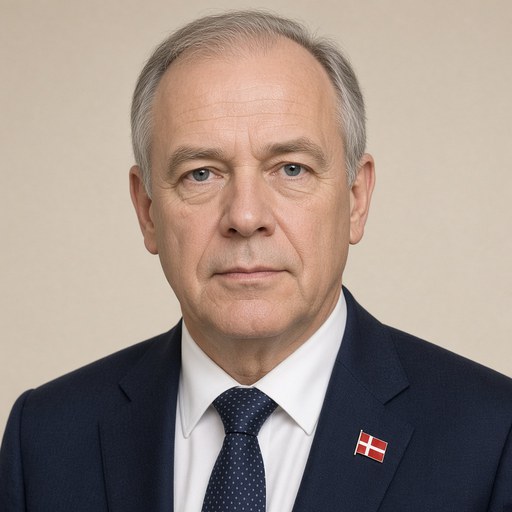
Prime Minister Poul Nyrup Rasmussen's speech on August 16, 2000, at the Social and Health School.
 Poul Nyrup Rasmussen · Prime Minister of Denmark
- Context
- Rasmussen addressed students and staff at the Social and Health School on August 16, 2000, discussing welfare, eldercare, and Denmark's upcoming euro referendum.
- Main themes
- Social and health education, welfare society, eldercare and nursing, Danish identity and solidarity, euro referendum, Danish currency and economy, international financial markets, personal care and compassion, European monetary union
- Duration
- ~34 min
- Words
- 4,093
- Sentences
- 199
- Readability
- 65
- Grade
- 9.2
- Syntax
- 3.04
- Vocabulary
- 1.93
Translated from Danish
The broad sphere of national life a sentence belongs to. Every sentence has an Arena, so it is the denominator the other indices are read against.
Other199 sentences in 43 paragraphs
First of all, I would like to thank you for the warm welcome - you have made a great impression on me. I perceive your efforts to receive me as an expression that it is not a coincidence that you are in the social and health education program.
You can feel it already when you arrive that the social and health education program, in my opinion, is one of the most important, and I do not say this just to please you. I say this because I am fully and firmly convinced of it. Engaging with people in areas where you actually come very close to personal care, hygiene, and compassion is indeed boundary-crossing.
In modern society, we can buy everything in supermarkets, and everywhere they tempt us with a youthful and eternal life, and if you buy this thing or that thing, you can be sure to be happy for the rest of your days. We all have our dreams of house, home, and family, and that is fine. But perhaps we sometimes forget in all our glorification that the most skilled, the youngest, the prettiest, and the most beautiful, that we will also grow old one day. That some of us may also become ill one day. And on that day, we actually need someone who has a social and health education and who does not just do it out of duty. But does it because one is aware that the most important job we can have is, in reality, to come very close to a person who needs it.
I say this because my own mother lives in a nursing home now - worn out, with bad knees and unable to walk. She turned 90 years old last Saturday when Lone and I visited her. When I leave there, there are so many things I could wish for. But one thing is completely clear: my mother's life today and the rest of the existence she has ahead of her could not have the quality it has if there were not staff around her who took care of her.
I sincerely believe that Danish society would not be what it is if we did not have the skilled social and health assistants in the hospital sector, in our nursing homes, in home care - all the places we need them. We could not talk about care if we did not have you who are taking the social and health education. And I would like to use that as a starting point. Do you understand, the society we have come far with is a good society, and we must ensure that this is what we understand by welfare and Danishness. Danishness is that we take care of each other when we need each other. Danishness is that we have a responsibility for each other and a special responsibility for the weakest. Danishness is our solidarity. We all have a heart that beats for someone, and therefore we constantly ask ourselves: 'What is best for our welfare society in the future?'
Look at this 20-kroner note, why is it Danish? Because the Queen is on the front. We have no doubt that we can use it in Denmark - that is how it is. What happens if we say yes on September 28, 2000, to the Danish euro? Then it happens that the National Bank, which produces this crown, will instead produce the Danish euro, but it is the National Bank that must produce it. It is stated in the Constitution that the King mints the coin, and the King does that, and now the Queen still does it in the future. The Danish euro will have the Queen's portrait on its front.
The Danish euro will be usable not only in Denmark but throughout Europe, in all the countries that have their French, Belgian, and German euros. The Germans have a German euro, the Spaniards a Spanish euro with the Spanish king on the front, and the Belgians have a Belgian euro with the Belgian king on it. The idea is that each of the coins they had before they switched to the euro was a little weaker than the coin we all now share. At the same time, the national symbol is preserved on their coin.
Understand me correctly, the Danish crown is today a strong crown because the Danish welfare society has a strong economy - we all know that. There is also no doubt that a strong Danish crown is only strong as long as we can be sure that Danish society has a strong economy - but it is also not so strong that it can withstand all international pressure on it.
This crown collapsed in 1993 and was subjected to enormous pressure in 1998. Do you know what happened in 1998? There were some on the international financial markets who thought they could make money by trying to get this crown to decrease in value - that is, to sell a whole lot of them now and buy them when they were cheap. There are people who make a living trading money, and therefore they pressured the Danish crown in 1998.
It was a consequence of the financial crisis in Southeast Asia. The entire large Southeast Asian region, which just five years ago was designated as the new great economic growth area, came to a standstill, and the financial money pounced on it, which affected ordinary people. There were some who did not have enough, and they then continued to Europe.
They did not pounce on the Portuguese coin or the Spanish coin because the two countries had said yes to entering the common currency with the Portuguese euro and the Spanish euro. No, they pounced on the Danish crown because we had not said yes. It cost us at that time: we had to pull 40 billion kroner out of the currency reserve in 1998 to protect the Danish crown against speculation and against losing value. The money has come back because we held on to our economic policy, but it is not every time that the money has come back. It is also not every time that it has succeeded in getting through a financial pressure in the way we did in 1998.
What is 40 billion kroner, Poul Nyrup? Well, regarding the social health education, 40 billion kroner is roughly equivalent to our total expenses for our hospitals. I know it cannot be directly compared - I just want to illustrate to you that the time is over when little Denmark can manage completely independently of others. In other words: A pressure on the Danish crown is a pressure on the Danish welfare society, and therefore it is important in the future to create a cooperation where a pressure does not hit us so hard and where we stand together.
The Danish crown is supported by about 5 million inhabitants. The Danish euro, if we say yes, will be supported by about 350 million people, because if they pressure us, all the others will come to our aid. You cannot pressure and topple a euro that is supported by 350 million people and 12-13 countries. It is the world's strongest economic area precisely because the countries stand together and take care of each other.
We have spent 100 years building the Danish welfare society because we did not want anyone to be left out or left to fend for themselves. We did not want elderly people to be left to fend for themselves. We wanted a society where there were some skilled social and health assistants, whom we ensured received salaries and education to take care of our elderly people. That is the kind of society we wanted, and we wanted to decide for ourselves which way that society should go. Therefore, it should not only be the top of society that decides: It should be all of us who shape the future of this society, for precisely because it is all of us who shape it, and not just the few at the top with the money and power, it will be good.
We have succeeded in 100 years in creating a good welfare society - it can get better, and it is not the case that it has always been good.
Seven years ago, there were about 360,000 unemployed here in Denmark, and everyone knew someone who had become unemployed. Now there are 150,000 unemployed in Denmark, and today everyone knows someone who has found a job.
That is what drives me again and again; that is what makes me travel around the country and talk about how it should go - it is not for my own sake. What drives me is the Danish society and its weakest members who need someone and need care.
I have seen the great crises in 1974 and 1979, which were so severe that hundreds and thousands of Danish workers lost their jobs and that we could not finance our welfare society. Why did they lose their jobs? Because we were not good enough at cooperating across borders. Many other countries did not see that when capital had become international, we also had to become international. It was dreadful to watch.
When the crisis came and oil prices became 6- and 8-fold, Sweden cut back in their public sector because they had a large deficit. This resulted in unemployment because companies could not sell their goods when wages did not have the same drive. We also had to cut back in Denmark, and we could not sell the same to Sweden as we had been used to - and then Germany had to cut back as they could not sell what they had been used to selling to Sweden and Denmark - and so the wheel turned. Unemployment rose in Europe. It amounted to 16 million people during the crisis years that hit us.
It is only now in Denmark, after 8 years of work, that we have managed to bring unemployment down to what it was 27 years ago. Therefore, there are many unemployed in the EU, but it is not the EU's fault, but the lack of EU cooperation that is the cause of it, as we compete against each other instead of cooperating with each other.
There are two paths for Denmark, domestically and internationally. There is my path - our path, as I call it - and then there is theirs - that is, the others' path. Have you thought about what they say - those who believe that it is best for Denmark to say no, including the Danish People's Party? Have you heard that they have forgotten to say that they proposed that one should pay for having one's children looked after? They also propose that taxes should be reduced to 30%. I ask, where will that money come from? And how will we ensure a good healthcare system if we lower taxes to 30%? Where will the money come from?
It is also the party that proposes that we should pay user fees for our courses, for our labor market education, and it is the party that also proposes that if we become unemployed, the state should no longer contribute to it. That is why the Danish welfare society can go two ways, for there has always been a political discussion between two paths. The path where we stand together on a tax system that solidarily finances our welfare and our social and health care - that is the path my heart beats for. User payments, privatizations, and all that with tempting 'me, me' - that is not my opinion.
And in the same way, in Europe, it can also go two ways. Denmark is a good country, but Denmark must also face the fact now that our dependence on other countries is so great that if financial crises come from outside, we need to be together with others to protect our welfare and the weakest in our welfare society.
I have two plans for the future. What we call the sustainable society is about making our welfare even more sustainable. It is about four core areas; the healthcare system, which needs to have better quality and waiting times. It is about our elderly people, where we need to build more nursing homes, we need to train more social and health assistants, and we need to ensure greater solidarity and greater shared responsibility for our elderly and vulnerable. Point three is about a better school, and point four is that we change our labor market so that we also have room for those who are not 100% efficient. With these four core areas, we will achieve a sustainable society. We will only be able to reach these four core areas if we simultaneously ensure that Denmark is securely placed among and together with our neighbors. We have never been able to accept in Denmark that there were a few who decided, or that those who had the most money and power decided. We have in Denmark since the beginning of the last century said that now we will all decide.
The social and health education today is not the same as it was 20 years ago. Today we know much more about how we can do it best for our sick people and our elderly, those who need care, but our idea is the same. Our human respect and care are the same, but the way we do it today is different from before. We have adopted new tools. I saw new tools and methods outside here that we did not know 20-25 years ago, but our idea is the same: genuine human care. And in the same way for Denmark in Europe. When we advocate for the welfare society, we still do it with all the values I have described, but when the world outside changes, we must also adopt the new tools - and that is precisely what we want.
There was a union representative who sat at Vestfrost - one of the large Danish companies in Esbjerg - and he said: 'Poul Nyrup, we 1,700 employees at Vestfrost know all about what currency fluctuations mean. If the British pound loses value, our goods become more expensive for the English to buy, which means that the next day at the meeting in the cooperation committee, there will only be one item on the agenda: Layoffs.'
There is something else I would also like to talk about - it is independence. I know that many of you say: 'Well, if we switch to the Danish euro, what about our independence? Do we lose independence? Do we lose part of our Danishness?'. No, we do not. In reality, we gain something in common that we lost along the way. When the world became international and capital movements began to flow freely, which they could from around the 1980s, we also decided in Denmark that capital movements should flow freely. From that time, we no longer solely determined our own interest rate because money always moves to where it can earn the most on it. Therefore, interest rate setting is completely crucial in relation to the others. And therefore, the reality is that if we say yes to the common currency, that is, yes to the euro, then the interest rate is indeed determined together with the others - but the others are already effectively doing that today before the vote.
It used to take about a couple of hours or three in the old days, from when the German Bundesbank set its interest rate, until the others followed suit. Today, it is the European Central Bank that sets the interest rate, and we follow a little after to see. I usually say that it takes about 3-4 hours, but the other day just before the summer holidays, I received a note in the parliamentary chamber where we were discussing a bill. It stated that at 11:54, the European Central Bank raised the interest rate by a quarter percent, and at 12:21, the Danish National Bank raised the interest rate by a quarter percent. Our independent freedom of action is not 3 hours, but about 25 minutes. And that is why it is also important that each and every one of you knows the Danish reality, so we can better relate when we have to cast our votes on September 28, 2000.
And what is it that we are actually giving up? Yes, it is true that if we say yes on September 28, 2000, we can no longer formally set the interest rate ourselves - but we were not really doing that beforehand. It is also true that we can no longer formally change the value of our own currency - but we could not do that beforehand either. The devaluations of the past, as it is called to write down the value of one’s currency to gain a competitive advantage, we have left behind. Devaluations were really about taking jobs from the neighbor over to oneself at the expense of the neighbor. This often led to advice and inflation. And I can tell you that higher inflation is the reverse Robin Hood policy: It affects the lowest incomes and benefits those at the top.
Future monetary policy is about building more jobs in cooperation and competition, and I would like to emphasize that.
If we say yes to the Danish euro, we will, as economists say, have greater fiscal leeway or, in plain English, we can continue the growth path we have underway. If we say no, we will have to be more Catholic than the Pope himself in our fiscal policy. Because then we will have to convince all the financial markets that we have control over things, and they will test us, for now, we stand outside. Therefore, we need to have a tighter grip on the reins than we need. If we say yes, we have better opportunities to continue the line we want to pursue in the healthcare sector, in social and health matters, and elderly care, our schools, and so on. If we say no, we must hold tightly to the reins and run a tighter economic policy.
Denmark should not be isolated. I hate being outside and being alone. I am sure that you all fundamentally feel the same way. We humans are born to be together, to build communities - not to be lonely, isolated, and outside. The same applies to the welfare state as it does in Denmark. And we have something to offer – yes, look at yourselves! We have a good social and healthcare system, but we must not think that it is the best in the world.
The World Health Organization recently gave us a rating, where I think we ranked far too low. I looked a little closer at the numbers and found that the main explanation is that our average life expectancy is too low in Denmark because too many people die in the age group from around 40 years to around 55-59 years. Many people live longer in Denmark, but too many die right there in the middle. This is due to many different factors, but also because we have a poor working environment and, for some, a lifestyle that is not so good. But I also did not like that when we looked at the numbers, we are not world champions across the board.
I would very much like our welfare state to be at the forefront, but I must tell you that if we look at things like child benefits and family allowances, France, for example, is ahead of us. And for instance, in the pension area, we can find countries in Europe, like the Netherlands and others, that are ahead of us. So it is not one-sided that Denmark has the best welfare state and is ahead of all the others. We are ahead in several areas, but besides being able to teach them something, we can also learn something from them.
Then there are some who have said to me, 'Well, everything will just be harmonized.' I have heard that since 1972, when we first voted on becoming a member of the association called the European Community. Back then, I was told that 'then all the Italian workers will come up to Denmark and benefit from our Danish welfare, and we do not want that!'
What happened was the opposite. They did not come to Denmark. The Italian workers preferred to work in Italy, where they can speak Italian and get spaghetti – they can also get that in Denmark, but still. And do you know what happened when Spain became a member of the EU? The same. Spanish workers from France and all sorts of other places returned to Spain, and if you are Spanish, you would prefer to live in Spain, and if you are Danish, you would prefer to live in Denmark - and fortunately, that is the case.
Dear everyone, we have not become less Danish by being a member of that association for 25 years – we have almost become more Danish! The French have not become less French, but rather more French. We should not be afraid of our national identity. Danishness thrives best in community with others, it is as if each individual thrives best in community. To be Danish, for me, is not to have a specific currency. To be Danish is to have a welfare state, companionship, care, a social and health sector. To be Danish is not to have a specific plastic card. It is to have a society where we give each other a chance, where each individual should be able to develop their talent regardless of whether they were born with a silver spoon in their mouth or have had a drag over their neck from the start. There must be room for everyone, everyone should be able to unfold, and that is the Danishness we can best defend if we are together with others in a new roaring international world.
I will conclude by saying what will specifically happen if we say yes on September 28, 2000. What will happen to my salary? My student grant? My plastic cards? My loans? If we say yes on September 28, 2000, the National Bank will be the first to start completing the production and design of the Danish euro. The Danish euro can then be used throughout Europe, with the same value and purchasing power across Europe. Conversely, the Germans will no longer come with DM, but with German euros, the French will not come with French francs, but with French euros.
That is what is best for Denmark, because we are dependent on our neighbors and they are dependent on us. That is what is best for Denmark, because it best secures our jobs and above all ensures people with moderate incomes. That is what is best for Denmark, because it secures our safety against international future unrest and crises. It simply gives greater energy to shape what we want.
I am sure that the security is greater within than outside. I am sure that more companies will invest in Denmark if we say yes. I am sure that interest rates will be lower within than outside. And I am sure that we are also better protected against speculators within than outside.
I will end with three simple questions. Given that this is the case, why on earth should we say no to more influence, no to more stability, and no to new opportunities to further develop our welfare and no to solidarity?
If we have peace and strength in our part of the world in Europe, we can also be supportive of developing countries and the new poor people who have a slim hope, after the fall of the Berlin Wall and the collapse of Soviet communism, of getting a slightly better life over there in the east. And they take nothing from us. They get a better development, and that also gives us a better development. Because then we can send some goods to them and vice versa, and then things move forward.
Denmark does best in an open, sensible, and good cooperation with others – we should not isolate ourselves. We do best together with others. That was just what I wanted to say.
The original Danish. The tags above are read on the English translation's sentences.
Allerførst vil jeg sige tak for velkomsten - I har gjort et stort indtryk på mig. Jeg opfatter lidt det, at I har gjort så meget ud af at tage imod mig, som udtryk for, at det ikke er en tilfældighed, at I er på social- og sundhedsuddannelsen.
Man kan mærke allerede, når man kommer, at social- og sundhedsuddannelsen efter min opfattelse er en af de vigtigste, og det siger jeg ikke bare for at tække jer. Det siger jeg, fordi jeg fuldt og fast er overbevist om det. Det at beskæftige sig med mennesker på områder, hvor man i virkeligheden kommer meget tæt på den personlige pleje, hygiejnen og omsorgen, er jo grænseoverskridende.
I det moderne samfund kan vi jo købe alting i supermarkederne og alle steder lokker de med et ungdommeligt og evigt liv, og hvis du køber den ting eller den ting, så er du helt sikker på at blive lykkelig resten af dine dage. Vi har da alle sammen vores drømme om hus, hjem og familie, og det er også godt nok. Men vi glemmer måske nok en gang imellem i al vores forherligelse, at de dygtigste, de yngste, de pæneste og de smukkeste, at vi også bliver gamle en dag. At nogle af os kan også godt blive syge en dag. Og den dag har vi faktisk brug for, at der er nogen, som har en social- og sundhedsuddannelse og som ikke bare gør det af pligt. Men gør det, fordi man er klar over, at det allervigtigste, vi kan have som job, er i virkeligheden at komme meget tæt på et menneske, der har brug for det.
Jeg siger det, fordi min egen mor bor på et plejehjem nu - nedslidt, dårlige knæ og kan ikke gå. Hun blev 90 år forrige lørdag, hvor Lone og jeg var ovre at besøge hende. Når jeg tager derfra, er der så mange ting, jeg godt kunne ønske. Men én ting står fuldstændig klart: min mors liv i dag og resten af den tilværelse, hun har foran sig, kunne ikke have den kvalitet, det har, hvis der ikke var personale omkring hende, der tog sig af hende.
Jeg mener fra hjertet, at det danske samfund ikke var det, som det er, hvis ikke vi havde de dygtige social- og sundhedsassistenter på sygehusområdet, på vores plejehjem, i hjemmeplejen - alle de steder vi har brug for dem. Vi kunne ikke tale om omsorg, hvis vi ikke havde jer, der tager social- og sundhedsuddannelsen. Og det vil jeg gerne bruge som start. Forstår I, det samfund, vi er nået langt med, er et godt samfund, og vi skal sørge for, at det er det, vi forstår ved velfærd og danskhed. Danskhed er jo, at vi tager os af hinanden, når vi har brug for hinanden. Danskhed er jo, at vi har et ansvar for hinanden og et særligt ansvar for de svageste. Danskhed er vores sammenhold. Vi har jo alle et hjerte, der banker for nogen, og derfor stiller man sig konstant spørgsmålet: 'Hvad er så bedst for vores velfærdssamfund i fremtiden?'
Se på denne 20-krone, hvorfor er den dansk? Fordi Dronningen er på forsiden. Vi er ikke i tvivl om, at den kan vi bruge i Danmark – sådan er det. Hvad sker der, hvis vi siger Ja den 28. september 2000 til den danske euro? Da sker det, at Nationalbanken, som jo producerer denne krone, i stedet for vil producere den danske euro, men det er Nationalbanken, der skal producere den. Det står i Grundloven, at Kongen slår mønten, og det gør kongen og nu Dronningen stadigvæk i fremtiden. Den danske euromønt vil på sin forside have Dronningens portræt.
Den danske euro vil kunne bruges, ikke alene i Danmark, men i hele Europa, i alle de lande, der har deres franske, belgiske og tyske euro. Tyskerne har en tysk euro, spanierne en spansk euro med den spanske konge på forsiden og belgierne har en belgisk euro med den belgiske konge på. Ideen er, at hver af de mønter, de havde, før de gik over til euroen, var lidt svagere, end den mønt vi nu alle går fælles om. Samtidig er det nationale symbol bevaret på deres mønt.
Forstå mig ret, den danske krone er i dag en stærk krone, fordi det danske velfærdssamfund har en stærk økonomi – det ved vi godt alle sammen. Der er heller ingen tvivl om, at en stærk dansk krone kun er stærk så længe, vi kan være sikre på, at det danske samfund har en stærk økonomi - men den er heller ikke så stærk, at den kan modstå al international pres på den.
Denne krone brød sammen i 1993 og var udsat for et enormt stærkt pres i 1998. Ved I, hvad der skete i 1998? Der var der nogen på de internationale finansmarkeder, der troede de kunne tjene penge på at prøve at få denne krone til at gå ned i værdi – altså at sælge en hel masse af dem nu og købe dem, når den var billig. Der er folk, der lever af at handle med penge og derfor pressede de den danske krone i 1998.
Det var en udløber af finanskrisen i sydøst-Asien. Hele det store sydøst-asiatiske område, som jo bare for 5 år siden blev udnævnt til at være det store nye økonomiske vækstområde, gik i stå, og finanspengene kastede sig over den, hvilket gik ud over ganske almindelige mennesker. Der var nogen, der ikke fik nok og de fortsatte så til Europa.
De kastede sig ikke over den portugisiske mønt eller den spanske mønt, fordi de to lande havde sagt Ja til at gå ind i den fælles valuta med den portugisiske euro og den spanske euro. Nej, de kastede sig over den danske krone, for vi havde jo ikke sagt Ja. Det kostede dengang: vi måtte hente 40 milliarder kroner op af valutakassen i 1998 for at beskytte den danske krone mod spekulation og mod at tabe i værdi. Pengene er kommet igen, fordi vi holdt fast i vores økonomiske politik, men det er ikke hver gang, at pengene er kommet igen. Det er heller ikke hver gang, at det er lykkedes at komme igennem et finanspres på den måde, vi gjorde i 1998.
Hvad er 40 milliarder kroner, Poul Nyrup? Ja, apropos de sociale sundhedsuddannelser, så svarer 40 milliarder kroner nogenlunde til vores samlede udgifter til vores hospitaler. Jeg ved godt, det ikke kan sammenlignes direkte – jeg vil bare illustrere for jer, at den tid er forbi, hvor lille Danmark kan klare sig fuldstændigt uafhængigt af andre. Med andre ord: Et pres på den danske krone er et pres på det danske velfærdssamfund og derfor gælder det om i fremtiden at få skabt et samarbejde, hvor et pres ikke rammer os så stærkt og hvor vi står sammen.
Den danske krone bæres af ca. 5 millioner indbyggere. Den danske euro, hvis vi siger Ja, vil blive båret af ca. 350 millioner mennesker, for hvis de presser os, kommer alle de andre os til hjælp. Man kan ikke presse og vælte en euro, der bæres af 350 millioner mennesker og 12-13 lande. Det er verdens stærkeste økonomiske område netop i kraft af, at landene står sammen og værner om hinanden.
Det danske velfærdssamfund har vi brugt 100 år på at bygge op, fordi vi ikke ville have, at nogle skulle holdes udenfor eller overlades til sig selv. Vi ville ikke have, at ældre mennesker var overladt til sig selv. Vi ville have et samfund, hvor der var nogle dygtige social- og sundhedsassistenter, som vi sørgede for fik løn og uddannelse til at kunne tage sig af vores ældre mennesker. Sådan et samfund ville vi have og vi ville selv bestemme, hvilken vej det samfund skulle gå. Derfor skulle det ikke kun være toppen af samfundet, der skulle bestemme: Det skal være os alle sammen, der former dette samfunds fremtid, for netop i kraft af, at det er os alle, der former det, og ikke kun de få i toppen med pengene og magten, så bliver det godt.
Det lykkedes os på 100 år at få et godt velfærdssamfund – det kan blive bedre, og det er jo ikke sådan, at det har været godt altid.
For 7 år siden var der cirka 360.000 arbejdsløse her i Danmark, og alle kendte én, der var blevet arbejdsløs. Nu er der 150.000 arbejdsløse i Danmark, og i dag kender alle en, der er kommet i arbejde.
Det er dét, der driver mig igen og igen; dét, der får mig til at fare land og rige rundt og tale om, hvordan det skal gå - det er jo ikke for min egen skyld. Det, der driver mig, er det danske samfund og det er samfundets svageste, der har brug for en og brug for omsorg.
Jeg har set de store kriser i 1974 og 1979, som var så voldsomme, at hundrede og tusindvis af danske arbejdere mistede deres job og at vi ikke kunne finansiere vores velfærdssamfund. Hvorfor mistede de deres job? Fordi vi ikke var gode nok til at samarbejde på tværs af grænserne. Mange andre lande så ikke, at når kapitalen var blevet international, så måtte vi også blive internationale. Det var rædselsfuldt at se på.
Da krisen kom og oliepriserne blev 6- og 8-dobbelte, skar Sverige ned i deres offentlige sektor, fordi de havde stort underskud. Det resulterede i arbejdsløshed, for virksomhederne kunne ikke sælge deres varer, da lønnen heller ikke havde samme drivkraft. Vi måtte også skære ned i Danmark, og vi kunne ikke sælge det samme til Sverige, som vi havde været vant til - og så måtte Tyskland skære ned, da de heller ikke kunne sælge det, de havde været vant til at sælge til Sverige og Danmark - og sådan gik møllen ellers. Arbejdsløsheden steg i Europa. 16 millioner mennesker blev det til i de kriseår, der ramte os.
Det er først nu i Danmark, efter 8 års arbejde, at vi har fået bragt arbejdsløsheden ned til, hvad den var for 27 år siden. Derfor er der mange arbejdsløse i EU, men det er ikke EU ́s skyld, men manglen på EU ́s samarbejde, der er årsag til det, idet vi konkurrerer mod hinanden i stedet for at samarbejde med hinanden.
Det kan gå to veje for Danmark, indenrigs og udenrigs. Der er min vej - vores vej, som jeg kalder den - og så er der deres – altså de andres vej. Har I tænkt på, hvad det er, de siger - dem der mener, at det er bedst for Danmark at sige Nej, heriblandt Dansk Folkeparti? Har I hørt, at de har glemt at sige, at de foreslog, at man selv skal betale for at få passet sine børn? De foreslår også, at skatten skal nedsættes til 30%. Jeg spørger, hvor skal de penge komme fra? Og hvordan skal vi sikre os et godt sygehusvæsen, hvis vi sætter skatten ned til 30%? Hvor skal pengene komme fra?
Det er jo også det parti, der foreslår, at vi selv skal betale brugerafgift på vores kurser, på vores arbejdsmarkedsuddannelser, og det er det parti, der også foreslår, at hvis vi bliver arbejdsløse, så skal staten ikke længere bidrage til det. Det er derfor, at det danske velfærdssamfund kan gå to veje, for der har altid været en politisk diskussion mellem to veje. Den vej, hvor vi står sammen om et skattesystem, der solidarisk finansierer vores velfærd og vores social- og sundhedshjælp - det er den vej, mit hjerte banker for. Brugerbetalinger, privatiseringer og alt det der med at lokke med 'mig selv' og 'mig selv' - det er ikke min holdning.
Og på samme måde ude i Europa kan det også gå to veje. Danmark er et godt land, men Danmark skal også se i øjnene nu, at vores afhængighed af de andre lande er så stor, at hvis der kommer finanskriser udefra, har vi brug for at være sammen med de andre for at værne om vores velfærd og de svageste i vores velfærdssamfund.
Jeg har to planer for fremtiden. Det, vi kalder det holdbare samfund, handler om, at vores velfærd skal blive endnu mere holdbar. Det handler om fire kerner; sygehusvæsenet, der skal have en bedre kvalitet og ventetider. Det handler om vores ældre mennesker, hvor vi skal have bygget nogle flere plejehjem, vi skal have uddannet nogle flere social- og sundhedsassistenter og vi skal have sikret et større sammenhold og større fælles ansvar for vores ældre og svage. Punkt tre handler om en bedre skole, og punkt fire, at vi får ændret vores arbejdsmarked, så vi også har plads til dem, der ikke er 100% effektive. Med de fire kerner vil vi få et holdbart samfund. Disse fire kerner vil vi kun kunne nå, hvis vi samtidig sørger for, at Danmark er trygt placeret mellem og sammen med vores naboer. Vi har jo i Danmark aldrig kunnet affinde os med, at der var nogle få, der bestemte, eller at dem, der havde flest penge og magt, bestemte. Vi har i Danmark siden starten af forrige århundrede sagt, at nu vil vi bestemme alle sammen.
Social- og sundhedsuddannelsen i dag er ikke den samme som for 20 år siden. I dag ved vi meget mere om, hvordan vi gør det bedst muligt for vores syge mennesker og vore ældre, dem, der har brug for plejeomsorg, men vores idé er den samme. Vores menneskelige respekt og omsorg er den samme, men måden, vi gør det på i dag, er anderledes end før. Vi har taget nye værktøjer i brug. Jeg så her udenfor nye værktøjer og metoder, som vi jo ikke kendte for 20-25 år siden, men vores idé er den samme: ægte menneskelig omsorg. Og på samme måde for Danmark i Europa. Når vi går ind for velfærdssamfundet gør vi det stadigvæk med alle de værdier, jeg har beskrevet, men når verden udenfor forandrer sig, så må vi også tage de nye værktøjer i brug – og det er just det, vi gerne vil.
Der var en tillidsmand, der sad på Vestfrost - en af de store danske virksomheder i Esbjerg - og han sagde: 'Poul Nyrup, vi 1.700 medarbejdere på Vestfrost ved nok alt om, hvad valutauro betyder. Hvis det engelske pund taber i værdi, så bliver vores varer dyre for englænderne at købe, hvilket betyder, at der dagen efter på møde i samarbejdsudvalget kun vil være et punkt på dagsorden: Fyringer.'
Der er noget andet, jeg også gerne vil tale om - det er selvstændighed, Jeg ved, at mange af jer siger: 'Jamen, hvis vi nu skifter over til den danske euro, hvad så med vores selvstændighed. Mister vi selvstændighed? Mister vi en del af vores danskhed?'. Nej, det gør vi ikke. Vi får i virkeligheden noget til fælles, som vi tabte undervejs. Da verden blev international og kapitalbevægelserne begynde at flyde frit, og det kunne de fra omkring 1980’erne, besluttede vi også i Danmark, at kapitalbevægelserne måtte flyde frit. Fra det tidsrum bestemte vi ikke længere alene vores egen rente, fordi pengene altid bevæger sig derhen, hvor man kan tjene mest på dem. Derfor er rentefastsættelsen fuldstændig afgørende i forhold til de andre. Og derfor er virkeligheden, at hvis vi siger Ja til den fælles valuta, altså Ja til euro, så bestemmes renten ganske rigtigt sammen med de andre – men det gør de andre i realiteten allerede i dag før afstemningen.
Der gik ca. et par timer eller 3 i gamle dage, fra tyske Bundesbank havde fastsat sin rente, til de andre fulgte efter. I dag er det den Europæiske Centralbank, der fastsætter renten og vi følger lidt efter for at se. Jeg plejer at sige, at der går en 3-4 timer, men forleden lige inden sommerferien fik jeg en seddel ind i folketingssalen, hvor vi sad og behandlede et lovforslag. Der stod, at kl. 11.54 forhøjede den Europæiske Centralbank renten med en kvart procent, og kl. 12.21 forhøjede den danske Nationalbank renten en kvart procent. Vores selvstændige handlefrihed er ikke 3 timer, men ca. 25 minutter. Og derfor er det også vigtigt, at hver eneste af jer kender den danske virkelighed, for så kan vi bedre forholde os, når vi skal sætte vores kryds den 28. september 2000.
Og hvad er det egentlig, vi afgiver? Ja, det er rigtigt, at hvis vi siger Ja den 28. september 2000, kan vi formelt ikke længere alene selv fastsætte renten - men det gjorde vi reelt ikke i forvejen. Det er også rigtigt, at vi formelt ikke længere kan ændre værdien på vores egen mønt - men det kunne vi heller ikke i forvejen. Fortidens devalueringer, som det hedder at skrive værdien ned på ens mønt for at få en konkurrencefordel, har vi forladt. Devalueringer handlede i virkeligheden om at tage arbejdspladser fra naboen over til en selv på bekostning af naboen. Det førte ofte til råd og inflation. Og jeg kan sige jer, at højere inflation er omvendt Robin Hood politik: Det går ud over de laveste indkomster og det er en fordel for de store foroven.
Fremtidens pengepolitik handler om, at vi opbygger flere arbejdspladser i samarbejde og i konkurrence, og det vil jeg gerne understrege.
Siger vi Ja til den danske euro, får vi, som det hedder blandt økonomerne, større finanspolitisk råderum eller på godt dansk, så kan vi fortsætte den fremganglinie, vi har i gang. Siger vi Nej, skal vi være mere katolske end paven selv i vores finanspolitik. For så skal vi nemlig overbevise alle de finansielle markeder om, at vi har styr på sagerne, og de vil prøve os efter, for nu står vi udenfor. Derfor skal vi lige have lidt mere hånd om tømmerne, end vi behøver. Siger vi Ja, har vi bedre muligheder for at fortsætte den linie, vi gerne vil fortsætte på sygehusområdet, på social- og sundhedsområdet og ældreomsorgen, vores skoler og så videre. Siger vi Nej, må vi holde et fast tag i tømmerne og køre en strammere økonomisk politik.
Danmark skal ikke isoleres. Jeg hader at være udenfor og være alene. Jeg er sikker på, at I alle sammen grundlæggende har den samme følelse. Vi mennesker er født til at være sammen, til at bygge fællesskaber op - ikke til at være ensomme, isolerede og udenfor. På samme måde gælder det også velfærdssamfundet som det danske. Og vi har noget at byde på – ja, se på jer selv! Vi har et godt social- og sundhedsvæsen, men vi må heller ikke tro, at det er verdens bedste.
Verdenssundhedsorganisationen kom jo med en karakter for nylig, hvor jeg synes, vi lå alt for langt nede. Jeg læste lidt tættere på tallene og om at hovedforklaringen er, at vores gennemsnitlige levetid er for lav i Danmark, fordi for mange mennesker dør i aldersgruppen fra omkring 40 år til omkring de 55-59 år. Der er mange, der bliver ældre i Danmark, men der er for mange, der dør lige der i midten. Det skyldes mange forskellige forhold, men også at vi har et dårligt arbejdsmiljø og for nogles vedkommende en livsstil, som ikke er så god. Men jeg kunne heller ikke lide, når vi så på tallene, at vi altså ikke er verdensmester over hele linien.
Jeg ville frygtelig gerne have, at vores velfærdssamfund var forrest, men er nødt til at sige til jer, at hvis vi ser på sådan noget som børnepenge og familieydelser, der er Frankrig f.eks. foran os. Og f.eks. på pensionsområdet kan vi finde lande i Europa, Holland og andre, der er foran os. Så det er ikke ensidigt sådan, at Danmark har det bedste velfærdssamfund og er foran alle de andre. Vi er foran på en række felter, men udover at kunne lære dem noget, kan vi også lære noget af dem.
Så er der nogen, der har sagt til mig, 'Jamen, det hele bliver jo bare harmoniseret'. Det har jeg hørt på siden 1972, da vi for første gang stemte om at blive medlem af den forening, der hedder det Europæiske Fællesskab. Da sagde man til mig, at 'så kommer alle de italienske arbejdere herop til Danmark og nyder godt af vores danske velfærd, og det vil vi ikke have!'.
Der skete det modsatte. De kom ikke op til Danmark. De italienske arbejdere kunne bedst lide at arbejde i Italien, der kan de tale italiensk og få spaghetti – det kan de også få i Danmark, men alligevel. Og ved I, hvad der skete, da Spanien blev medlem af EU? Det samme. Spanske arbejdere fra Frankrig og alle mulige andre steder vendte tilbage til Spanien, og hvis man er spanioler, vil man helst bo i Spanien, og er man dansk, vil man helst bo i Danmark - og heldigvis er det sådan.
Kære alle sammen, vi er ikke blevet mindre danske af at være medlem af den forening i 25 år – vi er nærmest blevet mere danske! Franskmændene er ikke blevet mindre franske, men nærmest mere franske. Vi skal ikke være bange for vores nationale identitet. Danskhed trives bedst i fællesskab med andre, det er, som om hver enkelt menneske trives bedst i fællesskab. Det, at være dansk, er for mig ikke en bestemt mønt. Det, at være dansk, er at have et velfærdssamfund, samvær, omsorg, en social- og sundhedssektor. Det, at være dansk, er ikke at have et bestemt plastikkort. Det er at have et samfund, hvor vi giver hinanden en chance, hvor hver enkelt menneske skal kunne udfolde sit talent uafhængigt af, om man er født med en sølvske i munden eller har fået et drag over nakken fra starten. Der skal være plads til alle, alle skal kunne udfolde sig, og det er den danskhed, vi bedst kan forsvare, hvis vi er sammen med de andre i en ny brølende international verden.
Jeg vil slutte med at sige, hvad der så konkret sker, hvis vi siger Ja den 28. september 2000. Hvad sker der med min løn? Min SU? Mine plastikkort? Mine lån? Hvis vi siger Ja den 28. september 2000, så vil Nationalbanken som det første gå i gang med at færdiggøre produktionen og designet på den danske euro. Den danske euro kan så bruges i hele Europa, med samme værdi og købekraft i hele Europa. Omvendt, så kommer tyskerne ikke længere op med DM, men med tyske euro, franskmændene kommer ikke med franske franc, men med franske euro.
Det er det, der er bedst for Danmark, fordi vi er afhængig af vores naboer og de er afhængige af os. Det er det, der er bedst for Danmark, fordi det sikrer vores arbejdspladser bedst og det sikrer frem for alt folk med jævne indkomster bedst. Det er det, der er bedst for Danmark, fordi det sikrer vores tryghed mod internationale fremtidige uroligheder og kriser. Det giver simpelthen større energi til at udforme det, som vi gerne vil.
Jeg er sikker på, at trygheden er større indenfor end udenfor. Jeg er sikker på, at flere virksomheder vil investere i Danmark, hvis vi siger Ja. Jeg er sikker på, at renten vil være lavere indenfor end udenfor. Og jeg er sikker på, at vi også er stærkere beskyttet mod spekulanter indenfor end udenfor.
Jeg vil slutte af med tre enkelte spørgsmål. Når det nu er sådan, hvorfor i alverden skal vi så sige Nej til mere indflydelse, Nej til mere stabilitet og Nej til nye muligheder for at videreudvikle vores velfærd og Nej til solidaritet?
Har vi ro og styrke i vores del af verden i Europa, så kan vi også være solidariske med ulandene og de nye fattige folk, der har et spinkelt håb om, efter Berlin murens fald og Sovjet-kommunismens sammenbrud, at få et lidt bedre liv derovre østpå. Og de tager ikke noget fra os. De får en bedre fremgang, og det giver også os en bedre fremgang. For så kan vi sende nogle varer til dem og omvendt, og så går det fremad.
Danmark har det bedst i et åbent, fornuftigt og godt samarbejde med de andre – vi skal ikke isolere os. Vi gør det bedst sammen med de andre. Det var bare lige det, jeg ville sige.