




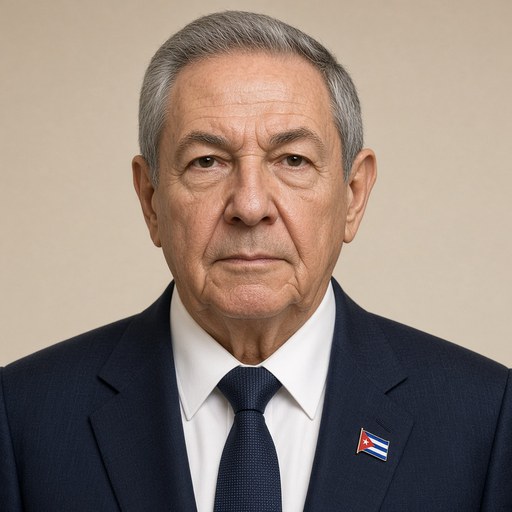
Raúl Castro: "CARICOM and Cuba will continue their path of effective integration."
 Raúl Castro · President of Cuba
- Context
- Castro addressed the IV CARICOM-Cuba Summit in Trinidad and Tobago on December 9, 2011, marking 39 years of Cuba-Caribbean diplomatic relations.
- Main themes
- CARICOM-Cuba relations, Caribbean integration, global economic crisis, climate change, South-South cooperation, neoliberalism critique, diplomatic history, Small Island Developing States, CELAC, cultural exchange, multilateralism, language and identity
- Duration
- ~23 min
- Words
- 2,734
- Sentences
- 91
- Readability
- 34
- Grade
- 15.9
- Syntax
- 3.28
- Vocabulary
- 2.52
Translated from Spanish
The broad sphere of national life a sentence belongs to. Every sentence has an Arena, so it is the denominator the other indices are read against.
Other91 sentences in 53 paragraphs
Honorable Kamla Persad-Bissessar, Prime Minister of Trinidad and Tobago;
Honorable Denzil Douglas, Prime Minister of Saint Kitts and Nevis, current President of CARICOM;
Honorable Prime Ministers and Presidents of CARICOM member countries;
His Excellency Ambassador Irwin LaRocque, Secretary-General of CARICOM;
Distinguished Heads of Delegations, Ministers, Representatives of Regional Organizations, and Special Guests.
I wish to express to the people and authorities of Trinidad and Tobago my sincerest gratitude for the expressions of friendship and solidarity that the Cuban delegation has received since our arrival in this brother country.
I especially acknowledge the magnificent preparation of the event and the dedication with which Honorable Kamla Persad-Bissessar and her government team have created the conditions for the IV CARICOM-Cuba Summit.
In the future, perhaps soon, the President representing my country will be able to do so in English: I speak English very very bad.
Indeed, my mother always worried that we would study, like all mothers, and in a boarding school where we were for three to four months; we would go out to visit family, we lived in the countryside. My mother hired an extra English teacher at home, a magnificent woman who was Jamaican and of whom I have a wonderful memory; but when my mother turned her back, I would go out to play ball or baseball, and I advised the teacher not to inform my mother of anything. I don’t know what she would do, she would be in a dilemma; but the point was that my mother was always chasing me around the ball fields that were near the house.
That is to say, at my age it will be difficult, but the next one must speak English. It is a necessity for our country, not only because of the proximity of our northern neighbors; if it were for that, we would prefer to be mute; we do it not only because of the importance of that language on a global scale in all aspects, but also because we are Caribbean, and all Caribbean people, as the honorable Prime Minister of Trinidad and Tobago very well expressed, must speak Spanish and, in the case of Spanish speakers, English as well.
On a day like today, 39 years ago, four Caribbean countries that had achieved their independence bravely and sovereignly decided to establish diplomatic relations with Cuba.
Cuba will never forget such a noble gesture and will eternally recognize the attitude of leaders Errol Barrow, Forbes Burnham, Michael Manley, and Eric Williams, who paved the way for a relationship based on mutual respect, friendship, and cooperation between CARICOM member countries and Cuba.
Next year we will commemorate the 40th anniversary of that historic event of 1972, significant for the Caribbean and of enormous importance for Cuba. We intend to celebrate it by dedicating the International Book Fair, the most significant cultural event of the Cuban publishing movement, in 2012, to the Caribbean, its works, and its authors, as recognition of the culture and common thought of our peoples. This activity is not only celebrated in the capital of the republic, it is celebrated in all provincial capitals, in all cities, and in a good number of the 168 municipalities that my country has.
Our IV Summit takes place at a time when humanity faces great challenges and dangers.
Recently in Caracas, during the founding Summit of CELAC, I referred to the fact that "we share a complex and tumultuous world, in which peoples rebel against injustices, imperialist policies of plunder, the concentration of wealth, corruption, and abuse of power. This is a phenomenon particularly expressed in North Africa, the Middle East, almost all of Europe, and North America. It is an expression of the collapse of ruthless neoliberal economic models already known and repudiated in our region. It is also a world in which great powers violate International Law, exercise their domination through the use of force, and attack sovereign nations under the guise of pretexts and manipulations."
When assessing our common challenges, it is impossible to overlook the growing impact of the global economic crisis, the magnitude and scope of which are still unknown. Its devastating effects extend across all continents.
The countries of the South suffer from the distortions of a world economic order that excludes our legitimate interests. We suffer the impact of protectionism and the sustained increase in subsidies and the prices of food and hydrocarbons. The populations of developing countries are the main victims of the exhaustion of the prevailing model and the plundering of natural resources.
Climate change is an evident global threat that demands urgent - and I repeat the term urgent - just and balanced solutions that involve all countries of the world in a real and effective way. In this regard, which particularly harshly affects the viability of the Small Island Developing States of the Caribbean and the Pacific, the selfishness and lack of political will of developed countries have not allowed for a decisive and comprehensive response to halt the growing environmental deterioration, nor to grant our nations the special treatment that their insular condition requires.
Recent studies conducted by Cuban scientists over the past five years on the vulnerabilities of coastal systems in our region warn that sea level rise between 2050 and 2100 will be in a range of 27 to 85 centimeters, a reality with strong geographical, demographic, and economic implications for our island states. In the case of Cuba, the study estimates that by 2050, 2.32% of the national territory could be permanently submerged, which would imply that if adaptation measures are not taken - which we have already begun to implement gradually - 79 coastal settlements would be affected and 15 would completely disappear, and they are not the most important in terms of the total number of affected - to avoid extending these words too much - an experience that we would share with all the countries of the Caribbean and other regions of the world that may be interested.
Indeed, the fact that 79 settlements would be affected and that 15 would completely disappear is not an exact figure; there will be many more if this sea level rise occurs. From 27% in the year fifty to 85% by the end of the century, which, as you know, time passes quickly and, more than time, we pass; time remains the same. And if we now say in 50, 80, or 100 years, it seems like a long time; but when we have already lived 80 years and look back, it seems like we are seeing that it was just a while ago.
I do not have the figure at this moment, mentally, of what percentage of our population in our condition as an island country lives near the sea. Cuba is also a country of around 111,000 square kilometers, with a longitudinal axis of about 1,250 kilometers; that is, long and narrow, and therefore, there are a huge number of citizens who live near the sea. It is not just this data of 79 settlements and that 15 will disappear. The southern coast, a large part of the southern coast of the island is very low, and although it may not be permanently submerged in the waters of the Caribbean Sea, every time there is a storm or a simple surge of the sea due to bad weather, the waters will invade part of the territory and although they return later to their normal or previous situation, they will leave us with terrible salinity with consequences for agriculture, in addition to the other elements I have mentioned that will be quite terrible.
We have already begun to take measures: some populations that were devastated in the south, for example, in the province of Camagüey, where the population demanded that their homes be built in the same place, I personally went there, spoke to all the affected, and explained to them that we could not build them in the same place due to all the previous elements we have, even since 1932. In that town, called Santa Cruz del Sur, there is a monument that represents the hand of a drowned person, several meters high, pointing out, after a hurricane, the retreat of the sea. There, a tsunami simply wiped out all the people who were in that place; thousands were killed. It was not difficult to convince them, of course, that we have to continue using the houses that were not damaged for being more resistant, but all the new ones we built several kilometers further north of their old location. And we have already begun to show that we cannot continue building in many low-lying coastal areas. And this happened in 2008 when three hurricanes in the span of two months, which were quite strong, affected the entire country; one started in the eastern provinces and exited through the west. There was another, the first, named Gustav - we are not the ones who name them in that area, they used to have female names; now they alternate, one year female and the next year male - which hit the largest island after Cuba, the Isle of Youth, and when I flew over it by helicopter after this natural event, it looked like it had received a nuclear hit, especially starting with the most fragile homes.
That is to say, hundreds of kilometers of roads were also affected, and thousands of telephone and electric poles that run along that route. A very costly road of about 250 kilometers, a promise we made during the liberation war to the farmers of the Sierra Maestra, which was very costly, took us several years to complete, is already being destroyed by the blows of the sea, not just by hurricanes, but by a simple bad weather.
I apologize for having extended on these data, but since we all have an insular condition, I think they are interesting and it is one of the topics we must study, for which you can count on our modest cooperation in all Caribbean countries. I believe it can be useful to foresee the future and mitigate the damages that may be done to us, especially to preserve human lives.
In these three hurricanes, in these disasters that we were pointing out, there was not a single death in those devastated towns because we had simply evacuated them hours before.
For that reality, the fight against climate change must be accompanied by the transfer of technology from the industrialized North to the underdeveloped South and access to new financial resources that ensure that our countries can adapt and adopt measures that allow for their sustainable development.
The absence of concrete progress towards a real solution in the negotiations on Climate Change responds to the irresponsible attitude of those who benefit from irrational waste, disasters, and military confrontations. The results of the 17th Conference on Climate Change, which will close its sessions tomorrow in Durban, South Africa, show, so far, that they will not meet the legitimate and essential needs of underdeveloped countries, particularly small island developing states.
In this complex global context, CARICOM and Cuba will continue their path of effective integration and mutual solidarity.
Cuba does not forget the Caribbean demand to end the economic, commercial, and financial blockade imposed on our noble and heroic people by the government of the United States for more than fifty years, the essence of which has remained unchanged. The "changes" so often announced by the current President of the United States have not gone beyond a certain relaxation of travel to Cuba for Cuban citizens residing in the United States and the remittance of their remittances, which were the last feats carried out by the previous president, namely, a certain Bush (son). The expectations of the so-called Summit of the Americas in 2009, in this city, did not transcend rhetoric, much less now that we enter an election year.
Latin America and the Caribbean are today advancing towards new and higher forms of integration, with the conviction that we are united in the defense of the rights of the peoples of the region, as an inseparable part of the project dreamed of by the heroes of our independence.
The formation of the Community of Latin American and Caribbean States is a sign that we are moving in the right direction. Cuba will act with full commitment, convinced that Latin American integration would be impossible and incomplete without the Caribbean and that the interests of CARICOM must also be those of our entire region.
The Caribbean Community has developed relationships of friendship and respect among its members and has accumulated organizational and working experience that should be leveraged in the process of consolidating and strengthening this nascent organization, CELAC, which will be a long road, full of obstacles, including those that arise from ourselves, and one of the fundamental issues amid that diversity and tolerance is to be able to have patience and to advance continuously, little by little, but always advancing and never stagnating.
At this gathering of Caribbean brotherhood, we reiterate the historical and ethical responsibility of Latin America and the Caribbean with the sister Republic of Haiti, the first to achieve independence in our region, where the first victorious social revolution in the history of humanity took place. We must continue to strive to contribute to its reconstruction and development, strictly adhering to the will of its government and the needs of its people.
Regarding our collaboration with the brother Haitian people and the modest effort we are making there, I have reiterated, on more than one occasion, that we will remain in Haiti for as long as necessary, if the Government of that nation so decides.
A united and supportive Caribbean is our only path. The cooperation we have developed among ourselves has undeniable achievements in the areas of health, education, agriculture, and disaster response, which were already mentioned this morning by the honorable Prime Minister of Trinidad and Tobago. Cuba reaffirms its willingness to continue strengthening relations with the member countries of CARICOM and to find ways to implement new collaboration projects and increase the effectiveness of those already existing.
Thank you very much.
Army General Raúl Castro Ruz, President of the Councils of State and Ministers of Cuba, alongside the Prime Minister of Trinidad and Tobago, Kamla Persad-Bissessa, during the IV CARICOM-CUBA Summit, which is being held at the National Academy of the Performing Arts in Port of Spain, on December 8, 2011. AIN PHOTO/Frederic DUBRAY/AFP/
Army General Raúl Castro Ruz, President of the Councils of State and Ministers of Cuba, alongside the Prime Minister of Trinidad and Tobago, Kamla Persad-Bissessa, and the Prime Minister of Saint Kitts and Nevis and President of the Caribbean Community (CARICOM), Denzil Douglas, during the IV CARICOM-CUBA Summit, at the National Academy of the Performing Arts in Port of Spain, on December 8, 2011. AIN PHOTO/Frederic DUBRAY/AFP/
Army General Raúl Castro Ruz, President of the Councils of State and Ministers of Cuba, speaks at the inauguration of the IV CARICOM-CUBA Summit, which is being held at the National Academy of the Performing Arts in Port of Spain, Trinidad and Tobago, on December 8, 2011. AIN PHOTO/Frederic DUBRAY/
Army General Raúl Castro Ruz, President of the Councils of State and Ministers of Cuba, speaks at the inauguration of the IV CARICOM-CUBA Summit, which is being held at the National Academy of the Performing Arts in Port of Spain, Trinidad and Tobago, on December 8, 2011. AIN PHOTO/Frederic DUBRAY/AFP/
Opinion
Politics
The Dehistoricization of Time May 6, 2026 | +
Antipodes May 4, 2026 | 4
There is no justification for aggression against Cuba May 4, 2026 | 14
Letter from Havana May 3, 2026 | 3 |
Díaz-Canel: “Cuba will not fail the hope of the world” May 2, 2026 | 14 |
go to Opinion »
The Dehistoricization of Time May 6, 2026 | +
Cuban Foreign Minister: “The Secretary of State stated that there is no oil blockade against Cuba. He has simply chosen to lie” May 5, 2026 | 10
The new executive order from the U.S. president: An unprecedented aggression against Cuba May 5, 2026 | 10 |
May 1: Ultra-rich and poor workers in the Argentina of Llao Llao May 5, 2026 | 3
Confessions of the Secretary of State May 5, 2026 | 9 go to Politics »
The original Spanish. The tags above are read on the English translation's sentences.
Honorable Kamla Persad-Bissessard, primera ministra de Trinidad y Tobago;
Honorable Denzil Douglas, primer ministro de San Cristóbal y Nevis, presidente en ejercicio de CARICOM;
Honorables Primeros Ministros y Presidentes de los países miembros de CARICOM;
Su Excelencia Embajador Irwin LaRocque, secretario general de CARICOM;
Distinguidos Jefes de Delegaciones, Ministros, Representantes de Organismos Regionales e Invitados Especiales.
Deseo expresar al pueblo y a las autoridades de Trinidad y Tobago el más sincero agradecimiento por las muestras de amistad y solidaridad que ha recibido la delegación cubana desde nuestra llegada a este hermano país.
Reconozco especialmente la magnífica preparación del evento y la dedicación con que la Honorable Kamla Persad-Bissessard y su equipo de gobierno han creado las condiciones para la realización de la IV Cumbre CARICOM-Cuba.
En un futuro, tal vez cercano, el Presidente que en ese caso represente a mi país podrá hacerlo en inglés: I speak english very very bad (Risas).
Realmente mi mamá siempre tuvo la preocupación de que estudiáramos, como todas las madres, y en un colegio interno donde estábamos de tres a cuatro meses; salíamos de visita para ver a la familia, vivíamos en el campo. Mi mamá me ponía una profesora extra, en la casa, de inglés, una magnífica mujer que era jamaicana y de la cual guardo un magnífico recuerdo; pero cuando mi mamá daba la espalda, yo me iba a jugar pelota o béisbol, y le recomendaba a la maestra que no informara nada a mi mamá. No sé qué ella haría, se vería en un dilema; pero la cuestión era que mi mamá siempre andaba cayéndome detrás por los campos de pelota que quedaban cerca de la casa.
Es decir que ya a mi edad va a ser difícil, pero el próximo debe hablar inglés. Es una necesidad para nuestro país, no solo por las proximidades de los vecinos del Norte; si fuera por eso, preferíamos ser mudos; lo hacemos no solo por la importancia de ese idioma a escala mundial en todos los aspectos, sino, además, porque somos caribeños, y todos los caribeños, como muy bien expresaba la honorable Primera Ministra de Trinidad y Tobago, deben hablar español y a su vez inglés, en el caso de los hispanoparlantes (Aplausos).
Un día como hoy, 39 años atrás, cuatro países caribeños que habían alcanzado su independencia decidieron, de manera valiente y soberana, establecer relaciones diplomáticas con Cuba.
Cuba no olvidará jamás tan noble gesto y reconocerá eternamente la actitud de los líderes Errol Barrow, Forbes Burnham, Michael Manley y Eric Williams, quienes abrieron el paso a una relación basada en el respeto mutuo, la amistad y la cooperación entre los países miembros de CARICOM y Cuba.
El próximo año conmemoraremos el 40 aniversario de aquel acontecimiento histórico de 1972, relevante para el Caribe y de enorme trascendencia para Cuba. Nos proponemos celebrarlo dedicando la Feria Internacional del Libro, el evento cultural más significativo del movimiento editorial cubano, en el año 2012, al Caribe, sus obras y sus autores, como reconocimiento a la cultura y el pensamiento común de nuestros pueblos. Es una actividad que no solo se celebra en la capital de la república, se celebra en todas las capitales de provincias, en todas las ciudades y en una buena cantidad de los 168 municipios que tiene mi país.
Nuestra IV Cumbre tiene lugar en un momento en que la humanidad enfrenta grandes desafíos y peligros.
Recientemente en Caracas, en el marco de la Cumbre constitutiva de la CELAC referí que "compartimos un mundo complejo y convulso, en el que los pueblos se rebelan contra las injusticias, las políticas imperialistas de saqueo, la concentración de la riqueza, la corrupción y el abuso del poder. Se trata de un fenómeno expresado particularmente en el Norte de África, el Medio Oriente, casi toda Europa y Norteamérica. Es expresión del colapso de despiadados modelos económicos neoliberales ya conocidos y repudiados en nuestra región. Es también un mundo en el que las grandes potencias violan el Derecho Internacional, ejercen su dominación mediante el uso de la fuerza y agreden a naciones soberanas al amparo de pretextos y manipulaciones".
Al evaluar nuestros desafíos comunes, resulta imposible obviar el creciente impacto de la crisis económica global, cuya envergadura y alcance aún se desconocen. Sus efectos devastadores se extienden por todos los continentes.
Los países del Sur padecemos las distorsiones de un orden económico mundial que excluye nuestros intereses legítimos. Sufrimos el impacto del proteccionismo y del incremento sostenido de los subsidios y los precios de alimentos e hidrocarburos. Las poblaciones de los países en desarrollo somos las principales víctimas del agotamiento del modelo imperante y del saqueo de los recursos naturales.
El cambio climático es una evidente amenaza global que reclama soluciones urgentes -y repito el término urgentes-, justas y equilibradas, que involucren de forma real y efectiva a todos los países del mundo. En este aspecto, que lesiona con particular crudeza la viabilidad de los Pequeños Estados Insulares del Caribe y el Pacífico, el egoísmo y la falta de voluntad política de los países desarrollados no ha permitido dar una respuesta decidida y abarcadora para detener el creciente deterioro ambiental, ni otorgar a nuestras naciones el trato especial que requiere su condición insular.
Estudios realizados recientemente por científicos cubanos durante los últimos cinco años sobre vulnerabilidades de los sistemas costeros en nuestra región, alertan que la elevación del nivel del mar entre el 2050 y el 2100 estará en un rango entre 27 y 85 centímetros, realidad con fuertes implicaciones geográficas, demográficas y económicas para nuestros estados insulares. En el caso de Cuba, se estima en el estudio que en el 2050 podría quedar sumergido de forma permanente un 2,32% del territorio nacional, lo que implicaría que de no tomarse las medidas de adaptación -que ya iniciamos paulatinamente-, se afectarían 79 asentamientos costeros y 15 desaparecerían totalmente, y no son los más importantes por la cantidad total de afectación -para no extender mucho estas palabras-, experiencia que les trasmitiríamos a todos los países del Caribe y de otras regiones del mundo que les interese.
Realmente que se afectarían 79 asentamientos y que 15 desaparecerán totalmente no es un dato exacto, van a ser muchos más si se produce esta elevación del mar. De un 27% el año cincuenta y un 85% a fin del siglo, que, como ustedes saben, el tiempo pasa rápido y, más que el tiempo, pasamos nosotros; el tiempo es el mismo. Y si ahora decimos dentro de 50, 80 o 100 años, nos parece que es mucho tiempo; pero cuando ya hemos vivido 80 años y miramos hacia atrás, nos parece estar viendo que fue hace un rato.
No tengo el dato en este momento, mentalmente, de qué porcentaje de nuestra población en nuestra condición de país insular vive cerca del mar. Cuba es, además, un país de alrededor de 111 000 kilómetros cuadrados, con un eje longitudinal de unos 1 250 kilómetros; o sea, largo y estrecho, y, por lo tanto, hay una enorme cantidad de ciudadanos que viven cerca del mar. No es solo este dato de 79 asentamientos y que 15 desaparecerán. La costa sur, una gran parte de la costa sur de la isla es muy baja, y aunque no quede permanentemente sumergida en las aguas del Mar Caribe, cada vez que haya tormenta o una simple surgencia del mar por un estado de mal tiempo, las aguas invadirán parte del territorio y aunque regresen después a su situación normal o anterior, nos dejarán una terrible salinidad con consecuencias en la agricultura, además de los demás elementos que he mencionado que serán bastante terribles.
Ya hemos empezado a tomar medidas: algunas poblaciones que fueron arrasadas en el sur, por ejemplo, en la provincia de Camagüey, donde la población exigía que se le construyera en el mismo lugar su vivienda, fui personalmente allí, les hablé a todos los afectados y les expliqué que no podríamos construírselas en el mismo lugar por todos los elementos anteriores que tenemos, incluso desde 1932. En ese pueblo, llamado Santa Cruz del Sur, hay un monumento que representa la mano de un ahogado, de varios metros, que está señalando, después de un huracán, la retirada del mar. Allí un maremoto arrasó sencillamente con todas las personas que había en dicho lugar; fueron miles los muertos. No fue difícil convencerlos, naturalmente, de que tenemos que seguir usando las viviendas que no fueron dañadas por ser más resistentes, pero todas las nuevas las hicimos varios kilómetros más al Norte de su antigua ubicación. Y ya empezamos a manifestar que no podemos seguir construyendo en muchos lugares bajos de las costas. Y esto sucedió en el 2008 cuando tres huracanes en el lapso de dos meses, que fueron bastante fuertes, afectaron todo el país; hubo uno que empezó por las provincias orientales y salió por el occidente. Hubo otro, el primero, de nombre Gustav -no somos nosotros los que les ponemos los nombres en esa área, antes tenían nombres de mujer; ya alternan, un año de mujer y otro año de hombre-, que nos agarró la isla mayor después de Cuba, la Isla de la Juventud, y cuando la sobrevolé en helicóptero después de este evento natural, parecía un golpe nuclear lo que había recibido, sobre todo empezando por las viviendas más frágiles.
Es decir que fueron, además, cientos de kilómetros de carreteras afectados, y miles de postes telefónicos y eléctricos que van por esa ruta. Una costosísima carretera de unos 250 kilómetros, promesa que hicimos durante la guerra de liberación a los campesinos de la Sierra Maestra, que fue muy costosa, tardamos varios años en concluirla, ya se nos está desbaratando por los golpes del mar, no por huracanes solamente, sino por un simple mal tiempo.
Perdonen que me he extendido en estos datos, pero siendo todos, teniendo todos una condición insular, creo que son interesantes y es uno de los temas que debemos estudiar, por lo que pueden contar con nuestra modesta cooperación en todos los países caribeños. Creo que puede ser útil para poder prever el futuro y paliar los daños que nos pueden hacer, sobre todo para preservar las vidas humanas.
En estos tres huracanes, en estos desastres que les estábamos señalando, no hubo ni un solo muerto en esos pueblos arrasados porque sencillamente los habíamos evacuado horas antes.
Por esa realidad, el enfrentamiento al cambio climático debe ir acompañado de la transferencia de tecnología del Norte industrializado al Sur subdesarrollado y del acceso a nuevos recursos financieros que garanticen que nuestros países puedan adaptarse y adoptar medidas que les permitan su desarrollo sostenible.
La ausencia de progresos concretos hacia una solución real en las negociaciones sobre Cambio Climático responde a la actitud irresponsable de quienes se benefician del irracional despilfarro, las catástrofes y las confrontaciones bélicas. Los resultados de la 17 Conferencia sobre Cambio Climático, que cerrará sus sesiones mañana en Durban, Sudáfrica, muestran, hasta ahora, que no cubrirán las necesidades legítimas e imprescindibles de los países subdesarrollados, en particular, de los pequeños estados insulares en desarrollo.
En este complejo contexto global, CARICOM y Cuba continuarán su camino de integración efectiva y mutua solidaridad.
Cuba no olvida el reclamo caribeño de poner fin al bloqueo económico, comercial y financiero impuesto a nuestro noble y heroico pueblo por el gobierno de los Estados Unidos hace más de cincuenta años, cuya esencia ha permanecido inalterable. Los "cambios" tantas veces anunciados por el actual Presidente de los Estados Unidos, no han ido más allá de cierta flexibilización a los viajes a Cuba de los ciudadanos cubanos residentes en los Estados Unidos y a la remisión de sus remesas, que fueron las últimas hazañas llevadas a cabo por el anterior presidente, o sea, un tal Bush (hijo). Las expectativas de la llamada Cumbre de las Américas del 2009, en esta ciudad, no trascendieron la retórica, mucho menos ahora que entramos en año de elecciones.
América Latina y el Caribe avanzan hoy hacia nuevas y superiores formas de integración, con la convicción de que nos une la defensa del derecho de los pueblos de la región, como parte inseparable del proyecto soñado por los próceres de nuestra independencia.
La conformación de la Comunidad de Estados Latinoamericanos y Caribeños es una muestra de que avanzamos en el camino correcto. Cuba actuará con pleno compromiso, convencida de que la integración latinoamericana sería imposible e incompleta sin el Caribe y de que los intereses de CARICOM han de ser también los de toda nuestra región.
La Comunidad del Caribe ha desarrollado relaciones de amistad y respeto entre sus miembros y ha acumulado una experiencia organizativa y de trabajo que deberá ser aprovechada en el proceso de consolidación y fortalecimiento de esta naciente organización, la CELAC, que será un largo camino, lleno de obstáculos, incluso los que surgen de nosotros mismos y una de las cuestiones fundamentales en medio de esa diversidad y tolerancia es poder tener paciencia y avanzar continuamente, poco a poco, pero siempre avanzando y nunca estancándonos.
En esta cita de hermandad caribeña reiteramos la responsabilidad histórica y ética de América Latina y el Caribe con la hermana República de Haití, la primera en alcanzar la independencia en nuestra región, donde se produjo la primera revolución social victoriosa en la historia de la humanidad. Debemos continuar esforzándonos para contribuir a su reconstrucción y su desarrollo, con estricto apego a la voluntad de su gobierno y a las necesidades de su pueblo.
En cuanto a nuestra colaboración con el hermano pueblo haitiano y el modesto esfuerzo que realizamos allí, he reiterado, en más de una ocasión, que permaneceremos en Haití los años que sean necesarios, si el Gobierno de esa nación así lo dispone.
Un Caribe unido y solidario es nuestro único camino. La cooperación que hemos desarrollado entre nosotros cuenta con logros innegables en las áreas de la salud, la educación, la agricultura y el enfrentamiento a los desastres naturales, que ya fueron citados en la mañana de hoy por la honorable Primera Ministra de Trinidad y Tobago. Cuba ratifica su voluntad de continuar fortaleciendo las relaciones con los países miembros de CARICOM y de encontrar fórmulas que permitan la ejecución de nuevos proyectos de colaboración e incrementar la eficacia de los ya existentes.
Muchas gracias (Aplausos).
El General de Ejército Raúl Castro Ruz, presidente de los Consejos de Estado y de Ministros de Cuba, junto a la primera ministra de Trinidad y Tobago, Kamla Persad-Bissessa, durante la IV Cumbre CARICOM-CUBA, que sesiona en la Academia Nacional de las Artes Escénicas, en Puerto España, el 8 de diciembre de 2011. AIN FOTO/Frederic DUBRAY/AFP/
El General de Ejército Raúl Castro Ruz, presidente de los Consejos de Estado y de Ministros de Cuba, junto a la primera ministra de Trinidad y Tobago, Kamla Persad-Bissessa, y el primer ministro de Saint Kitts y Nevis y presidente de la Comunidad del Caribe (CARICOM), Denzil Douglas, durante la IV Cumbre CARICOM-CUBA, en la Academia Nacional de las Artes Escénicas, en Puerto España, el 8 de diciembre de 2011. AIN FOTO/Frederic DUBRAY/AFP/
El General de Ejército Raúl Castro Ruz, presidente de los Consejos de Estado y de Ministros de Cuba, interviene en la inauguración de la IV Cumbre CARICOM-CUBA, que se celebra en la Academia Nacional de las Artes Escénicas, en Puerto España, Trinidad y Tobago, el 8 de diciembre de 2011. AIN FOTO/Frederic DUBRAY/
El General de Ejército Raúl Castro Ruz, presidente de los Consejos de Estado y de Ministros de Cuba, interviene en la inauguración de la IV Cumbre CARICOM-CUBA, que se celebra en la Academia Nacional de las Artes Escénicas, en Puerto España, Trinidad y Tobago, el 8 de diciembre de 2011. AIN FOTO/Frederic DUBRAY/AFP/
Opinión
Política
La deshistorización del tiempo 6 mayo 2026 | +
Antípodas 4 mayo 2026 | 4
No existe justificación alguna para una agresión contra Cuba 4 mayo 2026 | 14
Carta desde La Habana 3 mayo 2026 | 3 |
Díaz-Canel: “Cuba no le fallará a la esperanza del mundo” 2 mayo 2026 | 14 |
ir aOpinión »
La deshistorización del tiempo 6 mayo 2026 | +
Canciller cubano: “El secretario de Estado afirmó que no existe un bloqueo petrolero a Cuba. Ha optado sencillamente por mentir” 5 mayo 2026 | 10
La nueva orden ejecutiva del presidente de EEUU: Una agresión inédita contra Cuba 5 mayo 2026 | 10 |
1 de Mayo: Ultra ricos y trabajadores pobres en la Argentina de Llao Llao 5 mayo 2026 | 3
Confesiones del Secretario de Estado 5 mayo 2026 | 9
ir aPolítica »