




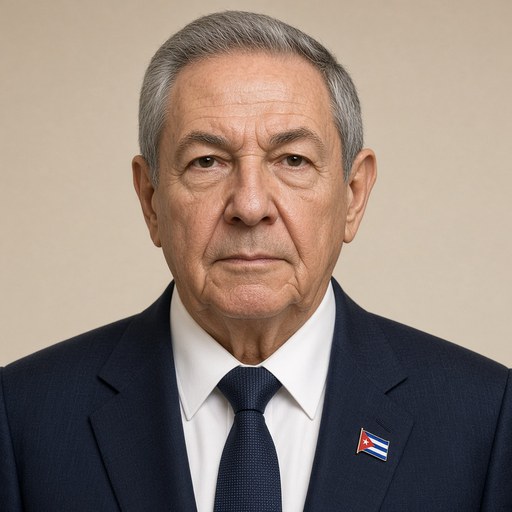
Speech delivered at the Seventh Ordinary Session of the VII Legislature of the Assembly.
 Raúl Castro · President of Cuba
- Context
- Castro addressed the Seventh Ordinary Session of the VII Legislature of Cuba's National Assembly on August 1, 2011, reporting on economic progress and Party Congress guidelines.
- Main themes
- Cuban economic performance, GDP growth, updating the Cuban economic model, economic guidelines of the Party Congress, agricultural and industrial shortcomings, energy efficiency, external finances and debt restructuring, financial discipline, investment management, provincial governance experiment, global economic crisis impacts, U.S. blockade
- Duration
- ~27 min
- Words
- 3,230
- Sentences
- 78
- Readability
- 23
- Grade
- 19.9
- Syntax
- 3.54
- Vocabulary
- 2.29
Translated from Spanish
The broad sphere of national life a sentence belongs to. Every sentence has an Arena, so it is the denominator the other indices are read against.
Other78 sentences in 57 paragraphs
Comrades:
Considering that in recent days we have held several meetings, including a very extensive Council of Ministers, the central event for the 58th anniversary of July 26, and the second Plenary of the Central Committee of the Party last Saturday, also with many guests, my intervention before this Assembly will be brief, as I will not repeat what has been raised in these activities.
Furthermore, the deputies in their respective commissions and in plenary have analyzed the detailed information regarding the progress of the economy in the first half of the year and the estimates for the rest of the year, as well as approved the settlement of the 2010 budget.
They have also been informed about the constitution and functioning of the Permanent Commission for Implementation and Development, created from the agreements of the Sixth Congress of the Party to lead the process of updating the Cuban economic model in a harmonious and comprehensive manner.
At the same time, the Parliament agreed today to support and approve in spirit and letter the Guidelines of the Economic and Social Policy of the Party and the Revolution, which will translate into an increased legislative effort to shape the legal and institutional foundations in favor of the functional, structural, and economic modifications of the country.
With that same purpose, the National Assembly authorized the experiment in the provinces of Artemisa and Mayabeque in the interest of separating the functions of the People's Power assemblies and the administrative councils, with the aim of studying this experience for its subsequent generalization, which will require prior modifications to be introduced in the Constitution of the Republic.
This frees me from going into details and allows me to focus on the most substantive aspects.
In the first half of the year, the economy grew by 1.9 percent compared to the same period last year, and it is estimated that the year will end with a growth of 2.9 percent of the Gross Domestic Product, known as GDP.
While the results are generally positive, there are still shortcomings in Agriculture, the Food, Sideromechanical, Light, and Construction Materials industries due to errors in planning and a lack of comprehensiveness in the management of these branches of the economy.
Despite the existing insufficiencies, it can be stated that the energy efficiency of the national economy improved, crude oil production increased, and although the production of associated gas decreased slightly, it is estimated that the plan for the year will be fulfilled.
On the other hand, the deterioration of sugar production has stopped, there was a significant increase in tourist arrivals, as well as superior results in various sectors, and an adequate internal monetary balance has been preserved, while maintaining a favorable correlation between productivity and average wages.
Exports increased and imports decreased. However, a tense situation in external finances persists, although it has been partially alleviated by the debt restructuring processes with our main creditors, which has contributed to continuing to reduce the withholdings on transfers abroad and places us in a position to affirm that they will be definitively eliminated before the end of this year, as announced by the Minister of Economy and Planning.
We will persist on the path of gradually recovering the international credibility of the Cuban economy.
The Council of Ministers in its session last June approved the general guidelines for the preparation of next year's plan, which must overcome the inconsistencies and poor reconciliation still present.
In 2012, the national economy will continue to be subjected to the effects of the global economic crisis, the rise in food prices announced by the Food and Agriculture Organization of the United Nations (FAO), as well as high fuel and other raw material prices, and restrictions on obtaining new financing will continue, in addition to those arising from the U.S. blockade.
These realities compel us to accelerate the improvement of the management work of the agencies and the performance of companies and other institutions and to redouble the retraining of leaders at all levels to make the content of the Guidelines approved by the Party Congress a reality, particularly regarding the need to elevate the role of accounting and internal control as indispensable instruments of business management and also of the contract, a decisive factor in the interrelations of the different actors in the economic life of the nation.
It is essential to restore financial discipline in the economy and to put an end to the superficiality and negligence that characterize the relationships of collections and payments in the country.
Regarding investments, it is true that progress has been made, but we have a long way to go to eliminate improvisation and costly irrationalities.
Moving on to another matter. In compliance with the agreements of the Sixth Congress, the Permanent Commission for Implementation and Development was created to lead the process of updating the economic model, including the functional and structural improvement of government at all levels, which, alongside proposing the introduction of specific changes in various areas of economic life in the short term, will elaborate the comprehensive theoretical conceptualization of the Cuban socialist economy, a task that, as can be understood, will require more time and much effort.
The Council of Ministers also approved the initial basic functional structure and composition of this Commission, defining its working principles, among which it is important to highlight that it does not replace the institutional responsibility of the agencies and entities, while maintaining the precept that all opinions must be analyzed and when consensus is not reached, the discrepancies will be raised to the higher instances authorized to decide.
Knowing the Cubans and for its importance, I repeat: all opinions must be analyzed and when consensus is not reached, the discrepancies will be raised to the higher instances authorized to decide, and furthermore, no one is mandated to prevent it.
Aside from the organizational definitions for the work of the Commission, the Government has been adopting different decisions in line with the Guidelines, including the additional flexibilization of self-employment and its tax regime, the approval of the policy to simplify the procedures for the transfer of property of housing and motor vehicles among citizens, the banking and credit policy for individuals, including self-employed workers, the definition of the bases for the preparation of the new Tax Law, the reduction of sale prices of implements and supplies to agricultural producers, and the marketing of various equipment, the sale of which was not allowed, and products in large format packaging in response to the demand from non-state management forms.
Another set of measures will continue to be studied for application in the coming months, about which I will not elaborate, considering the information provided in this session of the Assembly.
Now I will refer to a painful incident caused by errors in the application of the cadre policy and in the relationship towards religion that led to the unjust replacement of a comrade from the position she held with good results. By addressing this issue publicly, I aim to rectify that injustice and, in passing, present an eloquent example of the damage that outdated concepts, which are contrary to legality, still rooted in the mentality of not a few leaders at all levels, cause to individuals and to the Revolution itself.
The aforementioned comrade, whose identity, workplace, and even province I will withhold, not for the sake of useless secrecy, but out of respect for her privacy, comes from a humble background, is married, and is the mother of two children, both of whom, along with herself, are members of the Party, as is her retired husband; she has a distinguished work history and was a victim of the prevailing mentality at various levels of the Party and the State for professing religious beliefs and attending church services in her locality on some Sundays.
It was considered dishonest that she, as a Party member and administrative cadre, had not informed about her religiosity, something she was not obliged to do and which constitutes a flagrant violation of the citizen rights enshrined in the Constitution of the Republic, whose Article 43 on this matter states:
"The State enshrines the right won by the Revolution that citizens, without distinction of race, skin color, sex, religious beliefs, national origin, and any other that harms human dignity:
- Have access, according to merits and abilities, to all positions and jobs of the State, of the Public Administration, and of the production and provision of services..." (end of quote).
Then the decision to remove her from her position was masked with the application of the measure "release for renewal," using the pretext that although she had excellent results, there were no prospects for further promotion and therefore she should yield her position to another comrade. To complicate matters further, instructions were given not to touch on the religious issue in her workplace or in the Party nucleus when evaluating her replacement.
All this happened in February of this year; she began working in another entity, losing 40 percent of her salary, continued to be a Party member, and resigned herself in silence to the pain of the injustice committed, until after learning of the Central Report to the Sixth Congress, one day after it began, she decided on April 17 to send a complaint to the President of the Councils of State and Ministers, after which an investigative process was carried out that corroborated all her claims.
Of course, the comrade, if she wishes, must be reinstated in her previous position, as the Second Plenary of the Central Committee agreed to propose to the corresponding government instance last Saturday, July 30, and regardless of her decision, which is absolutely personal, let these words serve as an act of moral vindication.
Now, what good does this bitter experience and the damage caused to a Cuban family by attitudes based on an archaic mentality, fueled by simulation and opportunism, do us? More than once I have expressed that our worst enemy is not imperialism nor, much less, its hired hands on our soil, but our own mistakes, and that these, if analyzed deeply and honestly, will transform into lessons to avoid repeating them. Consequently, we must review this narrow and exclusionary vision definitively and adjust it to the reality that emanates from the agreements of the Fourth Congress in 1991 that modified the interpretation of the statutes that limited the entry of revolutionary believers into the organization and now those of the Sixth Congress of the Party.
Many years ago, our Revolution surpassed the stage of confrontation with some religious institutions, a period in which excesses were committed on both sides, to a greater or lesser extent. We are also aware of the enemy's aspirations to foster confrontation and suspicion between believers and the revolutionary process, calculations that have proven to be mistaken because from the very first moments, the vast majority of humble Cubans with religious beliefs supported the Revolution.
To those who harbor doubts about this, we recommend reading the Bush (son) Plan for the transition in Cuba, which, as far as we know, has not been repealed, and the role that is intended to be assigned to all religious organizations in its subversive strategy against our country and that, despite the failure harvested, we know they have not ceased in their attempts.
On this matter, much has been said by Fidel himself for decades and more recently in the Central Report to the Party Congress, in which a call was made - I quote -: "Continue eliminating any prejudice that prevents uniting in virtue and in the defense of our Revolution all Cubans, believers or not..." (end of quote).
Therefore, I do not consider it necessary to elaborate further on this and only highlight that attitudes such as those criticized here undermine our main weapon to strengthen national independence and sovereignty, namely, the Unity of the Nation.
This fact once again demonstrates that the greatest obstacle we face in fulfilling the agreements of the Sixth Congress is the psychological barrier formed by inertia, immobility, simulation or double standards, indifference, and insensitivity, and that we are obliged to overcome with constancy and firmness, first of all, the leaders of the Party, the State, and the Government at the different national, provincial, and municipal levels.
We will be patient and at the same time persevering in the face of resistance to change, whether conscious or unconscious. I warn that any bureaucratic resistance to the strict compliance with the agreements of the Congress, massively supported by the people, will be futile.
I have never been in favor of haste or abrupt changes; I prefer reasoning, convincing, educating, and adding to rather than sanctioning. However, in the face of violations of the Constitution and established legality, there is no alternative but to resort to the Prosecutor's Office and the Courts, as we have already begun to do, to demand accountability from the offenders, whoever they may be, because all Cubans, without exception, are equal before the law.
Without changing our mindset, we will not be able to undertake the necessary changes to guarantee sustainability, or in other words, the irrevocability of the socialist character and the political and social system enshrined in the Constitution of the Republic.
Let us clear our heads of nonsense of all kinds; do not forget that the first decade of the 21st century has already concluded, and it is time.
In the final words of the day before yesterday to the members of the Central Committee and other guests, when addressing this topic and suggesting that these words be said here, in the manner that has been done, I recalled that this comrade was born - according to the data - in January 1953. I then remembered that this was the year of the attack on Moncada and I told the members of the Central Committee: "I did not go to Moncada for that".
In the same way, we recalled that on July 30, the day of the mentioned meeting, it marked 54 years since the assassination of Frank País and his faithful companion Raúl Pujol. I met Frank in Mexico; I saw him again in the Sierra. I do not remember having known a soul as pure as his, so brave, so revolutionary, so noble and modest, and addressing one of those responsible for the injustice they committed, I said: Frank believed in God and practiced his religion; as far as I know, he never stopped doing so. What would you have done with Frank País?
Next, I will address another point of our current situation. As part of the measures being considered in the path of reducing prohibitions and regulations issued at other times during the revolutionary process in legitimate defense against the aggressions we have been subjected to for more than 50 years, and also modifying different decisions that played their role in certain circumstances and then unnecessarily persisted, I take this opportunity to inform the deputies and the citizens that we are working to implement the update of the current migration policy, for which we have been advancing in the reformulation and development of a set of regulatory norms in this area, adjusting them to the conditions of the present and the foreseeable future.
We take this step as a contribution to increasing the ties of the nation with the emigrant community, whose composition has changed radically compared to the initial decades of the Revolution, when the United States government sheltered the criminals of the Batista dictatorship, terrorists, and traitors of all kinds and encouraged the flight of professionals to bleed the country dry. Let us remember, just to mention one example, that of the six thousand doctors we had at the beginning of the Revolution in 1959, half - 3,000 - left for abroad.
Today, the overwhelming majority of Cuban emigrants do so for economic reasons, although a few still claim to be victims of political persecution to gain supporters and help from their sponsors abroad or to justify abandoning a mission or contract. The truth is that almost all preserve their love for the family and the homeland that saw them born and express solidarity in various ways towards their compatriots.
Precisely the aspirations to improve the standard of living constitute the main motivation for migratory movements, not only in Cuba but on a global scale, further encouraged by the blatant brain drain practiced by powerful countries to the detriment of the development of the Third World.
In our case, we cannot forget that we are the only country on the planet whose citizens are allowed to settle and work in the territory of the United States without any visa, regardless of the legality of the means used to achieve it, by virtue of the criminal Cuban Adjustment Act of 1966, 45 years ago, and the policy known as "wet feet, dry feet" that favors human trafficking and has caused numerous deaths of innocents.
This sensitive issue has been the subject of political and media manipulation for many years in an effort to denigrate the Revolution and turn it against Cubans living abroad.
No one in the major international press talks about the aforementioned Adjustment Act; it is as if it did not exist. Cuban emigrants are, as a result of the lie repeated thousands of times, referred to as "political exiles" fleeing communism. In other words, for them, citizens of Cuba "escape," while from the rest of the world, they emigrate.
What would happen if a Latin American, Asian, or African adjustment law were enacted in the United States or the European Union? The answer is obvious. There is the gigantic wall built on the northern border of Mexico and the thousands of deaths that occur year after year in deserts and seas adjacent to the centers of world power.
As is logical, the relaxation of migration policy will take into account the right of the revolutionary State to defend itself against the interventionist and subversive plans of the U.S. government and its allies, and at the same time, reasonable countermeasures will be included to preserve the human capital created by the Revolution against the talent theft practiced by the powerful.
So far on the topic of emigration.
On the other hand, the occasion is opportune to, on behalf of the deputies of the National Assembly and all the Cuban people, extend our congratulations to the President of Bolivarian Venezuela, comrade Hugo Chávez Frías, on his recent birthday and to convey our admiration for his exemplary fighting spirit in the face of adversity, as true revolutionaries do, and our absolute confidence that he will overcome this new test that life has imposed on him.
Finally, this session of the National Assembly began with the adoption, by acclamation of the deputies, of a resolution demanding that the government of the United States immediately end the unjust and illegal treatment against Gerardo Hernández Nordelo and calling for increased solidarity from parliamentarians and honest people around the world until we achieve the release of our Five Heroes and their unconditional return to the Homeland. It is precisely with this issue that I wish to conclude my words, conveying to you a strong embrace and the unwavering determination of our entire people to never cease in the struggle for your freedom.
That is all.
Thank you very much.
The original Spanish. The tags above are read on the English translation's sentences.
Compañeras y compañeros:
Considerando que en los últimos días hemos desarrollado varias reuniones, entre ellas un Consejo de Ministros muy ampliado, el acto central por el 58 aniversario del 26 de Julio, el segundo Pleno del Comité Central del Partido el pasado sábado, igualmente con muchos invitados, mi intervención ante esta Asamblea será breve, pues no voy a repetir lo planteado en estas actividades.
Además, los diputados en sus respectivas comisiones y en plenaria han analizado la información detallada acerca de la marcha de la economía en el primer semestre y los estimados para el resto del año, así como aprobaron la liquidación del presupuesto del 2010.
También han sido informados sobre la constitución y funcionamiento de la Comisión Permanente de Implementación y Desarrollo, creada a partir de los acuerdos del Sexto Congreso del Partido para conducir el proceso de actualización del modelo económico cubano de forma armónica e integral.
Al propio tiempo el Parlamento acordó en el día de hoy respaldar y aprobar en su espíritu y letra los Lineamientos de la Política Económica y Social del Partido y la Revolución, lo que se traducirá en una labor legislativa acrecentada para conformar las bases legales e institucionales a favor de las modificaciones funcionales, estructurales y económicas del país.
Con ese mismo propósito la Asamblea Nacional autorizó la realización del experimento en las provincias Artemisa y Mayabeque en interés de la separación de las funciones de las asambleas del Poder Popular y de los consejos de la administración, con el objetivo de estudiar esta experiencia para su ulterior generalización, lo cual requerirá previamente introducir las modificaciones pertinentes en la Constitución de la República.
Ello me libera de entrar en detalles y me permite concentrarme en los aspectos más sustantivos.
En el primer semestre la economía creció en 1.9 por ciento respecto a igual período del año anterior y se estima culminar el año con un crecimiento del 2.9 por ciento del Producto Interno Bruto, el llamado P.I.B.
Si bien los resultados en general son positivos, persisten incumplimientos en la Agricultura, las industrias Alimentaria, Sideromecánica, Ligera y de Materiales de la Construcción a causa de errores en la planificación y falta de integralidad en la dirección de estas ramas de la economía.
A pesar de las insuficiencias todavía existentes, puede afirmarse que mejoró la eficiencia energética de la economía nacional, creció la producción de petróleo crudo y aunque disminuyó de forma leve la de gas acompañante, se estima cumplir el plan del año.
Por otra parte, se detuvo el deterioro de la producción de azúcar, se registró un crecimiento significativo en el arribo de turistas, así como se obtuvieron superiores resultados en diversos sectores y se ha logrado preservar un adecuado equilibrio monetario interno, al tiempo que se mantiene una correlación favorable de la productividad y el salario medio.
Las exportaciones se incrementaron y decrecieron las importaciones. Sin embargo perdura una tensa situación en las finanzas externas, aunque aliviada parcialmente por los procesos de reestructuración de deudas con nuestros principales acreedores, lo que ha contribuido a continuar reduciendo las retenciones de transferencias al exterior y nos sitúa en condiciones de ratificar que las mismas serán suprimidas definitivamente antes de concluir el presente año, como anunció el Ministro de Economía y Planificación.
Persistiremos en el camino de recuperar paulatinamente la credibilidad internacional de la economía cubana.
El Consejo de Ministros en su sesión del pasado mes de junio aprobó los lineamientos generales para la elaboración del plan del próximo año, el cual debe superar las incoherencias y la deficiente conciliación, todavía presentes.
En el 2012 la economía nacional continuará sometida a los efectos de la crisis económica global, la escalada de los precios de los alimentos anunciada por la Organización de las Naciones Unidas para la Alimentación y la Agricultura (FAO), así como se mantendrán elevados los del combustible y otras materias primas, y proseguirán las restricciones para la obtención de nuevos financiamientos, además de las derivadas del bloqueo norteamericano.
Estas realidades nos obligan a acelerar el perfeccionamiento del trabajo de dirección de los organismos y el desempeño de las empresas y otras instituciones y redoblar la recalificación de los dirigentes en todos los niveles para hacer realidad el contenido de los Lineamientos aprobados por el Congreso del Partido, en particular en lo referido a elevar el papel de la contabilidad y el control interno como instrumentos insustituibles de la gestión empresarial y también del contrato, factor decisivo en las interrelaciones de los diferentes actores de la vida económica de la nación.
Se hace imprescindible reinstaurar la disciplina financiera en la economía y acabar con la superficialidad y negligencia que caracterizan las relaciones de cobros y pagos en el país.
En cuanto a las inversiones, es cierto que se ha avanzado, pero nos queda mucho trecho por recorrer para desterrar la improvisación y las costosas irracionalidades.
Pasando a otro asunto. En cumplimiento de los acuerdos del Sexto Congreso fue creada la Comisión Permanente para la Implementación y Desarrollo que conducirá el proceso de actualización del modelo económico, incluyendo el perfeccionamiento funcional y estructural del gobierno en todos los niveles, la que a la par de proponer la introducción, a corto plazo, de cambios puntuales en diversos ámbitos de la vida económica, elaborará la conceptualización teórica integral de la economía socialista cubana, tarea que, como se comprenderá, requerirá de más tiempo y mucho esfuerzo.
El Consejo de Ministros también aprobó la estructura funcional básica inicial y la composición de esta Comisión, definiendo sus principios de trabajo, entre los que cabe destacar que la misma no sustituye la responsabilidad institucional de los organismos y entidades, al tiempo que se mantiene el precepto de que todas las opiniones deben ser analizadas y cuando no se alcance el consenso, las discrepancias se elevarán a las instancias superiores facultadas para decidir.
Conociendo a los cubanos y por su importancia repito: todas las opiniones deben ser analizadas y cuando no se alcance el consenso, las discrepancias se elevarán a la s instancias superiores facultadas para decidir y además nadie está mandatado para impedirlo.
Al margen de las definiciones organizativas para el trabajo de la Comisión, se han venido adoptando por el Gobierno diferentes decisiones en consonancia con los Lineamientos, entre ellas, la flexibilización adicional del trabajo por cuenta propia y su régimen tributario, la aprobación de la política para simplificar los trámites de la transferencia de la propiedad de la vivienda y vehículos automotores entre los ciudadanos, la política bancaria y de créditos a las personas naturales, incluyendo los trabajadores por cuenta propia, la definición de las bases para la elaboración de la nueva Ley Tributaria, la reducción de los precios de venta de implementos e insumos a los productores agropecuarios y la comercialización de equipos diversos, cuya venta no estaba permitida, y productos en envases de gran formato en respuesta a la demanda de las formas no estatales de gestión.
Se continuará estudiando otro conjunto de medidas para su aplicación en los próximos meses, acerca de las cuales no me extenderé, considerando la información brindada en esta sesión de la Asamblea.
Ahora me referiré a un doloroso incidente causado por errores en la aplicación de la política de cuadros y en la relación hacia la religión que motivaron la sustitución injusta de una compañera del cargo que desempeñaba con buenos resultados. Al abordar esta cuestión públicamente persigo el objetivo de reparar esa injusticia y de paso presentarles un ejemplo elocuente del daño que ocasionan a las personas y a la propia Revolución conceptos obsoletos, por demás contrarios a la legalidad, todavía enraizados en la mentalidad de no pocos dirigentes en todos los niveles.
La citada compañera, de quien me reservo la identidad, el centro de trabajo e incluso la provincia, no en aras del secretismo inútil, sino del respeto a su privacidad, es de origen humilde, casada y madre de dos hijos, los dos y ella misma militantes del Partido, al igual que su esposo ya jubilado; con una destacada trayectoria laboral, y fue víctima de la mentalidad imperante, en distintos niveles del Partido y el Estado, por profesar creencias religiosas y acudir algunos domingos al culto en la iglesia de su localidad.
Se consideró deshonesto que ella, como militante del Partido y cuadro administrativo, no hubiese informado de su religiosidad, algo que por otra parte no estaba obligada a hacer y que constituye una flagrante violación de los derechos ciudadanos refrendados en la Constitución de la República, cuyo artículo 43 sobre este tema expresa:
"El Estado consagra el derecho conquistado por la Revolución de que los ciudadanos, sin distinción de raza, color de la piel, sexo, creencias religiosas, origen nacional y cualquier otra lesiva a la dignidad humana:
- Tienen acceso, según méritos y capacidades, a todos los cargos y empleos del Estado, de la Administración Pública y de la producción y prestación de servicios..." (fin de la cita).
Entonces se enmascaró la decisión de sacarla del cargo con la aplicación de la medida "liberación por renovación", esgrimiendo el pretexto de que aunque tenía magníficos resultados no se vislumbraban posibilidades de promoción ulterior y por tanto debía ceder su puesto a otro compañero. Para complicar más la situación, dieron indicaciones de no tocar el tema religioso en su centro laboral ni en el núcleo del Partido al valorar su sustitución.
Todo esto sucedió en febrero del presente año, ella comenzó a trabajar en otra entidad, perdiendo el 40 por ciento de su ingreso salarial, siguió militando en el Partido y se resignó en silencio al dolor de la injusticia cometida, hasta que posterior a conocer el Informe Central al Sexto Congreso, un día después de comenzar este, decidió el 17 de abril remitir una queja al Presidente de los Consejos de Estado y de Ministros, tras lo cual se realizó un proceso investigativo que corroboró todos sus planteamientos.
Por supuesto que la compañera, si así lo desea, debe ser repuesta en su anterior cargo, como acordó proponer a la instancia del gobierno correspondiente el Segundo Pleno del Comité Central el pasado sábado 30 de julio, y al margen de su decisión, absolutamente personal, sirvan estas palabras como un acto de reivindicación moral.
Ahora bien, de qué nos sirve esta amarga experiencia y el daño ocasionado a una familia cubana por actitudes basadas en una mentalidad arcaica, alimentada por la simulación y el oportunismo. Más de una vez he expresado que nuestro peor enemigo no es el imperialismo ni mucho menos sus asalariados en suelo patrio, sino nuestros propios errores y que éstos, si son analizados con profundidad y honestidad, se transformarán en lecciones para no volver a incurrir en ellos. En consecuencia, hay que revisar toda esta visión estrecha y excluyente, de manera definitiva, y ajustarla a la realidad que emana de los acuerdos del Cuarto Congreso en 1991 que modificaron la interpretación de los estatutos que limitaba el ingreso a la organización de los revolucionarios creyentes y ahora los del Sexto Congreso del Partido.
Hace muchos años que nuestra Revolución superó el escenario de confrontación con algunas de las instituciones religiosas, etapa en la que por ambas partes se cometieron excesos de mayor o menor envergadura. No ignoramos tampoco las aspiraciones del enemigo de fomentar el enfrentamiento y el recelo entre los creyentes y el proceso revolucionario, cálculos que han resultado equivocados porque desde los primeros momentos la inmensa mayoría de los cubanos humildes con creencias religiosas apoyaron a la Revolución.
A quien albergue dudas sobre ello, le recomendamos dar una lectura al Plan Bush (hijo) para la transición en Cuba, el cual que sepamos no ha sido derogado, y el papel que se pretende adjudicar a todas las organizaciones religiosas en su estrategia subversiva contra nuestro país y que, a pesar del fracaso cosechado, sabemos que no han cejado en sus intentos.
Sobre el particular bastante se ha dicho por el propio Fidel desde hace decenas de años y más recientemente en el Informe Central al Congreso del Partido, en el que se hizo un llamamiento -cito-: "Continuar eliminando cualquier prejuicio que impida hermanar en la virtud y en la defensa de nuestra Revolución a todas y a todos los cubanos, creyentes o no..." (fin de la cita).
Por ello no considero necesario abundar al respecto y sólo destacar que actitudes como las aquí criticadas atentan contra nuestra principal arma para afianzar la independencia y la soberanía nacional, o sea, la Unidad de la Nación.
Ese hecho pone de manifiesto, una vez más, que el mayor obstáculo que enfrentamos en el cumplimiento de los acuerdos del Sexto Congreso es la barrera sicológica formada por la inercia, el inmovilismo, la simulación o doble moral, la indiferencia e insensibilidad y que estamos obligados a rebasar con constancia y firmeza, en primer lugar, los dirigentes del Partido, el Estado y el Gobierno en las diferentes instancias nacionales, provinciales y de los municipios.
Seremos pacientes y a la vez perseverantes ante las resistencias al cambio, sean estas concientes o inconscientes. Advierto que toda resistencia burocrática al estricto cumplimiento de los acuerdos del Congreso, respaldados masivamente por el pueblo, será inútil.
Nunca he sido partidario del apresuramiento ni de los cambios bruscos, prefiero mil veces razonar, convencer, educar y sumar que sancionar, pero ante las violaciones de la Constitución y de la legalidad establecida no queda otra alternativa que recurrir a la Fiscalía y los Tribunales, como ya empezamos a hacer, para exigir responsabilidad a los infractores, sean quienes sean, porque todos los cubanos, sin excepción, somos iguales ante la ley.
Sin cambiar la mentalidad no seremos capaces de acometer los cambios necesarios para garantizar la sostenibilidad, o lo que es lo mismo, la irrevocabilidad del carácter socialista y del sistema político y social consagrados en la Constitución de la República.
Limpiémonos la cabeza de tonterías de todo tipo, no olviden que ya concluyó la primera década del siglo XXI, y es hora.
En las palabras finales de antes de ayer a los miembros del Comité Central y demás invitados, al tocar este tema y plantearles la sugerencia de que estas palabras fueran dichas aquí, en la forma que se ha hecho, recordaba que esa compañera nació -según los datos- en el mes de enero de 1953. Recordé seguidamente que ese fue el año del ataque al Moncada y les dije a los miembros del Comité Central: "Yo no fui al Moncada para eso" (Aplausos).
De la misma forma, recordábamos que el 30 de julio, día de la reunión mencionada, se cumplían 54 años del asesinato de Frank País y de su fiel acompañante Raúl Pujol. Yo conocí a Frank en México, lo volví a ver en la Sierra, no recuerdo haber conocido un alma tan pura como esa, tan valiente, tan revolucionaria, tan noble y modesta, y dirigiéndome a uno de los responsables de esa injusticia que cometieron, le dije: Frank creía en Dios y practicaba su religión, que yo sepa nunca dejó de hacerlo ¿Qué hubieran hecho ustedes con Frank País?
A continuación trataré otro punto de nuestra actualidad. Como parte de las medidas que se valoran en la senda de reducir prohibiciones y regulaciones emitidas en otros momentos del proceso revolucionario en legítima defensa ante las agresiones a que hemos sido sometidos por más de 50 años y también modificar diferentes decisiones que jugaron su papel en determinadas circunstancias y después perduraron innecesariamente, aprovecho la oportunidad para informar a los diputados y a los ciudadanos que nos encontramos trabajando para instrumentar la actualización de la política migratoria vigente, en función de lo cual se ha venido avanzando en la reformulación y elaboración de un conjunto de normativas reguladoras en esta esfera, ajustándolas a las condiciones del presente y el futuro previsible.
Damos este paso como una contribución al incremento de los vínculos de la nación con la comunidad de emigrantes, cuya composición ha variado radicalmente con relación a las décadas iniciales de la Revolución, en que el gobierno de Estados Unidos amparó a los criminales de la dictadura batistiana, a terroristas y traidores de todo tipo y estimuló la fuga de profesionales para desangrar al país. Recordemos, por sólo mencionar un ejemplo, que de seis mil médicos con que contábamos al comienzo de la Revolución, en 1959, la mitad -3 000- partió al extranjero.
Hoy los emigrados cubanos en su aplastante mayoría lo son por razones económicas, si bien algunos pocos todavía alegan ser víctimas de persecución política para granjearse adeptos y ayuda de sus patrocinadores en el exterior o justificar el abandono de una misión o contrato. Lo cierto es que casi todos preservan su amor por la familia y la patria que los vio nacer y manifiestan de diferentes formas solidaridad hacia sus compatriotas.
Precisamente las aspiraciones de mejorar el nivel de vida constituyen la principal motivación para los movimientos migratorios, no solo en Cuba, sino a escala global, alentados además por el descarado robo de cerebros que practican los países poderosos en detrimento del desarrollo del Tercer Mundo.
En nuestro caso, no podemos olvidar que somos el único país del planeta a cuyos ciudadanos se les permite asentarse y trabajar en el territorio de Estados Unidos sin visa alguna, con independencia de la legalidad del modo empleado para lograrlo, en virtud de la criminal Ley de Ajuste Cubano de 1966, hace 45 años, y la política llamada de "pies secos y pies mojados" que favorece el tráfico de personas y ha provocado numerosas muertes de inocentes.
Este sensible asunto ha sido objeto de manipulación política y mediática durante largos años en el propósito de denigrar a la Revolución y enemistarla con los cubanos que viven en el extranjero.
Nadie en la gran prensa internacional habla de la citada Ley de Ajuste, es como si no existiera. Los emigrados cubanos son, a resultas de la mentira repetida miles de veces, denominados "exiliados políticos" que escapan del comunismo. Es decir, para ellos de Cuba los ciudadanos "se escapan", mientras que del resto del mundo emigran.
¿Qué pasaría si en Estados Unidos o la Unión Europea se pusiera en vigor una ley de ajuste latinoamericano, asiático o africano? La respuesta es obvia. Ahí está el gigantesco muro construido en la frontera norte de México y las miles de muertes que, año tras año, se producen en desiertos y mares aledaños a los centros del poder mundial.
Como es lógico, la flexibilización de la política migratoria tendrá en cuenta el derecho del Estado revolucionario de defenderse de los planes injerencistas y subversivos del gobierno norteamericano y sus aliados y al propio tiempo, se incluirán contramedidas razonables para preservar el capital humano creado por la Revolución frente al robo de talentos que aplican los poderosos.
Hasta aquí el tema de la emigración.
Por otro lado, la ocasión es propicia para, en nombre de los diputados de la Asamblea Nacional y de todo el pueblo cubano, hacer llegar al Presidente de la Venezuela bolivariana compañero Hugo Chávez Frías nuestra felicitación por su reciente cumpleaños (Aplausos) y trasmitirle la admiración por su ejemplar espíritu de lucha frente a la adversidad, como hacen los verdaderos revolucionarios, y la absoluta confianza de que vencerá en esta nueva prueba que le ha impuesto la vida.
Finalmente, esta sesión de la Asamblea Nacional se inició con la adopción, por aclamación de los diputados, de un acuerdo demandando del gobierno de los Estados Unidos poner fin de inmediato al trato injusto e ilegal contra Gerardo Hernández Nordelo y llamando a incrementar la solidaridad de los parlamentarios y personas honestas de todo el planeta hasta conseguir la liberación de nuestros Cinco Héroes y su regreso incondicional a la Patria. Precisamente con este asunto deseo concluir mis palabras, trasmitiéndoles un fuerte abrazo y la indeclinable determinación de todo nuestro pueblo de jamás cejar en la lucha por la libertad de ustedes.
Eso es todo.
Muchas gracias (Aplausos).
Actualización del modelo socialista cubano
Especiales
Política
Banco Central de Cuba autoriza a diez empresas para usar criptomonedas en pagos al exterior 24 marzo 2026 | 28 |
Cienfuegos impulsa el desarrollo local a través de Postgrado de Comunicación Territorial y Estudios Demográficos 28 mayo 2025 | 1 |
Macroeconomía en Cuba 7 mayo 2024 | 44 |
Cuadrando la Caja: Responsabilidad social desde la economía cubana 12 febrero 2024 | 25
Esteban Lazo intercambia con Delegados de la Asamblea Municipal de Playa 20 septiembre 2023 | 13 |
ir aActualización del modelo socialista cubano »
1 de Mayo: Ultra ricos y trabajadores pobres en la Argentina de Llao Llao 5 mayo 2026 | 3
Confesiones del Secretario de Estado 5 mayo 2026 | 9
Medicina Natural y Tradicional: Usos comunes para tres cítricos 5 mayo 2026 | 3
¿Cómo la crisis y la guerra impactan en la clase obrera del mundo? (+ Video) 5 mayo 2026 | 2
Pequeña entrevista marxiana a Néstor Kohan 5 mayo 2026 | 5
ir aEspeciales »
La deshistorización del tiempo 6 mayo 2026 | +
Canciller cubano: “El secretario de Estado afirmó que no existe un bloqueo petrolero a Cuba. Ha optado sencillamente por mentir” 5 mayo 2026 | 10
La nueva orden ejecutiva del presidente de EEUU: Una agresión inédita contra Cuba 5 mayo 2026 | 10 |
1 de Mayo: Ultra ricos y trabajadores pobres en la Argentina de Llao Llao 5 mayo 2026 | 3
Confesiones del Secretario de Estado 5 mayo 2026 | 9
ir aPolítica »