




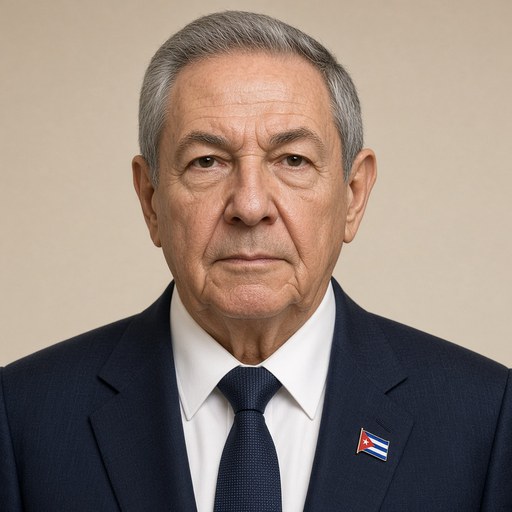
Speech delivered at the Summit of the Community of Latin American and Caribbean States (CELAC),
 Raúl Castro · President of Cuba
- Context
- Castro addressed the inaugural CELAC Summit in Venezuela on December 2, 2011, marking the founding of the regional bloc of 33 Latin American and Caribbean nations.
- Main themes
- Latin American and Caribbean unity, CELAC founding, regional sovereignty, poverty and inequality, economic development, solidarity, natural wealth, Haiti reconstruction, foreign military bases, nuclear-free zone, historical independence struggles
- Duration
- ~16 min
- Words
- 1,886
- Sentences
- 80
- Readability
- 43
- Grade
- 13.0
- Syntax
- 3.22
- Vocabulary
- 2.31
Translated from Spanish
The broad sphere of national life a sentence belongs to. Every sentence has an Arena, so it is the denominator the other indices are read against.
Other80 sentences in 41 paragraphs
Dear Presidents, Prime Ministers, and Heads of Delegations:
First of all, we greet the brotherly Venezuelan people and the Bolivarian Revolution. Venezuela welcomes us today with hospitality and pride, in the year that celebrates the bicentennial of its independence, and offers us the opportunity to bring together the governments of all of Latin America and the Caribbean.
We have the privilege of attending a foundational act of transcendent character. With the decisions we make here and the joint work of the last three years, we reclaim more than two centuries of struggles and hopes. Getting this far has cost us effort, but also blood and sacrifice.
The colonial metropolises of yesteryear and the imperial powers of today have been enemies of this endeavor. They have tried to challenge the ideals of Simón Bolívar who, with foresight, stated: "The unity of our peoples is not a mere chimera of men, but an inexorable decree of destiny."
The Community of Latin American and Caribbean States is our most cherished work. Symbolically, it consolidates the concept of a united and sovereign region, committed to a common destiny.
In strategic terms, it provides us with the political instrument required to unite wills, respect diversity, resolve differences, cooperate for the good of our peoples, and show solidarity with one another. Its success will depend on the character and wisdom of its members, which are the 33 independent nations situated between the Rio Bravo and Patagonia.
In unity around sovereignty, development, and equity will lie our strength, and from it will depend the prosperity with justice of the citizens of this vast and rich region. We do not have a fully homogeneous ideology, nor do we agree on all political positions. That is part of reality, and we must work with it in a climate of respect and cooperation.
We live in a nuclear weapons-free zone, a privilege enjoyed by very few regions of the world. It is a fundamental contribution to the cause of humanity for the total elimination of this threat, which endangers human survival.
We must aspire to declare ourselves, one day not too far off, a territory free of foreign military bases, as an additional contribution to regional identity.
The common heritage of our lands and seas treasures extraordinary natural wealth that, if used sustainably, with responsibility and solidarity, offers future generations the foundations for a future of prosperity and justice. We have a diverse and interconnected culture, with ancestral indigenous values. There exists a high-caliber technical and scientific potential that is insufficiently utilized.
Despite all this and non-negligible economic growth rates, Latin America and the Caribbean, with more than 20 million square kilometers of territorial extension and over 580 million inhabitants, advances slowly and fails to overcome the distortions that hinder its development.
We inhabit what is considered the region of the world with the greatest inequality in wealth distribution. Alongside the recognition that we have weathered the effects of the global economic crisis in better conditions, there is the great gap represented by the extreme concentration of wealth in a few hands against the immense poverty of the majorities.
The prosperity of our region depends on solving this problem. Currently, there are 180 million poor Latin Americans and Caribbeans, of whom 72 million live in extreme poverty. It is a tragedy that will not be resolved even if we all meet the Millennium Development Goals established by the United Nations.
Today, poverty affects 81 million of our children, and about 13 million of them cannot even access adequate food, in a region that produces more nutrients than it needs. Those children are the creditors of the future of this region. We are their debtors.
The recent economic evolution of Latin America and the Caribbean shows that, despite the deep global crisis, export revenues, mainly from commodities, have increased; that the burden of external debt, although unjust and burdensome, has been lighter; and that the accumulation of reserves has increased. This scenario offers us an opportunity if we act with responsibility and true solidarity.
And it is with that spirit that we must face the situation in Haiti, which represents a test for all of us. Latin America and the Caribbean have a historical and ethical responsibility to that sister republic, the first to gain independence from colonial yoke in our region, where the first victorious revolution in the history of humanity was led by slaves. Haiti requires and deserves our efforts to contribute, with more substantive support, to its reconstruction and development, strictly adhering to the will of its government and the needs of its people.
In our case, we already expressed it at the last Summit in Cancun in February 2010, and we reaffirm it today: "Cuban collaboration and its modest effort will remain in Haiti for as long as necessary, if the Government of that nation so decides. Our country, firmly blockaded, does not have any resources to spare; rather, it lacks everything, but is willing to share its poverty with those who have less, first and foremost with those who need it most on the continent."
I remember once when I visited Ecuador, at one of those many international meetings we have attended, I took the opportunity to visit the Chapel of Man, founded by that magnificent painter of the continent, Osvaldo Guayasamín, and I was impressed by a sign with a thought that was not his—according to his eldest son—and that was on one of the walls of such an important cultural and historical center. The sign read: "When I was a child, I cried because I had no shoes, until one day I saw a child who had no feet." This means that no matter how difficult the situation of a country may be, no matter how complex and great our poverty may be, there is always someone poorer than us, always a child without feet who does not need shoes.
Dear colleagues:
We have taken on the commitment to firmly oppose any attempt to destabilize the constitutional order in our countries.
It is not a fortuitous manifestation, but a genuine response to the coup d'état against Venezuela in 2002 and then the oil coup, the sedition in Santa Cruz in Bolivia, the military coup perpetrated in Honduras, the attempted coup in Ecuador, and the constant destabilization actions against legitimately constituted governments, firmly committed to the social justice demands of their peoples, defenders of the sovereignty of their countries, and expressions of the cleanest and most effective democracy.
The nature and motivations of those who promote these attacks on sovereign institutions and against the constitutional rights of the peoples are known. It is also known that they receive support from the United States and some European governments, as well as the complicity of powerful private organizations in the information and advertising industry.
I remember that in a meeting we held in Nicaragua, in the capital Managua, due to the recent similar events that occurred in Central America, I drew attention when I spoke: "What a coincidence that all these attempts have been against ALBA countries!" and I turned to President Correa, who was to my left, and said: "You will be next." He looked surprised, as if to say: "But why?" He himself and all of you know why.
It is the struggle between petty oligarchic interests, supported by transnational capital, and the legitimate rights of the peoples. It would be a grave mistake to ignore that Latin America and the Caribbean have changed, that we cannot be treated as in the past. It has cost us work to confront the burden of colonialism and neocolonialism, and a firm regional determination to defend the hard-won independence must be expected. The Bicentennial Charter that we adopt today must be taken as an expression of that reality.
Beyond our regional environment, we share a complex and tumultuous world, in which peoples rebel against injustices—what we see in Europe, in other regions of the world, and in the United States with the American population demonstrates this—the imperialist policies of plunder, the concentration of wealth, corruption, and abuse of power. It is a phenomenon particularly expressed in North Africa, the Middle East, almost all of Europe, and North America. It is an expression of the collapse of ruthless neoliberal economic models already known and repudiated in our region.
It is also a world in which the great powers violate International Law, exercise their domination through the use of force, and attack sovereign nations under the guise of pretexts and manipulations.
In Libya, NATO has committed an international crime that now threatens to become a model. (Explosions of fireworks are heard.)
That is the war that Chávez is waging against mosquitoes or I don't know what (Chávez tells him it is a firecracker in Caracas in homage to CELAC).
To the shame of the United Nations, defenseless cities have been bombed for eight consecutive months, massacring civilians, destroying social services, mutilating infrastructure, and displacing and turning hundreds of thousands of people into refugees.
For Cuba, the attitude of the United States is not news. It is the same as always. We have been facing more than five decades of hostility and aggression. We suffer the most comprehensive and enduring economic, commercial, and financial blockade ever imposed on any country. Our region knows this and has not ceased to speak out firmly, for which we Cubans thank all of you.
I will conclude by reading a paragraph that I put in, then took out, but after what Chávez said, I will read it.
I wish to thank the meeting of Foreign Ministers yesterday, their generous proposals regarding Cuba and the recommendation for a future Cuban presidency of CELAC in 2013. I was going to leave it for tomorrow or after you, presidents, prime ministers, and heads of delegations expressed yourselves; but Chávez, the president of Venezuela, the host country, here made agreements, he made me vote, I agreed, I voted, and now I interpret... I already asked Correa if he agrees with that type of voting, if Cuba is granted the celebration of the next CELAC, after Chile.
I also thank you, in this case, not only to the foreign ministers but to all the presidents, prime ministers, and heads of delegations present.
Finally, how does it stand, Correa? You agree, as Chávez would say, right?
Is everyone in agreement or should I withdraw this paragraph? I do not want to give thanks and then someone raises their hand and says: no, I do not agree.
(Chávez affirms that they will be in Cuba in 2013)
Well, then we keep it.
Thank you very much to all.
We recognize Venezuela for the immense effort made to create the foundations and organize this Summit, as well as the leadership of President Hugo Chávez Frías in guiding us here, towards such promising results for the future of the region and its contribution to the integration and unity of Latin America and the Caribbean.
In the Community of Latin American and Caribbean States, Cuba will work with dedication, altruism, and commitment for the unity of our peoples, for a future of peace and social justice, and for the unwavering effort to consolidate the full independence of what José Martí defined for the future as "Our America."
Thank you very much.
The original Spanish. The tags above are read on the English translation's sentences.
Estimados Presidentes, Primeros Ministros y Jefes de delegaciones:
Saludamos, en primer lugar, al hermano pueblo venezolano y a la Revolución bolivariana. Venezuela nos recibe hoy hospitalaria y orgullosa, en el año que celebra el bicentenario de su independencia y nos ofrece la oportunidad de reunir a los gobiernos de toda América Latina y el Caribe.
Tenemos el privilegio de asistir a un acto fundacional de carácter trascendental. Con las decisiones que aquí adoptamos y el trabajo conjunto de los últimos tres años, reivindicamos más de dos siglos de luchas y esperanzas. Llegar tan lejos nos ha costado esfuerzo, pero también sangre y sacrificio.
Las metrópolis coloniales de antaño y las potencias imperiales de hoy han sido enemigas de este empeño. Han intentado desafiar el ideario de Simón Bolívar quien, con larga visión, sentenció: La unidad de nuestros pueblos no es simple quimera de los hombres, sino inexorable decreto del destino.
La Comunidad de Estados Latinoamericanos y Caribeños es nuestra obra más preciada. Simbólicamente, consolida el concepto de una región unida y soberana, comprometida con un destino común.
En términos estratégicos, nos brinda el instrumento político requerido para aunar voluntades, respetar la diversidad, resolver diferencias, cooperar por el bien de nuestros pueblos y solidarizarnos los unos con los otros. Su éxito dependerá del carácter y la sabiduría de sus miembros, que somos las 33 naciones independientes situadas entre el Río Bravo y la Patagonia.
En la unidad en torno a la soberanía, el desarrollo y la equidad estará nuestra fuerza y de ella dependerá la prosperidad con justicia de los ciudadanos de esta vasta y rica región. No tenemos un ideario plenamente homogéneo, ni coincidimos en todas las posiciones políticas. Esa es parte de la realidad y con ella debemos trabajar en un clima de respeto y cooperación.
Vivimos en una zona libre de armas nucleares, privilegio que disfrutan muy pocas regiones del mundo. Es una contribución fundamental a la causa de la humanidad por la eliminación total de esta amenaza, que pone en peligro la supervivencia humana.
Debemos aspirar a declararnos también, un día no muy lejano, territorio libre de bases militares extranjeras, como aporte adicional a la identidad regional.
El patrimonio común de nuestras tierras y mares atesora una riqueza natural extraordinaria que, utilizada de forma sostenible, con responsabilidad y solidaridad, ofrece a las futuras generaciones las bases de un porvenir de prosperidad y justicia. Contamos con una cultura diversa e interrelacionada, con valores ancestrales autóctonos. Existe un potencial técnico y científico de alto calibre e insuficientemente aprovechado.
A pesar de todo esto y de índices de crecimiento económico no despreciables, América Latina y el Caribe, con más de 20 millones de kilómetros cuadrados de extensión territorial y más de 580 millones de habitantes, avanza lentamente y no logra superar las deformaciones que obstaculizan su desarrollo.
Habitamos en la que se considera la región del mundo con mayor desigualdad en la distribución de la riqueza. Junto al reconocimiento de que hemos sobrellevado en mejores condiciones los efectos de la crisis económica global, está la gran brecha que significa la extrema concentración de la riqueza en pocas manos frente a la inmensa pobreza de las mayorías.
La prosperidad de nuestra región depende de la solución de este problema. Actualmente hay 180 millones de latinoamericanos y caribeños pobres y, de ellos, 72 millones en extrema pobreza. Es una tragedia que no tendrá solución incluso si cumpliéramos todos con los Objetivos de Desarrollo del Milenio establecidos por las Naciones Unidas.
Hoy, la pobreza afecta a 81 millones de nuestros niños y unos 13 millones de ellos ni siquiera pueden acceder a una alimentación adecuada, en una región que produce más nutrientes de los que necesita. Esos niños son los acreedores del futuro de esta región. Nosotros, sus deudores.
La reciente evolución económica de América Latina y el Caribe muestra que, a pesar de la profunda crisis global, han crecido los ingresos por exportaciones, principalmente de productos básicos; que la carga de la deuda externa, aunque injusta y agobiante, ha sido menor(;) , y que se ha incrementado la acumulación de reservas. Este escenario nos brinda una oportunidad si actuamos con responsabilidad y verdadero espíritu solidario.
Y es con ese espíritu que debemos encarar la situación en Haití, que representa una prueba para todos nosotros. América Latina y el Caribe tiene n una responsabilidad histórica y ética con esa república hermana, la primera en independizarse del yugo colonial en nuestra región, donde se produjo, dirigida por esclavos, la primera revolución victoriosa en la historia de la humanidad. Haití requiere y merece que nos esforcemos para contribuir, con aportes más sustantivos, a su reconstrucción y desarrollo, y con estricto apego a la voluntad de su gobierno y a las necesidades de su pueblo.
En nuestro caso, ya lo expresamos en la pasada Cumbre de Cancún, en febrero del 2010, y lo ratificamos hoy: la colaboración cubana y su modesto esfuerzo permanecerán en Haití los años que sean necesarios, si el Gobierno de esa nación así lo dispone. A nuestro país, férreamente bloqueado, no le sobra ningún recurso, más bien le falta de todo, pero está dispuesto a compartir su pobreza con los que tienen menos, en primer lugar con quien hoy más lo necesita en el continente.
Yo recuerdo en una ocasión que visité Ecuador, en una de esas tantas reuniones internacionales en que hemos coincidido, que aproveché y visité la Capilla del Hombre, fundada por ese magnífico pintor del continente, Osvaldo Guayasamín, y me impresionó un letrero de un pensamiento que no era de él según me explicó su hijo mayor y que estaba en una de las paredes de tan importantísimo centro cultural e histórico. Decía el letrero: Cuando era niño, lloraba porque no tenía zapatos, hasta que un día vi un niño que no tenía pies. Quiere decir que siempre, por muy difícil que sea la situación de un país, por muy compleja y grande que sea nuestra pobreza, siempre hay alguien más pobre que nosotros, siempre hay un niño sin pies y que no necesita zapatos.
Estimados colegas:
Hemos asumido el compromiso de oponernos con firmeza a todo intento de desestabilización del orden constitucional en nuestros países.
No es una manifestación fortuita, sino de genuina respuesta al golpe de Estado contra Venezuela del 2002 y luego la asonada petrolera, la sedición en Santa Cruz en Bolivia, el golpe militar perpetrado en Honduras, el intento de golpe en Ecuador y las constantes acciones de desestabilización contra gobiernos legítimamente constituidos, firmemente comprometidos con los reclamos de justicia social de sus pueblos, defensores de la soberanía de sus países y expresiones de la más limpia y efectiva democracia.
Se conoce la naturaleza y las motivaciones de quienes impulsan estos ataques a la institucionalidad soberana y contra los derechos constitucionales de los pueblos. Se sabe también que reciben el apoyo de Estados Unidos y de algunos gobiernos europeos, así como la complicidad de poderosas organizaciones privadas de la industria de la información y la publicidad.
Recuerdo que en una reunión que sostuvimos en Nicaragua, en la capital Managua, por los acontecimientos recientes similares sucedidos en América Central, llamé la atención cuando hice uso de la palabra: ¡Qué casualidad que todos esos intentos han sido contra países del ALBA!, y me viré para el presidente Correa, que estaba a mi izquierda, y le dije: El próximo serás tú. Me puso cara de sorpresa, como diciendo: ¿Pero por qué? Él mismo y todos ustedes conocen por qué.
Es la pugna entre mezquinos intereses oligárquicos, con apoyo del capital transnacional y los derechos legítimos de los pueblos. Sería un grave error desconocer que América Latina y el Caribe han cambiado, que no se nos puede tratar como en el pasado. Nos ha costado trabajo enfrentar el lastre del colonialismo y el neocolonialismo y debe esperarse una firme determinación regional de defender la independencia duramente alcanzada. La Carta Bicentenaria que hoy adoptamos debe asumirse como expresión de esa realidad.
Más allá de nuestro entorno regional, compartimos un mundo complejo y convulso, en el que los pueblos se rebelan contra las injusticias lo que vemos en Europa, en otras regiones del mundo y en el propio Estados Unidos con la población norteamericana lo demuestra, las políticas imperialistas de saqueo, la concentración de la riqueza, la corrupción y el abuso del poder. Se trata de un fenómeno expresado particularmente en el Norte de África, el Medio Oriente, casi toda Europa y Norteamérica. Es expresión del colapso de despiadados modelos económicos neoliberales ya conocidos y repudiados en nuestra región.
Es también un mundo en el que las grandes potencias violan el Derecho Internacional, ejercen su dominación mediante el uso de la fuerza y agreden a naciones soberanas al amparo de pretextos y manipulaciones.
En Libia, la OTAN ha cometido un crimen internacional que ahora amenaza convertirse en modelo. (Se escuchan explosiones de fuegos artificiales.)
Esa es la guerra que está echando Chávez contra los mosquitos o no sé contra qué (Chávez le dice que es un cohetazo en Caracas en homenaje a la CELAC).
Para vergüenza de las Naciones Unidas, se ha bombardeado durante ocho meses consecutivos a ciudades indefensas, masacrando civiles, destruyendo servicios sociales, mutilando la infraestructura y llevando a la condición de desplazados y refugiados a cientos de miles de personas.
Para Cuba, no es noticia la actitud de Estados Unidos. Es la misma de siempre. Llevamos enfrentando más de cinco décadas de hostilidad y agresión. Sufrimos el bloqueo económico, comercial y financiero más abarcador y duradero que se haya impuesto a país alguno. Nuestra región lo sabe y no ha dejado de pronunciarse con firmeza, lo cual los cubanos agradecemos a todos ustedes.
Voy a terminar leyendo un párrafo que lo puse, después lo quité, pero después de lo dicho por Chávez lo leeré.
Deseo agradecer la reunión de Cancilleres del día de ayer, sus generosos planteamientos sobre Cuba y la recomendación de una futura presidencia cubana de la CELAC en el 2013. Iba a dejarlo para mañana o después que ustedes, presidentes, primeros ministros y jefes de delegaciones se manifestaran; pero Chávez, el presidente de Venezuela, el país sede, aquí sacó acuerdos, me hizo votar a mí, yo estuve de acuerdo, voté, y ahora interpreto... ya le pregunté a Correa si está de acuerdo con ese tipo de votación, si se le cede a Cuba la celebración de la próxima CELAC, después de Chile.
Les doy las gracias además, en este caso, no solo a los cancilleres sino a todos los presidentes, primeros ministros y jefes de delegaciones presentes.
Por fin, ¿cómo queda la cosa, Correa? Está de acuerdo, como diría Chávez, ¿no?
¿Están de acuerdo todos o retiro este párrafo? No quiero dar las gracias y que después uno levante la mano y diga: no, no estoy de acuerdo.
(Chávez afirma que estarán en Cuba en el 2013)
Bien, entonces lo mantenemos.
Muchas gracias a todos (Aplausos).
Reconocemos a Venezuela el inmenso esfuerzo desplegado para crear las bases y organizar esta Cumbre, así como al liderazgo del presidente Hugo Chávez Frías al conducirnos hasta aquí, hacia resultados tan prometedores para el futuro de la región y su aporte a favor de la integración y la unidad de América Latina y el Caribe.
En la Comunidad de Estados Latinoamericanos y Caribeños, Cuba trabajará con dedicación, altruismo y compromiso por la unidad de nuestros pueblos, por un futuro de paz y justicia social, y por el empeño irrenunciable de consolidar la plena independencia de lo que José Martí definió para el porvenir como Nuestra América.
Muchas gracias (Aplausos).