




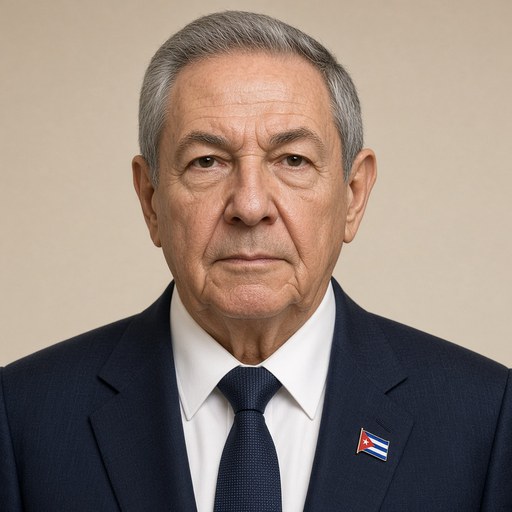
Speech delivered at the conclusions of the 6th Congress of the Communist Party of Cuba, at the Palace.
 Raúl Castro · President of Cuba
- Context
- Castro addressed the closing session of the 6th Communist Party Congress on April 19, 2011, coinciding with the 50th anniversary of the Bay of Pigs victory.
- Main themes
- Updating of the Cuban economic model, 6th Congress of the Communist Party of Cuba, economic guidelines and social policy, order, discipline, and demand, U.S. blockade and international market challenges, socialist irreversibility, resource savings and efficiency, agricultural land use and usufruct, unity of the nation, gradual economic reform, import costs and price increases, democratic participation of the Cuban people
- Duration
- ~25 min
- Words
- 3,023
- Sentences
- 65
- Readability
- 19
- Grade
- 21.9
- Syntax
- 3.79
- Vocabulary
- 2.29
Translated from Spanish
The broad sphere of national life a sentence belongs to. Every sentence has an Arena, so it is the denominator the other indices are read against.
Other65 sentences in 51 paragraphs
Dear Fidel;
Dear Nemesia;
Dear comrades:
We are approaching the end of the Congress, after intense days in which the Cuban communists have discussed and approved the Guidelines of the Economic and Social Policy of the Party and the Revolution, the Central Report, and various resolutions on the main issues analyzed.
I believe that the most dignified and productive way to commemorate the 50th Anniversary of the Victory over the mercenary invasion at Playa Girón, on a day like today, April 19, 1961, is precisely to have held a magnificent Party Congress, a meeting that culminates after just over five months since the start of discussions on the Guidelines, a process of profound democratic and transparent character, whose undeniable protagonism was assumed by the people under the direction of the Party.
I wish, on behalf of the nearly 800 thousand communist militants, the thousand delegates to the Congress, the new leadership of our organization, and in particular, of comrade Fidel Castro Ruz, to congratulate all Cubans for their decisive participation in the debate and the undeniable demonstration of support for the Revolution, which constitutes for us a reason for satisfaction and, most importantly, a superior responsibility and commitment to achieve, with the participation of all, the updating of the economic model in order to guarantee the irreversible nature of Socialism in Cuba.
We already expressed in the Central Report that we did not harbor illusions that the Guidelines and the measures associated with them, by themselves, would be the solution to all existing problems. To achieve success in this strategic issue and in others, it is necessary that we immediately focus on implementing the agreements of this Congress, under a common denominator in our conduct: ORDER, DISCIPLINE, and DEMAND.
The updating of the economic model is not a miracle that can happen overnight, as some think; its full deployment will be achieved gradually over the course of the five-year period, as there is much detailed work, planning, and coordination to be done, both in the legal framework and in the meticulous preparation of all those involved in its practical execution.
It will also be necessary to develop an intense outreach effort to the population regarding each measure we adopt and, at the same time, to keep our feet and ears well grounded and attentive to the ground, in order to overcome the obstacles we encounter and quickly rectify the mistakes we make in its application.
We are convinced that the main enemy we face and will face will be our own deficiencies and that, therefore, a task of such magnitude for the future of the nation cannot admit improvisations or haste. We will not hesitate to make the necessary changes, as Fidel indicated in his reflection yesterday, which we will carry out at the pace demanded by objective circumstances and always with the support and understanding of the citizenry, without ever putting at risk our most powerful weapon, the unity of the nation around the Revolution and its programs.
Without the slightest desire for chauvinism, I believe that Cuba is among the small number of countries in the world that have the conditions to transform their economic model and emerge from the crisis without social trauma because, first and foremost, we have a patriotic people, who know themselves to be powerful due to the strength represented by their monolithic unity, the justice of their cause, and military preparation, with high education and proud of their revolutionary history and roots.
We will advance decisively despite the U.S. blockade and the adverse conditions prevailing in the international market, which are expressed, among other things, in the restrictions on Cuba's access to sources of financing and the spiral of oil prices, which drags up the prices of other raw materials and food; in short, everything we acquire from abroad is becoming more expensive.
A few months into 2011 and according to very recent data, the additional cost of imports for the year has already risen to more than 800 million dollars, solely due to the increase in prices, to acquire the same planned quantities, which will force us, as soon as the Congress ends, to make adjustments to the plan approved last December.
At this time, saving resources of all kinds continues to be one of the main sources of income for the country, as there are still irrational expenses and immense reserves of efficiency that we must exploit with a great deal of common sense and political sensitivity.
Despite the acceptable performance achieved to date in the delivery of idle lands in usufruct, under Decree-Law 259 of 2008, thousands and thousands of hectares of cultivable land still await willing hands to extract the fruits that the population and the national economy demand and that we can harvest in our fields to replace the increasingly costly imports of many products, which today benefit foreign suppliers instead of our farmers.
The first thing we must do is fulfill what we have just approved at this event, and therefore, the decision for the Central Committee to analyze in its plenums, at least twice a year, how the agreements of the Congress are being fulfilled, particularly the progress of the updating of the economic model and the execution of the economic plan, is not fortuitous.
In this regard, I must emphasize the significance of the task assigned to the Permanent Government Commission for Implementation and Development, which will harmoniously lead the efforts and actions of the national organizations and entities involved in the updating of the economic model with the support, in particular, of the Ministry of Economy and Planning, which constitutes the General Staff of the Government for this activity of national endeavor.
On the other hand, our deputies have a greater task ahead, as the Guidelines approved by the Congress will be submitted to the analysis of the National Assembly of People's Power for legislative ratification in the successive sessions, as we complete the drafting of the corresponding legal regulations.
As you heard, the Congress agreed to convene the National Conference for January 28 of next year, the date on which we celebrate the 159th anniversary of the birth of José Martí, which will practically be a continuation of the 6th Congress, dedicated to realistically and critically assessing the work of the Party and also specifying the transformations required to exercise the role of the superior leading force of society and the State that corresponds to it by virtue of Article Five of the Constitution of the Republic. We also agreed to grant this Conference the authority to update methods and styles of work, structures, and cadre policy, including expanding and renewing the Central Committee.
As expressed in its call, the National Conference will be guided by the determination to "change everything that must be changed," contained in the brilliant definition of the concept of Revolution by comrade Fidel.
To achieve success, the first thing we are obliged to modify in the life of the Party is the mentality, which, as a psychological barrier, in my opinion, is what will take us the most work to overcome, having been tied for long years to the same dogmas and obsolete criteria. It will also be essential to rectify errors and to form, based on rationality and firmness of principles, a comprehensive vision for the future in order to preserve and develop Socialism under the current circumstances.
In terms of cadre policy, with the election of the new Central Committee, its Secretariat, and the Political Bureau, presented this morning, we have taken a first step to fulfill what we agreed upon at the Congress, especially regarding the initiation of a gradual process of renewal and rejuvenation of the chain of political and state positions, while also substantially improving the racial and gender composition.
The Central Committee is made up of 115 members, of which 48 are women, 41.7 percent, which more than triples the proportion achieved in the previous congress, which was 13.3 percent. The number of Black and mixed-race members is 36, increasing their representation by 10 percent, which now stands at 31.3 percent.
This result, which I repeat is a first step, is not the result of improvisation. The Party has been working deeply in this direction for several months with the aim of forming a candidacy that takes into account the need to achieve fair proportions of gender and race in the membership of the Central Committee.
They were selected from the vast pool of university graduates and qualified specialists that the Revolution did not waste time in training. They are children of the working class, emerging from the humblest roots of the people, with active political lives in student organizations, the Young Communist League, and the Party; young people who mostly have more than 10, 15, or 20 years of experience at the grassroots level, while continuing to work in the professions they studied, and almost all were proposed by the nuclei where they are members, as part of the preparation process for the Congress.
It is our responsibility going forward to follow up and continue their training to prepare them so that progressively, through their work, they can assume higher responsibilities.
In the integration of the higher bodies of the Party, despite the departure from the Central Committee of 59 comrades, half of its effective members, most of whom have a positive record of service to the Revolution; several veterans of the historical generation remained, and it is logical that this is the case, as one of the consequences of the deficiencies committed in this area, criticized in the Central Report, which have prevented us from having a reserve of mature and sufficiently experienced substitutes to take over the main positions in the country.
Therefore, we will continue to adopt similar measures in this decisive direction during the next National Conference of the Party and in the daily life of our party, governmental, and state activities.
Comrade Fidel Castro Ruz, founder and Commander in Chief of the Cuban Revolution, set the first example of consistent attitude in this matter by expressly requesting not to be included in the candidacy for the Central Committee.
Fidel is Fidel and does not need any position to occupy, forever, a prominent place in the history, present, and future of the Cuban nation. As long as he has the strength to do so, and fortunately he is in the fullness of his political thought, from his modest condition as a Party militant and soldier of ideas, he will continue to contribute to the revolutionary struggle and to the noblest purposes of Humanity.
As for me, I take on my last task with the firm conviction and honorable commitment that the First Secretary of the Central Committee of the Communist Party of Cuba has as its main mission and sense of life: to defend, preserve, and continue perfecting Socialism and never allow the return of the capitalist regime.
In the Political Bureau, as you will see, there is a proper proportion of main leaders of the Revolutionary Armed Forces. It is natural that it is so, which I justify by quoting the words of comrade Fidel in the Central Report to the First Congress of the Party:
"The Rebel Army was the soul of the Revolution. From its victorious arms emerged the new homeland, free, beautiful, vigorous, and invincible. When the Party was founded, our army, heir in turn to the heroism and patriotic purity of the Liberation Army and a victorious continuation of its struggles, entrusted the banners of the Revolution to its hands, and from that moment on and forever, it became its most faithful, disciplined, humble, and unshakeable follower." End of quote.
I have ample reasons to proclaim that the Revolutionary Armed Forces, of which I am proud to have been minister for almost 49 years, will never renounce fulfilling that role in service to the defense of the people, the Party, the Revolution, and Socialism.
The status of a member of the Central Committee, while it had partly been a recognition of the struggle of those elected, which was just, from this moment on, the concept that will prevail is that, in essence, this category represents a huge responsibility towards the Party and the people, since between congresses, the Central Committee is the superior body of party direction and has, according to the statutes, broad powers in controlling the application of the outlined policy and the economic and social development programs of the country, as well as in cadre policy and ideological work, among others.
In line with this, it is necessary to raise the preparation and constant improvement of its members, as we intend to actively use the Central Committee in the materialization of the agreements of the Congress, as a forum to collectively analyze, without any hint of formalism, the main issues of the life of the Party and the nation.
We will do the same in the Political Bureau, as it is the superior body of direction between the plenums of the Central Committee.
The Political Bureau is composed of 15 members, reduced from the previous 24 members, a number that proved to be excessive in practice. Three new comrades have joined: Mercedes López Acea, First Secretary of the Provincial Committee of the Party in Havana; Marino Murillo Jorge, Vice President of the Council of Ministers and Head of the Permanent Government Commission for Implementation and Development; and Adel Yzquierdo Rodríguez, who was recently appointed Minister of Economy and Planning.
These promotions are not casual; in the first case, it responds to the priority that the Party gives to its work in the capital, which has more than two million inhabitants, and in the case of the other comrades, it reflects the strategic significance of updating the economic model and developing the national economy.
We will maintain the useful practice of meeting weekly, as a group, the Political Bureau Commission with the Executive Committee of the Council of Ministers, to evaluate the fundamental issues of national events, while we will continue to encourage participation in the monthly sessions of the Council of Ministers, depending on the topics to be discussed and in the capacity of guests, from the members of the Political Bureau and the Secretariat of the Central Committee, the Council of State, and the presidency of the National Assembly; the central cadres of the Central Workers' Union of Cuba (CTC), other mass organizations, and the UJC, as well as the first secretaries of the provincial Party committees and the presidents of the Provincial Administration Councils.
This method has proven effective for transmitting, without intermediaries, essential information and guidance to the main leaders across the country for the performance of their responsibilities.
Finally, none of us can overlook the historical importance that the crushing defeat of the mercenary invasion at Playa Girón had for the fate of the Revolution, as a result of the firm, relentless, and determined action of our combatants, who, under the direct command of Commander in Chief Fidel Castro, who remained throughout the time in the theater of operations where the combat actions were taking place, destroyed, in less than 72 hours, the attempt by the United States government to create a beachhead in a remote corner of the homeland, to which they intended to later transfer, from a military base in Florida, a puppet government that would request the military intervention of American forces, located in very close waters, accompanying the mercenary contingent from its departure from Central American coasts, as they had already done in Guatemala in 1954, seven years earlier, when they overthrew the progressive government of Jacobo Arbenz.
Let this occasion serve to repeat Fidel's words on the fifteenth anniversary of the Victory, on April 19, 1976, when he said: "From Girón, all the peoples of America became a little freer," end of quote.
At Girón, for the first time, the armament supplied by the then Soviet Union a few months earlier was used in defense of socialism in Cuba, without having been able to fully assimilate it. It is only right, on a day like today, to recognize that without the help of the peoples that made up that immense country, especially the Russian people, the Revolution would not have been able to survive in its early years against the growing and continuous aggressions of imperialism, and for that, we will be eternally grateful.
Our gratitude, on a day like today, goes to the current socialist countries for their unwavering cooperation and support throughout all these years of hard battles and sacrifices.
The brotherly peoples of the Third World, especially those of Latin America and the Caribbean, who strive to transform the legacy of centuries of colonial domination, know that they will always count on our solidarity and support.
A warm fraternal greeting to the communist parties and other progressive forces around the globe, who fight tirelessly, starting from the firm conviction that a better world is possible.
I also wish to express the recognition of the Cuban people to all the governments that, year after year, have demanded with their vote and their voice, at the United Nations, the end of the economic, commercial, and financial blockade imposed by the United States on Cuba.
Finally, let our gratitude reach all those who, in one way or another, participated in the successful organization and assurance of this Congress.
I believe there is no better way to celebrate the 50th anniversary of the Day of Victory at Playa Girón than to close this historic Congress of the Party with the gift and presence of Fidel and the symbolism contained in the "Elegy of the White Little Shoes" by Indio Naborí, vibrantly recited by actor Jorge Ryan, and the emotional words of Nemesia, the coal girl who saw her mother die helplessly and the wounds inflicted on her grandmother and two brothers by the murderous action of planes painted with Cuban insignias, and whose white shoes, perforated by enemy shrapnel, are displayed in the Playa Girón museum, as material evidence that the Revolution remains victorious 50 years later, honoring its fallen.
Thank you very much.
The original Spanish. The tags above are read on the English translation's sentences.
Querido Fidel;
Querida Nemesia;
Queridos compañeras y compañeros:
Nos vamos acercando al final del Congreso, luego de intensas jornadas en las que los comunistas cubanos hemos discutido y aprobado los Lineamientos de la Política Económica y Social del Partido y la Revolución , el Informe Central y diferentes resoluciones sobre los principales asuntos analizados.
Considero que la forma más digna y a la vez productiva de conmemorar el 50º Aniversario de la Victoria sobre la invasión mercenaria en Playa Girón, un día como hoy, el 19 de abril de 1961, es precisamente haber efectuado un magnífico Congreso del Partido, reunión que culmina tras algo más de cinco meses del inicio de las discusiones acerca de los Lineamientos, proceso de profundo carácter democrático y transparente, cuyo protagonismo indiscutible lo asumió el pueblo bajo la dirección del Partido.
Deseo, en nombre de los casi 800 mil militantes comunistas, de los mil delegados al Congreso, de la nueva dirección de nuestra organización y en particular, del compañero Fidel Castro Ruz, felicitar a todas las cubanas y cubanos por su decisiva participación en el debate y la indudable demostración de apoyo a la Revolución , lo cual constituye para nosotros motivo de satisfacción y lo más importante, una responsabilidad y compromiso superiores para lograr, con el concurso de todos, la actualización del modelo económico a fin de garantizar el carácter irreversible del Socialismo en Cuba.
Ya expresamos en el Informe Central que no nos hacíamos ilusiones de que los Lineamientos y las medidas a ellos asociadas, por sí solos, fueran la solución a todos los problemas existentes. Para alcanzar el éxito en esta cuestión estratégica y en las demás, es preciso que de inmediato nos concentremos en hacer cumplir los acuerdos de este Congreso, bajo un denominador común en nuestra conducta: el ORDEN , la DISCIPLINA y la EXIGENCIA.
La actualización del modelo económico no es un milagro que pueda obrarse de la noche a la mañana, como algunos piensan; su despliegue total se logrará gradualmente en el transcurso del quinquenio, pues es mucho el trabajo de detalle, planificación y coordinación, tanto en el plano jurídico como en la preparación minuciosa de todos los que intervengan en su ejecución práctica.
También será necesario desarrollar una intensa labor de divulgación a la población sobre cada medida que vayamos adoptando y al mismo tiempo, mantener los pies y los oídos bien atentos y pegados a la tierra, para superar los obstáculos que encontremos y rectificar rápidamente los fallos que cometamos en su aplicación.
Estamos convencidos de que el principal enemigo que enfrentamos y enfrentaremos serán nuestras propias deficiencias y que por tanto, una tarea de tamaña dimensión para el futuro de la nación, no podrá admitir improvisaciones ni apresuramientos. No renunciaremos a hacer los cambios que hagan falta, como nos indicó Fidel en su reflexión de ayer, los que efectuaremos al ritmo que demanden las circunstancias objetivas y siempre con el apoyo y comprensión de la ciudadanía, sin poner nunca en riesgo nuestra arma más poderosa, la unidad de la nación en torno a la Revolución y sus programas.
Sin el menor afán de chovinismo, considero que Cuba está entre el reducido número de países del mundo que cuentan con las condiciones para transformar su modelo económico y salir de la crisis sin traumas sociales porque, en primer lugar, tenemos un pueblo patriótico, que se sabe poderoso por la fuerza que representa su unidad monolítica, la justeza de su causa y preparación militar, con elevada instrucción y orgulloso de su historia y raíces revolucionarias.
Avanzaremos con decisión a pesar del bloqueo norteamericano y las adversas condiciones imperantes en el mercado internacional, que se expresan, entre otras, en las restricciones para el acceso de Cuba a fuentes de financiamiento y la espiral de los precios del petróleo, que arrastra al resto de las materias primas y los alimentos; en pocas palabras, se encarece todo lo que adquirimos en el exterior.
A pocos meses de iniciado el 2011 y según datos muy recientes, ya se eleva a más de 800 millones de dólares el costo adicional de las importaciones del año, sólo por el incremento de los precios, para adquirir las mismas cantidades planificadas, lo que nos obligará en cuanto termine el Congreso a realizar ajustes al plan aprobado en diciembre pasado.
En estos momentos el ahorro de recursos de todo tipo continúa siendo una de las fuentes principales de ingresos del país, pues todavía existen gastos irracionales e inmensas reservas de eficiencia que debemos explotar con mucho sentido común y sensibilidad política.
Pese al aceptable comportamiento obtenido hasta la fecha en la entrega de tierras ociosas en usufructo, al amparo del Decreto-Ley 259 del 2008, aún persisten miles y miles de hectáreas de superficie cultivable esperando por brazos dispuestos a extraerle los frutos que tanto demanda la población y la economía nacional y que podemos cosechar en nuestros campos para sustituir las cada vez más costosas importaciones de muchos productos, que hoy benefician a suministradores extranjeros, en lugar de a nuestros campesinos.
Lo primero que debemos hacer es cumplir lo que acabamos de aprobar en este evento y por ello no es fortuita la decisión de que el Comité Central analice en sus plenos, al menos dos veces al año, cómo se cumplen los acuerdos del Congreso, en particular la marcha de la actualización del modelo económico y la ejecución del plan de la economía.
En este sentido, debo resaltar la trascendencia de la tarea asignada a la Comisión Permanente del Gobierno para la Implementación y Desarrollo, la cual conducirá armónicamente los esfuerzos y acciones de los organismos y entidades nacionales involucrados en la actualización del modelo económico con el apoyo, en particular, del Ministerio de Economía y Planificación, que constituye el Estado Mayor del Gobierno para esta actividad del quehacer nacional.
Por otra parte, nuestros diputados tienen un mayor trabajo por delante, ya que los Lineamientos aprobados por el Congreso serán sometidos al análisis de la Asamblea Nacional del Poder Popular, para su ratificación legislativa en los sucesivos períodos de sesiones, a medida que vayamos completando la elaboración de las normativas legales correspondientes.
Como ustedes escucharon, el Congreso acordó convocar para el 28 de enero del próximo año, fecha en que se cumple el 159 aniversario del nacimiento de José Martí, la Conferencia Nacional , la cual en la práctica será una continuación del 6to Congreso, dedicada a valorar con realismo y espíritu crítico la labor del Partido y también precisar las transformaciones requeridas para ejercer el papel de fuerza dirigente superior de la sociedad y el Estado que le corresponde en virtud del Artículo cinco de la Constitución de la República. Asimismo, acordamos otorgar a dicha Conferencia facultades para actualizar los métodos y estilo de trabajo, estructuras y política de cuadros, incluyendo ampliar y renovar el Comité Central.
Como se expresa en su convocatoria, la Conferencia Nacional estará presidida por la determinación de cambiar todo lo que debe ser cambiado contenida en la brillante definición del concepto Revolución del compañero Fidel.
Para alcanzar el éxito, lo primero que estamos obligados a modificar en la vida del Partido es la mentalidad, que como barrera sicológica, según mi opinión, es lo que más trabajo nos llevará superar, al estar atada durante largos años a los mismos dogmas y criterios obsoletos. También será imprescindible rectificar errores y conformar, sobre la base de la racionalidad y firmeza de principios, una visión integral de futuro en aras de la preservación y desarrollo del Socialismo en las presentes circunstancias.
En materia de política de cuadros, con la elección del nuevo Comité Central, su Secretariado y el Buró Político, presentados en la mañana de hoy, hemos dado un primer paso para cumplimentar lo que acordamos en el Congreso, muy especialmente en lo que se refiere a iniciar un proceso gradual de renovación y rejuvenecimiento de la cadena de cargos políticos y estatales, al tiempo que se mejoró, de manera sustancial, la composición racial y de género.
El Comité Central quedó integrado por 115 miembros, de los cuales 48 son mujeres, el 41.7 por ciento, lo que más que triplica la proporción alcanzada en el congreso anterior, que fue del 13.3 por ciento. Los negros y mestizos son 36, creciendo en un 10 por ciento su representación, que asciende ahora al 31.3 por ciento.
Este resultado, que repito es un primer paso, no es fruto de la improvisación. El Partido, desde hace varios meses, venía trabajando con profundidad en esta dirección con el propósito de conformar una candidatura que tuviera en cuenta la necesidad de lograr proporciones justas de género y raza en la membresía del Comité Central.
Fueron seleccionados de la gigantesca cantera de graduados universitarios y especialistas calificados, que la Revolución no perdió tiempo en formar. Son hijos de la clase obrera, surgidos de las entrañas más humildes del pueblo, con una vida política activa en las organizaciones estudiantiles, la UJC y el Partido; jóvenes que en su mayoría cuentan con más de 10, 15 ó 20 años de experiencia en la base, sin dejar de trabajar en las profesiones que estudiaron y casi todos fueron propuestos por los núcleos donde militan, como parte del proceso de preparación del Congreso.
Nos corresponde en lo adelante darles seguimiento y proseguir su formación para prepararlos en interés de que progresivamente, con su trabajo, puedan ocupar responsabilidades superiores.
En la integración de los órganos superiores del Partido, no obstante la salida del Comité Central de 59 compañeros, la mitad de sus miembros efectivos, la mayoría de ellos con una positiva hoja de servicios a la Revolución; nos mantuvimos varios veteranos de la generación histórica y es lógico que así sea, como una de las consecuencias de las deficiencias cometidas en este ámbito, criticadas en el Informe Central, que nos han impedido contar hoy con la reserva de sustitutos maduros y con experiencia suficiente para asumir el relevo en los principales cargos del país.
Por consiguiente, seguiremos adoptando medidas similares en esta decisiva dirección durante la próxima Conferencia Nacional del Partido y en la vida diaria de nuestro quehacer partidista, gubernamental y estatal.
El compañero Fidel Castro Ruz, fundador y Comandante en Jefe de la Revolución Cubana , nos dio el primer ejemplo de actitud consecuente en esta materia, al solicitar expresamente no ser incluido en la candidatura del Comité Central.
Fidel es Fidel y no precisa de cargo alguno para ocupar, por siempre, un lugar cimero en la historia, en el presente y en el futuro de la nación cubana. Mientras tenga fuerzas para hacerlo, y afortunadamente se encuentra en la plenitud de su pensamiento político, desde su modesta condición de militante del Partido y soldado de las ideas, continuará aportando a la lucha revolucionaria y a los propósitos más nobles de la Humanidad.
En lo que a mí respecta, asumo mi última tarea, con la firme convicción y compromiso de honor de que el Primer Secretario del Comité Central del Partido Comunista de Cuba tiene como misión principal y sentido de su vida: defender, preservar y proseguir perfeccionando el Socialismo y no permitir jamás el regreso del régimen capitalista.
En el Buró Político, como podrán observar, se refleja una adecuada proporción de Jefes principales de las Fuerzas Armadas Revolucionarias. Es natural que sea así, lo cual fundamento citando las palabras del compañero Fidel en el Informe Central al Primer Congreso del Partido:
El Ejército Rebelde fue el alma de la Revolución. De sus armas victoriosas emergió libre, hermosa, pujante e invencible la patria nueva Cuando se fundó el Partido nuestro ejército, heredero a su vez del heroísmo y la pureza patriótica del Ejército Libertador y continuador victorioso de sus luchas, depositó en sus manos las banderas de la Revolución y fue a partir de ese instante y para siempre su más fiel, disciplinado, humilde e inconmovible seguidor. Fin de la cita.
Tengo sobradas razones para proclamar que las Fuerzas Armadas Revolucionarias, de las cuales albergo el orgullo de haber sido ministro por casi 49 años, nunca renunciarán a cumplir ese papel al servicio de la defensa del pueblo, del Partido, de la Revolución y el Socialismo.
La condición de miembro del Comité Central, si bien en parte había sido hasta ahora un reconocimiento a la trayectoria de lucha de los elegidos, lo cual fue justo, a partir de este momento deberá predominar el concepto de que en esencia, esa categoría representa una enorme responsabilidad frente al Partido y el pueblo, pues entre congreso y congreso, el Comité Central es el organismo superior de dirección partidista y le corresponden, según los estatutos, amplias facultades en el control de la aplicación de la política trazada y los programas de desarrollo económico y social del país, así como en la política de cuadros y la labor ideológica, entre otras.
En consonancia con ello, se requiere elevar la preparación y superación constante de sus miembros, ya que nos proponemos utilizar activamente al Comité Central en la materialización de los acuerdos del Congreso, como foro para analizar de modo colegiado, sin asomo de formalismo, los principales temas de la vida del Partido y la nación.
Lo propio haremos en el Buró Político, como le compete, por ser el organismo superior de dirección entre los plenos del Comité Central.
El Buró Político se compone de 15 miembros, reduciéndose en comparación con el anterior de 24 integrantes, cantidad que en la práctica resultó excesiva. En él ingresaron tres nuevos compañeros: Mercedes López Acea, Primera Secretaria del Comité Provincial del Partido en La Habana; Marino Murillo Jorge, Vicepresidente del Consejo de Ministros y Jefe de la Comisión Permanente del Gobierno para la Implementación y Desarrollo y Adel Yzquierdo Rodríguez, quien recientemente fue nombrado Ministro de Economía y Planificación.
Estas promociones no son casuales, en el primer caso obedece a la prioridad que el Partido concede a su labor en la capital, de más de dos millones de habitantes y en los restantes compañeros, responde a la significación estratégica de la actualización del modelo económico y el desarrollo de la economía nacional.
Mantendremos la útil práctica de reunir de conjunto, semanalmente, a la Comisión del Buró Político con el Comité Ejecutivo del Consejo de Ministros, para evaluar los asuntos fundamentales del acontecer nacional, al tiempo que continuaremos propiciando la participación en las sesiones mensuales del Consejo de Ministros, según los temas a debatir y en calidad de invitados, a los miembros del Buró Político y del Secretariado del Comité Central, el Consejo de Estado y la presidencia de la Asamblea Nacional ; los cuadros centro de la Central de Trabajadores de Cuba (CTC), demás organizaciones de masas y la UJC , al igual que a los primeros secretarios de los comités provinciales del Partido y los presidentes de los consejos de la Administración Provincial.
Este método ha probado su eficacia para trasmitir, sin intermediarios, a los principales dirigentes de todo el país, informaciones indispensables y orientaciones para el desempeño de sus responsabilidades.
Finalmente, a ninguno de nosotros escapa la importancia histórica que revistió para el destino de la Revolución la aplastante derrota a la invasión mercenaria de Playa Girón, como resultado de la firme, incesante y decidida acción de nuestros combatientes, que bajo el mando directo del Comandante en Jefe Fidel Castro, quien se mantuvo todo el tiempo en el teatro de operaciones donde se libraban las acciones combativas, destrozaron, en menos de 72 horas, el intento del gobierno de los Estados Unidos de crear una cabeza de playa en un apartado rincón de la patria, al cual pretendían trasladar después, desde una base militar en la Florida , un gobierno títere que solicitara a la Organización de Estados Americanos, la tristemente célebre OEA, la intervención militar de fuerzas norteamericanas, ubicadas en aguas muy cercanas, acompañando al contingente mercenario desde su salida de costas centroamericanas, como ya habían hecho en Guatemala en 1954 siete años antes, al derrocar al gobierno progresista de Jacobo Arbenz.
Sirva la ocasión para repetir las palabras de Fidel en el décimo quinto aniversario de la Victoria , el 19 de abril de 1976 cuando dijo: A partir de Girón todos los pueblos de América fueron un poco más libres fin de la cita.
En Girón por primera vez fue empleado en defensa del socialismo en Cuba el armamento suministrado por la entonces Unión Soviética pocos meses antes, sin apenas haberlo podido asimilar completamente. Es justo, un día como hoy, reconocer que sin la ayuda de los pueblos que componían aquel inmenso país, en especial el pueblo ruso, la Revolución no hubiera podido sobrevivir en los años iniciales ante las crecientes y continuas agresiones del imperialismo y por eso les estaremos eternamente agradecidos.
Nuestra gratitud, un día como hoy, a los actuales países socialistas por su invariable cooperación y apoyo en todos estos años de duras batallas y sacrificios.
Los pueblos hermanos del Tercer Mundo, en especial los de América Latina y el Caribe, que se esfuerzan por transformar la herencia de siglos de dominación colonial saben que siempre contarán con nuestra solidaridad y apoyo.
Un caluroso saludo fraternal a los partidos comunistas y demás fuerzas progresistas de todo el planeta, que luchan sin cesar, partiendo de la firme convicción de que un mundo mejor es posible.
También deseo expresar el reconocimiento del pueblo cubano a todos los gobiernos que, año tras año, han reclamado con su voto y con su voz, en las Naciones Unidas, el cese del bloqueo económico, comercial y financiero impuesto por los Estados Unidos a Cuba.
Finalmente, llegue nuestro agradecimiento a todas y todos aquellos que de uno u otro modo participaron en la exitosa organización y aseguramiento de este Congreso.
Creo que no existe mejor modo de celebrar el 50 aniversario del Día de la Victoria en Playa Girón, que clausurar este histórico Congreso del Partido con el regalo y la presencia de Fidel y el simbolismo que encierra la Elegía de los Zapaticos Blancos del Indio Naborí, declamada vibrantemente por el actor Jorge Ryan y las emocionadas palabras de Nemesia, la niña carbonera que vio morir indefensa a su madre y las heridas producidas a su abuela y dos hermanos por la acción asesina de aviones pintados con las insignias cubanas y cuyos zapatos blancos, perforados por la metralla enemiga, se exponen en el museo de Playa Girón, como constancia material de que la Revolución se mantiene victoriosa 50 años después, rindiéndole honor a sus caídos.
Muchas gracias