




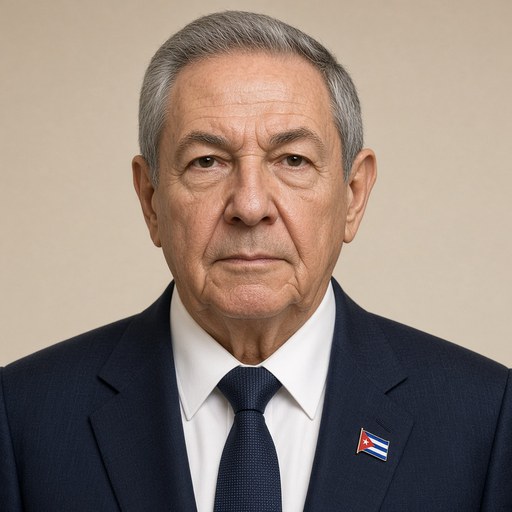
Speech delivered at the closing of the First National Conference of the Party, at the Palace of
 Raúl Castro · President of Cuba
- Context
- Raúl Castro addressed delegates at the closing of the First National Conference of the Cuban Communist Party on January 29, 2012, in Havana.
- Main themes
- Communist Party of Cuba reform, revolutionary unity and continuity, single-party system defense, internal party transformations, rejection of multiparty system, economic and social policy guidelines, mass organizations and civil society, U.S. imperialism and blockade, Cuban revolutionary history, Fidel Castro's legacy
- Duration
- ~34 min
- Words
- 4,124
- Sentences
- 88
- Readability
- 18
- Grade
- 22.4
- Syntax
- 3.98
- Vocabulary
- 2.29
Translated from Spanish
The broad sphere of national life a sentence belongs to. Every sentence has an Arena, so it is the denominator the other indices are read against.
Other88 sentences in 62 paragraphs
Comrades:
The First National Conference of the Party, which today concludes its sessions, has been dedicated, in accordance with the call issued by the 6th Congress, to objectively and critically evaluate the work of the Party, as well as to determine with a renewing will the necessary transformations to place it at the level demanded by current circumstances.
Let us not forget that only the Party, as the institution that groups the revolutionary vanguard and is a sure guarantee of the unity of Cubans at all times, only the Party, I repeat, can be the worthy heir of the trust placed by the people in the only Commander in Chief of the Cuban Revolution, Comrade Fidel Castro Ruz.
I will not stop to present the data of the participants in the discussion process of the draft Base Document nor the numerous modifications that resulted from it, considering the report presented by the Second Secretary of the Central Committee, Comrade José Ramón Machado Ventura, at the opening of this event, which, as everyone knows, did not begin yesterday, but almost immediately after the closing of the Party Congress.
After the preparation of the first draft of the Document and its subsequent analysis in multiple meetings of the Political Bureau and the Secretariat before the discussion in the grassroots organizations of the Party and the Young Communists Union (UJC), during the months of October and November of last year, its results were analyzed by the Third Plenary of the Central Committee, held on December 21, 2011.
Also, in the first weeks of this month, at the provincial level, the study and discussion were carried out by the delegates to the Conference and other cadres. In total, nine versions of the Document were prepared.
Unlike the draft Guidelines of the Economic and Social Policy of the Party and the Revolution, whose debate included, in one way or another, the entire population, the Base Document of the Conference, given its less comprehensive scope and its more directed focus on the internal functioning of the Party, was analyzed by the entire membership, although our people fully knew its content through the press.
On the other hand, in the preparatory process of the Conference, the role of the members in the interest of perfecting the relations of the Party with the UJC, the Central Workers' Union of Cuba, and other mass organizations was debated, so that they increase, under current conditions, their protagonism and influence in society.
As was to be expected, since the publication of the Document, there have been criticisms and exhortations from those who, confusing their innermost aspirations with reality, were under the illusion that the Conference would consecrate the beginning of the dismantling of the political and social system achieved by the Revolution over more than half a century, with the support of the majority of Cubans.
In this sense, it was no coincidence that the first objective of the Document expresses: "The Communist Party of Cuba, the superior leading force of society and the State, is the legitimate fruit of the Revolution, at the same time its organized vanguard and who guarantees, together with the people, its historical continuity." This concept, which we will never renounce, is fully in accordance with Article Five of the Constitution of the Republic, approved in a referendum by 97.7 percent of voters, through free, direct, and secret voting.
Our adversaries and even some who sympathize with us, abstracting from the history of permanent aggression, economic blockade, interference, and the media siege, expressed in the incessant campaigns of the supposedly free press, mostly subordinated to the prevailing imperial interests, all of which the Cuban Revolution has had to face, demand from us, as if it were a country in normal conditions and not a besieged plaza, the reinstatement of the multiparty model that existed in Cuba under the neocolonial domination of the United States.
Renouncing the principle of a single party would simply mean legalizing the party or parties of imperialism on our homeland and sacrificing the strategic weapon of the unity of Cubans, which has made the dreams of independence and social justice a reality for which so many generations of patriots have fought, from Hatuey to Céspedes, Martí, and Fidel.
In order to organize the struggle for the independence of Cuba and Puerto Rico, Martí conceived the creation of a single political party, the Cuban Revolutionary Party, according to his own words: "To promote the revolution so that all Cubans of good will can enter it: All those who love Cuba, or respect it."
When victory over Spain was already imminent, after thirty years of war, the American intervention occurred, and one of the first measures was to dissolve that party, just like the glorious Liberation Army, to give way to what came next, the multiparty system of the bourgeois republic and the creation of a new army with its repressive rural guard included, a guarantee of the absolute domination of all the riches of the nation, which they appropriated during the four years of the first military occupation.
That was the sad end of the two pillars of the independence revolution, the Party and its Liberation Army, which resurfaced exactly after 60 years under the leadership of Fidel, inspired by Martí's teachings. We will never allow that history to repeat itself.
It is not my purpose, in this intervention, to recount the historical evolution of the term Democracy, from its conceptualization in ancient Greece, as the "power of the people," although the majority of slaves did not count at all. Nor do I intend to philosophize about the validity and usefulness of the so-called representative democracy, which has ultimately become known to invariably lead to the concentration of political power in the class that holds the economic and financial hegemony of each nation, where the majorities also do not count, and when they manifest, as is happening at this very moment in many countries, they are brutally repressed and silenced with the complicity of the great press at their service, also transnationalized.
The best argument is the one offered by American democracy, which is sought to be imposed as a model on the whole world, in which the Democratic and Republican parties alternate power, defending, without major differences, the interests of the same big capital, to which both are subordinated.
There are, to cite a few examples, the Guantanamo Naval Base, territory illegally occupied by the United States, against the will of the Cuban people and which has remained so for more than 100 years, regardless of the party in power in that country, which proclaims so much the defense of human rights while, despite the promises of the current president, maintains there, for a decade, a prison, where in a legal limbo at this moment more than 170 foreign citizens are subjected to torture and mistreatment.
The second example is the invasion at Playa Girón, conceived and planned by a Republican president, Eisenhower, and carried out by President Kennedy, just three months after taking office, who was from the Democratic Party; and finally, the economic blockade, which has lasted half a century, regardless of whether a Republican or Democrat occupies the White House.
Without the slightest disdain for any other country for having multiparty systems and in strict adherence to the principle of respect for self-determination and non-interference in the internal affairs of other states, enshrined in the United Nations Charter, in Cuba, drawing from its experiences in the long history of struggles for independence and national sovereignty, we defend the system of the single party against the game of demagogy and the commodification of politics.
If we have sovereignly chosen, with the participation and support of the people, the Martian option of the single party, what corresponds to us is to promote the greatest democracy in our society, starting by setting an example within the ranks of the Party, which presupposes fostering a climate of maximum trust and creating the necessary conditions at all levels for the broadest and most sincere exchange of opinions, both within the organization and in its links with workers and the population, favoring that discrepancies are assumed with naturalness and respect, including the mass media, mentioned several times in the Objectives approved at this Conference, which must engage with responsibility and the strictest veracity in this endeavor, not in the bourgeois style, full of sensationalism and lies, but with proven objectivity and without useless secrecy.
To this end, it is necessary to encourage greater professionalism among the workers of the press, a task in which we are sure we will have the support of the Union of Journalists of Cuba (UPEC), the media, and the agencies and institutions that must provide them with reliable and timely information so that, together, with patience and unity of criteria, we can continuously perfect and elevate the effectiveness of the messages and the guidance to our compatriots.
At the same time, the formation of a more democratic society will also contribute to overcoming simulating and opportunistic attitudes that have arisen under the guise of false unanimity and formalism in the treatment of different situations in national life.
It is necessary for all of us to get used to telling each other the truths face to face, looking each other in the eye, disagreeing and discussing, even disagreeing with what the leaders say, when we believe we are right, as is logical, in the appropriate place, at the right time, and in the correct manner, that is, in meetings, not in the hallways. We must be willing to seek problems defending our ideas and firmly confronting what is done wrong.
We have already said on other occasions, and this was also recorded in the Central Report to the 6th Congress, that the only thing that could lead to the defeat of the Revolution and Socialism in Cuba would be our inability to eradicate the mistakes made in the more than 50 years since January 1, 1959, and the new ones we might incur in the future.
There has not been and will not be a revolution without mistakes, because they are the work of the actions of men and peoples who are not perfect, faced, moreover, for the first time, with new and enormous challenges. That is why I believe that there is no need to be ashamed of mistakes; the serious and shameful thing would be not to have the courage to delve into them and analyze them to draw lessons from each one and correct them in time.
In this sense, due to its permanent relevance, it is appropriate to recall the words of Comrade Fidel on September 28, 1986, when he closed the Third Congress of the CDR, when he stated: "The struggle against negative trends and the struggle against the mistakes made will continue inexorably, because we have the sacred duty to perfect everything we do, to perfect the Revolution, we have the sacred duty to never be satisfied, not even when we believe we are doing things well, much less will we be satisfied when we know that not everything is being done as well as it should be."
The generation that made the Revolution has had the historical privilege, rarely seen, of being able to lead the rectification of the mistakes made by it, an eloquent demonstration that they did not have a strategic impact; otherwise, we would not be here today. We do not think, despite no longer being so young, to waste this last opportunity.
In referring to this matter, I feel it is my duty to alert, once again, that we should not fall into the illusion of believing that the decisions adopted at this National Conference and not even the agreements of strategic scope adopted by the 6th Congress constitute the magic solution to all our problems.
To prevent the Party's instructions from falling on deaf ears again, the Political Bureau decided, just as it was indicated at the time regarding the progress of the updating of the economic model and the fulfillment of annual plans and the budget, that the plenums of the Central Committee analyze twice a year the application of the work Objectives of the Party approved by this Conference. The provincial and municipal Party committees will proceed in the same way, in the manner and frequency established by the Central Committee.
Experience has taught us that what is not effectively controlled is not fulfilled or is executed superficially.
It is imperative to work and persevere with Order, Discipline, and Demand to make the Guidelines of the Economic and Social Policy a reality, just as the Objectives approved at this event, leaving behind the burden of the old mentality and forging with transformative intention and much political sensitivity the vision towards the present and future of the Homeland, without abandoning, even for a moment, the Martian legacy and the doctrine of Marxism-Leninism, which constitute the main ideological foundation of our revolutionary process.
To achieve success in this endeavor, it is essential, as expressed in objective number 37, "to strengthen national unity around the Party and the Revolution, to tighten the permanent bond with the masses, and to consolidate the conviction of preserving the Cuban nation and the economic-social conquests, on the basis that Homeland, Revolution, and Socialism are indissolubly fused."
Now, the crux of the matter is not in having adequately formulated that objective or any other, but in determining the ways and means by which we put it into practice, with the utmost firmness, so that we can comprehensively evaluate how much and how we are advancing, detect negative trends in a timely manner, and be able to mobilize the party members and the people in achieving the objective in question.
This is equally applicable to the statements related to the Policy of Cadres, an area that, as the Central Report of the 6th Congress also expresses, suffered the effects of improvisation and a lack of foresight and systematicity, resulting in the fact that we still do not have a reserve of experienced and mature substitutes, with sufficient preparation to assume the complex leadership functions in the Party, the State, and the Government, a task that, for obvious reasons, as everyone will understand, is of strategic importance for the Revolution and in which we are working without haste, but without pause, in compliance with the agreements of the Congress.
I take this opportunity to reaffirm that as we advance in defining all the adjustments that will be necessary to introduce to the Constitution of the Republic and the complementary legislative framework, among other matters, we will implement the decision to limit to a maximum of two consecutive five-year terms the performance of the main political and state positions. In this regard, I believe that once the policies are defined and agreed upon by the relevant bodies, we can begin their gradual application without waiting for the constitutional reform, a resource to which we should not be resorting all the time, that is, modifying something in the Constitution, even if it is by the Parliament itself, without the need for a referendum. The Statutes and other guiding documents of the Party should also be modified in this sense.
When discussing these issues, one cannot fail to mention the importance of ensuring that the moral authority of the Party, its members, and especially the leaders, at all levels, is based on personal example, stemming from demonstrated ethical, political, and ideological qualities and permanent contact with the masses.
The Revolution of the humble, by the humble, and for the humble, which cost so much blood to our brave people, would cease to exist without a single shot fired by the enemy if its leadership were ever to fall into the hands of corrupt and cowardly individuals.
These concepts, which are nothing new, are worth keeping in mind due to the real and potential damage that the phenomenon of corruption poses for the present and future of the nation.
In recent weeks, the deputies of the National Assembly and numerous cadres and officials from across the country have received abundant information about some investigative processes being carried out in this area by the specialized bodies of the Ministry of the Interior, in close harmony with the Prosecutor's Office and the General Comptroller of the Republic. In due time, after the pronouncement of the corresponding courts, our entire population will be fully informed about these facts.
Not long ago, when I spoke at the closing of the Parliament sessions last December, I referred to the conviction that corruption is, at this stage, one of the main enemies of the Revolution, much more harmful than the multimillion-dollar subversive and interventionist program of the United States government and its allies both inside and outside the country. I also said that from now on we would not allow the actions against crime to be ephemeral, as has certainly happened to us on other occasions.
Fortunately, without the slightest intention of downplaying this quite widespread evil on the planet, I believe that our country can win the battle against corruption, first by stopping it and then by eliminating it without any kind of consideration. We have already warned that within the framework of the law we will be relentless with the phenomenon of corruption.
Frequently, several of those involved in the detected cases held Party membership, clearly demonstrating their double standards and the use of that condition to secure positions in the leadership structures, flagrantly violating the duties of a communist member, as established in the Statutes.
Therefore, without waiting for the review being carried out in the context of the updating of the Party's guiding documents, the Third Plenary of the Central Committee, held last December, specified that the sanction to be applied to those who participate in acts of corruption can only be expulsion from the ranks of the Party, without prejudice to the corresponding administrative or criminal responsibility, since until now, as a practice, this measure – expulsion – was exceptional and reserved for cases of treason to the Homeland and serious crimes.
There is no doubt that the vast majority of citizens and leadership cadres are honest people, but we know that this is not enough; it is not enough to be honest and to seem so; we must fight and confront, moving from words to action.
It is true that the Party has been fighting against this scourge for years; however, this was happening on one side and the Government on another. To ensure success, it is essential that the Party definitively assumes the leadership of the process, which does not mean in the slightest that it will replace the functions that belong to each institution.
The Party, first of all, will demand accountability from everyone for the fulfillment of their obligations, without intervening in the administration, but rather calling attention, alerting, and fighting there, from the nucleus, the municipality, probing, thinking, and rethinking how to mobilize all the forces in that endeavor. Every time we do that, we will find that the correlation of forces in all respects favors us in this endeavor to defeat corruption. The importance must be given to the organization and consistency of that struggle.
Moreover, this is not an exclusive function of the members; it is also a duty of every citizen, whether a member or not, who cares about their country.
It is worth in this context to revisit, due to its relevance, concepts defined since 1973, almost 40 years ago, as part of the preparatory process for the First Congress.
The Party must be capable of directing the State and the Government, controlling their functioning and their compliance with the established guidelines, stimulating, promoting, and assisting the better work of the governing bodies, but in no case substituting them. It directs them through control, and this term must be understood in the sense of verifying, examining, and reviewing, never in the sense of intervening or commanding.
Although it is not in the text, it is in the thought of all, of the entire mass of members, that "bossism" must definitively come to an end in the Party; its strength is moral, not legal, which is why one must have the moral authority to lead the Party and instill that spirit in the mass of members; it is the moral strength!
The Party directs by controlling that its directives, along with those of the State and the Government, are properly executed by those who correspond.
The party organization controls through its structures and all its members, from top to bottom and vice versa, which does not negate the role of control that the Government carries out over the administrative activity under its charge.
Control is simultaneous, but does not presuppose interference. In a production or service enterprise, it is exercised by the administration of the entity, by its higher levels, and by state or governmental bodies, as appropriate, whether it be the Comptroller's Office, the Prosecutor's Office, the banks, the tax administration offices, etc.
The Party organizations at the base carry out control through the actions of their members, whether they are simple workers or leaders, urging by example, from which their authority emanates, that the administration strictly adhere to the compliance with the current legal regulations, while also transmitting the relevant information to the higher political bodies. The Party controls that the economic plans and the budget are prepared correctly and that once approved by the Government and the Parliament, they are rigorously fulfilled.
These concepts have been clear for quite some time, since the First Congress, but then we forgot those resolutions, those agreements, that magnificent congress, and we shelved them, and that is why almost half a century later we have to dust off the papers of what we did 40 years ago, because we dedicated ourselves to other things, for one reason or another. That is why we defend institutionalism so much and that everyone does what corresponds to them, without interfering with others, rather supporting each other. These concepts, moreover, have been updated, making it essential from the base, that is, in the very nucleus of the Party and the Base Committee of the Youth, to educate the members in those principles and in how to carry out that task: each one in the framework where they develop their activities; how to do what we have oriented in the different congresses or Conferences, as in this case, that is, to educate the members in them to incorporate them into their daily actions. One does not need to become a philosopher; one does not need to become a philosopher!
That is what we must teach them, simply and gradually educating them in the corresponding meetings, in courses or whatever, so that they know what their function is, what their role is; but to perform that role, one must have moral authority in all senses. And I told them that this is, in my humble opinion – and this was a topic quite discussed in some of the commissions yesterday – the essential aspect of the so-called ideological political work and not the empty slogans and prefabricated phrases.
Before concluding these words, I consider it necessary to denounce, once again, the brutal anti-Cuban campaigns instigated by the government of the United States and some others traditionally committed to subversion against our country, with the collaboration of the major Western press and the assistance of their hired hands within the island in the effort to discredit the Revolution, justify the hostility and the blockade against the Cuban population, and create a fifth column that facilitates the aspiration to deprive us of our national independence and sovereignty.
As expressed in the editorial of the newspaper Granma on Monday, the 23rd, facts speak louder than words. The anti-Cuban campaigns will not undermine the Revolution or the people, who will continue perfecting their socialism. It will be demonstrated once again that lies, no matter how many times they are repeated, do not necessarily become truth, because "a just principle, from the depths of a cave, can be more powerful than an army."
Comrades:
In less than a year, we have held two Party events, this First National Conference and especially the 6th Congress, with momentous agreements for the present and future of the Revolution and Socialism in Cuba. The course has already been set, so let us advance with the same determination, ideological firmness, courage, and serenity demonstrated over more than 13 years of unjust imprisonment for our Five Heroes, for whose freedom we will never cease to fight and to whom we extend the fraternal greetings of the communists and all the Cuban people.
Thank you very much.
The original Spanish. The tags above are read on the English translation's sentences.
Compañeras y compañeros:
La Primera Conferencia Nacional del Partido que hoy concluye sus sesiones ha estado dedicada, en correspondencia con la convocatoria librada por el 6to Congreso, a evaluar con objetividad y sentido crítico el trabajo del Partido, así como determinar con voluntad renovadora las transformaciones necesarias para situarlo a la altura que demandan las actuales circunstancias.
No olvidemos que solo el Partido, como institución que agrupa a la vanguardia revolucionaria y garantía segura de la unidad de los cubanos en todos los tiempos, solo el Partido, repito, puede ser el digno heredero de la confianza depositada por el pueblo en el único Comandante en Jefe de la Revolución Cubana , el compañero Fidel Castro Ruz (Aplausos).
No me detendré a exponer los datos de los participantes en el proceso de discusión del proyecto de Documento Base ni las numerosas modificaciones que resultaron del mismo, considerando el informe presentado por el Segundo Secretario del Comité Central, compañero José Ramón Machado Ventura, en la inauguración de este evento, que como todos conocen no comenzó ayer, sino casi inmediatamente después de la clausura del Congreso del Partido.
Tras la elaboración del primer borrador del Documento y su posterior análisis en múltiples reuniones del Buró Político y del Secretariado antes de la discusión en las organizaciones de base del Partido y la Unión de Jóvenes Comunistas (UJC), durante los meses de octubre y noviembre del pasado año, sus resultados fueron analizados por el Tercer Pleno del Comité Central, celebrado el 21 de diciembre de 2011.
También en las primeras semanas de este mes, a nivel de provincia, se realizó el estudio y discusión por parte de los delegados a la Conferencia y otros cuadros. En total se elaboraron nueve versiones del Documento.
A diferencia del proyecto de Lineamientos de la Política Económica y Social del Partido y la Revolución , cuyo debate incluyó, en uno u otro modo, a toda la población, el Documento Base de la Conferencia , dado su alcance menos abarcador y su enfoque más dirigido al funcionamiento interno del Partido fue analizado por toda la militancia, si bien nuestro pueblo conoció íntegramente su contenido a través de los medios de prensa.
Por otra parte, en el proceso preparatorio de la Conferencia fue debatido el papel de los militantes en interés del perfeccionamiento de las relaciones del Partido con la UJC , la Central de Trabajadores de Cuba y demás organizaciones de masas, de manera que las mismas incrementen, en las actuales condiciones, su protagonismo e influencia en la sociedad.
Como era de esperar, desde la publicación del Documento no han faltado las críticas y exhortaciones de quienes, confundiendo sus más íntimas aspiraciones con la realidad, se ilusionaron con que la Conferencia consagraría el inicio del desmontaje del sistema político y social conquistado por la Revolución , a lo largo de más de medio siglo, con el apoyo de la mayoría de los cubanos.
En este sentido, no fue nada casual que el primer objetivo del mismo exprese: El Partido Comunista de Cuba, fuerza dirigente superior de la sociedad y del Estado, es fruto legítimo de la Revolución , al propio tiempo su vanguardia organizada y quien garantiza, junto al pueblo, su continuidad histórica . Este concepto, al que jamás renunciaremos, se encuentra en plena correspondencia con el artículo cinco de la Constitución de la República , aprobada en referendo por el 97,7 por ciento de los electores, mediante el voto libre, directo y secreto.
Nuestros adversarios y hasta algunos que simpatizan con nosotros, abstrayéndose de la historia de permanente agresión, bloqueo económico, injerencia y el cerco mediático, expresado en las incesantes campañas de la prensa supuestamente libre, subordinada en su mayoría a los intereses imperiales predominantes, todo lo cual ha debido enfrentar la Revolución Cubana , nos exigen, como si se tratara de un país en condiciones normales y no una plaza sitiada, la reinstauración del modelo multipartidista que existió en Cuba bajo el dominio neocolonial de los Estados Unidos.
Renunciar al principio de un solo partido equivaldría, sencillamente, a legalizar al partido o los partidos del imperialismo en suelo patrio y sacrificar el arma estratégica de la unidad de los cubanos, que ha hecho realidad los sueños de independencia y justicia social por los que han luchado tantas generaciones de patriotas, desde Hatuey hasta Céspedes, Martí y Fidel.
Con el fin de organizar la lucha por la independencia de Cuba y Puerto Rico concibió Martí la creación de un solo partido político, el Partido Revolucionario Cubano, según sus propias palabras: Para fomentar la revolución de modo que puedan entrar en ella todos los cubanos de buena voluntad: Todos los que amen a Cuba, o la respeten.
Cuando ya la victoria sobre España era inminente, después de treinta años de guerra, se produjo la intervención norteamericana y una de las primeras medidas fue disolver ese partido, al igual que el glorioso Ejército Libertador, para dar paso a lo que vino después, el multipartidismo de la república burguesa y la creación de un nuevo ejército con su represiva guardia rural incluida, garantía del dominio absoluto de todas las riquezas de la nación, de las que se apropiaron en los cuatro años de la primera ocupación militar.
Ese fue el triste final de los dos pilares de la revolución independentista, el Partido y su Ejército Libertador , resurgidos exactamente al cabo de 60 años bajo la conducción de Fidel, inspirado en las enseñanzas de Martí. No permitiremos jamás que esa historia se repita.
No es mi propósito, en esta intervención, hacer un recuento de la evolución histórica del término Democracia, desde su conceptualización en la antigua Grecia, como el poder del pueblo, aunque la mayoría esclava no contaba para nada. Tampoco pretendo filosofar sobre la vigencia y utilidad de la llamada democracia representativa, que en definitiva es harto conocido que ha devenido invariablemente en la concentración del poder político en la clase que detenta la hegemonía económica y financiera de cada nación, donde las mayorías tampoco cuentan y cuando se manifiestan, como sucede en estos precisos momentos en muchos países, son brutalmente reprimidas y silenciadas con la complicidad de la gran prensa a su servicio, también transnacionalizada.
El mejor argumento es el que nos ofrece la democracia norteamericana, la cual se pretende imponer como modelo a todo el mundo, en la que se alternan el poder los partidos Demócrata y Republicano defendiendo, sin mayores diferencias, los intereses del mismo gran capital, al cual ambos se subordinan.
Ahí están, por citar unos pocos ejemplos, la Base Naval de Guantánamo, territorio ocupado por Estados Unidos ilegalmente, contra la voluntad del pueblo cubano y que así ha permanecido por más de 100 años, con independencia del partido en el poder en ese país, que tanto proclama la defensa de los derechos humanos al tiempo que, a pesar de las promesas del actual presidente, mantiene allí, hace una década, una prisión, donde en un limbo legal en estos momentos más de 170 ciudadanos extranjeros son sometidos a torturas y vejaciones.
El segundo ejemplo, la invasión por Playa Girón, concebida y planificada por un presidente republicano, Eisenhower, y llevada a cabo por el presidente Kennedy, apenas tres meses después de tomar posesión , que era del Partido Demócrata; y por último, el bloqueo económico, que ha perdurado medio siglo, sin importar si es republicano o demócrata quien ocupa la Casa Blanca.
Sin el menor menosprecio a ningún otro país por tener sistemas pluripartidistas y en estricto apego al principio del respeto a la libre determinación y la no injerencia en los asuntos internos de otros estados, consagrado en la carta de las Naciones Unidas, en Cuba, partiendo de sus experiencias en la larga historia de luchas por la independencia y soberanía nacional, defendemos el sistema del partido único frente al juego de la demagogia y la mercantilización de la política.
Si hemos escogido soberanamente, con la participación y respaldo del pueblo, la opción martiana del partido único, lo que nos corresponde es promover la mayor democracia en nuestra sociedad, empezando por dar el ejemplo dentro de las filas del Partido, lo que presupone fomentar un clima de máxima confianza y la creación de las condiciones requeridas en todos los niveles para el más amplio y sincero intercambio de opiniones, tanto en el seno de la organización, como en sus vínculos con los trabajadores y la población, favoreciendo que las discrepancias sean asumidas con naturalidad y respeto, incluyendo a los medios de comunicación masiva, mencionados varias veces en los Objetivos aprobados en esta Conferencia, los que deberán involucrarse con responsabilidad y la más estricta veracidad en este empeño, no al estilo burgués, lleno de sensacionalismo y mentiras, sino con comprobada objetividad y sin el secretismo inútil.
A este fin es necesario incentivar una mayor profesionalidad entre los trabajadores de la prensa, tarea en la estamos seguros que contaremos con el apoyo de la Unión de Periodistas de Cuba (UPEC), los medios de comunicación y de los organismos e instituciones que deben tributarles información fidedigna y oportuna para, entre todos, con paciencia y unidad de criterio, perfeccionar y elevar continuamente la efectividad de los mensajes y la orientación a los compatriotas.
Al propio tiempo, la conformación de una sociedad más democrática contribuirá también a superar actitudes simuladoras y oportunistas surgidas, al amparo de la falsa unanimidad y el formalismo en el tratamiento de diferentes situaciones de la vida nacional.
Es preciso acostumbrarnos todos a decirnos las verdades de frente, mirándonos a los ojos, discrepar y discutir, discrepar incluso de lo que digan los jefes, cuando consideramos que nos asiste la razón, como es lógico, en el lugar adecuado, en el momento oportuno y de forma correcta, o sea, en las reuniones, no en los pasillos. Hay que estar dispuestos a buscarnos problemas defendiendo nuestras ideas y enfrentando con firmeza lo mal hecho.
Ya hemos dicho en otras ocasiones y así también se recogió en el Informe Central al 6to Congreso, que lo único que puede conducir a la derrota de la Revolución y el Socialismo en Cuba, sería nuestra incapacidad para erradicar los errores cometidos en los más de 50 años transcurridos desde el primero de enero de 1959 y los nuevos en que pudiéramos incurrir en el futuro.
No ha existido ni existirá una revolución sin errores, porque son obra de la actuación de hombres y pueblos que no son perfectos, enfrentados además, por primera vez, a nuevos y descomunales retos. Por eso creo que no hay que avergonzarse de los errores, lo grave y bochornoso sería no contar con el valor de profundizar en ellos y analizarlos para extraerles las enseñanzas a cada uno y corregirlos a tiempo.
En este sentido, por su permanente vigencia, es oportuno recordar las palabras del compañero Fidel el 28 de septiembre de 1986 al clausurar el Tercer Congreso de los CDR, cuando señaló: La lucha contra las tendencias negativas y la lucha contra los errores cometidos continuarán indefectiblemente, porque tenemos el deber sagrado de perfeccionar todo lo que hacemos, perfeccionar la Revolución , tenemos el deber sagrado de no estar satisfechos jamás, ni siquiera cuando creamos que estamos haciendo las cosas bien hechas, mucho menos vamos a estar satisfechos cuando sabemos que no están haciéndose todas las cosas lo bien hechas que tienen que hacerse.
La generación que hizo la Revolución ha tenido el privilegio histórico, pocas veces visto, de poder conducir la rectificación de los errores cometidos por ella misma, muestra elocuente de que no tuvieron una repercusión estratégica, de lo contrario, no estaríamos hoy aquí. No pensamos, a pesar de que ya no somos tan jóvenes, desaprovechar esta última oportunidad.
Al referirme a este asunto, me siento en el deber de alertar, una vez más, que no caigamos en la ilusión de creer que las decisiones adoptadas en esta Conferencia Nacional y ni tan siquiera los acuerdos de alcance estratégico adoptados por el 6to Congreso, constituyen la solución mágica a todos nuestros problemas.
Para impedir que nuevamente caigan en saco roto las instrucciones del Partido, el Buró Político decidió, al igual que como se indicó en su momento con respecto a la marcha de la actualización del modelo económico y el cumplimiento de los planes anuales y el presupuesto, que los plenos del Comité Central analicen dos veces al año la aplicación de los Objetivos de trabajo del Partido aprobados por esta Conferencia. Del mismo modo procederán los comités provinciales y municipales del Partido, en la forma y frecuencia que establezca el Comité Central.
La experiencia nos ha enseñado que aquello que no se controla con efectividad, no se cumple o se ejecuta superficialmente.
Se impone trabajar y perseverar con Orden, Disciplina y Exigencia por hacer realidad los Lineamientos de la Política Económica y Social, igual que los Objetivos aprobados en este evento, dejar atrás el lastre de la vieja mentalidad y forjar con intencionalidad transformadora y mucha sensibilidad política la visión hacia el presente y el futuro de la Patria , sin abandonar, ni por un instante, el legado martiano y la doctrina del marxismo leninismo que constituyen el principal fundamento ideológico de nuestro proceso revolucionario.
Para lograr el éxito en este empeño es imprescindible, como se expresa en el objetivo número 37, fortalecer la unidad nacional en torno al Partido y la Revolución , estrechar el vínculo permanente con las masas y consolidar la convicción de preservar la nación cubana y las conquistas económico-sociales, sobre la base de que Patria, Revolución y Socialismo, están fusionados indisolublemente.
Ahora bien, el meollo del asunto no está en haber formulado adecuadamente ese objetivo o cualquier otro, sino en determinar las vías y formas en que lo llevamos a la práctica, con la máxima firmeza, de manera que podamos evaluar con integralidad cuánto y cómo avanzamos, detectar a tiempo las tendencias negativas y ser capaces de movilizar a la militancia y al pueblo en la consecución del objetivo en cuestión.
Esto mismo es aplicable a los enunciados relacionados con la Política de Cuadros, área que como también expresa el Informe Central del 6to Congreso, sufrió los efectos de la improvisación y la falta de previsión y sistematicidad, trayendo como secuela que no contemos todavía con una reserva de sustitutos experimentados y maduros, con preparación suficiente para asumir las complejas funciones de dirección en el Partido, el Estado y el Gobierno, tarea que por razones obvias, como todos comprenderán, reviste una importancia estratégica para la Revolución y en la cual trabajamos sin precipitación, pero sin pausa, en el cumplimiento de los acuerdos del Congreso.
Aprovecho la ocasión para ratificar que en la medida en que avancemos en la definición de todos los ajustes que será necesario introducir a la Constitución de la República y al marco legislativo complementario, entre otros asuntos, implementaremos la decisión de limitar a un máximo de dos períodos consecutivos de cinco años, el desempeño de los cargos políticos y estatales principales. Al respecto, considero que una vez definidas y acordadas las políticas por las instancias pertinentes podemos iniciar su aplicación paulatina sin esperar por la reforma constitucional, recurso al que no debemos estar acudiendo a cada rato, o sea, ir a modificar algo de la Constitución, aunque sea por el propio Parlamento, sin necesidad de referendo. Igualmente deberán modificarse en ese sentido los Estatutos y otros documentos rectores del Partido.
Al hablar de estos temas, no puede dejar de mencionarse la importancia de asegurar que la autoridad moral del Partido, de sus militantes y en especial de los dirigentes, en todos los niveles, se fundamente en el ejemplo personal, a partir de demostradas cualidades éticas, políticas e ideológicas y el permanente contacto con las masas.
La Revolución de los humildes, por los humildes y para los humildes, que tanta sangre costó a nuestro valeroso pueblo, dejaría de existir sin efectuarse un solo disparo por el enemigo, si su dirección llegara algún día a caer en manos de individuos corruptos y cobardes.
Estos conceptos, que no son nada nuevos, bien vale la pena tenerlos siempre presentes por el daño real y potencial que para el presente y futuro de la nación significa el fenómeno de la corrupción.
En las últimas semanas los diputados de la Asamblea Nacional y numerosos cuadros y funcionarios de todo el país, han recibido copiosa información acerca de algunos procesos investigativos, que en esta materia desarrollan los órganos especializados del Ministerio del Interior, en estrecha armonía con la Fiscalía y la Contraloría General de la República. A su debido tiempo, luego del pronunciamiento de los tribunales correspondientes, toda nuestra población conocerá con amplitud estos hechos.
No hace mucho, al intervenir en la clausura de las sesiones del Parlamento el pasado mes de diciembre, me referí a la convicción de que la corrupción es, en la etapa actual, uno de los principales enemigos de la Revolución , mucho más perjudicial que el multimillonario programa subversivo e injerencista del gobierno de Estados Unidos y sus aliados dentro y fuera del país. También dije que en lo adelante no permitiríamos que las acciones de enfrentamiento al delito fueran efímeras, como ciertamente nos ha sucedido en otras ocasiones.
Afortunadamente, sin el menor ánimo de restarle gravedad a este mal bastante generalizado en el planeta, considero que nuestro país puede ganarle la batalla a la corrupción, primero frenarla y luego liquidarla sin contemplaciones de ningún tipo. Ya advertimos que en el marco de la ley seremos implacables con el fenómeno de la corrupción.
Con frecuencia, varios de los implicados en los casos detectados ostentaban la militancia del Partido, demostrando fehacientemente su doble moral y el empleo de esa condición para agenciarse posiciones en las estructuras de dirección, violando de manera flagrante los deberes de un militante comunista, establecidos en los Estatutos.
Por ello, sin esperar a la revisión que se ejecuta en el marco de la actualización de los documentos rectores del Partido, el Tercer Pleno del Comité Central, celebrado en diciembre pasado, precisó que la sanción a aplicar a quienes participen en hechos de corrupción no puede ser otra que la expulsión de las filas del Partido, sin menoscabo de la responsabilidad administrativa o penal que corresponda, pues hasta ahora, como práctica, esta medida la de expulsión era excepcional y se reservaba a casos de traición a la Patria y delitos graves.
No nos cabe la menor duda de que la enorme mayoría de los ciudadanos y los cuadros de dirección son personas honestas, pero sabemos que eso no es suficiente, no basta con ser honrados y parecerlo, hay que pelear y enfrentarse, pasar de las palabras a la acción.
Es cierto que el Partido desde hace años venía librando el combate contra este flagelo; sin embargo, este andaba por un lado y el Gobierno por otro. Para asegurar el éxito es preciso que el Partido asuma definitivamente la conducción del proceso, lo cual no significa en lo más mínimo que suplantará las funciones que a cada institución le pertenecen.
El Partido, en primer lugar, exigirá a todos responsabilidades por el cumplimiento de sus obligaciones, sin intervenir en la administración, pero sí llamar la atención, alertar y luchar allí, desde el núcleo, el municipio, hurgar, pensar y volver a pensar en cómo movilizar al conjunto de las fuerzas en ese empeño. Cada vez que hagamos eso, vamos a comprobar que la correlación de fuerzas en todos los sentidos nos favorece en este empeño de derrotar la corrupción. La importancia hay que dársela a la organización y constancia de esa lucha.
Además, esta no es función exclusiva de los militantes, es también un deber de cada ciudadano y ciudadana, militante o no, que se preocupe por su país.
Vale en este contexto retomar, por su actualidad, conceptos definidos desde 1973, hace casi 40 años, como parte del proceso preparatorio del Primer Congreso.
El Partido debe estar en capacidad de dirigir al Estado y al Gobierno, controlar su funcionamiento y el cumplimiento por ellos de las orientaciones trazadas, estimular, impulsar, coadyuvar al mejor trabajo de los órganos de gobierno, pero en ningún caso sustituirlos. Los dirige mediante el control, y este término debe entenderse en la acepción de comprobar, examinar y revisar, nunca en el sentido de intervenir o mandar.
Aunque no está en el texto, está en el pensamiento de todos, de toda la masa de militantes, que en el Partido debe acabarse definitivamente el mandonismo su fuerza es moral, no jurídica, por eso hay que tener moral para dirigir el Partido y llevar a la masa de militantes ese espíritu, ¡es la fuerza moral!
El Partido dirige controlando que sus directivas, junto a las del Estado y el Gobierno, se ejecuten apropiadamente por quienes corresponda.
La organización partidista controla por intermedio de sus estructuras y de todos sus militantes, de arriba a abajo y viceversa, lo cual no niega el papel de control que el Gobierno realiza sobre la actividad administrativa a su cargo.
El control es simultáneo, pero no presupone interferencias. En una empresa de la producción o los servicios, este se ejerce por la administración de la entidad, por sus niveles superiores y por organismos estatales o gubernamentales, según competa, ya sea la Contraloría , la Fiscalía , los bancos, las oficinas de la administración tributaria, etcétera.
Las organizaciones del Partido en la base llevan a cabo el control mediante el accionar de sus militantes, ya sean simples trabajadores o dirigentes, apremiando con el ejemplo, del que emana su autoridad, que la administración se atenga estrictamente al cumplimiento de las normativas jurídicas vigentes, sin dejar de trasmitir a los organismos políticos superiores la información pertinente. El Partido controla que los planes económicos y el presupuesto se elaboren de manera correcta y luego de aprobados por el Gobierno y el Parlamento se cumplan con rigurosidad.
Estos conceptos están bien claros hace bastante tiempo , desde el Primer Congreso, pero después nos olvidamos de aquellas resoluciones, de aquellos acuerdos, de aquel magnífico congreso y los engavetamos, y por eso casi medio siglo después tenemos que estarles quitando el polvo a los papeles de lo que hicimos hace 40 años, porque nos dedicamos a otras cosas, por una razón o por otra. Por eso defendemos tanto la institucionalidad y que cada cual haga lo que le corresponda, sin interferir a los demás, más bien apoyándonos. Estos conceptos, además, han sido actualizados, por lo que se hace imprescindible desde la base, o sea, en el propio núcleo del Partido y el Comité de Base de la Juventud , educar a los militantes en esos principios y en cómo se hace esa tarea: cada uno en el marco donde desenvuelve sus actividades; cómo se hace eso que hemos orientado en los diferentes congresos o Conferencia, como en este caso, o sea, educar a los militantes en los mismos para incorporarlos a su accionar diario. No hay que hacerse filósofo, ¡no hay que hacerse filósofo!
Eso es lo que les debemos enseñar, sencillo y poco a poco irlos educando en las reuniones correspondientes, en cursillos o en lo que sea, que sepan cuál es su función, cuál es su papel; pero para desempeñar ese papel hay que tener moral en todos los sentidos. Y les decía que ese es, en mi modesta opinión y este fue un tema bastante discutido en algunas de las comisiones ayer, el aspecto esencial del llamado trabajo político ideológico y no las consignas vacías y las frases prefabricadas.
Antes de concluir estas palabras considero necesario denunciar, una vez más, las brutales campañas anticubanas instigadas por el gobierno de Estados Unidos y algunos otros tradicionalmente comprometidos con la subversión contra nuestro país, con el concurso de la gran prensa occidental y la colaboración de sus asalariados dentro de la isla en el propósito de desacreditar a la Revolución , justificar la hostilidad y el bloqueo contra la población cubana y crear una quinta columna que facilite la aspiración de privarnos de la independencia y soberanía nacional.
Como expresa el editorial del periódico Granma del pasado lunes 23, los hechos hablan más que las palabras. Las campañas anticubanas no harán mella en la Revolución ni en el pueblo, que continuará perfeccionando su socialismo. Quedará nuevamente demostrado que la mentira, por muchas veces que se repita, no necesariamente se convierte en verdad, porque un principio justo, desde el fondo de una cueva, puede más que un ejército.
Compañeras y compañeros:
En menos de un año hemos efectuado dos eventos del Partido, esta Primera Conferencia Nacional y sobre todo el 6to Congreso, con acuerdos trascendentales para el presente y el futuro de la Revolución y el Socialismo en Cuba. El rumbo ya ha sido trazado, avancemos pues con la misma decisión, la firmeza ideológica, el valor y la serenidad demostrada en más de 13 años de injusta prisión por nuestros Cinco Héroes, por cuya libertad nunca dejaremos de luchar y a quienes hacemos llegar el saludo fraternal de los comunistas y de todo el pueblo cubano.
Muchas gracias (Aplausos).