




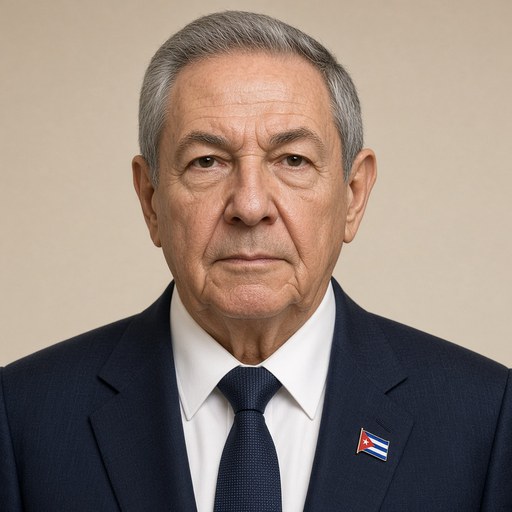
Speech by Raúl Castro: "We will continue to make all that has been agreed upon a reality."
 Raúl Castro · President of Cuba
- Context
- Castro addressed Cuba's National Assembly at its eighth ordinary session on December 23, 2011, reviewing economic performance and approving the 2012 plan and budget.
- Main themes
- Economic plan and budget 2012, implementation of VI Congress guidelines, Cuban GDP growth, economic reform progress, debt renegotiation and financial credibility, state budget deficit, food production and imports, contract discipline in enterprise relations, corruption and criminal accountability, social services funding, sugar production recovery, foreign investment and tourism
- Duration
- ~25 min
- Words
- 3,003
- Sentences
- 77
- Readability
- 25
- Grade
- 18.6
- Syntax
- 3.53
- Vocabulary
- 2.32
Translated from Spanish
The broad sphere of national life a sentence belongs to. Every sentence has an Arena, so it is the denominator the other indices are read against.
Other77 sentences in 58 paragraphs
Comrades:
The eighth ordinary session of the National Assembly, which concludes today, has approved the economic plan and the Budget Law for the year 2012. Likewise, the deputies received abundant information on the progress of the implementation of the Guidelines of the Economic and Social Policy of the Party and the Revolution, agreed upon by the VI Congress. The President of the Supreme People's Court and the Attorney General of the Republic also reported to Parliament.
This session was preceded by the expanded meeting of the Council of Ministers on December 16 and the celebration on Wednesday, December 21, of the Third Plenary of the Central Committee of the Party, as well as the work of the 12 permanent commissions of Parliament since last Tuesday. For all these reasons, I will not elaborate on the topics discussed and will refer only to some fundamental issues.
Amid the fluctuations of the global financial crisis, the Cuban economy has shown an acceptable and sustained performance, with Gross Domestic Product growing by 2.7 percent, lower than the 3.0 percent planned, mainly due to the non-execution of investments and the failure to meet some agricultural productions and those of the food and construction materials industries.
At the same time, in 2011, the gradual recovery of sugar production began, the record number of foreign visitors was surpassed, internal monetary balance has been preserved, and a favorable dynamic in the relationship between productivity and average salary has been achieved. The economy is structurally improving based on more adequate proportions in investments, prioritizing those of a productive and infrastructural nature.
We continue to advance in restoring the international credibility of our economy, through the strict compliance with financial obligations resulting from the renegotiation of debts with the main creditors, a policy that we will continue to strengthen going forward.
On December 18 of last year, when I spoke in this Parliament, I expressed that before the end of 2011 we would completely eliminate the limitations on transfers from Cuban banks abroad in favor of foreign suppliers.
Today we are in a position to affirm that we have fulfilled that commitment and, furthermore, that procedures have been put in place to prevent new withholdings in the future, except in exceptional circumstances.
The economic plan for the coming year was prepared in accordance with the Guidelines approved by the VI Congress of the Party and has a qualitatively superior level in terms of reconciling the demands between producers and clients. However, financial tensions will persist, which forces us to continue reducing expenses of all kinds, which are still one of the primary sources of income at our disposal. Gross Domestic Product is expected to grow by 3.4 percent.
Although an increase in national food production is planned, including rice and grains, and consequently, the quantities to be imported will decrease, these, as a result of rising prices, will amount to just over 1.7 billion dollars. This reality eloquently indicates the need to solidly advance in the goal of putting all still idle or poorly exploited lands into production.
The state budget deficit will remain at the same level as in 2011, that is, 3.8 percent of Gross Domestic Product, ensuring rationally the free services to the population in health, education, culture, and sports, as well as social security, subsidies for the regulated family basket, and for individuals with insufficient means to acquire construction materials, among others.
Turning to another matter, very closely linked to the economic functioning of the nation and which, despite having been discussed on several occasions, including the Central Report to the VI Congress, the Guidelines themselves - specifically No. 10 - interventions before Parliament, and in multiple meetings of the Council of Ministers; the required progress is not evident, is the primary role of the contract in the interrelations of enterprises, budgeted units, and non-state forms of management, which is reflected in the poor situation of collections and payments, with the consequent disruption to internal finances and the facilitation of criminal acts and corruption.
The above was evident, to cite just one example, in the fraudulent supplies of agricultural products to the markets of the capital, which did not exist or were not cultivated, generating a shortfall of more than 12 million pesos due to the criminal actions of executives, officials, and other workers of the state marketing enterprises, as well as small farmers who acted as fronts, all of whom will be held administratively and criminally responsible, in accordance with the severity of the facts.
I bring this topic to the fore to illustrate the urgent need for all of us who lead at different levels, from the grassroots to the highest positions in the country, to adopt a firm stance against indiscipline and lack of control in collections and payments, which constitute one of the main causes and conditions for crime. I am convinced that corruption is today one of the main enemies of the Revolution, much more harmful than the subversive and interventionist activities of the government of the United States and its allies both inside and outside the country.
The General Comptroller of the Republic, the Prosecutor's Office, and the specialized bodies of the Ministry of the Interior have been instructed to combat this scourge with all the severity allowed by our laws, as was successfully done in confronting the nascent drug trafficking that began in January 2003.
In this strategic battle, coordination, cohesion, and demands in the fight against crime have been elevated, and some results are beginning to be seen, both in the so-called "white-collar" crimes committed by national and foreign executives and officials linked to foreign trade and foreign investment, as well as in the misdeeds carried out by common criminals in collusion with administrative leaders and employees of state dependencies, in production processes, transportation, and distribution in entities of the food industry, commerce, gastronomy, the housing system, and the ministries of Basic Industry and Agriculture.
Precisely in the agricultural sector, since August 1 of this year, the fight against the theft and slaughter of large livestock and the consequent commercialization of its meat in the black market has been significantly strengthened, a phenomenon that has flourished over the years with a certain impunity, causing serious harm to state and private producers, not only from an economic point of view but also moral and social.
The Revolutionary National Police, along with other forces of the Ministry of the Interior, in close cooperation with political and mass organizations, has taken on the task of definitively eradicating cattle rustling in the Cuban fields, a crime in which complicity is involved with slaughterers, heads, and specialists of state enterprises, basic cooperative production units, small farmers, veterinarians, and municipal directors and other officials of the institution that is supposed to oversee the growth of the livestock population in the country, I refer to the Livestock Control Center, known by its acronym CENCOP.
I believe it is appropriate to clarify that this is not just another campaign, as has certainly happened in the past, when actions to restore order, over time, have been discontinued and routine and superficiality have set in, giving reason to those who expected everything to return to normal and that "the waters would find their level" to continue profiting at the expense of our people's heritage.
I can assure you that this time the rustlers will indeed be eradicated in the country, just as drug traffickers were eradicated, and they will not resurface, because we are determined to enforce the instructions issued by the Government and the agreements of the Party Congress. The same goes for those corrupt bureaucrats, with positions obtained through simulation and opportunism, who use the positions they still occupy to amass fortunes, betting on an eventual defeat of the Revolution.
This Wednesday, in the Plenary of the Central Committee, we analyzed these factors in depth and showed a series of documentaries and interrogations of white-collar criminals. In due course, in the respective provinces, all of you, fellow deputies, and also other leaders will be shown these materials.
We are very mindful of Fidel's warning on November 17, 2005, in the Aula Magna of the University of Havana, just over six years ago, when he referred to the fact that this country can self-destruct, that today the enemy cannot do it, but we can, and it would be our fault - concluded the Leader of the Revolution on that occasion. For this reason, we agreed two days ago, in the III Plenary of the Central Committee that I just mentioned, that we will eradicate this parasitic plague.
On behalf of the people and the Revolution, we warn that within the framework of the law, we will be relentless.
Closely linked to this firm determination to recover social discipline in our Homeland is the process of implementing the Guidelines of the Economic and Social Policy of the Party and the Revolution that was debated in the current session of the National Assembly, for there is no doubt that with this panorama I am narrating, it would be very difficult to update our socialism.
The Permanent Commission for Implementation and Development has provided extensive information on the progress of its work and the adoption of a set of decisions in compliance with the agreements of the Party Congress. I will not stop to take inventory of them; they are only the first steps. The fundamental issues are pending, which does not mean that we are not advancing at the expected pace.
We will continue to make all that was agreed a reality, without haste, but without pause, with the required comprehensiveness and gradualness, without rushing or improvisation, contributing to overcoming the old dogmatic mentality and promptly correcting any errors we may make. We will not neglect, for a moment, the unity of the majority of Cubans around the Party and the Revolution, that unity that has served us to get here and continue moving forward in the construction of our Socialism.
As expected, there have been exhortations, both well and poorly intended, for us to speed up the pace, and we are being urged to impose the sequence and scope of the measures to be adopted as if it were something insignificant and not the fate of the Revolution and the Homeland.
Following the authorization of the buying and selling of private cars and homes, many consider the urgent application of a new migration policy, forgetting the exceptional circumstances in which Cuba lives under the siege entailed by the interventionist and subversive policy of the government of the United States, always on the lookout for any opportunity to achieve its well-known purposes.
On August 1 of this year, I publicly addressed this topic in this Parliament and stated that we were working to implement the update of the current migration policy and that we were making progress in the reformulation and development of regulatory norms, in accordance with the conditions of the present and the foreseeable future. Today I reaffirm all and each of the statements made at that time, while reaffirming the unwavering will to gradually introduce the required changes in this complex issue, without failing to assess in its entirety the favorable and unfavorable effects of each step we take.
Now I will dedicate a few minutes to foreign policy.
2011 has been a tumultuous year for the world; today increasingly dangerous and reactionary trends are manifesting, while expressions of resistance and popular protest against neoliberal capitalism are increasing.
The mechanisms of the United Nations, created to preserve peace and security, have been manipulated to impose the tyranny of the United States and NATO on the planet, which adopt "regime change" as a model, violating the principles of International Law and using financial-media empires to stoke hatred and violence.
Meanwhile, in dozens of American and European cities, support for the message of the "indignados" is increasing, aimed at putting an end to the growing inequality in developed countries.
We urge those governments, which so loudly proclaim democracy, human rights, freedom of the press, etc., to listen to their legitimate demands, to consult their peoples on economic policies, adjustment measures, and to take public opinion into account, without the brutal repression to which they frequently subject student, professional, labor, immigrant, and other minority protests.
At the same time, Our America is advancing towards integration and regional sovereignty, as evidenced by the establishment in Caracas on December 2 of the Community of Latin American and Caribbean States (CELAC), which represents the most significant institutional event in the hemisphere in the last two centuries since Independence.
Cuba received the honor of being unanimously elected to preside over CELAC in 2013 and to host its third Summit at the end of that year. In doing so, it reaffirms all of Latin America and the Caribbean, whose peoples invariably supported the heroic struggle of the Cubans.
A few days later, in Trinidad and Tobago, our country expressed gratitude for the solidarity of our Caribbean brothers at the CARICOM-Cuba Summit.
Before Holy Week, we will receive the apostolic visit of His Holiness, Pope Benedict XVI, Head of State of the Vatican City and Supreme Pontiff of the Catholic Church.
Our people and government will have the honor of welcoming His Holiness with affection and respect.
Cubans do not forget the feelings of friendship and respect that were left in 1998 by the presence of Pope John Paul II in our land.
Likewise, as the international performance and the majority recognition of the Cuban Revolution grow, the discredit of the United States' policy towards our region has never been greater, and the condemnation in the world, in American society itself, and among the Cuban diaspora, of the genocidal economic, political, and media blockade against Cuba.
At the same time that we update our socialism, changing everything that must be changed, the government of the United States remains anchored in the past.
Barack Obama, the eleventh U.S. President since 1959, seems not to understand that Cuba made enormous and prolonged sacrifices to achieve its independence in the 19th century and to defend its freedom at Playa Girón in 1961, during the October Missile Crisis of 1962, at the beginning of the Special Period in the last decade of the 20th century, and in all these years of the current 21st century. Sometimes, it seems that he is not even informed that, in light of this reality, his government has had to abandon the most repeated pretexts to justify the blockade and invent increasingly unsustainable ones.
With equanimity and patience, we will dedicate ourselves to fulfilling the agreements of the Congress while the U.S. elections take place. We know that the blockade will continue and that funding and attempts to turn a handful of mercenaries into a destabilizing opposition will increase, but that does not keep a revolutionary people like ours, educated, armed, and free, from sleeping, who will never renounce its right to defend itself.
Although the immobility of the U.S. government and its lack of political will to improve relations encourage the most reactionary sectors to promote new provocations and acts of aggression, Cuba maintains the proposal to move towards normalizing its ties with the United States and to develop cooperation in all areas that could benefit both peoples.
The family ties and the limited exchange that exist between the two countries today demonstrate how positive their expansion would be for the good of all, without the obstacles and conditions imposed by the U.S. government, which subordinates any progress to its policy of hostility and interference, aimed at restoring dominance over Cuba.
Before concluding, I must inform this Assembly that the Council of State, in a humanitarian and sovereign gesture, agreed to grant clemency to more than 2,900 individuals sentenced.
Among these are women, the sick, people over 60 years of age, and also young people who have raised their cultural level and the possibilities of social reintegration.
Those sentenced for crimes of Espionage, Terrorism, Murder, Homicide, Drug Trafficking, Violent Pedophilia, Rape and Corruption of Minors, and Burglary in inhabited dwellings are not included in this benefit, except for a few exceptions. However, some convicted for crimes against State Security, who have served a significant part of their sentence in prison with good behavior, will be released.
In a systematic manner and in annual figures exceeding those included in this clemency, the People's Supreme Court, the Attorney General's Office of the Republic, and the specialized bodies of the Ministry of the Interior, according to current legal regulations, evaluate and order the early release of sentenced individuals, taking into account their behavior, the characteristics of the committed acts, and their family and health conditions, to which this time were added multiple requests from family members and various religious institutions, including the Council of Churches of Cuba and the Conference of Catholic Bishops of Cuba, through its President.
The announced visit to Cuba of Pope Benedict XVI and the celebration of the 400th anniversary of the finding of the image of Our Lady of Charity of El Cobre have also been taken into account.
The clemency will take effect in the coming days, as another demonstration of the generosity and strength of the Revolution.
At the same time, we express our willingness to grant early release to 86 foreign citizens from 25 countries, including 13 women, convicted by the courts for crimes committed in Cuba, on the condition that the governments of their countries of origin accept their repatriation.
The required information will soon be sent to those governments through the appropriate authorities via diplomatic channels.
Finally, just a few days before the end of this year of intense work, let a warm greeting for the new year and another anniversary of the triumph of the Revolution reach all our people, especially our valiant Five Heroes and their brave families.
In January, we will celebrate the First National Conference of the Party, so there will not be much time to rest.
That is all.
Thank you very much.
The original Spanish. The tags above are read on the English translation's sentences.
Compañeras y compañeros:
El octavo período ordinario de sesiones de la Asamblea Nacional que hoy concluye ha aprobado el plan de la economía y la Ley del Presupuesto para el año 2012. Igualmente, los diputados recibieron abundante información sobre la marcha del proceso de implementación de los Lineamientos de la Política Económica y Social del Partido y la Revolución, acordados por el VI Congreso. También rindieron cuentas ante el Parlamento el Presidente del Tribunal Supremo Popular y el Fiscal General de la República.
Esta sesión ha sido precedida por la reunión ampliada del Consejo de Ministros el pasado 16 de diciembre y la celebración el miércoles 21 del Tercer Pleno del Comité Central del Partido, así como el trabajo de las 12 comisiones permanentes del Parlamento desde el pasado martes. Por todo ello, no abundaré sobre los temas analizados y me referiré solo a algunas cuestiones fundamentales.
En medio de los vaivenes de la crisis financiera global, la economía cubana ha mostrado un desempeño aceptable y sostenido, el Producto Interno Bruto creció un 2,7 por ciento, inferior al 3,0 por ciento planificado, debido, básicamente, a la inejecución de inversiones y al incumplimiento de algunas producciones agropecuarias y de las industrias alimentaria y de materiales de la construcción.
Al propio tiempo, en el 2011 se inició la paulatina recuperación de la producción azucarera, se sobrepasó la cifra récord de visitantes extranjeros, se ha logrado preservar el equilibrio monetario interno y la dinámica favorable en la relación productividad - salario medio. Estructuralmente mejora la economía a partir de proporciones más adecuadas en las inversiones, priorizándose las de carácter productivo e infraestructural.
Continuamos avanzando en el restablecimiento de la credibilidad internacional de nuestra economía, mediante el estricto cumplimiento de las obligaciones financieras que resultan de la renegociación de deudas con los principales acreedores, política que proseguiremos reforzando en lo adelante.
El 18 de diciembre del pasado año al intervenir en este Parlamento, expresé que antes de concluir el 2011 suprimiríamos totalmente las limitaciones de transferencias desde bancos cubanos al exterior a favor de suministradores extranjeros.
Hoy estamos en condiciones de afirmar que hemos cumplido ese compromiso y, además, que se han puesto en vigor procedimientos para evitar nuevas retenciones en el futuro, salvo circunstancias excepcionales.
El plan de la economía del próximo año fue confeccionado en correspondencia con los Lineamientos aprobados por el VI Congreso del Partido y posee un nivel cualitativamente superior en cuanto a la conciliación de las demandas entre productores y clientes. No obstante, se mantendrán las tensiones financieras, lo que nos obliga a continuar reduciendo gastos de todo tipo, que son todavía una de las primeras fuentes de ingresos a nuestra disposición. El Producto Interno Bruto deberá crecer un 3,4 por ciento.
A pesar de que se planifica el aumento de las producciones nacionales de alimentos, entre ellas arroz y granos y en consecuencia, disminuirán las cantidades a importar, éstas a resultas de la elevación de los precios, o sea, las importaciones de alimentos, ascenderán a algo más de 1 700 millones de dólares. Tal realidad nos indica con elocuencia la necesidad de avanzar con solidez en el propósito de poner en producción todas las tierras todavía ociosas o deficientemente explotadas.
El déficit del presupuesto del Estado se mantendrá al mismo nivel que en el 2011, o sea, el 3,8 por ciento del Producto Interno Bruto, asegurándose con racionalidad los servicios gratuitos a la población en materia de salud, educación, cultura y deportes, así como la seguridad social, los subsidios a la canasta familiar normada y a personas naturales con insuficiente solvencia para la adquisición de materiales de la construcción, entre otros.
Pasando a otro asunto, muy estrechamente ligado al funcionamiento económico de la nación y del cual, a pesar de que se ha hablado en varias ocasiones, incluyendo el Informe Central al VI Congreso, los propios Lineamientos -concretamente el No. 10-, intervenciones ante el Parlamento y en múltiples reuniones del Consejo de Ministros; no se aprecia el avance requerido, es el papel primordial del contrato en las interrelaciones de las empresas, unidades presupuestadas y las formas no estatales de gestión, lo que se refleja en la deficiente situación de los cobros y pagos, con el consiguiente trastorno a las finanzas internas y el favorecimiento de hechos delictivos y la corrupción.
Lo anterior se puso de manifiesto, por solo citar un ejemplo, en los suministros fraudulentos de productos agropecuarios a los mercados de la capital, que no existieron, ni se cultivaron, generando un desfalco de más de 12 millones de pesos a causa del actuar delictivo de directivos, funcionarios y otros trabajadores de las empresas estatales comercializadoras, así como de agricultores pequeños que se prestaron como testaferros, a todos los cuales se les exigirán responsabilidades administrativas y penales, en correspondencia con la gravedad de los hechos.
Traigo el tema a colación para ilustrar la necesidad imperiosa de que todos los que dirigimos en los diferentes niveles, desde la base hasta los máximos cargos del país, asumamos una conducta firme ante la indisciplina y el descontrol en los cobros y pagos, que constituyen una de las causas y condiciones principales para el delito. Estoy convencido de que la corrupción es hoy uno de los principales enemigos de la Revolución, mucho más dañino que la actividad subversiva e injerencista del gobierno de Estados Unidos y sus aliados dentro y fuera del país.
La Contraloría General de la República, la Fiscalía y los órganos especializados del Ministerio del Interior, tienen instrucciones de combatir este flagelo, con toda la severidad que permiten nuestras leyes, como en su momento se enfrentó exitosamente el incipiente tráfico de drogas a partir de enero de 2003.
En esta batalla estratégica se ha elevado la coordinación, cohesión y exigencia en el enfrentamiento al delito y comienzan a verse algunos resultados, tanto en los hechos llamados de "cuello blanco", cometidos por directivos y funcionarios nacionales y extranjeros vinculados con el comercio exterior y la inversión extranjera, como en las fechorías llevadas a cabo por delincuentes comunes en contubernio con dirigentes administrativos y empleados de dependencias estatales, en los procesos productivos, la transportación y distribución en entidades de la industria alimentaria, el comercio, la gastronomía, el sistema de la vivienda y los ministerios de la Industria Básica y la Agricultura.
Precisamente, en el sector agropecuario, desde el primero de agosto del presente año se fortaleció, de manera sensible el combate contra el hurto y sacrificio de ganado mayor y la consiguiente comercialización de su carne en el mercado negro, un fenómeno que a lo largo de los años floreció con determinada impunidad, provocando graves afectaciones a productores estatales y privados, no sólo desde el punto de vista económico, sino también moral y social.
La Policía Nacional Revolucionaria, junto a otras fuerzas del Ministerio del Interior, en estrecha cooperación con las organizaciones políticas y de masas, ha asumido con profesionalidad y sistematicidad la tarea de erradicar definitivamente el cuatrerismo de los campos cubanos, delito en cuya ejecución participan en complicidad con los matarifes, jefes y especialistas de empresas estatales, unidades básicas de producción cooperativa, agricultores pequeños, veterinarios y directores municipales y otros funcionarios de la institución que se supone debe velar por el crecimiento de la masa ganadera en el país, me refiero al Centro de Control Pecuario, conocido por sus siglas como CENCOP.
Creo oportuno aclarar que no se trata de una campaña más, como ciertamente ha sucedido en el pasado, cuando las acciones para restablecer el orden, al decursar del tiempo, se han descontinuado y sobrevino la rutina y la superficialidad, dándole la razón a aquellos que esperaban que todo volvería a ser igual y que "las aguas cogerían su nivel" para seguir medrando a costa del patrimonio de nuestro pueblo.
Puedo asegurarles que esta vez sí se acabarán los cuatreros en el país, como se acabaron los traficantes de droga, y no resurgirán, porque estamos decididos a hacer cumplir las instrucciones impartidas por el Gobierno y los acuerdos del Congreso del Partido. Lo mismo les digo respecto a aquellos burócratas corrompidos, con cargos obtenidos a golpe de simulación y oportunismo que utilizan las posiciones que todavía ocupan para acumular fortunas, apostando a una eventual derrota de la Revolución.
Este miércoles, en el Pleno del Comité Central, analizamos con profundidad estos factores y mostramos una serie de documentales e interrogatorios a delincuentes de cuello blanco. En su momento, en las respectivas provincias, les serán mostrados a todos ustedes, compañeros diputados, y también a otros dirigentes.
Tenemos muy presente la alerta de Fidel el 17 de noviembre de 2005 en el Aula Magna de la Universidad de La Habana, hace algo más de seis años, al referirse a que este país puede autodestruirse por sí mismo, que hoy el enemigo no puede hacerlo, nosotros sí, y sería culpa nuestra -concluía el Jefe de la Revolución en aquella ocasión. Por eso acordamos hace dos días, en el III Pleno del Comité Central que les acabo de mencionar, que acabaremos con esa plaga parasitaria.
En nombre del pueblo y de la Revolución advertimos, que dentro del marco de la Ley, seremos implacables.
Muy vinculado con esa firme determinación de recuperar la disciplina social en nuestra Patria, se encuentra el proceso de implementación de los Lineamientos de la Política Económica y Social del Partido y la Revolución que fue debatido en la actual sesión de la Asamblea Nacional, pues a nadie le cabe dudas de que con este panorama que les estoy narrando sería muy difícil actualizar nuestro socialismo.
La Comisión Permanente para la Implementación y Desarrollo ha brindado una amplia información sobre la marcha de su trabajo y la adopción de un conjunto de decisiones en cumplimiento de los acuerdos del Congreso del Partido. No me detendré en hacer un inventario de ellas, son solo los primeros pasos. Las cuestiones fundamentales están pendientes, lo que no significa que no se avance al ritmo previsto.
Continuaremos haciendo realidad todo lo acordado, sin prisa, pero sin pausa, con la integralidad y gradualidad requeridas, sin apresuramientos ni improvisaciones, contribuyendo a la superación de la vieja mentalidad dogmática y corrigiendo oportunamente los errores que podamos cometer. No descuidaremos, ni un instante, la unidad de la mayoría de los cubanos en torno al Partido y la Revolución, esa unidad que nos ha servido para llegar hasta aquí y seguir adelante en la construcción de nuestro Socialismo.
Como era de esperar, no han faltado las exhortaciones, bien y mal intencionadas, para que apresuremos el paso y se nos pretende imponer la secuencia y alcance de las medidas a adoptar como si se tratara de algo insignificante y no del destino de la Revolución y de la Patria.
Tras la autorización de la compra venta de autos particulares y viviendas, no pocos consideran urgente la aplicación de una nueva política migratoria, olvidándose de las circunstancias excepcionales en que vive Cuba bajo el cerco que entraña la política injerencista y subversiva del gobierno de los Estados Unidos, siempre a la caza de cualquier oportunidad para conseguir sus conocidos propósitos.
El 1ro de agosto pasado en este Parlamento abordé públicamente el tema y expuse que nos encontrábamos trabajando para instrumentar la actualización de la política migratoria vigente y que se avanzaba en la reformulación y elaboración de normativas reguladoras, en correspondencia con las condiciones del presente y el futuro previsible. Hoy ratifico todos y cada uno de los planteamientos realizados en aquella oportunidad, al tiempo que reafirmo la invariable voluntad de introducir paulatinamente los cambios requeridos en esta compleja temática, sin dejar de valorar en toda su integralidad los efectos favorables y desfavorables de cada paso que demos.
Ahora dedicaré algunos minutos a la política exterior.
El 2011 ha sido un año convulso para el mundo, hoy se manifiestan tendencias cada vez más peligrosas y reaccionarias, a la par que se incrementan las expresiones de resistencia y protesta popular contra el capitalismo neoliberal.
Los mecanismos de Naciones Unidas, creados para preservar la paz y la seguridad, han sido manipulados para imponer al planeta la tiranía de Estados Unidos y la OTAN, que asumen como modelo el "cambio de régimen", la violación de los principios del Derecho Internacional y el empleo de los emporios financiero-mediáticos para atizar el odio y la violencia.
Mientras, en decenas de ciudades norteamericanas y europeas, aumenta el apoyo al mensaje de los "indignados", dirigido a poner fin a la creciente desigualdad en los países desarrollados.
Instamos a esos gobiernos, que tanto pregonan sobre democracia, derechos humanos, libertad de prensa, etc, etc, a escuchar sus legítimas demandas, a consultar a sus pueblos las políticas económicas, las medidas de ajuste y a tomar en cuenta a la opinión pública, sin la brutal represión a que con frecuencia someten a las manifestaciones estudiantiles, profesionales, obreras, de inmigrantes y otras minorías.
Al propio tiempo, Nuestra América avanza hacia la integración y la soberanía regional, muestra de ello fue la constitución en Caracas, el pasado 2 de diciembre, de la Comunidad de Estados Latinoamericanos y Caribeños (CELAC), lo que representa el hecho institucional de mayor trascendencia en el hemisferio durante los dos últimos siglos desde la Independencia.
Cuba recibió el honor de haber sido elegida unánimemente para presidir la CELAC en 2013 y acoger su tercera Cumbre al terminar ese año. Con ello, se reivindica a toda la América Latina y el Caribe, cuyos pueblos invariablemente alentaron la heroica lucha de los cubanos.
Pocos días después, en Trinidad y Tobago, nuestro país agradeció la solidaridad de los hermanos caribeños en la Cumbre CARICOM-Cuba.
Antes de Semana Santa recibiremos la visita apostólica de Su Santidad, el Papa Benedicto XVI, Jefe del Estado de la Ciudad del Vaticano y Sumo Pontífice de la Iglesia Católica.
Nuestro pueblo y gobierno tendremos el honor de acoger a Su Santidad con afecto y respeto.
Los cubanos no olvidamos los sentimientos de amistad y respeto que dejó en 1998 la presencia en nuestra tierra del Papa Juan Pablo II.
Asimismo, en la medida que crece la ejecutoria internacional y el reconocimiento mayoritario a la Revolución Cubana, nunca fue mayor el descrédito de la política de los Estados Unidos hacia nuestra región y la condena en el mundo, en la propia sociedad norteamericana y en la emigración cubana, al genocida bloqueo económico, político y mediático contra Cuba.
Al mismo tiempo que actualizamos nuestro socialismo, cambiando todo lo que debe ser cambiado, el gobierno de los Estados Unidos sigue anclado al pasado.
Barack Obama, el onceno Presidente estadounidense desde 1959, parece no comprender que Cuba hizo enormes y prolongados sacrificios para conquistar su independencia en el siglo XIX y defender su libertad en Playa Girón, en 1961, en la Crisis coheteril de Octubre de 1962, en el comienzo del Período Especial en la última década d el siglo XX y en todos estos años del actual siglo XXI. A veces, da la impresión de no estar siquiera informado de que, ante esta realidad, su gobierno ha tenido que renunciar a los pretextos más repetidos para justificar el bloqueo e inventar otros cada vez más insostenibles.
Con ecuanimidad y paciencia, nos dedicaremos a cumplir los acuerdos del Congreso mientras transcurren las elecciones estadounidenses. Sabemos que el bloqueo continuará y que se incrementará el financiamiento y los intentos de convertir a un puñado de mercenarios en una oposición desestabilizadora, pero eso no le quita el sueño a un pueblo revolucionario como el nuestro, instruido, armado y libre, que no renunciará nunca a defenderse (Aplausos).
Aunque el inmovilismo del gobierno norteamericano y su ausencia de voluntad política para mejorar las relaciones alientan a los sectores más reaccionarios a impulsar nuevas provocaciones y acciones de agresión, Cuba mantiene la propuesta de avanzar hacia la normalización de sus vínculos con Estados Unidos y desarrollar la cooperación en todas las esferas que puedan beneficiar a ambos pueblos.
Los lazos familiares y el limitado intercambio que existen entre los dos países demuestran hoy cuan positiva sería su expansión para el bien de todos, sin las trabas y condicionamientos impuestos por el gobierno de Estados Unidos, que subordina cualquier progreso a su política de hostilidad e injerencia, encaminada a restablecer el dominio sobre Cuba.
Antes de concluir, debo informar a esta Asamblea que el Consejo de Estado, en un gesto humanitario y soberano, acordó indultar a más de 2 900 sancionados.
Entre estos se encuentran mujeres, enfermos, personas con más de 60 años de edad y también jóvenes que han elevado su nivel cultural y las posibilidades de reinserción social.
No se incluyen en este beneficio, salvo contadas excepciones, los sancionados por delitos de Espionaje, Terrorismo, Asesinato, Homicidio, Tráfico de Drogas, Pederastia con Violencia, Violación y Corrupción de Menores y Robo con Fuerza en vivienda habitada. No obstante, serán puestos en libertad algunos condenados por delitos contra la Seguridad del Estado, que han extinguido en prisión una parte importante de la pena, con buena conducta.
De manera sistemática y en cifras anuales superiores a las comprendidas en este indulto, el Tribunal Supremo Popular, la Fiscalía General de la República y los órganos especializados del Ministerio del Interior, según las regulaciones legales vigentes, evalúan y disponen la excarcelación anticipada de sancionados, atendiendo a su comportamiento, las características de los hechos cometidos y las condiciones familiares y de salud, a lo que se unieron, esta vez, múltiples solicitudes de familiares y de diversas instituciones religiosas, entre ellas el Consejo de Iglesias de Cuba y la Conferencia de Obispos Católicos de Cuba, por intermedio de su Presidente.
Se ha tenido en cuenta, además, la anunciada visita a Cuba del Papa Benedicto XVI y la celebración del 400 aniversario del hallazgo de la imagen de la Virgen de la Caridad del Cobre.
El indulto se hará efectivo en los próximos días, como una muestra más de la generosidad y fortaleza de la Revolución.
Al propio tiempo, manifestamos la disposición de conceder la excarcelación anticipada a 86 ciudadanos extranjeros, de 25 países, incluidas 13 mujeres, condenados por los tribunales por delitos cometidos en Cuba, bajo la condición previa de que los gobiernos de sus naciones de origen acepten su repatriación.
Por los canales diplomáticos se hará llegar próximamente la información requerida a dichos gobiernos a través de las autoridades correspondientes.
Por último, a pocos días de finalizar este año de intenso trabajo, llegue a todo nuestro pueblo, en primer lugar a nuestros valerosos Cinco Héroes y sus valientes familiares, una calurosa felicitación por el año nuevo y un aniversario más del triunfo de la Revolución.
Ya en enero nos espera la celebración de la Primera Conferencia Nacional del Partido, así que no habrá mucho tiempo para descansar.
Eso es todo.
Muchas gracias.
(Ovación.)
Actualización del modelo socialista cubano
Opinión
Banco Central de Cuba autoriza a diez empresas para usar criptomonedas en pagos al exterior 24 marzo 2026 | 28 |
Cienfuegos impulsa el desarrollo local a través de Postgrado de Comunicación Territorial y Estudios Demográficos 28 mayo 2025 | 1 |
Macroeconomía en Cuba 7 mayo 2024 | 44 |
Cuadrando la Caja: Responsabilidad social desde la economía cubana 12 febrero 2024 | 25
Esteban Lazo intercambia con Delegados de la Asamblea Municipal de Playa 20 septiembre 2023 | 13 |
ir aActualización del modelo socialista cubano »
La deshistorización del tiempo 6 mayo 2026 | +
Antípodas 4 mayo 2026 | 4
No existe justificación alguna para una agresión contra Cuba 4 mayo 2026 | 14
Carta desde La Habana 3 mayo 2026 | 3 |
Díaz-Canel: “Cuba no le fallará a la esperanza del mundo” 2 mayo 2026 | 14 |
ir aOpinión »