




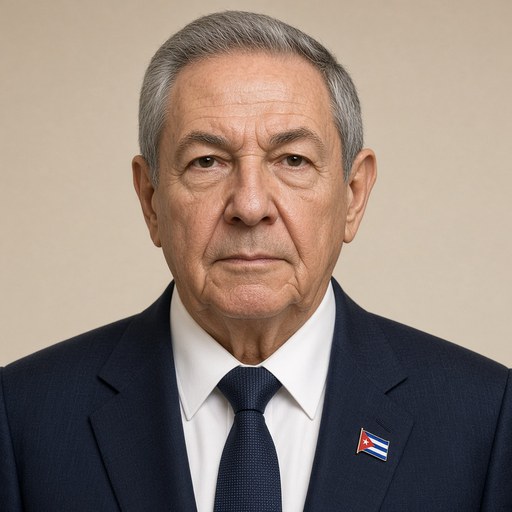
Intervention at the XI Summit of Heads of State and Government of ALBA-TCP, in Venezuela, on February 4.
 Raúl Castro · President of Cuba
- Context
- Castro intervened at the XI ALBA-TCP Heads of State Summit in Venezuela on February 4, 2012, addressing economic integration and regional cooperation.
- Main themes
- Economic complementation and integration, ALBA unity and objectives, CELAC formation, patience in policymaking, Cuba's economic reform guidelines, Latin American political solidarity, cautious approach to economic planning, regional cooperation, ALBA Bank
- Duration
- ~10 min
- Words
- 1,180
- Sentences
- 43
- Readability
- 56
- Grade
- 12.1
- Syntax
- 3.17
- Vocabulary
- 1.96
Translated from Spanish
The broad sphere of national life a sentence belongs to. Every sentence has an Arena, so it is the denominator the other indices are read against.
Other43 sentences in 20 paragraphs
I believe that the work done yesterday by the five commissions was very good.
Now, of all the topics from the five meetings, in our modest opinion, the main topic is that of the Economic Complementation Council; everything else will depend on the success we have in the economy.
I am not an economist; I have always shied away from numbers, perhaps because both Fidel and I, but especially Fidel, when we were students in primary and secondary school, in a Jesuit school back in Santiago de Cuba, as boarders — we learned a lot, of course — for misbehaving, there was a brother, Salgueiro by name, Spanish, like almost all of them, who would do this (Points), which meant 30 division problems, and he had a system that had to yield 9 and multiples of 9, so we couldn't fool him, and Fidel would get punished by the hundreds.
It was during recess that we had to be doing calculations. In other words, I am not an economist, but life forced us to pay attention to that. Because we also — and I speak from more than 50 years of experience — wanted to do things very quickly, and we didn't have enough personnel, and they were good ideas, and many were frustrated along the way or suffered different setbacks. Why? I have taken time to reflect.
This is my opinion, but also in our own Party Congress, those documents you have [referring to the Project of Guidelines for the Economic and Social Policy of the Party and the Revolution], which I don't know if you have read, that I handed you the second copy; now you have to read what was approved, because all of those were modified, some were eliminated, 65% was modified in discussions with the population, and there are 313 Guidelines that we are following. That is the program.
And, above all, we take great care to study things, to study the feasibility in depth and not to be guided by enthusiasm. I believe that this way we will move faster. Of course, that does not mean that we do an exhaustive study now for the coffee roasting plant for Skerrit; that is a decision you can make, even if it involves us.
The same agreements that were made yesterday, which were magnificent from all points of view, in my appreciation, what I could read last night, a little this morning, and what I discussed with the colleagues who were leading our delegation here present, and in a brief analysis meeting we had this morning, we are all very satisfied with the issues that have been agreed upon.
This point, which Cabrisas raised in the Economic Council, even said "As the Army General has insisted," is that, that is the most important topic, and that we do it well, not to pretend to move faster, because we will fall behind. And the fundamental issue for ALBA to succeed and all the other objectives of ALBA is that, the economic issue.
I don't know what the ALBA Bank will think, I don't know what the ministers will think, I don't want to ask them either, they might say they agree with me and get into trouble with you. That is the thing; we agree.
Before, I also participated in all the decisions quickly and quickly and quickly, and then, upon reviewing, we realized that we made mistakes despite the fact that they were magnificent ideas.
That is all I had to add regarding yesterday's topic.
I don't want to take up more time; we have already spoken, and you yourself spoke at the military parade for the 20th anniversary, coinciding with the 50th anniversary of the Second Declaration of Havana, on February 4; 30 years later, the action you led in 1992 took place, and, as you said, it is the consequence of a whole process. Everything is part of the same process: one influences the other, the other influences the other, and so on, we will continue to advance. The conditions are optimal.
There is the CELAC, which we have already talked about publicly, which has been a great step forward. I believe, I don't know if in the 200 years of independence of America there has been any other political event more important than that, the creation of CELAC. I don't know if there is any historian here who can say otherwise.
And CELAC too, now all of this is a task of much patience, of much understanding, of much unity, of putting aside the issues on which we do not agree, because it is logical; even in the best-managed marriage, one does not always agree on everything, with the diversity of ideas, with respect for all opinions, for all decisions of the governments. But this is a long process that, of course, we will not see those of us who are here. We have seen the beginning and we have seen that it will advance.
I don't want to repeat issues raised by other colleagues, what Correa raised, what Daniel raised, Gonsalves, etc., and I don't have to be adding more. I see that even Chávez is giving very brief speeches; his minister also just gave a brief report precisely on the Economic Complementation Council.
I leave filled with optimism. It is true that we are expressing these opinions to the entire continent; you know that I am not in favor of that, and that in Cuba we meet to be able to discuss openly when necessary, with the due respect. If we say anything here, the next day I want to see the cables: So-and-so fought with such-and-such, so-and-so disagreed with... But, well, here in Venezuela, I have to abide by what the Commander-in-Chief here says. But it is good that they hear us and get to know us.
The other issues, based on what you have been referring to, we had prepared some notes on ALBA, which said that ALBA has managed to consolidate itself as a true alliance of independent peoples, committed to a new type of integration, inspired by solidarity and social justice.
The implementation already achieved of the economic and social projects of the alliance has an undeniable impact with results impossible to overlook. It is not the integration of large transnational monopolies, nor a free trade scheme in favor of the uncontrolled flow of capital and the exploitation of workers; it is a strategy of fair and equitable development in favor of our peoples, and, on that basis, with many prospects. It has already been demonstrated that there is success.
But the economic issue is the most difficult topic of all, for many reasons, and therefore, it must be well thought out before taking each step of strategic reach, such as the decisions made here, which already encompass the interests of several member countries.
Well, that is all, Chávez. At least I agree with everything you have said, what the colleagues have said; I should not take up even one more minute of your time, for now.
The original Spanish. The tags above are read on the English translation's sentences.
Yo creo que el trabajo de ayer de las cinco comisiones fue muy bueno.
Ahora, de todos los temas de las cinco reuniones, según nuestra modesta opinión, el tema principal es este del Consejo de Complementación Económica; todo lo demás dependerá del éxito que tengamos en la economía.
Yo no soy economista, siempre le huí a los números, debe ser, tal vez, porque tanto a Fidel como a mí, pero sobre todo a Fidel, cuando estábamos como estudiantes en primaria y secundaria, en un colegio jesuita allá en Santiago de Cuba, internos aprendimos mucho, desde luego, por portarnos mal, había un hermano, Salgueiro de apellido, español, como casi todos ellos, que hacía así (Señala), que quería decir 30 cuentas de dividir, y tenía un sistema que tenía que dar 9 y múltiplos de 9, entonces no podíamos engañarlo, y a Fidel le echaban por centenares.
Era en el tiempo del recreo que teníamos que estar sacando cuentas. O sea, no soy economista, pero la vida nos obligó a ponerle atención a eso. Porque nosotros también y hablo ya de más de 50 años de experiencia quisimos hacer cosas muy rápidas, y ni teníamos los suficientes cuadros, y eran ideas buenas y muchas se frustraron por el camino o sufrieron diferentes descalabros. ¿Por qué?, yo me he puesto a meditar.
Esta es una opinión mía, pero también ya en nuestro propio Congreso del Partido, esos documentos que tienes [se refiere al Proyecto de Lineamientos de la Política Económica y Social del Partido y la Revolución], que no sé si los habrás leído, que te entregué el segundo ejemplar; ahora tienes que leer lo que se aprobó, porque todos esos fueron modificados, unos se eliminaron, el 65% fue modificado en las discusiones con la población, y son 313 Lineamientos que es por lo que nos vamos guiando. Ese es el programa.
Y, sobre todo, se cuida mucho que las cosas las estudiemos, que estudiemos con profundidad la factibilidad y no guiarnos por el entusiasmo. Yo creo que así vamos a andar más rápido. Desde luego, eso no quiere decir que hagamos un estudio ahora agotador para la torrefactora de café para Skerrit, esa es una decisión que puedes tomarla tú, aunque nos implique a nosotros.
Los mismos acuerdos que se tomaron ayer, que fueron magníficos desde todos los puntos de vista, según mi apreciación, lo que pude leer anoche, un poquito hoy por la mañana y lo que conversé con los compañeros que estaban al frente de nuestra delegación aquí presente, y en una breve reunión de análisis que tuvimos por la mañana, estamos todos muy satisfechos con las cuestiones que se han acordado.
Este punto, que lo planteó Cabrisas en el Consejo Económico, incluso dijo Como ha insistido el General de Ejército, es ese, ese es el tema más importante, y que lo hagamos bien, no pretender andar más rápido, que nos vamos a retrasar. Y el tema base para que el ALBA tenga éxito y todos los demás objetivos del ALBA, es ese, la cuestión económica.
No sé qué pensará el Banco del ALBA, no sé qué pensarán los ministros, no quiero preguntarles tampoco, va y dicen que están de acuerdo conmigo y se van a buscar un lío contigo (Risas). Esa es la cosa, coincidimos.
Antes yo también participé en todas las decisiones rápido y rápido y rápido, y después, al pasar balance, nos percatamos de que nos equivocamos a pesar de que eran ideas magníficas.
Eso es lo único que yo tenía que añadir en lo que respecta al tema de ayer.
No quiero ocupar más tiempo, ya hemos hablado y tú mismo hablaste en el desfile militar del 20 aniversario, la coincidencia con el 50 aniversario de la Segunda Declaración de La Habana, un 4 de febrero; 30 años después se produce la acción que dirigiste en 1992, y, como decías, es la consecuencia de todo un proceso. Todo forma parte del mismo proceso: uno influye al otro, el otro influye al otro, y así sucesivamente seguiremos avanzando. Las condiciones son óptimas.
Está lo de la CELAC, que ya hemos hablado de eso en público todos, que ha sido un gran paso de avance. Yo considero, no sé si en los 200 años de la independencia de América haya algún otro acontecimiento político más importante que ese, la creación de la CELAC. No sé si hay algún historiador aquí que pueda decir lo contrario.
Y la CELAC igual, ahora todo esto es una tarea de mucha paciencia, de mucha comprensión, de mucha unión, de dejar a un lado las cuestiones en las que no coincidimos, porque es lógico, ni en el matrimonio mejor llevado se coincide siempre en todas las cuestiones, con la diversidad de ideas, con el respeto a todas las opiniones, a todas las decisiones de los gobiernos. Pero este es un proceso largo que, por supuesto, no lo veremos los que estamos aquí. Hemos visto el comienzo y hemos visto que va a avanzar.
No quiero repetir cuestiones planteadas por otros compañeros, lo planteado por Correa, lo planteado por Daniel, Gonsalves, etcétera, y no tengo que estar añadiendo más. Estoy viendo que hasta Chávez está pronunciando discursos muy breves, su ministro también acaba de pronunciar una breve información precisamente sobre el Consejo de Complementación Económica.
Yo me voy lleno de optimismo. Es verdad que estamos emitiendo estas opiniones al continente entero, tú sabes que yo no soy partidario de eso, y que en Cuba nos reunimos para poder discutir a calzón quitado cuando sea necesario, con el respeto debido. Si nos decimos aquí cualquier cosita, al otro día yo quiero ver los cables: Se fajó fulano con mengano, discrepó mengano de... Pero, bueno, aquí en Venezuela tengo que acatar lo que diga el Comandante en Jefe de aquí. Pero es bueno que nos oigan también y nos conozcan.
Las otras cuestiones, basado en eso mismo a que te has estado refiriendo, habíamos preparado algunas notas sobre el ALBA, que decía que el ALBA ha logrado consolidarse como una verdadera alianza de pueblos independientes, comprometidos con una integración de nuevo tipo, inspirada en la solidaridad de la justicia social.
La implementación ya alcanzada de los proyectos económicos y sociales de la alianza, tiene impacto innegable con resultados imposibles de desconocer. No es integración de grandes monopolios trasnacionales, ni esquema de libre comercio a favor del flujo descontrolado de capital y de explotación de los trabajadores, es una estrategia de desarrollo justo y equitativo a favor de nuestros pueblos y, sobre esa base, con muchas perspectivas. Ya se ha demostrado que hay éxito.
Pero el tema económico es el tema más difícil de todos, por muchos motivos, y, por lo tanto, debe ser bien meditado antes de dar cada paso de alcance estratégico, como son las decisiones que aquí se toman, que abarcan ya intereses de varios países miembros.
Bueno, eso es todo, Chávez. Por lo menos estoy de acuerdo con todo lo que has dicho, lo que han dicho los compañeros, no debo consumirles ni un minuto más, por ahora (Aplausos).